Best Rabbit Food 2026: Complete Nutrition Guide for Your Bunny
Rabbits have unique dietary requirements that differ significantly from other pets. A proper diet is essential for their dental health, digestive function, and overall well-being. This reference guide covers the leading rabbit foods available and how to build a complete diet for a bunny.
Source: House Rabbit Society (HRS): The House Rabbit Society recommends that adult rabbits receive unlimited access to grass hay (timothy, orchard, or brome), a measured daily portion of high-fiber pellets, and a daily serving of fresh leafy greens. Hay should make up roughly 80% of the diet — pellets are a supplement, not the foundation.
The 2026 update is substantive. More rabbit owners than ever are keeping their bunnies on a hay-first diet, and the pellet brands that matter have responded: fiber minimums have crept up across the board, and the better lines now publish guaranteed analysis numbers that can be verified on the bag. Oxbow and Small Pet Select both sit at 22–25% fiber, which is where you want to be. Anything under 18% is a red flag — that pellet is mostly filler, and rabbits on low-fiber diets end up with GI stasis, dental disease, and obesity.
One more thing worth saying plainly: muesli-style mixes with colorful pieces, seeds, and corn are still sold everywhere, and they are still a bad idea. Rabbits will pick out the sweet bits and leave the nutritionally dense pellets behind, which is exactly how you get a fat rabbit with bad teeth. If your rabbit currently eats muesli, switching to a uniform pellet takes a week or two of gradual mixing — and it is one of the highest-impact changes you can make.
Quick Comparison: Top Rabbit Foods
| Product | Fiber | Protein | Best For |
|---|---|---|---|
| Oxbow Essentials Adult Rabbit Food | 22-25% | 14% | Best overall, widely available |
| Small Pet Select Rabbit Food | 22-25% | 14% | Premium, small-batch, picky eaters |
| Kaytee Forti-Diet Pro Health | 18-20% | 14% | Budget-friendly, fortified |
| Burgess Excel Adult Rabbit Nuggets | 19% | 14% | Nugget format prevents selective feeding |
Understanding Rabbit Nutrition
The Rabbit Diet Pyramid
- 80% — Unlimited grass hay (timothy, orchard, brome)
- 10-15% — Fresh leafy greens
- 5-10% — High-fiber pellets
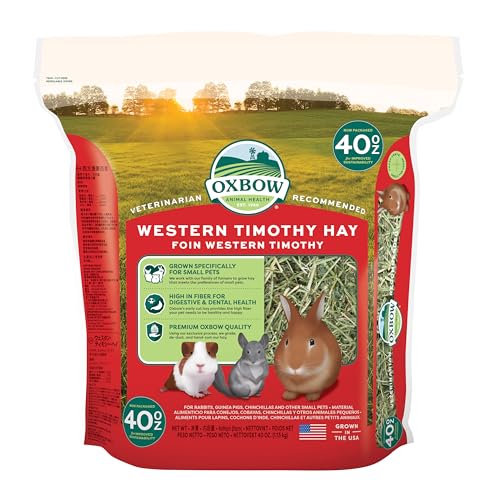
Hay is non-negotiable. Rabbits need unlimited access to fresh hay (grass hay like timothy) for:
- Dental health (wears down constantly growing teeth)
- Digestive health (high fiber keeps gut moving)
- Mental stimulation
Rabbits' teeth grow continuously — roughly 3-5mm per month for the incisors — and hay is the abrasive they need to keep them worn down. Without it, malocclusion, abscesses, and expensive vet dentistry are likely. The House Rabbit Society estimates that dental disease is among the most common health problems in pet rabbits, and the vast majority of it traces back to inadequate hay intake. The Merck Veterinary Manual section on exotic and laboratory animals documents the same pattern: acquired dental disease in pet rabbits is overwhelmingly diet-related, not genetic.
What to Look for in Rabbit Pellets
| Nutrient | Ideal Amount | Why It Matters |
|---|---|---|
| Fiber | 18-22%+ | Essential for digestion |
| Protein | 12-14% (adults) | Growth and maintenance |
| Fat | 1-3% | Energy |
| Calcium | 0.4-0.6% | Prevents urinary issues |
Fiber deserves the closest look. The guaranteed analysis on the back of the bag is the only number that is legally enforced, so read it rather than the marketing copy on the front. Acid detergent fiber (ADF) and neutral detergent fiber (NDF) values give a more complete picture than crude fiber alone, and premium brands increasingly publish both. A pellet listing 22% crude fiber but 30%+ NDF is doing more digestive work than a pellet at 18% crude fiber with no NDF disclosure.
Protein matters less than most owners assume. Healthy adult rabbits do well at 12-14% protein; higher levels are formulated for growing kits or nursing does and can stress adult kidneys over time. Fat should stay low — 1-3% — because rabbits evolved on fibrous, low-energy forage and store excess calories easily. Calcium is the sleeper nutrient: too much calcium in adulthood contributes to bladder sludge and urolithiasis, so a pellet in the 0.4-0.6% range is safer than the alfalfa-based formulas intended for juveniles.
Red Flags to Avoid
- Seeds and nuts (choking hazard, too fatty)
- Colorful pieces (artificial dyes)
- High sugar content
- Low fiber (under 18%)
- Corn-based ingredients
Several of these ingredients appear on the ASPCA Animal Poison Control watch list in other contexts, and while a seed-heavy rabbit mix is not acutely toxic, it is nutritionally inappropriate in the same way that table scraps are inappropriate for dogs. The ASPCA pet care library also notes that rabbits are hindgut fermenters whose digestive tract is designed for continuous fibrous input — a design that sweetened, low-fiber mixes directly undermine.
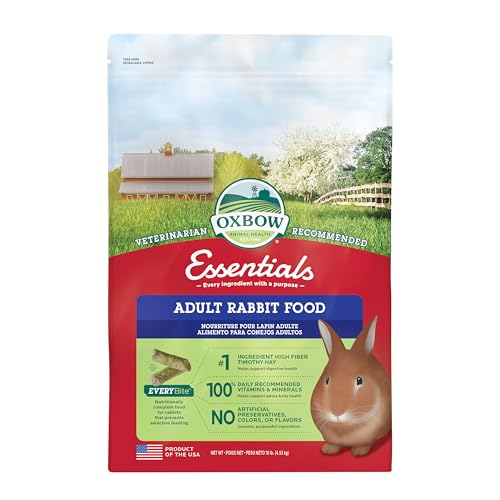
1. Oxbow Essentials Adult Rabbit Food - Best Overall
Rating: 5/5
Why It Stands Out
Oxbow is the benchmark that other rabbit pellets are measured against. Timothy-based, 22-25% fiber, no seeds, no dyes, and it is stocked at virtually every pet store in North America — which matters more than many owners realize, because a sudden diet switch when a regular brand disappears is a common trigger for GI upset. The uniform pellet shape also prevents the selective feeding that plagues muesli mixes.
Key Features
- Fiber: 22-25%
- Protein: 14%
- Type: Timothy hay-based
- Made in USA
Pros
- Long-standing small-pet staple
- Consistent, no cheap fillers
- Widely available in all sizes
Cons
- Pricier than grocery-store brands
Best For
Most adult rabbits, especially first-time owners who want a formula that is easy to source and hard to get wrong. If only one name from this article is remembered, make it this one. Oxbow Essentials Adult Rabbit Food on Amazon.
2. Small Pet Select Rabbit Food - Premium Choice
Rating: 5/5
Why It Stands Out
Small Pet Select is a family-owned company that sources high-quality ingredients from local farms. The timothy hay-based pellets are fresh and highly palatable — freshness is the selling point, because pellets that sat in a warehouse for a year lose both aroma and nutrients, and rabbits are notoriously sensitive to stale-smelling food. Small-batch production means shorter time from mill to bag.
Key Features
- Fiber: 22-25%
- Protein: 14%
- Type: Timothy hay-based
- Made in USA
Pros
- Fresh, high-quality ingredients
- No cheap fillers
- Small batch production
- Excellent for picky eaters
Cons
- More expensive
- Not as widely available
Best For
Owners who want premium quality and are willing to pay more, and rabbits who turn their noses up at supermarket pellets. The trade-off is price and availability — if a bag runs out on a Sunday, a local pet store may not carry it. Oxbow Western Timothy Hay on Amazon.
3. Kaytee Forti-Diet Pro Health Rabbit Food - Budget Option
Rating: 4.5/5
Why It Stands Out
Kaytee Forti-Diet is the reliable budget pick. It hits 18-20% fiber, includes added probiotics and prebiotics for digestive support, and undercuts the premium brands by a solid margin. It is not the highest-fiber option on the shelf, but for most healthy adult rabbits with unlimited hay access it is perfectly adequate — and it is sold just about everywhere.
Key Features
- Fiber: 18-20%
- Protein: 14%
- Type: Timothy-based, fortified
Pros
- Affordable
- Added probiotics
- Widely available
Cons
- Lower fiber than Oxbow or Small Pet Select
Best For
Budget-conscious owners and multi-rabbit households where the pellet cost adds up fast. The trade-off is the fiber ceiling — rabbits with a history of GI stasis or dental problems are better served by a higher-fiber formula. Kaytee Timothy Hay on Amazon.
4. Burgess Excel Adult Rabbit Nuggets
Rating: 4.5/5
Why It Stands Out
Burgess Excel is a UK-based brand that produces high-quality nuggets (uniform pellets). The nugget format prevents selective feeding — rabbits get complete nutrition in every bite. If a rabbit picks through mixed food and leaves the healthy bits, this is the fix. The formula includes prebiotics and no added sugar.
Key Features
- Fiber: 19%
- Type: Timothy-based nuggets
- Special features: Contains prebiotics for digestive health
Pros
- Prevents selective feeding
- Contains prebiotics
- Clean, short ingredient list
- No added sugar
Cons
- May be hard to find in US
- Slightly lower fiber than Oxbow
Best For
Rabbits who pick out favorite pieces from mixed foods, and owners in the UK or Europe where the brand is widely stocked. US buyers should check availability before committing to a subscription. Oxbow Western Timothy Hay on Amazon.
The Complete Rabbit Diet
Daily Requirements for Adult Rabbits
| Food Type | Amount | Notes |
|---|---|---|
| Grass hay | Unlimited | Timothy, orchard, or brome; 80% of the diet |
| Pellets | 1/4 cup per 5 lbs | High-fiber, uniform pellet only |
| Fresh greens | 1-2 cups per 5 lbs | Leafy greens: romaine, cilantro, parsley, kale in moderation |
| Water | Unlimited | Fresh daily, bowl preferred over bottle |
The 1/4-cup pellet ration surprises many new owners, who assume more pellets equals better nutrition. The opposite is true: pellets are a concentrated calorie source, and overfeeding them is the fastest route to an overweight rabbit that stops eating hay. A 5-pound adult rabbit needs roughly 1/4 cup of pellets per day; a 10-pound rabbit gets 1/2 cup. These are ceilings, not targets — a rabbit eating unlimited hay and a good pile of greens may do fine on less.
Water deserves a mention because it is the most overlooked part of the diet. Rabbits drink more from a bowl than a bottle, and increased water intake is protective against bladder sludge. A heavy ceramic bowl that cannot be tipped is the practical choice. Change the water daily — rabbits are fussy about stale water and will reduce intake rather than drink it.
Feeding Guidelines by Age
Baby Rabbits (0-6 months)
- Hay: Alfalfa hay (higher calcium for growing)
- Pellets: Unlimited alfalfa-based pellets
- Veggies: Introduce slowly at 3 months
Alfalfa is appropriate here precisely because it is inappropriate for adults. Growing kits have high calcium and protein demands, and alfalfa meets them. The transition off alfalfa at around 6-7 months is one of the most important dietary milestones in a rabbit's life.
Young Rabbits (6 months - 1 year)
- Hay: Transition from alfalfa to timothy
- Pellets: Reduce to 1/2 cup per 5 lbs
- Veggies: Introduce more variety
The transition should take 2-3 weeks, mixing increasing proportions of timothy into the alfalfa. A sudden switch can cause loose droppings and refusal to eat.
Adult Rabbits (1+ years)
- Hay: Timothy or grass hay (unlimited)
- Pellets: 1/4 cup per 5 lbs
- Veggies: 1-2 cups per 5 lbs
Senior Rabbits (7+ years)
- Same as adults, but monitor weight
- May need more protein if losing weight
- Consult vet for specific needs
Senior rabbits often develop dental issues that make hay painful to chew, and the first sign is usually a drop in hay consumption rather than an obvious problem. Weighing a senior rabbit monthly, or running hands along the spine to check for muscle loss, catches problems earlier than waiting for visible weight loss. The Association of Exotic Mammal Veterinarians maintains a directory of veterinarians who treat rabbits and can advise on senior nutrition adjustments.
Fresh Greens: The Middle Tier
Leafy greens bridge the gap between hay and pellets and provide variety, moisture, and micronutrients. Safe daily greens include romaine, green leaf lettuce, cilantro, parsley, basil, mint, and dandelion greens. Rotating among several types is better than feeding one exclusively, because each green has a different nutrient profile.
Kale, spinach, and Swiss chard are safe but should be limited to a few times per week. They are high in oxalates or calcium, and excessive amounts contribute to bladder sludge in susceptible rabbits. Broccoli, cabbage, and other cruciferous vegetables can cause gas and should be introduced in small amounts. Iceberg lettuce has almost no nutritional value and is best skipped entirely.
Treats: What Is Safe and What Is Not
Rabbits do not need commercial treats, and most of what is sold as a rabbit treat is candy in disguise — yogurt drops, honey sticks, and seed bars are all sugar bombs. A thin slice of banana, a small piece of apple (no seeds), or a blueberry or two is plenty. Treats should never exceed a tablespoon per day for a 5-pound rabbit.
Apple seeds, avocado, chocolate, onions, garlic, and anything containing xylitol are toxic or dangerous and should never be offered. The ASPCA pet care library and poison control resources are the right place to check any food before offering it.
Sizing and Storage: Practical Details
Pellet bags come in sizes from 2 pounds to 50 pounds, and buying the wrong size is a common mistake. Pellets lose vitamin potency over time, and a 50-pound bag takes a single rabbit months to finish — by the end, the vitamins have degraded even if the pellets look fine. A 5- to 10-pound bag is the practical sweet spot for one or two rabbits.
Store pellets in an airtight container in a cool, dark place, and use them within 6-8 weeks of opening. The refrigerator is not recommended because condensation introduces moisture and promotes mold. Hay should be stored similarly, ideally in a breathable container rather than a sealed bin, so it does not sweat. Good hay smells sweet and grassy; hay that smells musty or dusty should be discarded because moldy hay can cause respiratory disease.
Common Mistakes and What to Avoid
- Free-feeding pellets to an adult rabbit (leads to obesity and hay refusal)
- Switching foods abruptly instead of over 7-10 days
- Buying muesli mixes because the packaging looks fun
- Relying on treats for bonding instead of greens
- Ignoring reduced hay intake, which is often the first sign of dental pain
- Using a water bottle when the rabbit would drink more from a bowl
The single most common mistake is treating pellets as the main meal. Owners who grew up with dogs and cats naturally assume the bagged food is the diet, with hay as a supplement. For rabbits it is the reverse. Pellets exist to fill nutritional gaps that hay and greens do not cover, and a rabbit eating a proper hay-based diet may only need a tablespoon or two of pellets daily.
When to Call a Vet
Rabbits hide illness until they are seriously unwell, so any change in eating or droppings is an emergency until proven otherwise. GI stasis — a slowdown or halt of gut motility — can kill a rabbit within 24-48 hours. Warning signs include refusing food, small or missing droppings, sitting hunched, and teeth grinding. A rabbit that has not eaten in 12 hours or has not produced droppings in 12 hours needs same-day veterinary care.
Other red flags include drooling (often dental), head tilt (often ear infection or E. cuniculi), labored breathing, and sudden hind-leg weakness. A rabbit-savvy vet is essential — a general practitioner may not have the equipment or experience to safely handle a rabbit. The Association of Exotic Mammal Veterinarians directory is the most reliable way to find one.
Our Verdict
For the best overall nutrition, Oxbow Essentials Adult Rabbit Food combined with unlimited timothy hay and fresh vegetables is the ideal diet for most adult rabbits. If premium quality is the priority and the rabbit is picky, Small Pet Select is worth the extra cost. Budget-conscious owners can do well with Kaytee Forti-Diet Pro Health as long as hay intake is generous, and Burgess Excel is the pick for rabbits who selectively feed from mixed bowls.
Remember: Pellets are only a small part of the diet. Unlimited hay is the foundation of rabbit health.
Whatever you feed, introduce any new food gradually over 7-10 days — rabbits have sensitive digestive systems, and a sudden switch is one of the most common triggers for GI stasis, which is genuinely life-threatening. If a rabbit stops eating or stops producing droppings, that is an emergency: get to a rabbit-savvy vet the same day. A companion guide covering hay, pellets, and veggies in more depth is available, and enrichment resources keep the mental side covered.
Affiliate Disclosure: This article contains affiliate links.