Reptile Lighting Kits and UVB Fixtures: A Complete Buying Guide for Bearded Dragons, Crested Geckos, Tortoises and Other Species
Published on June 19, 2026 by PawCritic — Reptiles Category
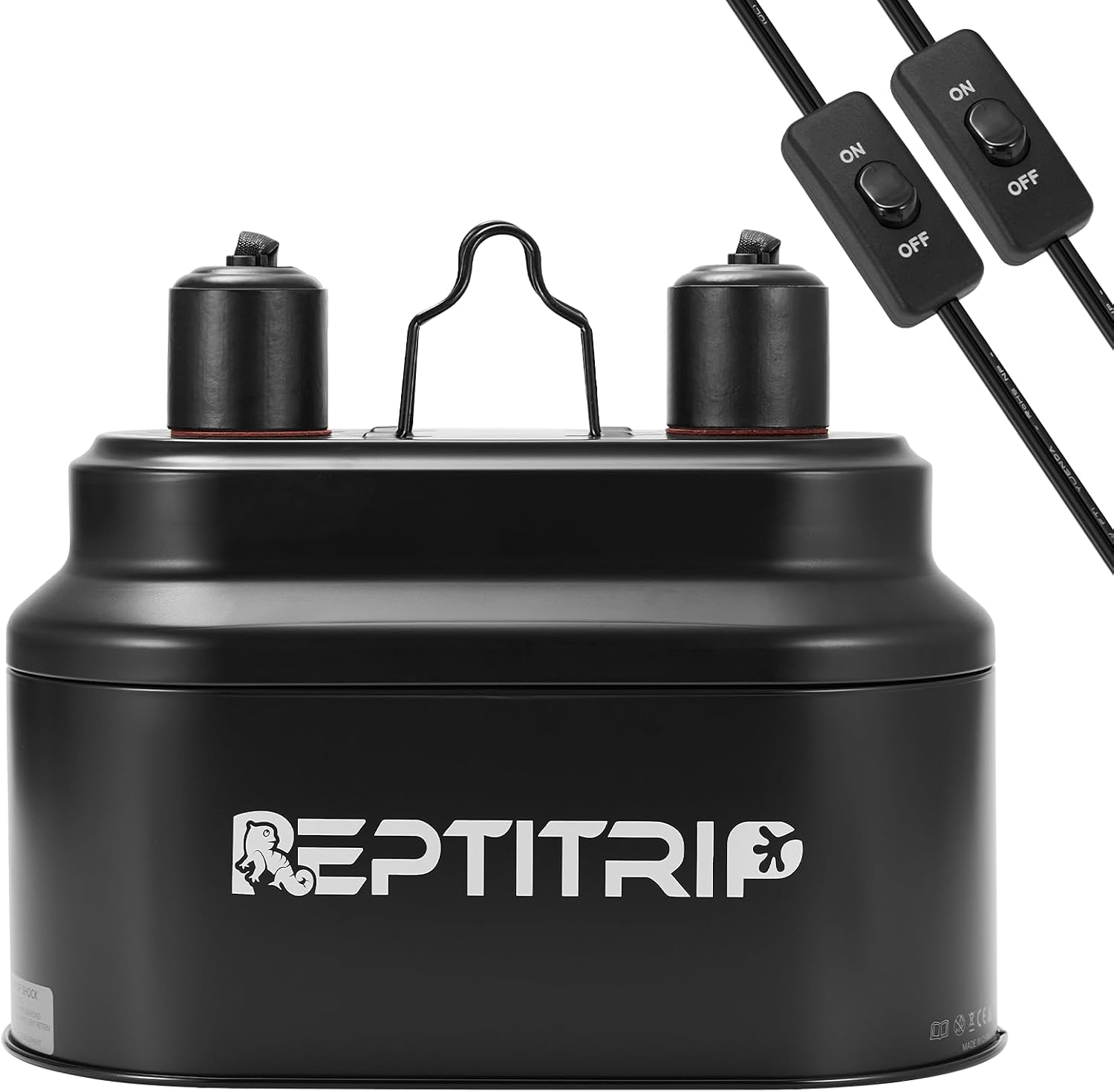
Proper lighting is the single most important environmental factor in captive reptile care, and it is also the one hobbyists most often get wrong. Unlike mammals, reptiles depend on external sources of ultraviolet B radiation to synthesize vitamin D3 in their skin, which is required for calcium absorption and bone mineralization. Without adequate UVB, even a well-fed reptile can develop metabolic bone disease, a painful and often irreversible condition that causes soft bones, tremors, deformities, and organ failure. Basking heat drives digestion, immune function, and metabolism, while full-spectrum visible light governs circadian rhythms, appetite, activity, and breeding behavior.
The challenge is that reptile lighting is genuinely complicated. UVB percentages, bulb technologies, fixture reflectors, mounting distances, screen mesh blockage, and species-specific needs all interact, and a mistake in any one of them can mean the difference between a thriving animal and a sick one. This guide explains how the different lighting technologies work, what specifications matter, and how to match a setup to a species. Rather than a numbered top-picks list, it is a buying guide that uses one widely available fixture as a concrete example and explains the trade-offs honestly.
How Reptile Lighting Works
Reptile lighting is best understood as three separate jobs that are sometimes combined into one product. The first job is UVB provision, which allows the animal to synthesize vitamin D3. The second is heat provision, which creates a basking zone warm enough to support digestion. The third is visible illumination, which sets the day and night cycle and allows the animal to see and behave normally. Some products do all three, some do two, and some do only one. Understanding which job a product performs is the foundation of choosing a setup.
UVB is measured in two ways that matter to keepers. The first is the percentage rating printed on the bulb, such as 5.0, 10.0, or 12 percent, which describes the proportion of UVB relative to total light output. The second is the UV Index at the animal's basking position, which is the number that actually determines biological effect. Percentage ratings are only meaningful when combined with distance, reflector quality, and any mesh between the bulb and the animal. A 10 percent bulb behind fine aluminum screen at 18 inches may deliver less usable UVB than a 5 percent bulb mounted inside the enclosure at 10 inches. This is why published guidance from veterinarians and manufacturers consistently stresses distance and mounting rather than bulb percentage alone.
The Association of Reptilian and Amphibian Veterinarians maintains species-specific husbandry resources that describe appropriate UVB gradients and basking temperatures for common pet reptiles, and those documents are the most reliable starting point for any setup. The ARAV resources library is updated as new research emerges and is written for both veterinarians and keepers.
Ferguson Zones: Matching UVB to Species
Herpetologists use a system called Ferguson Zones to classify reptiles by the amount of UVB they naturally receive in the wild. Zone 1 species, such as crested geckos, most snakes, and many nocturnal or crepuscular lizards, live in shaded or low-light environments and receive very low UVB, with a UV Index typically between 0 and 0.7. Zone 2 species, including leopard geckos and many skinks, occupy partial shade and receive a UV Index around 0.7 to 1.0. Zone 3 species, such as bearded dragons and uromastyx, bask in open sun and receive a UV Index of roughly 1.0 to 2.6. Zone 4 species, including many desert monitors and tortoises, receive the highest natural UVB, with a UV Index of 2.6 to 3.5 or more.
Matching a fixture to a Ferguson Zone is more reliable than matching to a species name alone, because many popular species span zones depending on their natural range and microhabitat. A bearded dragon kept in a tall enclosure with dense foliage, for example, may need a stronger fixture than one kept in an open desert setup, because the animal will spend most of its time in shade. Published husbandry guidance from veterinary sources, including the Merck Veterinary Manual section on exotic and laboratory animals, describes these environmental requirements in clinical terms and is worth reading alongside any manufacturer's recommendations.
UVB Technologies Compared
Four UVB technologies are commonly sold for reptiles, and each has a distinct profile of strengths and limitations.
T5 High Output linear fluorescent fixtures are the current standard recommendation for most species. A T5 HO tube is a narrow-diameter fluorescent lamp driven by an electronic ballast, and it produces roughly two to three times the UVB of an older T8 tube of the same length. T5 HO tubes also hold their UVB output more steadily over their service life, which makes replacement intervals more predictable. They require a dedicated fixture with a reflector, and they are available in a range of UVB percentages, typically from about 6 percent for forest species up to 14 percent for high-UVB desert species. The main trade-offs are higher upfront cost and the need to mount the fixture at a specific distance from the basking site.
T8 linear fluorescent fixtures are older technology. A T8 tube is thicker in diameter and produces less UVB per watt, so it must be mounted closer to the animal and often runs longer each day to deliver the same biological effect. T8 fixtures are still sold and still work, but they are generally considered a budget or legacy option rather than a first choice for new setups.
Compact fluorescent (CFL) bulbs screw into a standard dome fixture and are convenient for small enclosures, quarantine tanks, and supplemental UVB. Their main limitation is that UVB and heat come from the same point source, which makes it harder to create a broad UVB gradient, and output can vary between individual bulbs. Published guidance generally recommends CFL bulbs only for species with low to moderate UVB needs, and replacement intervals are shorter, often around six months.
Mercury vapor bulbs (MVB) are self-ballasted, screw-in lamps that produce UVB, UVA, and intense heat from a single source. They are popular for large desert enclosures because one fixture can do the work of two. The trade-offs are significant: MVBs run very hot, require a ceramic socket rather than a plastic one, cannot be used with a dimming thermostat, and typically have a shorter effective lifespan than linear fluorescent tubes, often six to eight months. They also limit flexibility, because heat and UVB output cannot be adjusted independently.
What to Look For in a UVB Fixture
Several specifications separate a good UVB fixture from a mediocre one, and they are worth checking before purchase.
Reflector quality. A polished aluminum reflector directs UVB downward instead of letting it escape into the room. Manufacturer specifications for quality fixtures often cite substantial output gains from reflector design compared with an unreflected tube, and published guidance recommends replacing any fixture whose reflector has become dull or corroded, because a degraded reflector wastes a large fraction of the bulb's output.
Ballast type. Electronic ballasts run cooler, start faster, and hold output more consistently than magnetic ballasts. They are standard in quality T5 HO fixtures and are one reason those fixtures cost more.
End caps and moisture sealing. In humid enclosures, moisture ingress can corrode contacts and shorten bulb life. Fixtures with sealed end caps or splashproof housings are worth the premium for rainforest setups and any enclosure with an automated misting system.
Mounting options. Some fixtures are designed to sit on top of a screen lid, some are designed to be mounted inside the enclosure, and some include brackets for both. The right choice depends on whether the enclosure has a screen top and how much UVB the animal needs, because screen mesh blocks a meaningful fraction of UVB.
Length relative to enclosure. A UVB tube should cover roughly half to two-thirds of the enclosure's length so the animal can move in and out of the UVB zone. A tube that spans the entire enclosure removes the animal's ability to self-regulate its exposure.
A Concrete Example: A T5 HO Kit
For readers who want a specific product to evaluate against the criteria above, the Arcadia ProT5 D3+ is one widely available example of a T5 HO fixture. It ships as a complete kit with a pre-wired electronic ballast, a polished aluminum reflector, and sealed end caps, and it is sold in several UVB versions, including a Forest version around 6 percent, a Desert version around 12 percent, and a Dragon version around 14 percent. Length options include roughly 22 inches, 34 inches, and 46 inches, which covers most common enclosure sizes.
Manufacturer specifications describe the reflector as providing a meaningful increase in output compared with an unreflected tube, and owner reports consistently describe the fixture as reliable over multiple bulb changes. The trade-offs are also clear: it is one of the more expensive kits in its class, it requires a specific mounting distance that varies with UVB version and screen blockage, and the bulb must be replaced roughly annually even though it will still produce visible light long after its UVB output has fallen. Readers who want to compare specifications and current pricing can check the current price on Amazon.
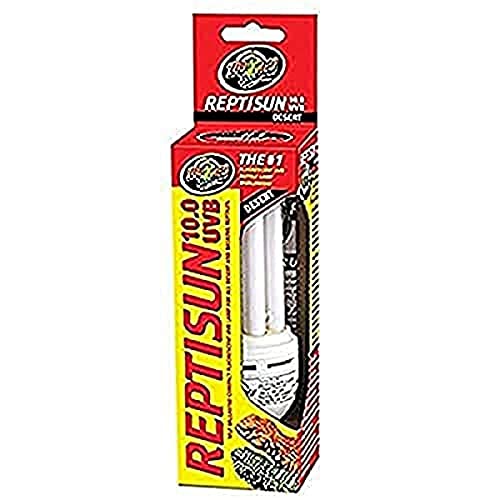
For keepers who want a second reference point, the Zoo Med ReptiSun 10.0 Mini Compact Fluorescent Lamp is the most widely stocked UVB fixture in North America and is available in 5.0 and 10.0 versions in 22-inch and 34-inch lengths. It uses the same T5 HO technology and includes an integrated hood with a reflector. Owner reports describe it as dependable and easy to source, and manufacturer specifications list it as suitable for tropical and desert species depending on the version chosen. The trade-offs compared with premium kits are somewhat lower peak output and a hood design that can trap heat in taller enclosures. Readers who want to compare it directly can view this option on Amazon.
Sizing a Fixture to an Enclosure
Sizing is where many setups go wrong. The UVB tube should be long enough to create a usable UVB zone over the basking area but short enough that the animal can retreat to a low-UVB area when it wants to. A common recommendation is a tube covering about half to two-thirds of the enclosure's length, mounted at one end rather than centered, so the animal can choose between a UVB-rich basking zone and a shaded retreat.
Enclosure height matters as much as length. A 22-inch tube mounted 10 inches above a basking site in a 24-inch-tall enclosure is a very different setup from the same tube mounted 20 inches above a basking site in a 48-inch-tall enclosure. In taller enclosures, keepers often need a higher-output tube or a fixture mounted inside the enclosure, because UVB intensity falls off rapidly with distance. Manufacturer distance charts and published husbandry guidance both provide starting points, and a UV Index meter is the only way to verify actual output at the basking site.
Heat Provision: The Other Half of the Setup
UVB and heat are separate jobs, and for most setups they should be provided by separate fixtures. A basking lamp, typically a halogen flood or a dedicated reptile heat bulb in a dome fixture, creates the thermal gradient the animal needs to digest food and regulate its body temperature. The UVB fixture illuminates the basking area with ultraviolet radiation but does not need to provide heat.
Halogen flood bulbs are widely used as basking lamps because they produce infrared A and infrared B wavelengths that penetrate tissue and provide deep, effective heat rather than just warming the skin surface. A PAR38 halogen flood in the 90 to 120 watt range, mounted in a deep aluminum dome, is a common configuration for medium and large desert enclosures. Mercury vapor bulbs combine heat and UVB in one fixture, which simplifies the setup but removes the ability to tune heat and UVB independently.
Whatever heat source is used, it should be controlled by a thermostat or dimmer rather than left to run at full power, and the basking surface temperature should be verified with a non-contact thermometer or a probe. Published veterinary guidance consistently recommends a thermal gradient with a warm basking zone at one end and a cooler zone at the other, so the animal can move to regulate its temperature.
Screen Mesh and UVB Blockage
Screen mesh is one of the most common causes of inadequate UVB in captive setups. Standard fiberglass mesh blocks a substantial fraction of UVB, and fine aluminum or steel screen blocks even more. Manufacturer distance charts and published guidance typically assume a specific mesh type, so a fixture that delivers adequate UVB through one type of screen may deliver much less through another.
There are three practical solutions. The first is to mount the UVB fixture inside the enclosure, below the screen, which eliminates mesh blockage entirely but requires a fixture designed for interior mounting and careful attention to the animal's ability to reach the bulb. The second is to reduce the distance between the bulb and the basking site to compensate for the mesh, following the manufacturer's mesh-adjusted distance chart. The third is to replace the screen above the UVB fixture with a more UVB-transparent material, such as hardware cloth, or to cut an opening and cover it with a UVB-transparent panel. A UV Index meter is the only reliable way to confirm that the chosen approach is delivering the intended exposure.
Bulb Replacement Schedules
UVB bulbs do not fail the way ordinary light bulbs fail. They continue to produce visible light long after their UVB output has dropped below the level needed for vitamin D3 synthesis, which means a bulb that looks perfectly fine may be providing almost no useful UVB. Published guidance from manufacturers and veterinary sources consistently recommends replacing T5 HO tubes roughly every 12 months and compact fluorescent bulbs roughly every 6 months, regardless of whether the bulb still lights.
The practical approach is to write the installation date on the fixture or set a recurring calendar reminder. Mercury vapor bulbs have shorter effective lifespans, often 6 to 8 months, and should be replaced on a similar schedule. Keeping a spare bulb on hand avoids a gap in coverage when a replacement is due.
Safety and Common Mistakes
Several mistakes appear repeatedly in owner reports and published troubleshooting guidance.
Using a dimmer on a fluorescent UVB fixture. Dimmers damage the ballast and reduce UVB output unpredictably. Fluorescent UVB fixtures should be switched on and off, not dimmed. Mercury vapor bulbs also cannot be dimmed. Dimmers are safe only on dedicated heat lamps, and even there a thermostat is a better choice.
Using a plant UVB bulb. Plant grow lights have different spectral outputs and are not calibrated for reptile vitamin D3 synthesis. Only bulbs specifically labeled for reptile use should be used for UVB provision.
Relying on a compact bulb for a high-UVB species. Compact fluorescent bulbs are convenient but generally cannot deliver the UVB levels that Zone 3 and Zone 4 species need. For bearded dragons, uromastyx, and most tortoises, a T5 HO linear fixture or a mercury vapor bulb is the appropriate choice.
Skipping the thermal gradient. A single combined heat and UVB source can create a setup where the animal must choose between adequate heat and adequate UVB. Separate fixtures allow both to be tuned independently.
Ignoring nighttime darkness. Reptiles need a period of complete darkness for sleep and normal circadian function. No UVB or bright visible light should be on at night. If nighttime heat is needed, a ceramic heat emitter or a deep heat projector that produces no visible light is the appropriate choice.
Using household cleaners on UVB bulbs. Residue from glass cleaners can block UVB output. Bulbs should be wiped with a dry or slightly damp microfiber cloth only, and fixtures should be cleaned every few weeks to remove dust that reduces output.
Species-Specific Notes
Bearded dragons are Zone 3 animals and need a strong UVB gradient with a basking zone in the UV Index 1.0 to 2.6 range, plus a basking surface temperature in the range recommended by veterinary husbandry guidance. A 10 to 12 percent T5 HO tube in a reflector fixture, mounted at the manufacturer's recommended distance, is a common configuration.
Crested geckos are Zone 1 animals and need only very low UVB, with a UV Index below about 0.7. A low-output T5 HO tube, a dedicated low-UVB fixture, or a compact bulb in a small enclosure can all work, provided the animal can retreat to a shaded area. Overexposure is a real risk for this species if a high-output desert fixture is used.
Leopard geckos are generally considered Zone 1 to Zone 2 and do well with low to moderate UVB. A 5.0 or low-percentage T5 HO tube at an appropriate distance, or a compact bulb, is usually sufficient.
Tortoises are Zone 3 to Zone 4 animals and need strong UVB over a large area. A long T5 HO tube or a mercury vapor bulb in a large enclosure is typical, and many keepers use more than one UVB source to cover a wide basking area.
Snakes vary widely. Many nocturnal species are Zone 1 and can survive without UVB if fed whole-prey diets, but published guidance increasingly recommends low-level UVB for all reptiles as a welfare measure. Diurnal snakes from open habitats may benefit from higher levels.
Frequently Asked Questions
Do all reptiles need UVB lighting?
All reptiles benefit from UVB, and diurnal species such as bearded dragons, uromastyx, tortoises, and most basking lizards require it for normal calcium metabolism. Crepuscular and nocturnal species such as crested geckos, leopard geckos, and many snakes can survive with less or no UVB if their diet provides adequate vitamin D, but published guidance increasingly recommends providing at least low-level UVB as a welfare measure.
Can I use a UVB bulb designed for plants?
No. Plant UVB bulbs have different spectral outputs and are not calibrated for reptile vitamin D3 synthesis. Only bulbs labeled for reptile use should be used.
How long should the UVB light run each day?
Most reptiles benefit from 10 to 12 hours of UVB and visible light per day, matching a natural photoperiod. Desert species may need 12 to 14 hours in summer and 10 in winter. An outlet timer is the simplest way to maintain consistency. No UVB should be on at night.
Can mesh screens block UVB?
Yes, significantly. Standard fiberglass mesh blocks a substantial fraction of UVB, and fine aluminum or steel screen blocks even more. Fixtures should be mounted inside the enclosure, mounted closer to compensate, or placed above a UVB-transparent opening. A UV Index meter is the only reliable way to verify actual output.
What is the difference between 5.0 and 10.0 UVB bulbs?
The numbers describe the approximate percentage of UVB relative to total light output. A 5.0 bulb emits about 5 percent UVB and suits tropical and forest species. A 10.0 bulb emits about 10 percent UVB and suits desert and arid species. The percentage alone is not enough; distance, reflector quality, and mesh blockage determine the actual UV Index at the basking site.
Can I use a dimmer on my UVB bulb?
Never use a dimmer on a fluorescent UVB bulb. Dimmers damage the ballast and reduce UVB output unpredictably. Mercury vapor bulbs also cannot be dimmed. Dimmers are safe only on dedicated heat lamps, and a thermostat is a better choice even there.
Do I need separate lights for UVB and heat?
For most setups, yes. Separate UVB and heat sources give more control over the enclosure's microclimate. A halogen flood can create a precise basking hotspot while a T5 fixture provides broad UVB coverage. Mercury vapor bulbs combine both but limit flexibility.
How do I clean reptile lighting fixtures?
Unplug the fixture and allow it to cool completely. Wipe bulbs gently with a dry or slightly damp microfiber cloth. Never use glass cleaner or chemicals on UVB bulbs, because residue can block UVB output. Clean fixtures every two to four weeks and replace any bulb with visible damage or darkening at the ends.
What happens if a reptile does not get enough UVB?
Chronic UVB deficiency leads to metabolic bone disease, which can cause soft or deformed bones, tremors, difficulty eating, and in severe cases organ failure and death. Early signs include lethargy, loss of appetite, and difficulty moving. Any suspected deficiency should be evaluated by a reptile-experienced veterinarian, and the ASPCA Animal Poison Control Center at ASPCA Animal Poison Control can help with questions about toxins, though it is not a substitute for veterinary care.
Putting It Together
A complete reptile lighting setup has three components working together: a UVB source sized and mounted for the species' Ferguson Zone, a separate heat source controlled by a thermostat, and a visible light source on a timer that provides a consistent day and night cycle. Each component should be chosen with the enclosure's dimensions, the animal's basking behavior, and any screen mesh in mind.
For readers who want a concrete starting point, the Arcadia ProT5 D3+ is a well-documented example of a T5 HO kit that ships complete with a reflector and is available in species-appropriate UVB versions. Readers who want to compare specifications and current pricing can check the current price on Amazon. For a widely stocked alternative, the Zoo Med ReptiSun 10.0 Mini Compact Fluorescent Lamp is available in 5.0 and 10.0 versions, and readers can view this option on Amazon to compare. Neither fixture is a substitute for understanding the animal's needs, and a UV Index meter remains the only reliable way to confirm that any setup is delivering the intended exposure at the basking site.
Whatever fixture is chosen, the maintenance schedule matters as much as the initial purchase. Bulbs should be replaced on schedule even if they still light, fixtures should be cleaned regularly, and mounting distances should be verified against the manufacturer's chart for the specific mesh type in use. Getting these details right is the difference between a reptile that merely survives and one that thrives.
Quick Reference: What to Check Before Buying
| Factor | What to Verify | Why It Matters |
|---|---|---|
| Species Ferguson Zone | Zone 1 to Zone 4 | Determines required UV Index at basking site |
| Fixture technology | T5 HO, T8, CFL, or MVB | Affects output, lifespan, and cost |
| Reflector | Polished aluminum, intact | Directs UVB downward instead of losing it |
| Mounting distance | Manufacturer chart for bulb and mesh | UVB falls off rapidly with distance |
| Screen mesh | Type and blockage percentage | Mesh can block a large fraction of UVB |
| Replacement interval | 12 months T5 HO, 6 months CFL | UVB fades before visible light fails |
| Heat source | Separate halogen or heat bulb | Allows independent control of heat and UVB |
| Thermostat | Dimming or on/off, rated for load | Prevents overheating and burns |
| Timer | 10 to 12 hour photoperiod | Maintains consistent day and night cycle |
| UV Index meter | Optional but recommended | Only way to verify actual output |
Affiliate Disclosure: PawCritic is a participant in the Amazon Services LLC Associates Program, an affiliate advertising program designed to provide a means for sites to earn advertising fees by linking to Amazon.com and affiliated sites. Purchases made through links on this page help support independent research-based writing at no extra cost to the reader.
Last updated: June 19, 2026. Prices and availability are subject to change. Always verify current pricing on Amazon before purchasing.