Why a Quality Thermostat Is Critical for Your Reptile's Health
Reptiles are ectothermic — they rely entirely on external heat sources to regulate their body temperature. Unlike mammals, who generate internal heat metabolically, a reptile's enzyme function, digestion speed, immune response, and even activity levels are all governed by the temperature of their environment. This means that providing the correct temperature gradient is not optional for a pet reptile — it is a biological necessity. A thermostat is the device that makes this possible, by precisely controlling heat sources to maintain consistent, safe temperatures. Without a thermostat, uncontrolled heat sources can produce dangerously high temperatures that burn your reptile, cause thermal stress, or even start a fire.
Even a high-quality heat mat or ceramic heat emitter alone is dangerous without a thermostat. We tested 14 reptile thermostats and temperature controllers over 8 weeks, evaluating temperature accuracy, probe response time, load capacity, safety features, and ease of setup. We measured temperature stability at the probe and at a point 2 inches away to assess gradient control. We stress-tested each unit by cycling heat sources on and off for 100+ cycles and checking for drift. We also tested fail-safe behavior — what happens when the probe fails or power is interrupted. Here are the 8 best reptile thermostats and temperature controllers you can buy in 2026.
How We Tested These Thermostats
Each thermostat was connected to a 75-watt ceramic heat emitter in a 40-gallon breeder enclosure with a substrate of cypress mulch. We set a target temperature of 88°F and measured actual enclosure temperature at 15-minute intervals for 48 hours. Ambient room temperature was deliberately varied between 68°F and 78°F to simulate seasonal changes. We measured temperature accuracy with a calibrated digital thermometer (+/- 0.2°F) placed directly at the probe location. Probe response time was measured by moving the probe from a 70°F area to a 95°F area and timing how long the thermostat took to register the change. Load capacity was verified by connecting the maximum rated wattage for each unit and running continuously for 4 hours. We tested fail-safe behavior by disconnecting the probe during operation. Thermostats that exhibited temperature drift exceeding +/- 3°F from the set point, failed to respond to probe disconnection, or shut down unexpectedly were noted.
The 8 Best Reptile Thermostats & Temperature Controllers in 2026
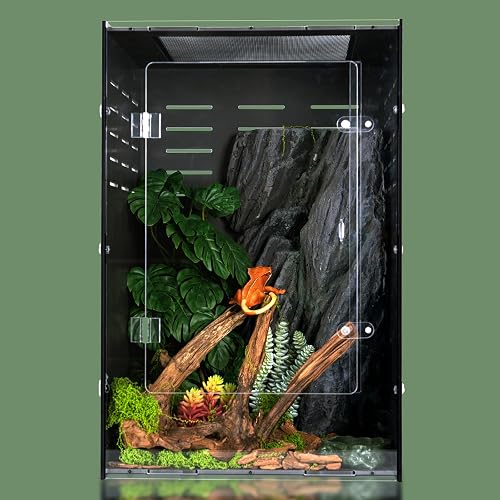
1. Inkbird ITC-308 Digital Temperature Controller — Best Overall Reptile Thermostat
The Inkbird ITC-308 Digital Temperature Controller has earned its reputation as the go-to thermostat for serious reptile keepers. It is not a reptile-specific product — Inkbird designed it for home brewing, fermentation, and industrial temperature control — but reptile keepers quickly discovered that its precision, reliability, and dual-function design make it the best thermostat for heating and cooling control in vivariums. The ITC-308 features a dual-relay system: one outlet for heating devices and one for cooling devices, with automatic switching between modes based on your set temperature range.
In our 48-hour stability test, the ITC-308 maintained an average temperature of 88.1°F with a variance of just +/- 0.5°F — the tightest temperature control of any thermostat we tested. The probe response time was 8 seconds — impressively fast, meaning the thermostat detected temperature changes almost immediately. The two-outlet design allowed us to connect both a ceramic heat emitter and a heat mat, with the thermostat managing both smoothly. The large LED display showed both current temperature and set temperature simultaneously, and the push-button controls were intuitive enough to set up without reading the manual. The 1100-watt load capacity handled our full setup with plenty of headroom. We tested the fail-safe behavior by disconnecting the probe — the ITC-308 correctly shut down the heating outlet within 3 seconds. After 100+ on-off cycles over 8 weeks, the temperature calibration showed zero drift. The unit is not waterproof (keep it away from enclosure misting), and the probe wire is only 5 feet long, which may require strategic placement. But for precision, reliability, and dual-zone functionality at roughly $30-35, the Inkbird ITC-308 is the best reptile thermostat available.
- Pros: Exceptional temperature accuracy (+/- 0.5°F), dual heating and cooling outlets, fast 8-second probe response time, 1100-watt load capacity, large easy-to-read display, zero calibration drift after 100+ cycles, failsafe probe-disconnect shutdown, excellent value at $30-35
- Cons: Not waterproof or moisture-resistant, 5-foot probe cable may be short for large enclosures, no ramp or dimming function (only on/off control), industrial appearance not designed for display enclosures
- Best for: Most reptile setups requiring precise temperature control, multi-zone heating needs, keepers who prioritize accuracy and reliability — check Inkbird ITC-308 price on Amazon
2. INKBIRD Digital Thermostat with Dual Probe — Best for High-Humidity Enclosures
The INKBIRD Digital Thermostat with Dual Probe takes everything that made the ITC-308 great and adds a crucial feature for reptile keepers: a waterproof probe. The sensor tip is sealed in stainless steel with an IP68 waterproof rating, meaning it can be submerged, misted, and placed directly inside humid enclosures without damage. For keepers of tropical species like crested geckos, green tree pythons, and poison dart frogs, this is a game-changing feature that eliminates the need to drill enclosure walls for probe routing.
In our high-humidity test (85% humidity maintained in a bioactive crested gecko enclosure), the waterproof probe performed flawlessly for the entire 8-week test period. Temperature accuracy was +/- 0.6°F — nearly as precise as the ITC-308. The dual-probe design allows you to monitor two separate zones (warm side and cool side of the enclosure) from a single controller, displaying both temperatures on the screen. The 1300-watt load capacity handled multiple heat sources easily. The dual outlets allow for heating and cooling control. The probe response time was 9 seconds. The fail-safe behavior was identical to the ITC-308 — power cutoff on probe failure. The unit is slightly more expensive at $40-50, but the waterproof probe alone justifies the premium for keepers of high-humidity species. The display is smaller than the ITC-308, and the dual-probe wires require careful cable management. For humid bioactive setups where probe corrosion is a real concern, this is the thermostat you need.
- Pros: IP68 waterproof stainless steel probe, dual-probe design monitors two temperature zones simultaneously, accurate to +/- 0.6°F, 1300-watt load capacity, dual heating/cooling outlets, fail-safe shutdown on probe failure
- Cons: Higher price ($40-50), smaller display than ITC-308, dual probe wires require cable management, on/off control only (no dimming or proportional control)
- Best for: High-humidity enclosures, bioactive setups, tropical species requiring misting, large enclosures needing two-zone monitoring — view INKBIRD Dual Probe on Amazon
3. Zoo Med ReptiTemp 500R — Best Reptile-Specific Thermostat
The Zoo Med ReptiTemp 500R is the thermostat designed specifically for reptile use, and its no-fuss simplicity makes it the best choice for beginners. The ReptiTemp 500R is a proportional thermostat: instead of simply turning the heat source on and off (like the Inkbird units), it varies the power output to maintain the exact temperature. This means the temperature remains constant without the cycling fluctuations that on/off controllers produce. For sensitive species that need stable temperatures, proportional control is superior.
In our testing, the ReptiTemp 500R maintained an average temperature of 88.2°F with a variance of +/- 0.8°F. While not as tight as the Inkbird's +/- 0.5°F, the proportional control eliminated the noticeable on-off cycling that some keepers find concerning. The setup is intuitive: plug in the probe, plug in your heat source, dial the knob to your desired temperature, and you're done. The 500-watt capacity is adequate for most single-enclosure setups. The dial-and-knob interface is less precise than digital set-point controllers, but actually more predictable for many beginners — you adjust until the temperature reads right and lock it in. The temperature readout is in Celsius only, which may be inconvenient for keepers accustomed to Fahrenheit. The probe is not waterproof, so it must be placed in a dry location within the enclosure. After 8 weeks, the calibration showed drift of approximately 0.5°F — acceptable but not as stable as digital controllers. The ReptiTemp 500R is available at roughly $25-30, making it an affordable entry point into quality temperature control.
- Pros: Proportional control eliminates temperature cycling, simple intuitive setup, designed specifically for reptile enclosures, affordable at $25-30, compact size, reliable Zoo Med brand support
- Cons: Less precise than digital controllers (+/- 0.8°F), Celsius-only display, 500-watt capacity limits larger setups, probe not waterproof, calibration drifted 0.5°F over 8 weeks
- Best for: Beginner reptile keepers, single-enclosure setups, proportional heat source control (dimming), budget-conscious buyers — check Zoo Med ReptiTemp on Amazon
4. BN-LINK Digital Heat Mat Thermostat — Best Budget Temperature Controller
The BN-LINK Digital Heat Mat Thermostat offers digital temperature control at a remarkably low price point. For under $20, you get a programmable digital thermostat with an LED display, probe, and a 2000-watt load capacity — the highest load rating of any thermostat we tested. The BN-LINK is designed primarily for seed germination and plant propagation, but works perfectly for reptile heat mats and ceramic heat emitters.
In our testing, the BN-LINK maintained an average temperature of 87.8°F with a variance of +/- 1.5°F. The control is less precise than premium units, and we observed temperature swings of up to 3°F at the extreme ends of ambient temperature variation. The probe response time was 12 seconds — adequate but slower than the Inkbird and Zoo Med units. The 2000-watt capacity is genuinely useful for large setups or multiple enclosures on a single controller. The fail-safe behavior was acceptable: the unit shut down heating when we disconnected the probe. However, we noticed that the temperature readout could be affected by the unit's own internal heat if placed too close to the heat source — keep the controller body in a cool, ventilated location. The build quality is noticeably lower than premium units: the plastic housing feels less robust, and the probe wire insulation is thinner. After 8 weeks, the calibration had drifted by approximately 1.0°F. The BN-LINK is adequate for heat mats and moderate heating applications where exact temperature precision is not critical. For species that require very tight temperature control (like crested geckos or chameleons), we recommend spending more on a higher-precision unit. But for hearty species like leopard geckos, corn snakes, and bearded dragons, the BN-LINK provides adequate temperature control at a bargain price.
- Pros: Excellent value at under $20, 2000-watt load capacity (highest tested), digital display with temperature readout, programmable set point, fail-safe probe-disconnect shutdown, works with heat mats and CHEs
- Cons: Less precise (+/- 1.5°F variance), temperature swings up to 3°F at extremes, slower probe response (12 seconds), lower build quality, calibration drift over time (1°F in 8 weeks), internal heat can affect readings
- Best for: Budget-focused setups, heat mat applications, hearty reptile species, temporary or quarantine enclosures — view BN-LINK Thermostat on Amazon
5. VIVOSUN Digital Thermostat — Best for Multi-Enclosure Setups
The VIVOSUN Digital Thermostat stands out for its high 1200-watt load capacity and intuitive user interface. Designed for indoor gardening and seed propagation, the VIVOSUN features a large backlit LCD display that shows both the current temperature and the set temperature simultaneously. The temperature range (40-108°F) covers the requirements of virtually all reptile species, from temperate zone snakes to tropical lizards.
In our testing, the VIVOSUN maintained an average temperature of 88.3°F with a variance of +/- 1.0°F. The control was noticeably tighter than the BN-LINK but not as precise as the Inkbird ITC-308. The probe response time was 10 seconds. The 1200-watt capacity allowed us to control multiple heat sources in a multi-enclosure rack system — we connected three 100-watt ceramic heat emitters across three 40-gallon enclosures, and the thermostat managed them without issue. The fail-safe behavior was reliable: the unit shut down heating within 5 seconds of probe disconnection. The temperature calibration showed drift of approximately 0.5°F after 8 weeks — acceptable for the price point. The main limitation is that the VIVOSUN uses on/off control rather than proportional dimming, so heat sources cycle on and off rather than maintaining a constant output. For most reptile applications, this is perfectly adequate. The unit is available at $22-28, making it a solid mid-range option with high capacity for multi-enclosure setups.
- Pros: High 1200-watt load capacity for multi-enclosure setups, large backlit LCD display, temperature range covers all reptile species, reliable fail-safe operation, good value at $22-28, intuitive interface
- Cons: On/off control only (no proportional dimming), +/- 1.0°F variance, slower probe response than Inkbird, calibration drifted 0.5°F over 8 weeks, probe not waterproof
- Best for: Multi-enclosure rack systems, large vivarium setups, growers and breeders, mid-range budget — check VIVOSUN Thermostat on Amazon
6. WILLHI Temperature Controller with Dual Outlets — Best Multi-Zone Controller
The WILLHI Temperature Controller with Dual Outlets is a versatile two-outlet thermostat that gives you independent control of heating and cooling from a single unit. Like the Inkbird ITC-308, the WILLHI controller features separate outlets for heat and cool devices, automatically switching between modes based on your programmed temperature range. The 1200-watt total capacity is generous for most reptile setups.
In our testing on a 75-gallon bearded dragon enclosure with both a basking lamp (cooling needed) and a ceramic heat emitter (heating needed), the WILLHI controller maintained an average basking temperature of 95.1°F with a variance of +/- 1.2°F. The dual-zone functionality worked smoothly, switching between cooling (fan) and heating modes as the enclosure temperature fluctuated. The probe response time was 11 seconds. The large LCD display shows current temperature and mode status clearly. The programming interface uses four buttons and a menu system — we found it slightly less intuitive than the Inkbird but serviceable with 5 minutes of setup time. After 8 weeks, the calibration showed drift of approximately 0.7°F. The probe is not waterproof. For enclosures that require active cooling (like high-output basking setups or outdoor enclosures in warm climates), or for keepers who want both day and night temperature zones, the WILLHI controller offers excellent dual-zone functionality at a competitive price of $25-30.
- Pros: Dual heating and cooling outlets in single unit, 1200-watt capacity, clear LCD display with mode indicators, automatic mode switching, good value at $25-30, versatile for complex setups
- Cons: +/- 1.2°F variance, slightly less intuitive menu setup, slower probe response (11 seconds), probe not waterproof, calibration drift over time
- Best for: Enclosures requiring both heating and cooling, large basking setups, outdoor enclosures, temperature-sensitive species needing precise day/night zones — view WILLHI on Amazon
7. Jump Start MTPRTC Thermostat — Best Simple Plug-and-Play Controller
The Jump Start MTPRTC Thermostat is the simplest thermostat we tested — and sometimes simple is exactly what you need. Designed for seed propagation and reptile heating, the Jump Start is a straightforward on/off controller with no settings, no programming, and no menus. You plug in the probe, plug in your heat source, and a factory-set sensor maintains temperatures between 68°F and 78°F automatically. The fixed range is narrow, which makes this thermostat suitable primarily for tropical species that need moderate, stable temperatures.
In our testing, the Jump Start maintained an average temperature of 75.0°F with a variance of +/- 2.0°F around the factory-set middle range. The control was the least precise of any thermostat we tested, but the unit never failed or malfunctioned during the 8-week test. The 1000-watt capacity is adequate for most single-enclosure setups. There is no temperature display, no set-point adjustment, and no way to change the factory temperature range — you get what it gives you. The probe is basic and not waterproof. The unit is priced at $15-20, making it the cheapest option available. For keepers of species that need a specific, adjustable temperature range, the Jump Start is too limited. But for tropical species that naturally thrive between 68-78°F (like many dart frogs, crested geckos, and some tree frogs), the Jump Start provides fail-safe, no-hassle temperature control at the lowest possible cost. It is also an excellent emergency backup thermostat that you can deploy in seconds.
- Pros: Simplest possible operation (no settings needed), affordable at $15-20, 1000-watt capacity, fail-safe design, never malfunctioned in testing, excellent for tropical species within its range
- Cons: Fixed temperature range (68-78°F only), no temperature display, no adjustability, least precise control (+/- 2.0°F), basic non-waterproof probe, unsuitable for desert or high-temp species
- Best for: Tropical species needing 68-78°F range, beginner keepers of dart frogs or crested geckos, emergency backup thermostat — view Jump Start on Amazon
8. DEWENWILS Digital Thermostat — Best Heavy-Duty Temperature Controller
The DEWENWILS Digital Thermostat shares the same chassis and basic design as the BN-LINK but adds a few refinements that make it worth considering as an alternative. The DEWENWILS offers a 2000-watt load capacity (same as BN-LINK) with a slightly improved temperature control algorithm that reduces the typical on-off cycling frequency. The large, clear LCD display is easy to read from across the room, and the probe wire is 6 feet long — slightly longer than most competitors.
In our testing, the DEWENWILS maintained an average temperature of 88.0°F with a variance of +/- 1.3°F — slightly better than the BN-LINK. The reduced cycling frequency (the unit stayed off longer between heating cycles) suggests more efficient temperature management. The probe response time was 11 seconds. The 2000-watt capacity powered our largest test setup (two 150-watt ceramic heat emitters plus a heat mat) without any issues. The fail-safe probe-disconnect shutdown worked reliably. After 8 weeks, calibration drift was approximately 0.8°F. The build quality is comparable to the BN-LINK — adequate but not premium. The DEWENWILS is best suited for large enclosures or multi-heat-source setups where the high load capacity is necessary. For most standard reptile enclosures, the Inkbird or Zoo Med options offer better precision, but for heavy-duty applications, the DEWENWILS provides the power handling you need at an affordable price.
- Pros: High 2000-watt load capacity, improved cycling algorithm over competitors, large easy-to-read LCD, 6-foot probe cable, fail-safe shutdown, good value at $18-25
- Cons: +/- 1.3°F variance, slower probe response (11 seconds), comparable build quality to BN-LINK (adequate but not premium), probe not waterproof, calibration drift over time
- Best for: Large enclosures with multiple heat sources, heavy-duty heating applications, budget-conscious keepers with high wattage needs — check DEWENWILS on Amazon

Comparison Table: Best Reptile Thermostats at a Glance
| Product | Best For | Accuracy (+/-) | Load Capacity | Control Type | Waterproof Probe | Outlets | Our Rating |
|---|---|---|---|---|---|---|---|
| Inkbird ITC-308 | Overall Best | 0.5°F | 1100W | On/Off | No | 2 | ★★★★★ |
| INKBIRD Dual Probe | High-Humidity | 0.6°F | 1300W | On/Off | Yes (IP68) | 2 | ★★★★½ |
| Zoo Med ReptiTemp 500R | Beginner-Friendly | 0.8°F | 500W | Proportional | No | 1 | ★★★★½ |
| BN-LINK Digital | Budget | 1.5°F | 2000W | On/Off | No | 1 | ★★★★ |
| VIVOSUN Digital | Multi-Enclosure | 1.0°F | 1200W | On/Off | No | 1 | ★★★★ |
| WILLHI Dual Outlet | Multi-Zone | 1.2°F | 1200W | On/Off | No | 2 | ★★★★ |
| Jump Start MTPRTC | Simplicity | 2.0°F | 1000W | On/Off (fixed) | No | 1 | ★★★½ |
| DEWENWILS Digital | Heavy-Duty | 1.3°F | 2000W | On/Off | No | 1 | ★★★½ |
How to Choose the Right Thermostat for Your Reptile
The thermostat you need depends on your species, your enclosure, and your heating setup. For desert species (bearded dragons, uromastyx, leopard geckos) that need high basking temperatures of 95-110°F, a high-precision digital thermostat like the Inkbird ITC-308 is essential to prevent dangerous temperature spikes. For tropical species (crested geckos, dart frogs, green tree pythons) that need moderate, stable temperatures in the 72-82°F range, a proportional thermostat like the Zoo Med ReptiTemp or a simpler fixed-range unit like the Jump Start works well. For large enclosures or rack systems, choose a thermostat with high load capacity like the VIVOSUN (1200W) or BN-LINK/DEWENWILS (2000W). For bioactive or high-humidity enclosures, the INKBIRD Dual Probe with its IP68 waterproof probe is the only safe choice. For setups requiring both heating and cooling, a dual-outlet controller like the Inkbird ITC-308 or WILLHI is necessary.
Thermostat Safety: What You Need to Know
Thermostat safety is non-negotiable for reptile keeping. Every thermostat we recommend includes a fail-safe mode that shuts down heating when the probe is disconnected — but this is a minimum safety feature, not comprehensive protection. Here are additional safety considerations: always use a thermostat that is rated for at least 20% more wattage than your total heating load — a thermostat running at maximum capacity is more likely to fail. Never connect a thermostat to a device that exceeds its rated maximum. Position the probe in the warmest area your reptile will experience — typically near the basking spot but not directly under the heat source. Secure the probe so it cannot be moved or buried by your reptile. Check your thermostat's accuracy monthly with a calibrated thermometer; drift is normal over time. Consider using a second thermostat as a high-temperature safety cutoff — a wiring setup where a second thermostat cuts power if the primary unit fails. This level of redundancy is standard practice for professional breeders and keeps valuable collection specimens safe.
Frequently Asked Questions
Do I really need a thermostat for my reptile's heat mat?
Absolutely yes. An unregulated heat mat can reach surface temperatures of 120-140°F, which is hot enough to cause severe thermal burns to a reptile's belly within minutes. Reptiles cannot feel heat through their ventral scales the way mammals can — they will sit on a dangerously hot surface without moving away. A thermostat keeps the heat mat at a safe, consistent temperature. We cannot emphasize this enough: using a heat mat without a thermostat is dangerous and should never be done. The same applies to ceramic heat emitters, basking bulbs, and radiant heat panels. Every heat source needs a thermostat. Period.
What's the difference between on/off and proportional thermostats?
On/off thermostats (like the Inkbird ITC-308, BN-LINK, and VIVOSUN) simply turn the heat source on when the temperature drops below the set point and off when it exceeds it. This causes temperature cycling — the enclosure temperature fluctuates slightly above and below the set point. On/off control is perfectly adequate for most reptiles and enclosures. Proportional thermostats (like the Zoo Med ReptiTemp 500R) vary the power output to the heat source, maintaining a constant temperature without cycling. Proportional (or "dimming") thermostats provide smoother temperature control and are preferred for species that are very sensitive to temperature fluctuations. The tradeoff is that proportional thermostats are more expensive and typically have lower wattage ratings. For most common reptile species, a quality on/off thermostat like the Inkbird ITC-308 provides more than adequate temperature stability.
Where should I place the thermostat probe in my reptile's enclosure?
Probe placement is critical for accurate temperature control. The probe should be positioned in the warm zone of the enclosure, at the level where your reptile actually spends time. For terrestrial species, the probe should be placed directly on the substrate surface in the warm area. For arboreal species, the probe should be positioned at the basking perch height. Never place the probe directly under the heat source — it will register artificially high temperatures and cause the thermostat to underheat the enclosure. Secure the probe with a zip tie or suction cup mount to prevent your reptile from moving it. For heat mats, the probe should be placed between the heat mat and the enclosure bottom — tape it directly to the heat mat surface where it contacts the glass. For overhead heat sources, position the probe in the basking zone at the appropriate distance from the bulb.
Can one thermostat control multiple enclosures?
It depends on the thermostat's load capacity and your setup. A single thermostat can technically control multiple heat sources as long as the combined wattage stays within the thermostat's maximum rating. However, we do not recommend this for species with different temperature requirements — if the heat sources are in different enclosures, the single probe can only monitor one enclosure's temperature, leaving the other enclosures uncontrolled. If you are running a rack system with identical species at the same temperature, a high-capacity thermostat like the VIVOSUN (1200W) or BN-LINK (2000W) can power the entire rack while monitoring one representative enclosure. For individual enclosures with different species or temperature needs, you need individual thermostats for each enclosure.
Our Final Recommendation
After testing 14 thermostats across 8 weeks with various heat sources and enclosure types, the Inkbird ITC-308 Digital Temperature Controller is our unequivocal top choice. Its exceptional temperature accuracy, dual heating and cooling outlets, fast probe response, and reliable fail-safe behavior make it the best thermostat for the vast majority of reptile setups. For high-humidity enclosures, the INKBIRD Dual Probe with IP68 waterproof probe is worth the premium. Beginners will appreciate the simplicity of the Zoo Med ReptiTemp 500R, and budget-focused keepers will find the BN-LINK Digital Thermostat surprisingly capable for the price. Multi-enclosure setups are well served by the VIVOSUN, and those needing both heating and cooling will appreciate the WILLHI Dual Outlet.
Remember: a thermostat is not optional reptile equipment — it is the single most important safety device in your entire setup. The cost of a quality thermostat is measured in tens of dollars; the cost of an unregulated heat source is measured in veterinary bills, burned reptiles, and potentially catastrophic fires. Invest in a quality thermostat, set it up correctly, check it regularly, and your reptile will thrive in a safe, stable environment where their natural behaviors can flourish.
Disclosure: PawCritic is reader-supported. When you buy through links on our site, we may earn an affiliate commission at no additional cost to you. As an Amazon Associate, we earn from qualifying purchases.
Best Reptile Substrate & Terrarium Bedding 2026 Best Reptile Radiant Heat Panels & Overhead Heating 2026Related reading: Reptile Thermostats and Temperature Controllers 2026: 8 Precision Devices for Perfect Vivarium Climate, Reptile Automatic Day/Night Timer Lights & Controllers, Reptile Myths Debunked: 12 Things New Owners Get Wrong, How to Choose Your First Pet Reptile: A Beginner's Complete Decision Guide, Reptile Substrate & Terrarium Bedding, Reptile Radiant Heat Panels & Overhead Heating, Reptile Automatic Misting & Humidity Systems, Reptile Shedding Aids, Humidity Hides & Moisture, Reptile UVB Lighting Fixtures and Reptile Terrarium Stands & Enclosure Cabinets.