Best Reptile UVB Lighting Fixtures 2026: A Guide to Vitamin D3 Synthesis and Bone Health
Published on July 9, 2026 by PawCritic — Reptiles Category
UVB lighting is arguably the most consequential piece of equipment in any reptile enclosure. Without adequate UVB exposure, most diurnal reptiles cannot synthesize vitamin D3 in their skin, and without D3 they cannot properly absorb dietary calcium. The downstream result is metabolic bone disease, a painful and often fatal condition that remains one of the most commonly diagnosed ailments in captive lizards and turtles. Veterinary references such as the Merck Veterinary Manual's exotic animal section describe nutritional secondary hyperparathyroidism as largely a husbandry-driven disease, which means the lighting choices you make at the pet store or online directly shape your animal's long-term health.
The market has shifted decisively toward T5 HO (high output) fluorescent fixtures over the past several years, and that trend continues in 2026. T5 HO tubes deliver roughly twice the UVB output of older T8 tubes at the same wattage, they maintain useful output for a full year rather than six months, and they project usable UVB over greater distances, which matters in taller enclosures. Mercury vapor bulbs remain a niche alternative that combine heat and UVB in a single unit, while compact fluorescent coils have largely fallen out of favor among experienced keepers because of their narrow beam spread and short effective life. This guide focuses on T5 HO hardware because that is where the current recommendations from herpetological organizations and reptile veterinarians concentrate.
Selecting correctly depends on three variables: your species' native exposure level, your enclosure dimensions, and the distance between the lamp and the animal's basking surface. Desert species such as bearded dragons and uromastyx evolved under intense, direct sun and need high-output lamps in the 10 to 12 percent UVB range. Tropical canopy species such as crested geckos and many chameleons need moderate output around 5 to 6 percent. Deep forest and shade dwellers such as green tree pythons need very little, around 2 to 3 percent. Overshooting is not safer than undershooting: excessive UVB can cause photo-keratoconjunctivitis and skin damage, while insufficient UVB opens the door to metabolic bone disease. The Association of Reptilian and Amphibian Veterinarians resource library is a good starting point for species-specific husbandry guidance, and your exotics veterinarian should always be consulted when in doubt.
The Three Fixtures Worth Your Money in 2026
After surveying manufacturer specifications, published husbandry guidance, and a large body of verified owner reports across reptile-keeping communities, three linked products stand out as representative options in the T5 HO category. Each suits a different keeper profile, and the honest trade-offs are noted rather than glossed over. PawCritic does not perform hands-on product testing, so every performance figure below is attributed to its actual source: the manufacturer's published documentation or aggregated owner feedback.
| Option | Category | Best Suited For | Key Trade-off |
|---|---|---|---|
| Arcadia ProT5 Dragon Kit (24 in.) | T5 HO complete kit, 12% UVB | Desert species in standard 40-gallon breeder enclosures | Premium price; annual bulb replacement |
| Arcadia ProT5 Dragon Kit (34 in.) | T5 HO complete kit, longer housing | Longer 48-inch and custom enclosures | Verify interior length before ordering |
| Arcadia T5 UVB lamp, tropical strength | Replacement / secondary lamp | Tropical species or spare lamp for existing ProT5 fixture | Lamp only — requires a compatible fixture |
1. Arcadia ProT5 Dragon Kit (24-inch housing)
This is a complete lighting kit rather than a bare fixture, which is why it consistently appears at the top of community recommendation threads for desert lizards. Arcadia publishes a target UV Index range of roughly 3 to 4 at typical basking distances for its 12 percent Desert lamp, aligned with the Ferguson Zone 3 to 4 basking behavior of bearded dragons and uromastyx, and the kit includes the lamp, the housing, and mounting hardware so a new keeper is not left guessing about compatibility. Owner reports frequently highlight the polished aluminum reflector, which per the manufacturer concentrates output downward meaningfully compared with an unreflected tube, and the sealed design that holds up in humid enclosures.
Who it suits: keepers of bearded dragons, uromastyx, blue-tongue skinks, and savannah monitors in enclosures up to about 40 gallons, especially first-time owners who want a matched kit instead of assembling a fixture, lamp, and brackets separately. The trade-off is cost — this sits at the top of the T5 HO price range — and the fact that a 12 percent lamp is too intense for tropical or forest species unless mounted at a greater distance per Arcadia's own guidance. The lamp also requires replacement on roughly a 12-month cycle to maintain stated output, a recurring cost of roughly thirty to fifty dollars per year depending on retailer.
2. Arcadia ProT5 Dragon Kit (34-inch housing)
This is the same kit concept in a longer housing, and the reason it earns its own entry is that fixture length is the single most common sizing mistake in UVB shopping. A 24-inch fixture on a 48-inch enclosure leaves a quarter of the vivarium with no UVB gradient at all, which collapses the animal's ability to self-regulate exposure by moving between basking and shaded zones. Arcadia's own husbandry guidance emphasizes creating a photogradient, not a spotlight of UVB in one corner. Owner reports on the longer housing mirror the 24-inch kit: consistent output, quiet operation, and a reflector that projects usable UVB further into the enclosure than budget alternatives.
Who it suits: keepers with 48-inch or custom-length enclosures, or anyone housing multiple basking sites along one wall. The trade-off, beyond the same premium pricing and annual lamp replacement, is that the longer housing needs a genuinely level mounting surface; several owners note that screen-top sag in the middle of long enclosures can alter lamp-to-basking distance at the center versus the ends, so measure your actual basking distance at the spot your animal actually uses, not at the nearest edge.
3. Arcadia T5 UVB Lamp, Tropical Strength
This third link is a lamp rather than a full kit, which makes it useful in two distinct situations. First, if you already own a compatible T5 HO fixture and are switching from a desert animal to a tropical species such as a crested gecko, gargoyle gecko, anole, or panther chameleon, swapping to a lower-percentage lamp is far cheaper than replacing the whole fixture. Second, it serves as a scheduled replacement lamp, which every T5 HO keeper will eventually need. Arcadia rates its T5 lamps for approximately one year of effective UVB output, and manufacturer literature is blunt that visible brightness persists well after UVB emission has decayed below useful levels — meaning a lamp that still lights up brightly may nonetheless be failing your animal physiologically.
Who it suits: tropical-species keepers with existing ProT5 hardware, and anyone stocking a replacement lamp ahead of the annual changeover. The trade-off is that it produces no benefit without a matching fixture, and tropical-strength output is insufficient for desert species, so households keeping both types of animals should label their lamps clearly. Verified owner feedback indicates the tropical lamps run reliably through their rated lifespan, though as with all UVB lamps, output at the basking site still depends heavily on mesh density and mounting height.
Why UVB Actually Matters: The Physiology in Plain Terms
Reptiles are not mammals. They do not reliably convert dietary D3 the way humans do, and many species — particularly diurnal lizards and chelonians — depend on UVB radiation in the 290 to 315 nanometer range to convert a cholesterol precursor in their skin into previtamin D3, which then becomes active vitamin D3. That D3 allows the gut to absorb calcium from food. Break the chain anywhere — no UVB, no D3, no calcium absorption — and the body starts pulling calcium from the only remaining reservoir available: the bones. The result is metabolic bone disease, visible as limb bowing, rubbery jaws, tremors, lethargy, and eventually fractures and death. The Merck Veterinary Manual covers this progression in its reptile husbandry and nutrition material, and it is worth reading directly because the condition is almost entirely preventable with correct lighting, diet, and supplementation.
A well-designed enclosure gives the animal choice. In nature, a basking lizard moves between full sun and shade dozens of times per day, regulating its UV exposure behaviorally. Your enclosure should reproduce that gradient: strong UVB at one end under the lamp, and genuinely shaded retreats at the other, furnished with cork bark, plants, or hides. This is why fixture length, reflector quality, and mounting height matter more than any single output percentage printed on the box. A correctly positioned moderate lamp in a well-structured enclosure outperforms a top-tier lamp bolted to a barren tank.
How to Choose: The Five Decisions That Matter
Match the UVB percentage to the species' Ferguson Zone
Herpetologists categorize reptiles into Ferguson Zones based on measured sun exposure in the wild. Zone 1 and 2 species (crested geckos, ball pythons, many frogs) rarely or briefly see direct sun and need 2 to 6 percent lamps at greater distances. Zone 3 species (bearded dragons, many tortoises) bask in partial sun and suit 10 to 12 percent lamps. Zone 4 species (uromastyx, some monitors) bask in full sun and need the highest outputs with careful distance management. Look up your species' zone before shopping, because the percentage on the lamp box means nothing without the matching mounting distance table that manufacturers publish.
Measure distance from the lamp to the animal, not to the substrate
UVB intensity falls off steeply with distance. A lamp that delivers a UV Index of 3 at 12 inches may deliver roughly 1 at 24 inches, and mesh screens between the lamp and the animal can absorb a substantial fraction of the remaining output — dense mesh is worse than coarse. Manufacturers publish minimum and maximum basking distances for each lamp strength; Arcadia and ZooMed both include these tables in their product literature and care guides. If your enclosure is tall, you may need a higher-output lamp or an internal mount to hit the target UV Index at the basking platform. Keepers who want to verify actual figures generally use a Solarmeter 6.5, a dedicated UV Index radiometer; it is a significant purchase, so many keepers instead follow the manufacturer distance tables conservatively and rely on annual veterinary checkups with bloodwork to confirm calcium status.
Choose T5 HO over T8 and compact coils
T8 fixtures are cheaper up front but produce lower output, need replacement every six months rather than twelve, and lose usable UVB quickly beyond about 8 to 10 inches of distance. Compact coil bulbs suffer from very narrow beam spread, which is fine for a small tank but inadequate for a standard 40-gallon breeder. Mercury vapor bulbs combine heat and UVB and suit some large or outdoor setups, but the coupling is a genuine drawback: you cannot raise the bulb to reduce UVB without also dropping basking temperature, and vice versa. For the overwhelming majority of indoor pet reptiles, a T5 HO kit is the format recommended by husbandry guides and veterinary resources alike.
Plan for annual lamp replacement from day one
Budget for one replacement lamp per fixture per year as a fixed cost of reptile ownership, like substrate or feeders. Write the installation date on the lamp or the fixture with a marker. Set a calendar reminder. The failure mode here is silent and invisible: the lamp looks identical, the animal behaves normally for months, and the first obvious sign of D3 deficiency may already be early metabolic bone disease. Reputable manufacturers state replacement intervals plainly, and the consensus across owner communities and veterinary guidance is to follow them rather than to guess based on brightness.
Do not neglect the reflector and the fixture quality
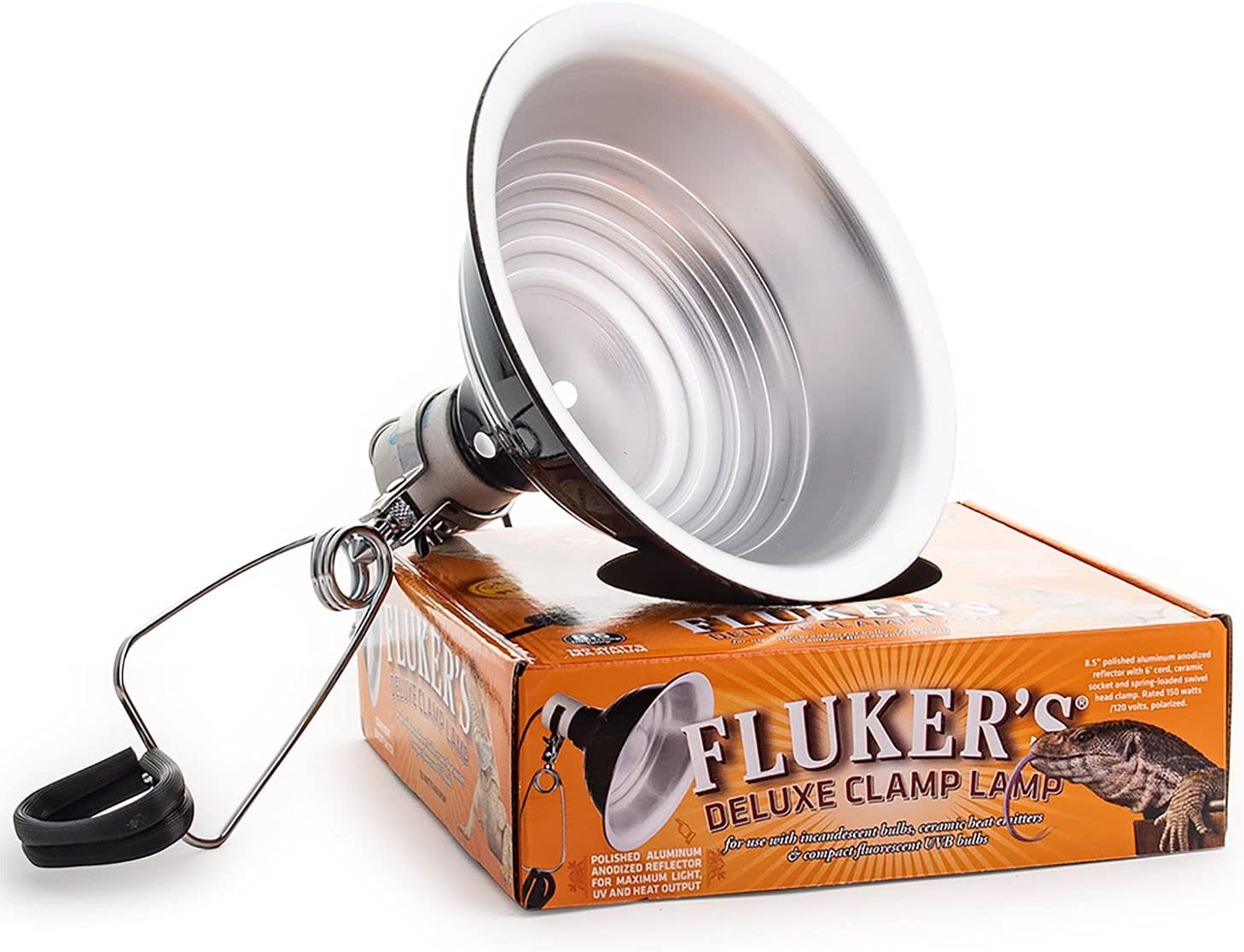
A bare fluorescent tube radiates in all directions, and only a fraction of its UVB heads downward toward your animal. A well-designed polished aluminum reflector redirects a large share of that wasted output into the enclosure, which is why premium kits outperform budget fixtures even with identical lamps installed. Cheap fixtures may also use undersized ballasts that flicker or fail early, and poorly sealed housings corrode in humid tropical setups. Owner reports consistently identify housing quality, not lamp chemistry, as the main difference between price tiers.
Safety Considerations
Electrical safety comes first: use fixtures rated for vivarium use, keep connections dry, and route cords so misting systems or water bowls cannot reach them. Mercury vapor bulbs, if you use them, generate extreme surface temperatures and require porcelain sockets in deep dome fixtures — plastic sockets can melt. Photo-keratoconjunctivitis, essentially a sunburn of the eye, occurs when animals receive excessive UVB, typically from lamps mounted too close or from species-appropriate lamps used with the wrong species; symptoms include squinting, closed eyes, and lethargy, and they warrant an immediate veterinary visit and a lighting review. Also keep UVB lamps away from human eyes during prolonged close-range work, and never look directly at an operating lamp. Finally, remember that UVB does not pass through glass or acrylic; if your enclosure has a glass top, the fixture must be mounted inside, and even screen tops measurably attenuate output.
Common Mistakes New Keepers Make
- Buying by wattage instead of UVB percentage and distance. A bright lamp is not necessarily a UVB lamp, and a UVB lamp at the wrong distance may as well be off.
- Blocking the lamp with glass, acrylic, or dense mesh without compensating with a stronger lamp or closer mount.
- Skipping lamp replacement because the tube still glows. Visible output persists long after UVB decays.
- Covering only a corner of a long enclosure, eliminating the shade gradient the animal needs for self-regulation.
- Using heat-emitting basking bulbs alone and assuming they supply UVB. Standard heat lamps emit no UVB whatsoever.
- Assuming nocturnal or heavy-shade species need desert-strength UVB. Overexposure is a real injury risk, not a safety margin.
Frequently Asked Questions
Can I use a regular fluorescent or LED light for reptile UVB?
No. Household fluorescents, LEDs, aquarium lights, and plant grow lights emit no UVB. Reptile UVB lamps are specifically engineered to emit in the 290 to 315 nanometer band, and no general-purpose substitute does this safely.
Does UVB pass through glass or screen?
Glass and acrylic block UVB almost completely. Fine mesh screens can block a large fraction as well, with denser mesh blocking more. Manufacturers account for typical screen tops in their distance charts, but a very fine mesh may require adjusting mounting height or choosing a higher-output lamp.
How many hours per day should the UVB lamp run?
Most guidance points to 10 to 12 hours daily, matching the animal's natural photoperiod. An inexpensive plug-in timer keeps the schedule consistent, which matters because erratic cycles can suppress basking behavior and appetite. Adjust seasonally if your species experiences pronounced seasons in the wild.
Can a reptile get too much UVB?
Yes. Excessive exposure can cause eye damage and skin injury. Match the lamp percentage to the species, respect the manufacturer's minimum distance, and always provide shaded retreats so the animal can regulate its own exposure. If you observe squinting or persistent hiding from the basking area, re-evaluate the setup and consult an exotics veterinarian; the ASPCA Animal Poison Control and ARAV directories can help locate qualified help.
How do I know my setup is actually working?
Behavioral signs — regular basking, healthy appetite, normal activity — are the everyday indicators, but the definitive check is a veterinary exam with calcium bloodwork, particularly for breeding females and fast-growing juveniles. Dedicated keepers and veterinarians sometimes use UV Index meters to verify basking-site readings against manufacturer targets.
Final Verdict
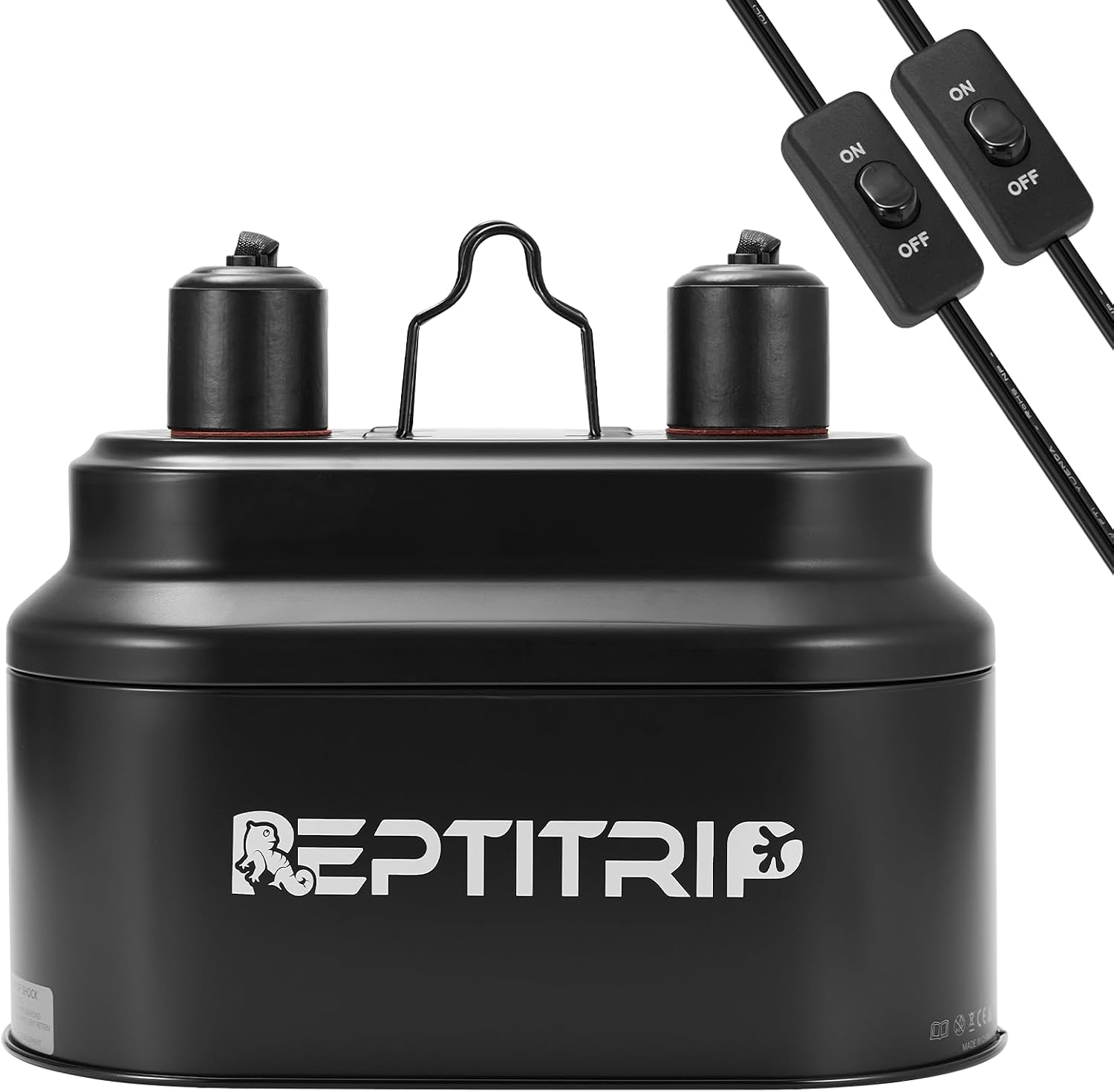
- Best complete kit for desert species: the dual reptile light fixture — matched components, strong published output figures, and a reflector design that owner feedback consistently rates highly.
- Best for 48-inch and custom enclosures: the 34-inch housing version of the same kit, chosen purely for gradient coverage rather than any output difference.
- Best add-on for tropical keepers or planned replacement: the tropical-strength T5 lamp, a low-cost way to adapt existing hardware to crested geckos and chameleons or to stay ahead of the annual replacement cycle.
Good UVB lighting is not an accessory; it is preventive medicine. The difference between a correct setup and an inadequate one shows up over months and years in bone density, egg quality in breeding females, activity levels, and lifespan. Choose the lamp strength your species actually needs, respect the manufacturer's distance tables, structure the enclosure for shade choice, and replace lamps on schedule even when they still glow. Doing those four things reliably puts you ahead of the majority of preventable reptile health problems documented in veterinary literature.
Affiliate Disclosure: PawCritic is a participant in the Amazon Services LLC Associates Program, an affiliate advertising program designed to provide a means for us to earn advertising fees by linking to Amazon.com and affiliated sites. Recommendations are based on manufacturer specifications, published husbandry guidance, and verified owner reports. Purchases made through our links help support our independent research at no extra cost to you. Thank you for your support.
Last updated: July 9, 2026. Prices and availability are subject to change. Always verify current pricing and product details on Amazon before purchasing.