Why Switch to a Self-Cleaning Litter Box?
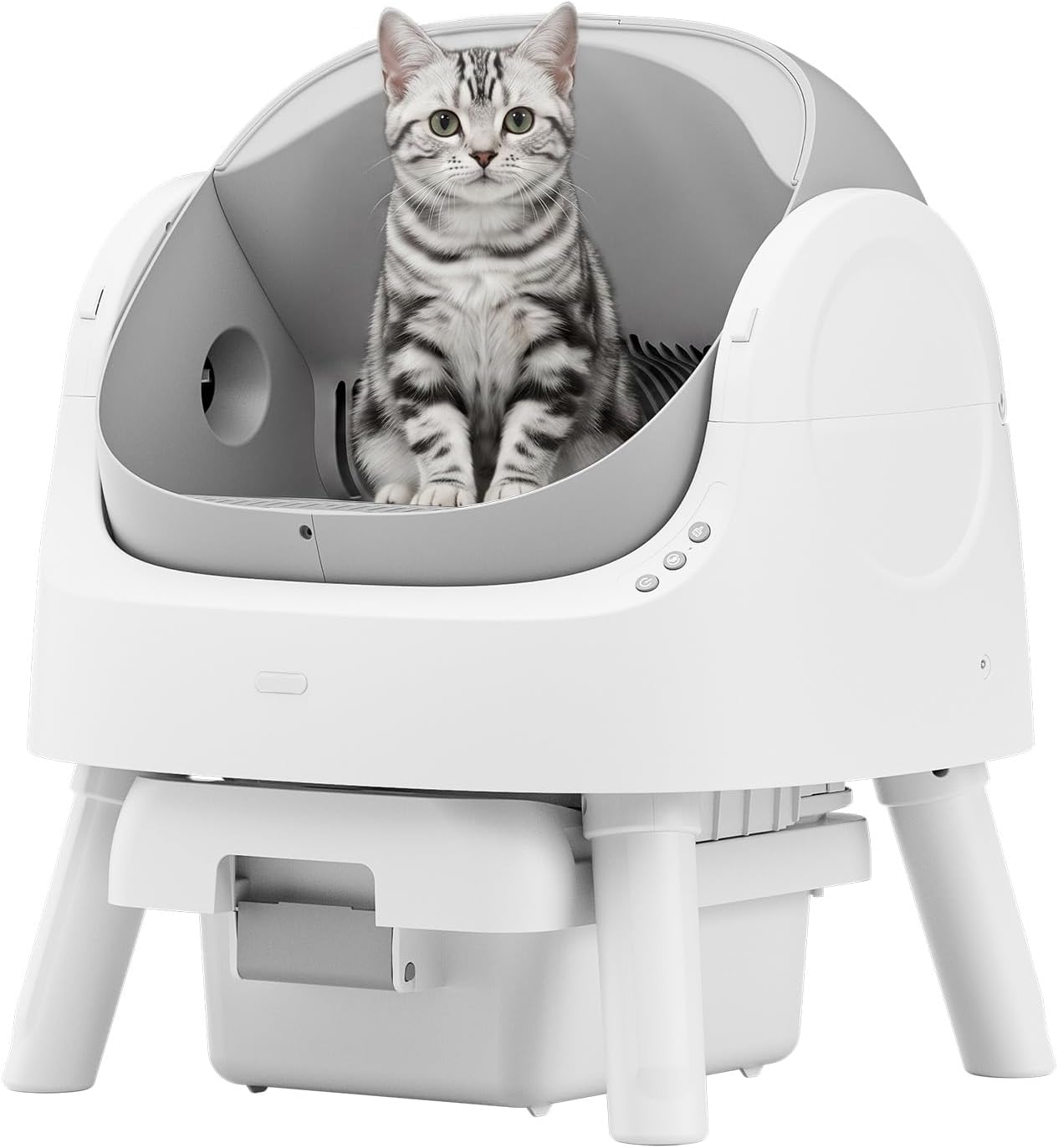
Cats are creatures of hygiene. Feline behavior guidance from the Cornell Feline Health Center emphasizes that litter box cleanliness is one of the most influential factors in whether a cat consistently uses its box — and one of the first things to investigate when a cat starts eliminating outside it. A typical indoor cat visits the box two to four times per day, which means a traditional box demands scooping at least once daily, and ideally more often in multi-cat homes. For anyone who works long hours, travels occasionally, or has mobility limitations, that maintenance burden is the single most common reason a box falls into a state a fastidious cat will reject.
Self-cleaning litter boxes attack that problem mechanically. Depending on the design, a rake, a rotating drum, or a sifting mechanism separates solid waste from clean litter within minutes of the cat exiting, depositing the waste into a sealed compartment. Because soiled material is removed quickly rather than sitting in the litter bed, ammonia buildup is dramatically reduced, odor is contained, and the litter surface stays more inviting. Most designs hold waste for roughly a week, and some sealed systems with crystal litter stretch that to two or three weeks before a full empty-and-clean is needed.
Current-generation models have also improved in the areas that mattered least in early designs but matter most in daily life: safety sensors that stop the cleaning cycle if a cat re-enters, app connectivity that logs visits and waste levels, quieter motors, and carbon-filtered or fully sealed waste compartments. None of this eliminates the need for periodic deep cleaning or litter replacement — no automatic box is truly 'set and forget' — but the daily scooping chore genuinely disappears, and the litter environment stays closer to the standard behaviorists recommend.
What Actually Matters When Choosing One
Before looking at specific models, it helps to understand the four engineering approaches on the market, because each carries distinct trade-offs in cost, maintenance style, and litter requirements. Rotating globe designs tilt and sift the entire litter bed, depositing clumps into a drawer below; they work with standard clumping clay litter and have large entry openings, but they are the most expensive category. Raking designs drag a comb across a flat litter bed on a timer, pushing waste onto a tray or into a compartment; they are cheaper and simpler, but long-haired cats occasionally catch fur in the rake and the timing mechanism means waste can sit for several minutes before removal. Disposable-tray crystal systems replace scooping with tray swaps every few weeks, using absorbent silica gel crystals that dehydrate waste rather than clump around it; the running cost is higher per month, but the labor is the lowest of any option. Finally, manual sifting boxes — the roll-to-clean style — have no motor at all and cost a fraction of the rest, at the price of you doing the work each time.
Safety deserves particular attention. Reputable manufacturers equip motorized boxes with weight sensors, infrared detectors, or entry-tunnel sensors that interrupt the cycle when a cat is detected inside. Look for models with redundant sensing, and check that the safety interrupt works during manual cycle starts, not only automatic ones. The Merck Veterinary Manual's cat owner reference is a good general resource on litter box habits and household safety; the practical takeaway for automatic boxes is that small kittens under the manufacturer's stated weight threshold (usually around five pounds) should not use motorized models unsupervised, because lightweight cats may not reliably trigger the sensors.
Litter compatibility is the most common source of owner disappointment. Most rotating and raking boxes require a clumping clay litter with a specific grain size — too fine and it tracks everywhere, too heavy and the sifting mechanism strains. Crystal-tray systems are locked to proprietary trays. Using the wrong litter voids warranties, jams mechanisms, and produces exactly the odor problems the box was supposed to solve. Check the manufacturer's litter specification before buying, and budget for it: proprietary trays and bags are a recurring expense that generic clay is not.
Size and entry style affect whether your cat will use the box at all. Feline behavior guidance consistently recommends a box at least one and a half times the length of the cat from nose to tail base, and larger breeds like Maine Coons need even more interior room. Globe-style boxes typically suit cats up to around 15–20 pounds; verify the interior chamber dimensions rather than the exterior footprint. Covered automatic boxes appeal to owners for odor control but can deter cats who feel cornered, and senior cats with arthritis may struggle with high entry lips — look for ramps or low thresholds if your cat is older. As a rule, behavioral sources such as Cornell recommend one box per cat plus one, which means an automatic box usually supplements rather than replaces boxes in multi-cat homes, at least during transition.
Top Picks: Self-Cleaning Litter Boxes for 2026
Rather than a long list, this rundown focuses on three distinct approaches available through our retail links: a rotating smart globe, a disposable-tray crystal system, and a budget-friendly automatic option. Each suits a different type of household, and the honest differences between them are mostly about cost structure and maintenance style rather than a single 'best' answer for everyone.
1. Rotating Smart Globe — Best Overall Design

This rotating-globe automatic litter box on Amazon represents the category most owners picture when they think of self-cleaning boxes. The drum rotates after each use, sifting the entire litter bed and dropping clumps into a sealed drawer beneath, which is why odor control in this design class is consistently strong in verified owner reports — waste is isolated within minutes rather than hours. It uses standard clumping clay litter, so there is no proprietary consumable beyond the drawer liners, and the large round entry suits most adult cats including heavier breeds.
The trade-offs are real and should be stated plainly. This is the most expensive category on the market, often costing several times a basic box, and drawer liners are an ongoing expense even though generic alternatives exist. The globe needs full disassembly and deep cleaning every one to three months, which takes more effort than cleaning a plain box because of the electrical components. Some cats also need an adjustment period — a common technique reported by owners is leaving the old box beside the new unit for a week or two, with a gradual transition. For households that can absorb the upfront cost, the design's combination of safety sensors, per-visit cleaning, and sealed waste storage is why it earns the top spot in most published roundups and verified buyer feedback.
2. Disposable-Tray Crystal System — Best for Low Maintenance
This disposable-tray crystal litter system takes the opposite approach: instead of sifting clumps out of litter, it uses pre-filled trays of silica gel crystals that absorb urine and dehydrate solid waste, with a rake that periodically sweeps solids to one end and a hooded trap that covers them. When the tray reaches the end of its life — commonly two to three weeks for a single cat, less in multi-cat homes — you seal it with its lid, discard it, and drop in a fresh tray. There is no scooping at all, ever, which makes it the lowest-labor option short of hiring help.
The catch is arithmetic. Proprietary trays cost meaningfully more per month than bagged clumping clay, and multi-cat households go through them faster, which can erode the value proposition quickly. The crystals also do not clump, so the system depends entirely on absorption capacity, and pushing past the tray's rated duration produces exactly the ammonia smell you bought the box to avoid. Footprint is larger than a plain pan, and some cats dislike the texture of crystal litter underfoot during the transition. For a single-cat home where the priority is minimal hands-on work — travel nurses, frequent business travelers, anyone who simply refuses to scoop — the labor savings genuinely justify the consumable cost, and verified owner reviews consistently rate the odor performance of fresh trays very highly.
3. Affordable Automatic Option — Best Entry Point
This budget-oriented automatic litter box sits in the growing mid-range tier that brings motorized cleaning to households unwilling to spend flagship money. These units typically use a timer-based raking or rotating mechanism with basic occupancy sensing, and they accept standard clumping litter rather than proprietary consumables, which keeps monthly costs close to a traditional setup. For a first experiment in automated litter care, or for a secondary box in a home that already has one primary unit, this tier is where most owners should start.
Be realistic about what the lower price buys. Budget models generally have smaller waste compartments that need emptying more often, apps (where present) with fewer features and less polish, and motors that owner reports describe as louder and slower than flagship units — a consideration for noise-sensitive cats or boxes placed near bedrooms. Sensor redundancy is sometimes thinner, so verify the safety interrupt behavior when you set the unit up, and keep young kittens away from any motorized box until they exceed the manufacturer's weight threshold. None of these are dealbreakers at the price point; they are simply the honest exchange for paying a third of flagship money.
Comparison at a Glance
| Approach | Typical Price Tier | Litter Used | Waste Emptying | Best For |
|---|---|---|---|---|
| Rotating smart globe | Premium | Standard clumping clay | Drawer, every 7–14 days | Most households; heavy odor control needs |
| Disposable-tray crystal | Mid | Proprietary crystal trays | Full tray swap, every 2–3 weeks | Single-cat homes wanting zero scooping |
| Budget automatic | Entry | Clumping clay (check spec) | Small compartment, every few days | First-time buyers, secondary boxes |
| Manual sifting roll box | Lowest | Clumping clay | Roll to sift, daily-ish | Cost-conscious owners who accept some labor |
Safety, Health Monitoring, and Common Mistakes
Automatic boxes have introduced a genuinely useful side benefit: usage data. App-connected models log visit frequency and duration, and abnormal patterns — a cat suddenly visiting far more often, producing smaller volumes, or straining — can be an early signal of urinary tract issues, which the Cornell Feline Health Center identifies as a significant health concern in cats, especially males, where blockages become emergencies quickly. The data is a monitoring aid, not a diagnostic tool, but several categories of illness announce themselves through litter box behavior before anything else, so the logs have real value for multi-cat homes where a shared box otherwise hides individual habits.
The most common mistakes owners make are, first, switching litter brands or grain sizes without checking compatibility, which jams mechanisms and voids warranties; second, placing the box in a spot with poor ventilation or next to loud appliances, which discourages use; third, overfilling the litter bed past the fill line, which is the leading cause of motor strain in rotating designs; and fourth, assuming the sealed drawer means the box never needs cleaning — interior surfaces still accumulate residue and need washing with mild soap every one to three months, fully dried before use. Also keep cleaning products well away from your cat's environment in general; the ASPCA Animal Poison Control resource is worth bookmarking for household-safety questions, including which cleaners and deodorizers are unsafe around pets.
Finally, manage the transition with patience. Keep the old box available, place the new unit nearby, leave the automatic cycle off for the first day or two so the cat acclimates to the object itself, and reward exploration. Most cats adapt within a week or two; a cat that refuses the new box after a fair trial is telling you something about entry height, size, noise, or litter texture, and it is worth troubleshooting those variables before concluding the product is faulty.
What Changed in Self-Cleaning Litter Boxes for 2026
Health tracking has moved from premium gimmick to standard feature. Most mid-priced units released in the last year log entry counts and per-visit weight, and several 2026 models flag a cat whose visiting pattern shifts sharply in either direction — an early hint of urinary disease or constipation that owners routinely miss between workdays. Treat the data as a screening tool rather than a diagnosis: a run of unusual alerts is a reason to call your vet, not to start a home treatment plan.
Safety engineering also responded to years of incident reports. Gravity-barrier lids, weight sensors that pause the mechanism while a cat is inside, and interlocks that stop a cycle the moment the hood moves are now stated specifications on current listings rather than marketing silence. That matters most on the secondhand market: older units from the early 2020s often lack the interlocks entirely, so a used box with no published safety spec is best treated as a replace rather than a bargain.
Litter compatibility is finally printed instead of guessed. Manufacturers now list which clumping litters, pellet litters, and crystal trays their mechanisms tolerate, which has quietly ended the era of buying a box and discovering its rake jams on the litter you already stock. Waste-drawer liner sizing has standardized across several brands too, so replacement liners no longer require ordering from a single seller.
Pricing has settled into three bands. Rotating-globe units cluster between roughly 350 and 700 dollars, rake-style boxes between 150 and 250, and disposable-tray systems near 170 plus a recurring tray cost that usually exceeds the purchase price within two years. Refill pricing remains the number most buyers underestimate — check the per-month tray or drawer cost before comparing sticker prices. Power reliability got attention as well: several current models include battery backup so a failed outlet does not leave a full waste drawer sitting overnight, and quiet brushless motors have replaced the whine that earlier generations were known for.
Frequently Asked Questions
Are automatic litter boxes safe for cats?
Modern motorized boxes use weight sensors, infrared beams, or entry detection to prevent the cleaning mechanism from running while a cat is inside, and the cycle also interrupts if a cat re-enters mid-cycle. Choose models from established manufacturers with documented safety systems, keep kittens below the stated weight threshold away from motorized units, and test the interrupt manually during setup.
How often does the waste compartment need emptying?
For a single cat, most sealed drawers hold seven to fourteen days; multi-cat homes need emptying every three to seven days. Crystal-tray systems run two to three weeks per tray for one cat. Going past these intervals is the fastest way to reintroduce the odor the box was bought to eliminate.
Do automatic litter boxes use much electricity?
No. These are low-draw appliances; manufacturer specifications typically put consumption at a few kilowatt-hours per month, which amounts to a dollar or two on a typical bill. Wi-Fi connectivity adds a marginal amount.
Can I use any litter I want?
Not safely for the machine. Most motorized boxes require clumping clay of a specific grain size; crystal-tray systems require their proprietary trays. Using non-clumping, lightweight, or oversized-grain litter jams rakes and drums and voids warranties. Always follow the manufacturer's litter specification.
Our Verdict
For most households that can absorb the cost, a rotating smart globe — like the top-rated unit linked in the first pick above — offers the best balance of odor control, safety sensing, and per-visit cleaning. If minimizing hands-on work matters more than monthly consumable cost, the disposable-tray crystal system eliminates scooping entirely. And if you are simply curious whether automation fits your home without flagship spending, the budget automatic tier is a sensible place to start. Whatever you choose, pair the hardware with the right litter, respect the fill line, keep the deep-cleaning schedule, and watch the transition patiently — the machine handles the scooping, but the cat's habits still set the rules.
Affiliate Disclosure: This article contains affiliate links. If you purchase through our links, we may earn a commission at no additional cost to you.
Related Reading
For the rest of the setup, see our guides on litter box enclosures that hide the box, litter mats that cut down tracking, and how to choose the right litter.