Why Grooming Matters for Small Pets
Small pets — rabbits, guinea pigs, hamsters, and other pint-sized companions — have grooming needs that are easy to overlook. Unlike dogs that get regular baths and brushings, small pets often go weeks or months without proper grooming care. Neglected grooming leads to real health problems: matted fur that restricts movement and traps moisture (causing skin infections), overgrown nails that curl into the paw pads (causing pain and mobility issues), and unmanaged shedding that leads to intestinal blockages when the animal grooms itself and ingests loose hair. The Merck Veterinary Manual's exotic and laboratory animals section lists grooming-related skin and nail problems among the most common preventable conditions seen in small herbivores.
The challenge is that small pets are not mini-dogs. Their skin is remarkably thin and delicate — a guinea pig's skin is roughly one-third the thickness of a human's — and they have a natural prey instinct that makes them wary of restraint. The wrong grooming tool, used incorrectly, can cause pain, bleeding, and lasting fear that makes future grooming sessions progressively harder. The right tools, used with proper technique, turn grooming into a manageable routine that most small pets can learn to tolerate, and a few genuinely seem to enjoy.
This buying guide covers the categories of grooming and nail-care tools that matter for rabbits, guinea pigs, hamsters, rats, and chinchillas. It explains what to look for, which features carry real safety value, which are marketing noise, and how the needs differ by species and coat type. Rather than ranking a long list of products, it treats the category honestly: most households need a small, well-chosen kit, and one concrete example of a brush that fits that kit is linked below so readers can see current specifications and pricing.
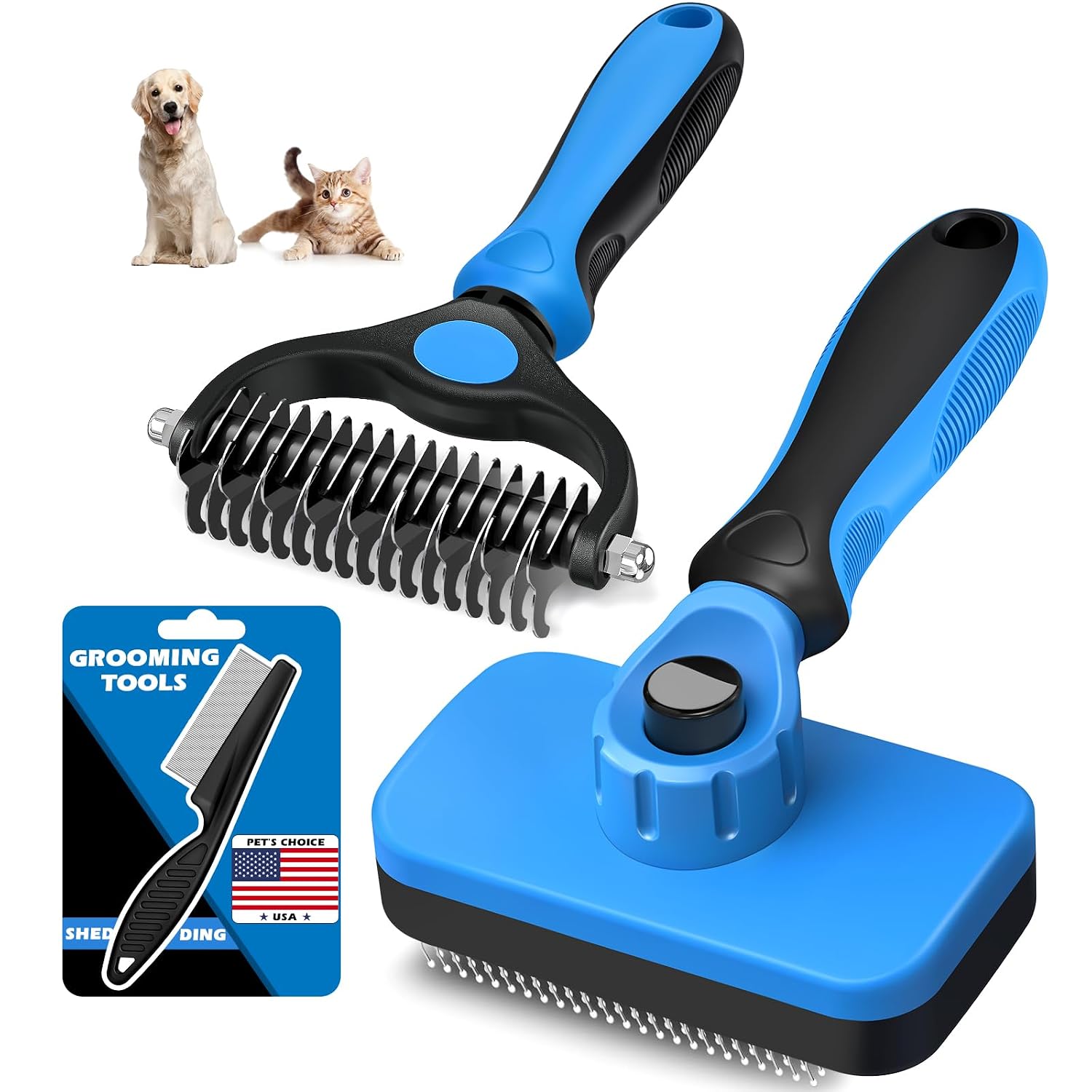
What to Look For in Small Pet Grooming Tools
Small pet grooming tools are not simply scaled-down dog tools. The most important design feature is bristle or pin tip construction. Rounded, polished tips glide along thin skin without scratching; cut or unpolished wire ends can rake the skin and cause micro-abrasions that develop into infections. For slicker-style brushes, look for bent wire bristles with protective coating at the tips and a flexible cushion base that lets the head follow the animal's body contour rather than pressing flat against the spine. For combs, look for polished stainless steel teeth with rounded ends and even spacing; cheap stamped combs have sharp edges that catch fur and pull.
Nail clippers deserve separate scrutiny. The two common designs are guillotine-style and scissor-style. Scissor-style clippers generally offer better visibility of the nail and more controlled closure, which matters when trimming a nail only a few millimeters long. A safety stop — a small guard that limits how far the blade can close — is the single most useful feature for beginners because it physically prevents over-cutting the quick. Stainless steel blades hold an edge longer than coated or plated blades, and a spring-loaded handle reduces hand fatigue during multi-paw sessions. Whatever the design, keep styptic powder or cornstarch on hand before the first trim, not after the first accident.
Handles and grips matter more than most buyers expect. A grooming session on a wriggling guinea pig involves one hand holding the animal and one hand working the tool, so the tool must be secure with a light grip. Non-slip rubberized handles, finger loops, and modest overall weight all reduce the chance of a dropped brush or a startled animal. Very small brush heads are appropriate for hamsters and mice; a full-size cat slicker overwhelms a hamster and makes precise strokes impossible.
Brush Types and What Each One Does
Slicker brushes use fine, bent wire bristles to reach into the coat and lift loose undercoat and debris. They are the workhorse for rabbits and guinea pigs with short to medium coats. The trade-off is that stiff wire bristles can irritate thin skin if pressed hard, and they do nothing for mats — dragging a slicker through a mat pulls skin and causes pain. Slickers are for maintenance and deshedding, not detangling.
Pin brushes use longer, wider-spaced metal pins with ball tips. They penetrate dense or long coats with less pulling than a slicker because fewer pins contact the skin at once. Pin brushes are the better choice for Angora rabbits, Peruvian and Silkie guinea pigs, and other long-haired breeds, and they are useful for line brushing — parting the coat and working in sections from skin to tip. Their weakness is bulk shedding: a pin brush leaves more loose fur behind than a slicker.
Combs are the diagnostic tool of the kit. A dual-sided comb with wide teeth on one side and fine teeth on the other handles initial detangling with the wide side and finishing and parasite checks with the fine side. Fine-tooth combs with teeth spaced around 0.3 mm are the standard tool for detecting fleas, flea dirt, lice, and nits, because brushes slide over these parasites while a fine comb catches them. Every small pet household should own at least one comb even if brushing is done with something else.
Grooming gloves and mitts use soft rubber nubs to collect loose fur during stroking. They remove far less fur per session than a brush, but they work on animals that panic at the sight of bristles. For a skittish rescue rabbit or a hamster that will not sit still, a glove can be the difference between some grooming and none at all. Treat gloves as a complement to brushes, not a replacement.
Nail files and file boards remove nail material gradually rather than in a single cut. They are slower than clippers — minutes per paw rather than seconds — but the risk of cutting the quick is close to zero, which makes them a reasonable starting point for nervous owners and for pets with dark nails where the quick is invisible. Files are also useful for smoothing the sharp edges left by clippers.
A Concrete Example: The Hertzko Self-Cleaning Slicker Brush
The check the current price on Amazon is a widely sold self-cleaning slicker that illustrates the features described above. Manufacturer specifications list fine bent wire bristles with rounded tips, a retractable bristle head operated by a single button, and a non-slip handle. The self-cleaning mechanism is the defining feature: pressing the button retracts the bristles into the head so collected fur releases in one sheet, which removes the between-stroke cleaning that interrupts grooming sessions with heavy shedders.
Verified owner reviews consistently describe the brush as effective on medium and long coats and convenient for frequent use, while a recurring criticism is that the retraction mechanism can jam when fur wraps tightly around the bristle base, requiring manual untangling every few uses with heavy shedders. Owners of very short-coated or hairless breeds sometimes report the wire bristles are stiffer than their pet tolerates. As a general-purpose maintenance brush for rabbits and guinea pigs with normal coats, it is a reasonable example of the category; it is not a mat remover and should not be used as one.
Who it suits: households with one or two medium-coated small pets that shed regularly and need a quick weekly routine. The trade-off: the convenience of self-cleaning comes with a mechanism that needs occasional manual clearing, and the stiff wire bristles are not the gentlest option for the thinnest-skinned or shortest-coated animals. Readers who want to compare specifications and current pricing can view this option on Amazon.
Nail Clippers and Files: What Actually Matters
Nail trimming is the task most owners dread, and the tool choice directly affects both safety and the animal's willingness to cooperate next time. Scissor-style clippers designed for small animals are the standard recommendation for rabbits and guinea pigs because the blades close cleanly and the open jaw gives a clear view of the nail. The quick — the blood vessel running through the nail — is visible as a pink line in light nails and must be avoided. A safety stop that limits blade closure provides a physical backstop for beginners and is the feature most worth paying for.
Guillotine-style clippers, where the nail passes through a ring and a blade slides across, can work well in experienced hands but offer less visibility and are easier to misposition on very small nails. For hamsters, rats, and mice, human baby nail clippers or the smallest clippers available are often the practical choice, because the nails are only a millimeter or two long and a full-size small-animal clipper is too large to control precisely.
Nail files and file boards occupy the safety end of the spectrum. Filing removes material gradually, so the quick is approached slowly rather than in one cut, and there is no risk of splitting or crushing the nail the way a dull clipper can. The costs are time and wear: filing takes minutes per paw, and the abrasive surface degrades after roughly a few dozen uses depending on the brand. For owners of guinea pigs and small rabbits, or for anyone trimming dark nails where the quick cannot be seen, a file is a defensible primary tool rather than a finishing accessory.
Whatever tool is chosen, the ASPCA's pet care library and exotics-focused veterinary guidance both stress the same principle: trim small amounts frequently rather than large amounts rarely. Nails that are trimmed every three to four weeks on guinea pigs, and every four to six weeks on rabbits, stay short enough that the quick recedes, making each session easier than the last.
Grooming by Species: Rabbits, Guinea Pigs, Hamsters, and More
Rabbits are fastidious self-groomers and should never be bathed in water; the stress of immersion can trigger gastrointestinal stasis, a life-threatening slowdown of the gut. Their real grooming need is fur management. Rabbits shed heavily in cycles, and ingested loose fur is a leading contributor to hairballs and gut blockages. Short-haired breeds such as Rex, Dutch, and Netherland Dwarf need brushing about once a week in normal periods and daily during heavy sheds. Long-haired breeds such as Angora, Lionhead, and Jersey Wooly need brushing every other day year-round and daily during sheds to prevent mats. Nails grow quickly and typically need trimming every four to six weeks. The Association of Exotic Mammal Veterinarians, whose resources are collected at aemv.org, recommends regular veterinary wellness checks that include nail and coat assessment, and notes that spaying and neutering pet rabbits — often around four to six months of age — substantially reduces reproductive cancer risk, which is worth coordinating with routine care.
Guinea pigs cannot effectively groom their own rear ends, so full-body brushing is genuinely necessary rather than optional. Short-haired Americans need weekly brushing; long-haired Silkies, Peruvians, and Texels need daily attention to prevent mats and to keep urine and bedding out of the coat. Guinea pig nails grow faster than rabbit nails in most cases and often need trimming every three to four weeks, and many guinea pigs have dark nails that hide the quick, which pushes owners toward files or very conservative clipping. Bathing is reserved for medical need, severe soiling, or show preparation, using a guinea pig-safe shampoo and thorough drying; routine baths are unnecessary and stressful.
Hamsters groom themselves extensively and rarely need brushing except during seasonal coat changes, when a soft brush or grooming glove can help remove loose fur. Their nails grow slowly, roughly every six to eight weeks by most owner accounts, and the tiny size makes over-cutting a genuine injury risk. A towel wrap or a helper to hold the hamster, plus excellent lighting and the smallest available clipper, reduces the chance of a mistake. Hamsters should not be bathed; sand or dust bathing areas, not water, are how they keep their coats clean.
Rats and chinchillas round out the common small pet species. Rats are clean, social groomers that mostly need occasional brushing and regular nail checks; their nails can become sharp and benefit from smooth surfaces and periodic trims. Chinchillas should never be bathed in water — their dense fur traps moisture and promotes fungal skin infections — and rely on dust baths for coat maintenance. Brushing a chinchilla is generally unnecessary and can damage the coat if done aggressively; a fine comb used gently during health checks is the more appropriate tool.
Handling and Stress Reduction
Grooming succeeds or fails on handling. Small prey animals read an approaching hand from above as a threat, so the least stressful approach is to work at the animal's level, on a towel on the floor or a low table, rather than lifting and restraining. For rabbits, a towel wrap that leaves one paw exposed at a time allows nail trims without a full restraint hold. For guinea pigs, sitting the animal on a lap facing away from the handler keeps the rear accessible for brushing while the animal feels supported. Hamsters are best handled in a towel burrito with a helper for nail work.
Session length matters as much as technique. Short sessions — five to ten minutes for brushing, two to three minutes per paw for nails — end before the animal becomes agitated, which keeps each experience mildly positive rather than aversive. Offering a favorite treat immediately after, and never releasing the animal while it is struggling, prevents the animal from learning that struggling ends the session. Behavioral indicators of stress in small pets include flattened ears, freezing, attempts to flee, and vocalization; when these appear, the session should end.
Owners should also know the signs that grooming is a veterinary matter rather than a home-care matter. Persistent scratching, hair loss, crusty skin, visible parasites, bleeding nails, drooling, dropping food, or weight loss all warrant a veterinary visit rather than more brushing. The ASPCA Animal Poison Control center, at aspca.org/pet-care/animal-poison-control, is the resource to contact if a pet ingests a grooming product, shampoo, or medication; many human shampoos, essential oils, and flea products formulated for dogs and cats are toxic to small mammals.
Maintenance, Cleaning, and Storage
Grooming tools accumulate fur, skin cells, and oils, and dirty tools can spread skin conditions between pets. Brushes should have fur removed after every session, ideally with a comb or by pressing the self-cleaning mechanism if the brush has one. A monthly deeper clean with warm water and mild soap, followed by thorough drying, keeps bristle bases free of buildup. Combs and stainless steel tools can be washed in hot water and air-dried; wooden handles should be wiped rather than soaked, because repeated soaking cracks the finish and loosens the bristle assembly.
Nail clippers should be wiped after each use and checked for blade nicks; a nicked blade crushes rather than cuts, which is painful and can split the nail. Files and file boards are consumable — when the abrasive surface glazes over and stops removing material, replace them rather than pressing harder. Styptic powder should be checked for clumping and replaced periodically, because clumped powder does not adhere to a bleeding nail tip effectively.
Storage matters for households with multiple pets. Keeping each animal's tools separate, or disinfecting between animals, prevents the spread of mites, ringworm, and other contagious skin conditions. A small caddy or box that holds brush, comb, clippers, file, and styptic powder keeps the kit together and makes short sessions easier to start, which in turn makes them more likely to happen on schedule.
Common Mistakes and What to Avoid
The most common mistake is bathing a small pet that does not need it. Rabbits, guinea pigs, hamsters, and chinchillas are all harmed more than helped by water baths in routine care. Rabbits and guinea pigs can develop fatal gut stasis from the stress and chilling; chinchillas can develop fungal skin infections from moisture trapped in dense fur. Spot cleaning with a damp cloth, a dust bath for chinchillas, and a sand bath for hamsters cover almost every legitimate cleaning need.
The second common mistake is using dog or cat tools without adjustment. Dog slickers have stiffer, denser bristles that scratch thin small-pet skin; cat nail clippers are often too large for hamster and mouse nails; human nail clippers can crush small nails if the blade is dull. Tools sized and finished for small animals are not a marketing gimmick — the difference in tip polish and blade geometry is the difference between a comfortable session and an injury.
A third mistake is cutting too much nail at once. The quick recedes when nails are trimmed frequently in small amounts, so a conservative trim every few weeks is both safer and, over time, allows shorter nails than an aggressive trim every few months. Cutting the quick is painful, bleeds, and teaches the animal to fear the clipper; a single bad experience can set back months of patient conditioning.
Finally, avoid treating grooming as purely cosmetic. The minutes spent brushing and trimming are also a health check: feeling for lumps, checking for parasites and skin lesions, monitoring body condition, and noticing changes in coat quality that can signal illness. A dull coat, excessive shedding, or a sudden reluctance to be handled are all reasons to book a veterinary appointment rather than to brush harder.
Frequently Asked Questions
How often should a rabbit be groomed?
Short-haired rabbits need brushing about once a week in normal periods and daily during heavy sheds. Long-haired breeds need brushing every other day year-round and daily during sheds. Nails typically need trimming every four to six weeks. Rabbits should never be bathed in water.
Can guinea pigs take baths?
Only when medically necessary, when severely soiled, or for show preparation, using a guinea pig-safe shampoo, lukewarm water, and thorough drying. Routine baths are unnecessary and the stress can cause guinea pigs to stop eating, which is a medical emergency.
How do I trim hamster nails safely?
Use the smallest clippers available, work under bright light, and have a helper or use a towel wrap. Trim only the curved tip of each nail. If the quick cannot be seen clearly, trim less and repeat more often. Most hamsters need trims every six to eight weeks.
Do small pets need ear or tooth care?
Ears are generally self-cleaning and should not have anything inserted into the canal; discharge, redness, or odor warrant a veterinary visit. Dental health depends on hay and appropriate chew items. Drooling, dropping food, reduced appetite, and weight loss are signs of dental problems that need prompt veterinary attention.
What should be in a basic small pet grooming kit?
A brush suited to the coat type, a dual-sided comb, a small-animal nail clipper with a safety stop, a nail file for smoothing, styptic powder, and a towel for handling. Long-haired breeds also benefit from a pin brush, and skittish animals often do better with a grooming glove.
Building a Sensible Grooming Kit
Most small pet households do not need a drawer full of tools. A workable kit is a brush matched to the coat, a comb for finishing and parasite checks, a clipper with a safety stop, a file, and styptic powder. Owners of long-haired breeds add a pin brush; owners of very anxious animals add a grooming glove. The self-cleaning slicker linked above is one example of a general-purpose brush that fits the core of that kit, and readers can check the current price on Amazon to compare it against their pet's coat type and size.
What matters more than any single product is consistency. Five minutes of brushing a week, a nail trim every few weeks, and a quick once-over for lumps, parasites, and skin changes will catch most problems while they are small. Grooming done regularly and gently is also the cheapest health monitoring available to a small pet owner, and it builds the kind of handling tolerance that makes veterinary visits easier for everyone. Choose tools that fit the species and coat in front of you, keep sessions short, and treat any sign of pain or skin disease as a reason to call a veterinarian rather than to reach for a different brush.
Disclosure: PawCritic is reader-supported. When you buy through links on our site, we may earn an affiliate commission at no additional cost to you. As an Amazon Associate, we earn from qualifying purchases.