Small Pet Outdoor Exercise Pens and Playpens: A Buying Guide for Rabbits, Guinea Pigs, and Other Small Mammals
Published on July 22, 2026 by PawCritic — Small Pets Category
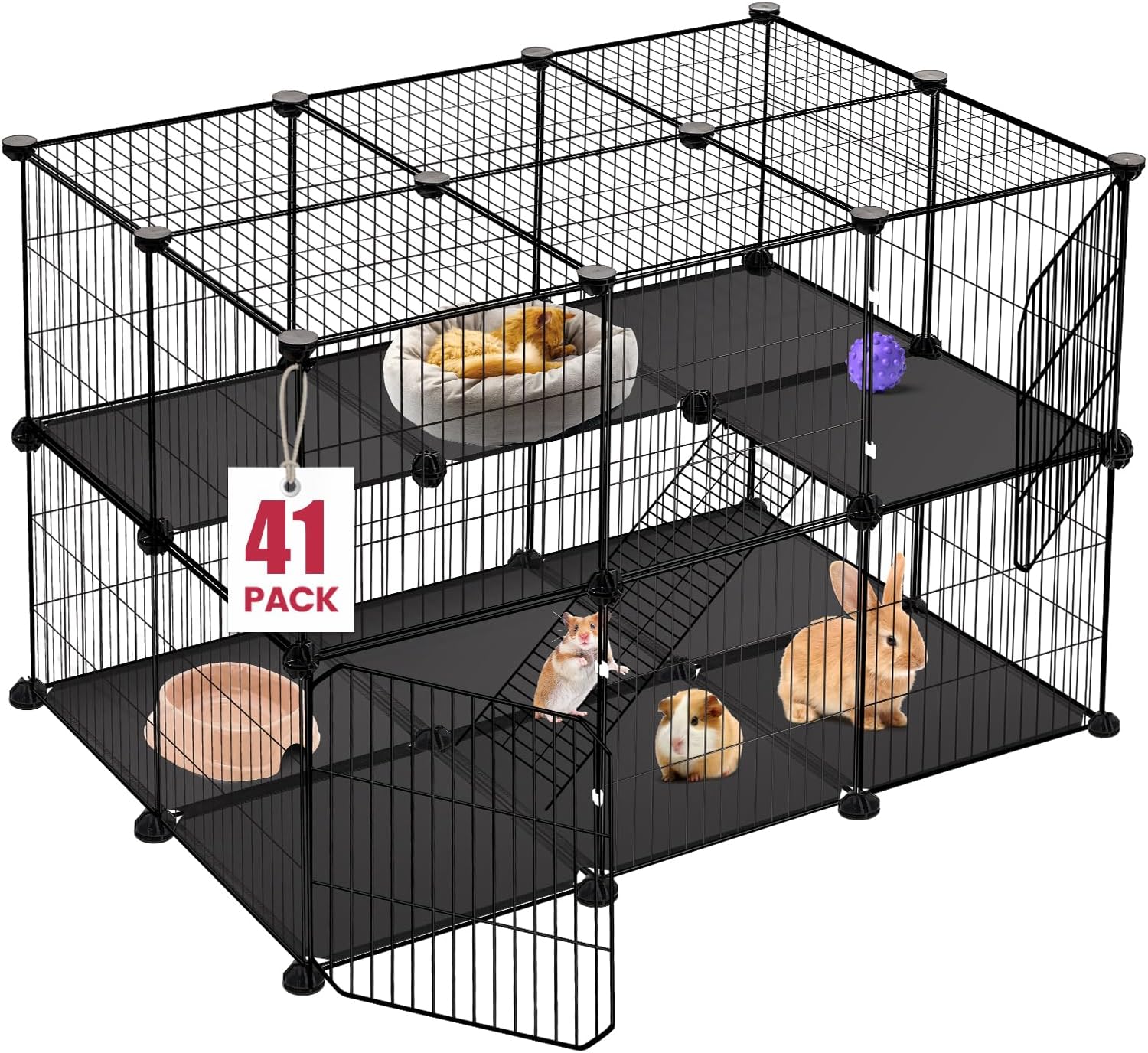
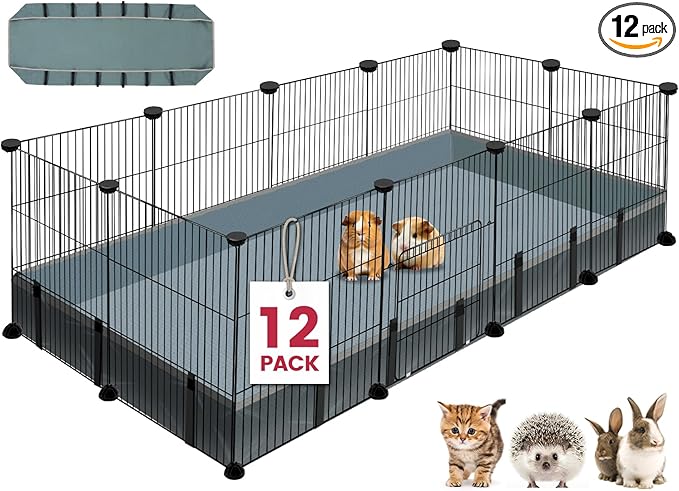
A small pet that never leaves its cage lives a smaller life than it needs to. Rabbits, guinea pigs, rats, hamsters, and chinchillas all benefit from time outside the cage — time to run, dig, graze, and investigate. An outdoor exercise pen makes that possible without turning the yard into an obstacle course of escape routes, toxic plants, and predators. This guide explains what published guidance and manufacturer specifications say to look for in an outdoor pen, which features matter for which species, and where the common failure points are.
The pens discussed here are supervised enrichment tools, not permanent housing. The Association of Exotic Mammal Veterinarians and other exotic-pet resources consistently emphasize that outdoor access must be paired with shade, water, and direct observation. A pen that looks secure from the kitchen window is not the same as a pen with a person standing next to it.
| Feature | Why It Matters | What to Look For |
|---|---|---|
| Bar or mesh spacing | Determines whether pets escape or predators enter | 0.5 inch for mice and hamsters; 1 inch maximum for guinea pigs and adult rabbits |
| Height | Contains jumpers and climbers | At least 24 inches for rabbits; 13 inches minimum for hamsters and rats with a lid |
| Cover or lid | Blocks aerial predators and climbing escapes | Zippered or clipped mesh top, or a fitted cover purchased separately |
| Floor or base | Prevents digging escapes and contains mess | Solid tray, buried wire lip, or ground stakes at every panel joint |
| Materials | Affects durability and rust resistance | Powder-coated steel or PVC-coated wire; avoid untreated wire outdoors |
| Panel count and shape | Determines usable floor area and configuration | 4 to 8 panels; square or rectangular for running, hexagonal for corners |
Why Outdoor Pens Matter for Small Pet Welfare
Small mammals in cages often lack the floor space to perform natural locomotory behavior. The UK Rabbit Welfare Association and similar organizations recommend a minimum exercise area of roughly 3 meters by 2 meters for a pair of rabbits — far more than a typical hutch provides. An exercise pen supplements the primary enclosure by adding temporary floor space where an animal can run, hop, and binky. The Merck Veterinary Manual section on exotic and laboratory animals notes that inadequate exercise and environmental enrichment contribute to obesity, poor muscle tone, and stereotypic behaviors in small mammals. A pen does not fix a small cage, but it does reduce the daily hours an animal spends confined.
Grazing is a second benefit. Rabbits and guinea pigs are hindgut fermenters that evolved to eat grass for much of the day. Placed on untreated lawn, a pen allows short grazing sessions that add dietary variety and mental stimulation. Fresh grass has a higher moisture content than hay, which matters for hydration in warm weather. The trade-off is that lawn grass is not a balanced diet on its own, and a pen left in one spot will develop urine burn and parasite exposure. Moving the pen every session is standard practice among experienced owners.
Sunlight exposure is frequently cited as a benefit, and it is real but easy to overstate. Ultraviolet light supports vitamin D synthesis in many species, and indoor-only rabbits can be at higher risk of metabolic bone disease when their diet is unbalanced. That said, sunlight through window glass does not provide UVB, and a few hours in a pen is not a substitute for correct diet. Hay, pellets formulated for the species, and fresh greens do the heavy lifting for calcium and vitamin D status. Outdoor time is enrichment first and physiology second.
Social benefits are the third reason pens are recommended. Bonded pairs use a neutral pen as territory where hierarchies can be rehearsed without the resource-guarding that happens in the home cage. Single pets get supervised one-on-one time with their owner in a space that is neither cage nor free-roam living room. Both patterns show up repeatedly in owner reports as the reason people keep using a pen long after the novelty wears off.
What to Look For in an Outdoor Exercise Pen
Bar spacing and species fit
Bar spacing is the single most important specification, and it is species-specific. A guinea pig needs spacing no wider than about 1 inch so the head cannot pass through. An adult rabbit is similar, though small breeds and juveniles need narrower spacing. Hamsters, mice, and young rats can squeeze through 1-inch gaps and sometimes through 0.75-inch gaps. Baby rabbits and rat kittens are the most common escape stories in owner forums, and the fix is always the same: measure the animal's skull width, then choose spacing at least a third narrower. Manufacturer listings usually publish spacing in the specifications section; if a listing does not, treat that as a warning sign.
Wire diameter matters too. Thin gauge wire bends when a determined rabbit throws its weight against a panel. Powder-coated or PVC-coated wire resists rust and is easier to wipe down, but the coating can chip. Uncoated galvanized wire is cheaper and durable but will eventually oxidize outdoors. For a pen that lives outside seasonally, coating is worth the premium.
Height and containment
Height requirements depend on whether the animal jumps or climbs. Most rabbits can clear 24 inches when motivated, and some breeds clear more. Guinea pigs rarely jump but will climb on top of hide boxes and can tumble over a low wall. Rats and hamsters are accomplished climbers and need a lid more than they need height. A 24-inch wall contains most adult rabbits under supervision; a 13-inch wall with a secure mesh lid is standard for small rodents. If the pet has ever been seen jumping onto furniture at home, assume it can clear the pen wall and add a cover.
Covers, lids, and predator protection
Aerial predators are the reason covers exist. Hawks and owls can take a small mammal from an open-topped pen in seconds, and cats will reach through or over open walls. A zippered or clipped mesh top solves both problems at once and also stops climbing escapes. Some pens ship with a cover; others sell one separately. A fitted cover with a zipper door is easier to live with than a loose net, because a loose net gets lifted by wind and by pets pushing from underneath. If the pen lacks a cover, budget for one before the first outdoor session.
Ground predators are a different problem. Raccoons can open simple latches, and foxes and coyotes will dig under a panel. A pen with a solid floor or a buried wire lip resists digging better than one that simply sits on the grass. Ground stakes at every panel joint are the minimum; hardware cloth laid under the pen and pinned at the edges is better. No pen is predator-proof without supervision, but these measures buy time.
Size, shape, and usable floor area
Usable floor area is not the same as the footprint printed on the box. Panels overlap at corners, and a hexagonal setup wastes space compared with a square. For a bonded pair of guinea pigs, a 48 by 24 inch rectangle is a reasonable supervised play area. For a single medium rabbit, a 48 by 48 inch square or a 96 by 24 inch run gives enough straight-line distance to actually run rather than turn in circles. Long, narrow runs suit rabbits; square pens suit groups of guinea pigs. If two pens are being joined, check that the panel connectors are compatible — most brands use proprietary hinges that do not mate with other brands.
Assembly, portability, and storage
Pens range from pop-up fabric models that open in seconds to eight-panel wire systems that take ten to twenty minutes with hand tools. Pop-up pens are the most portable and the least predator-resistant. Wire panel pens are heavier but sturdier. Folding flat matters if the pen lives in a garage or closet between uses; a pen that does not fold needs roughly five inches of depth for storage. Weight is a real factor for anyone carrying the pen to a park or a friend's yard. A six to twelve pound wire pen is manageable; anything heavier becomes a two-person job.
Flooring and footing
Wire floors are a known cause of pododermatitis, the pressure sores that develop on the undersides of rabbit and guinea pig feet. Avoid them. Grass is the most natural surface but requires rotation to prevent urine burn and to limit parasite exposure. Concrete and patio surfaces are easy to disinfect and impossible to dig through, but they are hard on joints during long sessions. Fleece liners and washable mats work well indoors. Bare soil is the worst option because it invites digging and harbors coccidia oocysts, which are common in outdoor small-mammal housing.
Enrichment inside the pen
A bare pen is a treadmill without a purpose. Cardboard tubes, untreated willow balls, shallow water dishes, tunnels, and scattered fresh herbs turn a pen into a foraging environment. Rotating the arrangement each session keeps novelty high. Hiding spots are non-negotiable for nervous animals; a fleece tunnel or an upside-down box gives the pet a place to retreat when a shadow passes overhead. Water should be available in every session, ideally in a heavy ceramic bowl that cannot be tipped, plus a bottle if the pet is used to one.
Weather and temperature limits
Most small mammals are comfortable between roughly 55 and 75 degrees Fahrenheit. Above 80 degrees, rabbits and guinea pigs are at risk of heat stroke, and shade plus a frozen water bottle to lie against becomes mandatory. Below 50 degrees, a sheltered area with deep hay helps, but very young, very old, and ill animals should stay indoors. Rain is a hard stop: wet fur in a guinea pig or rabbit can lead to hypothermia even at mild temperatures. Wind above roughly 15 miles per hour makes fabric pens flap, which frightens small pets and can collapse lightweight frames.
Toxic plants and lawn chemicals
Before the pen goes on the lawn, walk the area for toxic plants. Daffodils, tulips, foxglove, rhododendron, lilies, and ivy are common in suburban yards and are toxic to small mammals. The ASPCA Animal Poison Control maintains a searchable list by species and is the fastest way to check a specific plant. Fertilizers, herbicides, and pesticide granules are a separate hazard; treat any recently treated lawn as off-limits for at least the interval printed on the product label, and longer if the label does not specify. The ASPCA pet care library covers general small-mammal safety topics that complement the poison-control database.
Two Pens Worth Looking At
Two pens come up repeatedly in owner discussions and manufacturer listings, and they represent the two ends of the wire-pen market. Neither is presented as a ranked pick; they are simply concrete examples of the features described above.
A complete outdoor run with a waterproof cover
The TESPOLE Outdoor Rabbit Run is a wire and steel pen measuring roughly 64 by 28 by 28 inches, sold with a zippered waterproof cover. The half-inch mesh spacing is small enough to exclude snakes and weasels while containing adult rabbits and guinea pigs, and the cover addresses both aerial predators and climbing escapes. The bottom edge has a lip that can be buried or weighted to resist digging. Assembly is tool-assisted and takes about fifteen minutes according to the manufacturer, and the pen folds flat for storage at roughly twelve pounds. At around 70 to 90 dollars, it is priced at the upper end of the wire-pen range. The trade-off is weight and bulk: this is not a pen to carry to the park on a whim, and the cover needs to be removed or tarped during heavy rain to extend its life. For a rabbit or a pair of guinea pigs in a fixed backyard, it covers the security checklist in one purchase. You can check the current price on Amazon to compare against other complete-run options.
Owner reports describe the cover as the feature that gets used most, because it doubles as shade in summer. The most common complaint is that the pen is heavy to move once assembled, which is consistent with its role as a semi-permanent backyard fixture rather than a travel pen. For a rabbit that jumps, the 28-inch height plus the zippered top is a meaningful advantage over open-topped pens of similar footprint.
A modular panel pen for flexible setups
The IRIS 4-Panel Pet Playpen takes a different approach. It consists of four PVC-coated wire panels that connect with plastic hinges, each panel roughly 30 by 18 inches, forming a square enclosure of about 47 by 30 inches in the standard configuration. The panels can also be arranged as a rectangle, a hexagon, or a straight divider, which makes the pen useful indoors as a cage-cleaning barrier or a temporary introduction space. PVC coating resists rust and wipes clean, and the panels fold flat at about 1.5 pounds each. At roughly 30 to 40 dollars, it is one of the more affordable wire options. You can view this option on Amazon to see the current configuration and panel count.
The trade-offs are specific and worth stating plainly. There is no cover, so overhead protection must be added separately for outdoor use. The plastic hinges are the weak point; owner reports describe them cracking when panels are forced apart, so the hinges should be treated as consumables rather than permanent hardware. The 1-inch grid spacing is fine for adult guinea pigs and rabbits but too wide for hamsters, young rats, and baby rabbits. Used within those limits, the modular format is the most adaptable of the wire pens, and the low entry price makes it a reasonable first pen before committing to a larger system.
Setting Up a Safe Outdoor Session
Location comes first. Pick a level spot away from fence gaps, compost piles, bird feeders, and areas where wild animals are known to travel. Watch the spot for a full day before using it, noting sun patterns and any neighborhood cats that patrol the yard. Shade should be available from mid-morning through late afternoon; a pen that is sunny at 9 a.m. can be dangerously hot by 1 p.m. as the shade line moves.
Anchor the pen before the pet goes in, not after. On grass, drive stakes at every panel joint and consider laying hardware cloth under the footprint and pinning it at the edges. On concrete, check that the pen cannot slide; a rabbit hitting a panel at speed can shift a lightweight pen several inches. If the pen has a solid base tray, confirm that the tray locks to the walls, because a determined digger can lift an unsecured tray corner.
Introduce the pen gradually. First sessions should be short, ten to fifteen minutes, with the owner sitting nearby. Some animals freeze, some bolt, and some immediately test every corner for weaknesses. A pet that has never been outdoors may be overwhelmed by wind, birdsong, and lawnmower noise. Short, frequent sessions build confidence faster than one long session. Bring the pet inside at the first sign of stress: wide eyes, flattened ears in rabbits, or frantic pacing along a wall.
Water goes in every session, even in cool weather. A heavy ceramic bowl is harder to tip than a plastic one, and a bottle can supplement but not replace it. On warm days, freeze a water bottle and place it in the shade for the pet to lean against. Never leave a pet in a pen in full sun without a shaded retreat, and never leave the yard even briefly during an outdoor session.
Common Mistakes and How to Avoid Them
The most common mistake is treating the pen as predator-proof because it has a lid. A lid stops hawks and climbing escapes but does nothing against a raccoon working a latch or a dog pushing a panel. Supervision is the only reliable defense, and pens should be considered a delay, not a barrier.
The second mistake is leaving the pen in one spot on the lawn. Urine burns the grass within a day or two, and parasite exposure rises the longer the pen sits in one place. Move the pen every session, or place it on a hard surface with a washable liner. Rotation also prevents the pet from over-grazing one patch down to the soil.
The third mistake is mixing species. Rabbits and guinea pigs should never share a pen. Rabbits can carry Bordetella bronchiseptica asymptomatically and transmit it to guinea pigs, and the size difference means a rabbit can injure a guinea pig without intending to. Different dietary needs make shared feeding impossible. Multi-species outdoor time is a welfare risk with no offsetting benefit.
The fourth mistake is underestimating heat. A guinea pig in a shaded pen on an 85-degree day can still overheat if the humidity is high and the pen blocks airflow. Signs of heat stress include heavy panting, drooling, and lying stretched out. The response is immediate: move the pet indoors, offer cool water, and wet the ears and feet with cool — not cold — water. If the animal does not improve within minutes, call an exotic-pet veterinarian.
The fifth mistake is buying a pen that is too small and calling it exercise. A pen that the pet crosses in two hops is a holding area, not an exercise space. Measure the pen against the species recommendation before purchase, and if the pen is smaller than recommended, plan to use it only as a supplement to free-roam indoor time rather than as the primary exercise outlet.
Maintenance and Cleaning
Wire pens with plastic or metal bases should be hosed down, scrubbed with a stiff brush, and disinfected with a pet-safe product after each outdoor session. Diluted white vinegar works for routine cleaning; a veterinary disinfectant such as F10SC is appropriate when coccidia or other parasites are a concern. Fabric components should be washed according to the manufacturer's instructions and dried fully before storage, because damp fabric grows mold quickly.
Inspect the pen before every use. Check hinges, latches, and stakes for looseness, look for bent wires or chewed coating, and confirm that the cover zipper still closes fully. A pen that worked last week can fail this week because a hinge cracked or a stake pulled loose in soft ground. The inspection takes under a minute and catches most failures before the pet is inside.
Store the pen dry. Wire left outdoors through a wet season will rust at the welds even with powder coating, and fabric covers stored damp will develop mildew that is difficult to remove. If the pen lives outside year-round, bring it under cover during the rainy season or accept that the cover will need replacement every year or two.
Frequently Asked Questions
How much outdoor time do small pets need?
Rabbits and guinea pigs benefit from several hours of exercise daily, which can be split between indoor free-roam time and supervised outdoor sessions. Hamsters are crepuscular and do best with one to two hours in the evening. Rats need one to two hours out of the cage daily and can use an indoor pen or a supervised outdoor session in calm weather. The exact number matters less than consistency; daily short sessions beat one long weekly session.
Can a rabbit stay in an outdoor pen overnight?
No. Exercise pens are daytime, supervised tools. Overnight, predator activity rises, temperatures drop, and no one is watching. A pen is not a substitute for a predator-proof hutch with a solid floor and a locking door, and it is not a substitute for indoor housing in most climates.
How do I stop a rabbit from digging out?
Options include a pen with a solid base tray, hardware cloth laid under the footprint and pinned at the edges, burying the bottom four to six inches of wire, weighting the bottom edge with pavers, or placing the pen on concrete. Combining two methods is better than relying on one, because rabbits dig at corners and along edges where panels meet.
Are pens safe for baby rabbits and guinea pigs?
With precautions. Check that bar spacing is narrower than the baby's skull, provide multiple hiding spots, keep sessions short, and maintain comfortable temperatures. Very young animals lose heat quickly and tire fast, so thirty to sixty minutes is a reasonable ceiling until they are older.
Can I use an outdoor pen indoors?
Yes, and most wire pens work well as indoor play areas, cage-cleaning barriers, or introduction spaces. Indoor use removes predator and weather risk but requires pet-proofing the surrounding room: cover electrical cords, remove toxic houseplants, and block gaps under furniture that a small pet could squeeze into.
How many pets fit in one pen?
It depends on the species and the pen. A 48 by 24 inch pen is a reasonable supervised area for two or three guinea pigs or one or two medium rabbits. Hamsters and rats need a lidded pen because they climb. Never mix species, and always supervise group sessions for signs of mounting, chasing, or nipping that can escalate.
What flooring is best?
Grass for grazing species with rotation to prevent urine burn, concrete or patio for easy cleaning, fleece or washable mats for indoor use. Avoid wire floors because of pododermatitis risk, and avoid bare soil because of digging and parasite exposure.
Final Considerations
An outdoor exercise pen is a supplement to good housing, not a replacement for it. The features that matter most are the ones that match the species: bar spacing narrow enough to contain the pet, height and a lid adequate for jumpers and climbers, a floor that resists digging, and materials that survive the weather. Covers, stakes, and washable liners are not accessories; they are part of the safety system. The two pens described above illustrate the range of what is available — a complete covered run for a fixed backyard setup, and a modular panel pen for flexible indoor and outdoor use — and both can work well within the limits described. Whatever pen is chosen, the routine is the same: inspect before use, supervise every session, provide shade and water, and bring the pet inside at the first sign of trouble. Published guidance from exotic-pet veterinarians and welfare organizations is consistent on that point, and it is the part of outdoor time that no product can replace.
Affiliate Disclosure: Some of the links above are Amazon affiliate links (tag: nannan09-20). We earn a small commission at no extra cost to you. All products are independently selected based on manufacturer specifications and published guidance.