The Emergency That Made Me Build My Kit in One Night
A few years back, one of my cockatiels clipped a blood feather on a Saturday evening. Saturday evening, mind you. The emergency avian vet was 45 minutes away and closed until Monday. I stood in my kitchen holding a paper towel against a wing that would not stop bleeding, digging through my bathroom cabinet for anything resembling styptic powder, and finding nothing but expired Neosporin and a faded box of human bandages. That bird survived because blood feathers usually do stop bleeding with steady pressure, but I got lucky. Luck is not a plan.
Here is the uncomfortable truth about bird emergencies: birds hide illness until they physically cannot anymore. That instinct kept them alive in the wild, where a visibly sick parrot becomes somebody's lunch. By the time your bird looks sick to you, you are often hours, not days, from a real crisis. According to the Association of Avian Veterinarians, the window between 'acting a little off' and 'life-threatening emergency' in companion birds is frequently shorter than 24 hours. So the kit you build today is not paranoia. It is the difference between managing a problem at 9 p.m. and panicking at 9 p.m.
I want to walk you through exactly what goes in a bird first aid kit, why each item earns its spot, and how to use the scary ones without making things worse. I have kept parrots for over 15 years and have made most of the mistakes worth making, so you do not have to repeat them.
Why a Human First Aid Kit Does Not Work for Birds
Grabbing the family first aid kit off the shelf is the instinctive move, and it is mostly wrong. Birds are small, hot-running, metabolically frantic creatures. Their body temperature sits around 104 to 107 degrees Fahrenheit. Their hearts beat hundreds of times per minute at rest. Products formulated for a 150-pound human can injure a 90-gram budgie.
A few examples of where human kits go wrong for birds: adhesive bandages stick to feathers and rip them out when removed. Hydrogen peroxide, which people still keep for wound cleaning, damages healthy tissue and is not recommended for wound care by most veterinary organizations. Human pain relievers like acetaminophen or ibuprofen are toxic to birds in tiny amounts. And that Neosporin I mentioned? Thick ointments can gum up feathers and interfere with thermoregulation, which matters more than you would think for an animal that relies on feather condition to hold body heat.
Build the kit for the bird. Separate container, separate shelf, labeled so a spouse or pet sitter can find it in the dark.
The Container Itself Matters
Use a tackle box. I am serious. A fishing tackle box with a fold-out tray gives you small compartments for syringes, swabs, and nail tools, plus deep lower storage for bigger items. Tackle boxes are cheap, portable, and latch securely, which matters if you also own cats or dogs who consider a first aid kit a chew toy. Clearly write your emergency vet's phone number, the after-hours clinic's number, and the ASPCA Animal Poison Control number on a card taped inside the lid. According to the ASPCA, their Animal Poison Control hotline operates 24 hours a day, and bird toxicity calls are a significant share of their exotic pet volume, precisely because birds get into things nobody expected.
Do not store the kit in a humid bathroom. Powders clump, gauze mildews, and adhesives fail. A closet shelf near the bird's room is ideal.
Item One: Styptic Powder, the Single Most Important Thing in the Kit
If you buy nothing else on this list, buy styptic powder. Broken blood feathers, torn toenails, and beak injuries are the three most common household bird bleeding events, and styptic powder stops capillary bleeding in seconds. You apply it with a cotton swab pressed firmly to the spot for 10 to 20 seconds.
Two critical cautions. First, styptic powder is for nails, feathers, and minor skin nicks only. Never pack it into a deep wound or a beak injury involving the quick at the tip, because it can cause tissue damage in those situations. Second, cornstarch or flour is a frequently suggested DIY substitute. It works in a pinch, roughly, but commercial styptic products like Kwik Stop work faster and carry less infection risk. In a bird, faster matters, because a budgie only has about a teaspoon of blood in its entire body.
One well-reviewed option on Amazon is the Kwik Stop styptic powder for pets, which handles both bird nails and blood feather emergencies.
Item Two: Towels, and the Skill to Use Them
The towel is the most underrated tool in bird first aid. Avian vets call it the burrito wrap or towel restraint, and doing it correctly is genuinely a skill. You want a medium-weight towel, thick enough that a beak cannot pinch through it, light enough that you can feel the bird's body through the fabric. Place the towel over the bird, gently gather it around the body with wings folded against the body, and hold from the back with your hand controlling the head loosely. Never compress the chest. Birds have no diaphragm; they breathe by expanding their chest, and a tight wrap suffocates them quietly.
Practice the wrap before you need it. Towel your bird for 10 seconds once a week, give a treat, and release. Birds who learn that towels predict treats instead of terror are dramatically easier to handle during an actual emergency. This is one of those things I learned the hard way: my first conure associated towels with nail trims and fought like a wild animal, which turned a two-minute first aid check into a 20-minute blood-pressure event for both of us.
Item Three: A Hospital Cage
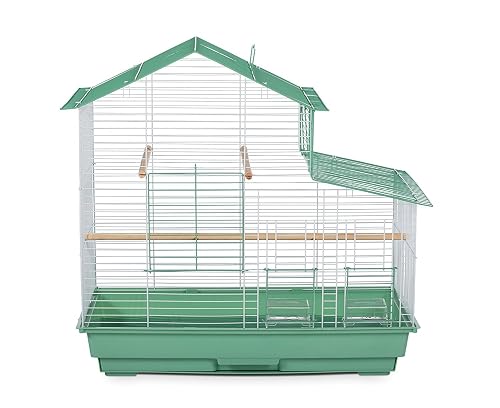
Every bird owner needs a small, easily cleaned travel cage that doubles as a hospital cage. When a bird is sick or injured, you want to remove perches, line the bottom with soft paper towels or a washable pad, add a single low perch or none at all, and place food and water within easy reach of a bird that may not want to climb. A sick bird burning through its reserves should not have to scale a flight cage to eat.
Partial heat is the other half of hospital cage setup. A sick bird often cannot maintain body temperature, but you cannot just blast a heat lamp. Aim for one end of the cage around 85 to 90 degrees Fahrenheit, leaving the other end at normal room temperature so the bird can self-regulate by moving. A heating pad wrapped around the outside lower third of the cage works, with a towel as a barrier. Watch for panting or held-out wings, which signal overheating.
If you need a solid carrier that works for vet trips and hospital duty, the Prevue Pet Products travel carrier is a size-appropriate option for small to medium parrots.

Item Four: Feeding and Hydration Tools
Keep a small box of 1 cc and 3 cc oral syringes, needle-free, in the kit. Sick birds dehydrate fast, and hand-feeding formula or electrolyte solution delivered by syringe can bridge the gap until you reach a vet. Also stock a small bag of hand-feeding formula even if you never intend to hand-feed a chick. It is the easiest digestible calorie source for a bird that has stopped eating, and a bird that stops eating is on a countdown. A healthy parakeet can die from not eating for 24 to 48 hours because its metabolism simply does not carry reserves.
Learn now, not mid-emergency, how to give oral fluids correctly. Drip slowly at the left side of the beak, from the bird's left, aiming toward the right side of the throat. The opening to the airway sits at the base of the tongue at the front center, and fluid aimed there goes into the lungs. This is how well-meaning owners accidentally aspirate birds during hand-feeding, and it is a genuine risk. If you are unsure, ask your avian vet for a demonstration at your next wellness visit. Ten minutes of instruction beats a fatal mistake.
Item Five: Wound Care Basics, Carefully Chosen
Keep these on hand: sterile gauze pads, non-stick wound dressing, paper tape rather than adhesive tape, saline solution for flushing eyes and shallow wounds, and blunt-tipped scissors for trimming feathers away from a wound if instructed by your vet. Diluted betadine, at the strength of weak tea, can be used to clean minor wounds around a bird's skin, but never let pooled solution soak into feathers at length, and never use it near eyes.
What to skip: ointments, human antiseptic sprays, anything with lidocaine or benzocaine. These numbing agents can cause serious reactions in birds even topically. When in doubt, flush with saline, cover lightly, and call the vet. According to the American Veterinary Medical Association, attempting home treatment beyond basic first aid is one of the most common reasons exotic pets arrive at clinics in worse condition than they left home in. First aid stabilizes. It does not cure.
Item Six: Nail and Beak Tools Plus a Polish for Prevention
A good pair of bird nail clippers, a coarse emery board, and cornstarch belong together in the kit. Overgrown nails catch on toys and cage bars, and the resulting torn toe is a classic Sunday-night bleed. A conditioning perch or two in the cage trims nails passively between trims, though never as the only abrasive surface, because sandpaper-style perches can cause foot sores if the bird sleeps on them. Position a conditioning perch where the bird lands briefly, not where it stands for hours.
For keeping those nails maintained between sessions, a set like the Four Paws grooming clippers for small pets handles budgie-to-cockatiel nail trims cleanly.
Item Seven: The Information Kit
Gather these on one card or in a zip bag: your regular avian vet's number, the nearest 24-hour emergency clinic that actually sees birds, the ASPCA poison control number, your bird's species and weight in grams, and a one-page medication list if your bird takes anything. Weighing your bird weekly on a gram scale is honestly one of the best preventive tools in your possession. A loss of 10 percent of body weight, which is 9 grams on a 90-gram budgie, is clinically significant in birds and can show up on the scale weeks before you notice anything visually.
Also note: not all emergency clinics see birds. Call around before you need one. Ask specifically if an avian veterinarian is on staff overnight. Write down the answer. The worst time to learn that your local ER clinic only sees dogs and cats is while holding a towel around a bleeding conure.
The Emergencies You Are Most Likely to Face, and the First Move for Each
Bleeding blood feather: grab the base of the feather at the shaft with your fingers or tweezers and pull it straight out in the direction it grows. This sounds brutal. It is not optional. A cracked shaft keeps bleeding, and pressure alone rarely fixes it. Once pulled, apply gentle pressure to the follicle for a minute or two, then styptic powder if needed.
Bleeding toenail: pinch the toe above the nail, apply styptic powder to the tip, hold 20 seconds. Keep the bird calm and quiet afterward; excitement raises blood pressure and restarts bleeding.
Flying into a window or mirror: this happens to flighted birds even in careful homes. Watch the bird for a full hour. Any head tilting, one-sided weakness, difficulty perching, or blood from the nares means an immediate vet trip, because head trauma in birds can worsen over hours.
Inhaled or swallowed a toxin: non-stick pan fumes, scented candles, avocado, aerosol sprays. Remove the bird to fresh air or stop exposure, then call poison control. Do not induce vomiting in a bird. Ever.
Egg binding in hens: a female straining, fluffed, sitting on the cage floor, possibly with a swollen vent, is a same-hour emergency. Keep her warm and get to a vet. This one does not resolve at home.
Maintaining the Kit Without Thinking About It
Twice a year, ideally when you change smoke alarm batteries, open the kit. Check expiry dates on saline and hand-feeding formula. Confirm the phone numbers on the card, because clinics move and merge. Replace anything you used and did not restock, and you will use things and forget to restock, everyone does. Test the flashlight you stored inside it, if you keep one. If you keep the kit in the same room as the bird cage, make sure it sits somewhere a loose bird cannot chew through cardboard packaging overnight.
The Realistic Takeaway
Nobody builds a first aid kit because they expect disaster. You build it because bird emergencies run on bird time, which is faster than human time, and usually lands on a weekend. A styptic powder, a towel you can actually restrain with, a hospital cage you can warm one end of, syringes, saline, gauze, and a card with the right phone numbers: that is the entire core. Total cost is roughly one vet visit. Total value, the night you need it, is the bird. Start with styptic powder this week if that is all you do, and build out from there. Your Saturday-evening self will thank you.
Related Reading
Want more on this topic? Check out our guides on best bird harnesses, best bird travel cage carrier small, best bird cage covers.