You Do Not Need a Miracle. You Need a Plan.
Disclosure: PawCritic is reader-supported. A few links below are Amazon affiliate links, and we may earn a small commission if you purchase through them at no extra cost to you.
The most common scenario in multi-pet households looks like this: a family brings home a new dog, sets her down on the carpet in front of the resident dog or cat, and waits for a spark of friendship. What they often get instead is a growl, a hiss, or a full-blown scuffle before the new collar is even adjusted. Then the phone calls start, and the dog needs to be separated from the family pet for months.
The uncomfortable truth is that your living room is one of the worst possible places for a first meeting. It is your resident pet's territory, saturated with their scent and their history. The newcomer walks in smelling like a shelter, looking scared, and acting exactly like an intruder. From your resident pet's point of view, that is precisely what they are.
The fix is not complicated. It is just boring. This is the step-by-step plan that veterinary behaviorists and shelter organizations recommend for adding a second dog or introducing a dog to a resident cat. It takes longer than most people want. It works better than rushed meetings.
One piece of good news before the details: according to the ASPCA, gradual, well-managed introductions dramatically reduce the risk of aggression and anxiety-related behavior. The goal is not instant best friends. The goal is neutral. Neutral is very achievable.
Why the Living Room Is a Setup for Failure
Territory drives behavior more than most owners realize. Your resident dog has spent months or years deciding that the couch, the backyard, and your lap belong to her. A strange dog suddenly appearing in that space is a threat to everything she has claimed. Cats have the same instinct, plus a size disadvantage that makes them feel even more cornered.
That is why every introduction should start on neutral ground. A sidewalk, an empty stretch of park, or a front yard neither animal treats as home turf. Even on neutral ground, you are not doing a meet-and-greet. You are doing a parallel walk, which is described in detail below.
The living room also holds the resident pet's resources: food bowls, toys, sleeping spots, and human attention. Resource guarding is one of the most common reasons introductions fail. When a new animal enters a space where resources are concentrated, the resident pet may feel compelled to defend what is hers. Starting outdoors removes that pressure entirely.
Before the Dog Even Comes Home
The prep starts days before the new dog arrives, and it is mostly about your resident pets. They are the ones whose world is about to be flipped upside down, and they deserve a head start.
First, set up a separate safe zone for each animal. For the newcomer, a spare bedroom with a crate, a bed, water, and toys. For the resident dog, the crate she already knows and loves. For a cat, this is non-negotiable: elevated perches, a second litter box, and clear escape routes in every room she uses. A cat that cannot escape is a cat that attacks.
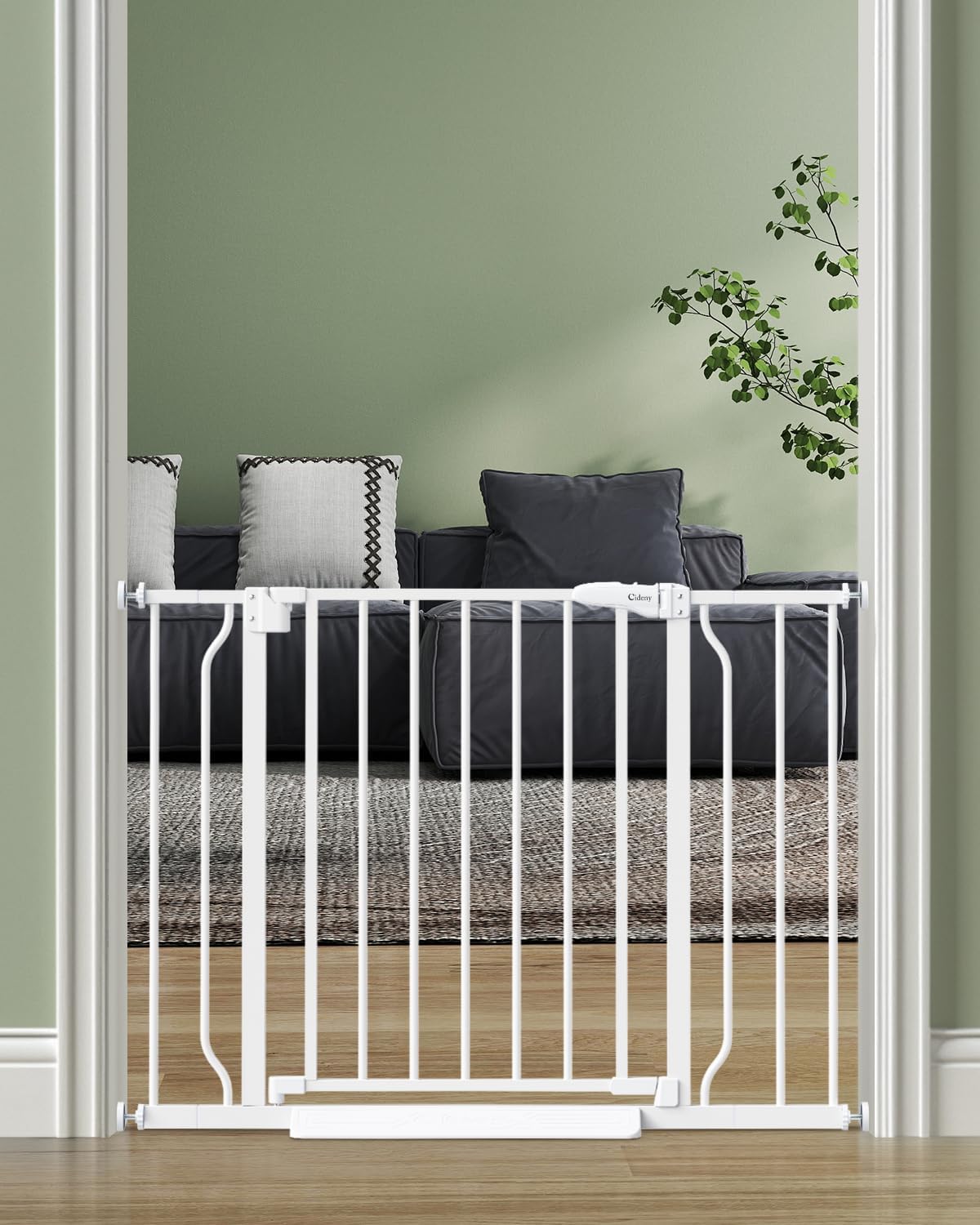
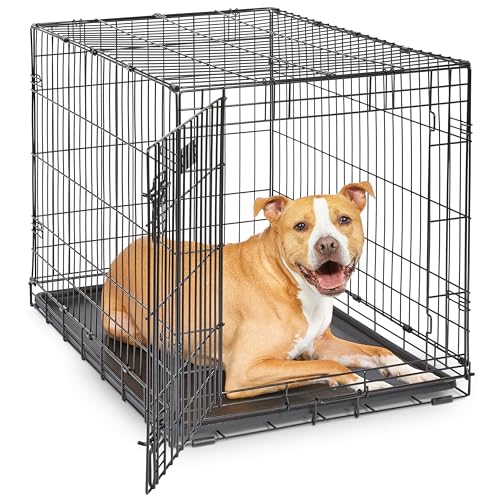
You will also want the right gear ready before the big day. A pressure-mounted baby gate, a wire crate with a divider, two separate leash-and-harness setups, and a big bag of high-value treats. If you are not sure what to look for, our guide to the best dog crates for home and travel breaks down the options that hold up.
- A sturdy, pressure-mounted baby gate for doorways — you will use this every day for weeks.
- A wire crate with a divider, sized so the new dog can stand up, turn around, and lie down comfortably.
- Soft, stinky high-value training treats — you will be feeding a lot of them.
- A dog appeasing pheromone diffuser for the new dog's sleeping area. It will not fix a rushed introduction, but it can take the edge off during decompression.
Scent Swapping: The Trick That Sounds Too Simple to Matter
Days before the meeting, start swapping scents. Rub a clean towel all over your resident dog's neck and shoulders, then place it in the new dog's room. Do the same with a towel from the new dog and put it near the resident dog's bed. Avoid the food bowl area — mixing strange scents with food can trigger resource guarding, and that is the last thing you need.
This matters more than most people expect. A dog's nose carries up to 300 million olfactory receptors, and familiarizing both animals before they ever lay eyes on each other takes the edge off the first visual contact. Stiff-backed, growling dogs often turn loose and curious after two days of simple scent work. It is the cheapest training tool you own, and almost nobody uses it.
Scent swapping also works for cat-dog introductions. Put a towel that smells like the dog near the cat's feeding station, and a towel that smells like the cat in the dog's crate. The goal is to make the other animal's odor predict something pleasant, like a meal or a nap.
The First 72 Hours: Decompression Is Not Negotiable
When the new dog walks through the door, resist every urge to put her down and let her explore. Keep her on a leash indoors and confine her to one or two rooms for the first couple of days. Your resident animals need to know their core territory is still theirs.
This stretch is called decompression. The new dog is running on cortisol after a stressful car ride, an unfamiliar day, and a wall of new smells. According to the AVMA pet owner resources, stress impairs learning and increases the likelihood of defensive aggression. Push introductions now, and you are not being brave — you are setting both animals up to fail.
A recommended 72-hour routine looks like this. Meals happen at exact times, in separate spaces. Potty breaks happen on leash, always in the same spot. Everyone gets solo attention: the resident dog still gets her evening walk without the newcomer, the cat still gets her perch time. This tells your resident pets, in a language they understand, that nothing is being taken from them.
Sleep matters too. A tired dog is less reactive, but a sleep-deprived dog is more reactive. Make sure the newcomer has a quiet, dark place to sleep away from the resident animals, and that the resident animals keep their normal sleeping arrangements.
Introducing a New Dog to a Resident Dog: The Parallel Walk
After two or three days of decompression, you can start real introductions — outside, with two handlers. This is the parallel walk method. According to the American Kennel Club, it is one of the most effective ways to introduce unfamiliar dogs because it builds a shared experience without forcing direct contact.
Here is how it works, step by step:
- You take the new dog. Another adult takes the resident dog. If you are alone, this session does not happen — recruiting a helper is not optional.
- Start walking in the same direction, 20 to 30 feet apart. Keep both leashes loose. Tension travels down the leash, and a tight leash makes a dog feel trapped.
- Every time your dog glances at the other dog without stiffening, say yes and drop a treat. This is the look-at-that game, and it teaches both dogs that the other one predicts good things.
- After a few minutes, close the distance — but only as much as both dogs stay relaxed. Ten feet is a great first session. Six feet is a great next step. Do not force nose-to-nose contact until you have had several calm sessions.
- Keep each session under 15 minutes, and end before things go sideways. Both dogs noticed each other and nothing bad happened is a win, and you are allowed to celebrate it.
When you finally allow direct contact, do it in a securely fenced, neutral space. Let them sniff for five seconds, then call them apart and feed. Repeat. If either dog freezes, raises a paw over the other's shoulders without a play bow, or goes stiff with a hard stare, separate them calmly. No yelling, no yanking — you want the memory to stay neutral, not scared.
After the session, walk both dogs home together. There is something instinctive about moving in the same direction that makes dogs feel like a team.
Introducing a New Dog to a Resident Cat: Whole Different Rules
If the resident pet is a cat, ignore most of what you just read. The parallel walk means nothing to a cat. What matters is escape routes and patience.
A cat's first instinct with a strange dog is not curiosity — it is survival. Dogs are predators from a cat's perspective, and a dog's friendly approach, bounding over nose first, reads as an attack. Plan for a full week of separation before a cat and dog ever share a room.
The sequence that works starts with complete separation. For the first few days, the dog stays completely separated from the cat. The dog can explore the house only while the cat is in a safe room. The cat gets the run of the house only while the dog is crated. Swap bedding every day so each animal is marinating in the other's scent.
Next comes the door phase. Feed both animals on opposite sides of a closed door. Cat on one side, dog on the other, each with a bowl of something wonderful. Move the bowls a little closer to the door over several days. You are pairing the smell of the other animal with food and safety, and that is the foundation.
Then you move to a baby gate or a door held open four inches. Make sure the gate has no gap underneath, because a terrified cat will flatten and squirm through. Give the cat a way out — a cat tree, a high shelf, any escape route she can reach before the dog can. Let her approach on her own schedule.
Some cats hiss for two weeks and then decide the dog is furniture. Others get curious within days, sniffing the dog's feet while the dog snoozes. What you want is the cat voluntarily spending time near the dog at her own distance. What you do not want is a cat spending days under the bed, refusing to eat or use the litter box. That is a red flag that the dog's energy is too intense, and you need to slow down.
Read Body Language Like You Mean It
You cannot manage an introduction you cannot read. Here are the signals that matter, and the ones people constantly get wrong.
For dogs, a wagging tail is not automatically happiness. A wide, sweeping wag means relaxed. A tail held high and flicking at the tip means arousal, and arousal can turn either direction. Lip licking, head turning, yawning, and squinting are stress signals — the dog is saying please back off, not I am tired. Whale eye — when you see the white crescent of the eyeball while the head is turned away — is a warning. Hackles raising along the entire back is a red alert.
A play bow is the greenest light you will ever see: front end down, rear end up, tail loose and sweeping. Two dogs exchanging play bows within the first five minutes of a controlled meeting means your hard work is paying off.
For cats, tail lashing means agitation. A puffed tail means terror. Ears pinned flat, a low crouch, and a fast tail flick mean a swat is incoming. And here is what most owners do not get: hissing is communication, not aggression. It is a cat saying back up, please. The actual attack comes later, without warning, when a cat feels completely trapped. That is why escape routes are not a luxury.
Mistakes That Go Wrong (So You Do Not Have To)
These are the mistakes that show up again and again in multi-pet homes.
Grabbing collars mid-fight is the big one. When two dogs fight, reaching for a collar with your bare hand is the fastest way to get bitten — often by the wrong dog. Keep a board, a crate door, or a jug of water between you and the fight. Never put your hand in the middle.
Punishing growls and hisses is a close second. If you scold a growl, the dog learns that the newcomer's presence causes punishment, so she skips the warning and goes straight to a snap. The growl was doing its job: preventing a fight. Punish it, and you get bites with no warning.
Then there is holding the cat during introductions. Owners scoop up the cat, hold her toward the dog, and say be nice. A cornered cat does not say please — she says claws. Put the cat down, let her keep her feet, and let her choose the distance.
And finally, the let us just see what happens first day. Even when nothing bad happens, you are gambling. A bad first impression can cement a negative relationship that takes months to undo. The stakes are too high for a coin flip.
When to Call In a Professional
Sometimes the smartest move is hiring help. Call a certified trainer or a veterinary behaviorist if either dog shows hard stares, stiff posture, or growling that lasts more than a few seconds during a controlled session. Call them if there is any actual contact — a bite or a fight — because that is not a moral failure, it is a signal that the setup is wrong. Call them if your cat will not eat, will not use the litter box, or will not come out of hiding for more than a few days.
Calming aids can support this process, but they are not a substitute for management. Pheromone diffusers, compression wraps, and puzzle toys are tools in a bigger toolbox. Our guide to the best dog calming aids for anxiety, wraps, and treats covers the options that are commonly recommended, and for keeping a new dog busy while she learns the house rules, puzzle feeders are worth a look.
The 3-3-3 Rule: What to Actually Expect
Here is a timeline most owners find uncomfortable: a new dog needs about three days to decompress, three weeks to learn your routine, and three months to feel truly at home. That is the 3-3-3 rule, and while it is a rule of thumb rather than a published study, it lines up with what veterinary behaviorists describe in practice. Full trust between two dogs often takes a couple of months. Cat-dog tolerance takes two to four weeks minimum, and actual friendship — grooming, sleeping side by side, playing — can take months or never arrive.
And that is fine. Coexistence is the goal. Friendship is a bonus. The dogs who end up thriving are the ones whose owners accepted the slow timeline instead of fighting it.
Gear That Supports the Plan
None of the gear below replaces the process, but the right equipment makes each stage easier to manage.
Pressure-Mounted Baby Gate
A pressure-mounted gate is the workhorse of dog-cat introductions. It lets you create a visual barrier without drilling into doorframes, and it is easy to move from the hallway to the kitchen as the introduction progresses. The trade-off is that a determined dog can push through a poorly fitted gate, so measure the doorway carefully and check the tension regularly. It suits renters and anyone who needs a temporary barrier rather than a permanent one.
Wire Crate With Divider
A wire crate with a divider lets you adjust the interior space as a puppy or new dog grows, which matters when you are crate training a dog who has never been confined before. Wire crates also offer more airflow than plastic crates, which helps in warm rooms. The trade-off is that wire crates are not as cozy or den-like, so a nervous dog may need a blanket draped over the top to settle. It suits owners who want one crate that can be resized rather than buying multiple crates.
High-Value Training Treats
Soft, smelly treats are the currency of counter-conditioning. You will use them during parallel walks, door-feeding sessions, and every calm glance between animals. The trade-off is that high-value treats are often richer than everyday kibble, so they need to be counted against your dog's daily calorie intake to avoid weight gain. They suit any owner running a structured introduction, because the process depends on rewarding calm behavior immediately.
Dog Appeasing Pheromone Diffuser
A pheromone diffuser plugs into a wall outlet and releases a synthetic version of the calming pheromone that nursing dogs produce. Owner reports describe it as taking the edge off during the first weeks after adoption, particularly at night. The trade-off is that it does nothing for a rushed introduction and should never be treated as a substitute for separation and slow desensitization. It suits owners who have already committed to the slow plan and want a little extra support during decompression.
Sizing and Safety Notes
Crate sizing is one of the most common mistakes. A crate should be large enough for the dog to stand up without ducking, turn around without scraping the sides, and lie down fully extended. If the crate is too large, a puppy may eliminate in one corner and sleep in another, which slows house training. A divider solves this by shrinking the space until the dog grows into it.
Baby gates need to be tall enough that the dog cannot jump over them and sturdy enough that a cat cannot push them loose. For cats, the gate should have no gap underneath. A cat can flatten her body and squeeze through a gap that looks far too small.
Harnesses should fit snugly enough that two fingers slide under the straps but not so loose that the dog can back out. A dog who slips a harness during a parallel walk can end up in a fight before you can react. Check the fit before every session.
Treats should be small enough to swallow quickly so they do not interrupt the training flow. Pea-sized pieces work well for most dogs. For dogs with food sensitivities, check the ingredient list against guidance from the Merck Veterinary Manual dog owner reference and your veterinarian.
Maintenance After the Introduction
The introduction is not over when the animals coexist peacefully. The first month is maintenance. Keep feeding stations separate. Keep the cat's litter box in a place the dog cannot reach. Keep the resident dog's solo walks on the calendar. These routines prevent the resource competition that can undo weeks of progress.
Watch for regression during stressful periods: moving, a new baby, a houseguest, or a change in work schedule. Stress can reopen old tensions, and the fix is usually to return to the baby gate and the parallel walk for a few days.
If either animal shows signs of chronic stress — hiding, pacing, loss of appetite, or excessive grooming — talk to your veterinarian. Nutrition and behavior are linked, and the WSAVA Global Nutrition Guidelines offer a useful framework for evaluating whether a diet is meeting an animal's needs during a stressful transition.
Common Mistakes to Avoid
- Rushing the first meeting because the dogs seem calm on leash.
- Feeding both animals in the same room before they are fully comfortable.
- Letting the cat hide under the bed for days without checking whether she is eating and using the litter box.
- Punishing a growl or a hiss instead of separating the animals and slowing down.
- Assuming a wagging tail means a dog is friendly.
- Leaving high-value chews or toys on the floor where resource guarding can start.
- Inviting guests to watch the first meeting, which adds noise and stress.
The Only Rule That Matters
If you remember one thing, make it this: the slowest introduction is the fastest one that works. Every day spent on separate walks and door-feeding is an investment in a home where nobody walks on eggshells.
The families who rush it do not save time. They spend months managing the fallout, and sometimes they end up rehoming one of the animals. The families who embrace boring, structured, painfully patient introductions are the ones posting photos of a golden retriever and a tabby cat curled up on the same bed.
Set your own pace. Err on the side of boring. And when you are convinced you are ready to speed up, wait another three days.
Your animals will thank you. So will your vet bills.