Disclosure: PawCritic is reader-supported. Some links below are Amazon affiliate links, which means we may earn a small commission if you buy through them — at no extra cost to you.
Some UVB bulbs emit almost no usable ultraviolet light, and they can do so for months while still glowing normally. The bulb looks bright, the enclosure looks correct, and a bearded dragon or tortoise may be receiving little to no UVB from the day the fixture was installed. This is not a rare edge case. Reptile forums and veterinary case reports describe it regularly, often surfacing only after a diagnosis of metabolic bone disease.
UVB is not a nice-to-have for most diurnal reptiles. It is the difference between a reptile that metabolizes calcium and one that slowly demineralizes its own skeleton. The sections below cover what actually goes wrong, how to recognize it, and how to correct it before the animal pays the price.
Why UVB Matters at All
Reptiles synthesize vitamin D3 in their skin when exposed to UVB radiation, and without vitamin D3 they cannot absorb calcium from food regardless of how much calcium powder is dusted on feeders. The result is metabolic bone disease, or MBD: soft and deformed bones, muscle tremors, jaw malformation, spinal kinks, and in severe cases death. It is among the most common health problems in captive reptiles, and published husbandry guidance treats it as almost entirely preventable.
The Association of Reptilian and Amphibian Veterinarians and most exotic-animal practitioners are direct about this: UVB is not optional for diurnal species such as bearded dragons, most iguanas, many geckos, and virtually all turtles and tortoises. Without it, they will eventually develop MBD. The Merck Veterinary Manual section on exotic and laboratory animals describes the same mechanism in its nutritional disease entries.
So the practical question for any keeper is simple: is the current setup actually delivering UVB, or just a pretty blue glow that the human eye reads as light?
Mistake #1: The Bulb That Emits No UVB
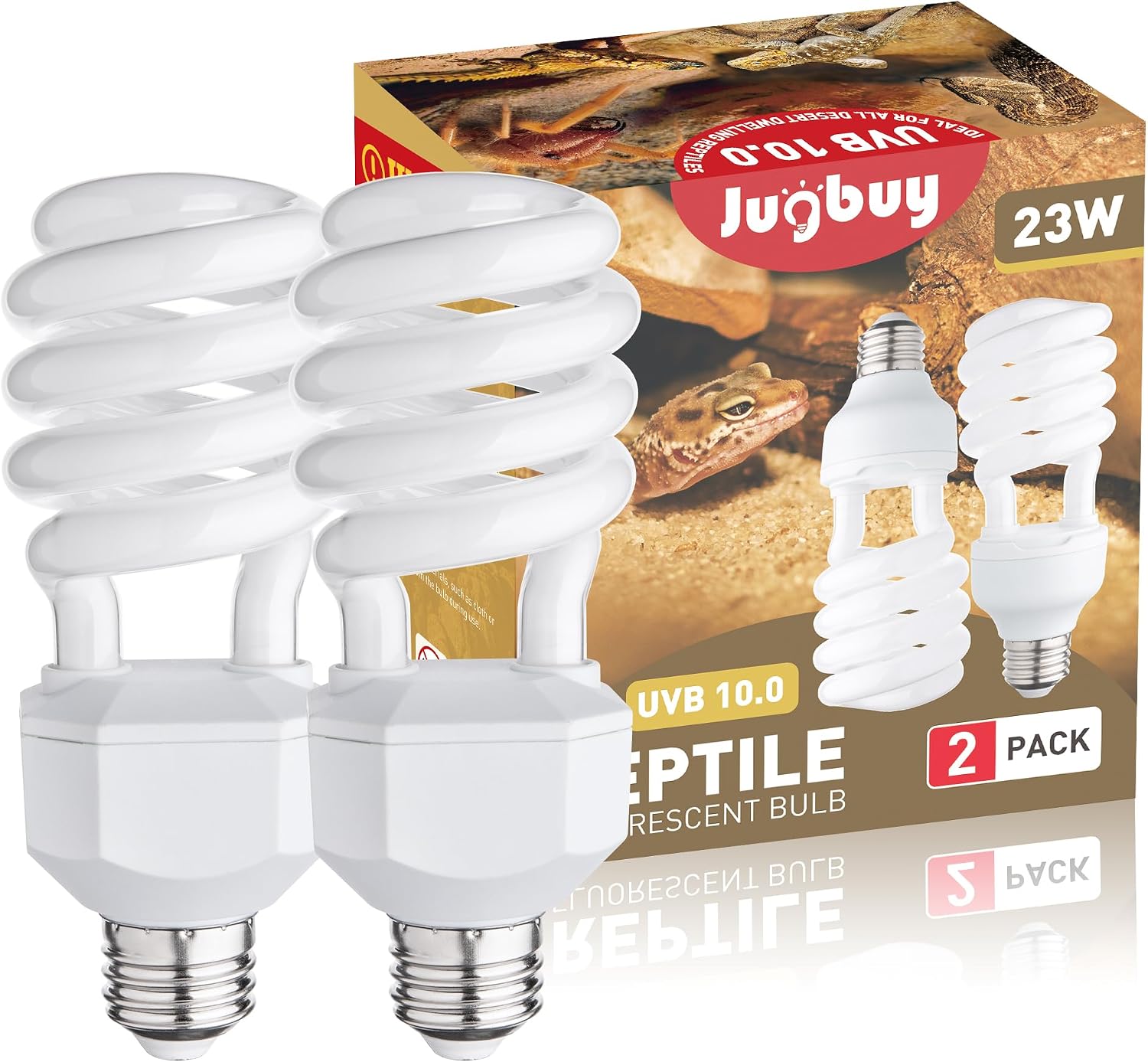
The single most common error, and the one that quietly harms the most reptiles, is buying a bulb that produces heat and visible light but no meaningful UVB. Some of the worst offenders are the coiled compact fluorescent bulbs sold in starter kits and the generic daylight bulbs that look perfect to the eye but emit next to nothing in the UVB range.
Published output curves from reputable manufacturers tell the story clearly. A name-brand T5 tube typically produces a UV index around 3.0 to 5.0 at basking distance, which is roughly what a bearded dragon needs. A no-name coiled bulb from a pet store shelf can produce 0.0 to 0.3 — essentially nothing — while looking completely normal to a human observer.
Human eyes cannot see UVB. That is the trap. A bulb that looks bright and natural may be delivering zero usable UVB to the animal. The only reliable ways to know are to measure with a UV index meter or to choose bulbs from manufacturers that publish third-party-verified output curves. For keepers building a bearded dragon setup from scratch, the UVB Reptile Light Bulb 10.0 in 24-inch form pairs a 12 percent bulb with a matched reflector, so the fixture and tube are already compatible and the rated output is documented by the manufacturer.
Mistake #2: The Bulb That Used to Work (But Does Not Anymore)
This is the version that catches experienced keepers. A quality UVB tube is installed correctly and works well for six months. Then, silently, UVB output drops to near zero. The bulb still glows. It still looks bright. But fluorescent tubes lose UVB output long before they burn out.
Most quality T5 UVB tubes are rated for roughly 12 months of use, but output degrades steadily from the first day. Compact and coil bulbs lose their UVB punch even faster, often within six months. Manufacturer guidance and exotic-vet recommendations converge on the same rule: replace the UVB tube every 12 months, or every six months for coil bulbs, regardless of how it looks.
Mark the replacement date on a calendar the day the bulb is installed. Not sometime next year — a specific date. Eighteen-month-old bulbs that still light up are common, and the owners running them usually believe the bulb is fine because it glows.
Mistake #3: Wrong Distance, Wrong Placement
UVB obeys the inverse square law, which in practice means that doubling the distance from the bulb to the reptile yields roughly one quarter of the UVB. That detail alone wrecks more setups than any bulb failure.
Two placement errors dominate. The first is a UVB tube mounted so far above the basking spot that the animal receives a fraction of the rated output. The second, and worse, is a UVB tube mounted behind glass. Glass blocks virtually all UVB. So do acrylic and most fine mesh screens. A bulb shining through glass or a tight mesh lid is delivering almost nothing.
Each bulb model has a published effective distance, usually printed on the box or in the manual. A typical T5 HO tube is effective at 8 to 12 inches; a T8 at 6 to 10 inches; a compact bulb at 6 to 8 inches. These figures assume no glass in between. Measure the actual distance from the bulb to the basking surface, and remember that a reptile climbing a branch sits much closer to the bulb than one resting on the floor, so the whole basking zone needs to fall in range.
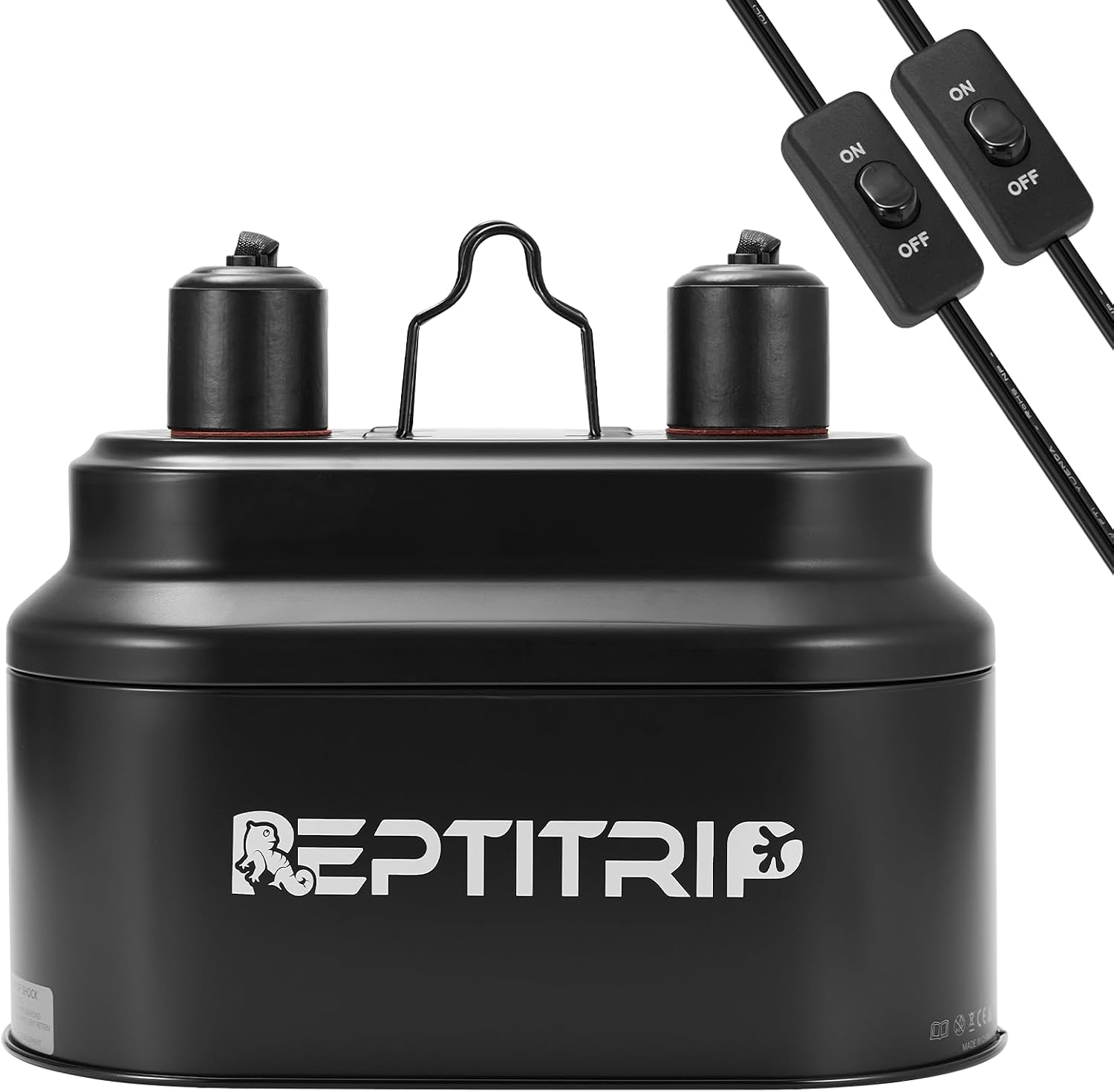
Distance errors are the main reason a UV index meter is worth the cost. A properly rated fixture with a reflector is the other half of the equation, since reflectors nearly double usable output. The Dual Reptile Light Fixture is a complete fixture-and-bulb combination that removes the compatibility guesswork for most keepers, and it is the kind of kit whose output curve is documented rather than assumed.
Mistake #4: No UVB Meter, Flying Blind
A UV index meter — the real Solarmeter-style device, not a cheap UV lamp tester card — tells a keeper exactly how much UVB an animal receives at basking height. It can be used before and after bulb replacement, to check the gradient across an enclosure, and to verify that distance math is correct. It converts a guessing game into a measurement.
The honest assessment: for anyone keeping a diurnal reptile such as a bearded dragon, uromastyx, most agamids, iguana, or many tortoises, a UV index meter pays for itself the first time it catches a dead bulb. For nocturnal species such as leopard geckos, crested geckos, and ball pythons, it is less urgent, since published guidance indicates they need little to no UVB in practice, though low-level UVB is not harmful. The meter should come before the fancy bulb in any purchasing order.
Mistake #4.5: Forgetting That Night Is a Thing
It sounds ridiculous, but a surprising number of setups run UVB around the clock because the fixture shares no timer, or because the owner never turns it off. Reptiles need a real dark period. UVB running continuously disrupts circadian rhythm, increases stress, and can interfere with sleep and breeding cycles. It also wastes the bulb, burning through its useful life in half the time.
The fix is a cheap outlet timer, the same kind used for a table lamp. Set it to 10 to 12 hours on and 12 to 14 off, matching the species natural day length. Sunrise and sunset simulators are pleasant but not required; a basic mechanical timer does nearly all of the job. The animal internal clock benefits, and so does the electricity bill.
Mistake #5: Treating UVB and Heat as the Same Thing
UVB and heat are two separate systems doing two separate jobs, and the all-in-one bulbs that try to do both usually do one of them badly. Mercury vapor bulbs do deliver real UVB and heat, but they are tricky to use: heat output is intense, UVB output varies with distance even more than a tube, and they need careful dimming control that most inexpensive fixtures do not offer.
For the vast majority of keepers, separating the systems is the safer approach. A T5 HO UVB tube handles ultraviolet, and a basking bulb or ceramic heat emitter on a thermostat handles heat. Two independent systems mean that when one fails, the other keeps working, and adjusting one does not wreck the other. Setup cost is slightly higher, but control is worth it.
On the heat side, a thermostat is non-negotiable on every heat source rather than a nice extra. The Inkbird ITC-308 is a dual-probe thermostat that has been widely used by keepers for years and is inexpensive enough that running a heat source unprotected is hard to justify. It is a category representative: a plug-and-play on/off thermostat for a single heat device, not a proportional dimming controller for a mercury vapor bulb.
The Full UVB Safety Checklist
Doing UVB right looks like this, step by step:
- Choose the right bulb: T5 HO linear tube from a reputable brand, matched to the species. T8 works on a budget, but T5 delivers more output for the same footprint.
- Match strength to species: Desert species such as bearded dragons and uromastyx need strong 10.0 or 12 percent tubes. Forest species such as chameleons and some day geckos need weaker 6 percent tubes. Getting this wrong leads to burns or MBD, and there is no universal UVB bulb.
- Mount it inside the enclosure or under a coarse screen, with the bulb within the rated distance. Never behind glass or acrylic.
- Put it on a timer: 10 to 12 hours a day, matching a natural day and night cycle. Irregular schedules stress reptiles and confuse their body clocks.
- Verify with a UV index meter at basking height, at least twice a year and after any bulb change.
- Replace the tube every 12 months (six months for coil bulbs), on a marked calendar date.
- Keep the bulb surface clean. A layer of dust cuts output significantly. Wipe it during enclosure cleanings.
Species-Specific UVB Needs
UVB requirements vary enormously across species, and treating them as interchangeable is one of the most common husbandry errors. Desert-dwelling lizards such as bearded dragons, uromastyx, and most agamids evolved under intense, unfiltered sunlight and need a UV index in the 3.0 to 5.0 range at the basking surface. Tropical forest species such as chameleons and many day geckos live under canopy shade and do best with a UV index around 1.0 to 2.0, provided by a weaker tube or a greater mounting distance. Getting this wrong in either direction causes harm: too little UVB leads to MBD, and too much causes photokeratitis, skin burns, and eye damage.
Turtles and tortoises are a special case. Most are strongly diurnal and heliothermic, meaning they actively seek sunlight to regulate both temperature and UV exposure. A tortoise kept indoors without a strong T5 tube will almost always develop shell and bone problems over time. Aquatic turtles need a basking platform that puts them within the effective distance of the tube, since they cannot receive UVB while swimming underwater.
Nocturnal and crepuscular species such as leopard geckos, crested geckos, and ball pythons are often kept without UVB, and published guidance indicates they can thrive on dietary vitamin D3 alone. That said, low-level UVB is not harmful for these species and some keepers provide it as a supplement to dietary D3. The key point is that the strong desert-grade tubes should never be used on these animals.
Calcium, D3, and Supplement Interactions
UVB and dietary supplements interact in ways that matter. A reptile with proper UVB lighting can synthesize its own D3 and does not need heavy supplementation, and over-supplementing with D3 can cause toxicity. A reptile without UVB depends entirely on dietary D3, which is why calcium powders for reptiles come in two forms: with D3 and without. Keepers using a strong T5 tube typically dust feeders with plain calcium and use a D3 supplement sparingly, while keepers without UVB rely on D3-containing powder at every feeding. The two strategies are not interchangeable, and mixing them up is a common cause of either MBD or hypervitaminosis D.
Common Mistakes Beyond the Bulb
Even a correct bulb can be undermined by enclosure design. A basking spot that is too small forces the animal to choose between heat and UVB rather than receiving both at once. A basking spot directly under the tube but far from the heat lamp creates a zone that is UV-rich but cold, and the animal will avoid it. The ideal layout places the UVB tube and the heat lamp over the same basking area so the reptile receives heat, visible light, and UVB simultaneously, which is what it would experience in the wild.
Reflectors are frequently overlooked. A T5 tube without a reflector sends roughly half its output upward into the fixture housing, where it is wasted. A good reflector redirects that light downward and nearly doubles the usable UVB at basking distance. Many inexpensive fixtures lack reflectors, which means a keeper may be running a quality bulb at effectively half its rated output.
Screen mesh is another quiet killer. A fine aluminum or fiberglass screen can block 30 to 50 percent of UVB, depending on mesh density. Coarse hardware cloth blocks much less. If a tube must be mounted above a screen, the effective distance should be adjusted downward to compensate, or the bulb should be mounted inside the enclosure behind a protective cage.
Maintenance and Replacement Schedule
A simple maintenance routine keeps UVB delivery predictable. Wipe the tube and reflector with a dry or slightly damp cloth during every enclosure cleaning, since dust and hard-water film cut output. Check the mounting distance and the angle of the reflector at the same time, because bulbs can shift when enclosures are moved or cleaned. Replace the tube on a fixed calendar date every 12 months for T5 and T8 tubes, or every six months for compact and coil bulbs, regardless of appearance.
Measure with a UV index meter at basking height at least twice a year and after every bulb change. Record the readings so that degradation over time is visible rather than assumed. If output has dropped significantly before the 12-month mark, the bulb or the fixture may be faulty, and both should be checked.
When to See the Vet — Right Now, Not Later
If a reptile may have been without UVB for a while, the signs of trouble can be subtle and easy to attribute to something else:
- Limp tail, legs, or jaw — the classic MBD presentation
- Tremors or twitching, especially in the toes
- Difficulty walking, or swimming motions with the legs
- A soft, rubbery jaw or a lower jaw that is harder to see
- Decreased appetite, lethargy, hiding more than usual
- Bumps or kinks along the spine, often felt rather than seen
Any of these warrant a veterinary visit rather than a forum post or a wait-and-see approach. MBD caught early can often be stabilized with corrected lighting, calcium supplementation, and supportive care. MBD caught late can leave permanent deformities that no amount of correct lighting will reverse. Published veterinary guidance treats the condition as largely preventable with proper husbandry, which is the kindest way of saying the responsibility rests with the keeper. For any question about a specific animal, the ASPCA Animal Poison Control is a useful reference for supplement and toxin questions, and an exotics vet is the right call for anything clinical.
The Bottom Line
Reptile UVB failures do not announce themselves. The bulb glows, the tank looks fine, and the damage accumulates silently for months. The single most important takeaway: if a UVB bulb is more than 12 months old, or a coil bulb more than six months old, replace it this week regardless of how it looks. If actual UVB output has never been measured, buy a meter before the next bulb purchase. Ten minutes of measuring will reveal more about a reptile health than a year of staring at a glowing tube.