A quality filter is the heart of any successful aquarium. It keeps water clear, removes harmful toxins, and creates a healthy environment for your fish.
An update for anyone buying in 2026: the fundamentals haven't budged — mechanical, biological, and chemical filtration still do the same three jobs — but the hardware keeps getting better. Self-priming canisters have trickled down from flagship prices into mid-range models, and DC-powered pumps (quieter, adjustable, barely warm to the touch) are standard on most new releases instead of a premium extra. What hasn't changed is what's at stake. According to the EPA's aquatic life criteria, un-ionized ammonia harms fish at fractions of a part per million, and the bacteria living in your filter media are what convert that ammonia into something safer. You're buying a bacteria hotel first; clear water is the bonus.
New tank? The filter matters less than the cycle behind it — our nitrogen cycle walkthrough explains why patience beats products in the first month.
Understanding Filtration Types
- Mechanical: Removes physical particles
- Biological: Beneficial bacteria convert ammonia
- Chemical: Activated carbon removes impurities
Filter Types Explained
Hang-On-Back (HOB): Easy to maintain, popular for beginners.
Canister: Superior capacity, ideal for larger tanks.
Sponge: Perfect for breeding tanks and shrimp.
Internal: Good for small tanks and quarantine.
Top 10 Aquarium Filters
1. Fluval FX6 Canister Filter
Best High-End Canister
Powerhouse filter for tanks up to 400 gallons.
Pros: Multi-stage filtration, self-priming
Cons: Expensive
2. EHEIM Classic External Canister Filter
Best Value Canister
Proven reliability at a reasonable price.
Pros: Reliable, quiet, easy maintenance
Cons: Manual priming
3. Marineland Penguin Bio-Wheel
Best HOB for Biological Filtration
Bio-Wheel technology provides excellent bio filtration.
Pros: Excellent bio filtration, easy
Cons: Bio-wheel can slow over time
4. AquaClear Power Filter
Best HOB Filter Overall
Large media capacity with adjustable flow.
Pros: Large capacity, adjustable flow
Cons: Can be noisy
5. Fluval C Power Filter
Best Compact HOB
Versatile design for small to medium tanks.
Pros: Compact, multi-stage
Cons: Limited media capacity
6. Seachem Tidal Filters
Best Hang-On Display
Elegant design with surface skimming.
Pros: Surface skimming, self-priming
Cons: Higher price point
7. Tetra Whisper EX Power Filter
Best Silent Operation
Very quiet operation for peaceful homes.
Pros: Whisper quiet, affordable
Cons: Basic filtration
8. Penn Plax Cascade Canister
Best Budget Canister
Quality canister filtration without the premium price.
Pros: Affordable canister, good flow
Cons: More maintenance
9. Fluval 307 Performance Canister
Best for Medium Tanks
Perfect balance of power and efficiency.
Pros: Great for 40-70 gallon tanks
Cons: Smaller media baskets
10. SunSun HW-304B Canister Filter
Best Value Canister
High capacity at a budget-friendly price.
Pros: Great value, high capacity
Cons: Quality control varies
Choosing the Right Filter Size
Choose a filter rated for at least 4x your tank volume per hour. A 20-gallon tank needs a filter rated for 80+ GPH.
Maintenance Tips
- Replace filter media every 4-6 weeks
- Never replace all media at once
- Clean intake monthly
- Rinse media in old tank water
There’s a human payoff, too — the AVMA points to the stress-lowering effect of watching a well-kept aquarium, and “well-kept” is doing the heavy lifting in that sentence. Stable, clean water starts with a filter that actually matches your tank.
The Bottom Line
Investing in a quality filter is essential for aquarium success. Consider your tank size, fish load, and budget when choosing.
Disclosure: As an Amazon Associate, we earn from qualifying purchases.
Product review for aquarium filters complete guide to crystal clear water
Common Mistakes to Avoid
Aquarium hobbyists frequently make preventable mistakes when selecting equipment. Undersizing equipment for the tank is the number one error — a filter, heater, or light rated for a 20-gallon tank will struggle in a heavily stocked 20-gallon setup. Always buy one size up from what you think you need. Mixing incompatible equipment is another common problem. Certain substrates, decorations, and chemical treatments can alter water parameters in ways that harm sensitive species or interfere with filtration.
Neglecting the nitrogen cycle when adding new equipment causes preventable fish deaths. Any new filter media, substrate, or decoration can disrupt established biological filtration if not introduced gradually. Buying based on aesthetics over function is particularly common with aquarium products. That beautiful decorative ornament may have sharp edges that tear delicate fins, while that sleek-looking filter may lack the biological capacity your tank needs.
Finally, skipping the quarantine period for new equipment can introduce diseases or pests to an established tank. Rinse and soak all new additions before they enter your aquarium environment.
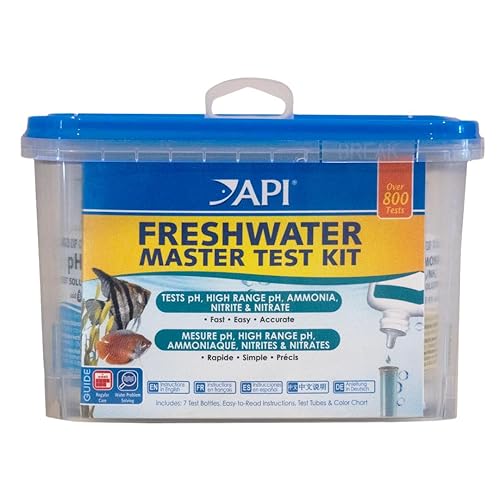
Two buys that pair well with any filter upgrade: accurate water test kits catch ammonia spikes before your fish do, and in tanks 40 gallons and up, a wavemaker keeps dead spots from forming behind the filter output.
Related reading: Aquarium Canister Filters, Aquarium Water Test Kits & Conditioners, Aquarium Canister Filters for Large Tanks, Aquarium Sponge Filters, Aquarium Power Filters & Hang-on-Back Filtration, Aquarium RO/DI Filtration Systems, Aquarium Dosing Pumps & Automation Systems, Aquarium Gravel Cleaners & Vacuum Syphons, Aquarium Auto Top-Off (ATO) Systems, Aquarium Sump Filtration Systems, Aquarium Water Conditioners and Aquarium Water Test Kits.