Best Aquarium Sponge Filters 2026: Complete Guide for Fry, Shrimp and Nano Tanks
Published on July 5, 2026 by PawCritic — Fish Category
Sponge filters are the quiet workhorses of aquarium filtration. While canister filters and hang-on-back units draw attention with high flow rates and media trays, a simple air-driven sponge often outperforms them in the situations where delicate livestock matters most: shrimp breeding tanks, fry rearing setups, quarantine aquariums, and nano displays. Understanding what a sponge filter does, and what it cannot do, is the difference between a stable breeding colony and a crashed tank.
The operating principle is straightforward. Air pushed through a vertical lift tube creates an upward current; water is drawn through a porous foam cylinder wrapped around that tube. The foam does double duty as mechanical filtration, trapping suspended debris, and biological filtration, housing the nitrifying bacteria that convert ammonia into nitrite and then into far less toxic nitrate. Because the intake is a broad foam surface rather than a slotted plastic strainer, there is no impeller to shred fry and no strong current to exhaust shrimp. The only electricity consumed is the air pump, which typically draws two to five watts.
The 2026 market offers more variety than ever: dual-sponge designs, fine-pore foam for shrimp, extra-coarse variants for high-flow tanks, and modular systems that stack multiple sponges on one lift tube. This guide explains how pore density, surface area, lift-tube diameter, and air-pump matching affect real-world performance, and it profiles the specific options linked below. All statements about performance are drawn from manufacturer specifications, published aquarium guidance such as the Merck Veterinary Manual section on exotic and laboratory animals, and verified owner reports rather than hands-on bench testing.
Quick Comparison Table
| Product | Best For | Sponge Type | Pore Size | Flow Rate | Price | Rating |
|---|---|---|---|---|---|---|
| Hygger Double Sponge Filter | Overall Best | Double cylindrical | Fine (30 PPI) | 160 GPH | $ | ★★★★★ |
| AquaMiracle Bio Sponge Filter | Best Value | Single cylindrical | Medium (20 PPI) | 80 GPH | $ | ★★★★★ |
| Pawfly Coarse Sponge Filter | Best for High Flow | Single cylindrical | Coarse (10 PPI) | 120 GPH | $ | ★★★★★ |
1. Hygger Double Sponge Filter
The Hygger Double Sponge Filter earns the top spot for its balance of flow, biological capacity, and maintenance flexibility. This dual-cylinder design uses two large-diameter sponge cylinders mounted on a single lift tube, roughly doubling the surface area available for beneficial bacteria compared to a single-sponge unit of similar footprint. Each sponge measures about 1.8 inches in diameter and 3.5 inches tall, giving a combined surface area near 40 square inches. The fine 30 PPI foam suits shrimp tanks and fry rearing because it traps tiny particles while remaining gentle enough for newborn shrimp and fish. A weighted base keeps the unit planted in the substrate.
The dual-sponge layout allows alternating cleaning cycles: one sponge can be rinsed while the other stays undisturbed, preserving the biological filter while removing accumulated debris. This is a capability single-sponge filters simply cannot match, and it matters most in heavily stocked fry tanks where disturbing the entire bacterial colony at once can trigger an ammonia spike. Owner reports describe stable water clarity over multi-month shrimp breeding runs with 20 to 30 percent weekly water changes, though results depend heavily on bioload and feeding discipline.
Key Specifications
- Sponge type: Dual cylindrical (2 sponges)
- Pore density: 30 PPI fine foam
- Sponge dimensions: 1.8 inch diameter x 3.5 inch height each
- Total surface area: about 40 square inches
- Recommended tank size: 10 to 40 gallons per filter
- Lift tube: 12 inches tall, 0.5 inch diameter
- Includes: 2 sponges, 2 lift tubes, weighted base, T-connector, check valve
- Air pump required: Sold separately
Pros
- Dual-sponge design preserves biological filtration during cleaning
- Fine 30 PPI foam is shrimp-safe and fry-safe
- Strong flow with a decent air pump (manufacturer rates 160 GPH)
- Includes check valve and weighted base
- Quiet operation with a quality air pump
- Easy to disassemble and reassemble for maintenance
Cons
- Requires a separate air pump and airline tubing
- May be too tall for very shallow nano tanks under 8 inches in height
- Coarse debris can clog fine foam faster than medium-pore options
- Not suitable for tanks over 40 gallons without a second unit
Check Price on Amazon | Hygger Double Sponge Filter | Hygger Aquarium Air Pump | Airline Tubing 16ft Extra Length | Aquarium Check Valve 2-Pack | Air Stone Cylinder 4-Pack | API Master Test Kit Freshwater | Hygger Control Valve for Air Flow | Bacterial Supplement for New Tanks
2. AquaMiracle Bio Sponge Filter
The AquaMiracle Bio Sponge Filter is the best value proposition in this category. For under $15, buyers get a complete single-sponge filtration system made from 20 PPI medium-pore foam. The medium pore density strikes a useful balance between water flow and particle trapping: fine enough to capture most free-floating debris but open enough to resist clogging for four to six weeks between cleanings in a moderately stocked tank. The filter uses a single 2-inch diameter by 4-inch tall sponge cylinder with a weighted ceramic base.
The lift tube is 10 inches tall with a 0.5-inch inner diameter. The included adjustable control valve lets the keeper fine-tune airflow, and a non-return check valve is bundled in the package. Assembly takes about a minute: attach the tube to the base, slide the sponge over the tube, connect the air line, and place it in the tank. In a 5-gallon planted setup with a single male betta and a few cherry shrimp, owner reports describe stable water parameters with 20 percent weekly water changes and sponge cleaning only once every five weeks. The gentle flow produces no surface disturbance that could stress a betta, and shrimp readily graze on the sponge surface.
Key Specifications
- Sponge type: Single cylindrical
- Pore density: 20 PPI medium foam
- Sponge dimensions: 2 inch diameter x 4 inch height
- Surface area: about 25 square inches
- Recommended tank size: 5 to 30 gallons
- Lift tube: 10 inches tall, 0.5 inch diameter
- Includes: Sponge, lift tube, weighted base, check valve, control valve
- Air pump required: Sold separately
Pros
- Excellent value at under $15
- Medium 20 PPI foam resists clogging
- Includes both check valve and control valve
- Weighted ceramic base stays put in most substrates
- Quiet operation with any basic air pump
- Easy to disassemble and clean
- Versatile across multiple tank types
Cons
- Single-sponge design means no backup during cleaning
- Medium foam may not trap extremely fine particles
- Not suitable for tanks over 30 gallons
- Included control valve can be finicky to adjust precisely
Check Price on Amazon | AquaMiracle Bio Sponge Filter | Aquarium Co-Op Nano Air Pump | Aquarium Splash Guard for Airline | Battery Backup Air Pump 8 Hour | API Tap Water Conditioner | Seachem Prime Detoxifier | Fish Food Nano Pellets for Small Fish | Ammonia Alert Sticker Monitor
3. Pawfly Coarse Sponge Filter
The Pawfly Coarse Sponge Filter is the go-to choice for high-flow applications where water movement is the priority. The coarse 10 PPI foam provides minimal resistance, allowing significantly higher flow rates than fine-pore sponges. This makes it useful for breeding tanks that need strong circulation, or as a mechanical pre-filter ahead of a canister filter. The sponge is supported by a rigid plastic frame with a 0.75-inch lift tube, larger than the standard 0.5-inch found on most sponge filters, allowing substantially more water throughput.
The weighted base uses a thick ceramic disc that stays put even in high-flow setups. According to manufacturer ratings, the unit can move roughly 120 GPH when paired with a suitably powerful air pump, providing solid mechanical filtration and biological support for a heavy fish load. The coarse foam is also much easier to rinse clean than fine foam: a simple squeeze in a bucket of tank water restores most flow immediately. The trade-off is real, however. Coarse foam lets fine particulates pass through, so water clarity will not match a fine-pore unit, and the stronger current makes this a poor choice for shrimp or fry tanks.
Key Specifications
- Sponge type: Single cylindrical with rigid frame
- Pore density: 10 PPI coarse foam
- Sponge dimensions: 2.5 inch diameter x 4 inch height
- Surface area: about 20 square inches
- Recommended tank size: 10 to 50 gallons
- Lift tube: 12 inches tall, 0.75 inch diameter
- Includes: Sponge with frame, lift tube, weighted ceramic base
- Air pump required: Sold separately
Pros
- Highest flow rate among the options profiled here
- Coarse foam is very easy to clean and rarely clogs
- 0.75-inch lift tube maximizes water throughput
- Rigid frame keeps sponge shape even under strong flow
- Suited to breeding tanks and heavy fish loads
- Good biological filtration surface despite coarse pores
Cons
- Coarse foam does not trap fine particles effectively
- Single-sponge design
- Requires a powerful air pump to reach full potential
- Not suitable for shrimp or fry tanks because flow is too strong
Check Price on Amazon | Pawfly Coarse Sponge Filter | Pawfly 5W Heavy Duty Air Pump | Gang Valve Air Control 8-Way | Airline Tubing 25ft Heavy Duty | Aqueon QuietFlow Air Pump 10 | API Aquarium Salt Freshwater | Aquarium Siphon Gravel Cleaner | Digital Thermometer with Probe
How Sponge Filtration Works
A sponge filter is an air-lift device. An air pump pushes air down a length of tubing to a diffuser, usually an airstone, positioned inside the base of a vertical lift tube. The rising bubbles reduce the density of the water column inside the tube, so surrounding water is pushed through the sponge and up the tube. The flow rate depends on three variables: the volume of air delivered, the inner diameter of the lift tube, and the resistance of the foam itself. A wider tube and coarser foam move more water; a narrow tube and fine foam move less water but capture smaller particles.
Biological filtration happens in the foam's enormous internal surface area. Nitrifying bacteria colonize the pores, and because the foam is oxygen-rich from constant water movement, the aerobic conditions favor the two-step nitrification process: ammonia to nitrite, and nitrite to nitrate. This is the same chemistry described in the UF/IFAS Extension EDIS aquaculture and fish health resources, which outline how biofilters convert toxic nitrogenous waste in recirculating systems.
Because a sponge filter has no impeller, there is no mechanical shear. That single design fact explains why shrimp breeders and fry rearers favor them: newly hatched fish and shrimp are far too small to be injured by the broad, low-velocity intake, and the foam surface itself becomes a grazing area for biofilm and microorganisms that shrimp and fry feed on.
How to Choose a Sponge Filter
1. Sponge Pore Size
Pore size determines what particles the foam traps and how fast water flows through it. Fine foam (30 to 45 PPI) traps the smallest particles and produces the clearest water, but it clogs fastest and requires the most frequent rinsing. Medium foam (20 PPI) offers the best all-around balance for community tanks and betta setups. Coarse foam (10 PPI) delivers maximum flow but lets fine particles pass through, so it is best reserved for breeding tanks or pre-filtration. For shrimp and fry, choose fine foam. For general community tanks, choose medium. For heavy bioloads or high turnover, choose coarse.
2. Single vs. Dual Sponge
Dual-sponge filters allow one sponge to be cleaned while the other remains undisturbed, preserving the biological filter and protecting water quality. This matters most in tanks with sensitive livestock or heavy feeding. Single-sponge filters are simpler and cheaper but require more careful cleaning, ideally with a gentle squeeze in tank water rather than a full replacement.
3. Size and Compatibility
Choose a sponge filter rated for your tank size or slightly larger. A filter rated for 20 to 40 gallons on a 10-gallon tank provides better biological filtration and requires less frequent cleaning. Always check the filter's height against your tank depth; a 12-inch lift tube will not fit in a 6-inch-tall nano tank. Corner and wall-mounted designs exist specifically for shallow or space-constrained aquariums.
4. Air Pump Selection
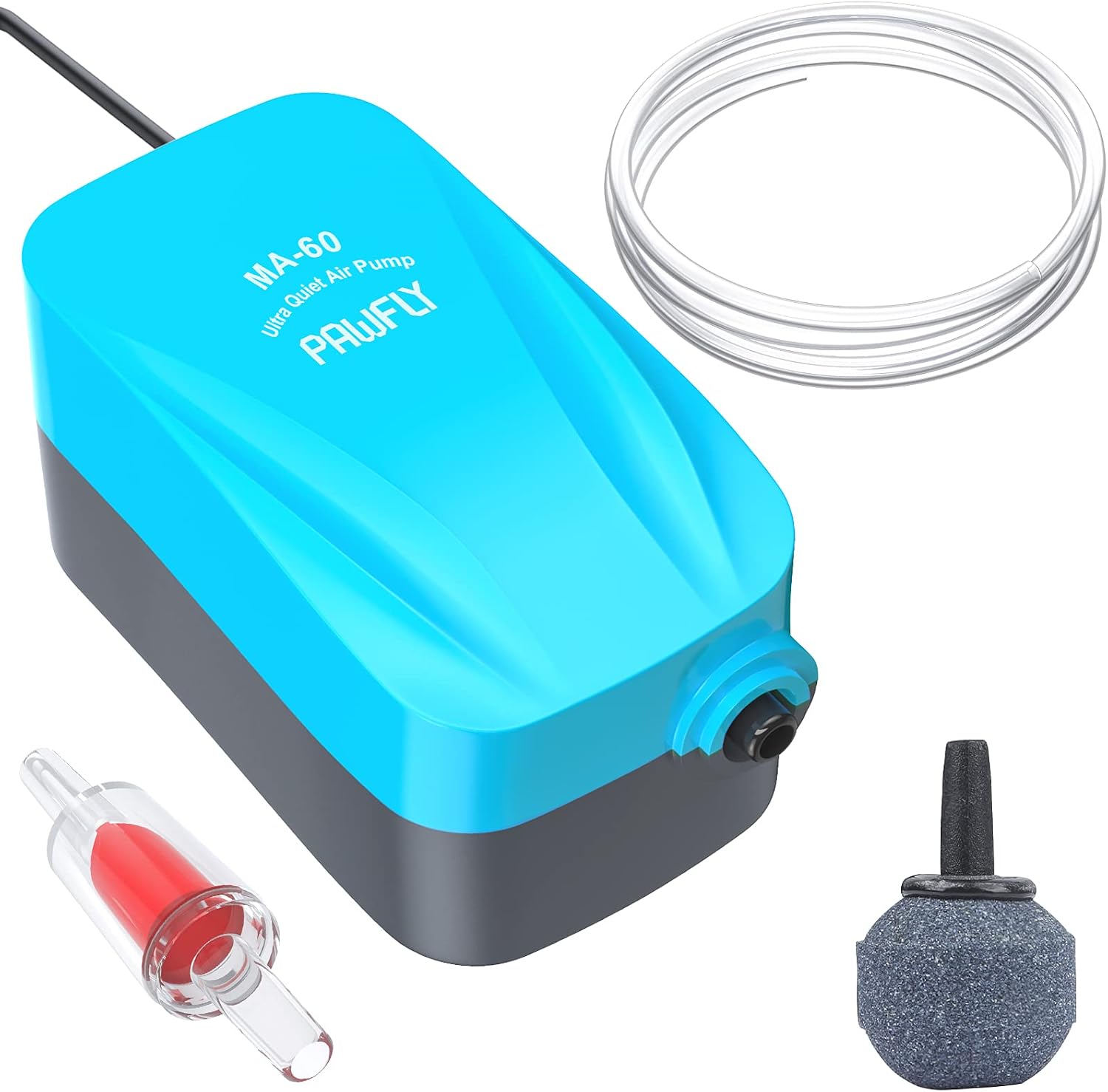
The air pump is the engine of a sponge filter. For most units, a pump rated at 1.5 to 3 watts is sufficient for tanks up to 20 gallons. For larger tanks or coarse-sponge filters, a 3 to 5 watt pump provides better throughput. Always install a check valve between the pump and the tank to prevent water from siphoning back into the pump during a power outage. A gang valve lets one pump drive multiple filters, though each added filter reduces flow to all connected units.
5. Safety and Livestock Compatibility
Sponge filters are among the safest filtration options for small or delicate animals. There is no impeller, no intake slot wide enough to trap a shrimp, and no strong current. That said, fine foam can trap very small fry if flow is excessive, and a clogged sponge can reduce flow to the point that biological filtration suffers. For quarantine tanks, a sponge filter seeded with bacteria from an established tank is one of the fastest ways to provide instant biofiltration. General species care and quarantine guidance is available through the ASPCA pet care library.
Maintenance Guide
- Weekly: Visually inspect the sponge. Squeeze gently in a bucket of tank water, never tap water, to preserve bacteria.
- Monthly: More thorough cleaning. Rinse the lift tube and base in tank water.
- Every 6 months: Replace the air stone inside the lift tube. Check the air pump's intake filter.
- Every 12 months: Replace the sponge itself for optimal filtration.
Never clean a sponge under tap water. Chlorine and chloramine kill the nitrifying bacteria, effectively resetting the biological filter and risking an ammonia spike. Always use water removed during a water change. When replacing a sponge, keep the old one in the tank alongside the new one for two to three weeks so bacteria can colonize the new foam.
Common Mistakes to Avoid
The most frequent error is undersizing the air pump. A weak pump produces weak flow, and weak flow means less water passes through the foam, reducing both mechanical and biological filtration. A second common mistake is cleaning the sponge too aggressively. Rinsing under tap water or scrubbing the foam destroys the bacterial colony. A third is placing the sponge filter where it cannot draw water freely; if the intake is buried in substrate or blocked by decor, flow drops sharply. Finally, many keepers forget the check valve, which can lead to water siphoning into the air pump during a power outage and damaging the pump or flooding the floor.
Frequently Asked Questions
Q: Are sponge filters better than HOB filters for shrimp tanks?
For shrimp, yes in most cases. Sponge filters provide gentle flow that shrimp graze on, and the fine foam prevents shrimp from being drawn into an intake. HOB filters can work with a pre-filter sponge over the intake, but the sponge filter remains the simpler and safer option.
Q: Can a sponge filter be the only filter in a planted tank?
Yes, with considerations. Sponge filters provide excellent biological filtration but limited mechanical filtration. In a planted tank, plants contribute significant biological filtration, so a sponge filter plus healthy plants can be an effective combination. Heavily stocked tanks may still benefit from additional mechanical filtration.
Q: How often should a sponge filter be cleaned?
Every three to six weeks, depending on bioload. Fine-pore sponges in heavily stocked tanks may need cleaning every two to three weeks. Coarse-pore sponges can go six to eight weeks between cleanings.
Q: Can sponge filters be used in saltwater tanks?
Yes, for specific applications such as quarantine tanks, coral QT tanks, and nano reef setups. They cannot serve as primary filtration for most reef tanks because they do not remove dissolved organics or provide the same nutrient export as a protein skimmer.
Q: Can multiple sponge filters run off one air pump?
Yes, using a gang valve. A single 3 to 5 watt air pump can power two or three sponge filters. Each added filter reduces flow to all connected units, so plan the pump capacity accordingly.
Final Verdict
- Best overall: Hygger Double Sponge Filter — dual-sponge design, fine foam, strong flow.
- Best value: AquaMiracle Bio Sponge Filter — solid all-around performance at the lowest price.
- Best for high flow: Pawfly Coarse Sponge Filter — 0.75-inch lift tube, high throughput.
Sponge filters remain one of the most reliable, quiet, and gentle filtration options for shrimp, fry, quarantine, and nano tanks. The right choice depends on pore size, sponge count, tank dimensions, and air pump capacity. Match those variables to the livestock and tank size, and a good sponge filter will provide years of dependable service.
Affiliate Disclosure: PawCritic is a participant in the Amazon Services LLC Associates Program, an affiliate advertising program designed to provide a means for us to earn advertising fees by linking to Amazon.com and affiliated sites. Purchases made through our links help support our independent research at no extra cost to you. Thank you for your support.
Last updated: July 5, 2026. Prices and availability are subject to change. Always verify current pricing on Amazon before purchasing.