Nano and Desktop Aquarium Kits: A Research-Based Buying Guide
Published on July 3, 2026 by PawCritic — Fish Category
Nano aquariums, generally defined as systems under 20 gallons, have become one of the fastest-growing segments of the freshwater and marine hobby. They fit on a desk, a kitchen counter, or a dorm shelf, and they let a keeper run a complete planted or reef ecosystem in a footprint smaller than a microwave. The appeal is obvious, but the biology of a small tank is unforgiving. A 5-gallon system holds roughly one-fortieth the water of a 200-gallon display, which means ammonia, temperature, and pH can move from acceptable to dangerous in hours rather than days.
That sensitivity is the single most important fact in this category. Manufacturer specifications, published husbandry guidance from the Merck Veterinary Manual exotic and laboratory animals section, and the fish-health bulletins maintained by UF/IFAS Extension EDIS all point to the same conclusion: the smaller the volume, the less room there is for error. A nano kit is not a beginner shortcut. It is a precision instrument, and the equipment choices made on day one determine whether the tank is stable on day one hundred.
This guide covers what actually matters when selecting a nano or desktop aquarium kit in 2026: glass quality, filtration architecture, lighting output, heater integration, stocking limits, and the maintenance rhythm that keeps a small system healthy. Rather than ranking a long list of products, it explains the category and treats one widely available kit as a concrete example of how the specifications translate into real-world use.
Why Water Volume Is the First Specification That Matters
Every other decision in nano aquarium selection flows from volume. A 3-gallon tank and a 9-gallon tank are not simply scaled versions of each other; they behave differently at a chemical level. The standard rule of thumb in fishkeeping is that larger volumes dilute waste more effectively and buffer changes in pH and temperature. In a 3-gallon system, a single missed feeding or a dead snail can push ammonia to a readable level within a day. In a 9-gallon system, the same event is diluted across three times the water and gives the keeper more time to respond.
Published guidance from the ASPCA pet care library and from university aquaculture extension programs consistently recommends that new keepers start with the largest tank they can accommodate, not the smallest. For nano systems specifically, 5 gallons is the practical floor for any setup that includes fish. Below 5 gallons, the realistic livestock options narrow to shrimp, snails, and a single betta in a carefully managed tank. Above 10 gallons, the system starts to behave more like a conventional aquarium and becomes noticeably more forgiving.
The trade-off is footprint and cost. A 9-gallon kit occupies roughly twice the desk space of a 3.5-gallon kit and typically costs 50 to 100 percent more once lighting and heating are included. The honest recommendation for most readers is to choose the largest volume that fits the intended location, then stock conservatively. Buying a 3-gallon tank because it fits a narrow shelf, then filling it with fish, is one of the most common and most preventable mistakes in the hobby.
Filtration: All-in-One Versus Separate Components
Nano kits generally fall into two filtration categories. All-in-one systems hide the filter in a rear compartment behind the display area, while bare tanks require the keeper to add an external filter, usually a small canister or a hang-on-back unit. Each approach has real consequences for maintenance, noise, and stocking capacity.
All-in-one filtration is convenient because the equipment is invisible from the front and the plumbing is pre-assembled. The typical design uses a three-stage layout: a coarse foam block for mechanical filtration, a biological medium such as ceramic rings or sintered glass, and a chemical stage such as activated carbon. This architecture is proven and works well in tanks up to about 10 gallons. The limitations are that the filter chamber occupies 15 to 25 percent of the tank's footprint, the media is often proprietary, and the pump is usually fixed rather than upgradeable.
Separate filtration, by contrast, allows the keeper to match filter capacity to bioload. A small canister filter rated for 30 to 60 gallons per hour can be paired with a 5-gallon tank to provide generous biological filtration and easy media customization. The trade-offs are visible equipment, additional cost, and more complex setup. For planted tanks and any system housing fish, a filter rated at three to five times the tank volume per hour is a reasonable target; for shrimp-only tanks, gentler turnover is preferable because shrimp fry can be injured by strong intake flow.
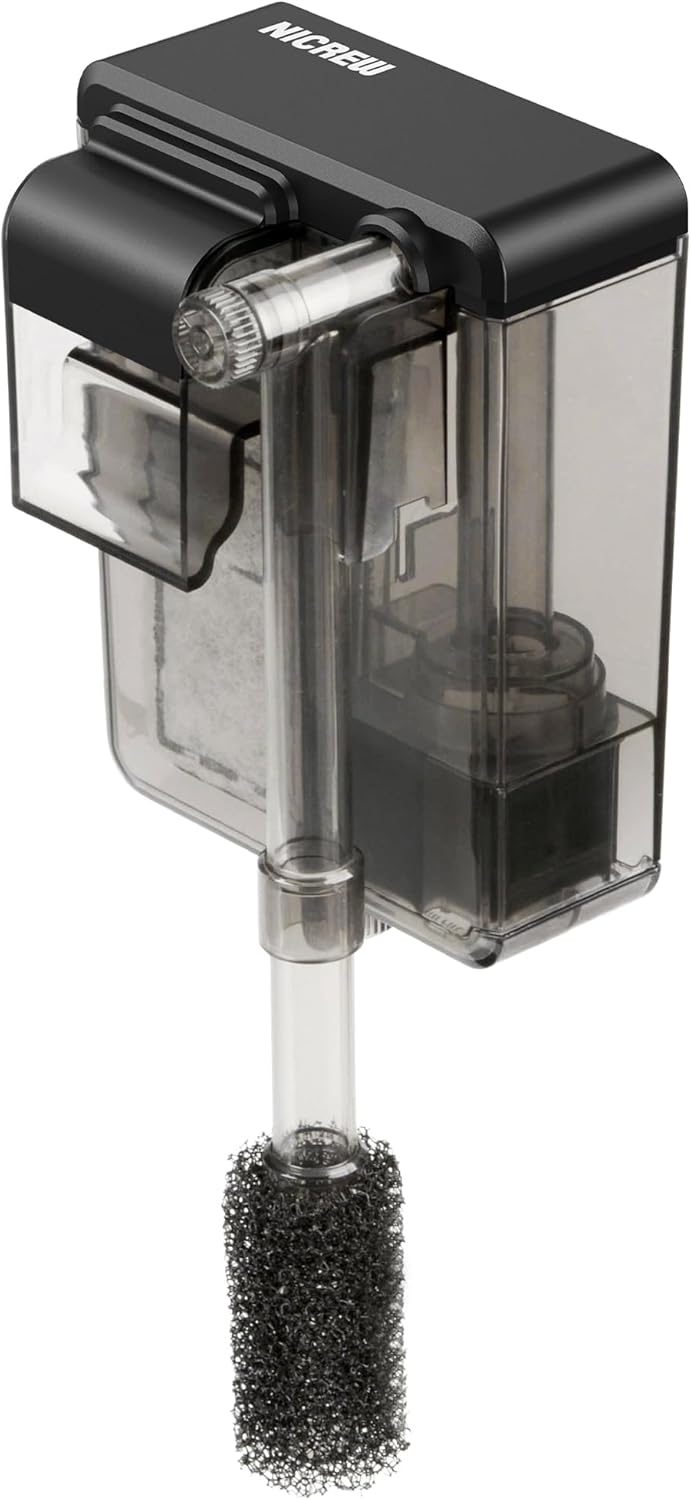
One accessory deserves mention regardless of filter type: a pre-filter sponge over the intake. This inexpensive addition prevents shrimp and small fish from being drawn into the filter, and it provides additional surface area for beneficial bacteria. Owner reports consistently describe pre-filter sponges as one of the highest-value modifications for nano shrimp tanks.
Lighting: What the Numbers Actually Mean
Lighting is the specification most often misunderstood by new nano keepers. The relevant metric is not wattage or color temperature alone but photosynthetically active radiation, or PAR, measured at the depth where plants actually grow. A light that produces 50 PAR at the water surface may produce only 15 PAR at the substrate of a 12-inch-tall tank, which is below the threshold for most carpeting plants.
For low-light species such as Java fern, Anubias, and most mosses, 20 to 30 PAR at the substrate is sufficient. Medium-light plants including Cryptocoryne, Rotala, and Ludwigia generally need 30 to 50 PAR. High-light carpeting plants such as Monte Carlo or dwarf hairgrass typically require 50 PAR or more, often combined with carbon dioxide injection. Manufacturer specifications for nano kits usually list color temperature and wattage rather than PAR, so keepers should look for published PAR charts or independent measurements where available.
Programmable lighting has become standard in mid-range kits and offers genuine benefits beyond aesthetics. A gradual sunrise and sunset ramp reduces stress on fish, and a consistent photoperiod of six to eight hours helps control algae. Lights with independent white and blue channels allow a moonlight phase that lets the keeper observe nocturnal behavior without disturbing the tank. For reef applications, channels covering blue, royal blue, and ultraviolet are important because coral fluorescence and growth depend on those wavelengths.
Heating and Temperature Stability
Most nano kits include filtration and lighting but omit the heater, which is a significant omission because tropical fish and shrimp require stable temperatures between roughly 74 and 80 degrees Fahrenheit. In a small volume, an unheated tank can swing several degrees between day and night, and those swings suppress immune function and trigger stress behaviors.
A 25-watt heater is adequate for tanks up to about 5 gallons, and a 50-watt heater suits 5 to 10 gallons. The critical feature is an internal thermostat rather than a fixed-output element, because a heater that cannot regulate itself can cook a small tank. Placing the heater near the filter outflow improves heat distribution and prevents localized hot spots. Keepers in cold rooms should consider a slightly oversized heater and verify temperature with a separate thermometer rather than trusting the heater dial.
Glass Quality and Tank Construction
Glass type affects both viewing clarity and long-term satisfaction. Standard float glass has a slight green tint that becomes noticeable when viewing a tank from the side, and it scratches relatively easily. Low-iron glass, sometimes marketed as ultra-clear or starphire, transmits more light and renders colors more accurately, which matters in a small tank where the viewer sits close to the glass.
Rimless construction, in which the glass panels meet without a plastic frame, provides a cleaner appearance and is standard on premium aquascaping tanks. Rimless tanks typically include a foam leveling mat to distribute weight evenly and prevent stress cracks. Silicone seam quality is another indicator of build quality; uniform, thin seams suggest careful assembly, while thick or uneven seams can indicate lower manufacturing tolerances. Warranty length is a reasonable proxy for manufacturer confidence, with premium brands offering multi-year coverage on glass.
Stocking a Nano Tank Responsibly
Stocking is where small tanks most often go wrong. The traditional one-inch-per-gallon rule is a rough guideline at best and is misleading in nano systems because it ignores body mass, activity level, and waste output. A more useful approach is to consider the adult size of each species, its swimming space requirements, and its position in the water column.
For a 5-gallon tank, realistic options include a single betta, a group of six to eight chili rasboras or ember tetras, or a colony of dwarf shrimp. For a 9-gallon tank, a small community of eight to ten nano fish plus a cleanup crew of shrimp or snails is achievable with diligent maintenance. Fish that grow beyond two inches, active swimmers such as danios, and schooling species kept in groups smaller than six are poor matches for nano volumes. The ASPCA pet care library and Merck Veterinary Manual both emphasize species-appropriate housing as a foundational welfare requirement, and in nano tanks that principle has direct practical consequences.
One Concrete Example: The Fluval Spec V
The Fluval Spec V is a 5-gallon all-in-one kit that illustrates how the specifications discussed above come together in a single product. It is widely available, well documented, and frequently discussed in owner forums, which makes it a useful reference point rather than a ranked pick. Readers who want to see current pricing can view this option on Amazon.
The Spec V uses low-iron glass and a three-stage rear filtration compartment with foam, ceramic biological media, and carbon. Its pump is rated at 106 gallons per hour, which provides roughly 21 turnovers per hour in a 5-gallon volume. That is generous circulation for a nano tank and is well suited to planted setups and shrimp colonies. The included LED light is a full-spectrum unit rated at 7000K with a built-in timer and a moonlight phase, which is sufficient for low to medium-light plants such as Anubias, Java fern, and Cryptocoryne.
The trade-offs are consistent with the category. No heater is included, so a 50-watt unit must be purchased separately for tropical livestock. The stock filter intake can draw in shrimp fry without a pre-filter sponge. The rear filtration compartment reduces the display footprint by roughly 20 percent. And the tank is not designed for saltwater without modification. For a keeper who wants a planted shrimp tank or a single-betta setup with minimal visible equipment, these are manageable limitations. For a keeper who wants a reef system or a community of active swimmers, a different configuration would serve better.
Owner reports describe the Spec V as quiet in operation and straightforward to maintain, with the rear compartment making media changes accessible without disturbing the display. Those characteristics align with what the published specifications suggest, and they are the reasons this kit appears frequently in beginner recommendations. Readers comparing options can check the current price on Amazon to see how it compares with alternatives in the same size class.
Maintenance Rhythm for Small Systems
Nano tanks reward consistency more than intensity. A weekly routine that takes twenty minutes is more effective than an occasional deep clean, because small volumes accumulate waste quickly and biological filtration depends on steady conditions. The following schedule reflects standard practice described in aquarium husbandry literature and in manufacturer maintenance guides.
- Weekly: Replace 20 to 30 percent of the water with temperature-matched, dechlorinated water. Vacuum the substrate lightly to remove visible debris without disturbing plant roots.
- Every three to five days: Wipe the glass with a magnetic scraper or a soft pad to prevent algae from establishing. Inspect plants for yellowing or melt.
- Every four weeks: Rinse filter media in tank water, never in tap water, to preserve beneficial bacteria. Replace chemical media such as carbon every four to six weeks.
- Every two to four weeks: Prune fast-growing plants and remove dead leaves. Trim mosses to prevent them from shading slower-growing species.
- Ongoing: Test ammonia, nitrite, nitrate, and pH with a liquid test kit, particularly during the first two months while the tank cycles.
The cycling period deserves special attention. A new nano tank requires two to four weeks to establish nitrifying bacteria, and ammonia and nitrite will spike during that window. Adding livestock before both readings return to zero is the most common cause of early losses in small tanks. A liquid test kit and patience are the two most valuable tools a new nano keeper can own.
Common Mistakes and How to Avoid Them
Several errors appear repeatedly in owner discussions and in guidance from extension services. Overstocking is the most frequent, followed by skipping water changes because the tank looks clean. A tank can appear clear while nitrate climbs, and by the time algae or fish distress becomes visible, the problem is well established.
Using tap water without a conditioner is another common error. Chlorine and chloramine are toxic to fish and to the beneficial bacteria in the filter, and both are present in most municipal water supplies. A dechlorinator is inexpensive and non-negotiable. Placing a nano tank in direct sunlight is a third frequent mistake; the resulting temperature swings and algae blooms are difficult to control in a small volume.
Finally, many keepers underestimate the importance of a quarantine or observation period for new livestock. Introducing a fish with an undiagnosed infection into a 5-gallon tank can wipe out the entire population within days because the small volume concentrates pathogens. A simple observation container or a small quarantine tank is a worthwhile investment for any keeper planning to add fish over time.
Frequently Asked Questions
Is a nano aquarium harder to maintain than a large one?
It requires more frequent attention, not necessarily more skill. Weekly water changes are essential rather than optional, and parameter swings happen faster. The upside is that maintenance sessions are short and the equipment costs less.
Can saltwater fish be kept in a nano tank?
Yes, with careful species selection. Small gobies, a single clownfish, and soft corals such as Zoanthids and mushroom corals are common choices. Reef nano tanks typically require a protein skimmer, an auto top-off system, and lighting with blue and ultraviolet channels.
What fish suit a 5-gallon tank?
A single betta is the most common choice. Small groups of chili rasboras, ember tetras, or celestial pearl danios can work in a well-filtered, well-maintained 5-gallon system, often alongside a few shrimp.
Is a heater always necessary?
For tropical fish and shrimp, yes. For cold-water species such as white cloud mountain minnows, or for planted tanks without fish, a heater may be optional depending on room temperature.
Can plants grow without carbon dioxide injection?
Many can. Java fern, Anubias, Cryptocoryne, Java moss, pearlweed, and Vallisneria all grow well in low-tech setups with a nutrient-rich substrate and adequate lighting. Carpeting plants and red stem plants generally benefit from carbon dioxide.
What to Look For: A Practical Checklist
Before purchasing any nano kit, verify the following: the tank volume is at least 5 gallons if fish are planned; the filter provides three to five turnovers per hour and uses replaceable or customizable media; the light produces enough PAR at substrate depth for the intended plants; a heater is either included or available in the correct wattage; the glass is low-iron if clarity is a priority; and replacement media and parts are readily available. Kits that omit a heater or use proprietary cartridges are not disqualifying, but the additional cost and ongoing expense should be factored into the decision.
The best nano aquarium is the one whose specifications match the keeper's intentions. A shrimp-focused planted tank has different requirements from a nano reef or a betta display, and a kit that excels in one role may be a poor fit in another. Reading the specifications carefully, stocking conservatively, and committing to a weekly maintenance routine will produce a stable, attractive system that remains healthy for years. Readers ready to compare a specific option can view this option on Amazon and check the current price on Amazon before deciding.
Affiliate Disclosure: PawCritic is a participant in the Amazon Services LLC Associates Program, an affiliate advertising program designed to provide a means for sites to earn advertising fees by linking to Amazon.com and affiliated sites. Purchases made through links on this page help support independent research at no extra cost to the reader.
Last updated: July 3, 2026. Prices and availability are subject to change. Always verify current pricing before purchasing.