Why a UV Sterilizer Is the Secret Weapon of Crystal-Clear Aquariums
Green water algae blooms, bacterial cloudiness, and ich outbreaks are problems every aquarist eventually faces. Chemical treatments can work in the short term, but they may stress fish, disrupt biological filtration, and create rebound issues that are worse than the original problem. A UV sterilizer takes a different approach: it uses ultraviolet light inside a sealed chamber to damage single-celled organisms as water passes through. No chemicals, no medication, no residue — just a controlled dose of UV-C energy that disrupts microbial reproduction.
A UV sterilizer works by pumping aquarium water through a quartz sleeve that houses a UV-C germicidal lamp. As water flows past the bulb, the 254 nm wavelength penetrates the cell walls of free-floating algae, bacteria, viruses, and protozoan parasites, including the free-swimming theront stage of ich. The DNA of these microorganisms is damaged so they cannot reproduce. UV sterilizers only affect organisms that pass through the unit. Beneficial bacteria colonizing filter media, substrate, and decor remain largely untouched because they live attached to surfaces rather than floating freely in the water column. For a clinical overview of aquatic animal health, the Merck Veterinary Manual section on exotic and laboratory animals is a useful reference.
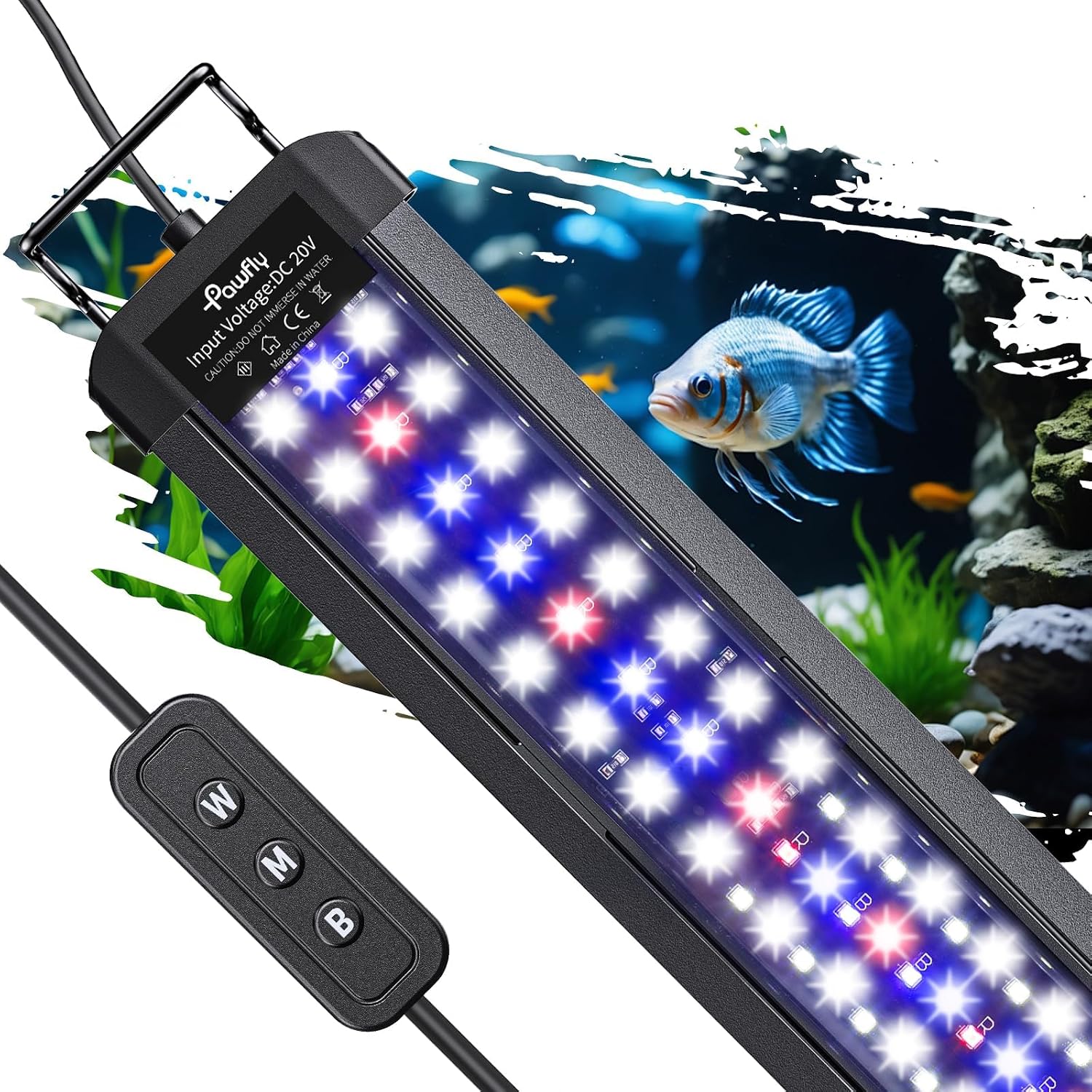
In freshwater tanks, UV sterilizers are commonly used to clear green water blooms within 3 to 7 days, reduce the spread of ich during outbreaks by targeting the free-swimming stage before it finds a fish host, and lower bacterial loads that contribute to fin rot, columnaris, and other opportunistic infections. In reef tanks, UV sterilizers are popular as a chemical-free method for managing dinos, cyanobacteria, and marine ich, though reef keepers debate UV's impact on beneficial planktonic copepods and amphipods. In pond applications, UV clarifiers are standard equipment because outdoor ponds exposed to sunlight will inevitably develop green water without UV clarification.
This buying guide covers the key specifications that determine whether a UV sterilizer will work for a given aquarium type, size, and budget. It explains wattage, flow rate, kill dose, quartz sleeve maintenance, and bulb lifespan, then walks through a single concrete example unit that illustrates how a self-contained internal UV sterilizer is specified and what its trade-offs are.
Understanding UV Sterilizer Sizing: Wattage, Flow Rate, and Kill Dose
- UV Wattage: The power of the UV bulb determines how much UV-C radiation is emitted. Higher wattage means more sterilization capacity. A common rule of thumb is 1 watt per 10 to 15 gallons for clarification (algae control) and 1 watt per 5 to 10 gallons for sterilization (disease control at higher kill rates).
- Flow Rate vs. Contact Time: This is the most common mistake. A UV sterilizer rated for up to 100 gallons assumes a specific flow rate. Run water through too fast, and organisms pass through before receiving a lethal UV dose. Too slow, and while sterilization is thorough, tank turnover suffers. The target depends on the goal: algae clarification typically needs 30,000 to 45,000 microwatt-seconds per square centimeter, achievable at moderate flow, while parasite and disease sterilization typically needs 90,000 or more microwatt-seconds per square centimeter, which requires slower flow for longer contact time.
- Quartz Sleeve: The quartz glass tube that separates the UV bulb from the water. Quartz, not regular glass, is required because standard glass blocks most UV-C radiation. A dirty or calcium-coated quartz sleeve can reduce UV transmission by 30 to 50 percent, so monthly cleaning is important for consistent performance.
- Bulb Lifespan: UV-C bulbs lose 40 to 60 percent of their output after 6 to 12 months of continuous operation, even though they still visibly glow. The glow is visible light, not UV-C, which is invisible to the human eye. Replace bulbs every 12 months at most, regardless of whether they still light up.
- Internal vs. Inline: Internal UV sterilizers sit inside the tank or sump and are submersible. Inline UV sterilizers connect to a canister filter or return pump plumbing via hose barbs. Inline units are generally more efficient because the flow path is controlled. Internal units are simpler to install but have less predictable flow-through rates.
A Focused Look at a Self-Contained Internal UV Sterilizer
The AA Aquarium Green Killing Machine is a widely referenced example of an internal UV sterilizer. It combines the UV bulb, quartz sleeve, water pump, and housing into one compact submersible cylinder, so no plumbing, hoses, or external pump are required. The integrated powerhead pulls water through the UV chamber at a pre-calibrated flow rate optimized for algae-killing dosage. It is available in 3W, 9W, and 24W models, with the 3W nano version measuring only about 6 inches long. This design is often chosen by aquarists who want a drop-in solution for green water without modifying filtration plumbing.
Because this unit is self-contained, it is most suitable for nano tanks, quarantine tanks, and situations where green water has already become an emergency. The trade-off is that the internal unit takes up in-tank space and is visible in minimalist aquascapes. The pump impeller requires cleaning every 2 to 3 months or flow drops significantly, and the flow rate is fixed, so it cannot be slowed for disease sterilization. Bulb replacement requires disassembling the unit rather than simply unplugging a bulb. The plastic housing is budget-grade and can crack if dropped. For aquarists who want to see a concrete example of this type of product, you can check the current price on Amazon.
When evaluating any internal UV sterilizer, compare the manufacturer's stated flow rate and recommended tank size against the kill dose needed for the target organism. For green water algae, a moderate dose is often enough. For ich or other parasites, a higher dose is required, which usually means slower flow or a larger unit. If the manufacturer does not publish a kill-dose chart, treat the wattage rating as a rough guide only.
What to Look For in a UV Sterilizer
Start with the goal. If the main problem is green water, a clarifier-sized unit may be sufficient. If the goal is disease prevention or parasite control, a sterilizer-sized unit with a higher kill dose is needed. The difference is not just wattage; it is the combination of wattage, flow rate, and contact time. A high-wattage unit with too-fast flow can underperform a lower-wattage unit with slower, controlled flow.
Check the quartz sleeve design. Some units have a removable sleeve that can be cleaned without disassembling the entire housing. Others require partial disassembly. A wiper assembly, found on some premium and pond models, allows the sleeve to be cleaned by pulling a handle. This is especially valuable in outdoor ponds where algae and mineral deposits accumulate quickly.
Review the bulb replacement schedule and parts availability. A UV sterilizer is only as good as its bulb. If replacement bulbs are hard to find or expensive, the unit may become disposable. Look for published bulb life ratings and confirm that replacement bulbs are stocked by the manufacturer or a reliable retailer. For pond owners, winterizing is also a consideration; units that cannot be drained and stored indoors may crack in freezing temperatures.
Consider installation requirements. Internal units need space inside the tank or sump. Inline units need plumbing connections and a pump or canister filter to drive flow. Some inline units add head pressure that reduces filter flow by 10 to 20 percent. If the aquarium uses a CO2 reactor, plumb the UV before the reactor or on a separate loop to avoid micro-bubbles that scatter UV light.
Finally, think about maintenance access. A UV sterilizer that is difficult to service will not be serviced regularly, and an uncleaned quartz sleeve can lose 30 to 50 percent of its UV transmission. Bypass valves and quick-disconnect unions make it possible to isolate, remove, and reinstall the unit without shutting down the entire filtration loop.
Sizing by Aquarium Type
Nano tanks under 20 gallons are often best served by a small internal UV sterilizer with an integrated pump. These units are simple to install and can clear green water quickly, but they take up space and may not provide enough contact time for parasite control. For a nano tank, a 3W to 5W unit is typical for clarification.
Medium freshwater tanks from 20 to 75 gallons can use either a larger internal unit or an inline unit connected to a canister filter. Inline units are generally more efficient because flow is controlled and the UV chamber is not competing with in-tank decor. A 9W to 18W unit is common for this range, depending on whether the goal is clarification or sterilization.
Large tanks over 100 gallons usually require an inline UV sterilizer with a dedicated pump or a high-flow canister filter. These systems benefit from published kill-dose charts so the aquarist can match flow rate to the target organism. Stainless steel housings and union connections are common in this class because they handle higher flow and pressure without cracking.
Reef tanks present a special case. UV can help control dinos, cyanobacteria, and marine ich, but it may also reduce beneficial planktonic copepods and amphipods. Some reef keepers run UV on a timer, off at night, to reduce impact on nocturnal planktonic life. During an active ich outbreak, running UV continuously is often prioritized over plankton preservation.
Ponds are the most demanding application. Outdoor ponds receive direct sunlight, which fuels green water algae. A UV clarifier is standard equipment. Pond units need weather-resistant housings, large hose connections, and often a wiper rod for the quartz sleeve. Sizing is based on pond volume and pump flow, with models ranging from 9W for small ponds up to 55W or more for large koi ponds. The UF/IFAS Extension EDIS aquaculture and fish health resources provide additional background on water quality and fish health management.
Maintenance and Common Mistakes
The most common mistake is installing UV before mechanical filtration. Water must be mechanically filtered before entering the UV chamber. Particulate matter can shield microorganisms from UV light, allowing them to escape sterilization. If plumbing inline, place the UV on the output of the canister filter after all mechanical and biological media. If using a dedicated pump, pull from a mechanical filtration chamber or use a pre-filter sponge on the intake.
The second most common mistake is mismatching flow rate to the goal. For green water algae control, faster flow can process more water per hour and clear the bloom faster, even though each pass has a lower kill rate. For disease control, slower flow provides a higher kill rate per pass, which is more effective for parasite elimination. A higher single-pass kill rate matters more than total gallons processed per hour when trying to eradicate ich theronts before they find a fish host.
Cleaning the quartz sleeve is non-negotiable. A calcium-coated or dirty sleeve reduces UV transmission. Monthly cleaning is recommended for most aquariums, and weekly cleaning may be needed in ponds. Some units include a wiper assembly that simplifies this task. If the sleeve cannot be cleaned easily, the unit will underperform over time.
Bulb replacement is also non-negotiable. A 12-month-old UV bulb that still glows may have lost 50 to 60 percent of its UV-C output. Running a depleted bulb wastes electricity and provides less sterilization than expected. Set a calendar reminder and replace the bulb annually. Keep a spare bulb on hand so replacement is not delayed.
Do not plumb UV after a CO2 reactor. The turbulent, CO2-saturated water exiting a reactor can cause micro-bubbles to form inside the UV chamber. These bubbles scatter UV light and reduce effectiveness. Plumb UV before the CO2 reactor or on a separate loop.
Use bypass valves. Plumb the UV sterilizer with a bypass T-fitting and valves so it can be isolated, removed, serviced, and reinstalled without shutting down the entire filtration loop. This makes maintenance practical and reduces the chance that cleaning is postponed.
Finally, do not expect UV to replace good husbandry. Water changes, proper filtration, and responsible feeding remain the foundations of aquarium health. UV clears algae and reduces pathogen loads, but it does not remove the nutrients that fuel algae. Address the nutrient source with water changes and reduced feeding. The ASPCA pet care library offers general guidance on responsible pet care that applies to aquarium keeping as well.
Safety and Species-Specific Considerations
UV sterilizers emit UV-C radiation, which is harmful to eyes and skin. Never look directly at an operating UV bulb, and never operate a UV sterilizer with the housing open. Most units are sealed to prevent exposure, but during maintenance, unplug the unit and allow it to cool before opening. Keep the unit out of reach of children and pets.
In freshwater community tanks, UV is generally safe for fish, plants, and beneficial bacteria. The main consideration is that UV may reduce free-floating algae that some small fish or invertebrates graze on, but this is rarely a problem in a well-fed aquarium. In reef tanks, UV may reduce populations of planktonic copepods and amphipods, which are beneficial for many reef inhabitants. Some reef keepers run UV only at night or on a timer to balance disease control with plankton preservation.
In ponds, UV clarifiers are typically safe for koi and goldfish. However, the unit must be sized and installed so that flow rate matches the manufacturer's recommendation. A pond UV that is too small for the volume will not clear green water. A pond UV that is too large may be unnecessary and expensive to operate. Weather-resistant housings and winterizing are important for outdoor installations.
Quarantine and hospital tanks often benefit from UV because they house fish that may be carrying pathogens. A small internal UV sterilizer can reduce bacterial and parasite loads in the water column, but it does not replace medication or proper quarantine procedures. UV is a supportive tool, not a treatment on its own.
What to Avoid
Avoid UV sterilizers that do not publish a flow rate or kill-dose chart. Without this information, it is impossible to know whether the unit will achieve the desired level of sterilization. Wattage alone is not enough, because flow rate and contact time determine the actual dose.
Avoid units with hard-to-find replacement bulbs. If the bulb cannot be replaced, the unit becomes disposable. Check that replacement bulbs are available before purchasing.
Avoid installing UV before mechanical filtration. Debris and particulate matter shield microorganisms from UV light. Always place UV after mechanical filtration.
Avoid running UV too fast for the target organism. If the goal is disease control, slow the flow to achieve a higher kill dose. If the goal is clarification, moderate flow is acceptable. Match flow to purpose.
Avoid skipping quartz sleeve cleaning. A dirty sleeve reduces UV transmission and wastes electricity. Clean monthly or more often in ponds.
Avoid using a UV sterilizer as a substitute for water changes. UV does not remove nitrate, phosphate, or dissolved organic compounds. It only affects organisms that pass through the chamber. Good husbandry remains essential.
FAQ
Will a UV sterilizer kill beneficial bacteria?
No. Beneficial nitrifying bacteria are sessile organisms that live attached to surfaces such as filter media, substrate, glass, and decor. They are not free-floating in the water column. A UV sterilizer only affects organisms that pass through the UV chamber, so beneficial bacteria are not exposed. The only beneficial organisms potentially affected are free-swimming copepods and amphipods in reef tanks, which is why some reef keepers run UV on a timer.
How long until green water clears with a UV sterilizer?
With a properly sized UV sterilizer running continuously, green water typically clears in 3 to 7 days. If green water persists beyond 7 days, the UV may be undersized, the flow rate may be too fast for sufficient contact time, or the quartz sleeve may need cleaning. Also check for the root cause, because green water is fueled by excess nutrients and light. UV clears the algae but does not remove the nutrients, so water changes and reduced feeding are still needed.
Can a UV sterilizer be run 24/7, or should a timer be used?
For freshwater tanks, running 24/7 is common and generally safe. UV does not affect water chemistry or produce harmful byproducts in typical aquarium use. For reef tanks, many experienced reefers run UV 24/7, but some use a 12-hour timer to reduce impact on nocturnal planktonic life. During an active ich outbreak, running UV continuously is often prioritized.
How often should the UV bulb be replaced?
Replace the UV bulb every 12 months at most, even if it still glows. UV-C output declines significantly over time, and the visible glow does not indicate that the bulb is still producing adequate UV-C. Keep a spare bulb on hand.
Does a UV sterilizer replace medication for sick fish?
No. UV can reduce pathogen loads in the water column, but it does not treat fish directly. Sick fish still need appropriate medication, isolation, and supportive care. UV is a supportive tool, not a standalone treatment.
Conclusion
A UV sterilizer is a useful tool for managing green water, reducing bacterial loads, and supporting disease prevention in aquariums and ponds. It works by exposing water to UV-C light, which damages the DNA of free-floating microorganisms so they cannot reproduce. It does not affect beneficial bacteria attached to surfaces, and it does not remove nutrients or replace water changes. When sized and installed correctly, it can make a noticeable difference in water clarity and fish health.
The key specifications to evaluate are wattage, flow rate, quartz sleeve design, bulb lifespan, and installation type. Internal units are simple to install but take up tank space and have fixed flow. Inline units are more efficient but require plumbing and a pump or canister filter. Pond units need weather-resistant housings and often a wiper assembly for the quartz sleeve.
For aquarists who want a concrete example of a self-contained internal UV sterilizer, the AA Aquarium Green Killing Machine is widely referenced. It combines the UV bulb, quartz sleeve, pump, and housing in one unit, which makes it easy to install in nano tanks, quarantine tanks, and situations where green water is an emergency. Its trade-offs include in-tank visibility, fixed flow rate, and a budget-grade plastic housing. You can view this option on Amazon to compare specifications and current pricing.
Whatever unit is chosen, regular maintenance is essential. Clean the quartz sleeve monthly, replace the bulb annually, and install UV after mechanical filtration. Match flow rate to the goal, whether clarification or sterilization. Use bypass valves for easy servicing. And remember that UV is a supplement to good husbandry, not a replacement for it.
Affiliate Disclosure: PawCritic.com participates in the Amazon Services LLC Associates Program. We may earn commissions from qualifying purchases at no extra cost to you.
Where to Buy
As an Amazon Associate, PawCritic earns from qualifying purchases. This does not affect our reviews or recommendations.