Aquarium Thermometers and Controllers: A Research-Based Buying Guide
Temperature is one of the few aquarium parameters that can kill livestock overnight without any visible warning. Tropical fish evolved in water bodies with enormous thermal mass, where temperature changes of a degree or two happen over days rather than minutes. A glass box holding 20 to 100 gallons has almost none of that buffering capacity, so a stuck heater, a summer heatwave, or a power outage can push a tank past its safe range in hours. The Merck Veterinary Manual section on exotic and laboratory animals notes that environmental instability is a leading stressor behind disease outbreaks in captive fish, which is why temperature monitoring sits alongside filtration and water testing as basic husbandry rather than an optional upgrade.
This guide explains what separates an accurate thermometer from a decorative one, when a standalone controller earns its cost, and how to match equipment to freshwater, planted, and reef systems. It is written from published manufacturer specifications, veterinary and extension guidance, and patterns that recur across verified owner reviews. No laboratory instruments were used to produce this article, and no product was purchased or bench-tested by the author. Where a specific product is mentioned, it is one concrete example of a category, not a ranked winner.
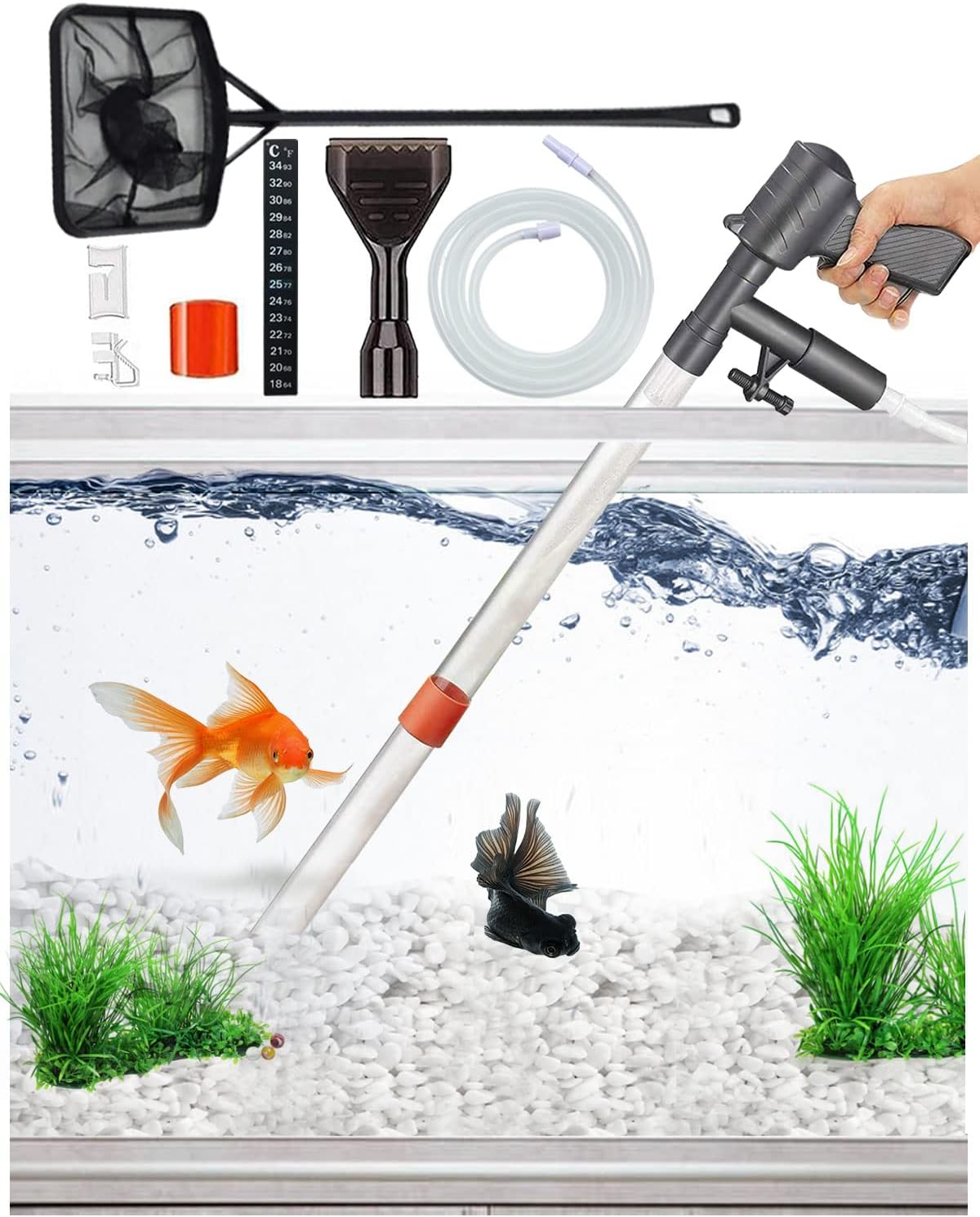
Why Aquarium Temperature Control Deserves Real Attention
Most tropical freshwater species are adapted to a band between roughly 74 and 80 degrees Fahrenheit, with reef animals often held tighter, near 78 degrees. Within that band, small daily movement is normal. The danger is not drift but speed: a heater that fails in the on position can raise a small tank several degrees per hour, and warm water holds less dissolved oxygen at exactly the moment fish need more of it. Overheating is generally more lethal than mild chilling, which is why high-temperature alarms matter more than most new keepers expect.
Chilling is a slower threat in most homes, but it is not harmless. A tank that drops into the low 60s during a winter power outage leaves fish lethargic and vulnerable to opportunistic infections such as ich. The ASPCA pet care library consistently frames stable housing conditions, including temperature, as the foundation of preventive care for aquatic pets, and that framing matches what aquarists observe: most disease outbreaks follow an environmental disruption rather than appearing spontaneously.
There is also an equipment-protection argument. Heaters themselves are consumables with finite lifespans, and a controller that cuts power to a failed heater protects both the livestock and the heater from cooking itself. For reef keepers running chillers, hysteresis control prevents the rapid on-off cycling that shortens compressor life and destabilizes tank temperature.
How to Judge Thermometer Accuracy Without a Lab
Manufacturer accuracy claims are usually stated as a tolerance, such as plus or minus 1 degree Fahrenheit or plus or minus 0.2 degrees. Those numbers describe the sensor, not the whole instrument, and they assume the unit is calibrated. In practice, a stick-on liquid crystal strip thermometer measures the outside of the glass, which can read one to three degrees away from the water column depending on room temperature and where the heater sits. That does not make glass thermometers useless; it makes them trend indicators rather than precision instruments.
Digital probe thermometers place the sensor in the water, which removes the glass barrier from the measurement. The trade-off is that probe placement matters. A probe resting directly above a heater will read warmer than the rest of the tank, and a probe tucked in a corner with poor flow will read cooler. The practical fix is to position the probe in a region with steady circulation, ideally mid-depth and away from the heater outlet, and to accept that any single reading is a sample of one location.
Calibration can be checked at home using the ice-point method. A slurry of crushed ice and water, stirred and allowed to stabilize for a few minutes, sits at 32 degrees Fahrenheit at standard pressure. If a digital thermometer reads meaningfully above or below that, the unit is out of calibration. Many controllers include a calibration offset that lets the user correct the displayed value against a reference, which is one of the strongest arguments for buying a controller rather than a plain display.
Thermometers vs Controllers: What Each Actually Does
A thermometer reports. A controller acts. This distinction is the single most common source of confusion among new aquarists, and it drives most of the purchasing regret described in owner forums. A thermometer can tell you the tank is at 86 degrees, but it cannot shut off the heater that caused it. A controller reads the same water and physically interrupts power to the heater when the setpoint is exceeded, then restores it when the tank cools.
Controllers add three capabilities that thermometers cannot provide: alarms with a threshold, hysteresis control, and in some models, data logging. The alarm is the safety feature. Hysteresis, sometimes called differential, is the temperature band between switching on and switching off. A controller set to 78 degrees with zero hysteresis would toggle a heater constantly around the setpoint, wearing out the relay and creating temperature ripple. A one- to two-degree differential produces smooth cycles instead.
Data logging is the quiet feature that changes how keepers diagnose problems. A graph of tank temperature across a week reveals overnight dips, midday spikes from lighting, and slow drift that a single glance at a display would never expose. That history is often what turns a vague suspicion of a failing heater into a documented pattern.
What to Look For: A Buyer's Checklist
Accuracy and Resolution
Resolution is the smallest increment the display shows, and accuracy is how close that number is to reality. A display that reads to 0.1 degrees with plus or minus 1 degree accuracy is offering false precision. For freshwater community tanks, plus or minus 1 degree is generally adequate. For reef tanks, breeding setups, and quarantine systems holding sensitive species, look for plus or minus 0.2 degrees or better, and expect to pay more for it.
Probe Construction and Cable
Stainless steel probe housings resist corrosion far better than painted or plated alternatives over long immersion. Cable length determines placement flexibility: a one-meter cable forces the display close to the tank, while a three-meter cable lets the readout sit on a shelf or inside a cabinet. Thin, unbranded probe wire is a common failure point when it is pulled during maintenance, so a braided or thicker jacket is worth a small premium.
Alarms and Notifications
An alarm is only useful if it reaches the keeper. Local audible alarms help when someone is home. Push notifications to a phone help when no one is. For anyone who travels or works long hours, remote notification is arguably the most valuable feature a controller can offer, because the failure mode it addresses, an unnoticed overnight temperature event, is exactly the scenario that kills entire tanks.
Outlet Ratings and Load
Controllers are rated for a maximum amperage or wattage per outlet. A 300-watt aquarium heater on a 10-amp outlet is comfortably within spec, but multiple high-wattage devices daisy-chained through one controller can exceed the rating and create a fire risk. Larger systems with high-wattage heating often require a separate contactor or relay, and this is a specification to check before purchase rather than after.
Connectivity and Ecosystem
Wi-Fi controllers typically operate on 2.4 gigahertz networks only, which is a frequent source of setup frustration for owners with modern dual-band routers. Ethernet-connected systems avoid that problem but tether the unit to a cable. App-based systems also carry a long-term question that hardware-only units do not: if the manufacturer stops updating the app, remote features can degrade even though the physical controller keeps working.
Power Loss Behavior
How a controller behaves after an outage matters. Some resume their previous setpoints automatically; others default to a safe state or require manual confirmation. In a region with frequent brief outages, a controller that silently resumes heating is convenient. In a region where a stuck heater is the bigger risk, a default-off behavior is safer. Either way, the behavior should be known before the unit is installed, not discovered during the first storm.
A Concrete Example: What a Basic Digital Thermometer Offers
For readers who want a single, low-cost reference point in the thermometer category, one widely available option is a compact suction-cup digital unit with an LCD display, a probe on a short cable, and a stated accuracy around plus or minus 1 degree Fahrenheit. Units in this class typically read from roughly 32 to 122 degrees Fahrenheit, switch between Celsius and Fahrenheit, and run on a coin cell or button battery. check the current price on Amazon if you want to see how this category is priced.
Who it suits: a beginner running a single freshwater community tank who wants a clear, always-on readout without spending more than the cost of a bag of fish food. What the trade-off is: the tolerance is loose enough that it should be treated as a trend indicator, there is no alarm, and the thin probe cable is the part most likely to fail first. It answers the question of what the temperature is, and nothing more.
Where a Controller Changes the Equation
The case for a controller is strongest wherever a single point of failure can take down a whole system. A 75-gallon reef tank with several hundred dollars of coral, a discus tank held at a precise 84 degrees, or a quarantine tank running medication all sit in that category. A dual-outlet controller in the 30 to 60 dollar range typically offers a heating outlet, a cooling outlet for a fan or chiller, adjustable hysteresis, high and low alarms, and a calibration offset. That combination covers the majority of real-world failure scenarios at a fraction of the cost of a full aquarium computer.
Owner reports on budget controllers cluster around a few recurring themes. The hardware is generally reliable, the setup is genuinely plug-and-play, and the bundled probe is functional but not premium. The most common complaint is display ergonomics: a single three-digit readout cannot show the current temperature and both setpoints at once, so checking the configuration requires cycling through menus. That is an inconvenience, not a safety issue, but it is worth knowing before buying.
Smart Controllers and the Connected Tank
Wi-Fi controllers add remote monitoring, push notifications, and temperature history graphs to the basic controller feature set. For a keeper who is away from home for ten hours a day, the notification alone can justify the price difference, because it converts an invisible overnight event into an alert on a phone. Temperature logging also makes it possible to correlate tank behavior with room conditions, which is useful when diagnosing summer spikes.
The honest limitations are worth stating plainly. Setup on 2.4 gigahertz networks can be finicky, apps from smaller manufacturers receive irregular updates, and long-term cloud support is not guaranteed. A smart controller is best understood as a convenience layer on top of a physical safety device, not a replacement for one. If the Wi-Fi drops, the controller should still hold its setpoints locally, and buyers should confirm that it does before relying on it.
Full Aquarium Controllers: When the Investment Makes Sense
At the top of the category sit modular aquarium computers that manage temperature alongside pH, salinity, dosing, and lighting. These systems start in the low hundreds of dollars and expand from there. Their temperature accuracy is typically the tightest available, their logging is exportable, and their automation rules can trigger actions across multiple devices, such as turning off a dosing pump when a probe reads out of range.
For a beginner with a 20-gallon freshwater tank, this tier is unnecessary complexity. For a reef keeper planning to add dosing and automated testing, it can be cheaper over three years than buying four separate single-function controllers. The trade-off is a genuine learning curve: setup and rule configuration can consume an evening, probes are often sold separately, and the system depends on a local network for full functionality.
Stick-On and Glass Thermometers: Honest Limits
Adhesive liquid crystal strips and suction-cup glass thermometers remain popular because they cost almost nothing and require no batteries. Their limitation is physical: they measure the temperature of the glass, not the water. In a tank with good circulation and stable room temperature, the difference is often small. In a tank near a window, above a radiator, or with a heater mounted close to the glass, the gap can be several degrees.
These devices are best used as a backup or a quick visual check, not as the primary instrument on a tank holding sensitive livestock. A reasonable approach is a glass or strip thermometer for at-a-glance confirmation plus a digital probe or controller for the actual decision-making. Two independent readings that disagree are themselves useful information, because they flag a placement problem or a failing sensor.
Temperature Ranges by Tank Type
| Tank Type | Typical Target Range | Suggested Alarm Window |
|---|---|---|
| Tropical freshwater community | 74 to 80 F | Low 72 F, high 82 F |
| Discus and other warm-water species | 82 to 86 F | Low 80 F, high 88 F |
| Goldfish and temperate species | 65 to 72 F | Low 60 F, high 76 F |
| Planted tank (most species) | 72 to 78 F | Low 70 F, high 80 F |
| Reef and coral systems | 76 to 80 F | Low 75 F, high 82 F |
| Quarantine or hospital tank | Match display tank | Low 74 F, high 82 F |
These ranges are starting points, not universal rules. Species-specific requirements vary, and the UF/IFAS Extension EDIS aquaculture resources are a useful reference for water quality parameters including temperature in fish-rearing systems. The alarm window should be set wide enough to avoid nuisance alerts during normal water changes and narrow enough to catch a real problem before it becomes an emergency. A two- to four-degree margin on each side of the target is a common starting point.
Maintenance and Calibration Routine
Sensors drift. Probe tips accumulate biofilm, which insulates the sensor and slows its response. A practical routine is to inspect the probe monthly, wipe it gently with a soft cloth or a diluted vinegar solution if mineral deposits are visible, and rinse it thoroughly before returning it to the tank. Vinegar residue left on a probe will skew readings, so rinsing is not optional.
Calibration checks belong on the same schedule as water testing. The ice-point method takes five minutes and catches gross drift. For controllers with a calibration offset, correcting a two-degree error is straightforward. For thermometers without one, a probe that reads two degrees off should be replaced rather than mentally adjusted, because the mental correction will eventually be forgotten at the worst possible moment.
Batteries in digital units are another quiet failure point. A thermometer that stops updating is indistinguishable from a stable tank at a glance, which is why a low-battery indicator matters. Changing batteries on a fixed annual schedule, or at the same time as replacing filter media, is a simple way to avoid the problem.
Common Mistakes and What to Avoid
The most frequent mistake is relying on the heater's built-in thermostat as the only temperature control. Heater thermostats are single-point devices with no alarm and no logging, and their calibration drifts with age. They are designed to maintain approximate temperature, not to protect livestock. A separate controller or at minimum a separate thermometer is the standard safeguard.
The second common mistake is placing the probe where it cannot do its job. A probe suction-cupped to the front glass above the substrate, far from the heater and far from circulation, may read two degrees cooler than the rest of the tank. The controller then overworks the heater trying to reach a setpoint the rest of the tank has already exceeded. Mid-tank placement in moving water is the reliable choice.
The third is ignoring outlet ratings. Controllers are not power strips, and exceeding their amperage rating risks relay failure or worse. High-wattage heating on large systems should route through a properly rated relay or contactor, and the controller should switch the relay rather than the load itself.
The fourth is buying a smart controller and treating the app as the safety system. Apps lose connection, phones run out of battery, and cloud services change. The physical controller must be able to hold safe setpoints on its own, with the app as an additional layer rather than the only one.
Frequently Asked Questions
What is the most accurate type of aquarium thermometer?
Digital probe thermometers with tight stated tolerances are generally the most accurate consumer option, followed by full aquarium controllers with calibrated probes. Glass and stick-on thermometers measure the glass surface rather than the water and should be treated as approximate. Accuracy claims should always be read as tolerances, not guarantees, and verified at home with an ice-point check.
Do I need a controller if my heater has a thermostat?
A built-in thermostat maintains approximate temperature but provides no alarm, no logging, and no protection against a stuck heater. A controller adds a high-temperature cutoff, hysteresis control, and often remote notification. The value is highest in reef tanks, large systems, and any setup where a single failure would be expensive to replace.
How often should tank temperature be checked?
A daily visual check is a reasonable minimum, but the events that cause losses typically happen overnight or during weather extremes. A controller with alarm notifications covers those windows in a way that manual checking cannot, which is why it is often the first upgrade recommended after a tank is established.
Can Wi-Fi controllers work on a 5 gigahertz network?
Most consumer Wi-Fi aquarium controllers operate on 2.4 gigahertz only. Owners with dual-band routers can usually enable a 2.4 gigahertz guest network, but buyers who want to avoid the issue entirely should consider controllers with Ethernet connectivity or hardware-only units that do not depend on a network at all.
What hysteresis setting should I use?
A differential of one to two degrees Fahrenheit is a common starting point. Too small a differential causes rapid cycling and relay wear. Too large a differential allows noticeable temperature swing. The right value depends on tank volume, heater wattage, and how tightly the species in the tank need to be held.
Is a smart controller worth it for a small tank?
For a small freshwater tank in a climate-controlled home, a basic digital thermometer plus a heater with a reliable thermostat may be sufficient. The smart controller premium is easiest to justify when the keeper travels, when the tank holds sensitive species, or when the room experiences real temperature swings.
Putting It Together
Temperature management is a two-part problem: knowing what the water is doing, and being able to do something about it automatically. A thermometer solves the first part. A controller solves the second. Most tanks benefit from both, and the cost of the two together is often less than the price of a single replacement fish.
For a first freshwater tank, a digital probe thermometer with a clear display and a mid-tank probe placement covers the basics. For a reef, a planted tank with expensive livestock, or any system where the keeper is away for long stretches, a dual-outlet controller with alarms and hysteresis is the more defensible purchase. Above that tier, modular aquarium computers serve keepers who want logging, automation, and expandability across multiple parameters.
Whichever route you take, verify the ice point, place the probe where water actually moves, set an alarm window before you need it, and treat the heater's own thermostat as a backup rather than the plan. view this option on Amazon to see how a basic digital thermometer in this category is priced, and compare that against the cost of a controller with alarms before deciding which layer of protection your tank actually needs.
Affiliate Disclosure: PawCritic is a participant in the Amazon Services LLC Associates Program, an affiliate advertising program designed to provide a means for sites to earn advertising fees by advertising and linking to Amazon.com. Product prices and availability are accurate as of the date noted above and are subject to change. Any price and availability information displayed on Amazon.com at the time of purchase will apply. We may earn a commission on qualifying purchases made through the affiliate links below, at no additional cost to you. Our editorial content is not influenced by our affiliate partnerships. Recommendations are based on published guidance, manufacturer specifications, and verified owner reports.
Related reading: aquarium heaters and temperature controllers, common aquarium fish diseases, aquarium substrate comparisons, and nitrogen cycle guides.