Why Water Testing Is the Most Important Habit for Aquarium Keepers
Ask any experienced aquarist what separates successful fish keepers from those who constantly battle algae blooms, fish illness, and unexplained deaths, and they'll give you the same answer: consistent water testing. Your aquarium isn't just a glass box of water — it's a complex, living ecosystem where invisible chemical processes determine whether your fish thrive or merely survive. Ammonia from fish waste, nitrite from bacterial breakdown, nitrate accumulation, pH fluctuations, and carbonate hardness all shift continuously throughout the day, influenced by feeding, lighting, plant respiration, and the metabolic activity of every organism in the tank.
The nitrogen cycle is the biochemical backbone of every aquarium. Fish produce ammonia through their gills and waste — a compound that's toxic at concentrations as low as 0.25 parts per million. Beneficial bacteria (Nitrosomonas) convert ammonia to nitrite, which is only slightly less toxic and deadly to fish at levels above 0.5 ppm. A second bacterial colony (Nitrobacter) converts nitrite to nitrate, which is relatively safe at low to moderate concentrations but becomes stressful above 40-80 ppm depending on species. Without regular testing, you're flying blind through this invisible chemical maze — and by the time your fish show visible signs of distress (gasping at the surface, clamped fins, reddened gills), significant damage has already occurred.
Water conditioners play the equally important role of making tap water safe for aquarium use. Municipal water supplies contain chlorine and chloramine — disinfectants that kill the very beneficial bacteria your nitrogen cycle depends on. Heavy metals like copper and lead can leach from plumbing and prove lethal to sensitive invertebrates like shrimp and snails. A quality water conditioner neutralizes these threats instantly while often providing additional benefits like slime coat protection and ammonia detoxification. The right combination of testing and conditioning transforms tap water from a potential toxin into a safe, stable environment for aquatic life.
In this guide, we review the best aquarium water test kits and conditioners available in 2026, comparing accuracy, ease of use, value, and suitability for freshwater and saltwater setups alike. Whether you're maintaining a single betta bowl or a 200-gallon reef system, the products reviewed here will help you master your water chemistry and give your aquatic pets the healthy environment they deserve.
Top Aquarium Water Test Kits & Conditioners for 2026
1. API Freshwater Master Test Kit — The Gold Standard
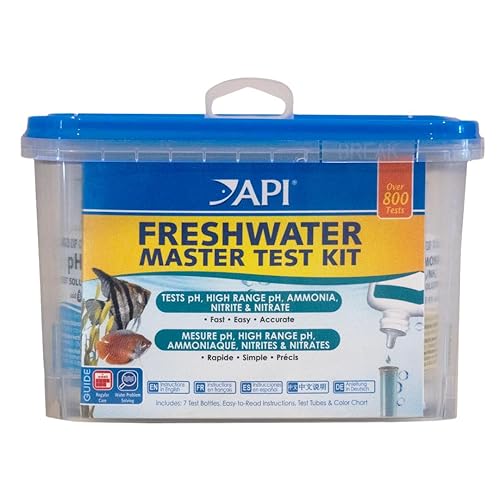
The API Freshwater Master Test Kit has been the go-to choice for aquarium hobbyists for decades, and the 2026 formulation continues that legacy. This liquid reagent kit tests for the four most critical parameters — pH, high range pH, ammonia, nitrite, and nitrate — with enough solution for over 800 tests total. Unlike test strips that can degrade with humidity exposure, the liquid reagents in individually sealed glass bottles remain stable for years when stored properly. Each test includes a laminated color chart that's far easier to read than the tiny printed cards included with strip-based kits. The included glass test tubes with caps are durable, chemical-resistant, and sit securely in the provided holding tray.
2. Seachem Prime Water Conditioner — The Multi-Function Powerhouse
Seachem Prime isn't just a dechlorinator — it's arguably the most versatile water treatment product ever created for aquarium use. A single 5 mL dose treats 50 gallons of tap water, removing chlorine, chloramine, and detoxifying ammonia, nitrite, and nitrate simultaneously. In emergency situations where ammonia or nitrite spikes occur (power outages, filter failures, overfeeding incidents), Prime can be dosed at up to 5x the normal amount to temporarily detoxify these compounds for 24-48 hours while you address the root cause. The concentrated formula means a 500 mL bottle treats 5,000 gallons — making it incredibly economical compared to competitors that require far higher dosing rates. Prime also promotes natural slime coat production, helping fish recover from handling stress and minor injuries.
3. API 5-in-1 Test Strips — Quick Daily Monitoring
For aquarists who want fast, convenient daily checks between comprehensive liquid testing sessions, API 5-in-1 Test Strips are an excellent companion tool. Each strip tests nitrate, nitrite, general hardness (GH), carbonate hardness (KH), and pH in approximately 60 seconds. While not as precise as liquid reagent kits for diagnostic purposes, these strips excel at providing trend data — helping you notice when parameters begin shifting before they become problems. The 25-count box is perfect for weekly or biweekly monitoring, and the color chart is printed on a moisture-resistant card that holds up to repeated use near water. Simply dip, swirl for the recommended time, and compare — no test tubes, no counting drops, no timer needed.
4. API Ammonia Test Kit — Targeted Toxin Detection
Ammonia is the single most dangerous compound in any aquarium, and having a dedicated, high-sensitivity ammonia test kit is essential for new tank cycling, quarantine setups, and troubleshooting sick fish. This liquid reagent kit provides 130 tests with a detection range from 0 to 8.0 ppm and clear color gradations that make even low-level readings unambiguous. The salicylate-based reagent chemistry is the same validated method used in professional water quality laboratories. For saltwater aquarists, API also offers a marine-specific ammonia test that compensates for the interference that seawater chemistry can cause with freshwater test reagents.
5. Seachem Stability — Biological Filtration Booster
While not a water conditioner in the traditional sense, Seachem Stability is the most important water treatment product for establishing and maintaining a healthy nitrogen cycle. This synergistic blend of aerobic, anaerobic, and facultative bacteria rapidly establishes the bio-filtration capacity that every aquarium depends on. Unlike competing bacterial supplements that contain only sporulated organisms that can survive on a shelf, Stability uses a patented process that keeps all bacterial species viable in their active state — meaning they begin working immediately upon introduction to the aquarium. Use during new tank cycling to reduce the typical 4-6 week cycle to as little as 7 days, or dose after filter cleaning, medication courses, or any disruption to your biological filtration.
Check Price on Amazon
6. Tetra EasyStrips Complete — Best Value Strip Kit
Tetra's EasyStrips Complete set is one of the best values in aquarium testing, combining 25 six-parameter test strips with a durable storage container that protects strips from the moisture that degrades paper-based tests. Each strip measures nitrate, nitrite, hardness, chlorine, alkalinity, and pH — a comprehensive panel that covers the most important daily monitoring parameters. The results appear in just 60 seconds, and the wide color pads make interpretation easier than strips with narrow reactive zones. The chlorine-specific pad is particularly useful for confirming that your dechlorinator has fully neutralized tap water before adding it to the aquarium.
Check Price on Amazon
7. Seachem Ammonia Alert — Continuous In-Tank Monitor
The Seachem Ammonia Alert is a unique product that provides continuous, real-time ammonia monitoring directly inside your aquarium. This credit-card-sized sensor uses a proprietary color-changing disc that detects free ammonia (NH3) — the toxic form — rather than total ammonia nitrogen. Unlike liquid or strip tests that give you a single snapshot, the Ammonia Alert monitors continuously for up to one year, changing from yellow (safe) to green (alert) to blue (toxic) as free ammonia rises. It's an indispensable early warning system for heavily stocked tanks, fry grow-out systems, and hospital tanks where ammonia spikes can develop rapidly between manual tests. Note that it responds to free ammonia only, not the ionized ammonium (NH4+) that most test kits measure — this is actually an advantage, as free ammonia is what harms fish.
Check Price on Amazon
8. API Stress Coat Water Conditioner — Therapeutic Treatment
API Stress Coat goes beyond basic dechlorination to provide therapeutic benefits for your fish. In addition to removing chlorine, chloramines, and neutralizing heavy metals, Stress Coat contains Aloe vera extract that replaces the natural slime coat fish lose during handling, netting, shipping, and aggressive tankmate interactions. The synthetic slime-coating polymer forms a protective barrier over wounds and abrasions, accelerating healing and reducing the risk of secondary bacterial or fungal infections. This makes Stress Coat the water conditioner of choice for quarantine tanks, new fish acclimation, and post-medication water changes when fish are stressed and more vulnerable to pathogens. It also reduces electrolyte loss, helping fish maintain proper osmotic balance during periods of physiological stress.
Check Price on Amazon
Liquid Reagent vs. Test Strips: Which Is Right for You?
| Feature | Liquid Reagent Kits | Test Strips |
|---|---|---|
| Accuracy | Highest — laboratory-grade chemistry | Good for trending, less precise |
| Cost per test | Pennies — 800+ tests per kit | $0.20-0.40 per strip |
| Time per test | 3-5 minutes with multiple steps | 60 seconds, dip and read |
| Shelf life | 3-5 years in sealed bottles | 1-2 years, sensitive to humidity |
| Parameters | Individual or comprehensive sets | Multi-parameter panels |
| Best for | Accurate diagnosis, cycling, problem solving | Quick daily/weekly monitoring |
| Ease of use | Requires clean vials, precise drops | Simple, minimal equipment |
Understanding Water Parameters: What You're Testing and Why
Ammonia (NH3/NH4+)
Ammonia enters your aquarium through fish respiration, waste decomposition, and uneaten food. Even at 0.25 ppm, ammonia causes gill damage, reduces oxygen uptake, and suppresses immune function. At 0.5 ppm and above, acute toxicity develops rapidly — fish show labored breathing, reddened gills, and erratic swimming. The goal for any established aquarium is 0 ppm ammonia at all times. During initial cycling, ammonia will spike to 2-4 ppm as the first bacterial colony establishes — this is normal and expected, provided no fish are present. For fish-in cycling (not recommended but sometimes unavoidable), use Prime or Amquel to detoxify ammonia daily while bacteria colonies develop. Any detectable ammonia in an established tank signals a serious problem: overfeeding, dead fish or plants decomposing, filter failure, or a disrupted biological filter.
Nitrite (NO2-)
Nitrite is the intermediate product of ammonia oxidation by Nitrosomonas bacteria. It's often called the "silent killer" because it causes damage before visible symptoms appear. Nitrite enters the bloodstream through the gills and converts hemoglobin to methemoglobin, which cannot transport oxygen — effectively suffocating fish from the inside out (a condition called "brown blood disease"). Affected fish may gasp at the surface despite adequate aeration, show brownish gill tissue, and become lethargic. Salt (sodium chloride) at 0.1-0.3% concentration provides protection against nitrite toxicity by competitively blocking nitrite uptake at the gills. Like ammonia, the target for nitrite is 0 ppm in any established aquarium. A nitrite spike during cycling indicates the Nitrobacter population is still developing.
Nitrate (NO3-)
Nitrate is the end product of the nitrogen cycle and is relatively non-toxic compared to its precursors. However, chronic exposure to elevated nitrate (above 40-80 ppm depending on species sensitivity) causes lethargy, reduced growth rates, compromised immune function, and increased susceptibility to disease. In saltwater reef tanks, nitrate must be kept even lower — below 5-10 ppm — as corals and many marine invertebrates are extremely nitrate-sensitive. Nitrate accumulates between water changes and is removed through dilution (water changes), plant/algae uptake, or specialized filtration media. The relationship between feeding and nitrate is direct: more food equals more fish waste equals more nitrate. Monitoring nitrate trends helps you calibrate your feeding amount and water change schedule.
pH and Carbonate Hardness (KH)
pH measures the acidity or alkalinity of aquarium water on a logarithmic scale, meaning a change of 0.3 pH units represents a doubling or halving of the hydrogen ion concentration. Most community freshwater fish thrive in a pH range of 6.5-7.5, though specific species like discus and wild-caught tetras require pH below 6.5, while African cichlids need pH above 7.8. Carbonate hardness (KH) is the water's buffering capacity — its ability to resist pH changes. Water with low KH (below 3° dKH) is prone to rapid pH swings that stress and potentially kill fish. Understanding the relationship between KH and pH is fundamental to maintaining a stable aquarium. If your pH keeps crashing despite water changes, your KH is likely depleted and needs replenishment with a carbonate-based buffer.
Water Conditioner Comparison: Quick Reference
| Product | Treats Per Bottle | Detoxifies Ammonia | Slime Coat | Saltwater Safe | Best For |
|---|---|---|---|---|---|
| Seachem Prime | 5,000 gal (500mL) | Yes — 24-48 hrs | Minimal | Yes | All-purpose, emergency use |
| API Stress Coat | 960 gal (16oz) | No | Yes — Aloe vera | Yes | Quarantine, new fish, healing |
| Tetra AquaSafe | 1,200 gal (16.9oz) | No | Yes — BioExtract | Yes | Routine water changes |
| Fritz Complete | 3,800 gal (16oz) | Yes | Yes | Yes | Heavy stocking, high bioload |
FAQ
How often should I test my aquarium water?
During the initial cycling period, test ammonia and nitrite daily and nitrate every 2-3 days. Once your tank is established, weekly testing of all parameters is sufficient for most setups. Heavily stocked tanks, newly added fish, or tanks recovering from medication should be tested more frequently — every other day for ammonia and nitrite until parameters stabilize. Reef tanks require more frequent testing for additional parameters including calcium, alkalinity, magnesium, and phosphate (typically 2-3 times per week). Keep a log of your test results — the trend is far more valuable than any single data point. A slowly rising nitrate level tells you that your water change schedule is adequate; a sudden ammonia spike demands immediate investigation.
Do I really need a liquid test kit, or are strips good enough?
Both have their place. Liquid reagent kits provide the accuracy needed for diagnosis, cycling, and troubleshooting specific problems — they're the gold standard. Test strips excel at quick daily or every-other-day monitoring to establish trends and detect changes between comprehensive liquid tests. The ideal approach combines both: use a liquid master kit for your weekly full water analysis and keep strips on hand for quick checks when something seems off or when monitoring during sensitive periods like cycling or medication. If budget limits you to one option, choose a liquid master test kit — the superior accuracy justifies the extra time investment.
Can I overdose water conditioner?
Most quality water conditioners have a wide safety margin — Seachem Prime, for example, can be safely dosed at up to 5x the normal rate in emergency ammonia/nitrite situations. However, extreme overdosing (10x or more) of dechlorinators can temporarily reduce dissolved oxygen levels because the chemical reactions involved in neutralizing chlorine and chloramine consume oxygen. This risk is highest in warm, heavily stocked tanks with marginal aeration. Always follow label dosing instructions during routine use, and ensure adequate surface agitation when treating large volumes of water. In heavily stocked tanks, add an airstone during water changes to maintain oxygen saturation while conditioners do their work.
Related reading: Aquarium Water Test Kits, Aquarium Water Conditioners, Aquarium Plant Tools & Aquascaping Kits, Nano & Desktop Aquarium Kits, Aquarium RO/DI Filtration Systems, Aquarium Dosing Pumps & Automation Systems, Aquarium Gravel Cleaners & Vacuum Syphons, Aquarium Auto Top-Off (ATO) Systems, Reef Tank Starter Kits, Aquarium Sump Filtration Systems, Aquarium Canister Filters and Aquarium Filters.
Affiliate Disclosure: As an Amazon Associate, PawCritic earns from qualifying purchases. All product recommendations are based on thorough research, expert consultation, and community feedback — never on affiliate relationships. Prices and availability are subject to change.
best aquarium best aquarium best aquarium