What Is a Bioactive Terrarium and Why Go Bioactive?
A bioactive terrarium is a self-sustaining, living ecosystem enclosed within a glass vivarium. Unlike a traditional reptile enclosure that relies entirely on the keeper to remove waste 鈥?spot-cleaning feces, replacing soiled substrate, wiping down glass, and doing complete substrate changes every 3-6 months 鈥?a bioactive vivarium uses a cleanup crew of microfauna (springtails and isopods) to decompose waste, a deep drainage layer to manage excess water, and live plants to filter the air, consume nitrates, and maintain humidity. The result is an enclosure that requires a fraction of the maintenance of a traditional setup, while providing your reptile or amphibian with a vastly more natural and enriching environment.
The core of a bioactive system is the cleanup crew. Springtails (Collembola) are tiny, wingless arthropods about 1-2mm in length that consume mold, fungi, and decaying organic matter. A healthy springtail population can process 80-90% of the mold that would otherwise form in a humid vivarium, preventing the respiratory infections and skin issues that plague reptiles kept in moldy enclosures. Isopods (commonly called pill bugs or roly-polies) are larger crustaceans that consume reptile feces, shed skin, dead leaves, and leftover feeder insects. A thriving isopod population will break down a crested gecko's droppings within 24-48 hours 鈥?compare this to the manual spot-cleaning that traditional keepers do daily. Together, springtails and isopods form a waste-processing ecosystem that mimics the forest floor in nature.
Below the substrate sits a drainage layer 鈥?typically 1-2 inches of hydroballs (expanded clay pebbles) topped with a permeable barrier screen. This layer prevents water from pooling in the substrate (which causes root rot and anaerobic bacterial growth) by providing a reservoir for excess water. In a bioactive vivarium, you can mist the enclosure heavily without worrying about waterlogging the substrate 鈥?the water drains through the substrate and collects in the drainage layer, where it evaporates back into the enclosure, maintaining humidity levels without manual intervention. Some bioactive kits include an access tube to the drainage layer so you can siphon out accumulated water if needed.
Live plants are the third pillar of a bioactive system. Tropical vivarium plants like pothos, bromeliads, ferns, and creeping fig absorb nitrates (the end product of the nitrogen cycle, produced when the cleanup crew breaks down waste), consume carbon dioxide and produce oxygen, provide hiding spots and climbing surfaces for your pet, and regulate humidity through transpiration. The root systems of these plants also bind the substrate together, preventing erosion and creating a stable soil structure that microfauna can tunnel through. In a mature bioactive vivarium, the plants and cleanup crew form a nutrient cycle: pet waste →isopods/springtails →plant fertilizer →clean water vapor.
The benefits of going bioactive are substantial. Weekly maintenance drops from 30-60 minutes (spot-cleaning, wiping glass, misting, checking humidity) to 10-15 minutes (mist the enclosure, trim overgrown plants, top off the leaf litter, feed the pet). Deep cleaning 鈥?the dreaded total substrate replacement 鈥?becomes completely unnecessary. The enclosure never smells like reptile waste because the isopods process it before bacterial decomposition creates odor. And your pet spends its life in a naturalistic environment with live plants, climbing branches, and bioactive soil 鈥?not a plastic tub with paper towel substrate and a plastic water dish. The difference in animal behavior between a bioactive and a sterile enclosure is dramatic: reptiles in bioactive vivariums show more natural foraging, climbing, and hiding behaviors, and they typically have brighter coloration and fewer stress-related health problems.
Key Components of a Bioactive Terrarium Kit
Before diving into the specific kits, it's important to understand what makes a quality bioactive kit: the drainage layer (hydroballs or lava rock for water management), substrate (a bioactive-specific soil mix, typically a blend of coconut coir, sphagnum moss, bark, sand, and activated charcoal that supports both plant growth and microfauna), leaf litter (dried magnolia or oak leaves that provide food and shelter for isopods and springtails), a cleanup crew starter culture (springtails and isopods to establish the ecosystem), hardscape materials (cork bark, manzanita branches, and spider wood for climbing and hiding), background (some kits include a three-dimensional foam or cork background designed for mounting epiphytic plants), and a lighting system (LED grow lights are standard, providing the spectrum required for plant photosynthesis without overheating the enclosure).
Most kits do NOT include the reptile itself (obviously), nor do they typically include a heating system (these depend on the specific species you're keeping 鈥?crested geckos need minimal heat, while bearded dragons need basking lamps) or a misting system (though many kits are designed to accommodate automatic misters like the MistKing). You should budget $50-200 for species-specific heating and $80-200 for an automatic misting system if your pet requires high humidity (crested geckos, dart frogs, chameleons, and tree frogs all benefit from automated misting).
Top 8 Bioactive Terrarium Kits for 2026
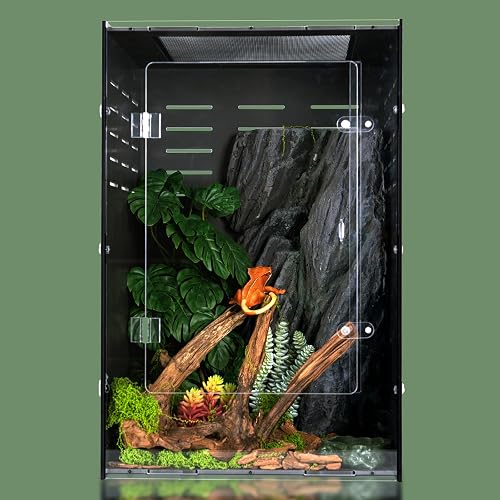
Best bioactive terrarium kits for 2026
1. The Biodude Bioactive TerraFirma Kit 鈥?Best Complete Bioactive Starter System
The Biodude's TerraFirma Kit is the gold standard for first-time bioactive keepers 鈥?a complete, species-specific kit developed by one of the most respected names in the bioactive reptile community. Each TerraFirma kit is tailored to a specific species or habitat type (crested gecko, dart frog, tropical forest, desert, arid, temperate), with the substrate mix, humidity level, and hardscape materials optimized for that species. The Tropical kit 鈥?the most popular 鈥?includes: a custom-blended substrate mix (TerraFirma Bio Bedding 鈥?a proprietary blend of organic potting soil, sphagnum peat moss, forest bark, activated carbon, and calcined clay that provides the ideal texture for both plant growth and isopod burrowing), a 1-inch layer of hydroballs for the drainage layer, a drainage barrier screen, a culture of springtails and dwarf white isopods (the ideal cleanup crew for tropical setups 鈥?they breed fast, stay small, and don't bother reptiles), a bag of magnolia leaf litter, a spray bottle with a misting nozzle, and a detailed 40-page setup guide with QR codes linking to video tutorials.
What sets the TerraFirma Kit apart is the substrate quality. The Bio Bedding is more than just soil 鈥?it's a biologically active living substrate that includes beneficial bacteria and fungi starter cultures that jump-start the nitrogen cycle. When you add the springtails and isopods, the entire ecosystem begins functioning within 24-48 hours rather than the 2-4 weeks it takes for a sterile substrate to establish. The substrate holds moisture evenly without becoming waterlogged 鈥?a critical feature for humid tropical vivariums where the difference between "perfectly moist" and "sopping wet" is the difference between healthy frogs and sick ones with bacterial infections. The substrate is also naturally pH-buffered to stay in the 6.5-7.0 range that tropical plants and microfauna prefer.
The kit's hardscape components 鈥?a 12-inch cork bark flat, two smaller cork bark rounds, and a handful of sphagnum moss 鈥?provide adequate starting structure, though many keepers supplement with additional branches and leaf litter after the first month. The included spray bottle is basic 鈥?expect to upgrade to an automatic misting system within 2-3 months (the Biodude recommends the MistKing Starter System). At $80-120 for the 18x18x24 inch size (the most popular for crested geckos and small dart frog groups), the TerraFirma Kit is not the cheapest option, but the species-specific optimization and biologically active substrate make it the most successful kit for first-time bioactive keepers. The failure rate 鈥?the percentage of keepers who abandon bioactive within 6 months due to mold, dying plants, or collapsing microfauna populations 鈥?is dramatically lower with the Biodude kit than with generic "bioactive in a box" products.
Pros:
- Species-specific substrate blends 鈥?optimized for crested geckos, dart frogs, tropical forests, arid, or temperate habitats
- Biologically active substrate with beneficial bacteria and fungi 鈥?ecosystem starts in 24-48 hours
- Includes springtail and dwarf white isopod starter cultures 鈥?viable, healthy microfauna populations
- Drainage layer with barrier screen 鈥?prevents waterlogging and substrate contamination
- 40-page illustrated setup guide with QR video tutorials 鈥?the best bioactive guide available
- Natural pH-buffering substrate 鈥?stays in the 6.5-7.0 range without monitoring
- Magnolia leaf litter included 鈥?isopods need leaf litter as a food source and shelter
- Risk of setup failure is lowest of any kit 鈥?proven track record with thousands of keepers
Cons:
- $80-120 for a substrate-only kit 鈥?does not include the enclosure, lights, or misting system
- Hardscape is minimal 鈥?cork bark flat and rounds are a starting point only, needs supplementation
- Spray bottle included is basic 鈥?expect to upgrade to automatic misting within months
- Species-specific SKUs make ordering confusing 鈥?must know which habitat you're setting up
- Not suitable for aquatic or semi-aquatic setups (turtles, newts, axolotls)
- Shipping costs are high 鈥?heavy substrate boxes cost $15-30 to ship
Rating: 5/5 | Best For: First-time bioactive keepers, crested gecko and dart frog setups, keepers who want the highest chance of success
2. Zoo Med Creatures Bioactive Terrarium Kit 鈥?Best Complete Enclosure + Bioactive System
Zoo Med 鈥?one of the largest and most trusted names in reptile products 鈥?created the Creatures Bioactive Terrarium Kit for keepers who want a truly turnkey bioactive system: a complete enclosure with LED lighting, substrate, drainage layer, background, and cleanup crew included in one box. The kit includes a Zoo Med 18x18x18 inch glass terrarium with a front-opening hinged door and a screened top, a custom-fit LED light bar (6500K daylight LED for plant growth, with a built-in timer), a Creatures Bioactive Substrate Kit (coconut coir, sphagnum moss, tree fern fiber, and activated charcoal 鈥?pre-blended and ready to pour), a pre-cut drainage layer mesh, a bag of hydroballs, leaf litter, a springtail and isopod starter culture (delivered as a single mixed colony), a foam background panel with cork bark texture, and a setup guide. The kit is designed for tropical species 鈥?crested geckos, dart frogs, day geckos, and tree frogs.
The standout feature is the completeness. The LED light bar is actually good enough for low-light tropical plants 鈥?pothos, ferns, and bromeliads will thrive under it. The foam background holds humidity and provides a surface for mounting epiphytic plants (you can glue bromeliads and moss directly to the background). The front-opening door makes maintenance easy without disturbing the ecosystem. At $180-230 for a complete enclosure with lights and bioactive components, the Creatures kit is the best value proposition for keepers who don't already have a terrarium. Compare this to buying components separately: an 18x18x18 Exo Terra tank ($90-110), the Zoo Med LED bar ($40-50), bioactive substrate kit ($30-40), hydroballs ($15-20), cleanup crew ($20-30), and foam background ($25-35) 鈥?total $220-285. The kit saves you $40-55 and includes everything matched and ready to assemble in one afternoon.
Pros:
- Complete system 鈥?enclosure, light, substrate, drainage, background, and cleanup crew all included
- $180-230 鈥?saves 15-25% compared to buying components separately
- LED light bar with timer 鈥?adequate for low-light tropical plants, built-in timer for day/night cycling
- Front-opening glass door 鈥?easy access for feeding and maintenance, no reaching over the top
- Foam background panel 鈥?holds humidity, provides plant mounting surface, looks natural
- All-in-one cleanup crew 鈥?springtails and isopods shipped together in a single culture
- Zoo Med brand reliability 鈥?available at Petco, PetSmart, and Amazon with easy returns
- Assembles in 2-3 hours 鈥?substrate, drainage, and hardscape all pre-measured and ready to use
Cons:
- Only one size (18x18x18) 鈥?too small for adult crested geckos (need 18x18x24 minimum) or any reptile over 8 inches
- LED light is fine for plants but insufficient for high-light species or sun-loving reptiles
- Single cleanup crew culture may not have both species viable 鈥?sometimes only springtails survive shipping
- Foam background is one piece with molded texture 鈥?not as flexible as DIY backgrounds with custom hardscape
- Screened top allows humidity to escape 鈥?tropical high-humidity setups need plastic wrap or glass top covering
- Substrate mix is basic 鈥?lacks the activated charcoal and calcined clay of premium bioactive soils
Rating: 4/5 | Best For: Keepers buying their first bioactive enclosure, complete setup from scratch, dart frog and small gecko enthusiasts
3. Exo Terra Rainforest Habitat Kit 鈥?Best Complete Rainforest Vivarium Package
Exo Terra's Rainforest Habitat Kit is the most well-rounded complete bioactive package from a major manufacturer 鈥?combining Exo Terra's legendary glass terrarium quality with a comprehensive bioactive substrate kit and appropriate lighting. The kit includes an Exo Terra 18x18x24 inch Rainforest Glass Terrarium (the gold standard size for crested geckos, day geckos, tree frogs, and anoles), an Exo Terra Reptile UVB100 UVB bulb and compact fluorescent fixture (provides both UVA/UVB for diurnal reptiles and 6500K daylight for plants), an Exo Terra Rainforest Substrate Kit (organic peat moss, coconut husk, sphagnum moss, and vermiculite 鈥?pre-blended and hydrated), a bag of hydroballs for the drainage layer, a custom-fit drainage mesh, leaf litter, a springtail culture, detailed bioactive setup instructions, and a three-year warranty on the terrarium.
The Exo Terra 18x18x24 enclosure is the most popular bioactive terrarium size for good reason: it provides adequate vertical space for arboreal species while fitting on a standard 48-inch wide shelf or desk. The front-opening dual doors provide full-access without disturbing the hardscape. The top screen is hinged for feeding access and includes a built-in cord port for misting tubing and probe wires. The raised bottom frame accommodates the drainage layer without reducing the visible soil depth. The UVB100 fixture provides essential UVB for diurnal reptiles (crested geckos are nocturnal and don't require UVB, but day geckos and anoles do), and the compact fluorescent bulb provides adequate light for low-to-medium light tropical plants.
At $200-260, the Rainforest Habitat Kit is more expensive than Zoo Med's Creatures kit but delivers better UVB lighting and a taller enclosure that's appropriate for adult crested geckos and larger tree frogs. The Exo Terra brand's parts availability 鈥?replacement doors, screen tops, and silicone seals are all available individually 鈥?means this kit can be maintained indefinitely. The three-year terrarium warranty is the best in the industry. This kit is ideal for keepers who want a proven, reliable enclosure from a brand with the best customer support in the reptile industry.
Pros:
- 18x18x24 inch Exo Terra enclosure 鈥?the ideal size for crested geckos, tree frogs, day geckos, and anoles
- UVB100 compact fluorescent fixture included 鈥?provides UVA/UVB for diurnal reptiles, 6500K for plants
- Front-opening dual doors with full-access design 鈥?easiest maintenance of any glass terrarium
- Rainforest Substrate Kit 鈥?pre-hydrated, ready to use, appropriate for tropical bioactive setups
- Three-year warranty on the terrarium 鈥?best in the industry, Exo Terra stands behind their glass
- Built-in cord port on screen top 鈥?clean routing for misting tubing, probes, and wiring
- Raised bottom frame 鈥?accommodates drainage layer without reducing visible soil depth
- Massive aftermarket accessories 鈥?Exo Terra replacement parts available at every pet store
Cons:
- $200-260 鈥?premium price for the Exo Terra name, comparable kits cost $30-60 less
- Compact fluorescent UVB bulb needs replacement every 6 months 鈥?ongoing cost of $15-20
- Substrate kit omits activated charcoal 鈥?an important component for bioactive filtration and odor control
- Springtail culture only 鈥?no isopods included, must purchase separately ($15-25)
- Leaf litter quantity is minimal 鈥?one small bag, need to supplement with additional magnolia leaves
- No hardscape materials included 鈥?must purchase cork bark, branches, and plants separately
Rating: 4.5/5 | Best For: Keepers who value enclosure quality and brand reliability, crested gecko keepers, first-time bioactive owners who want UVB capability
4. Carolina Custom Cages Bioactive Paludarium Kit 鈥?Best for Semi-Aquatic Setups
The Carolina Custom Cages Bioactive Paludarium Kit is the only kit on this list designed specifically for paludariums 鈥?mixed aquatic and terrestrial enclosures with a water feature, land area, and transition zone. The kit includes a Carolina Custom Cages 24x18x24 inch glass terrarium with a front-opening door, an acrylic water barrier that divides the tank into a 1/3 aquatic section (left side) and a 2/3 terrestrial section (right side), a Sicce DC submersible pump (adjustable 50-150 GPH) with tubing and spray bar for the water feature, a bioactive substrate kit (clay balls, coconut coir, sphagnum moss, and tree fern fiber in pre-measured bags), a full-spectrum LED light bar (18-inch, 18W, 6500K with 660nm red LEDs for plant flowering), cork bark flats and rounds, a large manzanita branch, a springtail and isopod culture (mixed colony), and detailed paludarium setup instructions with a recommended plant and fish list.
The paludarium design is sophisticated for a pre-packaged kit. The acrylic water barrier uses a silicone seal system that's virtually leak-proof 鈥?install it with the included silicone and let it cure for 24 hours before adding water. The left third of the tank becomes a shallow aquatic section (6-8 inches water depth) that supports nano fish (like chili rasboras or celestial pearl danios), shrimp (Neocaridina), and aquatic plants. The right compartment has the bioactive terrarium substrate, drainage layer, hardscape, and plants. The pump draws water from the aquatic section, pushes it through a spray bar that drips water across the terrestrial section (creating a humid waterfall that mimics a tropical stream bank), and returns to the aquatic section. The result is a single, self-contained ecosystem where the aquatic section filters the water that flows through the terrestrial section, and the bioactive terrestrial section filters waste from the aquatic section's inhabitants.
At $380-450, the Paludarium Kit is the most expensive kit in this guide, but the complexity of the design justifies the price when you consider what you'd pay for components: a 24x18x24 custom paludarium tank ($150-200), the pump and plumbing ($60-80), the acrylic water barrier ($40-60), bioactive substrate ($40-50), LED light ($40-60), hardscape materials ($50-80), cleanup crew ($25-35) 鈥?total $405-565. The kit saves you $25-115 and eliminates the trial-and-error of designing a leak-proof paludarium water barrier. This is a specialist kit for keepers who want the most visually stunning bioactive setup 鈥?a living diorama with water, land, plants, and animals 鈥?but it requires more technical skill and maintenance than a standard terrestrial bioactive vivarium.
Pros:
- Only dedicated paludarium kit available 鈥?designed specifically for semi-aquatic bioactive setups
- Acrylic water barrier with silicone seal 鈥?leak-proof when installed correctly
- Adjustable DC submersible pump with spray bar 鈥?creates a waterfall/mist wall effect
- Supports both aquatic life (nano fish, shrimp) and terrestrial (frogs, newts, crabs)
- Full-spectrum LED with 660nm red 鈥?supports flowering plants and strong plant growth
- Premium hardscape materials included 鈥?cork bark flats/rounds and a large manzanita branch
- Detailed paludarium-specific instructions 鈥?plant and fish compatibility list included
- Natural self-filtering ecosystem 鈥?aquatic waste feeds terrestrial plants, terrestrial filters water
Cons:
- $380-450 鈥?most expensive kit in this guide, premium price for complex design
- Water barrier silicone requires 24-hour cure time 鈥?can't fill immediately, plan ahead
- Not suitable for non-paludarium setups 鈥?the water barrier is permanent once installed
- Filter sock on pump intake clogs quickly 鈥?needs weekly cleaning in a stocked paludarium
- Evaporation is significant 鈥?the waterfall effect evaporates 1-2 quarts per day, ATO required
- Limited to small aquatic species 鈥?nano fish only (under 1.5 inches), no large fish or turtles
Rating: 4.5/5 | Best For: Advanced bioactive keepers, paludarium enthusiasts, vampire crabs, fire-bellied toads, newts, nano fish + dart frog cohabitation
5. Josh's Frogs Bioactive Starter Kit 鈥?Best for Dart Frogs & Poison Dart Frog Setups
Josh's Frogs is the premier dart frog specialist in the United States, and their Bioactive Starter Kit reflects the specific requirements of dart frog vivariums. The kit includes a specialized dart frog substrate (ABG Mix 鈥?a proprietary blend of tree fern fiber, sphagnum peat moss, orchid bark, charcoal, and coco coir, developed by the Atlanta Botanical Gardens and refined by Josh's Frogs), a 1-inch drainage layer of hydroballs, a drainage barrier screen, a bag of leaf litter, a culture of springtails and tropical gray isopods (Trichorhina tomentosa 鈥?a fast-breeding, tiny isopod species that won't outcompete or bother dart frogs), a bag of sphagnum moss, and a 30-page dart frog vivarium setup manual. The kit is available in three sizes based on the enclosure dimensions 鈥?12x12x18, 18x18x18, and 18x18x24.
The ABG Mix substrate is the star of the kit. It's the most proven bioactive substrate for dart frogs 鈥?it holds 70-80% humidity without becoming waterlogged, provides an ideal texture for isopod burrowing and frog foraging, resists compaction over years of use, and has a neutral pH that supports both tropical plants and microfauna. The substrate includes chunks of activated charcoal that absorb organic waste odors and provide chemical filtration. The tree fern fiber in the mix creates an open, airy texture that allows plant roots to spread freely and microfauna to move throughout the soil column. Josh's Frogs has been refining this formulation for over 15 years, and it shows in the consistency 鈥?every bag of ABG Mix produces the same results.
The isopod culture included in the kit is specifically the tropical gray isopod 鈥?not the larger and more aggressive dwarf white isopods or powder orange isopods that can disturb dart frog eggs and tadpoles. Tropical grays stay small (3-4mm), breed moderately, and spend most of their time in the leaf litter rather than on the surface where they might bother frogs. The springtail culture is a temperate springtail species that reproduces well at dart frog temperatures (72-78掳F). At $35-55 depending on size, the Josh's Frogs kit is the most species-specialized bioactive substrate kit available 鈥?it's worth the premium for dart frog keepers who prioritize the specific needs of their frogs over generic tropical bioactive setups.
Pros:
- ABG Mix substrate 鈥?the gold standard dart frog bioactive substrate, proven over 15+ years
- Species-appropriate isopods 鈥?tropical grays are safe for dart frog eggs and tadpoles
- Springtail culture optimized for 72-78掳F 鈥?reproduces well at dart frog temperature range
- Three sizes available 鈥?matches standard Exo Terra and Zoo Med enclosure sizes
- Excellent moisture retention without waterlogging 鈥?the critical balance for dart frog vivariums
- Activated charcoal chunks throughout 鈥?chemical filtration for odor control
- Josh's Frogs dart frog expertise 鈥?the most knowledgeable vendor for dart frog-specific needs
- Detailed dart frog vivarium manual 鈥?covers everything from substrate depth to plant selection
Cons:
- $35-55 for a substrate-only kit 鈥?does not include the enclosure, lights, or misting system
- Tropical gray isopods breed slower than dwarf whites 鈥?takes 3-4 months to establish a robust colony
- Not suitable for non-frog setups 鈥?the substrate composition is optimized for amphibian-specific needs
- Leaf litter quantity is minimal in the small size 鈥?expect to buy supplemental magnolia leaves
- No hardscape included 鈥?must purchase cork bark, branches, and plants separately
- ABG Mix can develop a white fungus bloom in the first 2-4 weeks 鈥?this is normal and harmless, but alarming for first-timers
Rating: 4.5/5 | Best For: Dart frog keepers (poison dart frogs, thumbnail dart frogs), keepers specializing in tropical amphibians
6. Thrive Bioactive Terrarium Kit 鈥?Best Budget Starter Under $100
The Thrive Bioactive Terrarium Kit is the most affordable entry point into bioactive keeping 鈥?a complete substrate and cleanup crew package designed for 10-20 gallon enclosures at a price that makes experimenting with bioactive accessible. The kit includes a pre-mixed bioactive substrate (coconut coir, sphagnum peat moss, orchid bark, and activated charcoal), a bag of hydroballs for drainage, a drainage mesh screen, leaf litter (dried oak leaves), a springtail culture, a small cork bark flat, a sample of powdered calcium supplement (for isopod exoskeleton development), and a basic setup guide. The Thrive kit is available at PetSmart stores and on Amazon, making it the most widely available bioactive kit on the market.
The Thrive kit is a genuine bioactive substrate 鈥?the coconut coir to orchid bark ratio is appropriate for tropical setups, and the activated charcoal provides some chemical filtration. The hydroballs are the standard expanded clay pebbles used in all bioactive drainage layers. The springtail culture is viable 鈥?it's shipped in a small container with charcoal and water, and it typically has 50-100 springtails visible upon arrival. The cork bark flat is about 4x6 inches 鈥?small but useful as a starting hardscape piece. At $30-50, the Thrive kit is the cheapest way to convert a standard 10-20 gallon aquarium or terrarium into a bioactive enclosure. However, the substrate volume is only enough for a thin layer (1-2 inches) in a 20-gallon tank 鈥?you'll need to supplement with additional substrate for an appropriate 2-3 inch bioactive depth. And the cleanup crew includes only springtails, not isopods 鈥?you'll need to purchase isopods separately ($15-25) for a fully functional bioactive system.
Pros:
- $30-50 鈥?the cheapest bioactive starter kit available, under half the price of competition
- Widely available at PetSmart and Amazon 鈥?walk into any PetSmart and buy one today
- Includes hydroballs, drain mesh, substrate, leaf litter, and springtails 鈥?real bioactive components
- Cork bark flat included 鈥?a small but usable hardscape piece for hiding spots
- Good for experimenting 鈥?try bioactive on a small tank before investing in a larger kit
- Calcium supplement sample included 鈥?thoughtful addition for isopod health (if you buy isopods)
- Compatible with standard 10-20 gallon glass tanks 鈥?doesn't require a specific brand enclosure
Cons:
- No isopods included 鈥?must purchase separately for a complete cleanup crew ($15-25)
- Substrate volume is insufficient for 20+ gallon tanks 鈥?only 1-2 inches depth, needs supplementation
- Springtail culture is small 鈥?takes 4-6 weeks to build a visible population in the vivarium
- Leaf litter quantity is minimal 鈥?one small handful of oak leaves, needs supplementation
- Coconut coir-heavy substrate breaks down faster than ABG mix 鈥?replace every 12-18 months
- Not suitable for high-humidity setups 鈥?drains less effectively than premium substrates
- Setup guide is basic 鈥?a single-page leaflet, not the detailed guide of The Biodude or Josh's Frogs
Rating: 3/5 | Best For: Budget-conscious beginners experimenting with bioactive, converting a small quarantine tank to bioactive, temporary bioactive setups
7. Wicked Willow Bioactive Terrarium Background Kit 鈥?Best for Custom DIY Backgrounds
The Wicked Willow Bioactive Terrarium Background Kit is not a complete enclosure kit 鈥?it's a specialized kit for building a custom three-dimensional foam background for any size terrarium. The kit includes a 5-pound block of dry-trim foam (a specialized high-density extruded polystyrene foam that's safe for reptiles 鈥?it doesn't crumble, doesn't off-gas, and doesn't absorb water like standard pink or blue foam board), a foam carving saw (a serrated blade for shaping the foam into rock faces, ledges, and overhangs), a dry-back adhesive that bonds foam to glass without off-gassing (cures in 30 minutes), a bag of silicone-safe sand for texturing (creates a natural rock surface texture), a bottle of Black Diamond blasting coal slag for color/texture, a tube of GE Silicone I (the only 100% silicone sealant safe for reptiles), and a comprehensive video tutorial access card (tutorials cover carving, texturing, planting, and maintenance).
What makes the Wicked Willow kit unique is that it enables the most naturalistic vivarium backgrounds in the hobby 鈥?the kind of three-dimensional rock walls and ledges that make a vivarium look like a slice of a tropical forest. The dry-trim foam carves easily into any shape: overhanging ledges for epiphytic plants, crevices for dart frogs to hide, flat faces for mounting bromeliads, and rounded edges that look like natural limestone rock. When textured with the included sand and silicone, the foam becomes visually indistinguishable from real rock 鈥?even experienced keepers have to touch it to tell the difference. The background adds 3-5 inches of depth to the enclosure, creating ledges and perches that maximize the usable space for arboreal species.
At $80-110 for the complete kit (enough for an 18x18x24 background), the Wicked Willow kit is not cheap for what it is 鈥?foam, glue, sand, and silicone 鈥?but the results are transformative. A vivarium with a Wicked Willow background looks like a museum exhibit. The background also adds insulation, improving temperature stability, and provides an ideal surface for mounting epiphytic plants without pots. This is an advanced kit 鈥?it requires 4-6 hours of carving time, 24 hours of curing, and some artistic ability to get museum-quality results. But for keepers who want the absolute best-looking bioactive vivarium, there's no substitute for a custom-carved foam background.
Pros:
- Creates museum-quality three-dimensional backgrounds 鈥?the most natural-looking option available
- Dry-trim foam is reptile-safe 鈥?no off-gassing, doesn't crumble or absorb water
- Included foam saw, sand, and silicone 鈥?everything needed for a complete background build
- Video tutorials included 鈥?step-by-step from carving to planting
- Adds ledges and perches 鈥?increases usable vertical space for arboreal species
- Insulates the enclosure 鈥?improves temperature stability in cold rooms
- Customizable to any enclosure size and shape 鈥?not limited to standard terrarium dimensions
Cons:
- $80-110 for foam, glue, and sand 鈥?expensive for the materials, you're paying for the kit convenience
- Requires 4-6 hours of labor to carve and 24+ hours of curing time 鈥?not a same-day project
- Artistic skill required 鈥?results vary dramatically based on your carving ability
- Does not include substrate, drainage, or cleanup crew 鈥?this is a background-only kit
- Foam dust from carving is an irritant 鈥?must wear a respirator mask during carving
- Once installed, the background is permanent 鈥?removing it will damage the enclosure glass
Rating: 4/5 | Best For: Advanced bioactive keepers, display-quality vivarium builds, keepers who want the most naturalistic backgrounds possible
8. Bioactive Boi Arid Desert Starter Kit 鈥?Best for Arid Bioactive Setups (Bearded Dragons & Leopard Geckos)
Most bioactive kits are designed for tropical rainforest setups, but Bioactive Boi's Arid Desert Starter Kit is a specialized system for desert and arid-dwelling species 鈥?bearded dragons, leopard geckos, uromastyx, blue-tongue skinks, and arid-dwelling snakes like Kenyan sand boas. The kit includes an arid-specific substrate mix (a 60/40 blend of washed play sand and organic topsoil 鈥?the gold standard substrate ratio for desert bioactive 鈥?with added decomposed granite and calcium carbonate for burrow stability), a drainage layer of lava rock (better than hydroballs for arid setups because lava rock stores heat and doesn't hold excess moisture), a woven polyester drainage barrier screen, a dune-sand top dressing (fine, sterilized sand that mimics natural desert surface), a bag of dried desert grasses and leaf litter (juniper leaves and dried grass, not the magnolia leaves used in tropical kits), a culture of arid-adapted powder orange isopods (Porcellionides pruinosus 鈥?a fast-breeding species that thrives in 70-90掳F temperatures and 20-40% humidity), a culture of desert springtails (a specialized species that tolerates low humidity better than tropical springtails), a bag of desert-hardy plant seeds (dwarf sedum, portulaca, and blue fescue grass), and a 25-page arid bioactive setup guide.
The Arid Desert kit addresses the fundamental challenge of desert bioactive: maintaining a cleanup crew population in low humidity. Powder orange isopods and desert springtails are the only microfauna that can survive 20-40% humidity and still eat waste. The substrate blend of 60% sand and 40% topsoil provides the drainage that bearded dragons need (standing moisture causes foot rot in desert species) while retaining enough moisture in the lower layers for the isopods to survive. The lava rock drainage layer is critical 鈥?in tropical tanks, hydroballs hold moisture and release it as humidity. In desert tanks, that same moisture would create dangerously humid conditions. Lava rock allows water to drain completely while providing heat retention for the basking area.
At $65-90, the Arid Desert kit is more expensive than generic bioactive substrates but significantly cheaper than setting up a tropical kit for a desert species (which would fail because the humidity-loving springtails and isopods would die in arid conditions). For keepers of bearded dragons, leopard geckos, and other desert species who want to go bioactive, this kit is essential 鈥?generic bioactive substrates are designed for tropical conditions and will not work in an arid setup.
Pros:
- Only dedicated arid bioactive kit on the market 鈥?designed specifically for desert vivariums
- Sand/soil substrate blend 鈥?60/40 ratio, the proven formula for desert bioactive
- Arid-adapted cleanup crew 鈥?powder orange isopods and desert springtails survive in low humidity
- Lava rock drainage layer 鈥?drains completely, doesn't hold moisture, stores heat
- Desert-hardy plant seeds included 鈥?sedum, portulaca, blue fescue for natural desert vegetation
- Dune-sand top dressing 鈥?natural desert surface appearance, burrow-friendly texture
- Detailed arid bioactive guide 鈥?covers species-specific temperature, humidity, and setup requirements
Cons:
- $65-90 鈥?premium price for a substrate-only kit, no enclosure or hardscape included
- Arid cleanup crews reproduce slower than tropical 鈥?takes 2-3 months to establish a robust colony
- Not suitable for tropical or humid species 鈥?will fail in high-humidity setups
- Included seeds are a nice touch but germination is inconsistent 鈥?supplemental plants needed
- Sand/topsoil substrate is heavy 鈥?a 40-gallon breeder setup needs 50+ pounds of substrate
- Requires supplemental watering of the substrate corners to maintain isopod habitat 鈥?counterintuitive for desert setups
Rating: 4.5/5 | Best For: Bearded dragon bioactive setups, leopard gecko bioactive, uromastyx, blue-tongue skinks, arid snake species
Comparison Table
| Product | Type | Best For | Cleanup Crew | Enclosure Included? | Hardscape | Price |
|---|---|---|---|---|---|---|
| The Biodude TerraFirma | Substrate Kit | All tropical species | Springtails + Dwarf Whites | No | Minimal cork | $80-120 |
| Zoo Med Creatures Kit | Full Enclosure | Small geckos/frogs | Springtails + Isopods | Yes (18x18x18) | Foam BG | $180-230 |
| Exo Terra Rainforest Kit | Full Enclosure | Crested geckos, tree frogs | Springtails only | Yes (18x18x24) | None | $200-260 |
| Carolina Paludarium Kit | Full Enclosure | Semi-aquatic species | Springtails + Isopods | Yes (24x18x24) | Cork + Manzanita | $380-450 |
| Josh's Frogs Starter | Substrate Kit | Dart frogs exclusively | Springtails + Tropical Grays | No | None | $35-55 |
| Thrive Bioactive Kit | Substrate Kit | Budget small setups | Springtails only | No | Small cork | $30-50 |
| Wicked Willow BG Kit | Background Kit | Custom backgrounds | Not included | No | DIY foam materials | $80-110 |
| Bioactive Boi Arid Kit | Substrate Kit | Desert species | Powder Oranges + Desert Springs | No | None | $65-90 |
Setting Up Your Bioactive Terrarium: A Step-by-Step Guide
Step-by-step guide to setting up a bioactive terrarium
- Install the drainage layer: Pour 1-2 inches of hydroballs or lava rock into the bottom of the enclosure. Level them with your hand 鈥?the surface should be flat but doesn't need to be perfect. For paludariums or high-humidity setups, include a PVC access pipe (1-inch diameter PVC pipe cut to the height of the enclosure) that allows you to siphon water from the drainage layer if it accumulates.
- Add the barrier screen: Cut the drainage barrier mesh to fit the enclosure dimensions with a 1-inch overlap on all sides. Lay the mesh flat over the drainage layer. The mesh prevents the substrate above from falling into the drainage layer and clogging the water reservoir.
- Install the background (optional): If using a foam background, apply silicone to the back of the foam panel and press it firmly against the back glass. Tape it in place with painter's tape and let the silicone cure for 24 hours. Skip this step if using a simple cork tile background or no background.
- Add hardscape: Arrange cork bark, branches, and other hardscape materials before adding substrate. Stack branches to create climbing routes and perches. Position cork bark flats to create hides and ledges. The hardscape should be stable 鈥?press it down firmly to ensure it won't shift when the substrate is added.
- Add the substrate: Pour the bioactive substrate over the barrier screen, working it around the hardscape. Target depth: 2-3 inches for most setups (deeper for burrowing species like leopard geckos at 3-4 inches, shallower for arid setups at 1.5-2 inches). Do not pack the substrate down 鈥?keep it loose and airy for isopod burrowing and plant root growth.
- Add leaf litter: Scatter a layer of dried leaves (magnolia for tropical, oak or dried grass for arid) across the substrate surface. The leaf litter should cover 50-75% of the visible substrate. Leaf litter provides food for isopods, hiding spots for springtails, and a natural forest floor appearance.
- Add plants: Plant live vivarium plants by digging small holes in the substrate, placing the root ball, and covering. Pothos, ferns, bromeliads, and creeping fig are excellent starter plants for tropical setups. For arid, use sedum, portulaca, aloe, and snake plant. Mist plants immediately after planting.
- Introduce the cleanup crew: Sprinkle the springtail culture (including the charcoal it came on) into a damp corner of the enclosure. Sprinkle the isopod culture in a different area, preferably under a cork bark flat or in a deep leaf litter pocket. The microfauna will disperse and establish throughout the substrate over 2-4 weeks.
- Let it establish: Wait 2-4 weeks before adding your reptile or amphibian. During this time, the plants should show new growth (sign of established roots), the springtails should be visible on the leaf litter and glass (tiny white dots moving around), and the isopods should be seen under cork bark and in leaf litter. If mold appears (white fuzz), it's normal 鈥?the springtails will consume it within 7-14 days.
FAQ
How often do I need to clean a bioactive terrarium?
Spot-cleaning is minimal 鈥?you may never need to remove feces because the isopods consume them. Monthly maintenance includes: trimming overgrown plants, removing dead leaves, topping off leaf litter if it's been consumed, cleaning the glass with distilled water, and checking the drainage layer for water accumulation (siphon if more than 1 inch deep). A complete tear-down and substrate replacement is never required in a properly functioning bioactive system 鈥?the ecosystem is self-sustaining indefinitely.
My bioactive terrarium smells musty. What's wrong?
A musty or anaerobic smell indicates that the substrate is waterlogged 鈥?the drainage layer is overwhelmed or the drainage layer pipe is blocked. The solution: siphon water from the drainage layer through the access pipe, reduce misting frequency, and increase ventilation by opening the screen top partially. If the smell persists, the cleanup crew population may be insufficient 鈥?add more springtails and isopods. A healthy bioactive terrarium should smell like damp forest soil, not like a swamp.
Can I use any reptile species in a bioactive terrarium?
Most tropical and temperate reptiles and amphibians thrive in bioactive setups. Desert species (bearded dragons, leopard geckos, uromastyx) can also be kept bioactive with an arid-specific substrate and cleanup crew 鈥?but the arid bioactive system works differently than tropical, and requires supplemental watering of the substrate corners to maintain isopod habitat. Species NOT suitable for bioactive: turtles and tortoises (they eat the plants and dig up the substrate), large constrictors (they crush the hardscape and cleanup crew), and strictly aquatic species (axolotls, aquatic turtles).
Do I need to feed the cleanup crew?
Yes 鈥?the cleanup crew's primary food source is reptile waste, shed skin, and dead plant matter, but in a new vivarium (first 2-4 weeks) and in lightly stocked enclosures, you should supplement-feed the isopods. Sprinkle a small pinch of fish flakes, freeze-dried bloodworms, or specialized isopod food (available from Josh's Frogs and The Biodude) into a leaf litter pocket once per week. Springtails feed on the same organic matter and mold 鈥?they don't need separate feeding if you're feeding the isopods.
Conclusion
Our top bioactive terrarium kit picks for 2026
For first-time bioactive keepers setting up a tropical vivarium, the The Biodude Bioactive TerraFirma Kit at $80-120 is the best investment you can make 鈥?the species-specific substrate blends, biologically active soil, and comprehensive setup guide give you the highest probability of success. The lower failure rate alone justifies the price premium over generic kits.
For keepers who want a complete turnkey system 鈥?enclosure, lights, and bioactive components in one box 鈥?the Zoo Med Creatures Bioactive Terrarium Kit at $180-230 is the best value. It includes everything you need except the animal, and the 18x18x18 size is perfect for dart frogs, small day geckos, and juvenile crested geckos.
For dart frog specialists, the Josh's Frogs Bioactive Starter Kit at $35-55 provides the proven ABG Mix substrate and the species-appropriate tropical gray isopods that won't disturb frog eggs 鈥?no other substrate kit matches its specialization for dart frog keepers.
For desert species keepers who want to go bioactive, the Bioactive Boi Arid Desert Starter Kit at $65-90 is the only viable option 鈥?the arid-adapted cleanup crew and sand/soil substrate blend are essential for keeping isopods alive in low humidity while providing the drainage that desert reptiles need.
Converting to bioactive is the single most impactful upgrade you can make to your reptile or amphibian's quality of life. The upfront cost of $30-120 for a bioactive substrate kit is quickly offset by the reduction in cleaning time, the elimination of substrate replacement costs, and the visible improvement in your pet's health, coloration, and natural behavior. Once you go bioactive, you'll never go back to paper towels and plastic plants.
Related reading: Live Vivarium Plants for Reptiles, Reptile Cleaning & Disinfectant Supplies, Leopard Gecko Terrarium Supplies & Starter Kits, Reptile Terrarium Backgrounds & 3D Decor, Reptile Substrate & Terrarium Bedding, Reptile Terrarium Stands & Enclosure Cabinets, Reptile Lighting Kits & UVB Fixtures, Reptile Feeding Tools & Tongs, Snake Humidifiers & Terrarium Misters and Reptile Thermostats and Temperature Controllers 2026: 8 Precision Devices for Perfect Vivarium Climate.
Affiliate Disclosure: PawCritic.com participates in the Amazon Services LLC Associates Program. We may earn commissions from qualifying purchases at no extra cost to you.
Where to Buy
As an Amazon Associate, PawCritic earns from qualifying purchases.
Affiliate Disclosure: PawCritic is reader-supported. When you buy through links on our site, we may earn an affiliate commission at no extra cost to you. Learn more.