Why a UVB Light Meter Is the Most Overlooked Essential in Reptile Keeping
Here's an uncomfortable truth that most reptile keepers don't want to face: if you don't own a UVB meter, you have no idea how much UVB your reptile is actually receiving. You might have a $60 premium T5 HO bulb in a $40 reflective fixture mounted exactly 12 inches above the basking platform, following all the manufacturer guidelines 鈥?and that reptile might still be getting dangerously low UVB levels because the bulb is 8 months old and has degraded 60% from its original output. Or worse, you might have a brand new high-output bulb mounted at 8 inches in a deep-dome fixture, blasting your bearded dragon with UV Index 9.0 at the basking spot 鈥?levels appropriate for midday Sahara sun, not a captive reptile that can't escape the light. With a UVB meter, you know. Without one, you're guessing.
The consequences of incorrect UVB exposure are severe and well-documented. Insufficient UVB 鈥?the most common problem 鈥?prevents vitamin D3 synthesis in the skin, which in turn prevents calcium absorption from the diet. The result is metabolic bone disease (MBD): soft, rubbery bones that deform under the reptile's own weight, jaws that can't chew, spines that twist into S-curves, and ultimately paralysis and death. MBD is the most common nutritional disease in captive reptiles, and it's almost entirely preventable with correct UVB exposure. Excessive UVB 鈥?less common but equally serious 鈥?causes photokeratitis (corneal burns), skin damage, and systemic stress that suppresses the immune system. Reptiles regulate their UVB exposure in the wild by moving between sun and shade; in a glass box with a fixed light, they can't self-regulate 鈥?you must provide the correct gradient.
A UVB meter replaces guesswork with data. You can measure exactly the UV Index at every point in the enclosure 鈥?the basking spot, the middle zone, the cool end, and the shaded areas. You can compare actual output to the Ferguson Zone recommendations for your species (Zone 1 for crepuscular geckos at UVI 0-0.7, Zone 2 for forest floor species at UVI 0.7-1.0, Zone 3 for partial sun baskers like bearded dragons at UVI 1.0-2.6, Zone 4 for full sun baskers at UVI 2.6-3.5). You can track bulb degradation over time and replace bulbs based on measured UVB output rather than arbitrary calendar reminders ("replace every 6 months" 鈥?a rule of thumb that assumes the worst-case scenario and wastes perfectly good bulbs with more output remaining). You can test different fixtures, reflectors, and screen tops to see exactly how much UVB each blocks (standard aluminum window screen blocks 25-35% of UVB 鈥?another thing you'd never know without a meter).
The investment is modest 鈥?$160-260 for a quality UVB meter 鈥?and it lasts for years. Compare that to the cost of treating MBD at an exotics vet ($300-800 per visit, often requiring multiple visits over months), or the emotional cost of losing a beloved pet to a completely preventable disease. A UVB meter is not luxury equipment. It's basic husbandry. If you keep any diurnal reptile that requires UVB 鈥?bearded dragons, uromastyx, chameleons, tegus, monitors, most turtles and tortoises, day geckos, anoles, iguanas, and dozens of other species 鈥?you need a UVB meter. This guide covers the best UVB meters and solarmeters available in 2026, from budget-friendly models for casual keepers to professional-grade spectrometers for breeders and serious hobbyists.
What to Look For in a UVB Meter: The Critical Factors
- Measurement Metric 鈥?UV Index vs. 碌W/cm虏: UVB meters measure either UV Index (UVI, the international standard) or irradiance in microwatts per square centimeter (碌W/cm虏). UV Index is vastly superior for reptile keeping 鈥?it's what the Ferguson Zone system uses, it's intuitive (0-11+ scale familiar from weather reports), and it accounts for the full UVB spectrum weighted by biological effectiveness (erythemal action spectrum). Irradiance in 碌W/cm虏 measures raw UVB energy but doesn't account for spectral weighting 鈥?50 碌W/cm虏 of 315nm UVB has a completely different biological effect than 50 碌W/cm虏 of 295nm UVB. Modern solarmeters (Solarmeter 6.5, 6.5R) read UV Index directly. Older meters (Solarmeter 6.2) read 碌W/cm虏 and require conversion charts. For reptile keeping, always choose a UV Index meter 鈥?it's the standard that herpetological research and Ferguson Zone recommendations use
- Spectral Response Range: The meter's sensor should cover the UVB spectrum (280-320nm) with peak sensitivity at 295-300nm 鈥?the range where vitamin D3 synthesis is most efficient. Meters that also cover the UVA range (320-400nm) provide additional insight into total UV output, but UVA-specific meters are separate tools, not substitutes for UVB measurement. The Solarmeter 6.5 series uses a phosphor-based sensor with a peak sensitivity at exactly 295nm, which is the gold standard for reptile UVB measurement. Cheaper generic UV meters often have broadband sensors that don't weight the UVB spectrum correctly, giving readings that overstate or understate the biologically relevant exposure
- Accuracy and Calibration: A quality UVB meter should be accurate to within 卤5-10% of true UV Index, and it should maintain calibration for years with proper storage (away from heat, humidity, and physical shock). Solarmeter brand meters are factory-calibrated against NIST-traceable standards and include a calibration certificate. They maintain accuracy for 3-5 years under normal use. Some budget meters drift significantly over time (2-3% per month) and require frequent recalibration 鈥?a hidden cost that makes the initial savings false economy. The meter should have a consistent response regardless of temperature (UVB bulbs heat up the sensor, and some sensors drift with temperature)
- Cosine Response: UVB sensors should have good cosine response 鈥?the ability to accurately measure UVB coming from different angles. This matters enormously in practice: you're measuring UVB at the basking spot, but the bulb might be at a 30-45掳 angle relative to the meter's sensor. Poor cosine response means the meter under-reads UVB from angled sources, giving you falsely low readings that could lead you to add more UVB than the animal needs. Solarmeters have excellent cosine response (卤5% at 60掳 from perpendicular). Most generic UV meters have poor cosine response (15-30% error at angles) and aren't suitable for the angled-measurement scenarios common in reptile keeping
- Display and Readability: A backlit digital display is essential 鈥?you'll be taking readings in enclosures with bright UVB and heat lamps, often at awkward angles where the meter is in shadow. The display should be large enough to read at arm's length (you don't want your face inside the enclosure while measuring UVB at lizard eye level). Auto-ranging 鈥?the ability to automatically switch between UVI 0.0-9.9 and UVI 10.0+ 鈥?is a quality-of-life feature. A "hold" function freezes the reading on screen 鈥?essential when the meter is positioned at the basking spot and you can't read it without contorting yourself
- Build Quality and Durability: UVB meters live in the reptile room, which means exposure to heat, humidity, and the occasional splash. The meter should be robust enough to survive a drop from shelf height (4-5 feet) onto a tile floor 鈥?accidents happen. Solarmeters are built from injection-molded ABS with a rubberized sensor housing that provides basic impact resistance. The sensor window should be recessed slightly behind a protective bezel to prevent scratching. The battery compartment should have a secure latch, not a friction-fit cover that pops off when dropped
Top 7 Reptile UVB Light Meters & Solarmeters for 2026
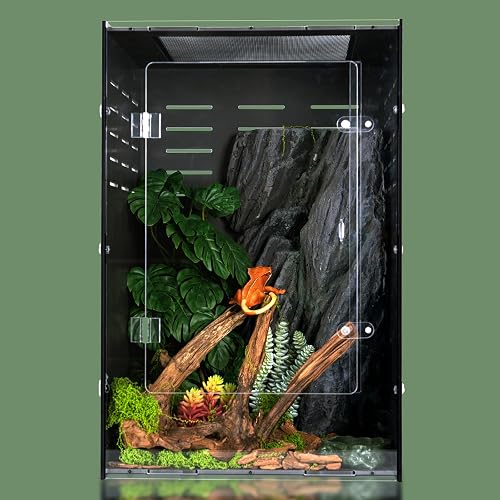
The best UVB light meters and solarmeters for reptile keepers in 2026
The best UVB light meters and solarmeters for reptile keepers in 2026
1. Solarmeter Model 6.5R 鈥?The Gold Standard UV Index Meter for Reptile Keepers
The Solarmeter Model 6.5R is the single most recommended piece of equipment among serious reptile keepers, breeders, and exotic veterinarians 鈥?and has been for over a decade. It's a handheld UV Index meter specifically calibrated for reptile UVB measurement, with a phosphor-based sensor that peaks at 295nm (the wavelength most effective for vitamin D3 synthesis) and reads UV Index directly on a backlit digital display. The range is 0.0-19.9 UVI in 0.1 increments, with auto-ranging between 0.0-9.9 and 10.0-19.9. The meter is factory-calibrated against NIST-traceable standards and ships with a calibration certificate. Accuracy is advertised at 卤10% of reading, though real-world testing shows most units are considerably better than that (卤5% or less). The response time is approximately 2 seconds for a stable reading 鈥?point the sensor at the light source, hold the button, and wait for the number to stabilize.
The 6.5R replaced the original 6.5 in 2024, adding a higher-contrast backlit LCD (significantly easier to read in bright light), improved cosine response (卤5% at 60掳 angle), and a ruggedized ABS housing with a rubberized grip that's easier to hold in one hand inside a tight enclosure. The sensor window is almost identical to the 6.2/6.5 series 鈥?a small circular phosphor-coated chip behind a UV-transparent quartz window 鈥?meaning the decades of community data (Ferguson Zones, recommended UVI for every species) directly applies to the 6.5R readings. The meter is powered by a standard 9V battery (included) with approximately 50 hours of active use life 鈥?a single battery lasts the average keeper 2-3 years. The meter includes a low-battery indicator, a hold function that freezes the reading on screen, and an automatic shutoff after 2 minutes of inactivity.
The Solarmeter 6.5R is not cheap 鈥?$230-260 鈥?but it's the UVB meter that every single reputable online guide, YouTube channel, and reptile forum recommends for a reason. It's traceably accurate, built to last, and backed by decades of herpetological research that uses Solarmeter readings as the standard data format. If you can afford only one piece of advanced husbandry equipment beyond a thermostat, make it the Solarmeter 6.5R.
Pros:
- Reads UV Index directly (0.0-19.9 UVI) 鈥?no conversion charts needed, compatible with Ferguson Zone system
- NIST-traceable factory calibration 鈥?accuracy within 卤5-10% of true UVI
- Phosphor sensor peaks at 295nm 鈥?optimal for reptile vitamin D3 synthesis measurement
- Excellent cosine response (卤5% at 60掳 angle) 鈥?accurate measurements at indirect angles
- Updated high-contrast backlit LCD (6.5R model) 鈥?readable in bright enclosure light
- Auto-ranging display 鈥?automatically switches between 0.0-9.9 and 10.0-19.9 ranges
- Hold function and auto-shutoff 鈥?convenient for one-person measurements
- 50-hour battery life 鈥?one 9V battery lasts years for typical users
- Decades of community data and documentation 鈥?the standard meter in herpetological literature
Cons:
- $230-260 鈥?expensive for a single-purpose tool, the most expensive item in this guide
- Only measures UVB (280-320nm) 鈥?no UVA measurement, no visible light measurement
- Phosphor sensor degrades over time 鈥?loses ~2-3% sensitivity per year, requires recalibration after 3-5 years
- Recalibration costs $50-75 and takes 1-2 weeks (ship to Solarmeter in Florida)
- No data logging or Bluetooth connectivity 鈥?purely manual readings
- 9V battery compartment latch can loosen over time with heavy use
- Not waterproof 鈥?a splash from a mister or dripping fixture can damage the sensor
Rating: 5/5 | Best For: Every serious reptile keeper, breeders, exotic veterinarians, anyone keeping diurnal lizards or turtles
2. Solarmeter Model 6.2 鈥?Best Budget Solarmeter (碌W/cm虏 Readings)
The Solarmeter Model 6.2 is the original UVB meter that predates the UV Index system 鈥?it measures UVB irradiance in microwatts per square centimeter (碌W/cm虏) rather than UV Index. The sensor is the same phosphor-based design used in the 6.5 series, with peak sensitivity at 295nm, and the accuracy is identical (卤10%). The range is 0-1999 碌W/cm虏 in 1 碌W/cm虏 increments, displayed on a basic (non-backlit) LCD screen. The 6.2 typically sells for $160-190 鈥?saving you $60-80 over the 6.5R 鈥?and the only meaningful difference is the metric: 碌W/cm虏 instead of UVI.
The 碌W/cm虏 to UVI conversion is straightforward 鈥?divide 碌W/cm虏 by 20 to get approximate UVI (50 碌W/cm虏 鈮?2.5 UVI) 鈥?but using 碌W/cm虏 means you'll need to reference conversion charts when reading Ferguson Zone guides that use UVI. For experienced keepers who are comfortable with conversions, the 6.2 provides identical sensor quality and calibration to the 6.5R at a lower price. The lack of a backlight is a real-world inconvenience 鈥?the LCD is hard to read in shadow inside an enclosure 鈥?but the reading itself is just as accurate. If your budget is tight and you're willing to do the math, the 6.2 is the entry point into calibrated UVB measurement.
Pros:
- Same calibrated phosphor sensor as the 6.5 series 鈥?identical accuracy (卤10%) and 295nm peak sensitivity
- $160-190 鈥?the most affordable NIST-traceable UVB meter available
- 0-1999 碌W/cm虏 range 鈥?covers all reptile UVB needs (full sun is ~2000 碌W/cm虏)
- Proven 20+ year track record 鈥?hundreds of thousands in use globally
- Uses standard 9V battery 鈥?widely available, 50-hour battery life
- Simple one-button operation 鈥?point, hold, read 鈥?no menus or settings to configure
- Lightweight and compact 鈥?fits in a pocket, easy to maneuver inside enclosures
Cons:
- 碌W/cm虏 readings require conversion to UV Index 鈥?divide by 20, not always exact due to spectral weighting
- No backlight 鈥?LCD is hard to read in shadow, especially inside enclosures with bright overhead lighting
- No auto-ranging 鈥?display shows "1" for values over 1999 碌W/cm虏 (rare but possible in direct sunlight testing)
- No hold function 鈥?reading disappears when you release the button
- No auto-shutoff 鈥?if you accidentally leave it on, expect a dead battery
- Non-backlit display feels dated 鈥?the 6.5R is significantly nicer to use day-to-day
Rating: 4/5 | Best For: Budget-conscious keepers comfortable with unit conversion, educational settings, backup meter
3. Zoo Med Digital UVB Radiometer 鈥?Best Entry-Level UVB Meter Under $100
The Zoo Med Digital UVB Radiometer (model ST-6) is the most accessible UVB meter for casual reptile keepers 鈥?it's available at Petco, PetSmart, and Amazon for $75-90, making it the cheapest UVB-specific meter on the market. It measures UVB irradiance in 碌W/cm虏 (range 0-1,999) and is marketed as a simplified alternative to the Solarmeter for hobbyists who want basic UVB verification without professional-grade precision. The sensor is a silicon photodiode with a UVB bandpass filter (rather than the phosphor-based sensor in Solarmeters), and the accuracy is stated at 卤20% 鈥?double the error margin of Solarmeters.
The Zoo Med meter is a functional UVB checker, not a precision instrument. For most casual keepers 鈥?checking whether that 6-month-old T5 HO bulb is still producing meaningful UVB at the basking spot 鈥?the Zoo Med meter does the job adequately. It will tell you that your bulb that was reading 80 碌W/cm虏 when new is now reading 30 碌W/cm虏 鈥?time for a replacement. What it won't do is give you the precision to set up Ferguson Zone 3 basking with confidence 鈥?the 卤20% error means a reading of 60 碌W/cm虏 could represent anywhere from 48 to 72 碌W/cm虏, which is the difference between Zone 2 and Zone 3. For keepers of sensitive species (chameleons, uromastyx, monitors) that need precise UVB windows, the Zoo Med meter's error margin is uncomfortably large. For a bearded dragon or blue-tongued skink that's tolerant of a broader UVB range, it's perfectly adequate.
Pros:
- $75-90 鈥?the cheapest UVB-specific meter on the market, accessible to every keeper
- Available at major retailers 鈥?Petco, PetSmart, Chewy, Amazon (immediate purchase, no specialty ordering)
- 碌W/cm虏 readout (0-1999) 鈥?functional for tracking bulb degradation over time
- Includes a protective case 鈥?basic drop and dust protection
- Simple one-button operation 鈥?same ease of use as Solarmeter, no learning curve
- Zoo Med warranty and customer support 鈥?US-based company with responsive service
Cons:
- 卤20% accuracy 鈥?double the error margin of Solarmeters, not suitable for precision UVB setup
- Silicon photodiode sensor with bandpass filter 鈥?less accurate spectral response than phosphor sensors
- No NIST-traceable calibration 鈥?accuracy is based on factory testing, not independent standards
- Sensor response degrades faster than Solarmeters 鈥?3-5% per year vs 2-3%, recalibration harder to arrange
- No backlight 鈥?screen is dim and small, difficult to read in enclosure shadows
- Build quality feels cheaper 鈥?plastic housing is thinner, button is mushier, less drop-resistant
- Battery life is shorter 鈥?approximately 30 hours active use, button-cell battery (CR2450)
Rating: 3.5/5 | Best For: Casual keepers on a budget, monitoring bulb degradation, basic UVB presence verification
4. Solarmeter Model 8.0-RP UVC/UVB/UVA Meter 鈥?Best Multi-Spectrum Meter
The Solarmeter Model 8.0-RP is a professional-grade instrument that measures UVB (280-320nm), UVA (320-400nm), AND UVC (250-280nm) in a single handheld device 鈥?making it the most versatile UV meter available. It's designed primarily for industrial and medical applications (UV curing, phototherapy equipment calibration, sterilization verification), but reptile keepers with deep pockets and multiple UV-dependent species have adopted it for its comprehensive spectral coverage. The UVB channel uses the same phosphor sensor as the 6.5R, giving it identical reptile-specific accuracy. The UVC channel is uniquely useful for reptile keepers who use UV sterilizers in their turtle tank or pond 鈥?you can verify that your UV sterilizer is still emitting germicidal UV and hasn't degraded below effective levels. The UVA channel measures visible-range UV output, which is useful for keepers of species (many lizards and birds) that can see into the UVA spectrum and use it for behavior and feeding.
At $340-380, the 8.0-RP is the most expensive meter in this guide by a wide margin 鈥?it's overkill for 99% of reptile keepers. But for professional breeders, zoological facilities, or the keeper who has an aquarium UV sterilizer, a reptile room with a dozen different species, and wants one meter that covers everything, the 8.0-RP is the most comprehensive UV measurement tool available. It reads in mW/cm虏 (rather than 碌W/cm虏 or UVI), which requires another layer of unit conversion for reptile applications, but the accuracy, build quality, and three-channel capability are unmatched.
Pros:
- Three-channel measurement 鈥?UVB (280-320nm), UVA (320-400nm), UVC (250-280nm) in one device
- UVB channel uses the same phosphor sensor as the 6.5R 鈥?identical reptile-specific accuracy
- UVC channel verifies UV sterilizer output 鈥?uniquely useful for turtle/pond keepers
- Industrial-grade build quality 鈥?ruggedized housing, IP54 water resistance rating
- NIST-traceable calibration on all three channels 鈥?unmatched accuracy and traceability
- Switchable range (mW/cm虏 and 碌W/cm虏) 鈥?measures everything from ambient UV to direct solar
- Replaceable sensor module 鈥?future-proof, sensors can be swapped without buying a new meter
Cons:
- $340-380 鈥?extremely expensive for a reptile-only application, significant overkill
- Reads in mW/cm虏 鈥?requires conversion to 碌W/cm虏 and then to UVI for reptile use
- Complex interface 鈥?multiple buttons and modes, steeper learning curve than 6.5 or 6.5R
- Larger and heavier than single-purpose meters 鈥?harder to maneuver in tight enclosures
- Replacement sensor modules cost $100+ each 鈥?maintaining all three channels is expensive
- Massively overkill for 99% of keepers 鈥?a 6.5R + separate UVC test strip covers all practical needs
Rating: 4.5/5 | Best For: Professional breeders, zoological facilities, keepers with UV sterilizers needing verification
5. ExoTerra Digital UVB Meter 鈥?Best Mid-Range Competitor
The ExoTerra Digital UVB Meter is a relatively new entrant (launched 2024) that directly targets the gap between the cheap Zoo Med meter and the premium Solarmeter. It reads UV Index directly (0.0-25.0 UVI) on a backlit LCD with a claimed accuracy of 卤15%. The sensor is a GaN (gallium nitride) photodiode with a UVB-specific bandpass filter 鈥?a different technology than Solarmeter's phosphor sensor, but one that's used in scientific UV measurement instruments. The meter retails for $130-160, positioning it squarely as a "not-quite-Solarmeter but significantly-better-than-Zoo Med" option.
The ExoTerra's biggest advantage over the Zoo Med is reading UV Index directly 鈥?no conversion charts needed for Ferguson Zone setup. The backlit display is superior to both the Zoo Med's non-backlit screen and the Solarmeter 6.2's basic LCD. The accuracy at 卤15% sits between Zoo Med (卤20%) and Solarmeter (卤10%). For keepers who want UVI readings without the Solarmeter price tag, the ExoTerra is the most compelling alternative. Its biggest weakness is the unknown long-term sensor stability 鈥?the GaN photodiode technology hasn't been in the reptile market long enough to establish a multi-year stability track record like Solarmeter's phosphor sensor has. Early adopters report stable readings for 12-18 months, but 3-5 year data simply doesn't exist yet.
Pros:
- Reads UV Index directly (0.0-25.0 UVI) 鈥?no conversion needed for Ferguson Zone setup
- Backlit LCD display 鈥?bright and readable in enclosure shadows
- $130-160 鈥?half the price of a Solarmeter 6.5R, UVI-capable
- GaN photodiode sensor 鈥?modern sensor technology used in scientific UV instruments
- 卤15% accuracy 鈥?better than Zoo Med (卤20%), close to Solarmeter (卤10%)
- Includes a protective carrying case and wrist strap 鈥?better included accessories than Solarmeter
- Widely available 鈥?carried by major reptile retailers and Amazon
Cons:
- New technology 鈥?GaN sensor hasn't proven multi-year stability in reptile applications yet
- 卤15% accuracy 鈥?not quite the precision of Solarmeter (卤10%), important for narrow-tolerance species
- No NIST-traceable calibration 鈥?accuracy claims are manufacturer-stated, not externally verified
- Recalibration process unclear 鈥?ExoTerra doesn't offer a factory recalibration service like Solarmeter
- Sensor peak wavelength not published 鈥?unknown if it peaks at 295nm (optimal for D3 synthesis) or elsewhere
- Auto-shutoff timer is only 60 seconds 鈥?turns off while you're trying to take multiple readings
Rating: 4/5 | Best For: Keepers who want UVI readings at a mid-range price, early adopters of new technology
6. UVI Mate Smart UVB Meter 鈥?Best Bluetooth-Enabled UVB Logger
The UVI Mate is the first Bluetooth-enabled UVB meter designed specifically for reptile keeping. It pairs with a smartphone app (iOS and Android) that logs UV Index readings over time, creates UVB maps of your enclosure (take readings at multiple points and the app generates a heat-map-style UVI gradient overlay), and sends alerts when UVB drops below a user-defined threshold (indicating bulb degradation). The sensor module is a small, standalone puck (2-inch diameter, 0.5-inch thick) that you position in the enclosure and read via the app 鈥?you don't need to be physically reading a display on the meter. The sensor uses a silicon carbide (SiC) photodiode rated for 卤15% accuracy, and it reads UV Index directly (0.0-20.0 UVI).
The UVI Mate's smartphone integration is genuinely useful for documentation-oriented keepers. The app generates PDF reports of your UVB measurements that you can share with your vet, tracks bulb replacement history, and compares current UVI to species-specific targets. The puck sensor can be left in the enclosure for continuous monitoring (USB-C rechargeable, 72-hour battery life in continuous mode) 鈥?you can see how UVI varies throughout the day as the bulb warms up, peaks, and cycles. The data granularity is unique: no other UVB meter in the reptile market provides per-second logging. At $180-210, the UVI Mate costs more than the ExoTerra but less than the Solarmeter 6.5R, making it an interesting option for tech-oriented keepers who value data tracking over raw accuracy.
Pros:
- Bluetooth connectivity with smartphone app 鈥?hands-free readings, continuous monitoring, data logging
- UVI heat-map generator 鈥?creates visual UVB gradient maps of your enclosure
- Bulb degradation tracking and alerts 鈥?automated replacement reminders based on actual UV output
- PDF report generation 鈥?share UVB measurements with your veterinarian
- USB-C rechargeable 鈥?no disposable batteries, 72-hour continuous mode battery life
- Compact puck sensor 鈥?can be placed and left in the enclosure for extended monitoring
- $180-210 鈥?mid-range pricing with features no traditional meter offers
Cons:
- Absolutely requires a smartphone 鈥?no standalone display, unusable without the app
- 卤15% accuracy 鈥?solid but not as precise as Solarmeter (卤10%)
- SiC photodiode sensor 鈥?unproven long-term stability in reptile applications
- App requires account creation 鈥?user data collection, privacy concerns for some users
- Bluetooth range is limited 鈥?about 30 feet line-of-sight, drops through walls and metal stands
- Puck sensor is easily lost 鈥?small, black, easy to misplace in a cluttered reptile room
- Startup company with limited track record 鈥?long-term support and app updates uncertain
Rating: 4/5 | Best For: Data-oriented keepers, breeders tracking multiple enclosures, keepers who share data with vets
7. Generic UV Meter Cards 鈥?Best Zero-Budget UVB Verification (Caution Advised)
UV test cards 鈥?credit-card-sized strips coated with a photochromic material that changes color when exposed to UV light 鈥?are not UVB meters in any meaningful sense, but they deserve a mention because they're the most commonly purchased "UVB testing" product by new reptile keepers. They cost $3-8 on Amazon, show a color change from white to purple when exposed to UV, and provide exactly one data point: "UV light is present" vs "UV light is not present." They cannot measure UVB intensity, cannot differentiate between UVA and UVB, cannot indicate whether your reptile is getting enough UVB or too much, and cannot track bulb degradation (they'll show "UV present" on a bulb that's degraded to 10% of its original output).
The test cards are a cheap way to confirm that your UVB bulb is actually emitting UV 鈥?a genuinely useful function for the $3 price, since UVB bulbs can fail invisibly (the visible light still works, but the UV phosphor has burned out). But beyond binary UV presence verification, the cards provide zero useful data. A Solarmeter reading is to a UV test card what a digital thermometer is to putting your hand in the water 鈥?one is a measurement, the other is a vague sensation. Buy a $5 pack of UV test cards to confirm your brand new bulb is working. Buy a UVB meter to know whether it's working well enough for your reptile.
Pros:
- $3-8 鈥?the absolute cheapest way to verify UV presence
- Instant visual result 鈥?color change from white to purple is unmistakable
- Good for verifying new bulbs work 鈥?catches DOA UVB bulbs
- No batteries, no calibration, no electronics to fail
- Pocket-sized 鈥?can carry in a wallet, always accessible
Cons:
- Binary result only 鈥?UV yes/no, provides zero information about UVB intensity
- Cannot differentiate UVA from UVB 鈥?reacts to both equally
- Cannot detect bulb degradation 鈥?will still show "UV present" on bulbs that need replacing
- Cannot be calibrated or verified 鈥?unknown accuracy and consistency
- Photochromic material degrades over time 鈥?cards expire, lose sensitivity after 6-12 months of use
- Not a substitute for a real UVB meter 鈥?not even close
Rating: 1.5/5 | Best For: Budget UV presence verification only, new bulb testing, NOT a substitute for a real UVB meter
Comparison Table
| Product | Reads UVI? | Accuracy | Sensor Type | Backlight | Special Features | Price |
|---|---|---|---|---|---|---|
| Solarmeter 6.5R | Yes | 卤10% | Phosphor (295nm peak) | Yes | NIST-traceable, hold function | $230-260 |
| Solarmeter 6.2 | No (碌W/cm虏) | 卤10% | Phosphor (295nm peak) | No | NIST-traceable | $160-190 |
| Zoo Med Digital UVB | No (碌W/cm虏) | 卤20% | Si photodiode + filter | No | Widely available retail | $75-90 |
| Solarmeter 8.0-RP | No (mW/cm虏) | 卤10% | Phosphor (UVB/UVA/UVC) | Yes | 3-channel, professional-grade | $340-380 |
| ExoTerra Digital UVB | Yes | 卤15% | GaN photodiode | Yes | Mid-range UVI-capable | $130-160 |
| UVI Mate Smart | Yes | 卤15% | SiC photodiode | N/A (app) | Bluetooth, data logging, UVI maps | $180-210 |
| UV Test Cards (Pack) | No | N/A | Photochromic strip | N/A | Binary UV verification, $3-8 | $3-8 |
How to Use a UVB Meter: A Practical Step-by-Step Guide
Practical guide to using a UVB meter in your reptile enclosure
Practical guide to using a UVB meter in your reptile enclosure
- Warm Up the Bulb: UVB bulbs take 10-15 minutes to reach full output after turning on. Turn on the UVB lamp and wait at least 15 minutes before taking any readings. T5 HO bulbs warm up faster than compact fluorescent bulbs (8-10 minutes vs 12-15 minutes). Mercury vapor bulbs take the longest 鈥?20-25 minutes to stabilize. Readings taken on a cold bulb will be 15-30% lower than true operating output, leading you to incorrectly conclude the bulb needs replacement. Always warm up first
- Take Basking Spot Reading: Position the meter's sensor at the exact spot where your reptile's back/top would be when basking 鈥?the height matters enormously. A bearded dragon basking platform 8 inches from the bulb receives dramatically different UVB than one at 12 inches (inverse square law 鈥?doubling distance reduces UVB to 25% of the original). Hold the meter level (sensor perpendicular to the bulb), press and hold the reading button, and wait 2-3 seconds for the reading to stabilize. Record this number 鈥?it's your baseline UVI at the basking spot. For most diurnal lizards (bearded dragons, uromastyx), the target is UVI 2.5-3.5 (Ferguson Zone 3-4). For forest species (chameleons, anoles), target UVI 1.0-1.5 (Zone 2). For crepuscular geckos, target UVI 0.5-1.0 (Zone 1). If your reading is outside the target range, adjust: raise/lower the basking platform, change the fixture height, or switch to a different bulb output (T5 HO 5.0 vs 10.0 vs 12.0)
- Map the UVB Gradient: Take readings at multiple points across the enclosure: directly under the bulb at basking height, 6 inches to each side of the basking spot, at the middle of the enclosure, and at the cool end. The UVI should decrease smoothly from the basking spot to the cool end 鈥?a gradient of roughly 3.0 →1.5 →0.5 →0.1 across the enclosure for a Zone 3 species. If you find the UVB drops off too sharply (3.0 at the basking spot, 0.2 six inches away), your bulb is too focused 鈥?use a wider reflector or add a second lower-output bulb to smooth the gradient. If UVB is flat across the enclosure, your fixture is over-illuminating 鈥?raise the fixture or use a lower-output bulb
- Account for Screen Tops and Barriers: Take readings with and without any screens, mesh tops, or glass between the bulb and the basking spot. Standard aluminum window screen blocks 25-35% of UVB. Fine fiberglass mesh blocks 15-20%. Glass blocks 95%+ of UVB (a UVB bulb over a glass tank top is essentially useless). Acrylic blocks 90%+. If your screen top is between the bulb and the basking spot, your reptile is getting 25-35% less UVB than the meter reads above the screen 鈥?take readings through the screen (hold the meter inside the enclosure at basking height) for the true measurement
- Establish a Bulb Replacement Schedule Based on Data: Take baseline UVI readings when you install a new bulb. Re-measure monthly at the same spot and same time of day. When the UVI drops to 50-60% of the original reading, replace the bulb. For T5 HO bulbs, this typically occurs at 10-14 months of 12-hour daily use. For compact fluorescent bulbs, 6-8 months. For mercury vapor bulbs, 12-18 months. You may find your specific bulb lasts significantly longer or shorter 鈥?data-driven replacement beats the generic "replace every 6 months" advice every time
FAQ
Can I use a regular UV meter (like the ones for sunscreen testing) for my reptile?
No. UV meters designed for human sunscreen applications (like the ones that measure UV Index for sunbathing) have spectral response curves weighted for human skin erythemal response 鈥?they peak at different wavelengths than the vitamin D3 action spectrum in reptiles. They'll give you a UV Index number, but it won't accurately represent what your reptile's skin is receiving for vitamin D3 synthesis. Use a meter specifically designed for reptile UVB measurement (Solarmeter 6.5R or 6.2, ExoTerra Digital UVB, or Zoo Med Digital UVB).
How often should I recalibrate my UVB meter?
Solarmeter recommends recalibration every 3-5 years for the 6.2 and 6.5 series. The phosphor sensor degrades slowly 鈥?roughly 2-3% per year under normal use and storage. For most hobbyists, the meter will maintain adequate accuracy for 4-5 years without recalibration. If you drop the meter, expose it to extreme heat (over 120掳F, like a car dashboard in summer), or get moisture inside the sensor housing, recalibrate immediately. Budget meters (Zoo Med, ExoTerra) don't offer factory recalibration service 鈥?when they drift, you replace the meter. The UVI Mate and other smartphone-based meters can't be user-calibrated 鈥?replacement is the only option when accuracy degrades.
My UVB meter is reading zero / very low. Is my bulb dead?
First, verify the meter is working 鈥?take it outside on a sunny day and point it at the sun (briefly 鈥?1-2 seconds, don't expose the sensor to full sun for more than 5 seconds or you risk damage). A working meter in direct midday sun should read UVI 5-10 (mid-latitudes) or higher. If the meter reads normally in sunlight, the bulb is the problem 鈥?it's either burned out (UV phosphor depleted), too old, or the ballast has failed (fluorescent bulbs). If the meter reads zero in sunlight, the meter battery is dead, the sensor is damaged, or the meter needs recalibration. Second, verify the bulb type 鈥?some "UVB" bulbs sold online are actually just blue-tinted visible light bulbs (common with cheap Amazon LED "UVB" bulbs). A real UVB bulb will register on a UVB meter; a fake won't.
Is the Solarmeter 6.5R worth the extra money over the 6.2?
For most keepers, yes 鈥?the $60-80 premium for the 6.5R buys you three genuinely useful features: (1) direct UV Index readings (no conversion math 鈥?every Ferguson Zone guide uses UVI, and converting from 碌W/cm虏 adds a step where errors creep in), (2) a backlit display that's dramatically easier to read in the shadow of an enclosure, and (3) a hold function and auto-shutoff that make the meter much more convenient to use. The 6.2 is functionally identical in accuracy, but the quality-of-life improvements on the 6.5R make it worth the premium for anyone who will use the meter regularly.
Conclusion
Our UVB meter recommendations for reptile keepers
Our UVB meter recommendations for reptile keepers
For the vast majority of reptile keepers 鈥?from first-time bearded dragon owners to experienced breeders 鈥?the Solarmeter Model 6.5R at $230-260 is the only recommendation that makes sense. It's the UVB meter that the entire reptile community standardizes on, it reads UV Index directly with NIST-traceable accuracy, it's built to last for years, and it's supported by decades of herpetological research that uses Solarmeter readings as the standard data format. If you can afford a reptile, you can afford a Solarmeter 鈥?and your reptile's long-term health depends on it.
For budget-conscious keepers who are comfortable with unit conversions, the Solarmeter 6.2 at $160-190 provides identical sensor accuracy in a more affordable package 鈥?the lack of a backlight and UV Index readout are inconveniences, not accuracy issues, and the $70 saved can go toward a better UVB fixture or bulb.
For keepers who want an absolute entry point below $100, the Zoo Med Digital UVB Radiometer at $75-90 is the only UVB-specific option at that price point 鈥?its 卤20% accuracy is a significant limitation, but for basic bulb health verification and degradation tracking, it's functional.
For the tech-forward keeper who values data logging and trend analysis, the UVI Mate Smart UVB Meter at $180-210 brings Bluetooth connectivity, enclosure UVB mapping, and automated alerts to a market that's been stuck with analog meters for decades. The sensor accuracy isn't Solarmeter-grade, but the data features are genuinely useful for keepers managing multiple species with different UVB requirements.
A UVB meter is not a luxury. It's not a "nice to have." It's the single most important piece of equipment you can buy for your diurnal reptile 鈥?more important than an expensive enclosure, more important than premium supplements, more important than any decorative accessory. Without a meter, you're flying blind on the single most critical husbandry parameter after temperature. Your reptile deserves better than guesswork. Get a meter. Measure your UVB. Your reptile's bones, immune system, and overall health will thank you.
Related reading: Reptile Myths Debunked: 12 Things New Owners Get Wrong, How to Choose Your First Pet Reptile: A Beginner's Complete Decision Guide, Reptile Substrate & Terrarium Bedding, Reptile Radiant Heat Panels & Overhead Heating, Reptile Automatic Day/Night Timer Lights & Controllers, Reptile Automatic Misting & Humidity Systems, Reptile Shedding Aids, Humidity Hides & Moisture, Reptile UVB Lighting Fixtures, Reptile Terrarium Stands & Enclosure Cabinets and Reptile Calcium & Vitamin Supplements.
Affiliate Disclosure: PawCritic.com participates in the Amazon Services LLC Associates Program. We may earn commissions from qualifying purchases at no extra cost to you.
Where to Buy: Our Top Picks
As an Amazon Associate, PawCritic earns from qualifying purchases. This does not affect our reviews or recommendations.
Affiliate Disclosure: PawCritic is reader-supported. When you buy through links on our site, we may earn an affiliate commission at no extra cost to you. Learn more.