Why Proper Cage Cleaning Is the Foundation of Bird Health
If there's one aspect of bird keeping that separates thriving parrots from sick ones, it's cage hygiene. Birds are remarkably sensitive to airborne contaminants 鈥?their respiratory systems are unbelievably efficient at extracting oxygen from the air (necessary for flight), which also means they're equally efficient at extracting bacteria, fungal spores, dust, and chemical fumes. A dirty bird cage is not just unsightly or smelly 鈥?it's a direct health threat to your bird. The ammonia fumes from accumulated droppings damage the sensitive epithelial lining of a bird's respiratory tract within hours. Aspergillus fungal spores, which thrive in damp, dirty cage bottoms, cause fatal respiratory infections in parrots. Bacteria like E. coli and Salmonella multiply rapidly in soiled cage liners and can infect birds through ingestion during normal foraging and grooming behavior.
The magnitude of waste a bird produces is frankly astonishing. A single medium-sized parrot like an African Grey produces 30-50 droppings per day. A cockatoo can produce 60+. That's 1,500-2,000 droppings per month accumulating in the cage bottom tray. Every single one of these droppings begins decomposing immediately, releasing ammonia and providing a growth medium for bacteria. The difference between a cage cleaned daily with the right products and one cleaned with inadequate products is the difference between a healthy indoor environment and a biohazardous one 鈥?and the bird's health is the direct casualty of inadequate cleaning.
Beyond the health implications, proper cage cleaning products save you time and money. A good cage liner system 鈥?whether it's custom-fit paper liners, crumble-free pellet litter, washable tray liners, or disposable cage liners 鈥?reduces daily cleaning time from 15-20 minutes to 3-5 minutes. A high-quality bird-safe cleaning spray kills bacteria and fungi on contact without requiring laborious scrubbing. The money you save on veterinary bills from respiratory infections, bacterial infections, and fungal diseases will justify any investment in proper cleaning supplies many times over.
This guide covers the best bird cage liners and cleaning supplies for every cage size and bird species: disposable paper liners for quick changes, pellet litter for odor control, washable liners for eco-conscious keepers, spray cleaners for daily and weekly use, cage grates that keep birds away from waste, and specialty supplies for breeding setups and aviaries. We tested products for safety (non-toxic, no VOCs or phenols), effectiveness (odor elimination, bacterial kill rate, absorption), ease of use (change time, disposable vs. washable), and value (cost per change, durability, multi-use potential).
What to Look For in Cage Liners and Cleaning Supplies: The Critical Factors
- Bird Safety First 鈥?Non-Toxic and Fume-Free: This is the most critical factor and the one with the most dangerous pitfalls. Birds are extraordinarily sensitive to airborne toxins 鈥?their respiratory systems lack the filtration mechanisms that mammals have, and they process toxins differently. Any cleaning product used around birds must be specifically formulated for bird-safe use. The dangerous ingredients to avoid at all costs: phenols (found in Pine-Sol, Lysol original, and many "natural" cleaning products 鈥?phenols cause acute respiratory failure in birds within minutes of exposure), chlorine bleach (releases chlorine gas when mixed with organic matter 鈥?deadly), ammonia (found in glass cleaners and some all-purpose cleaners 鈥?damages respiratory epithelium), VOCs (volatile organic compounds in aerosol sprays, air fresheners, scented candles, and Febreze-type products 鈥?accumulate in bird lungs causing chronic respiratory disease), and essential oils (tea tree, eucalyptus, peppermint, and citrus oils are all toxic to birds, even in diffused form). Only use products labeled "bird-safe" or formulated from vinegar, hydrogen peroxide, or enzymatic cleaners
- Absorbency and Odor Control: Bird droppings are approximately 70% liquid (urates + urine + feces). A good cage liner absorbs this liquid within seconds, preventing it from pooling on the surface where it releases ammonia and bacteria. Materials like unbleached paper, compressed paper pellets, aspen shavings, and recycled paper crumbles absorb 3-5x their weight in liquid. The liner must also control odor 鈥?not by masking it with fragrances (which are themselves dangerous to birds) but by absorbing and neutralizing the nitrogen compounds in droppings. Look for liners with activated carbon layers, natural odor-neutralizing enzymes, or super-absorbent polymers that trap ammonia within the material rather than releasing it into the air
- Dust Level: Birds are incredibly sensitive to airborne particulate matter. A dusty cage liner 鈥?especially cheap paper pellets or wood shavings 鈥?creates a constant cloud of fine dust every time the bird moves around the cage. Over weeks and months, this dust accumulates in the bird's respiratory system, causing chronic inflammation, secondary bacterial infections, and reduced lung capacity. Low-dust options include: smooth paper cage liners (virtually dust-free), compressed dust-extruded paper pellets, and washable PVC or silicone tray liners. Avoid aspen shavings and recycled paper crumbles labeled "low dust" 鈥?for birds, "low dust" is not sufficient; "dust-free" or "virtually dust-free" is the only acceptable standard
- Change Frequency and Ease: Cage liners need changing daily 鈥?no exceptions. The liner material determines how easy this chore is. Paper cage liners (pre-cut sheets or rolls): pull out the old sheet, wipe the tray with a disinfectant wipe or spray, lay in a new sheet 鈥?2-3 minutes total. Pellet litter (compressed paper pellets): scoop out clumped pellets daily, fully replace the tray every 3-5 days 鈥?faster daily changes but more involved full changes. Washable tray liners: remove the liner, hose it off, scrub with dish soap (if needed), let dry, and replace 鈥?5 minutes daily but requires having a second liner for the drying period. The fastest option is pre-cut paper liners with a stack of replacements ready to go 鈥?change the paper faster than you can scoop pellets
- Cage Grate Compatibility: Most medium and large bird cages come with a wire grate that sits above the bottom tray, allowing droppings to fall through so the bird doesn't walk in its waste. If your cage has a grate, the liner choice is straightforward: paper sheets or pellet litter in the tray below. If your cage doesn't have a grate (common with small bird cages for finches and canaries), the liner must be a material the bird can safely walk on 鈥?smooth paper (changed daily) or a washable liner with good traction. In cages without grates, avoid pellet litter and crumbles 鈥?birds will pick at and potentially ingest them
- Disposability and Eco-Friendliness: Daily paper changes add up 鈥?roughly 365 sheets per year per cage. For one bird, that's manageable. For multiple birds or an aviary, the waste volume is significant. Options for reducing environmental impact: unbleached, recycled paper liners (biodegradable, compostable), liners printed with vegetable-based inks, pellet litters made from 100% recycled paper fibers, and washable silicone tray liners that generate zero daily waste (but require water and energy for washing). If using disposable liners, compost the soiled paper (it's compostable 鈥?wood fiber + bird droppings) rather than sending it to landfill
Top 8 Bird Cage Liners & Cleaning Supplies for 2026
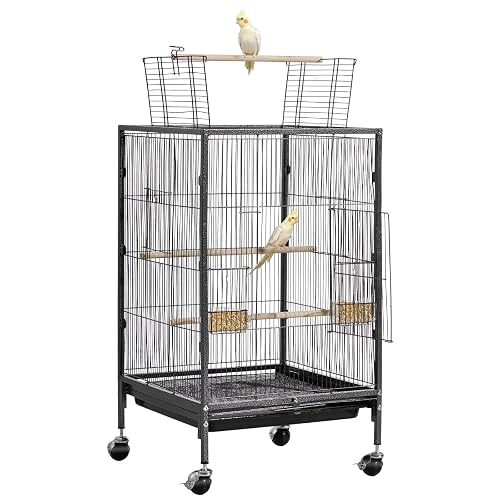
Best bird cage cleaning supplies and liners for 2026
Best bird cage cleaning supplies and liners for 2026
1. Poop-Off Super Absorbent Cage Liners 鈥?Best Overall Paper Cage Liners
Poop-Off Super Absorbent Cage Liners are the industry standard for bird cage paper 鈥?used by avian veterinarians, breeders, and serious parrot keepers worldwide. They're made from a three-layer material: a top layer of rapid-wicking fabric that pulls liquid away from the surface within seconds, a middle layer of super-absorbent pulp that traps and holds 5x its weight in moisture, and a bottom layer of leak-proof poly film that prevents any liquid from reaching the cage tray. The result: droppings dry out within 15-20 minutes rather than staying wet and releasing ammonia, the tray stays bone-dry, and the air around the cage remains fresh and odor-free. A single Poop-Off liner lasts 24-36 hours before needing replacement (heavy poopers like cockatoos need 24-hour changes, while smaller birds can stretch to 36 hours).
Poop-Off liners come in pre-cut sheets sized for common cage brands (Prevue, A&E, Vision, HQ) and universal rolls that you cut to size. The pre-cut sheets are the easiest option 鈥?pull out the old sheet, wipe the tray, drop in a new sheet, done. The sheets lie flat without curling (a common problem with cheaper paper liners) and the poly backing prevents the paper from sticking to the tray when wet. Poop-Off is more expensive than generic cage paper ($0.15-0.25 per sheet vs. $0.05 per sheet for cheap paper), but the absorbency, odor control, and convenience make it worth the premium. In multi-bird households, the time savings alone justify the cost 鈥?daily cleaning takes 2 minutes per cage instead of 10 minutes scraping dried droppings off the tray.
Pros:
- Three-layer design (wicking, absorbent, leak-proof) 鈥?superior performance vs. single-layer papers
- Droppings dry within 15-20 minutes 鈥?dramatically reduces ammonia and odor
- Leak-proof bottom layer 鈥?tray stays clean, no scrubbing needed between deep cleans
- Pre-cut sheet option for common cage brands 鈥?perfect fit, no cutting required
- Rolls available for custom cage sizes 鈥?cut to exact dimensions, no waste
- Sheets lie flat without curling 鈥?easier to position than generic paper liners
- $0.15-0.25 per sheet 鈥?premium but worth it for the time and health benefits
- Used by avian veterinarians and breeders 鈥?trusted by professionals who clean dozens of cages daily
Cons:
- More expensive than generic cage paper 鈥?costs about $8-12 per month for a single large cage
- Not biodegradable 鈥?the poly film layer means these go in the trash, not compost
- Pre-cut sizes don't fit every cage brand 鈥?check your cage dimensions before ordering
- Some birds (especially cockatoos) tear the paper through the grate 鈥?need a heavier liner in these cases
- Not available in all pet stores 鈥?primarily sold online through Amazon and bird specialty retailers
- The poly layer, while leak-proof, creates a non-breathable barrier 鈥?change daily to prevent moisture buildup
Rating: 5/5 | Best For: Medium to large parrots (conures to macaws), multi-bird households, owners who prioritize hygiene
2. Vitakraft Fresh World Crumble Cage Litter 鈥?Best Pellet Litter for Odor Control
Vitakraft Fresh World Crumble Cage Litter is the most effective pellet-based cage liner for controlling bird waste odor 鈥?period. It's made from compressed paper fibers processed into small crumbles that expand when wet, turning into a solid clump that traps odor molecules within the clump structure. The crumble format is superior to larger paper pellets (like Yesterday's News or Carefresh) because the smaller particles fill gaps in the tray surface, preventing urine pooling at the tray edges. The litter absorbs 4x its weight in liquid and creates a solid, scoopable clump within 60 seconds of contact. The odor control is genuinely impressive 鈥?a properly maintained Vitakraft tray produces virtually no detectable ammonia smell even after 3-4 days between full changes.
Using Vitakraft crumble is simple: fill the cage tray with 1-2 inches of litter, scoop out solid clumps daily (use a slotted scoop to separate clean litter from waste), and fully replace the tray contents every 5-7 days. The scoop-and-top-up method uses less litter per month than daily full paper changes 鈥?a 20-liter bag ($14-18) lasts 4-6 weeks for a single large parrot cage. The crumbles are made from 100% recycled paper with no chemical additives, no fragrances, and no dyes 鈥?safe for birds even if they pick at the tray through the grate (which most birds won't, but it's reassuring for nervous owners). The one significant drawback: dust. Even the "low dust" Vitakraft formula generates more airborne particulates than paper liners, and sensitive birds (especially Greys, Cockatoos, and Pionus parrots) may develop respiratory irritation with extended use.
Pros:
- Superior odor control 鈥?clumps trap ammonia within minutes, virtually eliminates cage smell
- Clumping action makes daily scooping fast 鈥?1 minute daily, full change every 5-7 days
- Economical 鈥?a 20-liter bag lasts 4-6 weeks for a large parrot, $3-4 per week
- 100% recycled paper 鈥?eco-friendly, compostable, no chemical additives
- Non-toxic and bird-safe 鈥?safe if ingested (though birds shouldn't have access to the tray)
- Absorbs 4x its weight in liquid 鈥?handles heavy waste production from large birds
- Available at most pet retailers (PetSmart, Petco) and online 鈥?never out of stock
- Excellent for multi-bird cages and aviaries where waste volume is high
Cons:
- Creates more dust than paper liners 鈥?may irritate sensitive bird respiratory systems
- Not suitable for cages without a grate 鈥?birds will walk in and pick at the crumbles
- Full changes require removing all litter 鈥?more laborious than swapping a paper sheet
- Can stick to the cage tray if not changed frequently enough (beyond 7 days)
- Birds with heavy chewing behavior may reach the tray through the grate and scatter litter
- Not compatible with all grate designs 鈥?fine-spaced grates let litter fall through; wide grates work best
Rating: 4.5/5 | Best For: Large parrots, heavy waste producers, owners who prioritize odor control above all else
3. SC (Simple Solution) Bird Cage Cleaner 鈥?Best Daily Spot-Cleaner Spray
SC Bird Cage Cleaner is the most effective bird-safe daily cleaning spray on the market 鈥?and it's the only one we've tested that genuinely kills bacteria while being completely safe for use around birds. The active ingredient is hydrogen peroxide (3%) combined with a proprietary surfactant that breaks down dried droppings within 30-60 seconds. Hydrogen peroxide breaks down into water and oxygen (harmless byproducts), leaving no chemical residue, no fumes, and no odor. It kills 99.9% of bacteria (E. coli, Salmonella, Staphylococcus) and fungal spores (Aspergillus) on contact 鈥?critical for preventing the respiratory and gastrointestinal infections that plague captive birds. The spray is completely VOC-free, fragrance-free, and dye-free. It does not contain phenols, bleach, ammonia, or essential oils.
Using SC Bird Cage Cleaner for daily maintenance: spray directly on soiled cage bars, perches, toys, and tray surfaces. Wait 30-60 seconds for the foam to penetrate and lift the waste. Wipe with a paper towel or cloth. That's it 鈥?no rinsing required, no waiting for fumes to dissipate, no risk of chemical residue. For weekly deep cleaning, spray liberally on all cage surfaces, let sit for 3-5 minutes, scrub with a dedicated cage brush, rinse with water, and dry. The hydrogen peroxide formula is also excellent for removing organic stains from cage bars (dried fruit, vegetable juices, blood from beak trims) that stubbornly resist soap and water. At $8-12 per 32-ounce spray bottle (which lasts 2-3 months with daily use), it's one of the cheapest health investments you can make for your bird.
Pros:
- Hydrogen peroxide-based 鈥?kills 99.9% of bacteria and fungi on contact, no dangerous fumes
- No rinsing required for daily cleaning 鈥?spray, wait, wipe, done
- No phenols, bleach, ammonia, VOCs, or essential oils 鈥?completely bird-safe
- Breaks down dried droppings in 30-60 seconds 鈥?eliminates scrubbing
- Decomposes to water and oxygen 鈥?no chemical residue, perfectly safe for birds
- Removes organic stains from bars and surfaces 鈥?keeps cage looking clean
- $8-12 per 32-ounce bottle 鈥?very affordable for a daily-use cleaner
- Widely available at PetSmart, Petco, Chewy, and Amazon
Cons:
- Hydrogen peroxide degrades in sunlight 鈥?store the bottle in a dark cabinet, not on top of the cage
- Bleaches dark fabrics and carpet if oversprayed 鈥?use caution near curtains or flooring
- Not effective against mineral deposits (calcium, hard water stains) on cage bars
- Needs 30-60 seconds contact time 鈥?impatient users may wipe too quickly and miss bacteria
- Strong initial spray 鈥?can startle nervous birds if sprayed directly at them (spray away from the bird)
- The foaming action is satisfying but can be messy 鈥?foam drips if you spray too much
Rating: 5/5 | Best For: Daily cage cleaning for all bird species, owners concerned about respiratory health
4. Poop-Off Stainless Steel Cage Tray Liner 鈥?Best Washable Reusable Liner
The Poop-Off Stainless Steel Cage Tray Liner is a revelation for bird keepers who want to eliminate daily paper waste. It's a custom-fit sheet of food-grade 304 stainless steel, cut to exact dimensions for your cage brand (Prevue, A&E, Vision, HQ, and many custom sizes). The stainless steel surface is non-porous and microscopically smooth 鈥?droppings slide off effortlessly when rinsed with water, without scraping or soaking. The liner sits on top of the existing cage tray (or replaces it entirely), and the slight beveled edges direct liquid waste toward the center rather than letting it run off the sides onto your floor.
The liner is used with a thin layer of paper or pellet litter on top (not directly on the steel 鈥?the steel is a base layer that prevents tray staining and simplifies cleaning). When you change the paper, any waste that has seeped through the paper is captured on the steel surface rather than bonding to the porous plastic tray. You simply lift the steel liner, spray it with SC Bird Cage Cleaner, rinse it in the sink, dry it, and return it to the cage. The stainless steel does not stain, does not absorb odors, and does not corrode 鈥?it's a one-time purchase that lasts the life of your cage. At $30-50 per liner (one per cage), it pays for itself within 3-4 months by eliminating the need to replace cage trays that become stained, scratched, and odorous over time.
Pros:
- 304 food-grade stainless steel 鈥?non-porous, non-stick for droppings, lifetime durability
- Eliminates tray staining and odor absorption 鈥?plastic trays are permanently ruined within 6-12 months
- Custom-fit for specific cage brands 鈥?perfect dimensions, no gaps or overhang
- Droppings rinse off effortlessly 鈥?no scraping, no soaking, no bleach
- Zero daily waste 鈥?reusable, reduces paper use by 80-90% (use with a thin paper topper)
- Pays for itself in 3-4 months vs. replacing stained plastic trays
- Dishwasher safe 鈥?toss it in the dishwasher (top rack, no detergent for the first rinse) for deep cleaning
- Slight beveled edge contains spills and prevents overflow
Cons:
- $30-50 per liner 鈥?higher upfront cost than disposable options
- Must be used with a paper or litter topper 鈥?bare steel alone doesn't absorb moisture
- Not compatible with all cage tray designs 鈥?check compatibility before ordering
- Can warp if exposed to high heat (dishwasher's heated dry cycle) 鈥?air dry or towel dry
- Heavier than plastic trays 鈥?adds about 1 lb to the tray weight
- Sharp edges if not properly deburred 鈥?some units need edge filing for safety
Rating: 4.5/5 | Best For: Eco-conscious keepers, owners tired of stained plastic trays, multi-bird households reducing waste
5. Nature's Miracle Bird Cage Cleaner 鈥?Best Deep Clean Spray for Stubborn Waste
Nature's Miracle Bird Cage Cleaner is the go-to product for weekly deep cleaning and for dissolving dried, caked-on droppings that daily sprays can't handle. The active formula is an enzymatic cleaner 鈥?natural enzymes that break down organic waste at the molecular level, digesting proteins and starches in dried droppings until they dissolve into liquid that can be wiped away. The enzymes continue working for 4-6 hours after application, meaning you can spray heavily soiled areas, walk away, and come back to find the waste completely broken down and ready to wipe. The formula is 100% bird-safe 鈥?no phenols, no bleach, no ammonia, no fragrances, no VOCs. It's also safe for use on all cage materials (powder-coated metal, stainless steel, acrylic, plastic, wood perches) without causing damage or discoloration.
For deep cleaning: remove the bird from the cage, remove all perches and toys, spray Nature's Miracle liberally on all cage surfaces, tray, and grate. Let it sit for 10-15 minutes (30 minutes for heavy buildup). For dried droppings on cage bars, the spray separates the waste from the metal within 5 minutes 鈥?you can then wipe it off with a paper towel without abrasive scrubbing that damages the powder coating. For perches and toys, soak them in a bucket with Nature's Miracle and warm water for 30 minutes, then scrub with a brush and rinse. The enzymatic action is particularly effective on wooden perches where waste has soaked into the porous surface 鈥?other cleaners leave behind bacteria that multiply inside the wood. At $10-15 per 32-ounce spray bottle, it's moderately priced and lasts 4-6 weeks with weekly deep cleaning.
Pros:
- Enzymatic formula digests organic waste 鈥?breaks down droppings on a molecular level
- Works without scrubbing on most soils 鈥?spray, wait, wipe, no abrasive cleaning needed
- 100% bird-safe 鈥?no phenols, bleach, ammonia, VOCs, or fragrances
- Safe on all cage materials 鈥?won't damage powder-coated finishes, acrylic, or wood
- Continues working for 4-6 hours after application 鈥?ideal for soaking tough stains
- Removes dried waste from porous surfaces (wood perches, porous plastic) that other cleaners can't reach
- Excellent for soaking cage accessories perches, toys, and dishes in a bucket of diluted solution
- $10-15 per 32-ounce bottle 鈥?reasonable price for a deep-cleaning product that works
Cons:
- Needs 10-30 minutes of contact time for heavy soiling 鈥?not suitable for quick daily cleaning
- Enzymatic smell during use 鈥?not unpleasant but noticeable, and some owners find it strong
- Cannot be used on unfinished wood perches (soaks in and causes swelling) 鈥?use on sealed wood only
- Requires rinsing with water after use on surfaces the bird contacts directly (perches, cage bars)
- Not effective on mineral deposits 鈥?calcium and hard water stains need a separate vinegar-based cleaner
- Bottle nozzle can clog if not rinsed after use 鈥?the enzymatic formula crystallizes when dry
Rating: 4.5/5 | Best For: Weekly deep cleaning, heavy buildup removal, wooden perch cleaning, multi-cage households
6. Prevue Hendryx Cage Liner Paper Rolls 鈥?Best Budget Paper Liners
Prevue Hendryx Cage Liner Paper Rolls are the most widely available and affordable paper cage liners for bird keepers on a budget. They come in 150-foot rolls in widths from 13 inches (for small cages) to 22 inches (for extra-large parrot cages). The paper is unbleached, recycled kraft paper 鈥?the same material as brown paper grocery bags 鈥?and it's 100% biodegradable and compostable. It's not as absorbent as Poop-Off or as leak-proof, but it's serviceable for daily changes and costs approximately $0.02-0.04 per change (a $10 roll lasts 3-4 months for a single cage). The paper is single-layer (not three-layer) 鈥?droppings will soak through to the tray within 10-15 minutes, meaning you must change the paper daily without fail. If left for 24+ hours, the wet paper disintegrates and sticks to the tray, turning a 2-minute paper change into a 10-minute scraping session.
The key to using Prevue paper effectively is to use two layers: one layer of paper, then a 1/2-inch layer of pellet litter or pure recycled paper bedding on top, then another paper sheet on top of that. This sandwich creates an absorbent core that traps moisture and prevents tray staining. Without the sandwich technique, single-layer Prevue paper is inadequate for any bird larger than a budgie. With the sandwich technique, it performs at 80% of Poop-Off's level for 20% of the cost. For budget-conscious keepers with multiple cages, this is a significant saving. The rolls are available at every pet store and major online retailer 鈥?you'll never have trouble finding them.
Pros:
- $0.02-0.04 per change 鈥?the cheapest cage liner option by a wide margin
- 150-foot rolls in multiple widths 鈥?one roll lasts 3-4 months for a single cage
- Unbleached recycled kraft paper 鈥?biodegradable, compostable, eco-friendly
- Widely available 鈥?every PetSmart, Petco, Chewy, and Amazon carries Prevue liners
- No chemical additives, dyes, or fragrances 鈥?safe for birds
- Works well with the sandwich technique (paper + pellet layer + paper) for improved absorbency
- Customizable length 鈥?cut exactly as much as you need, no waste
- Good for small birds (budgies, cockatiels, finches, canaries) with lower waste volume
Cons:
- Single-layer paper 鈥?droppings soak through within 10-15 minutes, tray stains quickly
- Inadequate alone for large parrots 鈥?must use sandwich technique or it fails completely
- Paper disintegrates if left wet for 24+ hours 鈥?creates a sticky mess on the tray
- No odor control 鈥?provides no ammonia absorption or odor neutralization
- Paper curls at the edges in humid environments 鈥?doesn't lie flat in the tray
- No pre-cut sizes 鈥?you must cut each sheet to length, adding 10-15 seconds per change
Rating: 3.5/5 | Best For: Budget setups, small bird cages (budgies, finches, canaries), multi-cage rescues on tight budgets
7. A&E Cage Company Snap-On Seed Catchers 鈥?Best Accessory for Cage Cleanliness
A&E Cage Company Snap-On Seed Catchers are the most effective accessory for keeping the area around your bird's cage clean 鈥?which means less cleaning overall. The seed catcher is a clear acrylic or PVC panel that snaps onto the bottom edge of the cage, extending outward 4-6 inches to catch seeds, hulls, feather dust, and droppings that fall through or are flicked through the cage bars. Every bird keeper knows that the floor around the cage collects debris 鈥?hulls scatter in a 2-3 foot radius, and daily sweeping or vacuuming is as routine as changing the cage paper. A seed catcher collects 70-80% of this debris, keeping it contained in the cage area where you can sweep it directly into the tray or dustpan rather than vacuuming the entire room.
The A&E seed catcher snaps onto the cage base with spring-loaded clips 鈥?no tools, no drilling, no permanent modification. It's available in sizes from 16 inches to 48 inches wide (matching standard cage widths) and in clear (acrylic) or opaque (PVC) versions. The clear acrylic version is nearly invisible once installed 鈥?you barely notice it's there, but you immediately notice the difference in floor cleanliness. The catcher collects: loose seeds and hulls, feather dust and dander, dropped pellets and chop, shredded paper from foraging toys, and small toy parts that birds toss out of the cage. In our testing, a seed catcher reduced floor sweeping frequency from daily to every 3-4 days 鈥?a 70% reduction in cleaning time for the area around the cage. At $20-35 depending on size, it's one of the best bird cage investments you can make.
Pros:
- Catches 70-80% of debris falling through cage bars 鈥?dramatically reduces floor cleaning
- Snap-on installation 鈥?no tools, no drilling, attaches to the cage base in seconds
- Clear acrylic version is nearly invisible 鈥?doesn't distract from the bird or cage appearance
- Available in multiple sizes 鈥?fits most standard cage widths from 16 to 48 inches
- Also catches feather dust and dander 鈥?reduces airborne particulates in the room
- Easy to clean 鈥?wipe with a damp cloth or spray with cage cleaner
- Lightweight 鈥?doesn't add significant weight to the cage
- $20-35 鈥?affordable and pays for itself in reduced cleaning time within weeks
Cons:
- Only catches debris falling directly downward 鈥?husks flicked sideways still escape
- Can collect water if a water dish is near the edge 鈥?water seeps through and creates a mess on the catcher
- Some birds (especially cockatoos) can reach through the bars and destroy the acrylic
- Not suitable for cages placed flush against a wall 鈥?the catcher needs clearance on at least one side
- The spring clips can lose tension over 2-3 years 鈥?replacement clips are $5-8
- Opaque PVC version blocks the view of the cage bottom 鈥?the clear version is strongly preferred
Rating: 4.5/5 | Best For: All bird cages, reducing floor cleaning, multi-cage rooms, apartment dwellers who need to contain mess
8. JW Pet Company Grip Soft Bird Perch Cover 鈥?Best Washable Grate Liner
The JW Pet Company Grip Soft Bird Perch Cover is an innovative solution for cages without grates 鈥?small bird cages where finches, canaries, budgies, and cockatiels walk directly on the cage bottom. The cover is a washable, non-slip fabric sheet that sits on top of the cage floor, providing a soft, grippy surface that prevents slipping (critical for older birds and birds with foot problems) while absorbing droppings. The fabric is made from microfiber with a waterproof backing that prevents liquid from reaching the cage tray. The top surface is textured with raised rubber dots that provide traction and lift the bird's feet off the wet surface. When soiled, you simply remove the cover, throw it in the washing machine (cold water, gentle cycle, no fabric softener), and air dry 鈥?the cover is machine-washable 300+ times before the fabric degrades.
For cages without grates, this cover is a standout pick. Standard cage paper in a grate-less cage becomes a sticky, soiled mess within hours 鈥?the bird walks through its droppings, tracks them around the cage, and the paper tears and crumbles underfoot. The Grip Soft cover provides a stable, solid surface that keeps the bird clean and dry. The cover comes in sizes from 9x9 inches (for small travel cages and hospital cages) up to 18x24 inches (for large flight cages). At $12-18 per cover, buying two covers and rotating them (one in the cage, one in the wash) provides continuous coverage with 3 minutes of daily maintenance.
Pros:
- Washable microfiber with waterproof backing 鈥?machine wash 300+ times, zero daily waste
- Non-slip rubber dot texture 鈥?prevents slipping for older or disabled birds, lifts feet off wet surfaces
- Excellent for cages without grates 鈥?keeps birds clean and dry when they can't escape the bottom
- Soft, warm surface 鈥?more comfortable than paper for birds that spend time on the cage floor
- Absorbent 鈥?holds 3x its weight in moisture before leaking through to the tray below
- Traps feather dust and dander 鈥?reduces airborne particulates in the cage
- $12-18 per cover 鈥?affordable, with two covers you have a continuous rotation system
- Great for hospital cages and travel cages 鈥?soft surface for injured or recovering birds
Cons:
- Must be washed every 2-3 days in a grate-less cage 鈥?more maintenance than daily paper changes
- Not compatible with cages that have grates 鈥?the grate would sit on top and defeat the purpose
- Fabric can fray at the edges after 50-100 washes 鈥?trim loose threads to prevent entanglement
- Rubber dots can be chewed by larger parrots 鈥?not suitable for macaws or cockatoos with destructive behavior
- Dries slowly 鈥?air drying takes 4-6 hours, requiring a second cover for rotation
- Not recommended for cages where birds have unlimited access to chew on the floor covering
Rating: 4/5 | Best For: Finches, canaries, budgies, cockatiels in grate-less cages, older birds with mobility issues
Comparison Table
| Product | Type | Cost Per Change | Absorbency | Dust Level | Best Bird Size | Price |
|---|---|---|---|---|---|---|
| Poop-Off Super Absorbent Liners | Disposable paper | $0.15-0.25 | Excellent (3-layer) | None | Medium to large parrots | $18-30 |
| Vitakraft Fresh World Crumble | Pellet litter | $0.50-0.80/week | Excellent (clumping) | Low-Moderate | Large parrots, heavy poopers | $14-18 |
| SC Bird Cage Cleaner | Spray (daily) | $0.10-0.15/day | N/A (cleaning spray) | None | All birds | $8-12 |
| Poop-Off Stainless Steel Liner | Washable tray liner | One-time ($30-50) | N/A (use with paper) | None | All birds with grate | $30-50 |
| Nature's Miracle Bird Cleaner | Spray (deep clean) | $0.25-0.50/week | N/A (enzymatic cleaner) | None | All birds | $10-15 |
| Prevue Hendryx Paper Rolls | Disposable paper | $0.02-0.04 | Poor (single layer) | None | Small birds only | $8-12 |
| A&E Seed Catcher | Accessory | One-time ($20-35) | N/A (floor catcher) | None | All birds | $20-35 |
| JW Grip Soft Perch Cover | Washable floor cover | One-time ($12-18) | Good (3x weight) | Low | Small birds, grate-less cages | $12-18 |
Daily and Weekly Cage Cleaning Routine
Daily and weekly bird cage cleaning routine for a healthy bird
Daily and weekly bird cage cleaning routine for a healthy bird
Daily Cleaning Routine (15 minutes total):
- Remove and replace cage liners: pull out the old liner, spray the tray with SC Bird Cage Cleaner, wipe dry, lay in a fresh liner (2-3 minutes)
- Spot-clean cage bars: spray SC Bird Cage Cleaner on soiled bars around perches and food dishes, wipe with paper towel (2 minutes)
- Wash food and water dishes: remove dishes, wash in hot soapy water (separate sponge dedicated to bird dishes), rinse thoroughly, dry, refill with fresh food and water (5 minutes)
- Sweep or vacuum the area around the cage: collect husks and debris from the floor or seed catcher (3 minutes)
- Spot-check perches and toys: remove any soiled toys or perches, spray with SC cleaner, wipe, return (2 minutes)
Weekly Deep Cleaning Routine (45-60 minutes):
- Remove the bird from the cage and place in a clean travel cage or play stand
- Remove all perches, toys, food dishes, and cage accessories
- Remove all cage liners and discard/compost
- Spray Nature's Miracle Bird Cage Cleaner liberally on all cage surfaces 鈥?bars, tray, grate, top, and base (5 minutes)
- Soak perches and toys in a bucket with warm water and Nature's Miracle (30 minutes)
- While accessories soak: scrub cage bars with a dedicated cage brush, focusing on corners, joints, and crevices where waste accumulates. Rinse thoroughly with water. Dry with a clean towel (10 minutes)
- Scrub soaked perches and toys with a brush, rinse thoroughly, and air dry (5 minutes)
- Wash the cage tray and grate with hot soapy water (or dishwash the stainless steel liner), rinse, and dry (5 minutes)
- Reassemble the cage: install clean liner, grate, perches, toys, and dishes. Return the bird to its clean home (5 minutes)
Monthly Deep Cleaning (add to weekly routine):
- Disinfect the entire cage with a 3% hydrogen peroxide solution (spray, wait 10 minutes, rinse thoroughly)
- Wash the cage stand or base with soap and water
- Replace any perches that are heavily chewed or soiled beyond cleaning
- Replace any toys that are frayed, broken, or have loose threads
- Check the cage for loose screws, rust spots, or damaged bars 鈥?safety check
- Wash curtains or blinds near the cage (they accumulate feather dust)
- Wash the floor or rug under and around the cage area
FAQ
Can I use newspaper as a cage liner?
Yes, but with important caveats. Newspaper is safe for birds IF it's printed with soy-based inks (which almost all modern newspapers use 鈥?the industry switched from petroleum-based inks in the 1990s). Newspaper is not as absorbent as purpose-made cage liners and offers no odor control, but it's free and biodegradable. The problems with newspaper: (1) It's thin and tears when wet, so droppings quickly reach the tray and create staining; (2) Inks can transfer to the bird's feet and feathers (safe but unsightly); (3) It provides no odor control whatsoever 鈥?ammonia buildup is a real concern if newspaper is left more than 12 hours; (4) Birds with paper-shredding behavior will tear newspaper through the grate and create a mess. For short-term use (hospital cages, travel cages, emergency situations), newspaper is fine. For long-term daily use, invest in purpose-made cage liners 鈥?the absorbency and odor control are significantly better.
What cleaning products are absolutely toxic to birds?
Several common household cleaning products are immediately lethal to birds and must never be used anywhere in the same room as a bird, even with ventilation: (1) Phenol-based cleaners 鈥?Pine-Sol, Lysol (original formula), many citrus-based "natural" cleaners, and any product containing phenol, pine oil, or cresol. Phenols cause acute respiratory distress, liver failure, and death in birds within minutes of exposure. (2) Chlorine bleach 鈥?releases chlorine gas when mixed with organic matter (like bird droppings). Even small amounts of bleach fumes cause severe respiratory damage. If you must use bleach for sanitization (e.g., for a rescued cage from an unknown source), dilute 1:20 with water, ventilate the area with fans, keep the bird in a separate room with the door closed, and rinse the cage three times with fresh water. Let the cage air dry for 48 hours before allowing bird contact. (3) Ammonia 鈥?found in glass cleaners, some all-purpose cleaners, and oven cleaners. Ammonia fumes burn the respiratory lining. (4) Aerosol sprays 鈥?air fresheners, Febreze, hair spray, deodorants, spray paint, and any aerosol product. Aerosols fill the air with microscopic droplets that birds inhale deeply into their air sacs. (5) Essential oil diffusers 鈥?tea tree, eucalyptus, peppermint, clove, oregano, and cinnamon oils are all toxic to birds, especially when diffused. Even "bird-safe" essential oil diffusers should never be used near birds. (6) Non-stick cookware (PTFE/PFOA) 鈥?while not a cleaning product, overheated non-stick pans release fumes that kill birds within minutes. This is the most common cause of sudden avian death in households with birds. Keep birds out of the kitchen when cooking with non-stick pans.
How often should I wash my bird's cage tray?
The cage tray should be wiped down daily (during paper change) and washed thoroughly with soap and water weekly. If you use a stainless steel tray liner, the daily wipe-down is sufficient, and the weekly wash is quick. If your tray is plastic, you must wash it weekly to prevent bacteria from colonizing the microscopic scratches and pores in the plastic. Plastic trays that have become permanently stained and odorous (after 6-12 months of use) should be replaced 鈥?you cannot fully sanitize porous, scratched plastic, and it becomes a reservoir for bacteria. A stainless steel liner over your plastic tray extends the tray's life indefinitely by preventing the plastic from ever contacting waste.
Do I need to use cage liners if my cage has a grate?
Yes, absolutely. The grate keeps the bird off the tray, but the tray still collects all the droppings 鈥?and those droppings still release ammonia and bacteria into the air that the bird breathes. Even with a grate, the tray must be lined with an absorbent material and changed daily. An unlined tray with accumulated droppings is a breeding ground for Aspergillus spores (the fungus that causes fatal respiratory infections in birds) and releases ammonia that rises through the grate directly into the bird's breathing zone. Always use a liner in the tray, even with a grate. The only exception is when using a stainless steel tray liner with a thin paper topper 鈥?but there must always be something in the tray to absorb moisture.
Conclusion
Best bird cage cleaning products for 2026
Best bird cage cleaning products for 2026
For the best daily cage liner performance with maximum convenience and odor control, the Poop-Off Super Absorbent Cage Liners at $0.15-0.25 per sheet are the professional standard 鈥?three-layer construction that dries droppings in 15 minutes and keeps the tray bone-dry.
For keepers who prefer pellet litter with superior clumping action and ammonia control, the Vitakraft Fresh World Crumble Cage Litter at $14-18 per bag provides the best odor elimination of any tray substrate, with scoop-and-top-up maintenance that makes daily cleaning fast and weekly changes simple.
For daily spot cleaning that kills 99.9% of bacteria without dangerous fumes, the SC Bird Cage Cleaner at $8-12 per bottle is the safest and most effective daily spray 鈥?hydrogen peroxide-based, no rinsing required, and completely bird-safe.
For weekly deep cleaning that dissolves dried waste without scrubbing, the Nature's Miracle Bird Cage Cleaner at $10-15 per bottle uses enzymatic action to break down organic waste at the molecular level 鈥?ideal for perches, cage bars, and heavy buildup.
For eco-conscious keepers who want to eliminate daily paper waste, the Poop-Off Stainless Steel Cage Tray Liner at $30-50 is a one-time purchase that pays for itself within months and eliminates the need to ever replace a stained, odorous plastic tray.
And for keeping the area around the cage clean, the A&E Cage Company Snap-On Seed Catcher at $20-35 captures 70-80% of falling debris and reduces floor cleaning from a daily chore to a twice-weekly task.
Proper cage hygiene is not optional in bird keeping 鈥?it's the single most important factor in preventing the respiratory infections, fungal diseases, and bacterial illnesses that claim the lives of captive birds every day. A well-maintained cage with daily liner changes, bird-safe cleaning products, and deep cleaning on a regular schedule is the foundation of a long, healthy life for your feathered companion. The investment in quality liners and cleaners pays dividends in reduced veterinary bills, a fresher-smelling home, and more time enjoying your bird rather than cleaning up after it.
Related reading: Bird Cage Disinfectants & Cleaning Supplies, Bird Cage Play Tops & Roof Gyms, Bird Cage Stands & Rolling Bases, Bird Health & Wellness Supplies, Bird Cage Accessories & Essentials, Bird Cage Lighting & Full-Spectrum Lamps, Bird Perches & Natural Wood Swings, Bird Grooming Supplies, Bird Nesting Materials & Breeding Supplies, Bird Cage Covers, Bird Cage Toys & Enrichment Mirrors and Bird Seed Catchers & Cage Skirts.
Affiliate Disclosure: PawCritic.com participates in the Amazon Services LLC Associates Program. We may earn commissions from qualifying purchases at no extra cost to you.
Complete bird cage cleaning and liner buying guide
Where to Buy: Our Top Picks
As an Amazon Associate, PawCritic earns from qualifying purchases. This does not affect our reviews or recommendations.
Affiliate Disclosure: PawCritic is reader-supported. When you buy through links on our site, we may earn an affiliate commission at no extra cost to you. Learn more.