Why Bird Feeders and Water Dispensers Matter More Than Most Owners Realize
Walk past any bird cage in the morning and the evidence is immediate: seed husks scattered across the floor, water bowls clouded with dunked pellets and feather dust, and food debris that somehow ends up three feet from the cage on the opposite side of the room. Birds are messy eaters by nature. In the wild, that messiness serves an ecological purpose, because scattered seeds germinate into the next generation of plants. In a living room, it is simply a cleaning headache.
The mess is not the real problem, though. Contamination is. An open water bowl becomes a bacterial reservoir within hours. A bird dunks food into it, introducing organic matter. It bathes in it, introducing feather dander and fecal matter. A biofilm forms on the bowl surface and shelters Pseudomonas, E. coli, and other pathogens. Published guidance from avian veterinarians consistently notes that bowl water can look clear while carrying a bacterial load high enough to cause chronic low-grade respiratory or gastrointestinal infections. The Association of Avian Veterinarians recommends fresh water at least once daily and full disinfection of food and water containers on a regular schedule.
Feeders have their own set of problems. An open hopper full of mixed seed lets a bird selectively eat its favorite seeds and scatter the rest. Over time, that means a diet skewed toward high-fat seeds and away from the balanced nutrition the mix was supposed to deliver. Scattered seed also attracts moths, ants, and rodents. The practical answer is equipment designed to contain mess, limit contamination, and make daily maintenance fast enough that it actually happens. Seed-catching feeders contain husks before they reach the floor. No-drip water bottles deliver water on demand through a sipper tube or valve, so the reservoir stays sealed and the bird cannot dunk, bathe, or defecate in it. Gravity hoppers dispense food gradually and reduce selective eating. Automatic feeders provide consistent portions when an owner is away from home at mealtime.
This guide covers what to look for in bird feeders and water dispensers across species, cage sizes, and lifestyles, from gravity-fed water silos for budgies to bolt-on stainless bowls for macaws. It also explains the maintenance routine that keeps any of them sanitary, the materials that are safe versus unsafe, and the common mistakes that undermine even well-chosen equipment. Where a specific product is referenced, it is offered as one concrete example in a broad category, not as a ranked top pick.
Key Considerations for Bird Feeders and Waterers
Material safety. Stainless steel and BPA-free, food-grade plastic are the materials that published avian guidance treats as safe for feeders and waterers. Galvanized metal is a known hazard because the zinc coating can cause heavy metal toxicity in parrots. Brass is risky because some alloys contain lead. Cheap plastics can leach chemicals when exposed to warm water or acidic foods such as chopped fruit. Stainless steel is the standard for durability and hygiene: it is non-porous, dishwasher-safe, does not scratch easily, and is chemically inert. Plastic is acceptable in food-grade form but develops micro-scratches over time, and those scratches shelter bacteria that dishwashing may not fully reach.
Mounting security. Feeders and waterers must be mounted so the bird cannot remove them. A cockatoo can unscrew, unhook, and throw a loosely attached bowl across the room in under a minute. Bolt-through mounting, where a screw passes through the cage bars and tightens from the outside, is the most secure common design. Locking quick-release mechanisms that the bird cannot operate are a reasonable second option. Suction cups and simple wire hangers are not adequate for medium-to-large parrots.
Disassembly for cleaning. If a feeder or waterer cannot be taken apart completely in under 30 seconds, daily cleaning becomes a chore that gets skipped. The best designs disassemble into three or four dishwasher-safe pieces with no tools required. Look for removable bowls, detachable sipper tubes, and brackets that stay on the cage while the food-contact parts come free.
Species-specific sipper training. Not every bird instinctively understands a water bottle sipper tube. Most species learn by watching an owner tap the ball-bearing tip to release a drop of water. Once the bird associates the metal tip with water, it typically uses the bottle reliably. Cockatiels, budgies, and finches often adapt within hours. Older birds, wild-caught birds, and some finches may take days or weeks. A backup open water source should always remain available during the transition to ensure hydration.
Portion control for pellets versus seeds. Pelleted diets, which avian veterinarians recommend for most species, can be left in a hopper for 24 to 48 hours because pellets do not spoil quickly and birds cannot selectively pick out preferred pieces when all pellets are uniform. Seed mixes should be offered in controlled portions. Once the bird has eaten the preferred seeds and only the filler seeds remain, the feeder should be emptied and fresh seed offered. A hopper full of seed mix lets a bird eat sunflower seeds for days while ignoring the millet, oats, and pellets that provide balanced nutrition. The Merck Veterinary Manual notes that seed-based diets for psittacines are commonly associated with nutritional deficiencies, which is one reason portion control matters.
Bird Feeders and Water Dispensers: A Buying Guide
Best bird feeders and water dispensers for clean, mess-free feeding
Best bird feeders and water dispensers for clean, mess-free feeding
The category breaks into a few functional types. Sipper bottles deliver water on demand through a stainless steel tube with a ball-bearing tip. Gravity waterers use a sealed reservoir that refills a shallow open cup as the bird drinks. Seed-catching feeders use a hood or guard to contain husks. Gravity pellet hoppers dispense food gradually from a sealed body. Bolt-on bowls are simple open bowls with secure mounting. Dual-compartment stations separate food and water in one mounted unit. Each type has a distinct set of trade-offs, and the right choice depends on species, diet, and how much daily maintenance an owner will realistically perform.
One product that appears repeatedly in owner discussions and retailer listings for the sipper-bottle category is the Lixit Quick-Lock Water Bottle. It is a BPA-free plastic bottle with a stainless steel sipper tube and a double ball-bearing tip that releases water only when the bird pushes the bearing. The Quick-Lock mounting bracket attaches to cage bars with a spring-loaded clamp. It is available in 6 oz, 8 oz, 16 oz, and 32 oz sizes, and the larger models include a water level indicator float. As a representative example of the sipper-bottle format, it illustrates the strengths and limitations of the category. Readers who want to see current pricing and specifications can check the current price on Amazon.
Sipper Bottles: Strengths and Trade-Offs
Sipper bottles are the format most often recommended for contamination resistance because the reservoir is sealed. The bird drinks from a stainless steel tube, and the bulk water never contacts food, feathers, or droppings. A double ball-bearing tip resists dripping and clogs less than single-bearing designs, though mineral deposits in hard-water areas can still build up on the bearing over weeks. The main trade-off is the training period. Birds unfamiliar with a sipper tube need one to seven days of guided introduction, and a backup open water source must remain available throughout. Plastic bottles are the most common and least expensive option, but heavy chewers such as large macaws and cockatoos can eventually damage them. Glass bottles solve the chewing problem but are heavier and breakable if dropped. Stainless steel sipper tubes are the standard across all price points and should be considered non-negotiable for hygiene.
Gravity Waterers: No Training Required
Gravity waterers use a sealed reservoir that screws onto a shallow drinking cup. As the bird drinks, water refills the cup from the reservoir, so the cup never runs dry and the bulk water stays sealed away from bathing, dunking, and defecation. Because the bird drinks from an open cup, no training is needed. The trade-off is that the open cup still accumulates some debris, including food particles and feather dander, so it needs daily rinsing. Full stainless steel construction is the most durable and hygienic option, and bolt-through mounting is essential for medium-to-large parrots. Reservoir threads can cross-thread if reassembled carelessly, and a cross-threaded reservoir will leak permanently.
Seed-Catching Feeders: Mess Reduction
Seed-catching feeders use a deep trough with a transparent hood that extends forward over the food. When a bird cracks a seed, the husk falls inside the hood rather than being flicked outside the cage. A slide-out tray at the bottom catches the husks and can be emptied without removing the feeder. Many models include a perch platform so the bird sits in front of the feeder rather than on top of a food bowl, which keeps droppings out of the food. Acrylic construction is common and offers better clarity than plastic, but acrylic scratches over time and should be cleaned with a soft cloth only. The hood can limit access for very large-beaked parrots, and some nervous birds are initially spooked by the transparent cover and need gradual introduction.
Gravity Pellet Hoppers: Multi-Day Feeding
Gravity pellet hoppers are designed specifically for pelleted diets. A transparent hopper holds one to two cups of pellets and gravity-feeds them into a shallow trough as the bird eats. The hopper prevents selective eating because all pellets are uniform, and it keeps the bulk of the food sealed away from droppings and bathing water. The eating surface is often stainless steel even when the hopper body is plastic. The main limitations are that seeds, especially mixed seeds and sunflower seeds, bridge and clog in the gravity feed, and plastic hopper bodies are not suitable for heavy chewers. In humid environments, pellets left in a hopper for three or more days can absorb moisture, become soft, and mold, so daily refilling is advisable regardless of remaining food.
Bolt-On Bowls: Durability and Simplicity
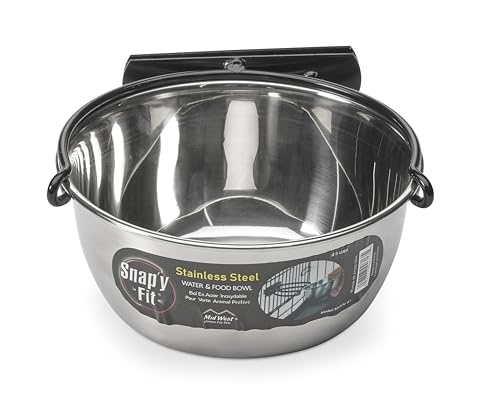
Bolt-on bowls are the simplest format: a stainless steel or plastic bowl with a bracket that clamps onto cage bars with a locking nut. Commercial-grade 304 stainless steel bowls with rolled rims and thick walls are used by breeders and rescues because they survive years of daily commercial dishwashing without warping, pitting, or corroding. The trade-off is that an open bowl offers no contamination protection. It is no more hygienic than any other open bowl, no matter how well made. Bolt-on bowls are best understood as a durability purchase, not a hygiene upgrade. They are also heavy, and a large bowl plus bracket can weigh around two pounds, which requires sturdy cage bars to support without sagging.
Dual-Compartment Stations: Food and Water Separation
Dual-compartment stations place food and water in distinct side-by-side troughs within a single mounted unit. Each compartment has its own removable bowl, often stainless steel, that lifts out for cleaning. The outer housing typically includes a perch bar across the front and a partial hood that provides some debris protection without fully enclosing the food. The design is particularly useful for birds that habitually dunk food in their water, because the water compartment is physically separate from the food compartment. Plastic housings are common and are not suitable for heavy chewers. Compartment sizes are usually modest, suitable for daily portions rather than multi-day feeding.
Quick-Release Bowl Systems: Convenience
Quick-release bowl systems use a mounting bracket that stays on the cage while the bowl twists out with a quarter-turn. The advantage is speed. Refilling becomes a five-second task, and buying multiple bowl sets allows shift-bowl feeding, where a clean bowl is swapped in while the used bowl is washed at a convenient time. Stainless steel bowls are the durable option, while plastic bowls are cheaper but scratch and crack over time. The plastic twist-lock bracket is often the weak point and can eventually crack under a determined cockatoo. The open-bowl design means the quick-release system is no more contamination-resistant than any other open bowl, though the ease of cleaning does encourage more frequent maintenance.
Feeder and Waterer Maintenance: The Daily and Weekly Routine
Essential bird feeder and water dispenser cleaning routine
Essential bird feeder and water dispenser cleaning routine
Daily: change water and remove wet food. Empty and refill water every 24 hours, regardless of whether it looks clean. Bacteria multiply rapidly in standing water, and clear-looking water can still carry a significant bacterial load. Remove any wet, soiled, or uneaten fresh food such as chop, fruits, or vegetables after two to four hours, because these spoil quickly at room temperature and grow mold and bacteria. Dry pellets can remain in the feeder for 24 hours, and seeds for 24 hours, after which husk-filled remains should be discarded.
Daily: wipe food-contact surfaces. Wipe the feeding trough or bowl with a damp paper towel during food changes. This removes the bacterial biofilm that forms on every food-contact surface. A five-second wipe prevents a week of biofilm accumulation that would otherwise require heavy scrubbing to remove.
Weekly: full disassembly and sanitization. Disassemble the feeder and waterer completely, including bottle, sipper tube, gasket, and bracket. Run the parts through a dishwasher on the sanitize cycle, or if no dishwasher is available, soak in hot water with unscented dish soap, scrub all surfaces including the inside of the sipper tube with a pipe cleaner or small brush, rinse thoroughly, and air dry. Check for mineral deposits on the sipper tube ball bearing and soak in white vinegar for 30 minutes if crusty.
Monthly: inspect for damage. Check plastic parts for cracks, because bacteria hide in cracks. Check rubber gaskets for brittleness, cracking, or mold growth and replace immediately if compromised. Check stainless steel for pitting, which is rare but possible with prolonged exposure to acidic foods such as citrus. Check mounting hardware for looseness, because a bracket that has worked loose over a month will eventually fail when the bird tests it.
The rule of two. Keep two complete sets of feeders and waterers per cage. While one set is in use, the other is being washed, dried, and ready for the next swap. This eliminates the situation where cleaning is skipped because there is no time, which is how bacterial colonies build up over weeks of insufficient cleaning.
Safety, Sizing, and Species Considerations
Species size and beak strength. Small birds such as budgies, finches, and canaries do well with lightweight plastic or stainless bowls and small sipper bottles in the 6 to 8 oz range. Medium birds such as cockatiels, lovebirds, conures, and parrotlets need bowls in the 10 to 16 oz range and mounting that resists moderate chewing. Large parrots such as African greys, Amazons, cockatoos, and macaws need heavy-duty stainless steel, glass rather than plastic reservoirs, and bolt-through or locking mounts. Matching equipment to beak strength is not about durability alone. A bowl a bird can remove becomes a toy that can be dropped, chewed, or used to injure itself.
Water volume and bird size. A single budgie drinks roughly 5 to 10 ml of water per day, while a large macaw may drink 50 to 100 ml or more. A 32 oz bottle holds about 950 ml, which is far more than a single small bird needs but appropriate for a large parrot or a multi-bird cage. Overly large reservoirs are not inherently better, because water that sits for many days can still develop issues at the sipper tip even if the reservoir is sealed. Match reservoir size to daily consumption so water is refreshed on a sensible schedule.
Food safety for fresh items. Chopped vegetables, fruits, and other fresh foods should be offered in shallow dishes that are removed within a few hours. The ASPCA pet care library and other veterinary resources maintain lists of foods that are safe and unsafe for pet birds. Toxic items such as avocado, chocolate, caffeine, alcohol, and high-salt foods should never be placed in a feeder, and any produce offered should be washed to remove pesticide residue. The ASPCA Animal Poison Control maintains guidance on household hazards, including plants and foods that can harm birds.
Cage placement. Feeders and waterers should be positioned away from perches where droppings are likely to fall into them. Mounting food and water at a height the bird can reach comfortably while standing on a perch reduces the chance of food being dropped or scattered. In multi-bird cages, provide more than one feeding station so a dominant bird cannot monopolize food or water.
Common Mistakes to Avoid
Refilling instead of washing. Topping off a water bottle or bowl without washing it allows biofilm to accumulate on the interior surfaces. The water may look clear while the container is coated with a bacterial layer. The correct routine is to empty, wash, rinse, and refill.
Using the wrong cleaning products. Scented dish soaps, bleach solutions that are not thoroughly rinsed, and household cleaners can leave residues that are toxic to birds. Unscented dish soap and hot water are sufficient for routine cleaning. If disinfection is needed, use bird-safe products and follow label directions, then rinse thoroughly and allow to air dry.
Ignoring mineral deposits. In hard-water areas, calcium and lime build up on sipper tubes and in gravity reservoirs. Deposits can slow or block water flow, and a bird may not get enough water. A weekly vinegar soak dissolves most deposits and should be part of the routine.
Leaving seed mixes in hoppers. Mixed seed bridges and clogs gravity hoppers, and the bird can selectively eat preferred seeds while leaving the rest. Seed should be offered in controlled portions in a feeder designed for seed, not in a pellet hopper.
Skipping the transition period. Removing an open water bowl the same day a sipper bottle is introduced can lead to dehydration if the bird does not yet understand the bottle. Always keep the original water source available until the bird is observed drinking from the new one.
Buying for looks rather than function. Decorative feeders with painted surfaces, glued joints, or unknown metal alloys are a risk. Paint can chip and be ingested, glue can fail and expose sharp edges, and unidentified metals may contain zinc or lead. Stick to stainless steel, food-grade plastic, and glass from manufacturers who specify materials.
Frequently Asked Questions
My bird refuses to drink from a water bottle. What should be done?
Sipper bottle refusal usually means the bird does not understand the mechanism, not that it dislikes the bottle. Install the bottle alongside the normal water bowl and do not remove the bowl yet. Tap the ball-bearing tip with a finger while the bird watches so a drop of water forms, then touch the drop to the bird's beak so it tastes the water. Repeat two or three times daily. Once the bird is observed using the bottle and the water level drops, gradually move the water bowl lower in the cage over three to four days, then remove it. Monitor closely for the first 48 hours after bowl removal, because a dehydrated bird will fluff its feathers, become lethargic, and show sunken eyes. If those signs appear, return the bowl immediately. Some species, especially wild-caught birds, older birds, and some finches, may never adapt to sipper bottles, in which case a gravity waterer or daily bowl cleaning is the practical alternative.
How often should a bird's water really be changed?
Every 24 hours, without exception. Published avian guidance and veterinary sources consistently note that bowl water can reach high bacterial counts within a day or two at room temperature. Water that looks clean can contain Pseudomonas aeruginosa, E. coli, and Klebsiella, all of which can cause infections in birds with compromised immune systems. Daily water changes are not optional hygiene theater. They are the difference between a healthy bird and a bird with chronic low-grade respiratory or gastrointestinal infections. Owners who cannot commit to daily water changes should switch to a sipper bottle system, where the reservoir stays clean and only the sipper tip needs attention.
Can pellets be left in the feeder for multiple days?
Pellets are formulated to be shelf-stable and do not spoil quickly at room temperature, but two caveats apply. Pellets absorb humidity, so in humid climates or during summer, pellets left in a feeder for three or more days can become soft and mold-prone. If pellets feel soft or smell musty, they should be discarded regardless of age. Pellets left in an open bowl also accumulate dust from the cage environment, including feather dander, dried dropping particles, and airborne dust. A gravity hopper feeder partially solves this by keeping the bulk food sealed. If using an open bowl for pellets, change them every 48 hours at most.
Does stainless steel versus plastic really matter?
Yes, significantly. Plastic bowls develop micro-scratches within weeks of use, from the bird's beak, from cleaning sponges, and from dishwasher tumbling. Those scratches harbor bacteria that can survive dishwashing because sanitizing water cannot penetrate microscopic crevices. Stainless steel is non-porous, so there is nowhere for bacteria to hide. Plastic can also leach chemicals when exposed to warm water, acidic foods such as citrus, and UV light, while stainless steel is chemically inert. For short-term use or tiny birds such as finches and canaries that do not scratch the surface, food-grade plastic is acceptable. For any parrot with a strong beak, for long-term health, and for ease of sanitizing, stainless steel is the better choice.
Are there any materials that should be avoided entirely?
Galvanized metal should be avoided because the zinc coating can cause heavy metal toxicity in parrots. Brass should be avoided because some alloys contain lead. Unmarked or cheap plastics should be avoided because they may leach chemicals, especially when exposed to warm water or acidic foods. Painted or glued decorative feeders should be avoided because paint can chip and glue can fail. When in doubt, choose stainless steel, food-grade plastic from a known manufacturer, or glass.
Where to Buy
As an Amazon Associate, PawCritic earns from qualifying purchases. This does not affect our reviews or recommendations.
The Lixit Quick-Lock Water Bottle is one example of the sipper-bottle format discussed above. It is a BPA-free plastic bottle with a stainless steel sipper tube, a double ball-bearing tip, and a spring-loaded Quick-Lock bracket, available in 6 oz, 8 oz, 16 oz, and 32 oz sizes. Readers who want to compare specifications and current pricing can view this option on Amazon. The same listing can be checked for the larger sizes and for the water level indicator feature on the 8 oz and 16 oz models. For owners who prefer to compare across retailers before deciding, the same product page is a reasonable starting point, and it can be viewed on Amazon here. As always, confirm the size and material of any bottle against the bird's species and beak strength before purchasing, and plan for a transition period with a backup water source. If the bottle is the right fit for the cage, it can be checked on Amazon for current availability.
Final Considerations
Clean food and clean water are not luxuries. They are the baseline standard of care for pet birds. In the wild, a parrot rarely eats from the same food source two days in a row and does not drink from stagnant, feces-contaminated water. Captive birds depend entirely on their owners for these fundamentals. The right feeder and waterer make daily maintenance fast, simple, and effective, which means it is more likely to be done every day. That consistency is what protects a bird from the chronic, low-grade infections that are easy to miss and hard to treat.
The choice between a sipper bottle, a gravity waterer, a seed-catching feeder, a pellet hopper, or a bolt-on bowl comes down to species, diet, and the owner's routine. Small birds in pellet-based diets often do well with a sipper bottle and a gravity pellet hopper. Seed-eating birds benefit from a seed-catching feeder and a sipper bottle or gravity waterer. Large parrots need glass or heavy stainless steel and bolt-through mounting. Multi-bird cages need more than one feeding station and enough capacity to prevent competition. None of these choices is permanent, and equipment can be changed as a bird's needs change.
What matters most is the maintenance routine that surrounds the equipment. Daily water changes, daily removal of wet food, daily wiping of food-contact surfaces, weekly full disassembly and sanitization, and monthly inspection for damage are the habits that keep any feeder or waterer safe. The equipment makes those habits easier, but it does not replace them. A well-chosen bottle that is never washed is no better than a bowl that is never washed. The combination of appropriate equipment and consistent cleaning is what gives a bird the clean, reliable food and water supply it needs to stay healthy.
Affiliate Disclosure: PawCritic.com participates in the Amazon Services LLC Associates Program. We may earn commissions from qualifying purchases at no extra cost to you.