Bird Window Perches and Aviary Accessories: A Research-Based Buying Guide
Published on July 3, 2026 by PawCritic — Birds Category
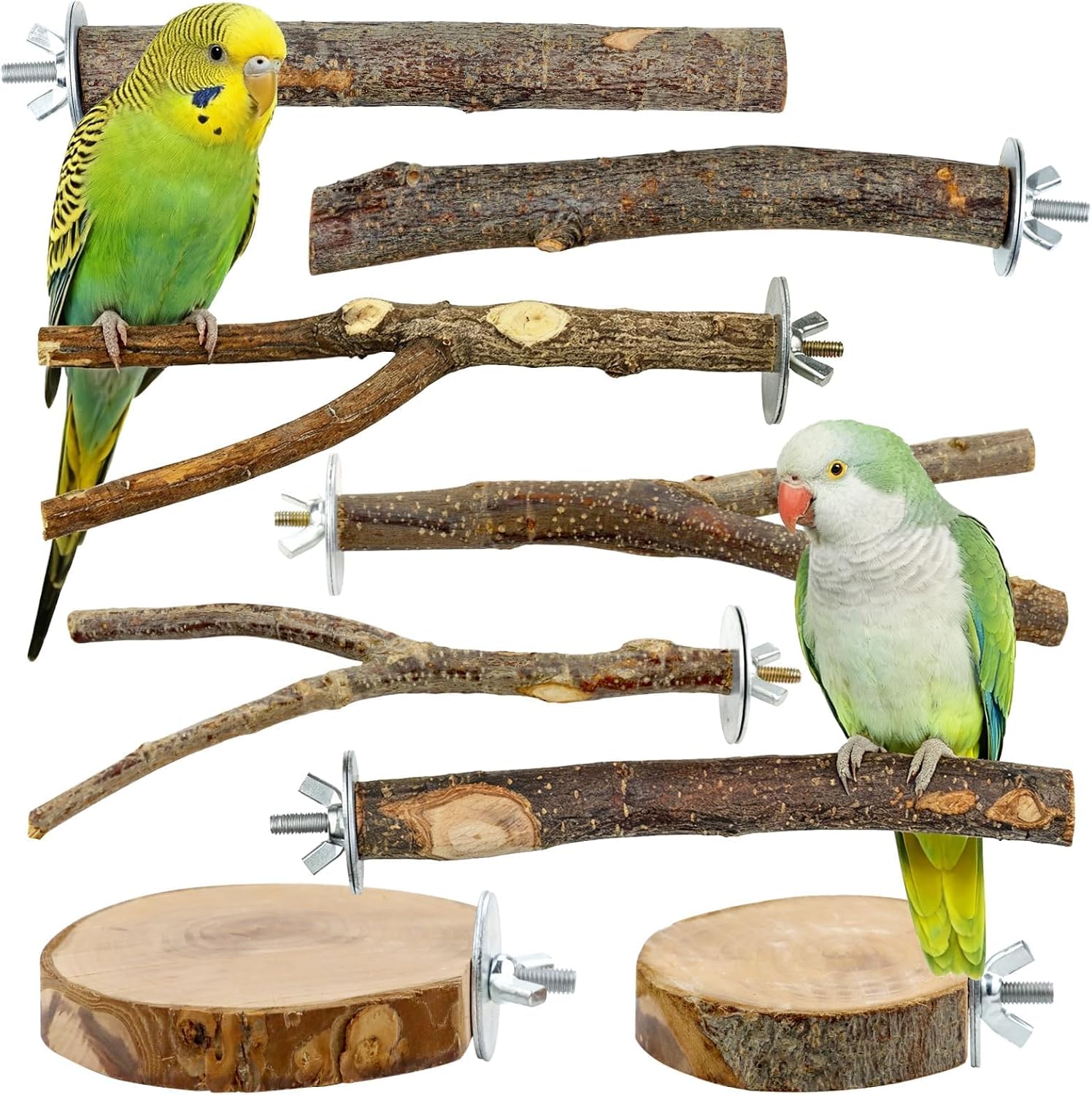
Parrots and other companion birds are social, intelligent, and highly motivated to investigate the world around them. In the wild, most species cover large territories each day, foraging, flying, and watching for predators and flockmates. A cage, no matter how generously sized, cannot replicate that range. Window perches and aviary accessories are a practical middle ground: they let a bird sit in natural daylight, watch outdoor activity, and move between the cage and a secondary station without leaving the home. This guide explains what published veterinary guidance, manufacturer specifications, and verified owner reports say about choosing these products safely.
The case for outdoor or window access rests on several well-documented points. Natural light supports circadian regulation and, when UVB reaches the bird, vitamin D3 synthesis, which is necessary for calcium absorption and bone health. The Association of Avian Veterinarians owner resources note that husbandry, housing, and environmental enrichment are core determinants of companion bird health, and that birds deprived of stimulation are prone to behavioral problems including feather damaging behavior. General bird-care material from the ASPCA pet care library similarly emphasizes species-appropriate housing, safe materials, and supervision. A window perch does not replace a proper cage, but it can add hours of low-cost enrichment each week when used correctly.
The market has moved well past a single suction-cup dowel. Today there are clear acrylic platforms with droppings trays, stainless steel perches rated for large parrots, fleece hammocks for finches, bath-and-perch hybrids, window-mounted aviary boxes, and free-standing outdoor cages. The categories differ enormously in weight capacity, mounting method, and species suitability, and the most common buying mistakes come from mismatching a product to a bird's size, strength, or chewing habits. Below is a structured look at the category: what matters, what to avoid, and how a single representative product fits into the picture.
What Actually Matters in a Window Perch or Aviary Accessory
Weight capacity and mounting method
The single most important specification is the manufacturer's stated weight capacity, and it should be treated as a ceiling rather than a target. A perch rated for 15 pounds is not appropriate for a bird that weighs 500 grams and lands hard after a startled hop; the dynamic load of a landing bird exceeds its static weight. Suction-cup perches typically use two to four cups, and the quality of the cups varies more than the quality of the perch body. Silicone cups with locking mechanisms or push-button releases hold far better than plain rubber cups, particularly on cold glass or in homes with wide temperature swings. Window-mounted aviaries, by contrast, transfer load to the window frame with brackets or foam wedges, so the relevant question becomes whether the frame and sash can carry that load and whether the window can be closed while the unit is installed.
Materials and bird safety
Bird-safe construction means no exposed zinc, lead, or copper in hardware the bird can reach; no soft plastics that shatter into sharp fragments; and no toxic paints, stains, or sealers on wood. Powder-coated steel is common in aviary frames and is generally acceptable when the coating is intact, but chipped powder coat over galvanized or plain steel can expose a rusting surface that owners should monitor. Acrylic is popular because it is clear, light, and easy to wipe down, but it scratches, and scratched acrylic harbors debris. Stainless steel is the most durable perch surface for large parrots because it resists beak gouging and can be washed aggressively. Unsealed pine, often used in wooden window gyms, has a real trade-off: it offers excellent grip and is safe to chew, but it absorbs droppings and moisture and can develop odor or surface mold if not maintained. The Merck Veterinary Manual section on exotic and laboratory animals is a useful reference for understanding how husbandry factors such as housing materials and sanitation affect captive bird health.
Size, perch diameter, and footing
Perch surface area matters more than most buyers expect. A platform perch gives a bird room to turn around, lie down, and spread a wing, while a dowel forces a single grip position. Textured surfaces, whether diamond-pattern acrylic or brushed stainless steel, improve grip without abrading the foot pad. Foot health is a genuine welfare issue: birds that spend hours on a single uniform-diameter surface are at higher risk of pressure sores, so a window perch should be one station among several with different diameters and textures. For small birds such as budgies, finches, and canaries, an 8 by 6 inch platform is generous. Medium birds such as cockatiels, conures, and quakers need roughly 10 by 8 inches to lie down comfortably. Large parrots need 12 by 10 inches or more, plus hardware rated well above their body weight.
Cleaning and sanitation
Any surface a bird spends hours on will collect droppings, food debris, and feather dust. Removable trays, lift-off side panels, and drain plugs are not luxuries; they determine whether the product actually gets cleaned. Acrylic and stainless steel wipe clean with mild soap and warm water. Fleece hammocks must be machine washed frequently because fabric holds moisture and organic matter. Unsealed wood should be inspected weekly for staining and odor, and replaced or resealed when it degrades. A shallow droppings tray that overflows after a few hours is a design flaw worth weighing before purchase.
Window type and installation
Suction-cup perches require smooth, clean, non-textured glass. They will not hold reliably on frosted glass, film-coated glass, or glass with heavy mineral buildup. Window-mounted aviary boxes generally require a double-hung window that opens vertically, because the sash must sit above the unit. Casement and horizontal slider windows usually are not compatible. No-drill foam-wedge systems exist for renters, but foam can loosen in wind, and the window cannot be fully closed while the unit is in place. Permanent screw-mounted brackets are more secure but leave holes and may conflict with lease terms.
Sun, heat, and supervision
Direct sun through glass creates a greenhouse effect. The air pocket between the glass and an interior perch can run 10 to 20 degrees warmer than the room, and a bird cannot leave a perch it is clipped to or cannot navigate away from. East-facing windows give gentle morning light; north-facing windows give indirect light all day; south- and west-facing windows can become dangerous during peak afternoon hours. Standard window glass blocks most UVB, so a bird on an indoor window perch gains visible light and warmth but limited vitamin D benefit unless the window is open or the bird is behind UVB-transmitting mesh. Aviary mesh and open windows change that equation, which is one reason window aviary boxes are appealing. No window perch or outdoor aviary should be used unsupervised, and sessions should be limited to a few hours at a time.
Product Categories at a Glance
| Category | Typical Mounting | Best Suited To | Main Trade-Off |
|---|---|---|---|
| Suction-cup platform perch | 2-4 suction cups on glass | Small to medium birds | Cups can fail; no predator protection |
| Heavy-duty metal perch | Locking silicone cups | Large parrots | Higher cost; needs very clean glass |
| Fleece window hammock | Cups plus cage clips | Finches, canaries, small budgies | Not for chewers; frequent washing |
| Bath-and-perch hybrid | Suction cups plus cage clip | Small to medium birds | Daily water changes; splashing |
| Window aviary box | Frame brackets or foam wedges | Small birds, supervised outdoor access | Permanent or semi-permanent install |
| Free-standing outdoor aviary | Floor standing | Small birds on balconies or patios | Not predator-proof; must be moved indoors |
A Representative Example: What a Clear Acrylic Window Perch Offers
For readers who want a concrete starting point, one widely sold design in this category is a clear acrylic platform perch with four heavy-duty suction cups, a textured grip surface, and removable side panels that form a shallow droppings tray. Manufacturer specifications for this style of perch list a platform around 10 inches wide by 8 inches deep and a weight capacity in the range of 15 pounds, which places it in the small-to-medium bird bracket: budgies, lovebirds, cockatiels, conures, quakers, and similar species. The clear body is intended to make the perch visually unobtrusive against the glass, and the tray design is meant to let an owner lift off the panels and rinse them rather than scrubbing the window sill.
This design suits owners who want daily, supervised window time without drilling or permanent installation, and whose birds are light enough that four quality suction cups are adequate. The trade-offs are consistent across owner reports: acrylic scratches if cleaned with abrasive pads, the suction cups need clean smooth glass and periodic reseating, the droppings tray is shallow and can overflow during long sessions, and the perch is not appropriate for macaws, cockatoos, or other heavy chewers. For a bird in that size class, the honest framing is that this is an enrichment accessory, not housing, and it works best as one station among several. Readers who want to compare specifications and current pricing can check the current price on Amazon for this style of perch before deciding whether it fits their bird's size and their window setup.
How to Match a Product to Your Bird
Small birds: budgies, finches, canaries, parrotlets
Small birds are the easiest group to serve and the group most likely to be over-served by heavy hardware. A lightweight acrylic perch, a fleece hammock, or a small window aviary box all work. The priorities are small mesh openings if the bird goes outdoors (roughly half an inch or less to prevent escape), a perch diameter the bird can grip fully, and protection from drafts. Finches and canaries generally do not chew destructively, so fleece hammocks are viable for them in a way they are not for parrots. Budgies are more active chewers than their size suggests and will test plastic edges and suction cups over time.
Medium birds: cockatiels, conures, quakers, lovebirds
Medium birds need a sturdier platform and a tray that actually contains waste. A 10 by 8 inch acrylic platform with four cups is a reasonable baseline, and a removable tray becomes important because a cockatiel can produce a surprising volume of droppings over a two-hour session. Cockatiels are notorious fabric chewers, so fleece products should be avoided for them. Conures will test every seam and hook; anything with small removable parts that could be swallowed is a poor choice. This is also the size class where a bird's landing force starts to matter, so cups should be inspected before every session.
Large birds: African greys, Amazons, cockatoos, macaws
Large parrots need metal. Acrylic platforms in the 15-pound class are not appropriate for a 450-gram African grey that lands with momentum, let alone a macaw. A stainless steel perch with locking silicone cups rated to roughly 30 pounds is the more defensible choice, and the trade-offs are real: metal can feel cold in winter, the units cost more, and the suction cups demand very clean, very smooth glass. Toy hooks on heavy-duty perches add enrichment value because large parrots need foraging and destruction outlets. Even with a 30-pound rating, a large parrot should be supervised on a suction-mounted perch, and many experienced keepers prefer a floor stand or a cage-top gym for large species instead.
Safety, Toxicity, and What to Avoid
Birds explore with their beaks, which means anything within reach will be chewed, ingested, or both. The ASPCA Animal Poison Control maintains guidance on common household toxins, and the general principle applies directly to bird hardware: avoid unknown finishes, avoid soft plastics that fragment, and avoid metals that can leach. Specific hazards to screen for in window perch and aviary products include:
- Exposed zinc or galvanized hardware that a bird can reach and chew, which is associated with heavy metal toxicity in birds.
- Lead weights, lead solder, or lead-based paints on older or imported products.
- Copper fittings and copper-containing treatments, which are toxic to birds at low doses.
- Small removable parts, screw caps, and toy hooks that a determined bird can unscrew and swallow.
- Mesh openings large enough for a bird to pass its head through but not its body.
- Sharp cut edges on wire mesh, which are common on inexpensive aviaries.
- Unsealed wood that stays damp and develops mold, which is a respiratory risk in a confined space.
Beyond materials, the two behavioral risks are escape and predation. A window aviary box with a tunnel connection to a cage is only as secure as the connection, and birds have escaped through gaps that looked closed. A free-standing outdoor aviary that is not predator-proof should never be used unattended, because hawks, raccoons, cats, and even rodents can reach through or work open lightweight mesh. Temperature is the third risk: a bird in a sunlit window aviary on a warm day can overheat quickly because it cannot move to shade on its own.
Maintenance Schedule That Actually Works
Window perches fail in predictable ways, and nearly all of those failures are maintenance issues rather than manufacturing defects. A practical routine looks like this:
- Before every session: press each suction cup to confirm it is seated, and check that the perch body is not cracked or loose.
- Daily: empty and rinse the droppings tray or wipe the platform; change bath water if the product includes a bath.
- Weekly: remove the perch, wash cups and glass with warm water and a drop of mild soap, dry both surfaces, and reseat. Inspect acrylic for scratches and metal for rust or chipped coating.
- Weekly: machine wash fleece hammocks on a gentle cycle and air dry.
- Monthly: inspect all hardware for looseness, check wood components for staining or odor, and replace bark perches or sisal rope when frayed.
- Seasonally: for outdoor aviaries, check mesh for rust and sharp edges, verify latches, and confirm the structure is stable before storm season.
Suction cups degrade over time even with good care. Silicone cups generally outlast plain rubber, and replacements are inexpensive relative to the cost of a fall. Owners who report cups failing after a few weeks almost always describe dirty glass, textured glass, or cold glass as the underlying cause.
Common Mistakes Buyers Make
The first mistake is buying for the bird the owner plans to get rather than the bird in the room. A perch rated for a budgie will not hold a cockatiel that lands hard, and a 30-pound stainless perch is wasted money and window space for a finch. The second mistake is treating the stated weight capacity as a safety margin when it is a limit. The third is ignoring window type: suction cups need smooth glass, and aviary boxes need a double-hung window. The fourth is underestimating cleanup; products without trays or with shallow trays generate more work than owners expect, and the perch ends up unused. The fifth is placing the perch in a west-facing window in summer, where heat buildup can be dangerous within an hour. The sixth is skipping supervision because the product looked secure on installation day. The seventh is using an outdoor aviary as permanent housing; these products are enrichment stations, not predator-proof enclosures, and the published guidance from veterinary organizations consistently treats supervised outdoor access as the appropriate use.
Frequently Asked Questions
Is a window perch safe for a bird?
With the right product for the bird's size, clean smooth glass, a weight rating well above the bird's weight, and supervision, a window perch is a low-risk enrichment tool. The main failure modes are suction cup release, overheating in direct sun, and a bird chewing hardware it should not reach. Inspect before each use and limit sessions to a few hours.
Does a bird get vitamin D through a window?
Standard window glass blocks most UVB, which is the wavelength needed for vitamin D3 synthesis, so an indoor perch behind closed glass provides limited vitamin D benefit. Visible light, warmth, and visual stimulation are still valuable. Open windows, UVB-transmitting mesh, or a properly designed outdoor aviary change the UVB picture, but diet and appropriate full-spectrum lighting remain the more reliable routes to vitamin D for most indoor birds.
How much weight can suction cups hold?
It depends entirely on the cup and the glass. Basic cups on budget perches may be rated for only a few pounds, while locking silicone cups on heavy-duty perches are rated to around 30 pounds by their manufacturers. Ratings assume clean, smooth, non-textured glass at moderate temperature. Cold glass, dirty glass, and textured glass reduce holding power substantially.
Can I use a window perch in a rental apartment?
Suction-cup perches leave no marks and are the renter-friendly option. No-drill window aviary inserts that use foam wedges also exist, but they require leaving the window partially open and can loosen in wind, so they need frequent checking. Screw-mounted aviary boxes generally are not suitable for rentals.
How do I stop suction cups from failing?
Clean both the cup and the glass with warm water and mild soap, dry both fully, and press the cup firmly while pushing out air. Reseat weekly. Replace cups when they feel stiff, discolored, or no longer snap back. Avoid alcohol-based cleaners, which can degrade silicone over time.
What if my bird is afraid of the new perch?
Introduce it gradually. Attach the perch with the bird out of the room so it can investigate from a distance later. Place favored treats on the platform, and spend time near the window with the bird on your hand before expecting it to use the perch alone. Some birds react to their own reflection, which fades with familiarity.
How many birds can share one window perch?
For a single platform perch, one bird at a time is the safe default. Multi-bird window gyms with larger platforms can accommodate two or three compatible medium birds, but only if the birds already coexist peacefully. Crowding a perch creates the same resource-guarding behavior it creates in a cage.
Where a Window Perch Fits in a Complete Setup
A window perch is an accessory, and it works best when it is one part of a broader enrichment plan rather than the whole answer. A bird needs a cage sized for full wing extension and short flights, perches of varied diameter and texture, foraging opportunities, destructible materials appropriate to the species, and social time. A window perch adds a change of scenery, natural light, and a second station that breaks up the day. A window aviary box or a supervised outdoor aviary adds fresh air and, with the right mesh, more of the UVB spectrum. None of these replace veterinary care, a balanced diet, or daily interaction. Readers who want to look at one concrete option in the natural wood perch category can view this option on Amazon and compare its stated dimensions and weight rating against their own bird's size and their window type.
Final Checklist Before You Buy
- Confirm the manufacturer's weight rating exceeds your bird's weight with margin for landing force.
- Confirm the perch dimensions let your bird turn around and lie down.
- Confirm the mounting method matches your window type and your lease terms.
- Confirm the materials are free of exposed zinc, lead, and copper, and that any wood is bird-safe and maintainable.
- Confirm there is a workable cleaning solution, ideally a removable tray.
- Plan the window orientation and session timing to avoid heat buildup.
- Commit to supervision and a maintenance routine, including regular suction cup replacement.
Used with realistic expectations, a window perch or aviary accessory is one of the better-value additions an owner can make. The gains are behavioral and environmental rather than dramatic: more light, more to watch, more movement between stations, and less time spent staring at the same four cage bars. The risks are manageable and mostly mechanical, which means they respond well to inspection, cleaning, and honest matching of product to species. Buy for the bird you have, mount it where the sun will not cook it, and treat it as supervised enrichment rather than housing.
Affiliate Disclosure: PawCritic is a participant in the Amazon Services LLC Associates Program, an affiliate advertising program designed to provide a means for sites to earn advertising fees by linking to Amazon.com and affiliated sites. Recommendations are based on published guidance, manufacturer specifications, and verified owner reports. Purchases made through our links help support our research at no extra cost to you.
Last updated: July 3, 2026. Prices and availability are subject to change. Always verify current pricing on Amazon before purchasing.