Parrot Shower Perches and Bathing Accessories: A Practical Buying Guide
Published on July 5, 2026 by PawCritic — Birds Category
Bathing is one of the most important and most frequently overlooked parts of parrot husbandry. Wild parrots encounter rain, dew, and standing water almost every day, and that constant exposure keeps their feathers clean, flexible, and free of dust and dander. In captivity, many parrots simply do not get enough bathing opportunities, and the consequences show up in the bird's plumage and skin: dry flaky skin, brittle feathers, an overabundance of dust, and in some cases over-preening or feather destructive behavior that develops when a bird tries to relieve skin discomfort on its own. Avian veterinary guidance, including resources from the Association of Avian Veterinarians, consistently describes regular bathing as a normal, health-supporting part of companion parrot care rather than an optional extra.
The benefits of a consistent bathing routine are well documented in avian care literature. Water on the feathers stimulates the preen gland and encourages the distribution of natural oils along the feather shafts, which keeps the barbs aligned and the plumage waterproof. Bathing removes dust, dander, and airborne debris that would otherwise be inhaled or swallowed during preening, which matters especially in households with dusty species like African greys, cockatoos, and Amazons. It soothes dry or itchy skin, promotes normal preening behavior instead of destructive over-preening, and provides genuine enrichment — many parrots treat bath time as the highlight of their day, flapping, spreading their wings, and vocalizing through the whole process. For background on feather and skin health across species, the Merck Veterinary Manual's exotic animals section is a reliable reference.
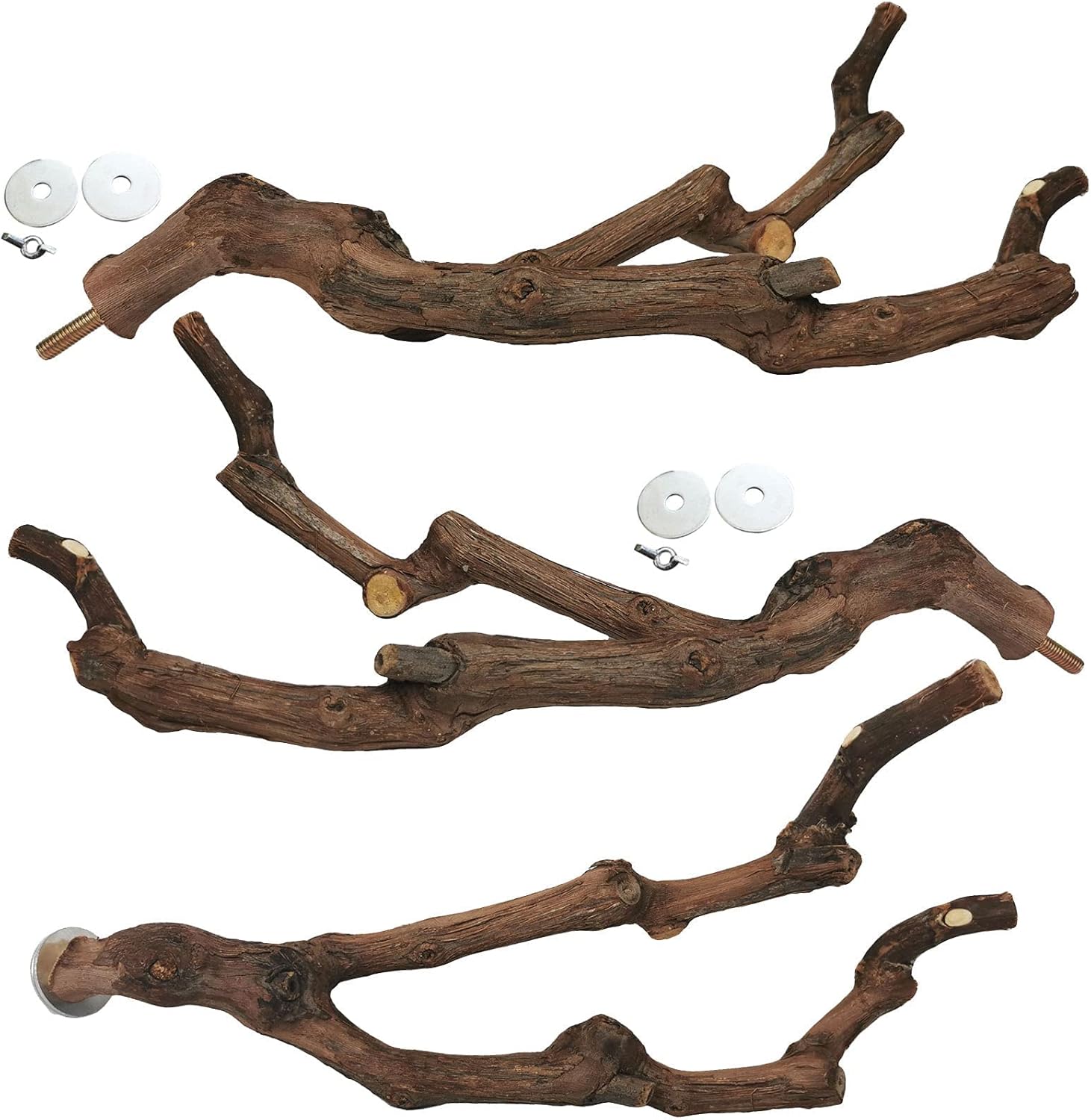
This guide is a buying guide, not a lab comparison. PawCritic does not run hands-on product trials. Instead, this article pulls together published manufacturer specifications, avian veterinary guidance, and long-standing owner reports to explain what matters when you are choosing a shower perch or bathing accessory for your bird, what the real trade-offs are between mounting styles and materials, and where the common mistakes happen. As concrete examples of what a well-reviewed product in this category looks like, you can look at a widely used natural wood perch of the type made by kathson — view this option on Amazon — as well as a bathing-friendly toy assortment from the same manufacturer that some owners use to build positive associations around bath time: check the current price on Amazon. Both are single examples in a large category, not endorsements of a ranked shortlist.
Why Parrots Need Regular Baths
Feathers are living structures in the sense that they require constant maintenance, and a parrot's beak alone cannot fully clean a feather that is coated in household dust, cooking-oil aerosols, and its own shed dander. Water does three things the beak cannot: it softens and floats away debris, it rehydrates the skin underneath the feather follicles, and it triggers the preening sequence that realigns feather barbs and redistributes uropygial oil. A parrot that never bathes tends to look dull and slightly greasy or excessively powdery, and the skin under the plumage becomes dry and itchy. Birds respond to that itch by preening harder, and over-preening can progress in some individuals to feather plucking, which is far harder to reverse than it is to prevent.
There is also a respiratory dimension. Powder-down species — greys, cockatoos, cockatiels — produce fine dust continuously, and in a dry home with central heating or air conditioning that dust accumulates on the bird itself as well as in the air. Regular wetting of the feathers knocks that dust down. Owners of dusty species frequently report that consistent misting or showering visibly reduces both the dust in the room and the bird's scratching. This is one of the few areas of parrot care where the payoff is immediately visible: within a few weeks of a regular bathing schedule, most owners report glossier feathers and a bird that actively solicits bath time.
The Main Categories of Bathing Setup
There are four broad approaches to parrot bathing, and the right one depends on your bird's size, temperament, and preferences — not on price tier. Wall-mounted shower perches attach to tile or glass with suction cups and let the bird join you in the actual shower. Freestanding bathing stands combine a perch, a mister, and a catch tray in one floor-standing unit, no wall attachment required. Cage-mounted baths — shallow clip-on bowls — let small birds bathe inside their enclosure on their own schedule. External tube-style baths mount on the outside of the cage and keep the interior drier. Misting with a plain spray bottle remains the simplest option of all and works for nearly every species, though it requires more patience from the human.
Wall-Mounted Shower Perches
Suction-cup shower perches are the most popular category, and the reasons are straightforward: they are cheap, portable, require no permanent installation, and they put the bird in the shower stream the way rain would in the wild. The classic design — a textured plastic or PVC perch platform on two large suction cups, with raised side lips — has been on the market for years and has accumulated a large body of owner feedback. The JW Pet shower perch is the archetype of this design, and its long track record of owner reports makes it a useful reference point for the whole category: owners of cockatiels, conures, lovebirds, and similar small-to-medium birds describe the textured surface as providing secure footing even when soaked, and the suction cups as holding well on clean smooth tile or glass. Per the manufacturer's specifications, the perch is sized for small-to-medium parrots, generally cited at up to roughly 250 grams.
Who this category suits: owners of birds from budgie size up to small grey size who already shower at a comfortable temperature and want the bird to participate. The trade-offs are real, though. Suction cups are the weak point of the entire category — they hold firmly on clean, smooth, non-porous surfaces and degrade quickly on textured tile, frosted glass, or grout lines. A cup that has lost elasticity with age will release without warning, and a 150-gram conure flapping enthusiastically in a stream of water puts far more transient load on a mount than its static weight suggests. Owners should press-test the mount before every session, replace cups that show any stiffness or cracking, and never leave a bird unattended on the perch. If your shower walls are textured, this category is probably wrong for you, and a freestanding stand or plain sink bathing is the safer route.
Freestanding Bathing Stands
Freestanding stands take the mounting question off the wall entirely. A typical design uses a powder-coated steel frame with a weighted non-slip base, one or more perch heights, a flexible gooseneck mister, and a removable catch tray. Because nothing adheres to tile, there is no suction failure mode, which makes this the most stable option for heavy birds — Amazons, cockatoos, macaws — where a dropped perch means a dropped bird. The trade-offs are cost, floor space, and assembly: these units occupy shower or bathroom floor area, take twenty minutes or more to put together, and are not portable the way a suction perch slips into a travel bag. Adjustable perch heights let you position the bird at different distances from the mister, which matters because many parrots prefer to be misted from above rather than sprayed directly. If you have a large parrot and a bathroom that can accommodate the footprint, the stability is worth the price; if you have a cockatiel, it is significant overkill.
Cage-Mounted and External Baths
For small birds — budgies, cockatiels, lovebirds, finches, canaries — a clip-on bath bowl attached to the cage bars is an inexpensive way to let the bird self-regulate its bathing. These shallow bowls typically hold one to two cups of water, have a textured bottom for grip, and cost very little. The honest downsides: water gets flung well beyond the bowl, so you will want the cage positioned over tray liners or washable flooring, and the bowl needs daily emptying and scrubbing because standing water grows bacteria fast in a warm house. External tube-style baths mount outside the cage and address the mess problem partially — the bird bathes from an external perch, and the enclosed tube keeps more water inside the unit. Owner reports note that some birds need a period of familiarization before they will use an external bath, and the clear plastic clouds and scratches over years of use. These are supplementary options; for larger parrots they are simply too small.
Materials: What Holds Up Wet and What Does Not
Material choice in a bathing accessory is not cosmetic — it determines grip, hygiene, and lifespan. Textured PVC and textured resin are the standard for perch surfaces because they provide grip when wet at a low cost, dry quickly, and resist mold and mildew reasonably well. The texture matters enormously: a smooth plastic surface that feels fine dry becomes an ice rink under a stream of shower water, and falls are the main injury risk in this category. Silicone sleeves over stainless steel represent the premium end — the silicone stays grippy and slightly warm to the touch, and the steel underneath cannot crack, rust, or absorb bacteria the way scratched plastic eventually does. Stainless constructions can be sanitized aggressively, even boiled, which is why some owners of large parrots treat them as lifetime purchases despite the much higher price. Whatever the material, inspect the surface regularly: scratched plastic develops crevices that hold moisture and grime, and perches should be scrubbed with bird-safe cleaning practices and rinsed thoroughly after each use.
Sizing: Getting the Match Right
Sizing is the single most common purchasing mistake in this category, in both directions. A perch platform built for a budgie will not safely hold a macaw regardless of how good the suction cups are, and a large platform can be intimidating to a small bird that feels exposed on it. As a practical guide drawn from manufacturer size charts and owner feedback: budgies and lovebirds do well on platforms roughly three to four inches wide; cockatiels and conures need four to five inches; African greys and Amazons need five to six inches with heavy-duty mounting; macaws and large cockatoos need six or more inches and a mounting system rated for the weight. Perch diameter matters for foot health too — the bird's toes should wrap roughly three-quarters of the way around the perch, not meet end-to-end or barely curve. Always check the stated weight capacity against your bird's actual weight, and remember that a bird flapping in water generates forces above its static weight. When in doubt, size the mount up, not down.
Water Temperature, Frequency, and Technique
Published avian care guidance is consistent on the basics. Use lukewarm water — roughly 85 to 90 degrees Fahrenheit, feeling mildly warm but not hot on the inside of your wrist. Cold water can stress the bird's system, and hot water scalds quickly because a parrot's skin is far thinner and more sensitive than a human's. Bathe in the morning or midday so the bird has ample daylight hours to dry completely before the temperature drops in the evening; a damp bird going into a cool night is a recipe for chill and potential illness. Most companion parrots do well with bathing two to three times per week, while powder-down species — greys, cockatoos, cockatiels — often benefit from daily light misting. Never use a hair dryer on high heat; if you assist drying at all, use the lowest heat setting held at a distance, or simply towel-pat gently and let the bird air dry in a warm room. Ordinary bathing needs nothing but plain water. Soaps and human shampoos strip the natural oils from feathers and irritate skin; if a bird is genuinely stained or sticky, an avian-specific product is the only appropriate choice, and questions about anything beyond plain water are worth raising with an avian veterinarian. For general safety reference on household products and pets, the ASPCA Animal Poison Control resource is worth bookmarking.
Introducing a Reluctant Bather
Not every parrot takes to bathing immediately, and forcing the issue is the worst approach — a bird that associates water with restraint or fear may refuse bathing for months afterward. The gradual path that experienced owners and behaviorists describe looks like this: start with a fine-mist spray bottle aimed upward so the mist falls on the bird like light rain rather than hitting it as a jet. Keep initial sessions under a minute and end them while the bird is still calm. Many birds learn by watching; splashing your hand in a shallow dish of water, or letting the bird observe a companion bird bathing, often triggers imitation. If you have bought a shower perch, place it in or near the cage for several days first so it becomes familiar furniture, then move it into the shower with the water off, and only then introduce water from a distance. Pair every positive bath experience with a favorite treat. Some birds take weeks to come around; a few genuinely prefer never to be soaked and will accept only the lightest misting, and that is an acceptable outcome as long as feather condition stays healthy.
Common Mistakes to Avoid
- Mounting on the wrong surface. Suction cups need smooth, clean, non-porous tile or glass. Textured tile, frosted glass, and painted walls cause failures. Clean and dry both the cup and the surface before mounting.
- Skipping the pre-session check. Press on every mounted perch before putting the bird on it. Suction degrades with age, temperature, and soap residue, and a cup that held last month may release today.
- Leaving a bird unattended. Bathing sessions require supervision from start to finish. A slipped perch, a sudden flap, or water in the nostrils all need a human response within seconds.
- Using hot water or forced-air drying. Both cause injuries that are entirely preventable. Lukewarm water and air drying in a warm room are the standard.
- Bathing late in the day. A bird that goes to sleep damp risks chilling. Schedule baths so full drying happens during daylight hours.
- Adding soaps or shampoos. Plain water is the default. Anything else needs an avian-veterinary reason behind it.
- Wrong size. Check weight capacity and platform width against your bird before buying, not after a fall.
Looking at a Concrete Example
To make the above concrete: the kathson natural parrot perch, one of the most widely purchased models in the category, illustrates the standard natural wood perch design well. Per the manufacturer's specifications and long-running owner reports, it uses a textured natural wood surface sized for small-to-medium parrots — cockatiels, conures, lovebirds, quakers, and similar — mounted with a fork-style branch that clamps to the cage, with a rough bark texture that helps keep a bird's grip secure. Owners describe the texture as grippy and the material as durable and easy to rinse. The trade-offs are the category's trade-offs: it is not suitable for large macaws or cockatoos, it demands a secure mounting point, and the wood is a wear item that eventually needs replacement. If your bird fits the size range and your cage bars cooperate, it is a low-cost, well-documented entry point — view this option on Amazon to check current pricing and the latest owner feedback. Some owners also use small toy or treat items to build positive associations with bath time, and a bird toy assortment serves that purpose — check the current price on Amazon if that approach fits your training plan.
How to Choose: A Summary
Start with your bird's weight and platform needs, then let your bathroom dictate the mounting style. Smooth tile or glass walls plus a small-to-medium bird: a suction-cup shower perch is the economical, well-proven answer, exemplified by the JW Pet model linked above. Textured walls, a very large parrot, or a need for absolute stability: a freestanding stand with a weighted base and mister, accepting the higher cost and floor footprint. Small bird that bathes on its own schedule: a clip-on bowl or external tube bath, with the understanding that splash mess and daily cleaning come with the territory. Any bird, any budget: a fine-mist spray bottle remains the most underrated tool in the category and costs almost nothing. Whatever you choose, verify the manufacturer's stated weight capacity, inspect mounts and materials regularly, supervise every session, keep the water lukewarm and the drying natural, and let your bird's feather condition tell you whether the routine is working. Regular bathing, done safely, is one of the simplest and most mutually enjoyable investments you can make in your parrot's long-term health.
Affiliate Disclosure: PawCritic is a participant in the Amazon Services LLC Associates Program, an affiliate advertising program designed to provide a means for us to earn advertising fees by linking to Amazon.com and affiliated sites. Purchases made through our links help support our research-based guides at no extra cost to you. Thank you for your support.
Last updated: July 5, 2026. Prices and availability are subject to change. Always verify current pricing on Amazon before purchasing.