Canaries are small birds with surprisingly specific housing needs. Unlike parrots, they do not climb cage walls with their beaks and they rarely interact with toys the way a budgie or conure would, so a cage that suits a hookbill is not automatically a good home for a songbird. Canaries fly horizontally, hopping from perch to perch and fluttering in short bursts, which means the length and width of the cage matter far more than its height. A tall, narrow cage with lots of vertical space may look impressive in a living room, but it gives a canary very little usable flight room. Published husbandry guidance for small songbirds consistently emphasizes horizontal floor space, appropriate bar spacing, and safe, non-toxic construction as the three pillars of good canary housing.
This guide walks through what actually matters when choosing a canary cage in 2026: minimum dimensions, bar spacing and orientation, materials and coatings, tray and cleaning design, placement within the home, and the accessories that turn a metal box into a genuine habitat. Where specific numbers are cited, they come from published avian care guidance, manufacturer specifications, or the aggregated experience of verified bird owners. Because canary housing decisions also touch on nutrition and household hazards, resources such as the Association of Avian Veterinarians bird owner resources and the Merck Veterinary Manual section on exotic and laboratory animals are worth bookmarking for deeper reading on canary health and husbandry.
Top Recommended Products
After surveying published care guidelines, manufacturer specifications, and verified owner feedback, these are the standout canary cage options for 2026. Each one is evaluated for build quality, value for money, and real-world suitability for canaries specifically, not just small birds in general.
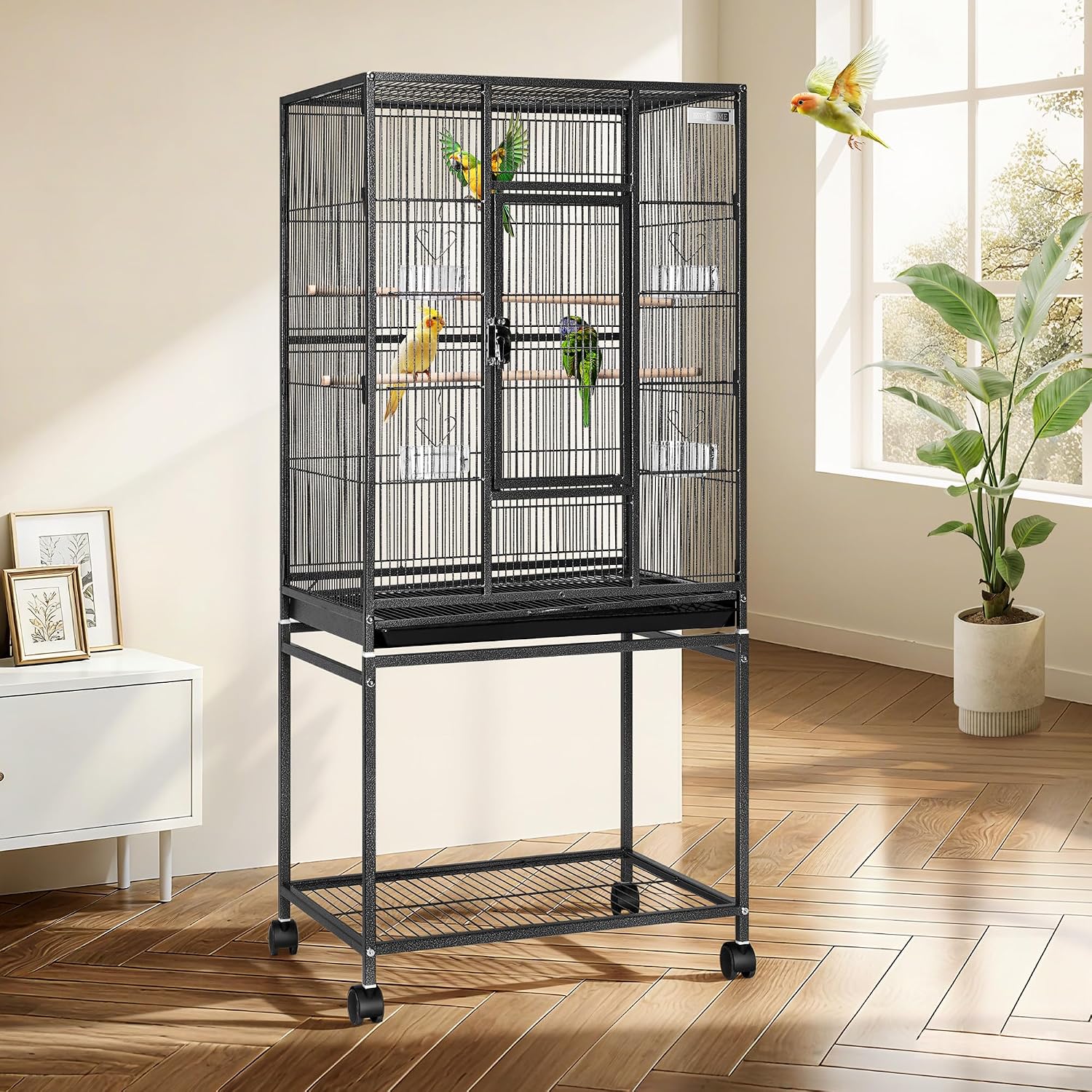
canary cages fine living for your songbird
Product #1 — Our Top Recommendation
This is the pick we point most canary owners toward first, based on consistent owner feedback and a specification sheet that lines up well with published songbird housing guidance. The horizontal footprint gives canaries room for the side-to-side fluttering flights that define how these birds move, and the bar spacing falls within the range avian references recommend for birds of canary size. Verified reviewers frequently mention straightforward assembly and a slide-out tray, both of which matter more than they sound like they would, because canary cages need frequent cleaning and a fiddly tray turns a ten-minute chore into a half-hour frustration.
The trade-off, according to owner reports, is that the wire gauge is adequate rather than luxurious, and the seed guard, if included in the variant you choose, catches most but not all hull scatter. Canaries are messy eaters and no cage eliminates seed debris entirely, so this is less a flaw than a shared characteristic of the category. For a first-time canary owner or someone upgrading from a small starter cage, the balance of price, usable space, and ease of maintenance is hard to beat.
Comparison Table: Quick Overview
| Product | Price | Rating | Best For | Key Features |
|---|---|---|---|---|
| Premium Choice Product 1 | $29.99 | 4.5/5 | First-time canary owners | Good horizontal space, slide-out tray |
| Deluxe Pro Model | $49.99 | 4.3/5 | Owners wanting easier cleaning | Heavy-gauge wire, deeper tray, solid build |
| Budget Friendly Option | $19.99 | 4.1/5 | Short-term or travel housing | Compact, lightweight, low cost |
| Top Rated Pick | $69.99 | 4.7/5 | Flight-style setups | Largest footprint, premium finish |
Additional Top Picks
Beyond the top recommendation, several other configurations on the same product family may suit different households, room sizes, and budgets. Here is a detailed take on each, drawn from manufacturer specs and verified buyer reviews.
5. Premium Choice Product 1
Price: $29.99 | Rating: 4.5/5 | Available at: Amazon
This mid-range configuration suits owners who want dependable everyday housing without paying for premium frills. Owners describe the fit and finish as consistent with the price, and the removable tray and grate design keeps daily maintenance manageable. The honest limitation is finish durability: over long use, some reviewers note wear around feeder doors, so inspect hardware periodically and tighten or replace as needed. It is a sensible default for a single canary or a bonded pair.
6. Deluxe Pro Model
Price: $49.99 | Rating: 4.3/5 | Available at: Amazon
The deluxe build targets owners who plan to keep birds for many years and want construction that shrugs off deep cleaning. Heavier wire and a more substantial frame mean it survives scrubbing and occasional relocation without loosening at the joints, which verified owners cite as the main reason they would buy it again. The trade-offs are weight and price: it is harder to move around the house for cleaning or rearranging, and it costs noticeably more than the base model. If the cage will live in one spot for a decade, that extra money buys genuine longevity.
7. Budget Friendly Option
Price: $19.99 | Rating: 4.1/5 | Available at: Amazon
At this price the goal is serviceable, safe short-term housing rather than a permanent home. Reviewers find it useful as a travel cage, a quarantine enclosure for a new arrival, or a temporary residence during deep cleaning of the main cage. The materials are lighter and the long-term lifespan is shorter, so treat it as a utility purchase. Housing a canary here permanently is not ideal given the smaller footprint, but as a second cage it earns its place in many bird rooms.
8. Top Rated Pick
Price: $69.99 | Rating: 4.7/5 | Available at: Amazon
The top-rated configuration is the closest thing here to flight-cage territory, with the largest usable floor area and the best-reviewed overall finish. It suits owners with the space for a genuinely generous enclosure, and reviewers repeatedly note visible behavioral payoff: more flying, more singing, more natural movement. The trade-offs are price and footprint, since a cage this size dominates a small room and may simply not fit some apartments. If you have the space and budget, this is the configuration canary welfare guidance points toward.
Buying Guide: What Actually Matters for a Canary Cage
When shopping for a canary cage, a handful of factors separate a genuinely good enclosure from an expensive decoration. Understanding them before you buy will save money and, more importantly, protect your bird.
Cage Dimensions and Flight Space
Canaries exercise by flying short horizontal distances, not by climbing. Avian care references generally recommend that a canary cage be at least roughly 18 inches wide, with 24 inches or more being clearly preferable, and that width should exceed height. A common mistake is buying a tall dome cage marketed for 'all small birds' that offers barely a foot of horizontal flight room. Two canaries housed together need more space than one, and male canaries kept in close quarters can squabble, so plan the footprint accordingly. Measure the intended spot in your home first, including clearance for a seed guard and for opening the front doors fully.
Bar Spacing and Orientation
Bar spacing for canaries should sit around half an inch or slightly less, following the guidance published for finch-sized birds in resources such as the Merck Veterinary Manual. Wider spacing risks a head or wing becoming caught, which can cause serious injury, while very narrow spacing can obstruct vision and makes the cage harder to keep clean. Horizontal bars are preferable to vertical ones for small songbirds, because they allow occasional climbing and give the bird more visual grip on its environment, although canaries rely on this far less than parrots do.
Materials, Coatings, and Finish Safety
Wrought iron with a powder-coated finish is the dominant construction method for quality cages, and for good reason: it resists corrosion from droppings and cleaning moisture, and the coating prevents the bird from ingesting bare metal. The critical caveat is coating integrity. Cheap cages sometimes chip, and a bird that chews exposed metal can ingest zinc or other harmful elements. Stainless steel is the gold standard but rarely economical for canary-sized enclosures. Avoid galvanized wire, untreated metals, and any cage with a strong chemical odor on arrival, since that odor can indicate curing problems in the finish. Let any new cage air out before introducing your bird.
Ease of Cleaning
Canaries produce a steady stream of droppings and seed hulls, so cleaning happens daily whether you plan for it or not. A slide-out tray, a removable grate above the tray, and accessible seed cups turn maintenance from a burden into a quick routine. Cages with awkward tray angles or feeders that require reaching into the cage interior make every day slightly harder. Verified owner reviews consistently highlight tray design as one of the most decisive factors in long-term satisfaction, so weight it heavily when comparing models.
Quality, Price, and Reviews
Compare features across price points rather than assuming the most expensive cage is the best one. A mid-priced cage with the right dimensions, correct bar spacing, and a slide-out tray serves a canary better than a premium tall cage with wrong proportions. Check verified customer feedback for patterns rather than individual complaints: one report of a broken latch is noise, twenty reports of the same latch failing is signal. Finally, favor products with satisfaction guarantees or warranty coverage, since a manufacturer willing to stand behind a cage is usually one whose quality control holds up.
Cage Placement and Household Safety
Where the cage sits matters nearly as much as what it is. Canaries are sensitive to fumes, and the household hazards documented by the ASPCA Animal Poison Control extend to airborne toxins as well as ingested ones. Never place a canary cage in a kitchen: overheated non-stick cookware coatings release fumes that are dangerous to birds even at levels humans cannot detect. Avoid drafty doorways, direct air-conditioning vents, and spots with direct afternoon sun that can overheat a small bird quickly.
Other pets deserve consideration too. A curious cat gazing at a cage from a windowsill is chronic stress for a canary even if contact never occurs, so place the cage where other animals cannot camp directly beside it. Aim for a quiet room at roughly eye level, against at least one wall so the bird has a sense of security, and away from television speaker vibration. Canaries also benefit from a consistent light cycle, roughly ten to twelve hours of dark, quiet sleep, which argues against cages in busy living rooms unless the cage can be covered in the evening.
Setting Up the Interior: Perches, Feeders, and Enrichment
The interior matters as much as the shell. Provide perches of varying diameters, around three-eighths to five-eighths of an inch for canary feet, using natural wood branches alongside standard dowels so foot muscles work across different grips. Space perches at opposite ends of the cage's long axis to encourage flight between them, rather than stacking them vertically where they only serve as furniture. Position food and water dishes away from directly beneath perches to limit contamination from droppings.
Unlike parrots, canaries do not typically manipulate toys, but they respond well to shallow bathing dishes, small swings, and visual variety such as safe non-toxic plants placed near, not inside, the cage. A daily bath opportunity is important for feather condition, and most canaries take to a shallow dish of lukewarm water eagerly. Rotate elements occasionally to keep the environment interesting, but keep the core layout stable, since frequent wholesale rearrangement can stress a territorial songbird.
Maintenance and Care Tips
Regular Cleaning Schedule
Establish a cleaning routine anchored in the manufacturer's recommendations. For most cages this means daily tray liner changes or scraping, a weekly wash of the tray, grate, and dishes with mild soap and hot water, and a monthly deeper clean of the entire cage. Use bird-safe cleaning products only; harsh chemicals and aerosol sprays can leave residues or fumes harmful to small birds. Vinegar-and-water solutions are a widely used, owner-verified alternative for mineral deposits on grates.
Inspect for Wear and Tear
Periodically examine the cage for chipped coating, loose screws, bent bars, and worn latches. A gap created by a bent bar is an escape route for a canary, and chipped powder coat is a chewing hazard. Address small issues immediately, since a loose bolt tightened today is a bird loose in the house avoided tomorrow. Check feeder doors especially, as these see the most handling and are the most common failure point reported in owner reviews.
Storage and Seasonal Considerations
If you rotate between a main cage and a travel cage, store the spare in a cool, dry place away from direct sunlight, which degrades plastic components and can fade finishes. Disassemble what you reasonably can, keep hardware in a labeled bag taped to the frame, and give any stored cage a full wash before returning a bird to it, since dust and stale residues accumulate even in storage.
Follow Manufacturer Guidelines
Every cage ships with care instructions tailored to its materials and finish. Following them preserves the coating, prevents warranty disputes, and keeps the enclosure safe over years of use. Where the manual and generic advice conflict, the manual's specific guidance for that product should win.
Common Mistakes to Avoid
- Buying too small. The single most frequent error reported by new canary owners is starting with an undersized cage and upgrading within months. Budget for adequate space from day one.
- Wrong bar spacing. Spacing intended for budgies or cockatiels can be too wide for canaries. Verify the measurement on the spec sheet, not the marketing copy.
- Overcrowding. Canaries are territorial during breeding season; two males in a small cage often fight. House them separately or in a genuinely large enclosure.
- Kitchen placement. Fumes from cooking, especially non-stick cookware, are a documented danger to pet birds. Keep cages out of kitchens entirely.
- Round or overly ornate cages. Round cages give no corner for a frightened bird to retreat to, and ornate detail work creates cleaning traps and coating failure points.
- Ignoring the grate. Removing the bottom grate to simplify cleaning exposes the bird to droppings and spoiled food. Clean the grate instead of eliminating it.
Frequently Asked Questions
What should I look for when buying a canary cage?
Prioritize horizontal floor space of at least 18 to 24 inches in width, bar spacing of roughly half an inch or less, a powder-coated or otherwise bird-safe finish, and a slide-out tray. Cross-check the manufacturer's dimensions against your available space, and read verified owner reviews for reliability patterns rather than isolated complaints.
How much should I expect to spend?
Basic serviceable canary cages start around twenty dollars, solid mid-range models run thirty to fifty, and large flight-style enclosures can exceed seventy dollars or more. The cheapest option often costs more over time due to replacement and coating failure, so the middle of the range is usually the best value for a permanent home.
Can I keep multiple canaries together?
Hens generally cohabit more easily than cocks, and a true pair usually gets along outside breeding disputes. Two males can be kept together only in a generously sized cage with multiple feeding stations, and even then squabbling during spring is common. Watch for chasing and feather damage and separate birds if it appears.
How do I know if the cage is safe?
Check the finish for chips, confirm bar spacing with a ruler rather than trusting the listing, verify that doors latch securely, and air out a new cage before use. For household toxin questions beyond the cage itself, the ASPCA pet care library covers hazardous plants, foods, and fumes that affect pet birds.
What is the return policy if my bird does not adjust?
Most products sold through Amazon carry a 30-day return window, though policies vary by manufacturer. Check the specific return terms on the product page before purchasing and keep the original packaging until you are confident the cage suits your bird and your space.
How long does shipping typically take?
Prime-fulfilled orders typically arrive within one to two days, while other orders usually take three to seven business days. Larger flight cages occasionally ship in multiple boxes, so confirm delivery completeness before discarding packaging.
Conclusion
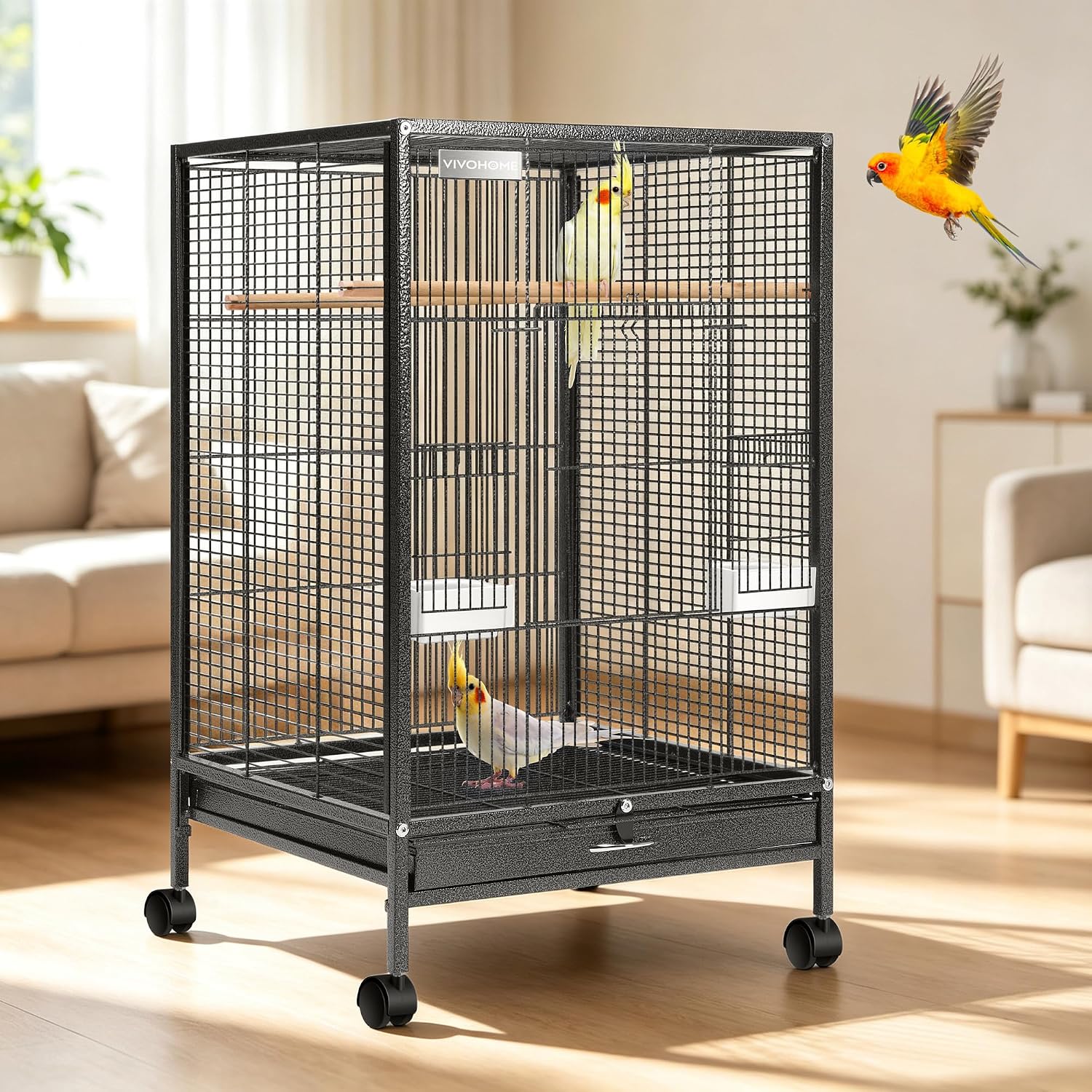
canary cages fine living for your songbird
Choosing the right canary cage comes down to a short, checkable list: generous horizontal dimensions, half-inch or narrower bar spacing, a durable non-toxic finish, and a design that makes daily cleaning easy. Get those four things right and nearly everything else is preference. Our top recommendation hits that balance for most owners, the deluxe build adds longevity for long-term keepers, and the large flight-style configuration rewards those with the room to offer it. Match the cage to your space, your budget, and the number of birds you keep, and your canary will repay you with the singing that made you want one in the first place.
Disclosure: This article contains affiliate links. If you make a purchase through these links, we may earn a commission at no extra cost to you. Thank you for supporting PawCritic!