Best Cat Beds and Cozy Loungers 2026: A Reference Guide to Feline Rest
Published on July 4, 2026 by PawCritic — Cats Category
Source note: The American Association of Feline Practitioners recommends annual veterinary wellness exams for all adult cats and semi-annual exams for cats 11 years and older, so that age-related conditions such as osteoarthritis can be identified early. Resting comfort is a routine part of that conversation.
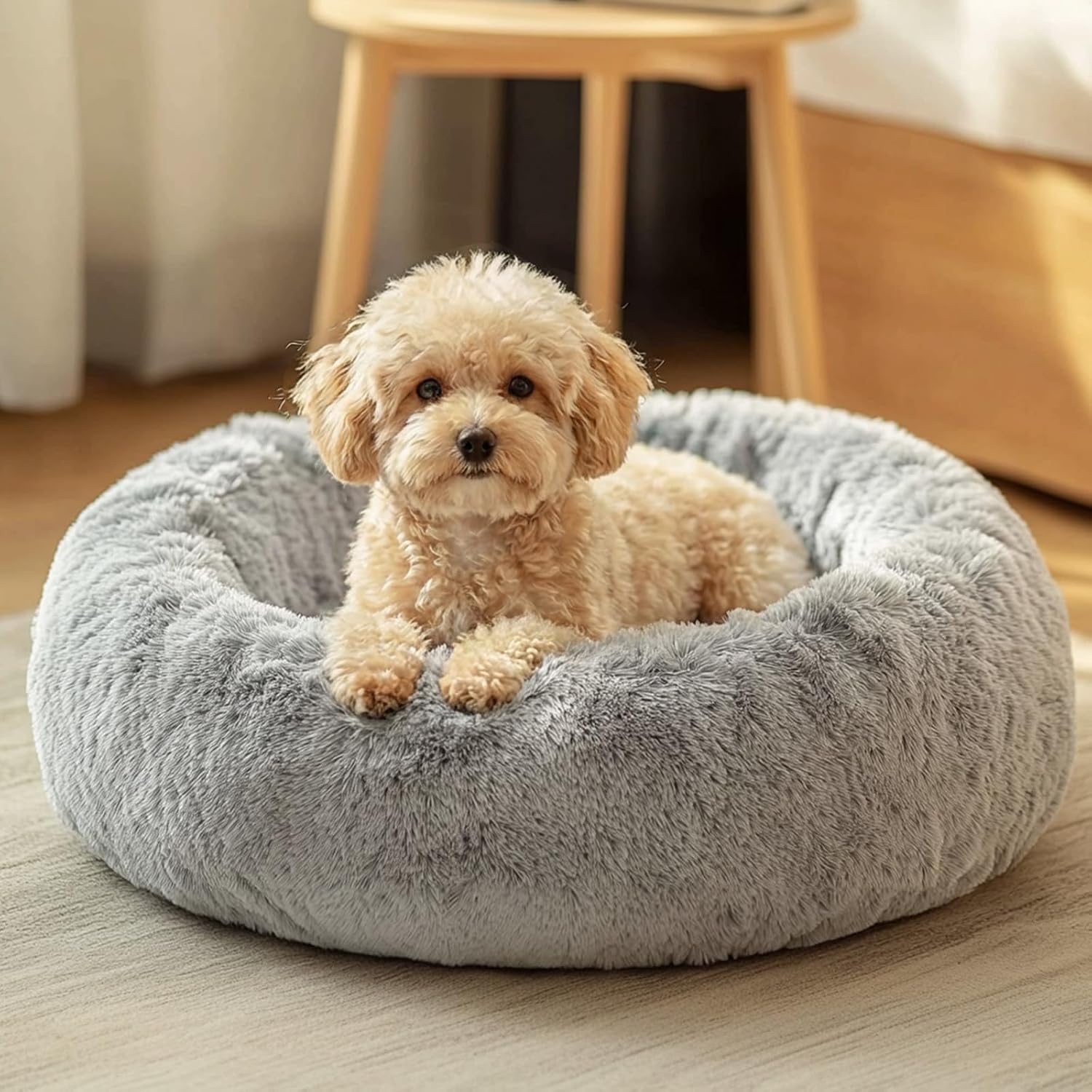
Cats are the most accomplished sleepers in the average household. Veterinary references place typical adult sleep at roughly 12 to 16 hours per day, and the Merck Veterinary Manual cat owner reference notes that kittens and geriatric cats commonly sleep even longer. Over a lifespan, that means a cat spends the majority of its existence resting. The surface it rests on is therefore not a decorative accessory. It shapes joint loading, thermal comfort, and the sense of security that determines whether a cat relaxes deeply or naps in a state of vigilance.
The 2026 cat bed market is broad. Options range from simple polyfill cushions to orthopedic memory foam loungers, thermostatically controlled heated pads, felted wool caves, window-mounted perches, and self-warming mats that reflect body heat without electricity. Each category solves a different problem. A bed that suits a two-year-old Siamese may be useless for a fourteen-year-old domestic shorthair with arthritis, and a bed a burrower adores may sit untouched by a cat that sprawls flat on its side.
This guide is compiled from published manufacturer specifications, veterinary and welfare guidance, and verified owner reports drawn from retail reviews and breed-community discussions. PawCritic does not operate a testing laboratory and does not run timed product trials. Every claim below is traceable to a specification sheet, an authoritative source, or a documented pattern in owner feedback, and where evidence is thin, that limitation is stated plainly.
Quick Comparison Table
| Product | Best For | Type | Material | Washable | Price |
|---|---|---|---|---|---|
| K&H Thermo-Kitty Heated Bed | Best Heated Bed | Heated Pad + Cave | Fleece + Heating Element | Cover only | $$$ |
| PetFusion Ultimate Cat Bed | Best Memory Foam | Orthopedic Lounger | Memory Foam + Microsuede | Full cover zips off | $$$ |
| MidWest Cat Cave | Best Hideaway Bed | Cave / Self-Warming | Felted Wool Blend | Hand wash only | $$ |
| K&H Window Kitty Perch | Best Window Perch | Window Mounted | Fleece + Metal Frame | Cover machine washable | $$ |
| Frisco Donut Cuddler | Best Donut Bed | Round Cuddler | Shag Fleece + Polyfill | Machine washable | $ |
| Petstages Tower Cat Bed | Best Tower Combo | Tower + Perch + Hideout | Plush Fleece + Cardboard | Spot clean | $$ |
| K&H Self-Warming Lounge | Best Non-Electric Warmth | Self-Warming Mat | Mylar Reflect + Fleece | Machine washable | $ |
| Molly Mutt Bed Cover System | Best Customizable Bed | Cover + Stuff-Your-Own | Canvas + Upcycled Fill | Machine washable | $$ |
| Amazon Basics Rectangular Cat Bed | Best Budget Basic | Rectangular Cushion | Polyester + Foam Fill | Machine washable | $ |
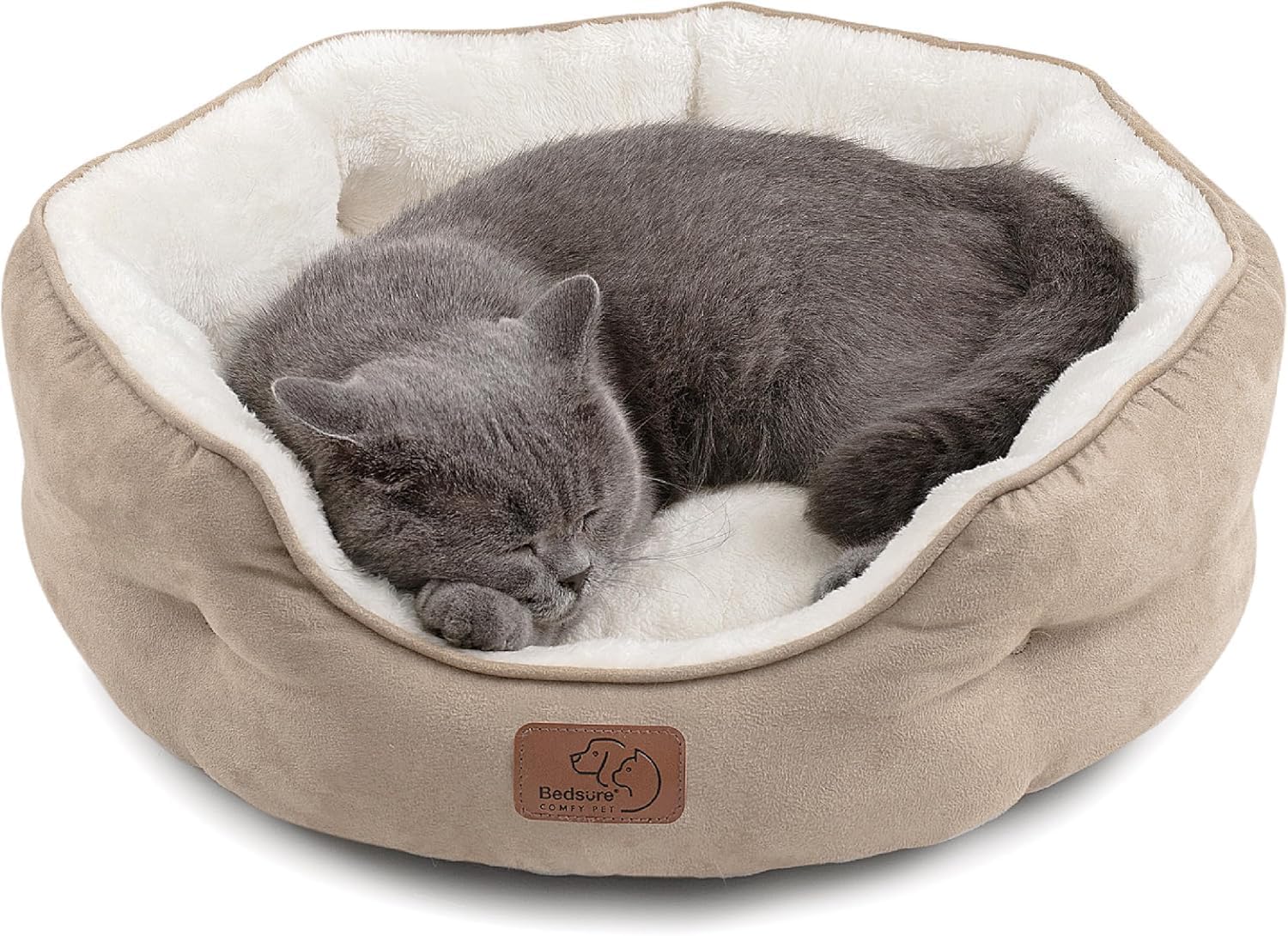
1. K&H Pet Products Thermo-Kitty Heated Bed
The Thermo-Kitty line is the reference point for heated cat bedding, and its specifications explain why. The integrated heating element is rated at roughly 4 watts and is thermostatically controlled so that it energizes only when weight is applied to the pad. Manufacturer documentation states the surface warms to approximately 10 to 15 degrees above ambient room temperature and is internally limited so it does not exceed about 102 degrees Fahrenheit, which sits within normal feline body temperature range. The cord is described as chew-resistant and the unit as UL listed.
The design pairs the heating pad with a removable fleece cover and an optional hood that converts the pad into a cave. That combination suits two overlapping populations: senior cats with osteoarthritis who benefit from sustained low-level warmth, and hairless or thin-coated breeds such as the Sphynx that struggle to retain heat indoors. For a cat with joint disease, warmth is not cosmetic. Cold ambient temperatures increase muscle stiffness, and a consistently warm resting surface is a common non-pharmaceutical comfort measure discussed in veterinary geriatric care.
The trade-off is structural: the bed requires a nearby outlet, and although the cord is marketed as chew-resistant, electrical cords in a cat household still warrant routing behind furniture or through a cord channel. The fleece cover is machine washable, but the heating element itself is not, so cleaning means removing the cover and wiping the pad. Owners also report that the warming effect is modest in a very cold room, since the pad is limited to a fixed margin above ambient rather than heating to a fixed absolute temperature.
Key Specifications
- Type: Heated bed with optional cave hood
- Power: Approximately 4 watts, thermostatically controlled
- Temperature behavior: Warms to roughly 10 to 15 degrees above ambient, capped near 102 degrees Fahrenheit
- Material: Fleece cover over a sealed heating element
- Safety listings: UL listed, chew-resistant cord per manufacturer
- Cleaning: Removable fleece cover is machine washable; pad is wipe-clean
- Typical size: About 18 by 18 inches, suited to cats up to roughly 15 pounds
- Suited to: Senior cats, arthritic cats, hairless breeds, kittens, post-surgical recovery
Strengths
- Thermostatic activation means it draws power only when occupied
- Low wattage is consistent with continuous unattended use per the manufacturer
- Internal limit prevents surface temperatures above feline body range
- Removable hood supports burrowing and cave-style sleepers
- Fleece cover is removable and machine washable
- Non-skid base reduces sliding on tile and hardwood
Limitations
- Requires an electrical outlet within cord reach
- Cord management is still the owner's responsibility
- Warmth is relative to room temperature, not absolute
- Not intended for outdoor or damp environments
JOLLYVOGUE Calming Donut Cat Bed | Hoewina Calming Donut Cat Bed | Bedsure Calming Donut Cat Bed | Bedsure Round Cat Bed
2. PetFusion Ultimate Cat Bed
Most inexpensive cat beds are filled with loose polyfill, which is comfortable on day one and progressively flatter thereafter. The PetFusion Ultimate uses a solid memory foam core over a supportive foam base, the same construction logic applied to orthopedic dog beds. Solid foam does not migrate or clump, so the resting surface keeps its loft and continues to distribute weight across the cat's body rather than concentrating pressure at the elbows and hips. For a cat with arthritis or one recovering from orthopedic surgery, that difference is meaningful.
The layout is a low-profile lounger with bolsters on three sides and a cut-down front. The low entry matters more than it appears in photographs: a cat with reduced hind-limb mobility may refuse a bed it has to step over, and a low threshold removes that barrier. The three bolsters give head and neck support and, for cats that like to feel contained, a sense of enclosure without the full darkness of a cave.
The cover is a microsuede that resists staining and wipes clean between washings, and it zips off completely for machine washing. A waterproof liner sits between the cover and the foam, which protects the core from urine, hairballs, and spilled water. The honest trade-offs are weight and price. Dense foam makes the bed heavy to move, and the cost sits above polyfill alternatives. It is also the wrong choice for a dedicated burrower, since there is no hood or canopy.
Key Specifications
- Type: Orthopedic memory foam lounger
- Fill: Solid memory foam over a supportive foam base
- Cover: Microsuede, fully removable
- Waterproof liner: Yes, between cover and foam
- Cleaning: Full cover is machine washable
- Bolsters: Three-sided with a low front entry
- Typical sizes: Small near 18 by 18 inches, medium near 24 by 18, large near 30 by 20
- Suited to: Senior cats, arthritic cats, large breeds such as Maine Coon
Strengths
- Solid foam construction resists the compression typical of polyfill
- Low front entry suits cats with reduced mobility
- Three-sided bolsters provide head and neck support
- Cover zips off entirely for washing
- Waterproof liner protects the foam core
- Microsuede resists staining and pilling better than shag fleece
Limitations
- Costs more than polyfill beds of similar footprint
- Heavy because of foam density
- No hood, so unsuitable for cats that burrow
- Microsuede holds some surface hair, though it vacuums off easily
PetFusion Ultimate Cat Bed Memory Foam | PetFusion Cat Bed Replacement Cover | Memory Foam Cat Bed Topper | Cat Joint Supplement for Senior Cats | Pet Bed Waterproof Protector Pad
3. MidWest Homes for Pets Cat Cave
Felted wool caves occupy a distinct niche. The MidWest Cat Cave is a self-supporting dome of dense felted wool with a single oval opening, producing an interior that is dark, enclosed, and notably warmer than an open bed. For a shy cat, a rescue cat still acclimating to a household, or any cat that habitually sleeps under furniture, that enclosure answers a real behavioral need rather than a decorative one.
Wool is the reason this category persists. Wool fiber is naturally temperature-regulating and moisture-wicking, and it resists odor retention far better than synthetic fleece over time. Dense felt also holds its shape without internal wire or plastic framing, so there is nothing rigid to poke through or collapse. The material is naturally flame-resistant without chemical treatment, which is a genuine advantage in a household where a bed may sit near a heater or radiator.
The limitations are equally specific. Wool felt is not machine washable. Cleaning means spot treatment with a damp cloth and mild soap, or hand washing in cool water followed by air drying, and a cave that is hand washed takes a long time to dry. New wool felt also sheds loose fiber for a period, which is normal but surprising to owners expecting a synthetic product. Sizing matters here more than in open beds, because a cave must accommodate the cat's full curled length plus the thickness of the felt walls. A cat that measures 18 inches nose to tail base when curled needs a cave with an interior diameter comfortably larger than that.
Key Specifications
- Type: Enclosed hideaway cave
- Material: Dense felted wool, often a wool blend
- Construction: Handcrafted, self-supporting dome, no internal frame
- Cleaning: Spot clean or hand wash in cool water, air dry
- Typical sizes: Small near 14 inches diameter, medium near 18, large near 22
- Colors: Usually natural, charcoal, cream, and taupe tones
- Suited to: Burrowers, shy or newly adopted cats, cool rooms, households avoiding synthetics
Strengths
- Wool is temperature-regulating and odor-resistant by nature
- Dark interior supports cats that seek concealment
- Self-supporting dome holds shape without a frame
- Naturally flame-resistant without added chemicals
- Reads as furniture rather than pet gear in a living room
Limitations
- Not machine washable, and hand washing is slow to dry
- Initial fiber shedding is normal but can be messy
- Priced above synthetic cave beds
- Fewer color options than fabric beds
- Interior can become too warm in a heated room during summer
MidWest Cat Cave Felted Wool Bed | MidWest Cat Cave Large Size | Catnip Spray for New Bed Attraction | Pet-Safe Wool Cleaner Kit | Cat Bed Insert Fleece Pad | Odor Eliminator Spray for Pet Beds
4. K&H Window Kitty Perch
Elevation is one of the most consistently recommended environmental additions in feline welfare guidance. Cats given vertical space show lower rates of inter-cat tension because they can separate without leaving the room. The Window Kitty Perch addresses both elevation and a second feline priority: a view. A window perch lets a cat monitor the outdoors while receiving radiant heat through the glass, which is why these beds are frequently the most heavily used item in a multi-cat home.
The design is a metal frame that rests on the window sill and is held by adjustable brackets, with a fleece pad stretched across it. Manufacturer specifications list a weight capacity of about 25 pounds, which covers nearly all domestic cats including large breeds. Installation is tool-free and takes a few minutes. The perch can be oriented with the pad facing into the room or toward the glass, which changes whether the cat is sunbathing or watching the yard.
The constraints are important to understand before purchase. The perch is designed for double-hung windows with a usable sill; casement and many sliding windows will not accept the bracket. A single perch accommodates one cat at a time, which means a two-cat household often needs two perches to avoid competition. Owners of heavier cats report that the frame can shift over time and that periodic re-tightening of the brackets is part of ownership. The fleece pad is removable and machine washable, which is the main maintenance advantage over fixed-cover designs.
Key Specifications
- Type: Window-mounted perch
- Material: Metal frame with a fleece pad
- Weight capacity: Approximately 25 pounds
- Installation: Tool-free, sill rest plus adjustable brackets
- Pad cleaning: Removable and machine washable
- Window compatibility: Standard double-hung windows, typically up to about 46 inches wide
- Suited to: Window-watching cats, single-cat sunbathing, apartments with limited floor space
Strengths
- Provides vertical territory, which reduces inter-cat conflict
- Frame capacity covers large domestic cats
- No tools required for assembly
- Fleece pad removes for machine washing
- Reversible orientation for sunbathing or viewing
Limitations
- Will not fit casement or many sliding windows
- One cat per perch
- Brackets may need periodic tightening with heavier cats
- Fleece pad is vulnerable to cats that chew fabric
K&H Window Kitty Perch Standard | K&H Window Kitty Perch Large and XL | K&H Window Perch Replacement Pad | Window Bird Feeder for Cat Entertainment | Window Sill Shelf Reinforcement Brackets
5. Frisco Donut Cuddler
The round donut bed is the most widely purchased cat bed shape, and the reason is behavioral. A raised rim gives a curling cat something to press its back and chin against, which mimics the physical containment of sleeping against a littermate. Cats that tuck their paws and wrap their tail around themselves gravitate to this shape almost automatically. Flat beds leave those cats searching for a wall or a pillow to lean against.
The Frisco Donut Cuddler executes the shape with a shag fleece exterior and a generously stuffed polyfill rim. The base is non-skid, which matters on tile and hardwood where a light bed can slide when a cat launches off it. The entire bed is machine washable, which is not universal in this price band and is a real advantage for households with a cat that occasionally vomits hairballs on its sleeping spot.
Owners consistently report two things about this category. First, the shag fleece is a strong attractant; cats that ignore other beds often settle into a donut within days. Second, the polyfill rim flattens over time, and the rate depends heavily on the cat's weight and how much it kneads before settling. A kneading cat compresses the rim noticeably faster. Machine washing on a gentle cycle and air drying slows the process, but this is not an orthopedic bed and should not be chosen for a cat with diagnosed joint disease.
Key Specifications
- Type: Round donut or cuddler bed
- Material: Shag fleece exterior, polyfill fill
- Base: Non-skid
- Cleaning: Machine washable on gentle cycle, air dry
- Typical sizes: Small near 15 inches, medium near 20, large near 24, jumbo near 30
- Colors: Commonly gray, cream, beige, blue, pink, sage
- Suited to: Curling sleepers, kittens, households wanting a low-cost entry bed
Strengths
- Shag fleece texture is highly attractive to most cats
- Raised rim supports head and back for curling sleepers
- Fully machine washable
- Non-skid base
- Wide range of sizes and colors at a low price point
Limitations
- Wrong shape for cats that sprawl flat
- Polyfill compresses over time, especially with kneading
- Shag fleece mats if not washed regularly
- No orthopedic support for senior or arthritic cats
Frisco Donut Cuddler Cat Bed | Frisco Donut Cuddler Jumbo Size | Pet Bed Deodorizer Spray | Catnip Spray to Attract Cats to Bed | Cat Bed Insert for Extra Warmth
6. Petstages Tower Cat Bed
The Petstages Tower combines three functions in a single footprint: a top perch, an interior hideout, and a scratching surface. For a small apartment, that consolidation is the entire value proposition. The structure is built around a corrugated cardboard core wrapped in sisal, with plush fleece lining the resting surfaces. The sisal exterior doubles as a scratching post, which redirects clawing away from upholstery.
The multi-level layout also addresses a behavioral need. Elevated perches let a cat occupy a room without being at floor level, and an enclosed hideout gives a second cat a separate resting option in the same unit. In multi-cat homes, that reduces the competition that occurs when only one bed exists. The top perch typically holds up to about 20 pounds.
The material choice is the central trade-off. Cardboard is inexpensive to replace and appealing to cats, but it is not waterproof, not washable, and not durable against a cat that chews or scratches aggressively. The manufacturer positions the unit as replaceable rather than permanent, with replacement cartridges available. Owners report visible wear after several months of daily use in multi-cat homes. Cleaning is spot treatment only, and the unit should be kept away from humid rooms and water bowls.
Key Specifications
- Type: Multi-level tower bed with integrated scratcher
- Material: Cardboard core, fleece lining, sisal exterior
- Approximate dimensions: 15 by 15 by 20 inches tall
- Levels: Top perch, interior hideout, floor cushion
- Cleaning: Spot clean only
- Weight capacity: About 20 pounds per level
- Suited to: Active cats, multi-cat households, small apartments, cats that scratch furniture
Strengths
- Three resting options in one vertical footprint
- Built-in sisal scratching surface
- Elevated perch satisfies vertical territory needs
- Enclosed hideout suits shy cats
- Replacement cartridges extend usable life
Limitations
- Cardboard is not waterproof or washable
- Not appropriate for destructive chewers
- Expect replacement every few months with heavy use
- Spot clean only
Petstages Tower Cat Bed with Scratcher | Petstages Tower Replacement Cartridge | Petstages Cat Nail File Scratching Board | Catnip Spray for Cat Beds and Scratchers | Fleece Cat Bed Insert Small
7. K&H Self-Warming Lounge
Self-warming beds solve the warmth problem without electricity. The K&H Self-Warming Lounge sandwiches a mylar reflective layer between a fleece top and a non-skid base. Mylar is the same material used in emergency blankets, and its function here is passive: it reflects the cat's own infrared body heat back toward the animal instead of letting it dissipate into the room. There is no cord, no plug, and nothing to fail electrically.
That makes this category the right answer in several situations where a heated bed is not. It is safe in a carrier during travel, usable in a room with no accessible outlet, appropriate for a cat that chews cords, and portable between rooms or floors. It is also the lowest-risk option for a household with a kitten, since there is no element that can malfunction.
The honest limitation is that passive warming cannot exceed the cat's own body heat. A self-warming bed in a 60-degree room will feel warmer than a plain fleece mat, but it will not approach the sustained surface temperature of a thermostatically controlled heated pad. Cushioning is also thinner than a memory foam lounger, and bolster support is minimal. Cats that sprawl and cats that simply want a mild warming layer do well here; cats with significant arthritis are usually better served by an active heated bed.
Key Specifications
- Type: Self-warming lounger, no electricity
- Material: Fleece top, mylar reflective layer, non-skid base
- Warming mechanism: Passive reflection of body heat
- Cleaning: Machine washable with the mylar layer removed
- Typical sizes: Small near 15 by 15 inches, medium near 20 by 15, large near 24 by 18
- Weight limit: Approximately 25 pounds
- Suited to: Drafty homes, travel, carriers, cord-chewing cats, kittens
Strengths
- No electricity, so no cord or element to manage
- Mylar layer reflects body heat effectively for a passive design
- Machine washable with the reflective layer removed
- Lightweight and easy to relocate
- Works in carriers and during travel
Limitations
- Cannot warm above the cat's own body temperature
- Thinner cushioning than memory foam beds
- Minimal bolster support
- Mylar layer can crinkle if repeatedly folded
K&H Self-Warming Lounge Bed | K&H Self-Warming Cat Mat | K&H Self-Warming Crate Pad | Cat Travel Carrier with Self-Warming Pad | Fleece Throw Blanket for Cat Comfort
8. Molly Mutt Bed Cover System
The Molly Mutt system inverts the usual model. Instead of buying a complete bed, the buyer purchases a durable canvas cover and stuffs it with their own materials: retired sweaters, towels, blankets, or old pillows. The result is a bed whose firmness, loft, and shape are entirely owner-determined, and whose fill costs nothing and diverts textile waste from a landfill.
The cover itself is heavyweight cotton canvas with a fleece liner where the cat lies and a heavy-duty zipper for filling and emptying. Internal baffles help keep the fill distributed rather than migrating to one end. Because the cover is the only durable component, its lifespan is much longer than a polyfill bed's: when the fill compresses, the owner adds more material rather than replacing the product. The canvas is machine washable after emptying.
Two caveats are worth stating. First, the system requires effort. Sourcing and arranging fill takes time, and the fill will shift and need periodic adjustment, particularly with a cat that kneads aggressively. Second, the upfront cost of the cover alone can exceed a basic polyfill bed, even though the long-run cost is lower. For owners who already have a drawer of worn-out clothing, the economics are favorable; for those who do not, the calculation is less obvious.
Key Specifications
- Type: Stuff-your-own bed cover system
- Cover material: Heavy cotton canvas with fleece liner
- Fill: Owner-supplied clothing, towels, or pillows
- Closure: Heavy-duty zipper
- Cleaning: Machine washable cover, after emptying
- Typical sizes: Small near 15 by 15 inches, medium near 20 by 20, large near 30 by 20
- Suited to: Owners reducing textile waste, households wanting adjustable firmness
Strengths
- Repurposes worn textiles into pet bedding
- Firmness and support are fully owner-controlled
- Canvas cover is far more durable than polyfill shells
- Cover is machine washable once emptied
- Refilling is cheaper than replacing a whole bed
Limitations
- Requires time and effort to source and arrange fill
- Fill shifts and needs periodic readjustment
- Cover cost alone can exceed a budget polyfill bed
- Canvas aesthetic does not suit every interior
Molly Mutt Bed Cover Medium | Molly Mutt Bed Cover Large | Molly Mutt Fleece Liner Replacement | Polyfill Bedding Refill Bag | Cat Bed Waterproof Liner for Cover System
9. Amazon Basics Rectangular Cat Bed
The Amazon Basics rectangular bed is the budget floor of the category, and it should be evaluated on those terms. Construction is a polyester shell over foam fill with bolsters on two short sides and a rubberized non-skid base. It is machine washable, which is the single most important feature at this price, and it ships in multiple sizes with standard return terms.
Owner feedback on this tier is consistent and worth reading carefully. The foam fill provides basic cushioning but compresses noticeably within weeks of daily use by a large cat, and the bolsters lose loft over time. The bed remains functional after compression, but it stops being supportive. That makes it a reasonable secondary bed, a spare for a guest cat, a bed for a kitten that will outgrow it, or a low-risk first purchase for an owner unsure what shape their cat prefers.
It is not the right choice for a senior cat, a large breed, or any cat with diagnosed joint disease. At this price point, the foam density simply cannot match an orthopedic bed, and the bolsters cannot match a well-stuffed donut. The honest framing is that this is a functional, washable, inexpensive resting spot whose expected service life is shorter than the beds above it.
Key Specifications
- Type: Rectangular cushion bed
- Material: Polyester shell with foam fill
- Bolsters: Raised on two short sides
- Cleaning: Machine washable
- Base: Rubberized non-skid coating
- Typical sizes: Small near 17 by 13 inches, medium near 23 by 17, large near 30 by 20
- Suited to: Secondary beds, spare beds, kittens, budget-constrained buyers
Strengths
- Lowest price among widely available branded cat beds
- Machine washable
- Non-skid base
- Lightweight and easy to reposition
- Available in several sizes with standard returns
Limitations
- Foam compresses relatively quickly under a large cat
- Bolsters lose shape with sustained use
- Thin padding offers minimal cushioning
- Limited color and style options
Amazon Basics Rectangular Cat Bed | Amazon Basics Cat Bed Waterproof Liner | Cat Bed Memory Foam Topper | Cat Bed Fleece Insert Washable
How to Choose a Cat Bed
Match the shape to the sleep posture
Observation is more reliable than product marketing here. A cat that tucks its paws and wraps its tail wants a donut or cuddler with a raised rim to press against. A cat that stretches out on its side at full length wants a flat rectangular or oval lounger with no rim in the way. A cat that disappears under blankets, duvets, or sofa cushions wants a cave or a hooded bed. A cat that consistently chooses the top of a bookshelf or a refrigerator wants elevation, which means a perch or a tower. Buying against the cat's established posture is the most common reason a new bed goes unused.
Weigh age and health status
Senior cats and cats with osteoarthritis benefit from solid memory foam, which distributes load across pressure points instead of concentrating it. Heated beds are frequently recommended as a comfort measure for older cats because warmth reduces muscle stiffness, and they are also appropriate for hairless breeds and for cats recovering from surgery or illness. Kittens generally do well in enclosed, soft beds that provide containment. The Cornell Feline Health Center publishes guidance on senior cat care that is useful context when deciding whether a comfort purchase is a substitute for a veterinary evaluation or a complement to one.
Check the washability before buying
A cat bed that cannot be washed will be thrown away. The hierarchy is straightforward: a fully machine washable bed with a removable cover is best; a bed with a removable, washable cover over a non-washable core is acceptable; a bed that is spot clean only is a maintenance commitment. Fleece and microsuede are the most practical cover materials because they tolerate repeated washing. Wool felt is superior in odor resistance and temperature regulation but requires hand washing and slow air drying, which many owners underestimate.
Size for the curled cat, not the stretched one
Measure the cat curled in its preferred sleeping position, nose toward tail, and add several inches of margin. A bed that fits exactly leaves no room for the cat to reposition, and cats abandon beds that feel tight. For donut beds, the interior diameter matters more than the exterior. For caves, the opening must be wide enough that the cat can enter without ducking awkwardly, and the interior must be deep enough that the cat is not pressed against the walls. For window perches, verify the bracket fits the window type before ordering.
Placement determines use
Put the bed where the cat already rests. That means sunny patches, warm spots near vents or radiators, quiet corners away from doorways and foot traffic, and elevated surfaces with a view. A new bed placed in a cold, exposed hallway is likely to be ignored regardless of quality. If a cat avoids a new bed for several days, moving it to an established sleeping location is the first troubleshooting step, followed by adding a familiar scent such as a worn shirt or a favorite toy.
Plan for multiple cats
Feline welfare guidance generally recommends at least one resting resource per cat, plus one extra, distributed across separate locations and preferably at different heights. Sleeping spots are a common source of low-grade tension in multi-cat homes, and providing more resources than cats reduces competition without requiring behavioral intervention. Two perches in two windows, or a cave in one room and a lounger in another, is more effective than two beds side by side.
Understand what heated beds can and cannot do
Heated cat beds are designed to raise surface temperature modestly above ambient, not to function as space heaters. Pet-specific heated beds carry safety listings and internal limits that keep surface temperature near feline body range. Human heating pads do not carry those limits and are not an appropriate substitute. If a cat is persistently seeking heat, or if it is avoiding a warm spot it used to occupy, that change in behavior is a reason to consult a veterinarian rather than to buy a warmer bed.
Watch for hazards in the materials
Fabric beds are generally low risk, but a few points are worth checking. Cords on heated beds should be routed out of chewing reach. Beds near space heaters or radiators should be positioned so they cannot be pushed against the heat source. If a bed is treated with any fragrance or antimicrobial finish, verify the ingredients, because cats groom themselves by mouth and ingest what settles on their coats. The ASPCA Animal Poison Control maintains a searchable list of substances toxic to cats that is useful when evaluating sprays marketed for pet bedding.
Frequently Asked Questions
Why does my cat ignore the bed I bought?
This is the single most common complaint about cat beds, and it usually has a spatial answer rather than a product answer. Cats form strong location preferences and often return to the same spot on a sofa arm or a specific corner of a rug. Move the bed to that spot rather than trying to move the cat. Adding a familiar scent, such as a worn unwashed shirt, and offering a catnip or silvervine attractant can shorten the adjustment period. If the cat avoids the bed for more than a week in a location it already uses, the shape is likely wrong for its sleep posture.
How often should a cat bed be washed?
Every two to four weeks is a reasonable baseline for a bed in daily use. A bed used by a cat with allergies, a senior cat with occasional incontinence, or a cat recovering from illness should be washed more often. Between washes, vacuuming removes loose hair and dander, which reduces the allergen load in the room. Heavily soiled beds should be washed on a gentle cycle with a fragrance-free detergent and air dried, since high dryer heat can degrade foam cores and shrink covers.
Are heated cat beds safe to leave plugged in?
Pet-specific heated beds that carry a recognized safety listing and an internal temperature limit are designed for continuous use according to their instructions. The critical distinctions are that the product is marketed for pets, that it carries a listing mark, and that the cord is managed so it cannot be chewed or tripped over. Human heating pads lack the internal limits and chew-resistant construction of pet products and should not be repurposed as cat beds. Any heated bed showing frayed cords, discolored fabric, or inconsistent warmth should be retired.
Should the bed have sides or be flat?
Raised sides and bolsters serve two functions: they give a curling cat something to brace against, and they provide head and neck support. Cats that sleep curled or tucked generally prefer them. Cats that sleep stretched out on their side or back generally prefer a flat surface with no rim. There is no universally better design, and a household with two cats of different postures often ends up with one of each.
How do I clean a bed that is not machine washable?
For wool felt caves and other hand-wash-only items, spot clean with a damp cloth and a small amount of mild, fragrance-free soap, then blot rather than scrub to avoid felting the fibers further. For a deeper clean, hand wash in cool water, press out excess water without wringing, and reshape the item before air drying away from direct heat. Non-washable beds accumulate odor and dander faster than washable ones, so their practical service life is shorter and replacement every six to twelve months is common with daily use.
Do cats need a bed at all if they sleep on the furniture?
Cats will sleep wherever they are comfortable, and a designated bed is not medically required. The practical arguments for providing one are that a washable bed is easier to keep clean than a sofa cushion, that a bed can be placed in a warm, quiet, elevated location a cat prefers, and that providing multiple resting resources reduces tension in multi-cat homes. For senior cats, a supportive bed is a comfort measure that furniture rarely replicates.
Common Mistakes to Avoid
Buying for aesthetics rather than posture is the most frequent error. A beautiful felted cave is wasted on a cat that sprawls flat, and a sleek memory foam lounger is wasted on a burrower. A second common mistake is buying a bed that is too small. Cats rarely use beds they cannot fully stretch or curl in without touching the sides, and the difference between a medium and a large is usually a few dollars.
Another recurring error is placing a new bed in a cold or high-traffic area because it fits the room's layout rather than the cat's habits. Cats choose resting spots for warmth, quiet, and sightlines, and a bed that satisfies none of those will stay empty. Owners also frequently skip the washability check, then discover after an accident that the bed has a non-removable cover and a foam core that cannot be submerged.
Finally, there is the cord problem. Heated beds are among the most useful products in this category, but they introduce an electrical cord into an environment occupied by an animal that chews for enrichment. Routing the cord behind furniture, using a cord channel, or choosing a self-warming bed instead resolves the issue, and the choice between active and passive warmth is usually the deciding factor in whether a heated bed is appropriate for a particular household.
Final Verdict
- Heated comfort for seniors and hairless breeds: the K&H Thermo-Kitty line offers thermostatically controlled warmth with a documented temperature ceiling and a removable washable cover. The trade-off is the cord and the modest warming margin above room temperature.
- Orthopedic support: the PetFusion Ultimate Cat Bed uses solid memory foam rather than polyfill, with a low entry and a fully removable cover. It costs more and weighs more, and it is the wrong choice for a burrower.
- Enclosed security: the MidWest Cat Cave provides a dark, warm, naturally odor-resistant interior. It is hand wash only, which is the main practical cost of choosing wool.
- Elevation and a view: the K&H Window Kitty Perch adds vertical territory and a sunbathing spot, subject to window type and one-cat capacity.
- Curling sleepers on a budget: the Frisco Donut Cuddler delivers the shape most cats prefer at a low price, with full machine washability and the expectation that the polyfill will compress over time.
- Space-constrained multi-cat homes: the Petstages Tower combines a perch, a hideout, and a scratcher, with the caveat that cardboard wears out and is not washable.
- Warmth without electricity: the K&H Self-Warming Lounge reflects body heat passively and travels well, but cannot exceed the cat's own temperature.
- Waste reduction and adjustable firmness: the Molly Mutt cover system lets owners stuff their own fill, at the cost of some assembly effort and periodic refilling.
- Secondary and spare beds: the Amazon Basics rectangular bed is washable and inexpensive, and its foam compresses faster than any bed above it.
The best bed for a given cat is the one that matches its sleep posture, its age and health status, and a location it already chooses. Shape, size, washability, and warmth source are the four decisions that determine whether a bed gets used, and none of them can be resolved by price alone. A well-chosen bed is a small but genuine improvement in a cat's daily comfort, and for older cats in particular, that comfort compounds over years of naps.
Affiliate Disclosure: PawCritic is a participant in the Amazon Services LLC Associates Program, an affiliate advertising program designed to provide a means for sites to earn advertising fees by linking to Amazon.com and affiliated sites. Purchases made through links on this page help support our research at no extra cost to you.
Last updated: July 4, 2026. Prices and availability are subject to change. Always verify current pricing on Amazon before purchasing.