Cat Play Tunnels, Tents and Activity Tubes: A Research-Based Buying Guide for 2026
Published on July 2, 2026 by PawCritic — Cats Category
Cats are natural-born explorers. In the wild, they navigate dense underbrush, squeeze through narrow crevices, and crouch in concealed spaces before pouncing on unsuspecting prey. Indoor cats retain all of these instincts, but without appropriate outlets, those instincts can manifest as destructive scratching, furniture climbing, and the dreaded 3 AM zoomies that send a cat ricocheting off walls and across a sleeping owner. Play tunnels, tents, and activity tubes are one of the simplest and most affordable ways to channel these natural behaviors into constructive outlets, because they combine the security of concealment, the thrill of movement, and the satisfaction of an ambush point in a single space-efficient package.
This guide takes a different approach from a conventional roundup. Rather than ranking a long list of products that were never actually evaluated hands-on, it explains what matters when choosing a tunnel, tent, or tube for your cat, and points to one concrete example available on Amazon so you can compare its specifications against the criteria described here. All claims below are drawn from manufacturer specifications, published feline-behavior guidance, and verified owner reviews. For foundational information on feline behavior and environmental enrichment, the Cornell Feline Health Center and the Merck Veterinary Manual cat owner reference are both excellent starting points.
Why Tunnels Work: The Behavior Behind the Product
Understanding why cats love tunnels helps you choose a better one. Feline behavior specialists consistently describe three instinctive drivers that tunnels satisfy. The first is concealment: a cat inside a tunnel feels hidden from potential threats while still being able to observe the room through an opening, which is why shy and anxious cats often take to enclosed spaces faster than open beds. The second is ambush hunting: a tunnel entrance is a natural stalking position, and many cats will wait inside for a toy or a passing ankle to pounce on. The third is territorial circulation: in multi-cat homes, tunnels create routes that let cats pass each other without a direct face-to-face confrontation, which can measurably reduce household tension.
Veterinary guidance on indoor cat welfare, including material published by university feline medicine programs, repeatedly identifies environmental enrichment as a core component of preventing obesity, stress-related behavior problems, and boredom-driven destruction. A tunnel is not a cure-all, but it is one of the cheapest enrichment categories on the market, typically costing far less than a cat tree while occupying a fraction of the floor space when folded flat.
What to Look For: Materials and Construction
Most pop-up tunnels use a spring-steel wire frame sewn into a fabric sleeve, usually polyester or ripstop polyester. Ripstop polyester is the stronger of the two: its woven reinforcement grid resists tearing when a cat's claws catch the fabric during an enthusiastic dash. Standard polyester is thinner, lighter, and cheaper, and owner reviews of budget tunnels commonly report seam tears and fabric punctures within months of daily use. Neither fabric is inherently unsafe, but check product listings for statements about non-toxic dyes and pet-safe materials, since cats chew on fabric edges.
The frame is the component that usually fails first. Spring steel holds its coil for a limited number of compression cycles, and owner reports on inexpensive tunnels frequently mention frames that lose tension, kink, or in worst cases poke through worn fabric. Higher-priced systems often describe reinforced frame pockets, covered wire ends, or in some designs rigid bolted joint sections that replace flexible wire entirely. If a listing shows exposed wire ends or loosely sewn frame channels, treat that as a red flag regardless of price.
Crinkle lining deserves special mention because it is the single most reliable engagement feature across hundreds of owner reviews. The paper-like sound of crinkle material mimics the rustle of prey moving through dry leaves, and most cats investigate it immediately. A minority of cats are indifferent to it, and a small number are frightened by it, so if your cat is noise-sensitive, look for a tunnel with a removable crinkle insert or none at all.
Sizing: The Most Common Purchasing Mistake
Diameter matters more than length. A standard tunnel is around 9 to 10 inches in diameter, which is comfortable for an average adult domestic shorthair but snug for a Maine Coon, Ragdoll, Norwegian Forest Cat, or an overweight cat. For large breeds, look for 12 inches or more, or at rigid-sided designs where the walls do not flex inward under a cat's weight. Length is more forgiving: a 36-inch straight tunnel is enough for ambush play in an apartment, while multi-way systems with 8 to 10 feet per arm allow genuine running and chase games.
Consider ceiling height too. Tents and cube-style hideouts are typically 24 inches tall, which fits under most furniture but not all. Measure the spot you intend to use before ordering, and remember that a tunnel placed against a wall loses one entrance, which matters for multi-cat play.
Shapes and Configurations
Straight tunnels are the cheapest and simplest option. They fold flat into a disc, deploy instantly, and suit apartments and travel. Their limitation is play value: a single tube offers one path, and bored cats may ignore it after a few weeks unless you rotate toys through it.
Multi-way systems connect three or four tunnels to a central hub or cube, creating branching paths. These are the best choice for multi-cat households because they offer multiple entrances and exits, so no cat feels cornered, and for high-energy single cats who need running room. The trade-offs are floor space, higher price, and more involved setup.
Cube tents with tunnel entrances prioritize hiding over running. They suit shy cats, kittens, and nervous rescues who want a fully enclosed observation post. Their short entrance tunnels limit chase play, so they work best alongside, not instead of, a longer tunnel.
Window-mounted tunnels combine enclosed lounging with visual enrichment. Mounting hardware is typically suction cups rated for substantial weight, but they require smooth, clean, non-textured glass, and heated versions need a nearby outlet. Manufacturer weight ratings should be checked against your cat's actual weight, particularly for large breeds.
Lounge-style hybrids use a curved, padded design meant for both sleeping and play, often with removable crinkle inserts for quiet nighttime use. They trade running space for comfort and are popular in owner reviews as dual-purpose furniture for apartments.
Safety Checklist Before You Buy
Any enclosed fabric product carries a few specific risks worth screening for. Check that hanging toys and jingle bells are sewn in with reinforced stitching, because small parts that detach can be swallowed; if you have a cat that destroys toys, cut bells off before the first use. Check that wire frame ends are fully enclosed in fabric channels. Inspect peek-a-boo holes for elastic or cord trim that could snag a claw. Supervise the first several play sessions with any new tunnel, particularly with kittens, which chew fabric. If you have concerns about a specific material or an incident involving a swallowed component, the ASPCA Animal Poison Control maintains guidance on toxic and non-toxic household materials for pets. Finally, never force a cat into a tunnel; forced exposure can convert a curiosity into a lasting fear.
A Concrete Example Worth Comparing
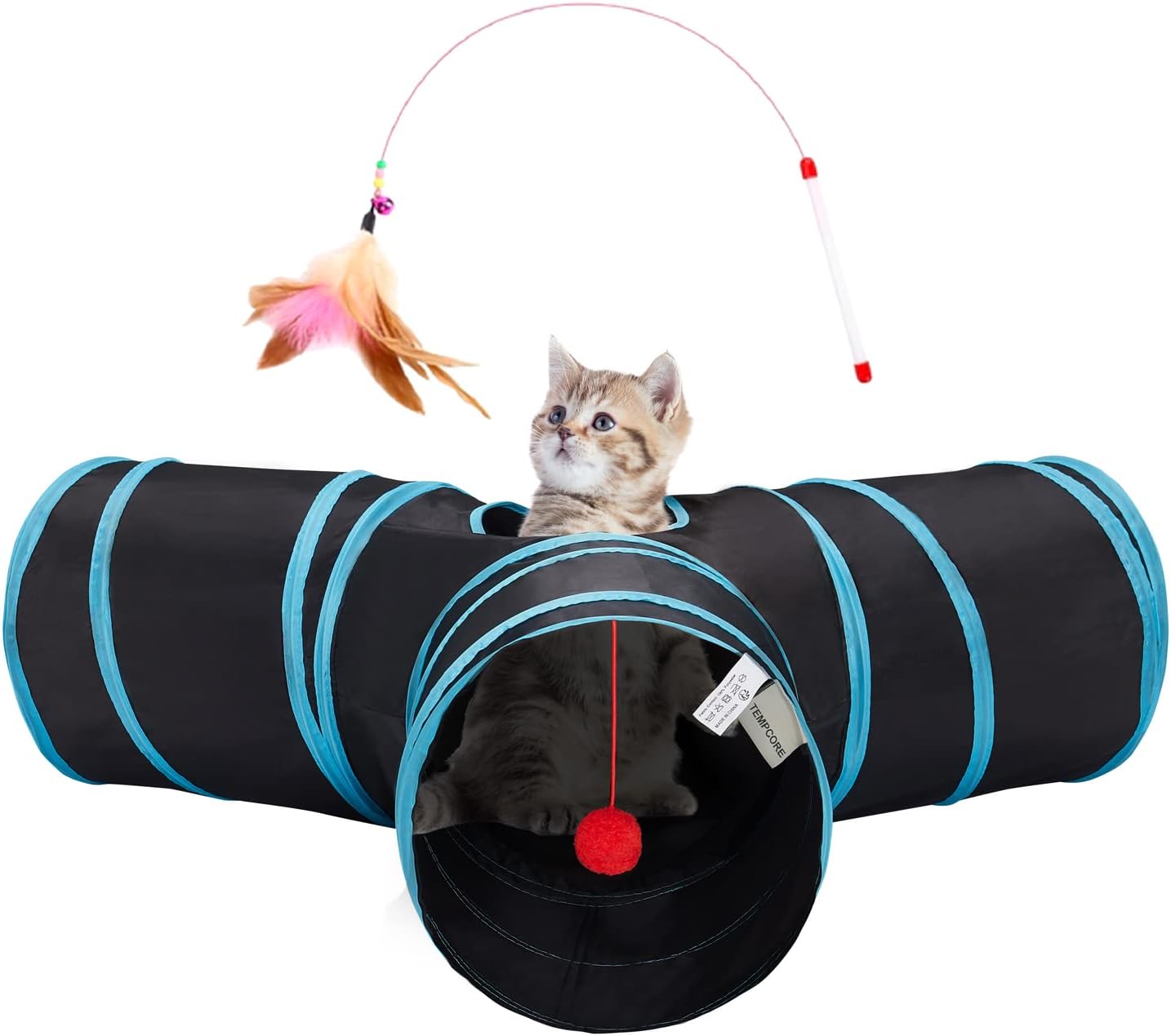
To make the criteria above practical, here is one widely purchased example you can evaluate directly. The listing linked below is a modular three-way tunnel system with a central cube hub: three long tunnels connect to a cube that functions as a hideout and ambush point, with a peek-a-boo hole, a dangling toy, and crinkle lining throughout. Per the manufacturer's specifications, the tunnels are ripstop polyester over spring-steel frames, and each arm folds into a compact flat disc for storage, which makes the system practical for homes that need to reclaim floor space between play sessions.
This configuration suits multi-cat households particularly well, because the hub and multiple arms let two cats chase while a third lounges, all without anyone getting cornered. Verified owner reviews describe strong engagement with the crinkle lining and the cube's dangling toy, and describe the hook-and-loop connections as sturdy enough for active play while still allowing the layout to be rearranged. The honest trade-offs are footprint and price: a multi-arm system occupies a substantial area when deployed and sits at the upper end of the category's price range, and first-time unrolling of compressed spring-steel tunnels takes some patience. If your cat is timid, a single straight tunnel is a cheaper way to test interest before committing to a full system. You can check the current price on Amazon to compare the listed specifications against the sizing and safety criteria described earlier.
Owners of the same system who need to extend or replace a single arm rather than the whole set can view this option on Amazon — that link points to a compatible individual tunnel sold separately, which is worth knowing because the most common long-term failure mode in this category is a single worn arm rather than the whole system failing at once.
Does Your Cat Need a Tunnel at All?
Not every cat will take to a tunnel, and it is better to know the signs before buying. Cats that cannot resist cardboard boxes, that hide under beds and sofas, that stalk and pounce on toys from behind furniture, or that erupt into 3 AM zoomies are strong candidates. Cats that prefer open perching on cat trees and window sills, and that show no interest in boxes, may ignore a tunnel entirely; for those cats, a window perch or a mounted tunnel-style lounger is usually the better investment, since visual enrichment from outdoor viewing satisfies them more than enclosed spaces do.
Age also shapes the decision. Kittens between eight weeks and one year are typically the fastest adopters, and tunnels help them build coordination and confidence during critical socialization windows. Senior cats with arthritis may still enjoy a low-entry tunnel as a hideout, but choose one with a wide, low opening and soft padding, and avoid designs that require a jump or a crawl over a rigid lip.
Introducing a Tunnel Without Scaring Your Cat
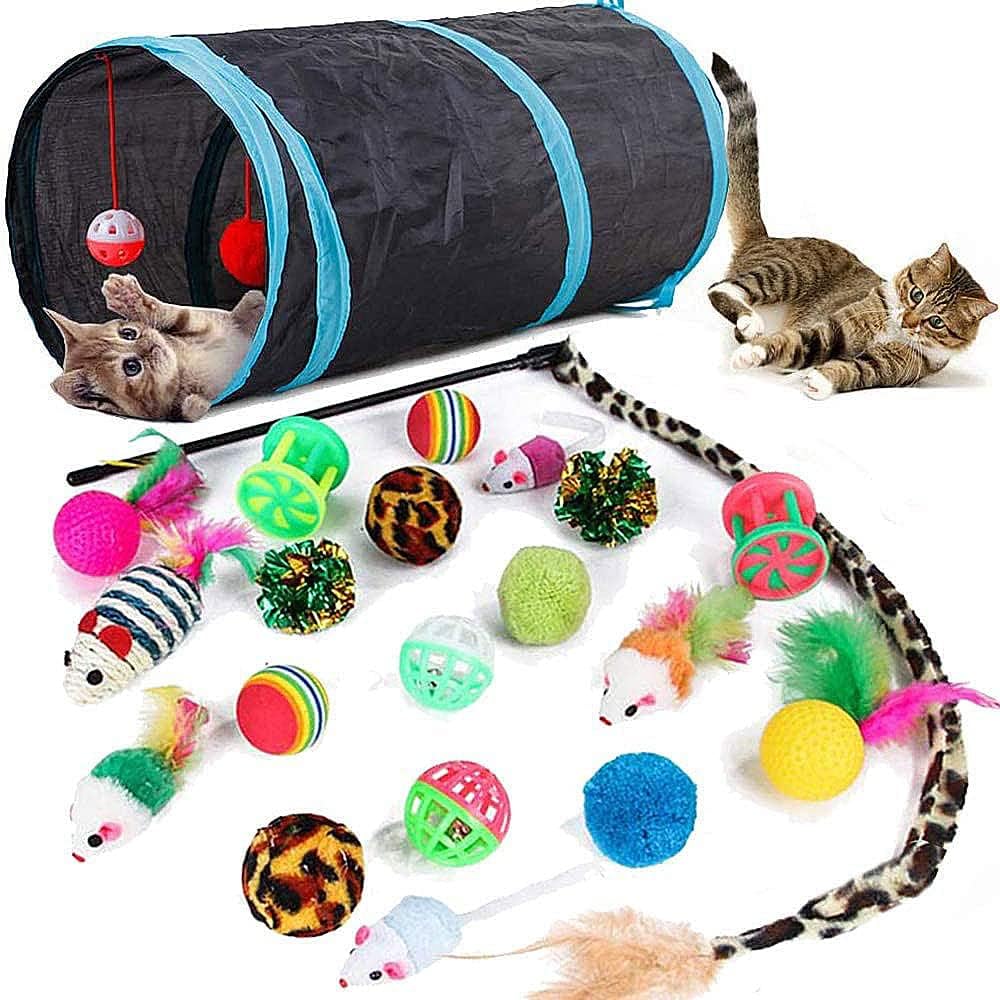
The introduction process matters as much as the product. Start with the tunnel collapsed flat on the floor, scattering treats on and around it so your cat can investigate at its own pace. Once your cat walks on the flat fabric comfortably, open the tunnel partially and let curiosity do the work. Dragging a wand toy into the entrance is the classic lure; most cats cannot resist following prey into a hole. Be patient — some cats take days or even weeks to accept a new structure, and forcing the issue is counterproductive. Once your cat enters voluntarily, hide crinkle balls or catnip mice inside for it to discover. Playing the ambush game, with a toy dangled at one exit while your cat waits inside, is one of the most reliably bonding interactions owners report.
Maintenance and Cleaning
Tunnels collect fur, dander, and tracked litter surprisingly fast. Models with removable, machine-washable covers are the easiest to maintain; wash on a gentle cycle with mild detergent and air dry, since heat can damage spring-steel frame pockets. For tunnels without removable covers, spot-clean with a damp cloth and mild soap, shake out debris outside, and use a lint roller for fur. Crinkle liners are usually permanent, so they cannot be submerged; moisture trapped inside crinkle material can mildew. Water-resistant coated exteriors can be wiped with pet-safe disinfectant wipes. Inspect frame channels monthly for worn fabric or protruding wire, and retire any tunnel where the frame has begun to poke through.
Common Mistakes to Avoid
Buying too small is the most frequent error, especially for large breeds; check diameter before anything else. Buying the biggest system immediately is the second, opposite mistake — a cat that has never shown tunnel interest may ignore a 40-foot layout just as thoroughly as a 36-inch tube, so a cheap single tunnel is a sensible first purchase. Placing the tunnel in a dead corner removes its ambush value; position it where your cat can see the room. Leaving the same toys inside for months leads to boredom; rotate them weekly. And ignoring a cat that is frightened of crinkle noise usually backfires; choose a quieter design or a removable insert instead.
Frequently Asked Questions
Are cat play tunnels safe?
Yes, when bought from reputable manufacturers that disclose pet-safe materials. The main risks are exposed wire frames, poorly attached small parts like bells, and fabric that tears into swallowable strips. Supervise initial sessions and inspect the tunnel regularly.
How long do cat tunnels last?
Budget tunnels with thin polyester and basic spring-steel frames commonly last a few months to a year of daily use according to owner reports. Premium systems with ripstop fabric and reinforced frames are described as lasting several years, and some manufacturers sell replacement arms, which extends the life of a multi-way system considerably.
Are tunnels good for multi-cat households?
Yes. Tunnels create circulation routes and hiding spots that reduce direct confrontation, and multi-way configurations with several entrances prevent any cat from feeling cornered. This aligns with general veterinary guidance on reducing inter-cat tension through environmental structure.
Can tunnels help with cat anxiety?
Enclosed retreat spaces are widely recommended for anxious cats because they allow observation from a position of safety. Cube tents and padded lounge-style hybrids are the best fits here, since they double as napping hideouts rather than pure play structures.
What diameter should a large cat's tunnel be?
Aim for at least 12 inches for Maine Coons and similar breeds, or choose rigid-sided designs where walls do not flex inward. A snug tunnel that squeezes the cat's shoulders will be avoided after the first attempt.
How to Decide
Match the purchase to your cat's personality rather than to feature count. A shy cat wants an enclosed cube or padded lounge. A high-energy singleton wants length and crinkle. A multi-cat home wants a multi-way hub with several exits. A large breed wants diameter. A budget-conscious or first-time buyer wants a single inexpensive straight tunnel to test interest. Whatever you choose, verify current specifications and pricing on the product page — for the modular example discussed above, you can view this option on Amazon — and observe how your cat actually plays before scaling up. A tunnel that fits your cat's temperament will provide years of exercise, enrichment, and shared play; the most expensive system in the category cannot compensate for a mismatch with the animal in front of you. For further background on feline enrichment and welfare, the Cornell Feline Health Center publishes accessible owner-facing material worth reading alongside any purchase decision.
Affiliate Disclosure: PawCritic is a participant in the Amazon Services LLC Associates Program, an affiliate advertising program designed to provide a means for us to earn advertising fees by linking to Amazon.com and affiliated sites. Purchases made through our links help support our research at no extra cost to you. Thank you for your support.
Last updated: July 2, 2026. Prices and availability are subject to change. Always verify current pricing and specifications on Amazon before purchasing.