Why Your Cat's Sleeping Spot Matters More Than You Think
Cats are professional sleepers. The average domestic cat spends 12 to 16 hours per day sleeping — that is 50 to 70 percent of their entire life. Senior cats and kittens can sleep up to 20 hours a day. When you consider that your cat will spend more than half of their life in a bed, the choice of that bed becomes remarkably consequential. Sleep is not idle time for a cat; it is when the body repairs tissue, consolidates memory, and regulates hormones. Disrupted sleep shows up in behavior long before it shows up in a veterinary exam.
Poor sleep quality in cats manifests in ways that many owners misattribute to aging or illness: irritability, decreased playfulness, increased vocalization, poor coat condition, and increased hiding behavior. The Cornell Feline Health Center notes that sudden changes in sleeping patterns or resting locations are often the first visible sign that something is wrong, which makes the bed itself a useful diagnostic baseline. A bed your cat actually uses gives you a consistent reference point for normal behavior.
Every cat has a unique sleeping personality: Burrowers want enclosed spaces. Sprawlers prefer open surfaces. Perch-seekers want elevation and window views. Choosing the right bed starts with understanding your cat's style. Watching where your cat already sleeps — under the duvet, in a cardboard box, on top of the fridge — tells you more than any product description. The bed is simply a way to formalize a preference your cat has already expressed.
Cat Beds and Window Perches: A Buyer's Guide
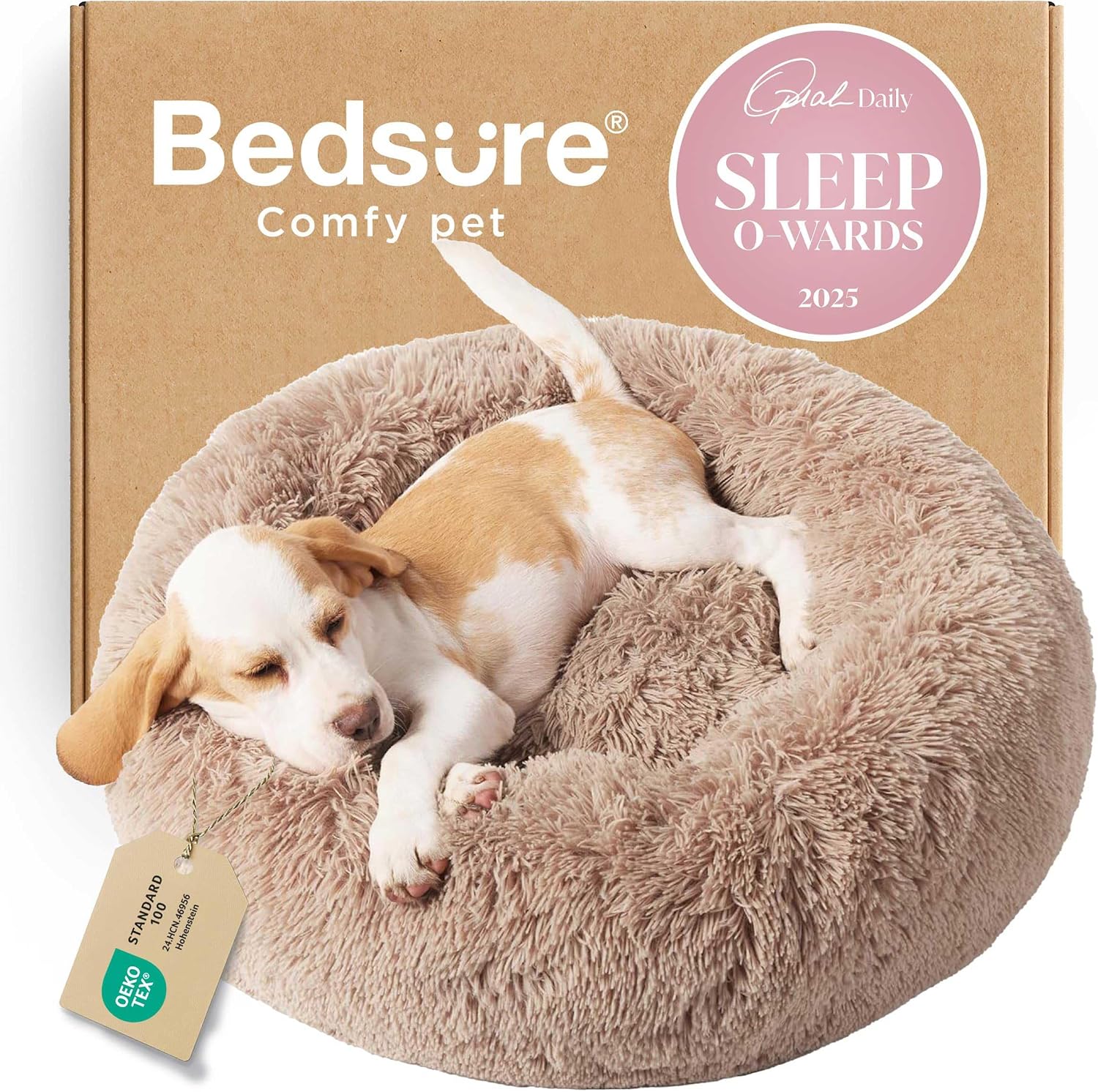
cat beds window perches cozy lounging comfort
This is a focused buying guide for the category, not a numbered rundown of competing products. The market for cat beds and perches is enormous, and most of it is functionally interchangeable: the same felt cave, the same suction-cup shelf, the same donut bed sold under a dozen brand names. What separates a bed your cat uses from a bed that becomes a laundry basket is a small number of physical properties — enclosure, thermal behavior, support, washability, and mounting safety. Understanding those properties lets you evaluate any product, including the one linked below, without relying on marketing copy.
Enclosure and the Burrowing Instinct
Felt cave beds are the single most popular category for a reason. A semi-enclosed design — dark, warm, and covered on five sides — mimics the hollow logs and dens that wild felids use for safety. The felt itself is dense enough to trap body heat, and manufacturers typically rate wool-blend felt caves as holding several degrees of warmth above ambient room temperature. A weighted roof adds a mild pressure effect that many owners describe as calming, similar in principle to a weighted blanket. For a cat that sleeps under furniture or inside boxes, a cave bed is the closest match to existing behavior.
The trade-off is ventilation and cleanliness. Enclosed beds trap dander, hair, and odor, and they need washing more often than open mats. Look for a cave with a removable or machine-washable interior, and check whether the felt holds its shape after washing. Cheap felt pills and collapses; denser wool blends survive repeated cycles. A cave bed is also a poor choice for a cat that sprawls belly-up in the middle of the floor, because the enclosure will simply be ignored.
Thermal Beds Without Electricity
Self-warming beds use a reflective Mylar layer to bounce the cat's own body heat back at them. Manufacturers of these beds commonly rate them as running 10 to 15 degrees Fahrenheit warmer than room temperature with no power source. That matters for senior cats, short-haired breeds, and cats in cold rooms, and it avoids the cord-chewing and overheating concerns that come with electric beds. The Merck Veterinary Manual cat owner reference points out that older cats have more difficulty regulating body temperature, which is one reason warmth-seeking behavior increases with age.
Electric heated beds remain an option for outdoor cats, arthritic seniors, and hairless breeds in cold climates, but they introduce real safety questions: chewed cords, thermostat failure, and burns on cats that cannot move away from the heat source. For an indoor cat in a normally heated home, a reflective self-warming mat or a felt cave provides adequate warmth with none of those risks. If you do choose electric, look for a bed with a chew-resistant cord and a low-wattage design intended for continuous use.
Orthopedic Support and Senior Cats
Memory foam beds matter most for cats with arthritis, hip dysplasia, or post-surgical recovery. The relevant specification is foam density and thickness, not the word orthopedic on the label. A three-inch base of certified memory foam distributes pressure at the joints in a way that a thin polyester fill cannot, and a waterproof inner liner protects the foam from accidents — a practical concern for senior cats. CertiPUR-US certification is a checkable claim: it means the foam has been tested for certain content limits and emissions, and it is verifiable through the certifying program rather than the retailer.
Raised bolsters add head and neck support and give a cat something to lean against, which many cats prefer over a flat mat. The trade-off is size and cost. Bolstered donut beds take up more floor space, cost more than flat mats, and are harder to wash because the bolster is usually attached. For a young, healthy cat, a bolster is a comfort feature; for an arthritic cat, it can be the difference between a bed that gets used and one that does not.
Window Perches and Mounting Safety
Window perches serve the perch-seeking cat: elevation, a view, and solar warmth. There are two mounting systems, and they fail in different ways. Suction-cup perches attach to glass and rely on the cups holding vacuum. Manufacturers of heavy-duty perches rate their dual-lock cups for holding forces in the range of 60 pounds, which sounds generous until you consider dynamic load — a cat launching onto the perch produces far more force than its resting weight. The failure mode is sudden release, which is why placement matters as much as hardware.
Over-the-window hammocks hook onto the window sash or frame and use no suction cups at all. They are generally cheaper, install in minutes, and work in rentals where drilling or adhesive mounting is not an option. The limitation is that they require a window that opens and a sash that can bear weight, and they tend to sag over time as the fabric stretches. A 600-denier oxford fabric resists that stretching better than thin nylon, and it is worth checking the stated weight limit against your cat's actual weight with a margin.
Materials, Washability, and Long-Term Cost
Faux fur interiors are warm and popular with cats, but they mat and trap hair, and low-quality faux fur sheds in the wash. Microfiber and fleece are easier to maintain and dry faster. Faux suede exteriors look better in a living room but stain more readily. Whatever the material, the practical question is whether the cover comes off and whether the manufacturer states a washing temperature. Beds that cannot be washed become disposable, and a $30 bed replaced twice a year costs more than a $50 bed with a removable cover.
Foam cores should never go in a washing machine; spot-clean them and air-dry fully before reassembly, because trapped moisture in foam grows mold. Suction cups should be cleaned with rubbing alcohol before installation and inspected monthly for hardening or loss of grip; most manufacturers recommend replacing cups every 12 to 18 months regardless of appearance. These are small maintenance habits, but they are the difference between a perch that lasts and a perch that drops a cat at 3 a.m.
A Concrete Example to Compare Against
One widely reviewed felt cave bed in this category is the MeowFurt Cat Bed Cave, a wool-blend felt design with a semi-enclosed shape, a weighted roof, and a machine-washable construction. It is a reasonable reference point for the burrower profile described above, and it illustrates the specifications worth checking in any cave bed: felt density, whether the roof holds its shape, and whether the interior can be washed. Owner reviews across large sample sizes consistently describe it as warm and well-used by cats that already hide under blankets, with the common complaints being shedding of felt fibers and the bed losing structure over time. You can check the current price on Amazon if you want to compare its specifications against the criteria below. It is one example, not a universal recommendation — the right bed depends on your cat's sleeping style, age, and coat.
How to Choose: A Practical Framework
- Match the bed to observed behavior, not to breed. Where does your cat already sleep? Under covers means cave. On windowsills means perch. Flat and spread out means open mat or bolster bed.
- Measure your cat before ordering. A bed that is too small gets ignored. For cave beds, the interior floor area should be at least the length of your cat from nose to tail base, plus a few inches.
- Check the weight rating on perches. Compare the stated limit to your cat's weight and leave a margin for dynamic load. A 12-pound cat on a perch rated for 15 pounds is a risk, not a bargain.
- Prioritize washability. Removable, machine-washable covers extend the usable life of a bed far more than premium fill.
- Consider the room, not just the cat. A perch above hard flooring is a hazard if the mount fails. Place it over carpet or a rug, or choose an over-sash hammock instead.
- For seniors, warmth and support beat novelty. A self-warming orthopedic mat with a low entry is more useful than a tall, enclosed cave that is hard to climb into.
Common Mistakes Owners Make
The most common mistake is buying a bed that reflects the owner's taste rather than the cat's behavior. A decorative sofa-style bed looks charming in a living room, but cats that burrow will ignore it, and cats that sprawl may use it only until the novelty fades. The second most common mistake is placement: a bed in a high-traffic area, next to a noisy appliance, or in direct sun during summer will be avoided. Cats choose sleeping spots for safety and temperature, and a bed placed against those preferences will not be used no matter how good the materials are.
Another frequent error is skipping the introduction period. A new bed smells foreign, and some cats take two to four weeks to adopt it. Placing an unwashed item of your clothing in the bed transfers your scent, and positioning the bed where the cat already sleeps removes the need for the cat to change routine. Sprinkling catnip or placing a few treats inside works for some cats and is ignored by others. Patience is more reliable than any attractant.
Finally, owners often underestimate maintenance. Suction cups that are never cleaned lose grip. Foam that is never aired develops odor. Felt caves that are never washed become a reservoir for dander, which matters for households with allergic family members. A five-minute monthly inspection of mounts, seams, and covers prevents most of the failures that show up in negative reviews.
Safety Notes Specific to Cats
Any product that can be chewed, ingested, or wrapped around a cat is a potential hazard. Loose threads on a worn bed can be swallowed and cause linear foreign body obstruction, which is a surgical emergency. Suction cups that fall off become toys and then choking hazards. Electric bed cords are a known chewing target. The ASPCA Animal Poison Control also reminds owners that some bedding treatments and scented sprays are toxic to cats, so avoid applying essential oils or fragranced sprays to a bed, and wash new bedding before first use to remove manufacturing residues.
Window perches deserve a specific caution. Never install one above a hard floor, a staircase, or furniture with sharp edges. Test the mount by pressing down firmly with your hand before letting the cat use it, and re-test monthly. If the cups show any sign of hardening, cracking, or loss of suction, replace them rather than reattaching. For cats over roughly 15 pounds, an over-sash hammock or a wall-mounted shelf is generally a safer choice than a suction-cup design, because the failure mode is gradual rather than sudden.
Frequently Asked Questions
How do I get my cat to use a new bed? Place an unwashed item of your clothing on the bed so it carries your scent, sprinkle catnip or place treats inside, and position the bed where the cat already sleeps. Some cats adopt a new bed within a day; others take two to four weeks. Forcing the cat onto the bed is counterproductive.
Are suction cup window perches safe? They can be, when installed on clean glass with cups cleaned in rubbing alcohol, inspected monthly, and replaced every 12 to 18 months. They should never be placed above hard flooring, and the stated weight limit should exceed your cat's weight with a margin. Over-sash hammocks avoid the suction failure mode entirely.
My cat sleeps on my bed. Is this a problem? No. Co-sleeping is normal and generally beneficial for the bond. A separate cat bed nearby gives the cat an alternative when the bed gets too warm or when your movement disturbs their sleep.
Should I get an electric heated cat bed? Electric beds are useful for outdoor cats, elderly cats with arthritis, and short-haired breeds in cold climates. For indoor cats, a self-warming bed with a reflective Mylar layer provides adequate warmth without electrical safety concerns. If you choose electric, look for a chew-resistant cord and a low-wattage design rated for continuous use.
How often should a cat bed be washed? Most manufacturers recommend washing removable covers every two to four weeks, more often for cats with allergies, skin conditions, or heavy shedding. Foam cores should be spot-cleaned and air-dried fully, never machine-washed.
Do cats prefer round or rectangular beds? It varies by sleeping posture. Curlers and burrowers tend to prefer round, enclosed shapes; sprawlers often prefer rectangular mats with room to stretch. Observation of your cat's current sleeping positions is more reliable than any general rule.
Where to Buy
cat beds window perches cozy lounging comfort
As an Amazon Associate, PawCritic earns from qualifying purchases.
Affiliate Disclosure: PawCritic.com participates in the Amazon Services LLC Associates Program.