Understanding Feline Anxiety: What Published Guidance Says
Feline anxiety is one of the most common behavioral concerns in domestic cats, and it is frequently misunderstood. A cat that urinates outside the litter box, overgrooms to the point of bald patches, hides for most of the day, or lashes out at a housemate is not being spiteful or stubborn. According to the Cornell Feline Health Center, stress and anxiety in cats often stem from environmental changes, social conflict, lack of predictability, or underlying medical conditions. In the wild, a stressed cat has options: climb, patrol a larger territory, or avoid the threat. In an apartment, those options shrink to a laundry basket, the top of the fridge, or the space under the couch. The result is a cat whose nervous system stays on high alert, and the behavioral fallout that follows.
Veterinary behaviorists generally divide feline anxiety into two broad categories: situational and chronic. Situational anxiety is triggered by a specific event, such as a move, a new pet, a veterinary visit, or a thunderstorm. Chronic anxiety is more diffuse and often tied to temperament, early socialization, or an environment that never quite feels safe. The distinction matters because the tools that help with one may not help with the other. A pheromone diffuser placed in the home, for example, is unlikely to resolve acute carrier panic on the way to the vet, while a fast-acting chew may do little for a cat who spends every evening hiding from a housemate.
Published guidance from the Merck Veterinary Manual emphasizes that behavior changes in cats should always be evaluated with a medical differential in mind. Hyperthyroidism, dental pain, arthritis, urinary tract disease, and even neurological conditions can all present as anxiety-like behaviors. Before investing in over-the-counter calming products, it is reasonable to have a veterinarian rule out physical causes. Once medical issues are excluded, a multimodal approach that combines environmental management, pheromone therapy, and targeted supplements tends to outperform any single product used alone.
How to Evaluate Cat Calming Products Without a Testing Lab
Because this publication does not perform hands-on product testing, the guidance here is drawn from published veterinary behavior literature, manufacturer specifications, and verified owner reports. That means the focus is on what can be checked and verified: the active ingredient and its proposed mechanism, the delivery method, the duration of effect, the coverage area for diffusers, safety features such as breakaway buckles, and the consistency of owner feedback over time.
When reading any cat calming product listing, the first question to ask is what the product actually contains. Pheromone diffusers and collars typically use a synthetic analog of a naturally occurring feline pheromone. Feline facial pheromone (FFP) is the chemical cats deposit when they rub their cheeks on furniture, doorframes, and people. Cat appeasing pheromone (CAP) is the pheromone a nursing queen produces to bond with her kittens. These are not drugs, and they do not sedate. They work by signaling safety through the olfactory system, which is why a cat must actually be in the room and breathing normally for a diffuser to have any chance of helping.
Edible calming products fall into a different category. Most contain ingredients such as L-theanine, thiamine (vitamin B1), colostrum calming complex, or herbal extracts like chamomile and valerian. Some are formulated for daily maintenance and build up over several days, while others are designed for acute events and are given 20 to 30 minutes before a known stressor. Palatability is a real constraint: a supplement a cat refuses to eat is worthless regardless of its ingredient list. Owner reports frequently mention that chicken-liver or fish-flavored chews are accepted more readily than capsules or powders.
Finally, consider the delivery method against the cat's temperament. A cat who will not wear a collar will not benefit from a calming collar, no matter how well reviewed. A cat who never enters the room where the diffuser is plugged in will not benefit from that diffuser. Matching the product to the cat's actual behavior is more important than chasing the highest-rated option.
Pheromone Diffusers: What They Are and Who They Suit
Plug-in pheromone diffusers are the most researched category of non-prescription calming products for cats. They release a synthetic pheromone into the air, and the cat absorbs it through normal respiration. Manufacturers typically state a coverage area of around 700 square feet per unit and a refill lifespan of about 30 days. In practice, owners often report that a single unit covers a small apartment or a single floor of a house, while larger or multi-level homes may need one unit per floor to maintain consistent coverage.
The two main pheromone types serve different purposes. Feline facial pheromone products are marketed for general anxiety, territory marking, and adjustment to new environments. Cat appeasing pheromone products are marketed specifically for tension between cats in the same household. This distinction is not marketing fluff; it reflects the different biological signals the pheromones mimic. A household dealing with inter-cat aggression may see little benefit from a general FFP diffuser, while a cat stressed by a move may not need the appeasing pheromone at all.
Onset time is another practical consideration. Manufacturer guidance and owner reports generally suggest that a diffuser needs 24 to 72 hours to saturate a room to a level where effects become noticeable. This makes diffusers a poor choice for an immediate crisis, such as a cat who is already hiding and refusing food after a move. In those situations, a faster-acting product or a veterinary consultation is more appropriate. For ongoing management, however, diffusers are convenient because they require no handling of the cat and no daily dosing.
Safety is generally favorable. Because the active ingredients are synthetic analogs of naturally occurring pheromones rather than drugs, diffusers are commonly described as safe for continuous use around cats of all ages. The main practical issues reported by owners are that some cats simply do not respond, that refills are a recurring cost, and that the diffuser must be plugged in vertically and away from furniture or curtains.
Calming Collars: Portable Pheromone Delivery
Calming collars take the pheromone concept and make it mobile. The collar is infused with a synthetic calming pheromone that is released gradually by the cat's body heat, creating a personal zone of pheromone that travels with the cat. This makes collars a natural fit for situations where a diffuser cannot follow: veterinary visits, travel, boarding, moving day, or a stay at a relative's home.
The most important safety feature to look for is a breakaway buckle. A cat collar that does not break away under pressure is a strangulation hazard, particularly for cats who climb or who live with other cats. During play or a fight, a collar can become snagged on a branch, a piece of furniture, or another cat's jaw. A breakaway buckle is designed to release under that kind of load. Any calming collar without one should be avoided.
Duration varies by product. Thirty days is common, and some products advertise 60 days. Owner reports suggest that pheromone intensity tends to decline in the final week or two of a collar's rated life, so a collar that claims 60 days may be most effective for the first 45 to 50. Collars are also not water-resistant in most cases and should be removed before bathing. A small number of cats develop mild skin irritation at the contact point, which usually resolves when the collar is removed or repositioned.
Collars are not a good fit for every cat. Some cats simply refuse to wear collars, and forcing the issue creates more stress than the collar relieves. For those cats, a diffuser at home combined with a fast-acting chew before travel is a more realistic strategy.
Calming Chews and Supplements: Daily Maintenance Versus Acute Support
Edible calming products divide into two functional groups, and confusing them is one of the most common mistakes owners make. Maintenance chews are formulated for daily use and typically take three to five days of consistent dosing before effects become noticeable. Acute chews are formulated for situational use and are given 20 to 30 minutes before a known stressor, with effects lasting several hours.
Common active ingredients in maintenance formulas include L-theanine, an amino acid found in green tea that is associated with calming neurotransmission; thiamine (vitamin B1), which supports normal nerve function; and colostrum calming complex, a bioactive milk protein that has been studied for its effect on stress-related cortisol. These ingredients are generally well tolerated, but they are not sedatives. Owners should not expect a cat to become drowsy or docile; the goal is a reduction in reactivity, not sedation.
Palatability is the practical bottleneck. A significant share of owner complaints about calming chews centers on cats refusing to eat them. Chicken-liver and fish flavors tend to be accepted more readily than capsules or unflavored powders. Some owners report success hiding chews in a small amount of wet food or a pill pocket, but cats who are suspicious of novel textures may reject the food entirely. If a cat refuses a chew for more than a few days, switching formats is usually more productive than persisting.
Age restrictions matter. Many chews are labeled for cats 12 weeks and older, and some manufacturers recommend consulting a veterinarian for younger kittens. For neonatal and very young kittens, environmental measures such as a warm, quiet nesting area are more appropriate than any supplement. As with any edible product, the AAFCO pet food standards provide useful context on how companion animal products are regulated and labeled, though calming supplements occupy a different regulatory space than complete diets.
A Closer Look at Two Concrete Options
Because this is a buying guide rather than a ranked list, the two products below are offered as concrete examples of the two most common pheromone delivery formats: a plug-in diffuser and a wearable collar. They are not presented as the only options, and they are not ranked against each other. They illustrate what to look for and what trade-offs to expect.
Example: A Plug-In Pheromone Diffuser
A plug-in diffuser using feline facial pheromone is the most common starting point for general home anxiety. The typical kit includes a diffuser head and a 30-day vial, with refills sold separately. Manufacturer specifications for this format generally cite coverage of about 700 square feet and continuous release for roughly 30 days. Owner reports describe noticeable changes in hiding, marking, and general tension within the first week for cats who respond at all, though a meaningful minority of cats show little change.
The trade-off is straightforward. Diffusers require no handling of the cat and work continuously, but they need a vertical outlet, they cost money every month in refills, and they only help a cat who spends time in the treated room. For a cat who hides in a bedroom all day, a diffuser in the living room will do nothing. Placement matters as much as the product itself. If you want to look at this format, check the current price on Amazon to compare kit and refill costs before committing.
Example: A Calming Pheromone Collar
A calming collar delivers pheromone continuously from body heat and is designed for cats who need support outside the home or in situations where a diffuser cannot reach. A 30-day collar is the most common format, with a breakaway buckle as an essential safety feature. Owner reports describe the collar as most useful for veterinary visits, travel, and boarding, where the stressor is time-limited and the cat is away from the treated home environment.
The trade-offs are also clear. Collars only work for cats who tolerate wearing them, the pheromone effect tends to fade in the final week, and the collar must be removed before bathing. For a cat who panics in the carrier, a collar alone may not be enough; many owners combine a collar with a fast-acting chew given 30 minutes before departure. If this format suits your situation, view this option on Amazon to check sizing and duration details.
Matching the Product to the Problem
The single most useful exercise before buying anything is to write down exactly what the cat is doing and when. A cat who sprays near windows when the neighbor's cat walks by has a territorial trigger. A cat who hides under the bed for two days after a move has an adjustment trigger. A cat who screams in the carrier has a travel trigger. A cat who ambushes a housemate at the litter box has a social conflict trigger. Each of these points toward a different tool.
Territorial marking and general environmental stress tend to respond best to a home diffuser using feline facial pheromone. Inter-cat conflict tends to respond best to a diffuser using cat appeasing pheromone, sometimes combined with a general diffuser in a different room. Travel and veterinary stress tend to respond best to a collar, a fast-acting chew, or both. Daily low-grade anxiety that never quite resolves may benefit from a maintenance chew given consistently over weeks rather than days.
It is also worth accepting that no over-the-counter product works for every cat. Published veterinary guidance and owner reports both suggest that a meaningful share of cats, often estimated in the range of 15 to 30 percent, do not respond to pheromone products at all. This is not a sign that the product is defective or that the owner did something wrong. It simply means the cat's anxiety has a different driver, and a different approach is needed.
Environmental Changes That Support Any Calming Product
No diffuser, collar, or chew can compensate for an environment that keeps a cat on edge. The following changes are consistently recommended in feline behavior literature and are frequently cited by owners as the factors that made the biggest difference.
- Vertical territory: Cats relieve stress by climbing. Wall shelves, tall cat trees, and cleared access to the top of a wardrobe or fridge give an anxious cat an overhead vantage point where they can observe without being approached. This is often the single most effective environmental change in a multi-cat home.
- Hiding spots: Every cat needs at least one place where they cannot be seen. Covered beds, cardboard boxes, and tunnels are not luxuries. They give a stressed cat a dark, enclosed retreat that their instincts recognize as safe. A cat who has no hiding spot will often create one by squeezing behind appliances, which is more dangerous.
- Resource separation: In homes with more than one cat, food bowls, water sources, and litter boxes should be spread out so no single cat can guard all of them. A common guideline is one litter box per cat plus one extra, placed in different locations rather than lined up in a row.
- Predictable routine: Cats are creatures of habit. Feeding, play, and quiet time at consistent hours each day signal that the world is orderly. Interactive play that lets a cat complete the natural stalk-chase-pounce sequence is one of the most reliable natural stress relievers available.
- Safe spaces during disruption: During moves, renovations, or parties, confining a cat to a single quiet room with familiar bedding, food, water, and a litter box prevents the kind of overwhelming exposure that can set anxiety back by weeks.
Common Mistakes Owners Make
The first mistake is expecting overnight results. Feline anxiety rarely develops in a day, and it rarely resolves in one. Diffusers need days to saturate a room, maintenance chews need days to build up, and behavioral change in the cat often lags behind both. Owners who give up after 48 hours frequently conclude that a product does not work when they simply have not given it a fair window.
The second mistake is stacking new products all at once. If a diffuser, a collar, and a chew are all introduced on the same day, there is no way to know which one is helping, which one is doing nothing, and which one might be causing a mild reaction. Introducing one product at a time, with at least two weeks between additions, makes it possible to evaluate each one honestly.
The third mistake is ignoring the environment. A diffuser in a home with one litter box for three cats, no vertical space, and a feeding station in a high-traffic hallway is fighting a losing battle. Environmental changes are not optional extras; they are the foundation that calming products build on.
The fourth mistake is waiting too long to involve a veterinarian. If a cat has been treated with a diffuser for a full month and a maintenance chew for two weeks with no improvement, or if the cat is losing weight, overgrooming to the point of skin damage, or eliminating outside the box, a veterinary consultation is warranted. Underlying medical conditions can mimic anxiety, and prescription options exist for cats who do not respond to over-the-counter products. The ASPCA Animal Poison Control is also a useful resource if there is any question about whether a supplement or essential oil product is safe for a cat, since some herbal ingredients that are fine for humans are toxic to felines.
Safety Considerations for Calming Products
Pheromone diffusers and collars are generally described as safe for cats of all ages because the active ingredients mimic naturally occurring chemical signals rather than acting as drugs. The main safety considerations are physical rather than chemical: diffusers should be plugged in vertically and kept clear of curtains, bedding, and furniture, and collars should always have a breakaway buckle.
Edible products require more caution. Some herbal ingredients, including certain essential oils, are not safe for cats. Tea tree oil, eucalyptus, citrus, and peppermint are among the substances that can cause serious reactions in cats, and products marketed for calming should be checked carefully for these ingredients. A veterinarian or a poison control resource should be consulted before giving a cat any supplement that is not specifically labeled for feline use.
Kittens, pregnant cats, and cats with chronic medical conditions deserve extra caution. Many chews are labeled for cats 12 weeks and older, and some manufacturers recommend veterinary consultation for younger or medically fragile cats. When in doubt, the safest course is to start with environmental measures and a diffuser, which require no ingestion, and to involve a veterinarian before adding anything edible.
Frequently Asked Questions
Do pheromone diffusers actually work for cats?
Published veterinary literature and manufacturer documentation describe pheromone diffusers as effective for a majority of cats, with a meaningful minority showing little response. The mechanism is olfactory rather than pharmacological, which is why a cat must be in the treated room and breathing normally for any effect to occur. Owners who see no change after a full 30 days are likely dealing with a cat in the non-responder group or with anxiety driven by a cause that pheromones cannot address, such as pain or a medical condition.
Can multiple calming products be used at the same time?
Yes, and for moderate to severe anxiety, combining approaches is common. A home diffuser addresses the environment, a collar addresses travel and out-of-home stress, and a chew addresses systemic reactivity. The practical rule is to introduce one product at a time so each can be evaluated. Starting everything at once makes it impossible to know what is working and what is unnecessary expense.
How long before a calming product starts working?
Diffusers generally need 24 to 72 hours to reach therapeutic saturation in a room. Collars begin releasing pheromone within about an hour of body-heat activation. Maintenance chews typically take three to five days of consistent dosing. Acute chews are formulated for onset within 20 to 30 minutes and are intended for known stressors rather than daily management. Patience is the common thread across all formats.
Are calming products safe for kittens?
Pheromone diffusers and collars are generally considered safe for kittens because they do not involve ingestion of a drug. Edible supplements often carry age restrictions, with 12 weeks being a common minimum. For very young kittens, environmental measures such as a warm, quiet nesting area and limited handling are more appropriate than any product.
When should a veterinarian be involved?
A veterinarian should be consulted if behavior changes are sudden, if the cat is losing weight or overgrooming to the point of skin damage, if there is any sign of pain or litter box avoidance, or if over-the-counter products have been used consistently for a month with no improvement. Medical causes such as hyperthyroidism, dental disease, and arthritis can all present as anxiety, and prescription options are available for cats who need more than over-the-counter support.
Putting It Together: A Sensible Buying Approach
For a cat with general environmental anxiety, a plug-in diffuser using feline facial pheromone is the most common starting point. It requires no handling of the cat, runs continuously, and is supported by a substantial body of published guidance. If you want to compare kit and refill costs before buying, check the current price on Amazon as one reference point among several.
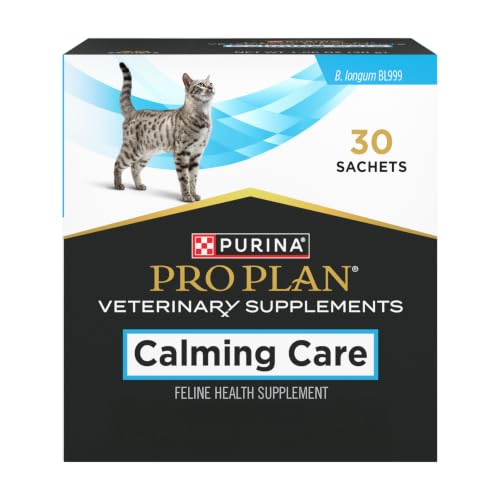
For a cat whose anxiety is tied to travel, veterinary visits, or time away from home, a calming supplement is the more logical format, sometimes paired with a fast-acting chew given before departure. If that matches your situation, view this option on Amazon to check duration and sizing details.
Whichever format you choose, treat the product as one part of a larger plan. Environmental enrichment, predictable routines, safe hiding spaces, and separated resources do at least as much work as any diffuser or chew. And if a cat does not improve after a fair trial, the next step is not another product. It is a conversation with a veterinarian about what else might be going on.
Disclosure: PawCritic is reader-supported. When you buy through links on our site, we may earn an affiliate commission at no additional cost to you. As an Amazon Associate, we earn from qualifying purchases.