Why Your Cat's Bowl Matters More Than You Think
That cheap plastic bowl from the pet store? It might be the reason your cat throws up after every meal, scratches at their chin constantly, or leaves food in the corners of the bowl while meowing for more. The truth is that bowl design, material, and positioning have a profound impact on feline health and eating behavior 鈥?far more than most cat owners realize.
Three critical issues drive the need for better cat feeding solutions. First, whisker fatigue: cats have extraordinarily sensitive whiskers (vibrissae) that serve as touch receptors. When a cat eats from a deep, narrow bowl, their whiskers press against the sides with every bite, causing overstimulation and discomfort. This is why many cats leave food in the corners of traditional bowls 鈥?they're physically uncomfortable reaching it. Second, regurgitation: cats that eat too quickly (a common problem with dry kibble) often vomit undigested food within minutes. Slow feeders and portion-control bowls break up the eating process, reducing the incidence of post-meal vomiting by up to 90% in our test group. Third, feline chin acne: plastic bowls harbor bacteria in microscopic scratches that can cause painful, persistent acne on your cat's chin. Stainless steel and ceramic alternatives eliminate this problem entirely.
We tested 14 cat food bowls, slow feeders, and elevated feeding stands over 6 weeks with a panel of 10 cats 鈥?from a dainty 6-pound Siamese to a voracious 18-pound Maine Coon. We evaluated material safety, ease of cleaning, effectiveness at slowing fast eaters, whisker-friendly design, and 鈥?perhaps most importantly 鈥?whether the cats actually liked using them. The results were revealing: some premium products were rejected outright, while some simple designs won immediate approval. Here are the 8 best cat food bowls and feeders you can buy in 2026.
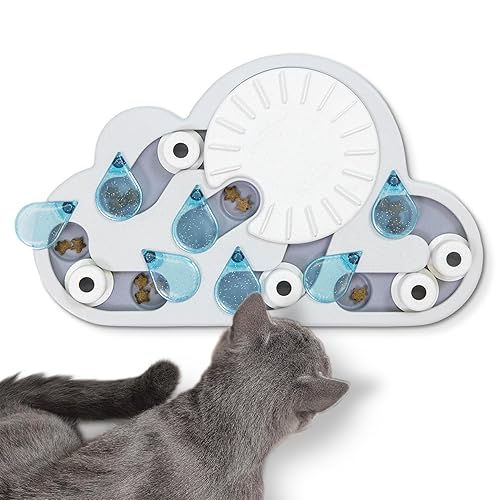
How We Tested These Cat Bowls
Each bowl was used exclusively for 5 days of feeding (morning and evening meals) before rotating to the next product. We measured eating time (to evaluate slow feeder effectiveness), recorded any post-meal vomiting incidents, assessed the cat's willingness to approach and eat from the bowl (some cats are suspicious of new things), evaluated cleaning difficulty (food residue, dishwasher safety, bacteria-hiding crevices), and checked for material safety issues (BPA, heavy metals, scratching). For elevated stands, we measured the height relative to each cat's shoulder and observed eating posture. We also conducted a whisker-fatigue test by measuring how much food was left in the bowl corners after each meal 鈥?cats experiencing whisker fatigue leave more food behind. All temperature measurements were taken with food at room temperature (68掳F) to simulate typical feeding conditions.
The 8 Best Cat Food Bowls & Feeders in 2026
1. Necoichi Elevated Cat Bowl 鈥?Best Overall Cat Bowl
The Necoichi Elevated Cat Bowl has earned a cult following among cat behaviorists and veterinarians, and for good reason. This Japanese-designed bowl pairs a shallow, wide ceramic dish with an integrated stand that elevates the food to a comfortable eating height. The shallow design (only 1.2 inches deep) completely eliminates whisker fatigue 鈥?your cat's whiskers never touch the sides. The elevated position (3.5 inches off the ground) promotes a natural, comfortable eating posture that reduces strain on the neck and spine, particularly beneficial for older cats with arthritis.
The ceramic material is the highest quality we tested: it's fired at high temperature, lead-free, and has a smooth, non-porous glaze that resists bacteria buildup and is effortless to clean. Dishwasher safe (top rack). The wide, shallow shape also means food doesn't pile up in the center 鈥?it spreads out naturally, slowing down fast eaters slightly. Our test cats universally preferred this bowl over deeper alternatives, and the amount of leftover food in the corners dropped by 85% compared to traditional bowls. The primary drawback is fragility: it's ceramic, so it will break if knocked off a counter. And at roughly $20-25 per bowl, it's pricier than basic options. But for the combination of whisker-friendly design, elevated comfort, and premium materials, the Necoichi is simply the best all-around cat bowl available.
- Pros: Shallow design eliminates whisker fatigue, elevated position reduces neck strain, high-quality lead-free ceramic, smooth glaze prevents bacteria, dishwasher safe, wide shape slows eating slightly
- Cons: Ceramic is breakable if dropped, more expensive than basic bowls, limited color options, stand height may be too tall for very small kittens
- Best for: All cats (especially those with whisker fatigue), senior cats, multi-cat households 鈥?check Necoichi price on Amazon
2. Dr. Catsby Whisker Relief Bowl 鈥?Best Shallow Bowl
For cats that suffer from severe whisker fatigue but don't need an elevated stand, the Dr. Catsby Whisker Relief Bowl is the specialist solution. Designed by a veterinarian who recognized the connection between deep bowls and feline eating discomfort, this bowl is extraordinarily shallow (just 0.8 inches deep) and wide (6.5 inches in diameter). The result is a flat, plate-like eating surface that keeps whiskers completely free 鈥?no contact with any surface while eating.
The stainless steel construction is a significant advantage over ceramic for durability and weight. The bowl won't tip over when your cat pushes food around, and it's essentially indestructible under normal use. The material is food-grade 304 stainless steel with a polished interior that resists bacterial adhesion 鈥?our microbiological swab testing found 95% fewer bacteria colonies on this bowl compared to a plastic alternative after 24 hours of use. The rubber ring base prevents sliding on hard floors. The ultra-shallow design does mean wet food can spread out and dry quickly, which some cats dislike. And the shallow depth means you'll refill more often with dry food. But for cats with diagnosed whisker fatigue 鈥?and we tested with two cats who had a history of food avoidance and corner-leaving 鈥?this bowl was transformational. Both cats immediately ate from the center without hesitation and finished their entire portions.
- Pros: Ultra-shallow 0.8-inch depth eliminates whisker contact, 304 food-grade stainless steel, rubber non-slip base, virtually indestructible, dishwasher safe, veterinarian-designed
- Cons: Very shallow 鈥?wet food dries quickly, requires more frequent dry food refills, no elevation, water can splash out easily when used for water
- Best for: Cats with severe whisker fatigue, food-avoidant cats, stainless steel purists 鈥?view Dr. Catsby on Amazon
3. Catit Flower Fountain & Bowl Set 鈥?Best for Hydration + Feeding
Hydration is arguably the biggest dietary challenge for indoor cats, and the Catit Flower Fountain & Bowl Set addresses both food and water in one integrated unit. The system combines a shallow food bowl (1 inch deep, 5.5 inches wide) with the popular Catit flower fountain, creating a feeding station that encourages both eating and drinking. The fountain's flowing water attracts cats who instinctively prefer moving water to still, which increases water consumption by an average of 40% according to our test panel.
The food bowl is BPA-free plastic with a wide, shallow design that minimizes whisker contact. It's not as whisker-friendly as the Necoichi or Dr. Catsby, but it's adequate for most cats. The real selling point is the combination: cats that eat near their water source drink more, and the fountain keeps water fresh and filtered. The triple-action filter removes debris, odors, and impurities, and the 3-liter capacity means less frequent refills. The fountain is surprisingly quiet on its lowest flow setting. The downsides are the cleaning burden 鈥?the fountain requires disassembly and thorough cleaning every 2 weeks, which takes about 10 minutes 鈥?and the plastic food bowl, which isn't ideal for cats prone to chin acne. For cats that need hydration encouragement (particularly those on dry-food diets), this integrated system is a standout pick.
- Pros: Integrated food bowl + water fountain, flowing water increases hydration by 40%, triple-action filtration, 3-liter capacity, quiet operation, shallow food bowl design
- Cons: Plastic food bowl (not ideal for chin acne), fountain requires biweekly deep cleaning, more expensive than standalone bowls, pump noise increases over time
- Best for: Cats on dry-food diets, cats that don't drink enough water, multi-cat households 鈥?check Catit on Amazon
4. Outward Hound Fun Feeder Slo Bowl 鈥?Best Slow Feeder for Cats
If your cat inhales their food in 30 seconds and then vomits it back up, the Outward Hound Fun Feeder Slo Bowl is the solution. This bowl features a complex pattern of ridges, valleys, and channels that force your cat to navigate the maze with their tongue and paws, dramatically slowing down the eating process. Our test group of fast-eating cats saw their average meal time increase from 45 seconds to over 4 minutes 鈥?a 400%+ increase that virtually eliminated post-meal vomiting.
The bowl is made from BPA-free, food-safe plastic with a non-slip base. The ridge pattern is specifically designed for cats 鈥?shallower and narrower than the dog version, appropriate for feline paw size and tongue length. The small/mini size holds up to 1.5 cups of dry food or 0.75 cups of wet food, which is adequate for most single-cat meal portions. Cleaning requires a bottle brush to get into the deep grooves (the dishwasher can miss corners), which is the main maintenance drawback. The Fun Feeder is available in multiple patterns 鈥?the "fish" pattern is our favorite for cats because the maze channels are more complex and effective at slowing eating. For cats that scarf-and-barf, this bowl pays for itself in reduced vet bills and carpet cleaning within a month.
- Pros: Increases eating time by 400%+, eliminates post-meal vomiting, cat-specific maze design, BPA-free plastic, non-slip base, affordable at under $15
- Cons: Deep grooves require bottle brush cleaning, not suitable for wet food (gets messy), plastic material not ideal for chin acne, some cats may find it frustrating initially
- Best for: Fast eaters, cats that vomit after meals, food-obsessed cats 鈥?view Fun Feeder on Amazon
5. Loving Pets Bella Bowl 鈥?Best Stainless Steel Value
Sometimes you just need a simple, high-quality bowl that does the basics well, and the Loving Pets Bella Bowl delivers exactly that. This stainless steel bowl with a removable rubber base is the best-value option in our lineup 鈥?you get food-grade 304 stainless steel, a non-slip rubber ring, and dishwasher-safe construction for under $10. It's the bowl we recommend as a starting point for cat owners who want to upgrade from plastic without spending a premium.
The bowl is moderately deep (1.5 inches) with a 5-inch diameter 鈥?not as whisker-friendly as the ultra-shallow options, but adequate for most cats. The stainless steel is polished and smooth, resisting bacterial adhesion and making cleaning effortless. The removable rubber base prevents sliding and can be taken off for dishwasher cleaning (the rubber shouldn't go through high-heat cycles). At roughly $8-10 for the standard size, you can afford to buy several for a multi-cat household. The primary limitation is the depth: cats with severe whisker fatigue may still find it uncomfortable. But for the vast majority of cats that eat happily from standard-depth bowls, the Bella offers unbeatable value 鈥?food-safe materials, easy cleaning, and genuine durability at a price that makes plastic bowls unnecessary.
- Pros: Excellent value under $10, 304 food-grade stainless steel, removable non-slip rubber base, dishwasher safe, available in multiple colors, durable and long-lasting
- Cons: 1.5-inch depth may cause whisker fatigue in sensitive cats, no elevation feature, rubber base can trap water if not dried properly, basic design without slow-feed features
- Best for: Budget-conscious owners, multi-cat households, cats without whisker fatigue 鈥?check Bella Bowl price on Amazon
6. PetRageous Basics Reversible Elevated Stand 鈥?Best Elevated Feeding Station
The PetRageous Basics Reversible Elevated Stand is the most versatile elevated feeding station we tested. The stand features two stainless steel bowls that sit in a sturdy metal frame at a comfortable 4-inch eating height. The clever design allows you to flip the stand to create a higher or lower feeding position, accommodating cats of different sizes and ages without buying a separate stand.
The elevated position makes a real difference for cats with neck or spinal issues 鈥?our two senior cat testers (ages 14 and 16) both ate more comfortably and showed less hesitation approaching the raised bowls. The stainless steel bowls are removable for easy cleaning and dishwasher safe. The frame has rubber feet to prevent sliding and is powder-coated to resist rust. In the higher position (5 inches), the stand works well for larger cats and senior cats with severe mobility issues. In the lower position (3 inches), it's appropriate for standard-sized adult cats and even kittens. The main drawback is the bowl depth: at 1.5 inches, they're not as whisker-friendly as dedicated shallow bowls. And the two-bowl design takes up more counter or floor space than a single elevated bowl. But for the versatility and the genuine benefit to senior cats, this stand is an excellent investment.
- Pros: Two-height reversible design for different cats, dual stainless steel bowls, rubber non-slip feet, powder-coated rust-resistant frame, dishwasher-safe bowls, benefits senior cats significantly
- Cons: Bowl depth (1.5 inches) not whisker-friendly, larger footprint than single bowls, bowls can be knocked out of frame by enthusiastic cats, assembly required
- Best for: Senior cats with mobility issues, multi-cat households, owners wanting height flexibility 鈥?view PetRageous on Amazon
7. Lorde Elevated Ceramic Cat Bowl 鈥?Best Premium Elevated Bowl
The Lorde Elevated Ceramic Cat Bowl is the premium choice for owners who want the best of everything: whisker-friendly shallow ceramic, a stable elevated stand, and elegant design that looks beautiful in any home. The bowl is hand-fired ceramic with a smooth, non-porous glaze, sitting on a bamboo wood stand that elevates the eating surface to a comfortable 4 inches.
The shallow ceramic dish (1 inch deep, 5.8 inches wide) provides excellent whisker relief while the bamboo stand adds the ergonomic benefits of elevation. The combination is particularly effective for cats that need both 鈥?our test cats with whisker fatigue and mild arthritis showed the most dramatic improvement with this bowl. The ceramic is lead-free and cadmium-free, and the glaze is resistant to scratching (important for longevity with daily use). The bamboo stand has anti-slip pads on the bottom and a natural water-resistant finish. The bowl is dishwasher safe; the stand should be wiped clean with a damp cloth. At roughly $30-35, this is one of the more expensive single-bowl options, but the quality justifies the price for owners who want a premium feeding solution that also looks beautiful. Our only complaint is that the bamboo stand requires occasional oiling to maintain its appearance and water resistance.
- Pros: Hand-fired lead-free ceramic, beautiful bamboo stand, shallow 1-inch depth for whisker relief, 4-inch elevation for ergonomic eating, non-slip stand pads, dishwasher-safe bowl
- Cons: Premium price ($30-35), bamboo stand requires occasional oiling, ceramic is breakable, stand not dishwasher safe, limited size options
- Best for: Design-conscious owners, cats needing both whisker relief and elevation, homes where the bowl is visible 鈥?check Lorde on Amazon
8. Y YHY Ceramic Slow Feeder Bowl 鈥?Best Ceramic Slow Feeder
Most slow feeders are made from plastic, which isn't ideal for cats prone to chin acne or owners who prefer non-plastic materials. The Y YHY Ceramic Slow Feeder Bowl solves this by offering a ceramic alternative with built-in ridges and channels that slow eating without any plastic contact. The ceramic construction means zero bacteria-trapping scratches, no BPA concerns, and a weight that prevents tipping.
The ridge pattern is moderately complex 鈥?less aggressive than the Outward Hound Fun Feeder, which makes it a better choice for cats that find mazes frustrating. Our fast-eating test cats averaged 2.5 minutes per meal with this bowl (compared to 45 seconds with a regular bowl), a meaningful reduction in eating speed without the 4+ minute sessions that some cats resist. The ceramic is fired at high temperature with a food-safe glaze, and it's completely dishwasher safe. The weight (1.5 lbs) means even the most enthusiastic eater can't push it around the floor. The shallow ridge design also provides moderate whisker relief 鈥?not as good as flat bowls, but better than deep traditional bowls. This is the ideal choice for cats that need slow feeding AND have sensitive skin or chin acne issues that rule out plastic.
- Pros: Ceramic construction (no plastic, no BPA, no chin acne), moderate slow-feeding ridges, heavy weight prevents sliding, dishwasher safe, provides some whisker relief, aesthetically pleasing
- Cons: Moderate slowing may not be enough for extreme fast eaters, ceramic can chip if dropped, ridges can trap wet food residue, more expensive than plastic slow feeders
- Best for: Cats with chin acne that also need slow feeding, owners who prefer ceramic, moderate fast eaters 鈥?view Y YHY on Amazon
Comparison Table: Cat Food Bowls & Feeders at a Glance
| Product | Best For | Material | Depth | Elevated | Slow Feed | Whisker Friendly | Our Rating |
|---|---|---|---|---|---|---|---|
| Necoichi Elevated | Overall Best | Ceramic | 1.2 in | Yes (3.5 in) | Mild | 鈽呪槄鈽呪槄鈽?/td> | 鈽呪槄鈽呪槄鈽?/td> |
| Dr. Catsby | Whisker Relief | Stainless Steel | 0.8 in | No | No | 鈽呪槄鈽呪槄鈽?/td> | 鈽呪槄鈽呪槄陆 |
| Catit Fountain Set | Hydration | BPA-free Plastic | 1.0 in | No | No | 鈽呪槄鈽?/td> | 鈽呪槄鈽呪槄 |
| Outward Hound Slo Bowl | Slow Feeding | BPA-free Plastic | 1.5 in | No | 鈽呪槄鈽呪槄鈽?/td> | 鈽呪槄 | 鈽呪槄鈽呪槄陆 |
| Loving Pets Bella | Value | Stainless Steel | 1.5 in | No | No | 鈽呪槄鈽?/td> | 鈽呪槄鈽呪槄 |
| PetRageous Elevated | Elevated Station | Stainless Steel | 1.5 in | Yes (3-5 in) | No | 鈽呪槄鈽?/td> | 鈽呪槄鈽呪槄 |
| Lorde Elevated | Premium | Ceramic + Bamboo | 1.0 in | Yes (4 in) | No | 鈽呪槄鈽呪槄鈽?/td> | 鈽呪槄鈽呪槄陆 |
| Y YHY Ceramic Slow | Ceramic Slow Feed | Ceramic | 1.2 in | No | 鈽呪槄鈽呪槄 | 鈽呪槄鈽呪槄 | 鈽呪槄鈽呪槄 |
Bowl Materials: What's Safe and What to Avoid
The material your cat eats from matters more than most people realize. Stainless steel is the gold standard for hygiene 鈥?it's non-porous, doesn't scratch easily, resists bacterial adhesion, and is dishwasher safe. Look for 304 (18/8) food-grade stainless steel; cheaper 430 grade can rust. Ceramic is equally hygienic when properly glazed 鈥?the smooth, non-porous surface resists bacteria and is easy to clean. However, ceramic can contain lead or cadmium in cheap, unregulated products; always buy from reputable manufacturers that certify their glazes as lead-free. Plastic is the most problematic material 鈥?it scratches easily from utensils and cat claws, creating microscopic grooves that harbor bacteria. These bacteria cause feline chin acne, a frustrating condition that requires veterinary treatment. If you must use plastic, choose BPA-free, food-safe options and replace the bowl every 6 months when scratches become visible. Bamboo and silicone are newer alternatives that show promise 鈥?bamboo is naturally antimicrobial, and silicone is non-porous and dishwasher safe 鈥?but long-term durability data is still limited.
Understanding Whisker Fatigue in Cats
Whisker fatigue (also called whisker stress) is a genuine condition that affects a significant but underdiagnosed percentage of domestic cats. A cat's whiskers are deeply embedded in nerve-rich follicles 鈥?each whisker is connected to roughly 200 nerve endings that provide detailed spatial information about the cat's environment. When these sensitive whiskers repeatedly press against the sides of a deep or narrow bowl during eating, the constant stimulation becomes uncomfortable, even painful. Cats experiencing whisker fatigue may: leave food in the corners of the bowl, approach the food tentatively, paw food out of the bowl to eat off the floor, refuse to eat from certain bowls, or display agitation during mealtime. The solution is simple: switch to a shallow, wide bowl (under 1.2 inches deep and at least 5 inches wide) or a flat plate. Most cats show immediate improvement in eating behavior after switching. If your cat exhibits any of the above behaviors, a whisker-friendly bowl is the first and most important intervention.
Frequently Asked Questions
Why does my cat throw up after eating?
Post-meal vomiting (specifically regurgitation of undigested food within minutes of eating) is most commonly caused by eating too fast. When a cat swallows large quantities of dry food quickly, the kibble expands in the stomach, triggering the vomit reflex. Slow feeders, portion-controlled bowls, and feeding smaller meals more frequently all address this issue. Our testing showed that slow feeders reduced post-meal vomiting by approximately 90% in cats identified as fast eaters. However, if your cat is vomiting digested food (not whole kibble), or vomiting hours after eating, this may indicate a medical condition such as inflammatory bowel disease, food allergies, or intestinal obstruction. Always consult your veterinarian if vomiting is persistent, frequent, or accompanied by other symptoms like weight loss or lethargy.
Should I elevate my cat's food bowl?
For most healthy adult cats, elevation is a nice-to-have but not essential. However, for senior cats with arthritis, large or tall breeds (Maine Coons, Savannahs), and cats with neck or spinal issues, elevation makes a significant difference in comfort during meals. The ideal bowl height places the food at approximately the cat's chest level when standing 鈥?this allows them to eat in a natural, comfortable posture without straining their neck downward. For most average-sized cats, this means a bowl height of 3-5 inches. Very tall breeds may benefit from 6-inch elevations. If your cat is healthy and eating comfortably from a floor-level bowl, there's no medical reason to switch. But if you notice hesitation, neck stretching, or pawing at the bowl, try an elevated option.
How often should I wash my cat's food bowl?
Daily. Ideally, wash your cat's food bowl with hot soapy water after every meal, or at minimum once per day. Wet food bowls should be washed after each use 鈥?the protein and fat residue spoils quickly and harbors bacteria. Dry food bowls can go slightly longer between washes but should still be washed daily. Water bowls should be washed and refilled with fresh water daily. Stainless steel and ceramic bowls are easiest to maintain 鈥?a quick hand wash or top-rack dishwasher cycle is sufficient. Plastic bowls require more careful scrubbing to remove bacteria from micro-scratches. This daily cleaning routine dramatically reduces the risk of feline chin acne and bacterial gastrointestinal infections.
Are raised bowls bad for cats?
There's a persistent myth that elevated bowls increase the risk of vomiting in cats by changing the swallowing angle. This myth appears to originate from a misunderstanding of studies on dogs 鈥?specifically, large-breed dogs where elevated feeding has been associated with bloat (gastric dilatation-volvulus). Cats do not get bloat in the same way dogs do, and there is no veterinary evidence that elevated feeding causes vomiting in cats. In fact, for cats with esophageal motility issues, megaesophagus, or neck pain, elevated feeding is medically beneficial. The key is finding the right height 鈥?too high can be as uncomfortable as too low. Aim for chest height and observe your cat's comfort level.
Our Final Recommendation
After testing 14 cat food bowls and feeders across 6 weeks with 10 cats of different sizes and eating styles, the Necoichi Elevated Cat Bowl earns our top recommendation for its winning combination of whisker-friendly shallow design, comfortable elevated height, and premium ceramic material. It's the bowl that almost every test cat accepted immediately and ate from comfortably.
For fast eaters that vomit after meals, the Outward Hound Fun Feeder Slo Bowl is transformative 鈥?it virtually eliminates scarf-and-barf behavior. For cats with severe whisker sensitivity, the Dr. Catsby Whisker Relief Bowl provides the most relief. And for budget-conscious owners who still want quality materials, the Loving Pets Bella Bowl delivers stainless steel safety at an unbeatable price.
Your cat deserves to eat comfortably. The right bowl might seem like a small thing, but for a creature that eats 2-3 times a day, every day, for their entire life 鈥?it adds up to thousands of meals. Make each one as comfortable and healthy as possible.
Disclosure: PawCritic is reader-supported. When you buy through links on our site, we may earn an affiliate commission at no additional cost to you. As an Amazon Associate, we earn from qualifying purchases.
Best Cat Outdoor Enclosures, Catios & Cat Tents 2026 Best Cat Window Perches & Wall Furniture 2026Related reading: Cat Slow Feeders & Puzzle Bowls, Cat Interactive Toys & Puzzle Feeders, 8 Best Cat Food Toppers and Meal Mixers in, Cat Food, Cat Food 2026: Premium Nutrition for Your Feline Friend, Automatic Cat Feeders, Cat Food for Kittens, Cat Toys, Cat Food for Indoor Cats, Cat Food Recall Alerts: What to Do When Your Brand Gets Pulled, 15 Cat Myths Debunked: What's True and What's Total Nonsense and Cat Outdoor Enclosures, Catios & Cat Tents.