Best Cat Flea and Tick Prevention Products 2026: A Research-Based Guide
Published on July 24, 2026 by PawCritic — Cats Category
Fleas and ticks are far more than an itchy nuisance for cats — they are vectors for serious disease. Fleas can transmit tapeworms, trigger flea allergy dermatitis (FAD), and, in heavy infestations, cause life-threatening anemia in kittens and senior cats. Ticks carry agents of Lyme disease, ehrlichiosis, and anaplasmosis. As warming climates lengthen flea and tick seasons across North America, veterinary professionals increasingly recommend year-round prevention rather than seasonal treatment. The Cornell Feline Health Center and the Merck Veterinary Manual's cat owner reference both publish detailed guidance on parasite life cycles, disease transmission, and safe prevention practices, and this article draws on that published guidance, manufacturer labeling, and verified owner reports rather than hands-on product trials.
PawCritic is a research publication: the information here reflects published veterinary guidance, EPA-registered product labels, manufacturer specifications, and aggregated owner experiences. Every product discussed below is a widely used, commercially available option, and the four featured picks represent the categories most cat owners search for: a prescription-strength broad-spectrum topical, a trusted over-the-counter topical, a fast-acting flea-only topical, and a long-duration collar.
Cat parasite prevention presents challenges that differ from dogs. Cats are metabolically sensitive to certain chemicals — pyrethrins and permethrin, common in canine products, are toxic to cats. Cats also groom themselves thoroughly, which means topical products must dry and absorb properly or the cat may ingest them. And many cats resist oral medication, which shapes which formats work in real households. The options covered below were selected because their labels, published efficacy data, and owner feedback specifically address feline safety.
| Product | Type | Duration | Active Ingredients | Minimum Age |
|---|---|---|---|---|
| Revolution Plus for Cats | Topical | 30 days | Selamectin + Sarolaner | 8 weeks |
| Frontline Plus for Cats | Topical | 30 days | Fipronil + (S)-Methoprene | 8 weeks |
| Advantage II for Cats | Topical | 30 days | Imidacloprid + Pyriproxyfen | 8 weeks |
| Seresto Cat Collar | Collar | Up to 8 months | Imidacloprid + Flumethrin | 10 weeks |
Understanding Flea and Tick Prevention for Cats
Before choosing a product, it helps to understand the flea life cycle, because effective control must address more than the adult insects you can see. Adult fleas on the cat represent only about 5 percent of a household's total flea population; the remaining 95 percent exists as eggs, larvae, and pupae hidden in carpets, bedding, upholstery, and floorboard cracks. A prevention strategy that only kills adults leaves the reservoir in the environment intact, which is why reinfestation is so common when treatment stops prematurely.
Adulticides kill adult fleas. Ingredients such as fipronil (Frontline), imidacloprid (Advantage), and selamectin (Revolution) act on the adult flea's nervous system, causing paralysis and death. According to manufacturer labeling, most topical adulticides begin killing fleas within 12 to 24 hours of application. Speed matters clinically: the faster fleas die, the less time they have to bite, which is especially important for cats with flea allergy dermatitis.
Insect growth regulators (IGRs) such as (S)-methoprene and pyriproxyfen work differently — they prevent flea eggs and larvae from maturing into adults. By sterilizing the reproductive cycle, IGRs gradually collapse the environmental population and prevent the boom-and-bust pattern of reinfestation. Products that pair an adulticide with an IGR, such as Frontline Plus and Advantage II, address both the visible problem and the hidden reservoir, which published veterinary guidance describes as the foundation of comprehensive flea control.
Tick coverage varies significantly between products. Not every flea product kills ticks, and the distinction is not always obvious on packaging. If you live in a tick-endemic region — which now includes most of the continental United States, and increasingly urban and suburban green space — choose a product explicitly labeled for the tick species in your area. Revolution Plus, Frontline Plus, and the Seresto collar are the options among our four featured picks that carry combined flea and tick claims for cats.
Weight, age, and health considerations. All parasiticides are dosed by weight band. Applying a product intended for a larger animal to a small cat risks overdose and adverse reaction, while underdosing leaves the cat unprotected and invites resistance concerns. Weigh your cat before purchasing and match the weight range printed on the package. Minimum ages matter too: most topicals are labeled for kittens 8 weeks and older, the Seresto collar for 10 weeks and older. Always consult a veterinarian before treating pregnant, nursing, sick, debilitated, or very young cats — this is a consistent recommendation across published veterinary sources, including the Merck Veterinary Manual's owner guidance.
Top Pick: Revolution Plus for Cats
Revolution Plus is a prescription topical that combines selamectin — an antiparasitic effective against fleas, ear mites, roundworms, and hookworms — with sarolaner, an isoxazoline class ingredient that targets ticks, including the black-legged deer tick that transmits Lyme disease. The dual formula gives it one of the broadest parasite spectrums of any feline product: fleas, ticks, ear mites, roundworms, hookworms, and heartworm prevention in a single monthly application. Manufacturer-sponsored efficacy studies, summarized in the product's FDA-approved labeling, report flea kill rates above 95 percent across the full 30-day dosing interval, with strong efficacy against black-legged ticks and American dog ticks through day 28.
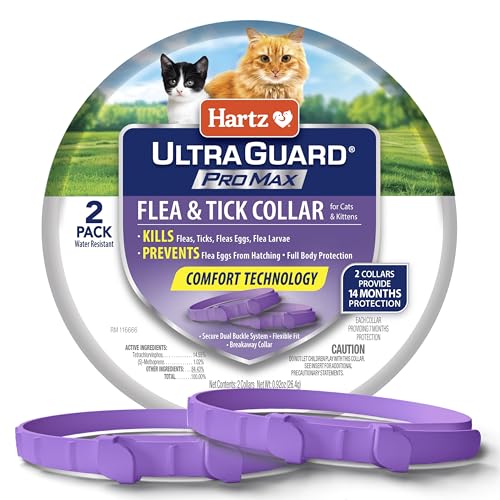
Application follows the standard topical protocol: part the fur at the base of the skull, place the entire tube contents directly on the skin, and keep the cat dry for 24 hours afterward. Owner reviews commonly describe the solution as fast-drying and low-odor, which matters for cats that groom immediately after application. Because Revolution Plus is a prescription product, obtaining it requires a veterinary visit or a telemedicine consultation, and per-dose cost typically runs higher than over-the-counter alternatives. For many owners, the offset is that heartworm and intestinal parasite coverage replaces separate deworming purchases. This option suits households wanting one product to cover the widest range of parasites, especially in regions where heartworm or ticks are prevalent; the trade-off is cost and the prescription hurdle. Check current price: Revolution Plus for Cats on Amazon.
Best Over-the-Counter Topical: Frontline Plus for Cats
For owners who prefer a non-prescription option, Frontline Plus remains one of the most widely used OTC flea and tick topicals for cats. Its two active ingredients — fipronil, an adulticide, and (S)-methoprene, an insect growth regulator — have been on the market for over two decades, giving the product one of the longest real-world safety records in feline parasite control. Manufacturer labeling states that it kills fleas within 12 hours of application and ticks within 48 hours, while the IGR component continues preventing egg and larval development for a full month.
Frontline Plus is labeled waterproof 24 hours after application, and the manufacturer states efficacy persists after bathing or swimming. Verified owner reports generally support this claim, describing sustained protection in cats that tolerate occasional baths or get wet outdoors. That water tolerance is a genuine advantage over some competing topicals that recommend longer no-bathing windows.
The limitation is spectrum: Frontline Plus does not protect against heartworm, ear mites, or intestinal parasites, so cats in heartworm-endemic areas may need separate coverage. For an indoor cat in a well-screened home with low mosquito pressure, that gap may be manageable; for outdoor cats, discuss heartworm prevention with your veterinarian. This pick suits owners who want proven, prescription-free flea and tick control at a mid-range price. Price: check on Amazon.
Best Flea-Only Topical: Advantage II for Cats
Advantage II pairs imidacloprid, a contact adulticide, with pyriproxyfen, an IGR. Its distinguishing feature is the kill mechanism: fleas die on contact with treated skin and coat rather than needing to bite, so the product begins working before the flea feeds. This contact-kill profile is frequently highlighted in veterinary discussions of flea allergy dermatitis, since FAD cats react to flea saliva and benefit from any product that minimizes biting. Manufacturer labeling indicates fleas begin dying within 12 hours, and the IGR breaks the reproductive cycle by preventing eggs from hatching.
The clear trade-off is that Advantage II does not kill ticks. For strictly indoor cats in urban apartments, flea-only coverage is often adequate — fleas hitchhike indoors far more readily than ticks. But for cats with outdoor access, or in regions where ticks are common, published guidance favors a product with an explicit tick label, and owners using Advantage II in those settings should perform regular tick checks. This pick suits flea-focused households, cats with flea allergy dermatitis, and budget-conscious buyers seeking a well-established monthly topical. Price: check on Amazon.
Best Collar: Seresto Cat Collar
The Seresto collar works on a different principle from old-fashioned flea collars. Its polymer matrix releases low, continuous doses of imidacloprid and flumethrin onto the skin and coat for up to eight months, and the actives spread across the body surface through the skin's natural oils. This sustained-release design provides whole-body coverage without a monthly liquid application, which owners of medication-averse cats consistently describe as the collar's single biggest benefit in reviews.
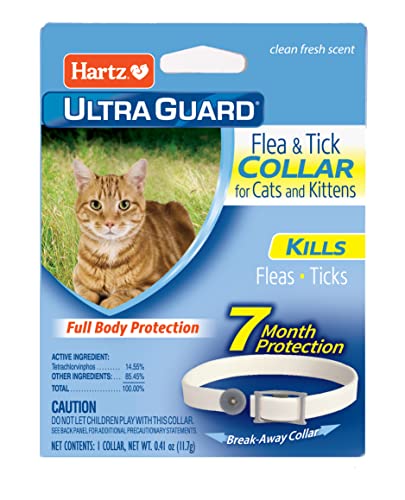
The eight-month duration changes the economics: while the upfront cost of a collar is higher than a single monthly dose, the per-month cost is competitive with quality topicals, and there is no monthly reminder to forget. The collar is labeled water-resistant and remains effective through occasional bathing and swimming. The manufacturer's safety documentation includes a dual breakaway and ratchet-release mechanism designed to release if the collar snags — owners note this is a genuine safety feature, though cats do occasionally lose collars to branches and fences, so check the fit periodically.
Some cats show mild, transient skin irritation under the collar in the first days of wear, which manufacturer guidance says typically resolves without intervention. If irritation persists, remove the collar and consult a veterinarian. This pick suits multi-cat households, cats that resist liquid application, and owners who want set-and-forget protection; the trade-off is the higher upfront cost and the small risk of losing the collar outdoors. Price: check on Amazon.
Other Categories Worth Knowing
Beyond the four linked options above, several other product categories appear in most searches, and knowing what they do helps you make an informed choice even when we do not link a specific listing. Rapid-kill oral tablets containing nitenpyram (sold as Capstar) begin killing adult fleas within about 30 minutes and are labeled safe for kittens as young as four weeks and two pounds, but their effect lasts only 24 to 48 hours — they are rescue tools for active infestations, not standalone prevention. Extended-duration topicals such as Bravecto Plus offer roughly 60 days of flea and tick protection plus heartworm coverage per dose, a good fit for owners who struggle with monthly schedules; note that isoxazoline-class ingredients carry an FDA-issued caution for animals with a history of seizures, so discuss them with a veterinarian if that applies to your cat. Store-brand fipronil-plus-methoprene topicals duplicate the Frontline Plus formula at a lower price, with owner reports noting coarser applicators and slightly slower drying as common compromises. Finally, vitamin-based oral supplements and essential-oil sprays occupy the natural aisle — peer-reviewed support for these is limited, some essential oils (tea tree and pennyroyal among them) are toxic to cats, and the ASPCA Animal Poison Control resource is worth consulting before using any botanical product around a cat.
Safety Rules That Apply to Every Product
Cat-specific formulation is non-negotiable. Canine flea products frequently contain permethrin, a pyrethroid that is highly toxic to cats even in small transferred doses — a dog treated with a permethrin product can poison a cat that grooms or sleeps against it. Never split a large-animal dose between pets, never guess at weight bands, and never apply a product labeled for another species. Before every application, check the label's species, weight, and age statements, and verify the EPA registration number, which confirms the product is an officially reviewed pesticide.
Watch for adverse reactions, particularly in the first 24 hours after a topical application or first collar wear. Signs flagged in manufacturer safety information and veterinary guidance include excessive drooling, vomiting, tremors, paw shaking at the application site, hair loss or redness at the site, and unusual lethargy or behavior. If a reaction occurs, wash the application area with mild dish soap and warm water if the product was applied recently, and contact a veterinarian promptly. Adverse events can be reported to the EPA's National Pesticide Information Center at 1-800-858-7378 and to the manufacturer; keeping the packaging with the batch number makes reporting easier.
Environmental Control: What Products Cannot Do Alone
No on-animal product fully compensates for an untreated environment. Because 95 percent of a flea population lives off the host, household management is a core part of published flea control protocols. Vacuum carpets, rugs, upholstery, and pet bedding at least twice weekly during active periods, giving special attention to baseboards, under furniture, and the corners where pets sleep — vacuuming removes adult fleas and also stimulates pupae to emerge, where they encounter the treated animal. Wash pet bedding weekly in hot water of at least 130 degrees Fahrenheit. In persistent infestations, an EPA-registered household spray or fogger containing an IGR such as pyriproxyfen or (S)-methoprene prevents immature stages from developing, but never use environmental products directly on the cat.
Year-round prevention matters even in cold climates. Indoor heating keeps flea development going through winter, and ticks become active whenever temperatures rise above roughly 40 degrees Fahrenheit, which happens on winter warm spells in much of the country. Pausing prevention from November through March leaves a gap that overwintered fleas and early-spring ticks readily exploit, and rebuilding protection after a lapse takes weeks because the environmental reservoir must be exhausted again.
Treat every pet in the household. A single untreated dog acts as a flea reservoir that continually reseeds the home and the cats. Coordinate products so all animals are protected on overlapping schedules, and quarantine newly arrived pets until they have been treated and checked.
Common Mistakes to Avoid
- Using dog products on cats. Permethrin toxicity from misapplied canine treatments is one of the most common feline pesticide emergencies reported to poison control lines. Check every label, every time.
- Underdosing by weight. Estimating a cat's weight instead of weighing it leads to doses that fall below the effective threshold, extending infestations and contributing to resistance.
- Stopping treatment when fleas disappear. The visible improvement means the adulticide is working, not that the environmental population is gone. Published guidance typically recommends continuing treatment for at least three months after the last flea is seen.
- Splitting doses between cats. Tubes are unit-dosed for a specific weight band. Dividing one tube between two cats underdoses both.
- Bathing too soon after application. Most topicals need 24 to 48 hours to distribute through the skin's oil layer; check the label's water-fastness statement before any bath.
- Ignoring the neck placement. Topicals go at the base of the skull where the cat cannot lick the wet product directly during the absorption window.
Applying a Topical Correctly
Technique affects both safety and efficacy. Remove the tube cap without collapsing the tube, part the fur at the base of the skull until skin is visible, and squeeze the entire contents in one spot — not along the back, which lets some product wick into fur rather than skin. Keep cats separated from other pets and from children until the application site is fully dry, usually several hours. For multi-cat households, this separation matters most with grooming pairs, since one cat licking another's application site both removes product and risks ingestion. Set a monthly calendar reminder tied to an easy date, and if a dose is more than a few days late, apply it immediately and resume the original schedule — do not double-dose.
FAQ: Cat Flea and Tick Prevention
How often should I apply flea treatment to my cat?
Most topicals are labeled for monthly (30-day) application; extended-duration topicals run about 60 days, and collars last up to eight months. Follow the label interval exactly, since stretching the interval is one of the most common causes of apparent product failure. Set a recurring reminder and apply on the same date each cycle.
Can I use dog flea treatment on my cat?
Never. Many canine products contain permethrin or other pyrethroids that are highly toxic to cats, and even incidental contact with a treated dog can poison a cat. Formulations differ between species even within the same brand line — always buy the product labeled for cats in the correct weight band.
What should I do if my cat has a bad reaction to a flea treatment?
If the product was applied recently, wash the site with mild dish soap and water, then contact your veterinarian. Watch for drooling, vomiting, tremors, skin redness, or unusual behavior, and keep the packaging with the batch number. Report the event to the EPA's National Pesticide Information Center at 1-800-858-7378 and to the manufacturer.
Are natural flea remedies effective?
Peer-reviewed evidence for diatomaceous earth, essential-oil sprays, and herbal collars is limited, and several botanicals — tea tree oil and pennyroyal among them — are toxic to cats. Vitamin-based supplements are sometimes described by owners as reducing attractiveness to fleas, but they should not serve as sole prevention. EPA-registered products with documented efficacy remain the standard recommendation in published veterinary guidance.
My cat is strictly indoors. Do I still need flea prevention?
Yes. Fleas enter homes on human clothing, on visiting pets, through open doors and windows, and between units in apartment buildings. Indoor cats face lower exposure risk than outdoor cats, but the risk is not zero, and an indoor infestation can persist year-round. Most veterinarians recommend year-round prevention regardless of lifestyle.
How do I treat my home for fleas?
Treat the pet first to remove the blood source, then address the environment: vacuum every two to three days for at least two weeks, discarding the canister contents into sealed outdoor trash, and wash bedding in hot water weekly. In severe cases, use an EPA-registered household spray or fogger containing an IGR. Environmental treatment is essential because adult fleas are only about 5 percent of the total population.
Can I bathe my cat after applying a topical?
Wait out the label's stated window — commonly 24 to 48 hours — before any bath, swim, or heavy soaking. After that period, most modern topicals are labeled water-resistant, though frequent shampooing with harsh products can shorten effective life.
What is the best approach for a multi-cat household?
Treat every cat simultaneously with individually weight-matched doses, and separate cats until application sites dry to prevent grooming transfer. Collar users avoid the transfer issue entirely. Consistent, synchronized dosing across all pets is what breaks the household cycle.
The Verdict
The right choice depends on your cat's lifestyle, your local parasite pressure, and how your budget and routine fit different formats. For the broadest parasite spectrum — fleas, ticks, heartworm, ear mites, and intestinal worms — the prescription topical Revolution Plus stands apart, at the cost of a veterinary consultation. Frontline Plus delivers proven, water-resistant flea and tick control without a prescription and has two decades of use behind it. Advantage II offers fast, bite-free flea control suited to indoor cats and flea-allergy sufferers, with no tick coverage. The Seresto collar trades a higher upfront price for eight months of effort-free protection. Whichever you choose, consistency is the decisive factor: set reminders, dose on schedule, treat every pet, and keep the environment clean. Uninterrupted prevention is what protects your cat's comfort and health.
Affiliate Disclosure: Some of the links above are Amazon affiliate links (tag: nannan09-20). PawCritic earns a small commission at no extra cost to you. Products are selected based on published veterinary guidance, manufacturer specifications, and verified owner reports; PawCritic does not perform hands-on product testing.