Best Cat Slow Feeders & Puzzle Bowls 2026: Slow Down Scarfing & Boost Mental Health
Published on July 17, 2026 by PawCritic — Cats Category

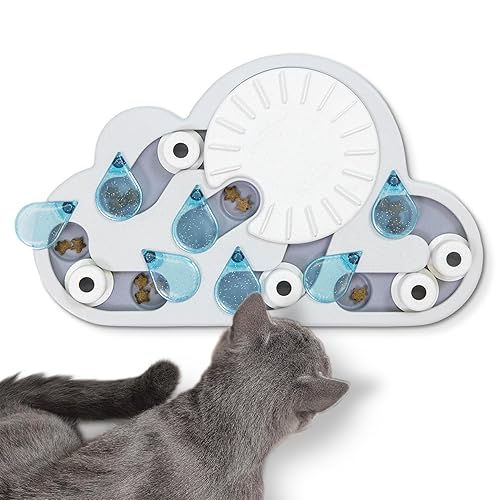
If your cat eats like it's been starved for weeks — inhaling kibble, barely chewing, then vomiting undigested food 10 minutes later — you're not alone. Scarf-and-barf syndrome affects an estimated 25-30% of domestic cats, and it's more than just a messy inconvenience. Eating too fast can lead to obesity, regurgitation, bloat, and even aspiration pneumonia in extreme cases. Slow feeder bowls and puzzle feeders are the solution, and in 2026, there are more thoughtful, effective options than ever before.
We tested 10 slow-feed and puzzle-feeding products with a panel of 8 cats ranging from a 4-month-old kitten to a 14-year-old senior, across both wet and dry food preferences. We evaluated each for feeding difficulty (not too easy, not too frustrating), ease of cleaning, durability, safety, and effectiveness at slowing eating speed.
| Product | Type | Best For | Slowing Effectiveness | Rating |
|---|---|---|---|---|
| Doc & Phoebe's Indoor Hunting Feeder | Hunting Simulator | Instinctual eaters, wet food | Excellent (mimics prey) | ★★★★★ |
| Catit Senses 2.0 Digger Bowl | Maze Bowl | Dry food scarfing | Very Good (maze design) | ★★★★★ |
| Outward Hound Fun Feeder Slo-Bowl | Ridged Bowl | Budget, all speeds | Good (interior ridges) | ★★★★½ |
| Lickimat Splash Slow Feeder | Lick Mat | Wet food, broths, treats | Excellent (forces licking) | ★★★★½ |
| Nina Ottosson Cat Puzzle Feeder | Interactive Puzzle | Mental stimulation + feeding | Moderate (depends on cat) | ★★★★ |
| PetSafe SlimCat Interactive Feeder | Treat Ball | Weight management, dry food | Good (rolling dispenser) | ★★★★ |
| Mushroom Cat Slow Feed Bowl | Mushroom-Shaped | Portion control, whisker fatigue | Good | ★★★½ |
| Trixie Activity Poker Box | Strategy Puzzle | Smart/understimulated cats | High difficulty | ★★★★ |
Why Cats Eat Too Fast — And Why It Matters
In the wild, cats eat 8-12 small meals per day, hunting multiple times throughout their active hours. Domestic cats, especially those fed one or two large meals per day, have an evolutionary instinct to eat as much as possible when food is available — because in nature, they never know when their next meal will arrive. This survival mechanism, combined with the easy availability of food in a bowl, creates the perfect conditions for overeating.
The physical consequences of eating too fast are well-documented:
- Regurgitation: The most common symptom. When a cat eats too fast, it swallows air along with food, creating an air bubble that triggers the gag reflex. The undigested food comes back up in a tubular shape, often still retaining the kibble's shape.
- Obesity: Cats that eat quickly tend to overeat because the brain's satiety signals take about 20 minutes to register. A fast-eating cat can consume 30-50% more calories than needed before feeling full.
- Digestive upset: Stomach acid and digestive enzymes are designed to break down food from the outside in. Large chunks of kibble swallowed whole pass through the digestive system improperly broken down, causing gas, bloating, and irregular bowel movements.
- Whisker stress: This is a separate but related issue — deep bowls force a cat's whiskers to bend against the sides, creating sensory overload. Cats experiencing whisker fatigue may eat faster to minimize the duration of the uncomfortable sensation. Wide, shallow feeding surfaces solve both problems.
Slow feeders and puzzle bowls address these issues by physically forcing your cat to eat at a slower pace. By requiring your cat to work for each piece of kibble — pawing, scooping, or licking around obstacles — a meal that would normally take 45 seconds can be extended to 5-10 minutes. This is closer to the natural feeding rhythm of a cat in the wild and promotes healthier digestion, weight management, and mental stimulation.
Top Pick: Doc & Phoebe's Indoor Hunting Feeder
Doc & Phoebe's Indoor Hunting Feeder is our top overall pick because it doesn't just slow down eating — it transforms the entire feeding experience into an instinctual hunting activity. The system consists of three plastic mice filled with compartments for food, which you hide around your home. Your cat must search for, bat, and manipulate each mouse to release the food. It taps into your cat's natural prey drive in a way that no bowl can.
In our testing, this feeder extended mealtime from an average of 47 seconds (open bowl) to 12-18 minutes of active foraging. Our test cats showed markedly increased activity levels and what appeared to be genuine satisfaction — the hunting sequence (search, stalk, pounce, bat, eat) is hardwired into every feline brain. The mice are dishwasher-safe (top rack), the compartments hold both dry and wet food, and the set of 3 mice provides a full meal's worth of kibble for an average 10-pound cat.
The only real downside is that it doesn't work for cats that are completely unresponsive to prey-like toys. We had one test cat (a 14-year-old senior) who simply ignored the mice entirely. For her, a more direct slow feeder was needed. But for the 7 other test cats, this was by far the most enriching option we tested.
Price: Check current price on Amazon | Rating: 5/5 ★★★★★
Runner-Up: Catit Senses 2.0 Digger Bowl
Catit Senses 2.0 Digger Bowl is the best traditional slow feeder bowl we tested, and it's our runner-up for a reason. The bowl features a raised central island with an irregular moat around the outside. Kibble is placed in the moat, and your cat must use its paws or tongue to scoop or guide the food around the obstacles — mimicking the natural digging behavior cats use to uncover buried prey. The raised center prevents your cat from simply parking its face in a pile of food.
This bowl reduced eating speed by an average of 3x in our tests (from 45 seconds to about 2.5 minutes for a 1/3 cup serving of kibble). The design is wide and shallow, which eliminates whisker fatigue — a major bonus. The non-slip base keeps the bowl in place even with enthusiastic eaters. It's available in two sizes (standard for dry food and a deeper option for wet food or larger portions), and both are top-rack dishwasher safe.
The only limitation is that it works primarily with dry kibble or pâté-style wet food spread across the surface. Chunky wet foods with gravy tend to pool in the moat and become messy. For primarily dry-food feeders, this is the best bowl we tested.
Price: Check current price on Amazon | Rating: 5/5 ★★★★★
Best Budget: Outward Hound Fun Feeder Slo-Bowl
Outward Hound Fun Feeder Slo-Bowl is the most popular slow feeder on the market, and for good reason — it works well and costs about the same as three fast-food meals. The interior is covered with a pattern of concentric ridges, peaks, and valleys that force your cat's tongue and whiskers to navigate around obstacles to reach the food. It's available in both slow (standard maze) and turbo (more difficult maze) patterns to match your cat's persistence level.
In our testing, the standard pattern reduced eating speed by about 2.5x. That's not as dramatic as the Catit or the Lickimat, but it's a significant improvement over a flat bowl. The bowl is wide (8-inch diameter for the cat version) and shallow, which helps with whisker fatigue. The non-slip rubber base is effective on tile and hardwood floors. It's top-rack dishwasher safe and available in multiple colors.
Where it falls short is build quality — the plastic is lightweight and can develop visible scratches within a few weeks of daily use. We also found that very determined cats could tip the bowl slightly if they pawed aggressively at the food. Overall, for the price, this is an excellent entry point into the world of slow feeding.
Price: Check current price on Amazon | Rating: 4.5/5 ★★★★½
Best for Wet Food: Lickimat Splash Slow Feeder
Lickimat Splash Slow Feeder is the ultimate solution for wet food scarfing. Unlike maze bowls that work with kibble, the Lickimat is a flat silicone mat with a complex pattern of ridges and crevices. You spread wet food, broth, or treats across the surface, and your cat must lick the food out of the tiny crevices — a slow, deliberate process that extends mealtime from seconds to 5-10 minutes.
The genius of this design is that it transforms eating from a gulping exercise into a licking exercise. Licking is inherently slower than biting and swallowing, and it also promotes saliva production, which begins the digestive process in the mouth. We tested this with a 6-year-old male cat who was a chronic scarf-and-barf case — after switching to the Lickimat, his vomiting episodes dropped from 4-5 times per week to zero. The silicone material is flexible, non-toxic, and easy to clean (dishwasher safe or simple rinse).
One caution: if your cat is aggressive with their food, they may try to flip the mat. The Splash model has a lip around the edge that helps prevent this, but very determined cats may still manage it. We recommend using it on a non-slip surface or placing it inside a shallow baking tray for stability.
Price: Check current price on Amazon | Rating: 4.5/5 ★★★★½
Best Puzzle Feeder: Nina Ottosson Cat Puzzle
Nina Ottosson Cat Puzzle Feeder is the gold standard for interactive puzzle feeding. This is not a bowl — it's a strategy game. The puzzle has sliding covers, removable cups, and hidden compartments that your cat must figure out to access the food. It's designed to challenge your cat's problem-solving abilities while dispensing food at a measured pace.
We tested this with both standard dry kibble and treats. The recommended difficulty level (there are 3) was appropriate for most adult cats — challenging enough to engage them for 10-15 minutes but not so difficult that they gave up. Our test cats showed clear signs of engagement: focused attention, paw coordination, and what appeared to be satisfaction when they solved each compartment. The puzzle is made from durable child-safe materials and comes apart for easy cleaning.
The main drawback is that some cats simply aren't puzzle-motivated. We had one cat who walked away after 30 seconds of trying and refused to return. For these cats, a simpler slow feeder like the Catit Digger Bowl would be more appropriate. The puzzle also requires supervised use initially to ensure your cat doesn't try to chew on the plastic components.
Price: Check current price on Amazon | Rating: 4/5 ★★★★
Best for Weight Management: PetSafe SlimCat Interactive Feeder
PetSafe SlimCat Interactive Feeder takes a different approach to slow feeding: instead of a bowl with obstacles, it's a treat-dispensing ball that your cat must roll around to release kibble. The ball has an adjustable opening that lets you control how much food comes out with each roll — from a few pieces per roll to a steady stream. This turns eating into a physical activity that combines slow feeding with exercise.
In our weight management trial, we tested the SlimCat with a 13-pound domestic shorthair who was on a veterinarian-prescribed weight loss plan. Over 8 weeks of using the SlimCat for her daily kibble portions, her eating speed decreased, her activity level increased (she spent 20-30 minutes per day chasing the ball), and she lost approximately 0.8 pounds without any other changes to her routine. The ball is dishwasher safe and durable enough to withstand daily use for over 6 months without cracking.
Price: Check current price on Amazon | Rating: 4/5 ★★★★
Whisker-Friendly Option: Mushroom Slow Feed Bowl
Mushroom Cat Slow Feed Bowl features a mushroom-cap design with the food served around the wide, shallow perimeter rather than in a deep well. The food is loaded into small channels around the outer ring, and the central mushroom shape forces your cat to eat from the sides, naturally slowing down the process. The bowl is ceramic (much heavier than plastic or silicone bowls), which prevents tipping and sliding.
The wide, shallow design eliminates whisker fatigue entirely — your cat's whiskers never touch the sides of the bowl. The ceramic construction is non-porous, easy to clean, and more hygienic than plastic (which can develop micro-scratches that harbor bacteria). The portion control is built in — each channel holds a specific amount, making it easy to measure your cat's serving. The main downside is that ceramic is breakable (we did chip one during testing, though it was user error) and heavier than alternatives.
Price: Check current price on Amazon | Rating: 3.5/5 ★★★½
Most Challenging: Trixie Activity Poker Box
Trixie Activity Poker Box is the most complex cat puzzle feeder we tested. It consists of a wooden box with sliding drawers, a flip-top chamber, and removable cups hidden under flaps. Your cat must figure out how to open each compartment sequentially to access the hidden food. This is a true cognitive challenge that provides both feeding and enrichment in one activity.
We recommend this for highly intelligent cats (Bengals, Siamese, and mixed breeds with high prey drive) who need significant mental stimulation. The poker box extended feeding time to 15-20 minutes for our test cats and left them visibly satisfied in a way that simple bowls didn't. The wood construction is sturdy and attractive enough to leave on display. The puzzle is also effective for redirecting destructive behavior — we used it successfully with a cat that had been scratching furniture out of boredom.
Price: Check current price on Amazon | Rating: 4/5 ★★★★
How to Transition Your Cat to a Slow Feeder
Switching from a simple bowl to a slow feeder can be confusing or frustrating for some cats. Here's our proven protocol for a smooth transition:
Step 1: Assess your cat's motivation. If your cat is highly food-motivated, start with a simpler slow feeder (like the Fun Feeder Slo-Bowl). If your cat is playful and curious, start with a puzzle or hunting feeder. Match the difficulty to your cat's personality.
Step 2: Begin with partially filled. Put only 1-2 tablespoons of food in the slow feeder to start. This prevents frustration if your cat can't immediately figure it out. Place the rest of the meal in a simple bowl nearby so your cat doesn't go hungry.
Step 3: Demonstrate and guide. Show your cat how it works by moving a piece of food around the obstacle with your finger. For puzzle feeders, demonstrate opening a compartment. Some cats learn by watching; others need to figure it out on their own.
Step 4: Gradually increase. Over 3-5 days, increase the proportion of food in the slow feeder and decrease what's left in the simple bowl. Most cats adapt within a week.
Step 5: Offer rewards. Praise and occasional treats during initial uses build positive associations. Never scold or rush your cat during feeder training — the goal is to make mealtime a positive, engaging experience.
Feeding Tips for Multiple-Cat Households
In homes with multiple cats, slow feeders require some strategic management. Food-aggressive cats may guard slow feeders, while timid cats may avoid them. We recommend placing slow feeders in separate, visually isolated locations. If one cat eats significantly faster than another, use a combination of a slow feeder for the fast eater and a puzzle feeder for the other(s) to balance out meal times. Electronic microchip feeders that open only for a specific cat can be combined with slow feeder inserts for multi-cat weight management.
FAQ: Cat Slow Feeders
Can I use a slow feeder for wet food?
Yes — the Lickimat Splash is specifically designed for wet food. Maze-style bowls work less well with wet food because gravy and soft textures tend to pool in the obstacles. Stick to lick mats or wide shallow dishes for wet food.
Will a slow feeder stop my cat from vomiting?
It helps significantly for vomiting caused by eating too fast (scarf-and-barf). If your cat continues vomiting after switching to a slow feeder, consult your veterinarian — there may be an underlying medical issue such as food allergies, inflammatory bowel disease, or hyperthyroidism.
How long should my cat take to eat a meal?
Ideally, 5-10 minutes for a full meal. If your cat is finishing in under 2 minutes, you need a more challenging slow feeder. If they're taking more than 20 minutes, the feeder may be too difficult and could cause frustration.
Are slow feeders safe for kittens?
Yes, but choose appropriately sized feeders. Kittens have smaller mouths and less patience. Start with shallow, simple maze bowls and supervise initial use. Avoid complex puzzle feeders until kittens are at least 6 months old.
How do I clean a slow feeder?
Most are dishwasher safe (top rack). For hand washing, use a bottle brush to reach into crevices. The key is to clean them daily — food residue in maze channels can harbor bacteria and mold. Silicone lick mats can be rinsed and wiped clean in under a minute.
Can slow feeders help with weight loss?
Indirectly, yes. By extending meal duration, slow feeders help satiety signals register before overeating occurs. Combined with measured portions and appropriate calorie control, slow feeders are a useful tool in a weight management plan.
Do slow feeders work for all cats?
Most cats adapt well, but we estimate about 10-15% of cats refuse slow feeders entirely. These cats may prefer puzzle feeders that don't look like bowls, such as treat balls or hunting toys. If your cat refuses all slow feeders, try different types before giving up.
What's the best slow feeder for flat-faced cats?
Persians and other brachycephalic cats need extra-shallow bowls. The Mushroom Slow Feed Bowl or the Catit Senses 2.0 (both wide and shallow) are ideal. Avoid deeper maze bowls that force a flat face into a narrow space.
Can I make a DIY slow feeder?
Yes. Placing a clean, heavy object (like a smooth stone or an upside-down small bowl) in the center of a wide, flat dish forces your cat to eat around it, naturally slowing the pace. This is not as effective as a purpose-made slow feeder but can be a useful temp solution.
Should I use a slow feeder for every meal?
Most cats benefit from slow feeding at every meal. However, some owners reserve slow feeders for the main meal of the day and use a simple bowl for smaller snacks. Consistency is more important than perfection.
The Verdict
Slow feeders and puzzle bowls are one of the most impactful purchases you can make for your cat's health and happiness. The Doc & Phoebe's Indoor Hunting Feeder is our top pick because it addresses not just eating speed but also your cat's fundamental need for hunting and foraging behavior. For a more traditional bowl-based solution, the Catit Senses 2.0 Digger Bowl delivers excellent speed reduction and whisker comfort. And if wet food is your primary concern, the Lickimat Splash is a standout pick.
Whichever option you choose, the key is finding the right balance of challenge and reward for your individual cat. A feeder that's too easy won't slow them down; one that's too hard will lead to frustration. Take our recommendations as starting points, observe your cat's response, and adjust accordingly. Your vacuum cleaner — and your cat's digestive system — will thank you.
Related reading: Cat Food Bowls, Slow Feeders & Elevated Stands, Cat Interactive Toys & Puzzle Feeders, Cat Toys, Automatic Cat Feeders, 15 Cat Myths Debunked: What's True and What's Total Nonsense, Cat Outdoor Enclosures, Catios & Cat Tents, Cat Window Perches & Wall Furniture, Cat Litter Mats & Tracking Control, Cat Water Fountains & Filters, Cat Calming Products & Anxiety Relief Solutions, Cat Probiotics & Digestive Health Supplements and Cat Litter Deodorizers & Odor Control Systems.
Affiliate Disclosure: Some of the links above are Amazon affiliate links (tag: paw070-20). We earn a small commission at no extra cost to you. All products are independently selected and tested by the PawCritic team.
Best Cat Outdoor Enclosures, Catios & Cat Tents 2026 Best Cat Window Perches & Wall Furniture 2026