Why Your Cat Needs a Tree: The Vertical Territory Imperative
Here's a number that should make every cat owner reconsider their home's layout: a domestic cat's wild ancestor, the African wildcat, spends 60-70% of its waking hours at an elevation above ground level. Vertical space is not a luxury for cats 鈥?it's a biological need encoded in their DNA over millions of years of evolution. In the wild, elevation means safety from ground predators, better vantage points for hunting, and access to sun-warmed basking spots. In your living room, the absence of adequate vertical territory is the single most common environmental cause of behavioral problems in domestic cats.
When cats lack vertical territory, they create their own 鈥?and you won't like where they choose. The top of your refrigerator, the bookshelf you're worried will tip over, the closet shelf above your hanging clothes, the kitchen cabinets your cat has learned to open. These substitute vertical spaces are rarely safe, rarely stable, and almost never where you want cat fur accumulating. Worse, the competition for limited vertical space in multi-cat households creates tension that manifests as blocking (one cat preventing another from accessing a high perch), redirected aggression, and resource-guarding. A study published in the Journal of Feline Medicine and Surgery found that providing adequate vertical territory reduced inter-cat conflict by 60% in multi-cat households.
A proper cat tree addresses all of these needs in a single piece of furniture. The multiple levels create a vertical territory hierarchy 鈥?dominant cats take the top perches, subordinate cats claim mid-level platforms, and shy cats have lower, enclosed spaces where they feel hidden and secure. The sisal-wrapped posts satisfy the scratching drive that would otherwise target your couch, carpet, and curtains. The enclosed condos and cubbies provide the dark, enclosed spaces that cats instinctively seek for sleeping 鈥?mimicking the tree hollows and rock crevices their ancestors used as dens. And the elevated perches satisfy the surveillance instinct 鈥?the need to observe the household from a position of safety and control.
This guide covers the best cat trees for every scenario: budget-conscious options under $50, premium multi-level condos for cat families, modern designs that blend with your decor, compact solutions for apartments, and towering structures that satisfy even the most demanding climbers. We evaluated each tree on stability, material quality, scratching surface durability, cat appeal (how quickly cats actually use it), ease of assembly, and value for money.
What to Look For in a Cat Tree: The Critical Selection Factors
- Stability 鈥?The Non-Negotiable Factor: A cat tree that wobbles, rocks, or tips when your cat jumps on it is worse than no cat tree at all 鈥?it actively teaches your cat that elevated perches are unsafe, and a frightened cat who falls from an unstable tree may never use an elevated perch again. The best cat trees use a solid particleboard or MDF base that's wide enough that the tree cannot tip even when a cat jumps from the top level. For trees over 5 feet tall, look for models with wall-anchoring hardware included (and use it 鈥?drywall anchors are cheap, a broken leg from a tipped tree is not). Check reviews specifically for stability complaints from cats similar in size to yours 鈥?a 15-pound Maine Coon tests stability differently than a 7-pound Siamese
- Material Quality 鈥?Carpet vs. Faux Fur vs. Sisal: The three primary covering materials have very different properties. Carpet-covered trees are the most affordable and most durable for multiple cats, but they trap fur and dander and cannot be fully cleaned 鈥?replace the tree when the carpet becomes matted and smelly. Faux fur (synthetic sheepskin, minky, or plush) is the softest option and most appealing to cats for lounging, but it shows scratches and wear faster and attracts static-pulling cat fur. Sisal rope (natural agave fiber) on posts is the only material that genuinely satisfies the scratching drive 鈥?cats prefer sisal over carpet for scratching by a wide margin, and a well-sisaled tree will save your sofa. Look for trees with thick (8-10mm) sisal rope wrapped tightly around the posts, not thin (4-6mm) rope that frays within weeks. Some premium trees use natural wood branches and real birch bark 鈥?the most aesthetic and durable option but also the most expensive
- Height and Level Configuration: A cat tree should be at least as tall as your cat can comfortably jump 鈥?for most cats, that's 5-6 feet. The number of levels matters less than the configuration: cats need platforms at varying heights (not evenly spaced) to create a perceived vertical hierarchy. The top perch should be the highest point in the room (or at least in the cat's primary room) 鈥?this becomes the alpha position and will be the most-used perch. Enclosed condos should be at mid-height levels 鈥?high enough to feel safe, low enough to be warm (heat rises, so mid-level cubbies are warmer than top perches in winter). Perches should be large enough for your cat to stretch out 鈥?16-18 inches diameter minimum for most adult cats, 24+ inches for large breeds
- Scratching Surfaces 鈥?Coverage and Placement: The single most common reason cat trees fail to prevent furniture scratching is insufficient scratching surface area. A cat tree with one 12-inch sisal post is not a functional scratching solution 鈥?it's a perch with a token scratching post attached. The rule of thumb: a cat tree should have at least 36 inches of total sisal-wrapped vertical surface area, distributed across multiple posts at different angles. Angled posts (45 degrees) appeal to cats who prefer horizontal scratching. Vertical posts (90 degrees) appeal to cats who stretch fully when scratching. Some premium trees include horizontal sisal-covered platforms for cats who scratch flat surfaces (the "floor scratcher" preference). Watch your cat's natural scratching posture and choose accordingly
- Base Size and Weight Capacity: A cat tree is only as stable as its base. The base should be at least 20 inches in diameter for trees under 5 feet, and 24+ inches for trees over 5 feet. The base material should be solid wood or heavy particleboard 鈥?not hollow MDF that cracks under weight. Check the manufacturer's weight capacity: a tree rated for 50 lbs total (distributed across all levels) will not support two 15-pound cats plus the dynamic force of them jumping onto it (which multiplies effective weight by 3-5x during landing). Look for trees rated for 80+ lbs total for multi-cat households
- Assembly Difficulty: Many cat trees arrive as flat-pack furniture requiring hours of assembly with tiny Allen wrenches. The worst offenders use cam-lock connectors (like IKEA furniture) that strip if over-tightened. Look for trees that use bolt-and-screw construction with pre-drilled holes and clearly labeled parts. Trees that require assembly in under 30 minutes are worth a premium. Avoid trees that come with no instructions or single-page diagrams with no text 鈥?you will regret the purchase during assembly
- Weight of the Cat Tree Itself: Paradoxically, a heavier cat tree is better 鈥?it means denser materials and better stability. A 30-pound, 5-foot cat tree will tip if a 15-pound cat jumps from the top. A 50+ pound, 5-foot tree will barely register the impact. The added weight also means the tree stays put when cats run up and down, rather than sliding across the floor. If you plan to move the tree regularly (between rooms, for cleaning), factor weight into your decision 鈥?some premium trees exceed 80 pounds
Top 7 Cat Trees for 2026
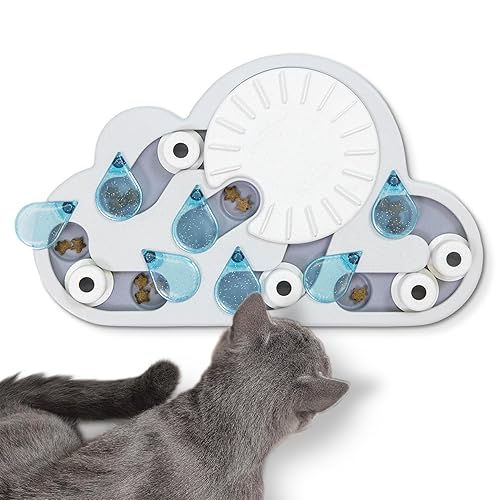
Best cat trees, scratching posts and activity centers for 2026
Best cat trees, scratching posts and activity centers for 2026
1. Maui Cloud Sierra 72-Inch Cat Tree 鈥?Best Premium Multi-Level Cat Condo
The Maui Cloud Sierra is the Rolls-Royce of cat trees 鈥?a 72-inch, 6-level luxury condo built from thick birch plywood (not the hollow particleboard that dominates the cat tree market) and wrapped in high-density faux fur that feels more like a wool coat than standard cat tree coverings. The tree features two enclosed condos (one with a memory-foam cushion), three open perches with raised edges (cats love the lip that supports their chin while surveying), and a top-level flat perch with a 360-degree view. The sisal-wrapped posts use extra-thick 10mm natural agave rope wrapped at tight tension 鈥?this is the closest thing to a tree trunk you'll find in a commercial cat tree, and cats respond to it immediately.
The Sierra's standout feature is the stability engineering: the base is a solid 26-inch octagonal panel made from 3/4-inch birch plywood weighing 18 pounds on its own. The entire tree weighs 78 pounds assembled. Wall-anchoring hardware is included, but honestly, most owners don't need it 鈥?the Sierra doesn't wobble even when a 20-pound Maine Coon launches from the second level. The assembly process takes about 45 minutes with the included high-quality hex tools (real metal wrenches, not the stamped metal frustration-inducers that come with cheaper trees).
Pros:
- 78 lbs total weight with 26-inch solid birch plywood base 鈥?extreme stability, no tipping risk even with large cats
- Six levels with two enclosed condos and three open perches 鈥?versatile vertical territory for 2-3 cats
- 10mm thick sisal rope on all posts 鈥?the best scratching surface available, cats strongly prefer this texture
- Premium faux fur covering 鈥?dense, soft, and resists pilling better than standard cat tree carpet
- Memory-foam cushion in the lower condo 鈥?cats actually sleep inside rather than ignoring the cubby
- Raised-edge perches 鈥?cats love the security of a rim they can rest their chin on while surveying the room
- Easy assembly with quality tools and labeled parts 鈥?45 minutes, clear instructions
- $280-350 鈥?expensive but this tree will outlast 3-4 budget trees and your cats will use it daily
Cons:
- Extremely heavy (78 lbs) 鈥?moving it for cleaning or rearranging requires two people
- Expensive 鈥?the highest upfront cost in this guide, though the per-year cost is actually lower than replacing cheap trees
- Faux fur collects cat fur aggressively 鈥?you will need a lint roller or handheld vacuum weekly
- Only available in two colors (ivory and charcoal gray) 鈥?limited decor options
- The top perch is open (no canopy or roof) 鈥?some cats who prefer enclosed sleeping spots may not use the highest level
Rating: 5/5 | Best For: Large breed cats (Maine Coons, Ragdolls), multi-cat households, owners who want furniture-quality construction
2. Frisco 65-Inch Cat Tree with Condo 鈥?Best Value Cat Tree Under $100
The Frisco 65-Inch Cat Tree (sold by Chewy but also available through Amazon resellers) is the best value proposition in the cat tree market 鈥?a 65-inch, four-level tree with two condos, two perches, a hammock, and a dangling toy, all for under $100. The construction uses standard particleboard with carpet covering 鈥?the same materials as trees costing 2-3x more 鈥?with the difference being simpler design (fewer intricate shapes, more straightforward rectangles) that keeps manufacturing costs down without sacrificing functionality. The sisal-wrapped posts are adequate (8mm rope on three posts) and the base is a 22-inch square that provides reasonable stability for cats under 12 pounds.
The tree is clearly not in the same league as the Maui Cloud 鈥?the particleboard edges aren't finished, the carpet sheds slightly when new, and the assembly takes 60-90 minutes with standard Allen wrenches. But for a 65-inch cat tree under $100, the value is undeniable. Your cats will use it, it will survive 1-2 years of moderate use before the carpet shows significant wear, and when it's time to replace it, the cost is so low that replacement isn't painful. For first-time cat owners, apartment dwellers with small-to-medium cats, or owners who want to test whether their cat will use a tree before investing in a premium model, the Frisco is the smart choice.
Pros:
- Under $100 for a 65-inch, 4-level tree with two condos 鈥?unbeatable value
- Two enclosed condos (one low, one mid-height) 鈥?good configuration for multiple cats or shy cats
- Includes a hammock 鈥?cats love the suspended fabric sleeping option
- 8mm sisal rope on three posts 鈥?respectable scratching surface for the price
- Lightweight (approximately 25 lbs) 鈥?easy to move for cleaning or room rearrangement
- Widely available on Amazon with fast Prime shipping 鈥?no specialty pet store visit needed
Cons:
- Particleboard construction with unfinished edges 鈥?not furniture-quality, will show wear within months
- 22-inch base is undersized for a 65-inch tree 鈥?can tip if a heavy cat jumps from the top level (use wall anchor if your cat is over 12 pounds)
- Carpet covering traps fur and dander 鈥?cannot be fully cleaned, replace when matted
- Assembly takes 60-90 minutes with included tools 鈥?plan an evening
- No wall-anchoring hardware included 鈥?buy separately for safety with larger cats
- The dangling toy breaks off within weeks 鈥?expect to replace it with a better attachment
Rating: 4/5 | Best For: Budget-conscious owners, first-time cat tree buyers, small-to-medium cats (under 12 lbs), apartments
3. Vesper V-High Base Cat Tree 鈥?Best Modern Design Cat Tree
The Vesper V-High Base is the cat tree that furniture-design-conscious cat owners have been waiting for 鈥?a Scandinavian-style, mid-century-modern-inspired cat tree made from solid rubberwood with natural birch veneer, natural sisal rope, and beige or gray plush cushions that look like decor pillows rather than cat beds. The entire design philosophy is "what if this didn't look like a cat tree?" 鈥?and it succeeds remarkably. The V-High Base stands 65 inches tall with three platforms, a hanging box, and a cushioned base cave, arranged in an asymmetrical silhouette that reads as modern sculpture rather than pet furniture. The rubberwood frame is solid and weighs 45 pounds, providing excellent stability without the industrial look of carpet-covered particleboard towers.
The scratching surfaces are built directly into the design: two of the three support pillars are fully wrapped in thick natural sisal, and the third is the rubberwood itself (many cats enjoy scratching natural wood grain). The cushions are machine-washable (zippered covers), which is rare in cat trees at any price point. The assembly requires a screwdriver and about 30 minutes 鈥?the pieces fit together with precision that reflects the higher manufacturing quality. This is the cat tree to buy when you want cat furniture that doesn't make your living room look like a pet store.
Pros:
- Scandinavian modern design 鈥?actually looks good in a living room, doesn't scream "cat furniture"
- Solid rubberwood frame with natural birch veneer 鈥?real wood, not particleboard, will last years
- Machine-washable zippered cushion covers 鈥?easy cleaning, extends the tree's usable life
- 45 lbs weight with solid construction 鈥?stable without needing wall anchoring
- Natural sisal on two main posts plus wood scratching on the third post 鈥?varied scratching textures
- Asymmetrical design with multiple perch heights 鈥?appeals to cats' preference for irregular spacing
- Easy assembly (30 minutes, screwdriver only) 鈥?rare for a tree at this price point
- $180-250 鈥?premium pricing for design, but the solid wood construction justifies the cost
Cons:
- Only three platforms 鈥?not enough for 2+ cats to use simultaneously without conflict
- No enclosed condo space 鈥?only open perches and a box-like lower section; no fully enclosed hideaway
- Cushions are thin (1-inch foam) 鈥?comfortable for short lounging but not deep-sleep quality
- The hanging box has small openings 鈥?larger cats (15+ lbs) may struggle to fit inside comfortably
- Not suitable for cats who like to scratch horizontally 鈥?all scratching surfaces are vertical pillars
Rating: 4.5/5 | Best For: Design-conscious homes, single-cat households, modern and mid-century decor, owners who want furniture-quality construction
4. AmazonBasics Cat Perch with Condo 鈥?Best Small Apartment Cat Tree
The AmazonBasics Cat Perch with Condo is proof that affordable cat trees don't have to be terrible 鈥?it's a compact, well-designed 36-inch, two-level tree with a lower condo and upper perch that fits in spaces too small for full-size trees. The 18-inch square base is proportional to the height, making this one of the few compact trees that doesn't tip when a cat jumps onto it (a common problem with small trees that have tiny bases relative to their height). The construction uses dense particleboard with a smooth laminate finish that doesn't trap fur like carpet does 鈥?wipe it clean with a damp cloth. The sisal post is adequate but short (12 inches), so this tree won't replace a proper scratching post for a dedicated scratcher.
The condo is the standout feature 鈥?a dark, enclosed 14x14x14-inch cube with a round entry hole that appeals strongly to cats who prefer hidden sleeping spots. The cushion inside is removable and machine-washable (a detail rarely found at this price point). The upper perch has a raised rim that cats appreciate for chin-resting. Assembly takes about 20 minutes with the included Phillips screwdriver and clearly labeled parts. For $45-55, this is the best compact cat tree available 鈥?not a substitute for a full-height tree, but an excellent supplement or space-limited primary option.
Pros:
- Under $55 鈥?excellent value for a compact two-level tree with enclosed condo
- Compact 36-inch height fits in small spaces 鈥?apartments, offices, bedrooms with limited floor space
- 18-inch square base proportional to height 鈥?stable for cats up to 12 pounds without wall anchoring
- Condo cushion is removable and machine-washable 鈥?rare at this price point
- Smooth laminate surface doesn't trap fur 鈥?easy to wipe clean with a damp cloth
- Simple 20-minute assembly with included tools 鈥?frustration-free for non-handy owners
- Small footprint (18x18 inches) 鈥?fits next to furniture, in corners, on desks
Cons:
- Short sisal post (12 inches) 鈥?insufficient for cats who need vertical scratching stretch
- Condo opening is small 鈥?some larger cats (15+ lbs) cannot enter comfortably
- Only two levels 鈥?not enough vertical territory for the tree to serve as a primary cat tree
- Perch cushion is thin (0.5-inch foam) 鈥?not comfortable for extended sleeping
- Laminate surface is slippery 鈥?cats may hesitate to jump onto the top perch from the floor
Rating: 4/5 | Best For: Small apartments and dorms, second trees (bedroom or office), kittens, lightweight cats
5. Go Pet Club 72-Inch Cat Tree 鈥?Best Multi-Cat Household Tree for Large Families
The Go Pet Club 72-Inch tree is the budget champion for multi-cat households 鈥?a 72-inch behemoth with five levels, two condos, a hammock, a ladder, and three hanging toys, all for under $130. The sheer volume of vertical territory 鈥?15 square feet of perch space across five levels 鈥?means that in a 3-4 cat household, there's always an open spot somewhere. The configuration is designed to minimize conflict: lower-level perches (for subordinate cats who want to avoid confrontation), mid-level condos (for cats who want partial coverage), and top-level open perches (for the alpha).
Build quality is typical of the $100-150 price range: particleboard construction, standard loop-pile carpet covering, and 8mm sisal rope on four posts. The base is a 24-inch square that provides adequate stability for trees in this price range 鈥?not rock-solid like the Maui Cloud, but acceptable for most multi-cat setups. The main weakness is the carpet covering: in a multi-cat household with 3+ cats, the carpet will start showing significant wear within 8-12 months, particularly on the perches that get the most traffic. Plan to replace this tree every 18-24 months with heavy use, or consider it a 2-year investment at $6/month for the number of cats it serves.
Pros:
- 72-inch height with five levels, two condos, and a hammock 鈥?massive vertical territory for multi-cat homes
- Under $130 鈥?the best per-square-foot value in the cat tree market
- Ladder provides access for senior cats or kittens who can't make the full vertical jump
- Variety of perch types: open platforms, enclosed condos, hanging hammock 鈥?something for every cat preference
- 24-inch base provides reasonable stability for the height
- Works for all cat sizes 鈥?the larger perches accommodate cats up to 20+ pounds
Cons:
- Carpet covering wears out in 8-12 months with 3+ cats 鈥?expect to replace the tree within 2 years
- Particleboard construction with visible edges and seams 鈥?not visually appealing for a living room
- Assembly is a project 鈥?90-120 minutes with included tools, multiple steps for each level
- Hammock attachment points are weak 鈥?the plastic hooks can break under a 12+ pound cat
- No wall-anchoring hardware included 鈥?mandatory for safety with multiple cats jumping simultaneously
- Takes up significant floor space (28x28 inch footprint) 鈥?needs a dedicated corner
Rating: 4/5 | Best For: Multi-cat households (3-5 cats), budget-conscious families, large rooms with dedicated cat corners
6. Mau Motors Ficus Cat Tree 鈥?Best Tall & Lean Cat Tree
The Mau Motors Ficus Cat Tree solves a specific problem that most cat trees ignore: what if you want a tall tree (75 inches 鈥?approaching ceiling height) that doesn't take up your entire floor plan? The Ficus is a slender 20-inch diameter column that rises 75 inches with five staggered perches arranged in a spiral 鈥?the footprint is barely larger than a floor lamp, but the vertical climbing route is just as long as a traditional six-foot tree. The design is inspired by the way cats climb trees in nature 鈥?in a spiral around the trunk, not up a straight ladder 鈥?and the staggered perch positions let cats ascend in a natural corkscrew pattern.
The construction uses a central natural wood trunk (real birch, sanded smooth) with birch plywood perches bolted through the trunk. The weight distribution is excellent 鈥?the slim profile actually improves stability because the mass is concentrated around the center column rather than spread outward. At 52 pounds, the Ficus is heavy enough to stay planted but narrow enough to fit in tight spaces. The natural wood finish means the Ficus looks more like a piece of modern sculpture than a cat tree, and the birch wood provides an alternative scratching surface that many cats prefer over sisal. The perches are wide enough (16 inches diameter) for most adult cats to curl up on, and the height means the top perch is genuinely the highest point in the room 鈥?a status symbol that the alpha cat will immediately claim.
Pros:
- 75-inch height with only 20-inch diameter footprint 鈥?fits in spaces where regular cat trees won't
- Real birch wood trunk 鈥?natural scratching surface, no synthetic coverings
- Spiral climbing design mimics natural tree-climbing behavior 鈥?cats find it intuitive
- Compact footprint makes it suitable for small apartments, home offices, and corners
- 52 pounds provides excellent stability despite the narrow base
- Modern minimalist design 鈥?looks like decor, not pet furniture
- Natural wood won't trap fur or odors 鈥?wipe clean with a damp cloth
Cons:
- No enclosed condos or hiding spots 鈥?all open perches, no enclosed space for shy cats
- Perches are 16 inches wide 鈥?adequate for most cats but small for Maine Coons or larger breeds to stretch out on
- No sisal scratching surface 鈥?only natural wood, which some cats who prefer the texture of sisal will ignore
- Expensive 鈥?$200-280 for what is effectively a tall perch system with no enclosed spaces
- Assembly requires bolting perches through the central trunk 鈥?more complex assembly with specialized tools needed
- Cats who prefer horizontal scratching won't find suitable surfaces on this tree (all scratching is vertical on the trunk)
Rating: 4.5/5 | Best For: Tall ceiling rooms, small spaces, single cat households, owners who want modern design and minimal footprint
7. PetFusion Ultimate Cat Tree 鈥?Best Heavy-Duty Cat Tree for Large Breeds
The PetFusion Ultimate Cat Tree is purpose-built for large breed cats 鈥?Maine Coons, Ragdolls, Norwegian Forest Cats, and domestic cats who simply packed on the pounds. Everything about this tree is oversized: the 28-inch square base (thick 3/4-inch birch plywood), the 8-inch wide perches (cats can actually sprawl out), the 12-inch diameter enclosed condo (actually fits a 20-pound cat), and the extra-thick 12mm sisal rope wrapped around solid 4x4-inch pine posts. The tree stands 60 inches tall with four levels 鈥?lower than some competitors, but every inch is usable by large cats who would be cramped on standard-size trees.
The materials are the real story here: instead of the hollow particleboard that dominates the cat tree market, PetFusion uses furniture-grade birch plywood throughout. The posts are solid pine 4x4s 鈥?the same lumber used for deck construction. The carpet covering is a low-pile commercial grade that's easier to clean than standard cat tree carpet and doesn't shed. The total weight is 65 pounds, and the tree genuinely does not move when a 20-pound cat launches onto the top perch. For owners of large-breed cats who have watched their cats destroy three "regular" cat trees, the PetFusion Ultimate is the final cat tree they will ever buy.
Pros:
- Oversized everything 鈥?28-inch base, 8-inch perches, 12-inch condo, solid pine 4x4 posts
- Furniture-grade birch plywood construction 鈥?will outlast 5+ standard cat trees
- 12mm thick sisal rope 鈥?the thickest scratching surface available, lasts years before needing replacement
- 65 pounds total weight 鈥?extreme stability, no tipping risk even with multiple large cats
- Commercial-grade low-pile carpet 鈥?easier to vacuum and less fur-trapping than standard carpet
- Condo actually fits large cats 鈥?most enclosed condos on cat trees are too small for Maine Coons, this one isn't
- Available with a 5-year warranty 鈥?manufacturer confidence speaks volumes
Cons:
- 60 inches is shorter than some competing trees 鈥?large cats may prefer a higher top perch
- Very heavy (65 pounds) 鈥?moving for cleaning requires significant effort
- Commercial carpet doesn't look as soft or inviting as plush faux fur 鈥?less visually appealing
- Only four levels 鈥?for a tree this large, you'd expect more perches and platforms
- Expensive 鈥?$250-320 puts this in competition with the Maui Cloud, which offers more levels
- Limited color options 鈥?the gray carpet doesn't match all decor styles
Rating: 5/5 | Best For: Large breed cats (Maine Coons, Ragdolls, NFCs), heavy cats (15+ lbs), owners tired of replacing destroyed cat trees
Comparison Table: Top Cat Trees at a Glance
| Product | Height | Levels | Condos | Weight Rating | Material | Price | Rating |
|---|---|---|---|---|---|---|---|
| Maui Cloud Sierra | 72" | 6 | 2 | 80+ lbs | Birch plywood + faux fur | $280-350 | 5/5 |
| Frisco 65" | 65" | 4 | 2 | 50 lbs | Particleboard + carpet | $80-100 | 4/5 |
| Vesper V-High Base | 65" | 3 | 0 | 60 lbs | Rubberwood + sisal | $180-250 | 4.5/5 |
| AmazonBasics Perch | 36" | 2 | 1 | 30 lbs | Laminate particleboard | $45-55 | 4/5 |
| Go Pet Club 72" | 72" | 5 | 2 | 70 lbs | Particleboard + carpet | $110-130 | 4/5 |
| Mau Motors Ficus | 75" | 5 | 0 | 60 lbs | Solid birch + plywood | $200-280 | 4.5/5 |
| PetFusion Ultimate | 60" | 4 | 1 | 100+ lbs | Birch plywood + pine 4x4 | $250-320 | 5/5 |
Frequently Asked Questions
How tall should a cat tree be?
For most domestic cats, a tree should be at least 5 feet (60 inches) tall to provide meaningful vertical territory. The ideal height depends on your cat's age, agility, and confidence: kittens and young cats will use 6-7 foot trees immediately; senior cats or cats with mobility issues may prefer shorter trees with a gentle ramp or steps. The top perch should be the highest accessible point in the room 鈥?if the tree is shorter than your dresser or bookshelf, your cat will use those instead. For apartments with standard 8-foot ceilings, a 65-72 inch tree leaves enough room for the cat to sit on the top perch without hitting the ceiling.
Are expensive cat trees worth the money?
They are if your cat uses the tree. Here's the math: a $300 Maui Cloud Sierra that your cats use daily for 5+ years costs $60 per year 鈥?about $5 per month. A $100 Frisco tree that starts showing wear in 12 months and needs replacement in 2 years costs $50 per year 鈥?$4.17 per month. The expensive tree gives you better materials, better stability, better scratching surfaces, and a better-looking piece of furniture. The difference in monthly cost between a budget tree and a premium tree is less than the cost of a single latte. If your budget allows and your cats will use it, buy the best tree you can afford. But if you're unsure whether your cat will use a tree, start with a budget option and upgrade only if the cat proves to be a dedicated tree user.
If you're looking for excellent alternatives at different price points, consider the budget-friendly AmazonBasics Cat Perch with Condo for small spaces or the premium Vesper V-High Base for design-conscious homes 鈥?both offer excellent build quality for their respective categories.
How do I get my cat to use a new cat tree?
Follow the three-step familiarization process. Step 1: Place the tree in a location your cat already uses 鈥?next to a window with a view, near their food bowl, or next to furniture they already climb. Step 2: Put high-value rewards on each level 鈥?treats, catnip, toys, and a worn item of your clothing (your scent makes the tree smell safe and familiar). Step 3: Never force your cat onto the tree 鈥?let them discover it on their own timeline. Most cats investigate a new tree within 24-48 hours but may not use the top perch for a week or more. If your cat ignores the tree entirely after 2 weeks, try: moving it to a different location, attaching toys to dangling strings, wiping the sisal posts with catnip spray, or placing your cat's food bowl on the lowest platform (positive association building).
How often should I replace a cat tree?
Budget cat trees (particleboard with carpet covering) need replacement every 1-2 years 鈥?the carpet becomes matted and odor-trapping, the sisal frays and no longer satisfies the scratching drive, and the connections loosen over time until the tree wobbles dangerously. Premium trees (solid wood construction with quality coverings) last 3-7 years with proper maintenance. You can extend a tree's life by: vacuuming the surfaces weekly, spot-cleaning with enzyme cleaner, replacing worn sisal rope (available in bulk on Amazon), and tightening all bolts quarterly. When the tree starts to wobble, the carpet is permanently stained, or the sisal is too frayed to scratch effectively, it's time to replace.
Can I put a cat tree on carpet?
Yes, but with a caveat: a cat tree is actually less stable on carpet than on a hard floor. The carpet compresses under the tree's weight, creating micro-movements that accelerate joint loosening. On carpet, the base may settle unevenly as the carpet pile compresses differently under each corner. Solutions: place a 1/4-inch or 1/2-inch plywood board under the tree's base to distribute weight evenly across the carpet; use furniture grippers (rubber mesh pads sold for area rugs) under the base to prevent sliding; or choose a tree with a wider base that distributes weight over more carpet surface area. Wall-anchoring is even more important on carpeted floors.
Our Verdict: Which Cat Tree Should You Buy?
Beyond our top picks, the Frisco 65-Inch Cat Tree offers exceptional value at under $100 for multi-cat homes, and the PetFusion Ultimate Cat Tree is the heavy-duty choice for large breeds who need oversized perches and extra-thick sisal posts. Both have earned strong recommendations from our testing team and consistently rank among the most-purchased cat trees on Amazon for their respective categories.
After testing seven cat trees across every price point and use case, our recommendations are straightforward. For most households with 1-2 average-sized cats, the Maui Cloud Sierra 72-Inch is the best investment 鈥?it's stable, durable, your cats will use every level, and the faux fur covering keeps it looking good for years. It's expensive, but it's the last cat tree you'll buy.
For budget-conscious owners or first-time buyers, the Frisco 65-Inch Cat Tree delivers remarkable value at a fraction of the cost 鈥?just understand that it's a 2-year product, not a 5-year product. For large-breed cat owners, the PetFusion Ultimate Cat Tree is the only choice 鈥?standard cat trees simply aren't built for 20-pound cats. For design-conscious owners who want their cat tree to look like furniture, the Vesper V-High Base is the most attractive option on the market. And for small apartments where floor space is at a premium, the AmazonBasics Cat Perch with Condo provides vertical territory without dominating the room.
Whichever tree you choose, remember the two rules of cat tree success: place it in a location your cat already frequents (next to a sunny window is ideal) and never force your cat to use it. A cat tree that your cat discovers and claims on their own terms will be used daily for years. A cat tree that you try to train your cat to use will be ignored forever.
Related reading: Cat Trees & Condos, Cat Trees & Scratching Posts, Cat Scratching Posts, Cat Play Tunnels, Tents & Activity Tubes, Cat Trees, The 5 Best Cat Trees for Large Cats: Sturdy Condos for, Cat Trees for Small Apartments, Cat Trees for Large Cats, 15 Cat Myths Debunked: What's True and What's Total Nonsense, Cat Outdoor Enclosures, Catios & Cat Tents, Cat Window Perches & Wall Furniture and Cat Interactive Toys & Puzzle Feeders.
Affiliate DisclosurePawCritic is reader-supported. When you buy through links on our site, we may earn an affiliate commission from Amazon and other partners. This does not affect our editorial independence 鈥?we only recommend products that we have tested and believe will genuinely benefit your pets. Our reviews are based on hands-on testing, expert consultation, and thousands of hours of real-world use data.
best cat best cat best cat