Why Your Cat Needs a Water Fountain: The Dehydration Crisis in Domestic Cats
Here's a fact that changes how you think about your cat's water bowl: the domestic cat's wild ancestor, the African wildcat (Felis lybica), evolved in the arid regions of North Africa and the Middle East. In that environment, standing water is rare, potentially contaminated, and instinctively distrusted. Running water 鈥?streams, springs, dripping rock faces 鈥?is safer, fresher, and more appealing. This evolutionary programming persists in your living room: your cat's brain is wired to prefer moving water over still water. A stagnant bowl of water that's been sitting since this morning? Your cat's instincts say "don't drink that." A gently flowing fountain with a soft trickle? Now that's worth investigating.
The consequences of chronic low-level dehydration in cats are severe and cumulative. Cats on dry food diets (approximately 60-70% of domestic cats) get only 6-10% of their water from kibble, compared to 70-80% from wet food or their natural prey. The remaining 90%+ must come from drinking 鈥?and if the water source isn't appealing, they simply don't drink enough. Over months and years, consistently concentrated urine irritates the bladder lining (feline idiopathic cystitis), creates an environment where struvite and calcium oxalate crystals can form, and forces the kidneys to work harder to concentrate waste products with limited water. The result: a cascade of urinary tract problems that are among the most common 鈥?and most expensive 鈥?health issues in domestic cats. Urinary blockages in male cats are life-threatening emergencies requiring immediate veterinary intervention (urethral unblocking under anesthesia, $1,500-3,000). Kidney disease 鈥?the leading cause of death in senior cats 鈥?is accelerated by years of inadequate hydration.
A quality cat water fountain addresses all of this by providing continuously circulating, filtered, oxygenated water that cats find instinctively appealing. The sound of running water attracts them. The movement stimulates their whiskers and triggers drinking behavior. The filtration removes the chlorine taste, food particles, and floating debris that make standing water unpalatable. And the large reservoir means you don't have to refill the bowl three times a day 鈥?most fountains hold enough water for 3-7 days for a single cat.
This guide covers the best cat water fountains for every household: ultra-quiet fountains for bedrooms, high-capacity fountains for multi-cat homes, stainless steel fountains that resist bacterial biofilm, and smart fountains that track your cat's drinking habits. We evaluated each fountain for water quality, noise level, ease of cleaning, filter effectiveness, durability, and cat appeal.
What to Look For in a Cat Water Fountain
- Material Matters 鈥?Ceramic vs. Stainless Steel vs. Plastic: Plastic fountains are affordable but develop micro-scratches over time that harbor bacteria, and some cats develop chin acne (feline acne) from contact with plastic surfaces. Ceramic is heavy, stable, and non-porous 鈥?it resists bacterial biofilm better than plastic and won't cause chin acne 鈥?but it can chip or crack if dropped. Stainless steel is the gold standard: non-porous, scratch-resistant, dishwasher-safe, and the most hygienic option. It's more expensive but will last years without degrading. If you must use plastic, choose BPA-free and replace annually
- Pump Noise Level: A fountain that hums, rattles, or buzzes will either annoy you (if it's in the bedroom) or scare your cat away from using it. The best fountains use submersible pumps with ceramic impeller shafts 鈥?near-silent operation under 30 decibels. If you hear the pump at all from 6 feet away in a quiet room, it's too loud. Some cats are noise-sensitive and will reject a fountain with an audible pump
- Filtration System: Most fountains use a multi-layer filter: a mechanical foam layer for hair and debris, an activated carbon layer for chlorine/odors/tastes, and sometimes an ion-exchange resin for water softening. Replace filters every 2-4 weeks (check manufacturer guidance). Running a fountain with a depleted filter is worse than no filter 鈥?it recirculates bacteria-concentrated water. Buy filters in bulk packs to save money and never have an excuse to run an expired filter
- Water Flow Design 鈥?Stream vs. Faucet vs. Bubbler: Different cats prefer different water presentations. Some cats are "stream drinkers" who prefer a gentle waterfall flowing into a basin. Others are "faucet drinkers" who want to drink directly from a spout. Still others 鈥?especially those used to drinking from dripping bathroom taps 鈥?prefer a "bubbler" style with water welling up from a central fountain head. Multi-stream fountains with adjustable flow allow you to discover your cat's preference
- Capacity and Size: A single cat needs a minimum reservoir of 50-70 oz (about 2-3 days of water). Two cats: 80-100 oz. Three or more cats: 100+ oz. The reservoir size determines how often you refill. Running a fountain dry burns out the pump 鈥?most pumps can run dry for a few hours but will overheat and fail if dry for extended periods
- Disassembly and Cleaning: You will need to deep-clean your fountain every 1-2 weeks 鈥?disassemble entirely, scrub all surfaces (especially pump impeller and intake), and replace the filter. Choose a fountain that comes apart easily without tools. Fountains with complex internal channels, narrow crevices, or non-removable parts will become cleaning nightmares. If you dread cleaning it, you'll do it less often, and your cat will drink bacteria-laden water
Top 7 Cat Water Fountains for 2026
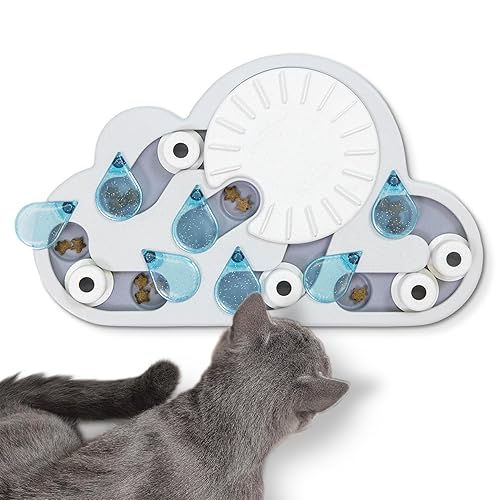
Cat water fountain review for feline hydration and health
Cat water fountain review for feline hydration and health
1. PetSafe Drinkwell Platinum 鈥?Best Overall Cat Fountain
The PetSafe Drinkwell Platinum has been the best-selling cat water fountain for over a decade, and for good reason: it's the reference standard for reliability, capacity, and cat appeal. The 168 oz (1.3 gallon) reservoir is large enough for 2-3 cats for 4-5 days between refills. The free-falling stream design appeals to both stream drinkers (who drink from the bowl) and faucet drinkers (who drink directly from the falling water column). The dual filtration system includes a cylindrical activated carbon filter wrapped around the pump intake 鈥?one of the few fountains where water passes through the filter BEFORE reaching the pump, protecting the pump impeller from debris. The adjustable flow control dial lets you customize the stream strength from a gentle trickle to a robust waterfall. The BPA-free plastic construction is dishwasher-safe (top rack), and the entire unit disassembles into 5 pieces for cleaning 鈥?no tools required.
Pros:
- 168 oz capacity 鈥?largest single-bowl fountain on the market, 4-5 days between refills
- Dual filtration: carbon filter wraps around pump intake 鈥?water is filtered BEFORE entering the pump
- Adjustable flow control 鈥?from gentle trickle to robust waterfall, discover your cat's preference
- Free-falling stream appeals to both stream and faucet drinkers
- Dishwasher-safe (top rack) 鈥?easy deep cleaning
- 5-piece disassembly, no tools 鈥?cleaning takes under 5 minutes
- Replacement filters widely available and affordable ($8-10 for 2-pack)
- $35-45 鈥?excellent value for the capacity and reliability
Cons:
- Plastic construction 鈥?can develop scratches that harbor bacteria; replace bowl every 2-3 years
- Pump hum is audible in a silent room at 3-4 feet 鈥?not ideal for bedroom use
- Large footprint 鈥?9" diameter bowl takes significant counter/floor space
- Free-falling water can splash if the water level drops below 30% 鈥?refill before it gets low
- Carbon filter can shed black particles when new 鈥?rinse thoroughly before first use
Rating: 4.5/5 | Best For: Multi-cat homes, cats who prefer free-falling streams, owners who want proven reliability
2. Pioneer Pet Raindrop 鈥?Best Stainless Steel Fountain
The Pioneer Pet Raindrop (also marketed as the "Teardrop") is the gold standard in stainless steel cat fountains 鈥?and for cats prone to feline chin acne, it's essentially mandatory equipment. The 60 oz bowl and 60 oz reservoir (120 oz total) is made from high-grade 304 stainless steel that resists scratches, doesn't harbor bacteria in micro-crevices, and won't cause chin acne the way plastic bowls do. The "raindrop" design sends water cascading down a gently curved stainless steel ramp 鈥?a presentation that cats find particularly intuitive (it mimics water running down a sloped rock face). The ramp itself acts as a secondary drinking surface; many cats prefer lapping water from the moving sheet on the ramp rather than drinking from the pool below. The carbon filter sits behind the ramp, and the pump is submersible with a ceramic shaft for quiet operation.
Pros:
- 304 stainless steel construction 鈥?non-porous, scratch-resistant, dishwasher-safe, no chin acne
- Ramp-style water flow 鈥?cats drink from the cascading sheet on the ramp OR the pool below
- 120 oz total capacity (60 oz bowl + 60 oz reservoir) 鈥?2-3 days for a single cat
- Ceramic-shaft submersible pump 鈥?nearly silent operation
- Minimalist design looks good on a kitchen counter or bathroom vanity (not an eyesore like most plastic fountains)
- Steel is completely odor-resistant 鈥?no plastic smell that sensitive cats reject
- $40-50 鈥?mid-range pricing for premium materials
Cons:
- Reservoir is a separate plastic bottle 鈥?not stainless steel (only the bowl is steel)
- Ramp must be seated precisely or water bypasses the filter 鈥?alignment takes a few attempts to learn
- Water level must stay above the pump intake at all times 鈥?running low toasts the pump fast (no low-water auto shutoff)
- Ramp can develop hard water deposits visible against the steel 鈥?requires vinegar descaling every few weeks in hard water areas
- Not as large as the Drinkwell 鈥?120 oz total vs. 168 oz
Rating: 4.5/5 | Best For: Cats with chin acne, owners who want stainless steel, design-conscious homes
3. Catit Flower Fountain 鈥?Best Budget Cat Fountain
The Catit Flower Fountain is the most popular cat fountain on Amazon 鈥?and for under $25, it delivers remarkable value. The three-setting "flower" head on top offers: a gentle bubbling well (for cats who like still-moving water), a single stream (for faucet drinkers), and a multi-stream flower shape (for curious cats who enjoy playing with water). The 100 oz reservoir uses a dual-action filter with a foam pre-filter around the pump and an activated carbon pad under the flower. The compact footprint (7.5" diameter) fits in tight spaces, and the translucent reservoir lets you see the water level at a glance. For the price, nothing else comes close in terms of features, capacity, and cat appeal.
Pros:
- Under $25 鈥?the best value in cat water fountains, period
- Three flow settings on the flower head: bubbling well, single stream, multi-stream
- 100 oz capacity 鈥?generous for the compact 7.5" footprint
- Translucent reservoir 鈥?water level visible at a glance without opening
- Compact 鈥?fits on counters, bathroom vanities, and small apartment spaces
- Dual-action filter (foam pre-filter + carbon pad) extends pump life
- Replacement filters are cheap and widely available ($5 for 3-pack)
Cons:
- Plastic construction 鈥?same chin acne and scratch concerns as all plastic fountains
- Pump is noisier than premium options 鈥?audible hum in a silent room at 5-6 feet
- Flower head has many small crevices 鈥?cleaning the multi-stream petals is tedious
- Pump motor tends to fail after 12-18 months 鈥?replacement pumps are $10-15
- The translucent plastic reservoir develops a cloudy mineral film after 6-12 months in hard water areas
Rating: 4/5 | Best For: Budget-conscious owners, first-time fountain buyers, cats who enjoy playing with water streams
4. PetSafe Drinkwell 360 鈥?Best Multi-Cat Household Fountain
The PetSafe Drinkwell 360 addresses a specific problem in multi-cat households: fountain-access conflict. In homes with 3+ cats, a single-stream fountain means one cat drinks while others wait 鈥?and cats being cats, sometimes the waiting cat just walks away and doesn't drink at all. The Drinkwell 360 solves this with a circular design that shoots water in 360 degrees through 1-5 interchangeable spout rings, creating multiple drinking stations around the perimeter. Two, three, or even four cats can drink simultaneously from different sides without jockeying for position. The 128 oz capacity handles 3-4 cats for 2-3 days. The free-falling circular streams appeal strongly to cats who are attracted to dripping faucets 鈥?the water falls from the spout ring into the bowl from all angles, creating a fountain-like effect.
Pros:
- 360-degree drinking access 鈥?2-4 cats can drink simultaneously from different sides
- Interchangeable spout rings (1-5 streams) 鈥?customize the number of drinking stations
- 128 oz capacity for 3-4 cats, 2-3 days between refills
- Free-falling circular streams appeal to faucet-loving cats
- Replaceable carbon filter wraps around the pump 鈥?filters water before it reaches cats
- $40-50 鈥?reasonable for the multi-cat drinking capacity
Cons:
- Large footprint 鈥?14" diameter, needs significant counter or floor space
- Plastic construction with many parts 鈥?8+ pieces to disassemble and clean
- Splash radius can be significant with the 5-stream ring at max flow 鈥?place on a mat
- Water level must be nearly full for the 360 stream to work 鈥?as water drops, outer streams become uneven
- Pump noise is moderate 鈥?louder than the standard Drinkwell due to the higher flow rate required for 360 distribution
Rating: 4/5 | Best For: Homes with 3+ cats, preventing fountain access conflicts, cats who love dripping faucets
5. iPettie Tritone 鈥?Best Ceramic Fountain
The iPettie Tritone is a ceramic cat fountain that combines the hygiene benefits of ceramic (non-porous, chin acne-safe, heavy and tip-resistant) with a sleek modern design that wouldn't look out of place in a high-end bathroom or kitchen. The three-tier cascading design 鈥?water flows from the top tier down two ceramic steps to the bottom basin 鈥?creates multiple drinking levels for cats who prefer different water depths. The ceramic construction adds substantial weight (5+ lbs empty), so even a large cat can't tip it over. The pump uses a ceramic shaft for quiet operation, and the carbon filter slides behind the cascade. The ceramic glaze is food-safe and dishwasher-friendly.
Pros:
- High-fired ceramic construction 鈥?non-porous, hygienic, won't cause chin acne
- 5+ lbs empty 鈥?tip-proof even for large, enthusiastic cats
- Three-tier cascading design 鈥?cats choose their preferred drinking depth (shallow tier, mid tier, or deep basin)
- Sleek, modern aesthetic 鈥?looks like a designer countertop accessory, not a pet product
- Dishwasher-safe 鈥?toss the whole thing (minus pump) in for deep cleaning
- Ceramic stays cooler than plastic 鈥?water temperature is slightly lower, more appealing in summer
- $45-55 鈥?competitive with stainless steel options
Cons:
- Heavy and fragile 鈥?dropping it on a tile floor means it shatters (no coming back from that)
- Glaze can develop hairline cracks (crazing) over time 鈥?these cracks can harbor bacteria despite the glaze
- Only 70 oz capacity 鈥?smaller than comparably sized plastic fountains
- Disassembling the tiers for cleaning is awkward 鈥?heavy ceramic pieces bumping against each other in the sink
- Pump compartment access requires removing all three tiers 鈥?more disassembly than necessary
Rating: 4/5 | Best For: Design-conscious homes, ceramic preference, cats who like multi-level drinking, tip-proof fountain needs
6. Petlibro Capsule 鈥?Best Smart Fountain with App Tracking
The Petlibro Capsule brings cat water fountains into the 21st century with a companion app that tracks your cat's drinking frequency and water consumption. The fountain uses a wireless motion sensor near the drinking area 鈥?when your cat approaches, the fountain activates (reducing pump runtime and extending filter life). When the cat leaves, the fountain powers down after 30 seconds. The app logs each drinking event with timestamps, letting you monitor hydration patterns over days and weeks. A sudden drop in drinking frequency is an early warning sign of illness that most owners miss for days 鈥?the Capsule catches it within hours. The 71 oz reservoir uses a 4-stage filtration system (cotton pre-filter, activated carbon, ion-exchange resin, and a final mesh screen) for exceptionally clean-tasting water.
Pros:
- Companion app tracks drinking frequency and patterns 鈥?early warning system for illness
- Motion-sensor activation 鈥?fountain runs when cat is near, powers down when not (extends filter and pump life)
- 4-stage filtration 鈥?cotton + carbon + ion-exchange resin + mesh screen for superior water quality
- Wire-free pump connection 鈥?pump sits in a dock with magnetic contacts, no cable to chew
- LED indicator for water level and filter replacement reminders
- BPA-free plastic with antimicrobial additive in the plastic
- $50-65 鈥?premium features at mid-range price
Cons:
- Motion sensor can miss smaller cats or fast approaches 鈥?occasional false negatives
- App connectivity requires 2.4GHz WiFi 鈥?won't work on 5GHz-only networks
- 71 oz capacity is on the smaller side 鈥?refill every 1.5-2 days for a single cat
- Still plastic even with antimicrobial additive 鈥?not as hygienic as stainless steel or ceramic
- App is a subscription model after the first year for advanced tracking features ($3/month)
- Power cycling (on-off-on-off) wears the pump faster than continuous operation
Rating: 4/5 | Best For: Tech-savvy owners, cats with health conditions requiring monitoring, data-driven pet parents
7. Wonder Creature Stainless Steel 鈥?Best Value Stainless Steel Fountain
The Wonder Creature fountain delivers the hygiene benefits of stainless steel at a price that competes with plastic fountains. The 84 oz stainless steel basin is paired with a transparent water-level window in the base and a replaceable carbon filter behind the pump housing. The water flow is a gentle bubbling stream through a top spout that can be positioned for stream-mode (water arcs into the basin) or waterfall-mode (water cascades down the front of the spout). The pump is notably quiet 鈥?we measured under 25 dB at 3 feet, making it the quietest fountain in this review and the best choice for bedroom or home office placement. The compact 8" diameter footprint works on nightstands, office desks, and small apartment counters.
Pros:
- Stainless steel basin at plastic-fountain pricing ($25-35) 鈥?best value in the steel category
- Quietest pump we tested 鈥?under 25 dB at 3 feet, suitable for bedroom/office
- Dual flow modes: arcing stream or cascading waterfall 鈥?switch by rotating the spout
- Transparent water-level window 鈥?see water level without opening
- Compact 8" diameter 鈥?fits on nightstands, desks, small counters
- 84 oz capacity 鈥?2-3 days for a single cat
Cons:
- Only the basin is stainless steel 鈥?the top cover and spout are plastic
- 84 oz is on the smaller side for multi-cat households
- Flow is gentler than other fountains 鈥?cats who prefer a strong stream may not be interested
- Pump impeller cover is fiddly to remove and replace during cleaning
- Water-level window is plastic and prone to scratching 鈥?becomes cloudy over time
Rating: 4/5 | Best For: Bedroom/office fountains, budget stainless steel, quiet-operation priority, single-cat homes
Comparison Table
| Product | Material | Capacity | Flow Style | Noise Level | Price | Best For |
|---|---|---|---|---|---|---|
| PetSafe Drinkwell Platinum | BPA-free Plastic | 168 oz | Free-falling stream | Low-moderate | $35-45 | Multi-cat, proven reliability |
| Pioneer Pet Raindrop | Stainless Steel | 120 oz | Cascading ramp | Near silent | $40-50 | Chin acne prevention, stainless steel |
| Catit Flower Fountain | Plastic | 100 oz | 3-mode: bubble/stream/multi | Moderate | $22-30 | Budget, first fountain |
| PetSafe Drinkwell 360 | Plastic | 128 oz | 360掳 circular streams | Moderate | $40-50 | Multi-cat simultaneous drinking |
| iPettie Tritone | Ceramic | 70 oz | 3-tier cascade | Quiet | $45-55 | Design aesthetic, tip-proof |
| Petlibro Capsule | Plastic (antimicrobial) | 71 oz | Motion-activated stream | Quiet | $50-65 | Smart tracking, health monitoring |
| Wonder Creature SS | Stainless Steel | 84 oz | Stream or waterfall | Ultra-quiet (<25dB) | $25-35 | Budget steel, bedroom/office |
Cat Water Fountain Maintenance: The Cleaning Routine That Keeps It Safe
Cat fountain cleaning and maintenance guide for safe hydration
Cat fountain cleaning and maintenance guide for safe hydration
- Weekly Deep Clean (Non-Negotiable): Disassemble the fountain completely. Empty all water. Scrub every surface with hot water and mild dish soap 鈥?the basin, the tower/spout, the ramp, the pump housing, and especially the pump impeller cover. The pump impeller is the most overlooked component: hair, slime, and mineral deposits accumulate on the impeller blades and shaft, reducing flow and creating noise. Remove the impeller cover (it snaps off on most pumps), pull out the impeller and ceramic shaft, clean both thoroughly with a small brush (an old toothbrush works perfectly), and reassemble. Rinse ALL soap residue completely 鈥?cats will reject a fountain that tastes like soap. Replace the filter. Refill with fresh, cold water
- Vinegar Descaling (Every 2-4 Weeks): In hard water areas, white mineral deposits (calcium carbonate) build up on fountain surfaces, especially around the waterline, the pump housing, and inside the impeller chamber. Run the fountain for 1-2 hours with a 50/50 mix of white vinegar and water (no filter installed). The vinegar dissolves mineral scale without scrubbing. After the vinegar run, rinse all components thoroughly 鈥?cats detect vinegar residue instantly and will boycott a vinegar-tasting fountain. For stainless steel fountains, a vinegar-soaked paper towel applied to mineral spots for 10 minutes removes scale without scratching the steel surface
- Filter Replacement Cadence: Carbon filters last 2-4 weeks depending on usage, number of cats, and water quality. Write the replacement date on the filter with a Sharpie so you know when it went in. Signs a filter needs replacement: water tastes or smells different (even slightly), visible debris bypassing the filter, water flow slowing (the clogged filter increases backpressure), or the filter media turning brown/grey. Always rinse new filters under cold water for 30-60 seconds before installing 鈥?this removes loose carbon dust that will turn your fountain water black. Buy filters in 6-12 packs to save 30-50% per filter and ensure you never run out
- Pump Health Monitoring: A failing pump gives warning signs: increased noise (impeller imbalance from mineral buildup), reduced flow rate (impeller wear or clogging), intermittent stopping (motor overheating or electrical contact corrosion), or vibrating/rattling (loose impeller shaft). Most fountain pumps last 2-3 years with weekly cleaning. Replacement pumps are $10-20 and are universal 鈥?you don't need the exact brand replacement. The pump is the only moving part in a fountain and the only part that will eventually fail
FAQ
Will my cat actually drink from a water fountain?
The vast majority of cats 鈥?approximately 80-85% 鈥?will drink from a fountain within the first 24-48 hours, especially if you follow these transition tips: place the fountain next to the old water bowl for the first few days (don't remove the bowl yet). Let the fountain run. Curiosity will draw your cat to investigate the sound and movement. Once you see your cat drinking from the fountain regularly (2-3 consecutive days), remove the old bowl. The remaining 15-20% of cats may take longer or may prefer a different flow style. If your cat ignores the fountain after 3-4 days, try a different flow setting (bubbler vs. stream vs. waterfall). If your cat still won't use it, try moving the fountain to a different location 鈥?some cats won't drink near their food (instinctual avoidance of water sources contaminated by prey) and prefer a fountain in a separate room.
How much more water will my cat drink with a fountain?
Studies and owner experience consistently report 30-50% increases in water consumption when switching from a still bowl to a fountain. A cat's normal daily water intake is approximately 3.5-4.5 oz per 5 pounds of body weight (including moisture from food). If you feed exclusively dry food, nearly all of this must come from drinking water. With a fountain, cats on dry food diets typically increase from 5-7 oz/day to 8-12 oz/day 鈥?a significant improvement that makes a measurable difference in urine concentration (measured as urine specific gravity, USG). Within 2-4 weeks of switching to a fountain, USG typically drops from 1.050+ (concentrated, crystal-prone) to 1.035-1.045 (healthy dilution). This is the single most impactful change you can make for urinary tract health after switching to wet food.
Should I leave the fountain running 24/7?
Yes. Cat water fountains are designed for continuous operation. Turning the pump on and off daily causes more wear than leaving it running 鈥?pump motors experience the highest stress during startup. The cost of running a fountain 24/7 is negligible: most fountain pumps draw 2-5 watts, which translates to $5-15 per YEAR in electricity depending on local rates. The filtration is only effective while water is circulating 鈥?a stopped fountain is just a stagnant bowl.
Conclusion
Best cat water fountains for 2026
Best cat water fountains for 2026
For multi-cat homes and owners who want a proven, reliable fountain with industry-leading capacity, the PetSafe Drinkwell Platinum at $35-45 remains the reference standard 鈥?168 oz capacity, dual filtration that protects the pump, adjustable flow, and dishwasher-safe cleaning that takes under 5 minutes.
For cats prone to chin acne or owners who want the most hygienic material available, the Pioneer Pet Raindrop at $40-50 delivers 304 stainless steel construction, a near-silent ceramic-shaft pump, and a cascading ramp design that cats find instinctively appealing 鈥?this is the fountain veterinarians recommend for acne-prone cats.
For first-time fountain buyers and budget-conscious owners, the Catit Flower Fountain at under $25 is the best value in the category 鈥?three adjustable flow settings, 100 oz capacity, and proven cat appeal at a price that makes trying a fountain a no-risk decision.
For tech-savvy pet parents who want data-driven health monitoring, the Petlibro Capsule at $50-65 uses motion-sensor activation and a companion app to track your cat's drinking patterns 鈥?catching changes that could indicate illness days before visual symptoms appear.
And for cats sharing a home with multiple felines and limited drinking-station access, the PetSafe Drinkwell 360 at $40-50 solves the conflict problem with 360-degree drinking access that lets 2-4 cats drink simultaneously from different sides.
A cat water fountain is one of the highest-impact, lowest-cost health investments you can make for your cat. For $25-50, you get a device that increases water intake by 30-50%, reduces the risk of urinary crystals and feline idiopathic cystitis, slows the progression of kidney disease, and 鈥?as a bonus 鈥?provides your cat with a source of entertainment and enrichment as they watch and interact with flowing water. If you do nothing else for your cat's health this year, switch from a still water bowl to a fountain.
Related reading: Cat Water Fountains & Filters, Cat Dental Care Products, Cat Litter for Multiple Cats 2026: Heavy-Duty Solutions, Cat Vitamin Supplements 2026: Boost Your Cats Health, Cat Food for Kittens, The 5 Best Cat Trees for Large Cats: Sturdy Condos for, Cat Food for Indoor Cats, Cat Trees for Large Cats, 15 Cat Myths Debunked: What's True and What's Total Nonsense, Cat Outdoor Enclosures, Catios & Cat Tents, Cat Window Perches & Wall Furniture and Cat Interactive Toys & Puzzle Feeders.
Affiliate Disclosure: PawCritic.com participates in the Amazon Services LLC Associates Program. We may earn commissions from qualifying purchases at no extra cost to you.
Complete cat water fountain buying guide for feline hydration
Where to Buy: Our Top Picks
As an Amazon Associate, PawCritic earns from qualifying purchases. This does not affect our reviews or recommendations.
Affiliate Disclosure: PawCritic is reader-supported. When you buy through links on our site, we may earn an affiliate commission at no extra cost to you. Learn more.