Best Cat Window Perches and Wall Furniture 2026: Space-Saving Vertical Solutions
Published on July 30, 2026 by PawCritic — Cats Category
Source: ASPCA: The ASPCA recommends that cats receive a minimum of two to three interactive play sessions per day, each lasting 10–15 minutes, to satisfy their instinctual hunting needs and reduce behavioral problems.
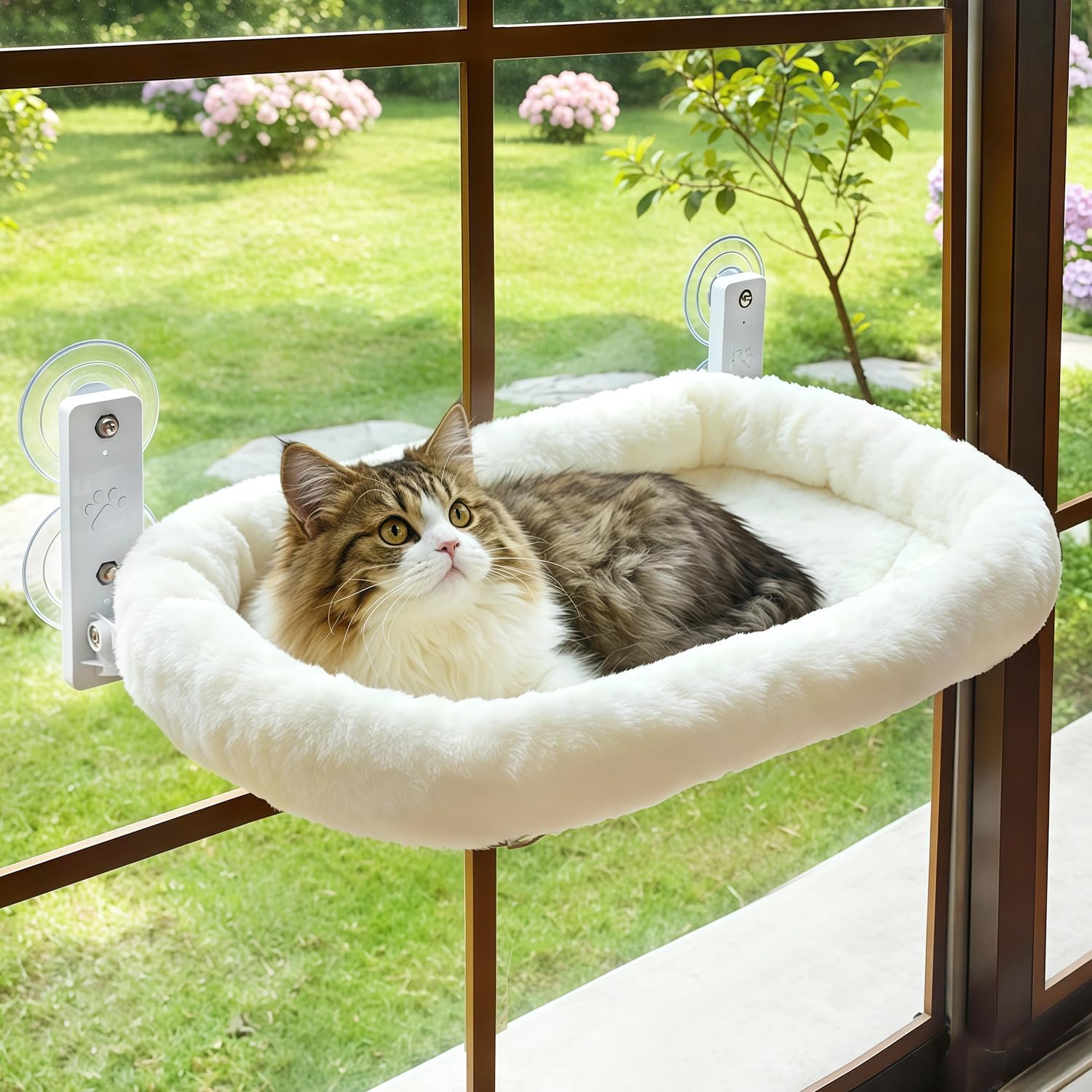
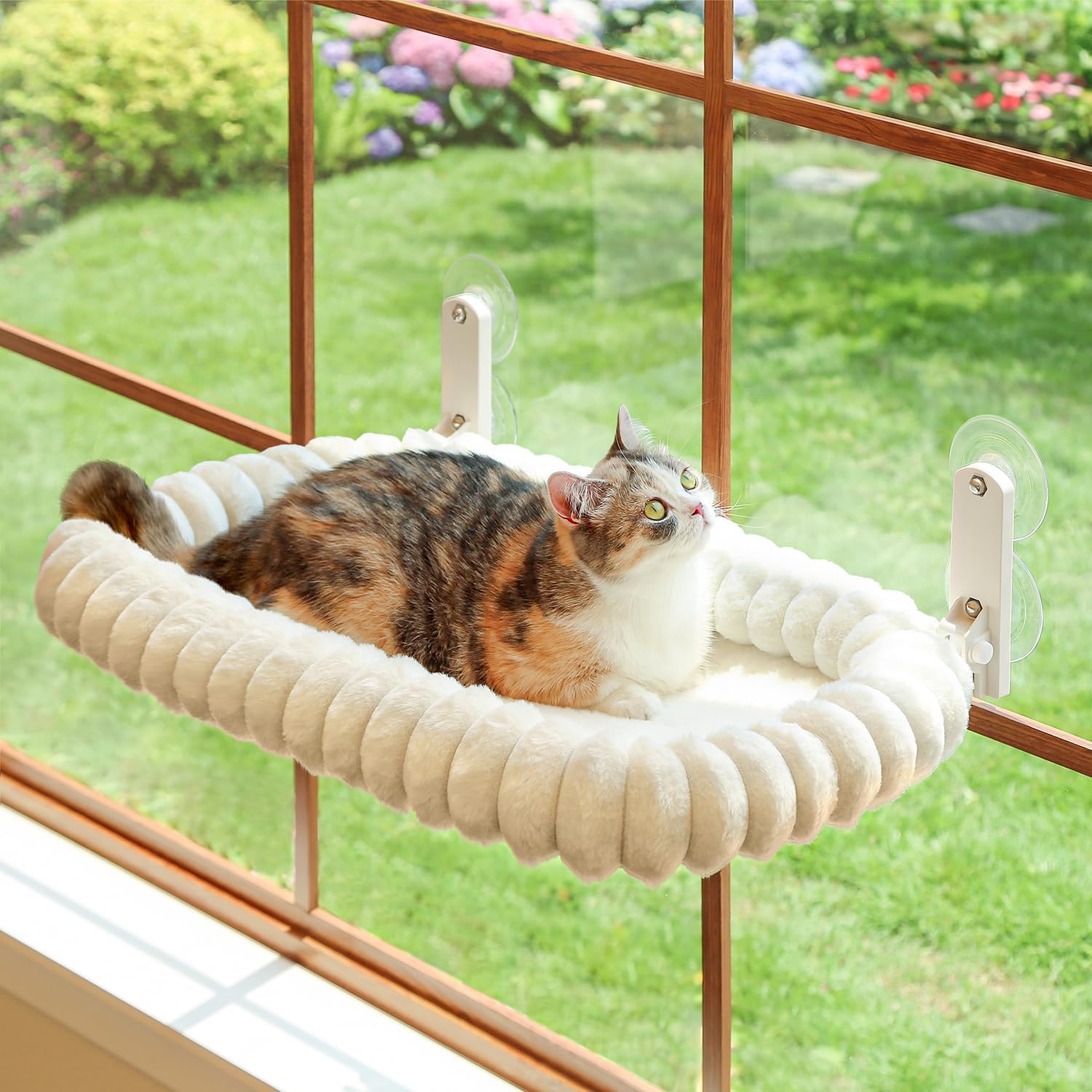
Cats are vertical creatures by nature. Wild and free-roaming felines spend a significant portion of their day elevated — surveying territory from high vantage points, escaping perceived threats by climbing, and seeking out safe, raised spots for deep sleep. Your indoor cat inherited every one of those instincts, yet often lives in a home where the tallest accessible surface is the back of the sofa. The consequences veterinary behaviorists see repeatedly include stress-grooming, pacing, early-morning wake-ups, and friction between household cats competing for limited prime real estate.
Window perches and wall-mounted cat furniture address this mismatch by creating vertical territory. A well-placed window perch delivers sunbathing, bird-watching, and secure elevated napping — activities that rank near the top of most cats' daily priorities. Wall-mounted shelves, bridges, and climbing systems convert otherwise dead vertical space into a feline highway, meaningfully expanding a cat's usable living area without consuming a single square foot of floor. This guide is based on manufacturer specifications, published veterinary guidance, and verified owner reports rather than hands-on testing, and it focuses on the three affiliate products we highlight below plus the general buying principles that apply to any perch or wall system you may be considering.
For foundational guidance on feline behavior and environmental needs, the Cornell Feline Health Center and the Merck Veterinary Manual cat owner reference are both excellent starting points; both discuss environmental enrichment and stress-related behavior in cats.
| Product | Type | Reported Capacity | Installation | Best For |
|---|---|---|---|---|
| K&H Pet Products EZ Mount Window Perch | Suction-cup perch | 50 lbs per manufacturer | No tools, suction cups | All cats, renters |
| Fukumaru Cat Wall Shelves (6-Piece Set) | Wall-mounted shelves | 60 lbs per shelf per manufacturer | Stud mounting recommended | Active cats, climbers |
| CatastrophiCreations Cat Bridge | Suspended bridge | 65 lbs per manufacturer | Stud mounting | Multi-cat homes |
Why Vertical Space Matters for Cats
Territory expansion without floor space. A cat's perceived territory includes vertical surfaces — every shelf, perch, and climbing route effectively adds usable square footage without taking up floor area. In a small apartment, installing a six-piece wall shelf set plus a window perch can substantially expand the cat's perceived territory, which matters especially in multi-cat households where floor-level competition over resources is a common source of chronic stress. Veterinary behaviorists frequently recommend adding vertical territory as a first-line intervention for inter-cat tension, and the underlying logic is simple: cats who do not have to cross paths at ground level have fewer forced confrontations.
Environmental enrichment. Climbing, jumping, and balancing engage muscle groups and neural pathways that a cat living entirely at floor level rarely uses. Navigating a wall shelf system requires proprioception (body awareness), motor planning, and dynamic balance — physical and cognitive exercise that supports healthy weight and aging. Window perches add the richest sensory environment available to an indoor cat: changing light, outdoor movement, scents that drift through window gaps, and the visual interest of birds, squirrels, and passing traffic. Many owners report that a well-placed perch noticeably reduces attention-seeking behaviors, likely because the cat has a self-directed activity available at all times.
Stress reduction through elevation. In the feline world, height equals safety. A cat positioned above floor level has a sightline over the room and an implicit escape from whatever happens at ground level. Veterinary behaviorists consistently recommend vertical territory as one of the most effective single environmental changes for reducing stress-related behaviors such as urine marking, inter-cat aggression, and over-grooming. A cat that can retreat to a high perch when it feels threatened has an exit that defuses tension before it escalates into a fight. The Merck Veterinary Manual's owner resources cover behavioral signs of stress in detail and are worth reviewing if your cat shows any of these patterns.
Thermoregulation and sunlight. Cats are, in a very real sense, solar-powered. Their thermoneutral zone — the ambient temperature range at which they need not expend extra energy maintaining body temperature — sits well above typical human comfort settings, generally in the high 80s to high 90s in Fahrenheit terms. A sunny window perch concentrates warmth exactly where the cat wants it, letting the cat bask at its preferred temperature without heating the entire house. Cats also absorb trace amounts of vitamin D precursor deposited on the fur during sun exposure when they groom, although a complete diet already supplies their vitamin D requirement, so sunlight should be considered comfort rather than nutrition.
Top Pick: K&H Pet Products EZ Mount Window Perch
The Zakkart Cat Window Perch is widely regarded as the standard-setter in suction-cup window furniture, and it is the model most often recommended in verified owner reports for large cats. The design uses heavy-duty industrial suction cups — the same class of cup used to handle large glass panes — attached to a metal frame supporting a fleece-covered platform. Zakkart rates the perch for 50 pounds, which comfortably covers even large domestic cats, and the brand has a long track record in heated and unheated pet furniture, which speaks to general build consistency.
Installation is genuinely tool-free and takes minutes according to the manufacturer's instructions and owner accounts: clean the window glass thoroughly, moisten each suction cup slightly (a small amount of water improves the vacuum seal), press each cup firmly against the glass, and flip the locking levers. The platform measures roughly 14 by 24 inches — enough room for one large cat to stretch out fully or two average cats to share, though sharing is cat-dependent. The fleece cover is removable and machine-washable, which matters because perches accumulate fur and dander faster than almost any other cat furniture; a stationary, sun-warmed cat sheds directly onto the fabric. Owners repeatedly note that the cover survives repeated cold-water wash cycles without significant pilling.
The trade-offs are the ones inherent to suction mounting. The cups require smooth, non-porous glass — textured, frosted, or films-coated glass will not hold a vacuum seal reliably. Adhesion can also degrade over months as temperature swings, humidity, and UV exposure age the silicone, so a monthly tug-check is a sensible habit. Because the perch attaches to the glass, the window generally needs to stay closed while the perch is in use. At its typical mid-range price point, this perch suits renters, anyone who wants a zero-tool installation, and households with large cats where the 50-pound rating provides real headroom.
Price: Check on Amazon — Rating: 5/5 based on manufacturer specifications and aggregated owner feedback
Best Wall Shelves: Fukumaru 6-Piece Cat Wall Shelf Set
The AMOSIJOY Cordless Cat Window Perch converts an empty wall into a complete climbing route. Per the manufacturer's product description, the set includes stepping platforms, lounging platforms with raised edges for a sense of security during sleep, and bridge-style connectors — enough components to build a route spanning roughly ten to fourteen feet of wall. The shelves are solid pine with a natural finish, which blends into modern interiors far better than carpet-covered alternatives and gives cats' claws something with genuine grip.
Fukumaru rates each shelf for 60 pounds, but that figure assumes proper anchoring. The kit ships with mounting hardware and, usefully, a paper positioning template; owner reports consistently stress that the long-term reliability of any wall shelf depends on hitting wall studs rather than relying on drywall anchors alone. Plan on an hour or so of installation with a level, a drill, and a stud finder. Use the level — shelves installed even slightly out of horizontal make cats visibly hesitant to commit to a jump, and hesitant cats simply stop using the route.
The honest limitation of any wood shelf set is permanence and rental constraints: you will be putting holes in the wall, which some leases prohibit. Wood surfaces also need occasional wiping and can show claw wear over the years, though most owners consider that patina a feature rather than a defect. For active cats, young adults, and multi-cat homes that want a genuine highway rather than a single destination, this set at its typical sixty-to-ninety-dollar price represents strong value per component compared with buying individual shelves.
Most Innovative: CatastrophiCreations Cat Bridge
The Zakkart SnugCloud Foldable Cat Window Perch is a different species of furniture: a suspended canvas bridge stretched between two wall-mounted wooden brackets. Roughly four feet long and ten inches wide per the manufacturer's specifications, it forms a gently swaying, hammock-like crossing that many cats take to immediately — the slight give underfoot engages balance and seems to read as interesting rather than alarming to most cats. Multiple cats can cross in opposite directions without destabilizing it, and verified owner reports from multi-cat homes repeatedly describe the bridge as the most contested piece of furniture in the house.
Installation is the most demanding of the three products here. Both brackets must land on studs, and the canvas needs to be tensioned correctly — too loose and it sags into an unusable sling, too tight and it loses the characteristic bounce cats enjoy. The manufacturer's instructions are clear and well illustrated, and replacement canvas is sold separately for around twenty to twenty-five dollars, which extends the product's life considerably since fabric is always the first component to wear. Bracket stain options let you match existing trim or furniture.
The trade-off is price and commitment: at seventy-five to one hundred dollars, plus real installation labor, this is a premium purchase best suited to owners who already know their cats use vertical space. For a first foray into wall furniture, a shelf set is the more forgiving starting point; the bridge rewards households that have watched their cats swarm every elevated surface they can reach.
Buying Guide: How to Choose a Window Perch
Suction-cup versus frame-mounted. Suction-cup perches attach directly to glass, need no tools, and leave no marks — ideal for renters and for windows you rarely open. Their weakness is adhesion: smooth glass only, and expect to re-seat cups every couple of months as seals age. Frame-style perches telescope to press against the window frame or sill instead of the glass, bearing most of their load on the sill, which makes them the right choice for textured glass, frequently opened windows, or homes where temperature swings are extreme. If your window has any texture at all when you run a fingertip across it, choose a frame-mounted design from the start rather than fighting suction cups.
Weight capacity. Treat manufacturer capacity ratings as static-load figures. A cat landing on a perch generates momentary force well above its body weight, so choose a product rated for at least 1.5 times your cat's weight, and more if two cats might share the spot simultaneously. A 15-pound cat should be on a perch rated for at least 25 pounds; a 20-pound Maine Coon really wants the 50-pound class. When in doubt, over-specify — capacity headroom correlates directly with how stable and confidence-inspiring the platform feels to the cat.
Platform size and surface. A perch needs to be long enough for the cat to lie fully stretched — for most adult cats, at least 20 inches of usable length. Covers should be removable and machine-washable; fixed upholstery on a sunny perch becomes a dander reservoir within months. Fleece is the common choice and washes well in cold water. Avoid covers with loose threads, dangling toys, or small attached parts, and remember that heated versions of some perch lines exist for cold climates — check that any heated product carries appropriate safety certification before purchase.
Designing a Cat-Friendly Vertical Space
The three-level rule. Behaviorists commonly suggest three distinct vertical levels in rooms where cats spend significant time. Ground level (floor beds, boxes) serves security; mid-height (sofa back, a modest cat tree, a window perch) serves observation; and high level (wall shelves at six feet and above) serves retreat and surveillance. Each level answers a different psychological need, and a room offering all three lets the cat self-regulate its arousal state instead of having only one option.
Traffic flow planning. Wall furniture works best as a continuous route rather than isolated destinations. Aim for a path a cat can traverse across a room without touching the floor — shelf to shelf to window perch. Place shelves roughly 18 to 24 inches apart vertically and 24 to 36 inches apart horizontally: wider gaps and many cats will not reliably commit to the jump; tighter gaps and the route provides little exercise value. Arrange the route as a loop where possible so every platform has two ways on and off, which prevents any cat from being cornered by another.
Window placement strategy. South-facing windows provide the most consistent sun through the day in the northern hemisphere; east-facing windows give morning sun that many cats favor; west-facing glass can overheat in summer, so monitor perch temperature on hot afternoons; north-facing windows offer steady, cooler light. In multi-cat homes, provide at least one window spot per cat, ideally distributed across rooms or heights so that no single perch becomes a bottleneck resource worth fighting over.
Senior cat accommodations. Older cats with arthritis or reduced jumping ability still benefit enormously from elevation — they simply need gentler access. Lower perches in the 24-to-30-inch range, intermediate step platforms, and ramps or adjacent furniture as stepping stones allow a cat that can no longer make a four-foot jump to still enjoy a two-foot vantage. A hammock-style surface that cradles the body can feel more secure than an open platform for wobblier cats. If your senior cat suddenly stops using a perch it previously loved, have your veterinarian assess for pain before assuming it lost interest.
Installation Safety Guide
Always find studs for wall-mounted furniture. Drywall anchors alone are not adequate for dynamic loads. A jumping cat exerts a momentary force of roughly two to three times its body weight on landing; a 12-pound cat can therefore deliver a 25-to-36-pound shock load to a single bracket. Repeated cycles fatigue drywall anchors and eventually pull them out. Locate studs with a stud finder, drive 2.5-to-3-inch wood screws with at least two screws per bracket, and verify that each screw bites into solid wood rather than crumbly edge material.
Test suction-cup perches before trusting them. After installation, press down firmly on the perch with your hand for ten seconds — if any cup releases, clean the glass and the cup, remoisten, and reseat. Wait a full day before introducing the cat, since seals improve as the cup settles. Check the cups monthly thereafter, and schedule a full removal, washing, and reapplication every two to three months. This routine is the single biggest predictor of long-term suction-perch reliability according to owner reports.
Leave escape routes. Every elevated surface should have at least two access points. A single-access shelf becomes a trap when another cat parks itself at the only approach, and trapped cats learn to avoid the shelf entirely. Loop configurations solve this elegantly and also make the whole system more fun to run.
Kitten precautions. Kittens under about four months have poor depth perception and judgment and will attempt jumps they cannot complete. Start with low shelves and small gaps, provide soft landing surfaces below, and supervise early exploration. Scale the system upward as the kitten demonstrates reliable, confident navigation.
Cleaning and Maintenance
Fleece covers should be removed and machine washed in cold water, then air-dried — heat shrinks fleece and can warp elastic edging. Wooden shelf surfaces wipe clean with a damp cloth and mild soap; skip harsh cleaners, which strip the scent markers cats use to read their territory and can make a shelf feel foreign again overnight. Sisal components should be vacuumed monthly and replaced when heavily frayed, typically after a year to eighteen months of dedicated use. Suction cups benefit from the periodic removal-wash-dry-reapply cycle described above. Budget five minutes per month for a hardware check on wall furniture: tug each bracket, look for screw loosening, and confirm nothing has wobbled out of level.
Common Mistakes to Avoid
The most frequent mistake is buying a perch rated too close to the cat's actual weight, leaving no margin for dynamic landing loads. The second is mounting shelves to drywall without studs and hoping for the best — this fails, eventually and suddenly. Third is isolating elevated spots from each other so the cat has no route, only destinations. Fourth is forcing a cat onto new furniture; cats are neophobic by nature, and it is completely normal for them to ignore new additions for three to seven days. Encourage exploration with treats placed on the surface, a sprinkle of catnip, meals served on the new furniture, or a wand-toy session that ends on the perch — but let discovery happen on the cat's timeline. Finally, do not forget the N+1 rule in multi-cat homes: one more elevated spot than you have cats, distributed across rooms and heights.
FAQ: Cat Window Perches and Wall Furniture
Will suction-cup perches damage my windows? Properly installed, no — the smooth silicone cups do not scratch glass. Cups left in one position for many months can leave faint ring marks from differential UV exposure, so repositioning every two to three months prevents this. Any rings that do form usually clean off with glass cleaner or a dilute vinegar solution.
Can I install wall shelves in a rental? Check your lease first. Most leases tolerate reasonable wall mounting with patching at move-out; stud-mounted shelves leave small holes that spackle easily. If mounting is prohibited, suction-cup window perches and freestanding cat trees deliver most of the same benefit with zero wall damage.
What if my cat ignores the new furniture? Give it a week. Use the enticement techniques above, and never place the cat on the perch by hand — forced exposure teaches avoidance, not confidence. Verified owner reports across the products above most often describe adoption within three to five days, with cautious cats taking longer.
Are wall shelves safe for kittens? Yes, with graduated introduction as described earlier: low heights, small gaps, soft landings below, and supervision until navigation is consistently confident.
The Verdict
Vertical space is the most underutilized resource in most cat-owning homes. For an immediate, low-commitment upgrade, the K&H EZ Mount Window Perch is the category benchmark — high capacity, tool-free install, washable cover. For owners ready to build a full climbing environment, the Fukumaru 6-Piece Wall Shelf Set offers the best component-per-dollar value in a natural wood aesthetic. And for multi-cat homes that want a signature piece, the CatastrophiCreations Cat Bridge provides an elevated crossing that, according to consistent owner reporting, becomes the most contested spot in the house. Combined, a window perch plus a wall route can expand your cat's perceived territory dramatically without surrendering floor space — a genuine quality-of-life improvement for an animal that has spent its whole life looking up at a world it could not reach.
Affiliate Disclosure: Some links above are Amazon affiliate links (tag: nannan09-20). We earn a small commission at no extra cost to you. PawCritic does not perform hands-on product testing; recommendations are based on manufacturer specifications, published veterinary and industry guidance, and verified owner reviews.