Crested Gecko Tanks 2026: A Practical Guide to Arboreal Habitats for Cresties
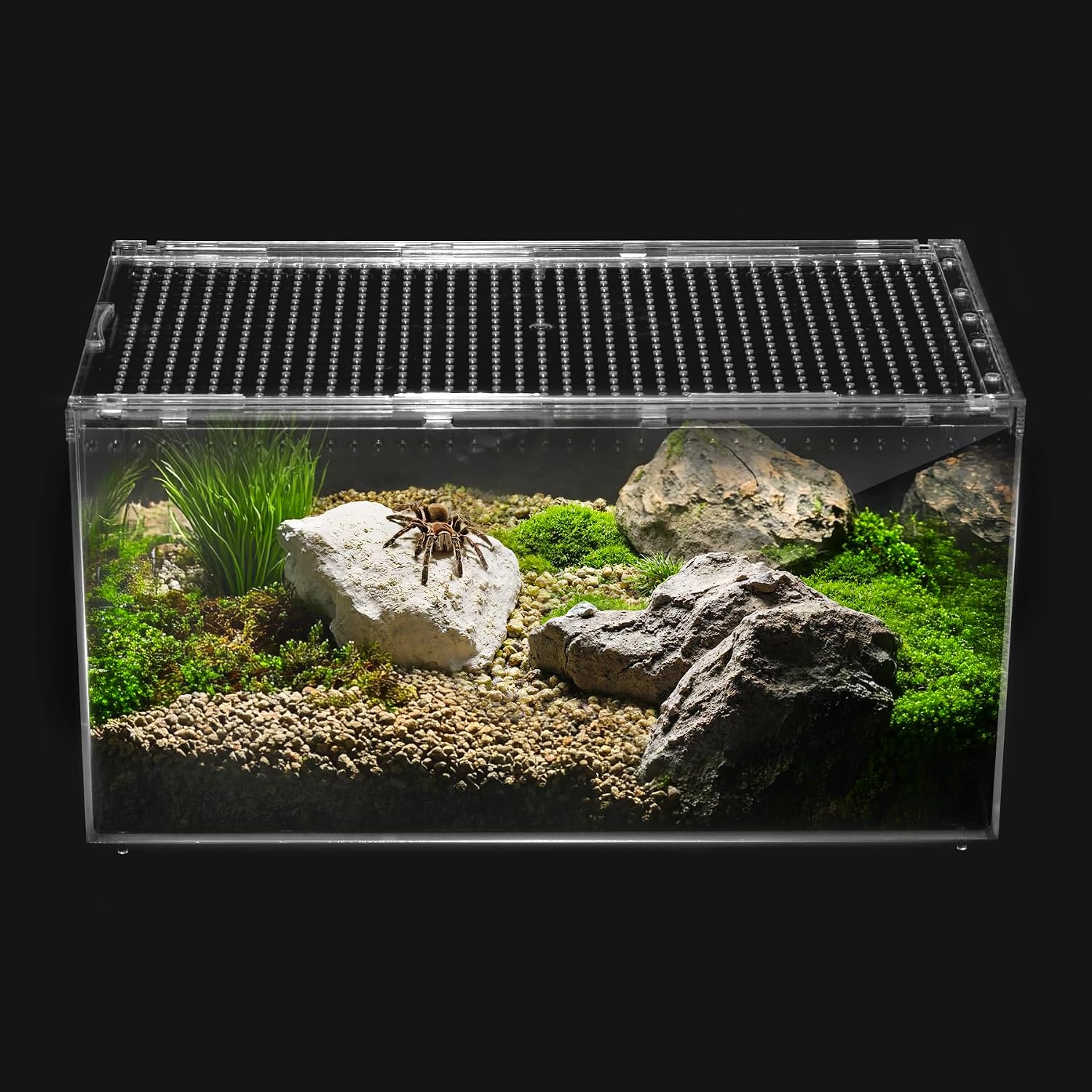
Crested geckos are arboreal animals, which means their entire biology is built around climbing, jumping, and sheltering in vertical vegetation. A tank that suits a ground-dwelling reptile like a leopard gecko will underserve a crestie almost immediately: the animal will spend its nights pacing the floor instead of using the height you paid for. This guide explains what published husbandry guidance actually says about crested gecko enclosures, how to size them, which materials and ventilation choices matter, and where common mistakes creep in. It is a buying guide, not a lab report — PawCritic does not perform hands-on product testing, so every recommendation here is grounded in veterinary resources, manufacturer specifications, and verified owner reports rather than personal bench work.
A good starting point for species-level husbandry is the Association of Reptilian and Amphibian Veterinarians resource library, which collects care literature written by clinicians who treat these animals. The Merck Veterinary Manual's exotic animals section is another useful reference, covering environmental requirements, common disease patterns, and the husbandry failures veterinarians see most often in geckos and other herpetofauna.
Why Vertical Space Is the Whole Point
Crested geckos (Correlophus ciliatus, formerly Rhacodactylus ciliatus) come from the humid forests of New Caledonia, where they live in shrubs and low trees, sleeping in folded leaves and bark crevices by day and hunting and exploring at night. In captivity, that translates directly into an enclosure whose height is at least as important as its footprint. A widely cited minimum for an adult crested gecko is a tank around 18 x 18 x 24 inches, roughly 20 gallons oriented vertically, though many experienced keepers argue that taller and larger is always better once you can maintain humidity and temperature gradients. Hatchlings and juveniles are usually started in smaller enclosures — often 8 to 12 quart bins or small front-opening tanks — because a vast enclosure can make it hard for a tiny gecko to find food, and because very young animals can struggle to locate hydration points.
The practical consequence for shopping is straightforward: filter out any enclosure described primarily in terms of horizontal floor space. A 40-gallon breeder tank, excellent for bearded dragons, gives a crestie far less usable habitat than a 24-inch-tall 20-gallon cube. Look for front-opening doors wherever possible. Front-openers reduce escape risk during feeding and misting, let you work at gecko level instead of descending on the animal from above like a predator, and make photographing and health checks dramatically easier. Sliding or hinged front glass with secure latches is the standard; screen tops on converted aquariums work too but require more DIY attention to access.
Glass, PVC, and Screen: Material Trade-offs
Enclosure materials fall into three families, and each has a real trade-off. Glass terrariums (the Exo Terra and Zoo Med style with front doors and a screen top) are the most common choice for good reasons: they hold humidity reasonably well, they are scratch-resistant and easy to clean, they give a clear view, and standardized sizing means accessories fit predictably. Their downside is weight and fragility — a 24-inch-tall glass terrarium full of substrate, branches, and plants can be awkward to move, and a dropped one is done. Glass also conducts heat, so in a cold room the glass itself can be chilly.
PVC enclosures have grown popular with advanced keepers. They are lighter than glass, hold humidity exceptionally well (often cutting misting frequency significantly), insulate better, and can be stacked in rack-like setups. The trade-off is visibility: PVC panels, sometimes with a single glass front, hide side views, and cheaper PVC can warp under heat lamps. Screen cages, common in chameleon husbandry, are generally a poor primary choice for cresties in most homes because they dump humidity too fast unless your ambient room humidity is already high; they are better suited to outdoor or greenhouse use in appropriate climates. For a first-time owner in a typical heated and air-conditioned house, front-opening glass is the pragmatic default, with PVC as the upgrade path once you know your misting routine and room conditions.
Ventilation and the Humidity Cycle
Crested geckos do not need constant saturation — they need a cycle. Published care guidance generally calls for humidity that spikes to around 80 to 100 percent after misting and dries back down to roughly 50 percent within a few hours, with a moderate ambient temperature around 72 to 78 degrees Fahrenheit during the day and a slight drop at night. Sustained wet conditions, especially combined with poor airflow, are what set up bacterial and fungal skin problems and scale rot. The screen-top-plus-front-vent design of most commercial arboreal terrariums exists precisely to create a chimney effect: cool dry air enters low at the front, warm humid air exits through the top.
When you evaluate a tank, look at where ventilation actually is. A fully screen top with no front vents, or front vents blocked by deep substrate, can stagnate. Conversely, an enclosure with too much screening in a dry winter house may never hold a humidity spike, forcing you into constant manual misting. Hygrometers are cheap and worth placing mid-height in the enclosure rather than at the very top, since that is closer to where the gecko actually sleeps. Avoid sealed or nearly sealed tanks marketed for high-humidity species without any ventilation at all; those tend to trade one problem for a worse one.
Heating, Lighting, and What to Avoid
Temperature is where new crestie keepers most often go wrong, and the failure mode is usually too much heat rather than too little. Crested geckos stress above roughly 80 degrees and can die of heat exposure in the mid-80s, so in most homes they need no heat source at all for most of the year. If your room drops below the mid-60s in winter, a low-wattage heat source regulated by a thermostat is appropriate — emphasis on regulated, since unregulated heat pads and lamps are a documented cause of thermal burns in reptiles. Any heat-emitting device should be controlled by a thermostat with the probe secured near the animal's resting spots, not resting loosely where it can shift.
Lighting is less critical than for diurnal basking species, since cresties are nocturnal and get vitamin D3 from a properly stored prepared diet in most feeding plans. Still, many keepers run a low-output UVB bulb on a daylight cycle to approximate natural photoperiod, and veterinary literature increasingly treats gentle UVB as low-risk and potentially beneficial when the animal can choose whether to expose itself. Provide plenty of cover so the gecko can hide from light entirely during the day. Whatever bulbs you choose, mount them above screen, never inside the enclosure, and check the manufacturer's stated fixture clearances.
Furnishing the Habitat: Climbing, Cover, and Feeding Stations
An empty tall tank is not an arboreal habitat — it is a glass box. The interior should create usable vertical terrain: cork bark tubes and flats, bamboo, dragon wood, manzanita, or sanitized branches roughly the diameter of the gecko's body or larger, arranged so the animal can move between levels without exposing itself in the open. Live plants (pothos, snake plants, bromeliads, philodendrons) or high-quality silk plants provide the dense cover crested geckos use as daytime sleeping shelters. If you use live plants, make sure every species in the tank is non-toxic, because geckos occasionally chew foliage or drink water off leaves. The ASPCA Animal Poison Control resources include searchable toxicity information for many common houseplants and are worth consulting before you plant anything.
Substrate choices span a range from bare paper towel (the standard for quarantined or sick animals — easy to disinfect and replace) to coconut fiber, cypress mulch, and full bioactive soil layers. For a display enclosure, a substrate that holds moisture without becoming waterlogged is the goal. One caution that recurs in veterinary case reports: loose, ingestible particulate substrates carry an impaction risk, particularly with careless feeding. Placing food dishes on a raised ledge or a flat rock or slate area over the substrate largely eliminates that risk, since cresties lunge at prey and can grab mouthfuls of floor along with the meal. Feeding ledges that attach with magnets or suction cups are inexpensive and solve this neatly while also suiting the gecko's preference to feed off the ground.
Sizing by Life Stage and Cohabitation Rules
Match enclosure size to the animal's stage. Hatchlings do best in small, simple setups where food is easy to find; a giant planted vivarium can effectively starve a 2-gram baby that cannot locate its dish. Juveniles graduate to mid-size tanks as they grow, and adults get the full 18 x 18 x 24 or larger. A pair of visual checks help: the gecko should be able to cross the tank in a few confident jumps without slamming into the opposite wall, and there should be at least two or three distinct hiding spots at different heights and humidities so the animal can thermoregulate and choose its own microclimate.
On cohabitation, keep it simple: one enclosure, one gecko, in almost all cases. Males are territorial and will fight, sometimes with severe injuries, and even male-female pairs kept together mean constant breeding pressure on the female plus egg-laying stress. Some experienced breeders house females together in very large, heavily furnished enclosures, but this requires monitoring for bullying, resource competition, and stress, and it is not a beginner configuration. Two tanks are cheaper than a vet visit.
A Concrete Example Worth a Look
Because this is a category guide rather than a multi-product roundup, one example helps anchor the discussion. If you want to see how a typical front-opening arboreal terrarium is specced and priced, you can check the current price on Amazon and compare its listed dimensions, door configuration, and ventilation layout against the criteria above. Enclosures in this class typically run in the fifty-to-one-hundred-fifty dollar range depending on size, with larger PVC setups climbing higher. When you evaluate any specific listing, verify three things on the product page itself: the exact external dimensions (and whether the stated volume matches them), the door and latch design, and whether a stand or substrate guard is included or sold separately, since shipping costs on those add-ons can surprise you.
Verified owner reviews are genuinely useful here in ways that marketing copy is not. Owners reliably report on whether latches stay secure against a determined gecko nose-pushing, whether screen tops rust in high-humidity rooms within a year, how the tank tolerates a suction-cup-heavy furnishing plan, and whether packaging survived shipping. Read the two-star and three-star reviews specifically — that is where latch failures, silicone seam issues, and warped frames show up honestly.
Maintenance: The Real Long-term Commitment
Whichever tank you buy, its value depends on the routine you run inside it. Daily tasks are light: spot-remove feces, check that the gecko ate overnight, and confirm the humidity dried down after the last misting rather than staying soaked. Weekly work involves wiping down glass and ledges with pet-safe cleaner or a dilute vinegar solution rinsed thoroughly, refreshing water dishes, and trimming or rearranging foliage that has flattened into a highway (geckos prefer broken, three-dimensional cover). Monthly and seasonal work includes replacing or turning loose substrate, inspecting branches and cork for mold, and checking silicone seams, screen integrity, and latch alignment.
Cleaners matter more than owners sometimes realize. Residues from ammonia-based sprays, scented products, or harsh disinfectants linger on glass and decor and can irritate a gecko's skin and airways. Stick to products labeled safe for reptiles, or plain hot water and vinegar with thorough rinsing, and never clean the enclosure with the animal inside it. Quarantine protocol for any new gecko — a minimum of 30 to 60 days in a simple, easily disinfected paper-towel setup — is standard veterinary advice and doubles as good practice for sanitizing anything secondhand before it enters your main display.
Common Mistakes and What to Avoid
- Buying horizontal. Floor space is nearly irrelevant to a crestie compared to height. If the tank is wider than it is tall, keep shopping.
- Overheating. A heat lamp 'just to be safe' in a 72-degree room is how cresties end up stressed or worse. Add heat only when a reliable thermometer says the enclosure is too cold.
- Constant saturation. Misting so often the substrate never dries invites skin and bacterial problems. The drying phase is not a flaw; it is the point.
- Underfurnishing. Two plastic plants and one stick in a 24-inch tank leaves the gecko exposed and stressed. Dense cover at multiple heights is a requirement, not decoration.
- Open-top handling. Cresties jump, and they jump unexpectedly. Open the tank at your own eye level, know where the animal is before you unlatch anything, and never leave doors ajar during feeding.
- Ignoring escape-proofing. Check gaps around cord and tube pass-throughs; a young crestie can squeeze through spaces that look too small to matter.
Frequently Asked Questions
What size tank does an adult crested gecko need?
The commonly cited minimum is an 18 x 18 x 24 inch enclosure, about 20 gallons, oriented vertically. Larger is better if you can maintain the humidity cycle and temperature range, and juveniles should start smaller so they can find food reliably.
Glass or PVC for a first enclosure?
Glass front-openers are the usual recommendation for beginners: predictable humidity behavior, easy cleaning, full visibility, and standardized accessory fit. PVC suits keepers who already know their misting routine and want better insulation and lighter weight, at the cost of side visibility.
Do crested geckos need UVB lighting?
Not strictly — they are nocturnal and most prepared diets contain vitamin D3. Many keepers still run low-output UVB on a day-night cycle with plenty of hiding cover, treating it as a low-risk supplement rather than a necessity.
How do I keep humidity right without making the tank soggy?
Mist enough to spike humidity in the evening, then let it dry down toward 50 percent over several hours. A hygrometer mounted mid-height, adequate top and front ventilation, and a moisture-holding substrate do most of the work.
Can two crested geckos share a tank?
Generally no. Males fight, and pairs breed continuously with real costs to the female's health. Solo housing is the safe default for pet keepers.
What should I budget?
Expect roughly fifty to one hundred fifty dollars for a quality appropriately sized enclosure, plus ongoing costs for substrate, food, supplements, and eventual décor upgrades. Cheaper tanks exist but often cost more over time in warping, rust, and replacement.
Wrapping Up
The right crested gecko tank is tall rather than long, front-opening rather than top-opening, well-ventilated rather than sealed, and furnished densely enough that a nocturnal forest animal has somewhere to hide. Get those four things right and the rest of husbandry — feeding, misting, monitoring — becomes far easier. Measure your space, check manufacturer dimensions against the minimums discussed here, read verified owner reviews for the failure modes that matter, and if you want a representative option to start from, view this option on Amazon and judge it against the checklist above.
Disclosure: This article contains affiliate links. If you make a purchase through these links, we may earn a commission at no extra cost to you. Thank you for supporting PawCritic!