Why Large Breed Dogs Need Special Beds
Large breed dogs such as German Shepherds, Golden Retrievers, Labrador Retrievers, and Great Danes have sleeping requirements that differ meaningfully from those of smaller dogs. The core issue is mechanical: a dog weighing 90 or 120 pounds concentrates far more load on the same square inches of bedding than a 25-pound dog does. Over months and years, that load compresses cheap filler, polyester stuffing, and low-density foam until the bed flattens into a thin pad that offers almost no cushioning. When a big dog lies on a flattened bed, its elbows, hips, and shoulders press directly against the floor through the fabric, which creates pressure points rather than relieving them.
Veterinary guidance is consistent on why this matters. According to the AVMA's resources for pet owners, osteoarthritis is one of the most common chronic conditions in adult dogs, and large and giant breeds are disproportionately affected, in part because conditions like hip and elbow dysplasia are heritable in those populations. Supportive, well-cushioned bedding does not cure joint disease, but it is one of the least expensive interventions an owner can make at home to reduce daily discomfort for an aging or arthritic dog. A dog that rests on a surface that distributes its weight evenly wakes up stiffer less often, and owners of senior large breeds frequently report easier mornings after switching from a cheap stuffed bed to a solid orthopedic foam base.
There is also a thermoregulation angle that many buyers overlook. Large, deep-chested dogs accumulate heat under their own body mass, and dense foam can trap that warmth overnight. Manufacturers have responded by layering gel-infused or charcoal-infused memory foam into their premium beds, and by offering elevated mesh cots that allow air to circulate on all sides. Neither approach is magic, but the underlying physics is sound: convection and conductive cooling help a heavy dog shed heat that a thick enclosed bed would hold in. For households in warm climates or with double-coated breeds like Huskies and Bernese Mountain Dogs, this is a legitimate selection criterion, not a marketing gimmick.
What to Look for in a Large Dog Bed
Before comparing specific models, it helps to understand the specifications that actually separate a bed suitable for a 100-pound dog from one that will bottom out within a season. The following criteria are drawn from manufacturer specifications and from recurring themes in verified owner reviews.
- Foam type and density: Genuine memory foam or high-density orthopedic support foam, rather than shredded filler or egg-crate convoluted foam, which compresses quickly under heavy dogs.
- Thickness: For dogs over 80 pounds, a foam slab of roughly 4 inches or more is generally needed to prevent bottoming out; premium beds for giant breeds use 7 inches or more.
- Cover durability: Tight-weave upholstery-grade fabric with reinforced seams resists digging, circling, and the abrasion of heavy claws better than plush or fleece covers.
- Washability: A removable cover with a machine-washable outer layer and, ideally, a water-resistant inner liner protects the foam from accidents and odor absorption.
- Non-slip base: A grippy bottom surface keeps the bed from skating across hardwood or tile when a large dog steps on and off, which protects both the dog's joints and the floor.
- Warranty terms: Long warranties against sagging and flattening are a useful proxy for foam confidence, because a manufacturer will not guarantee compression performance it does not expect the foam to deliver.
The Best Dog Beds for Large Breeds
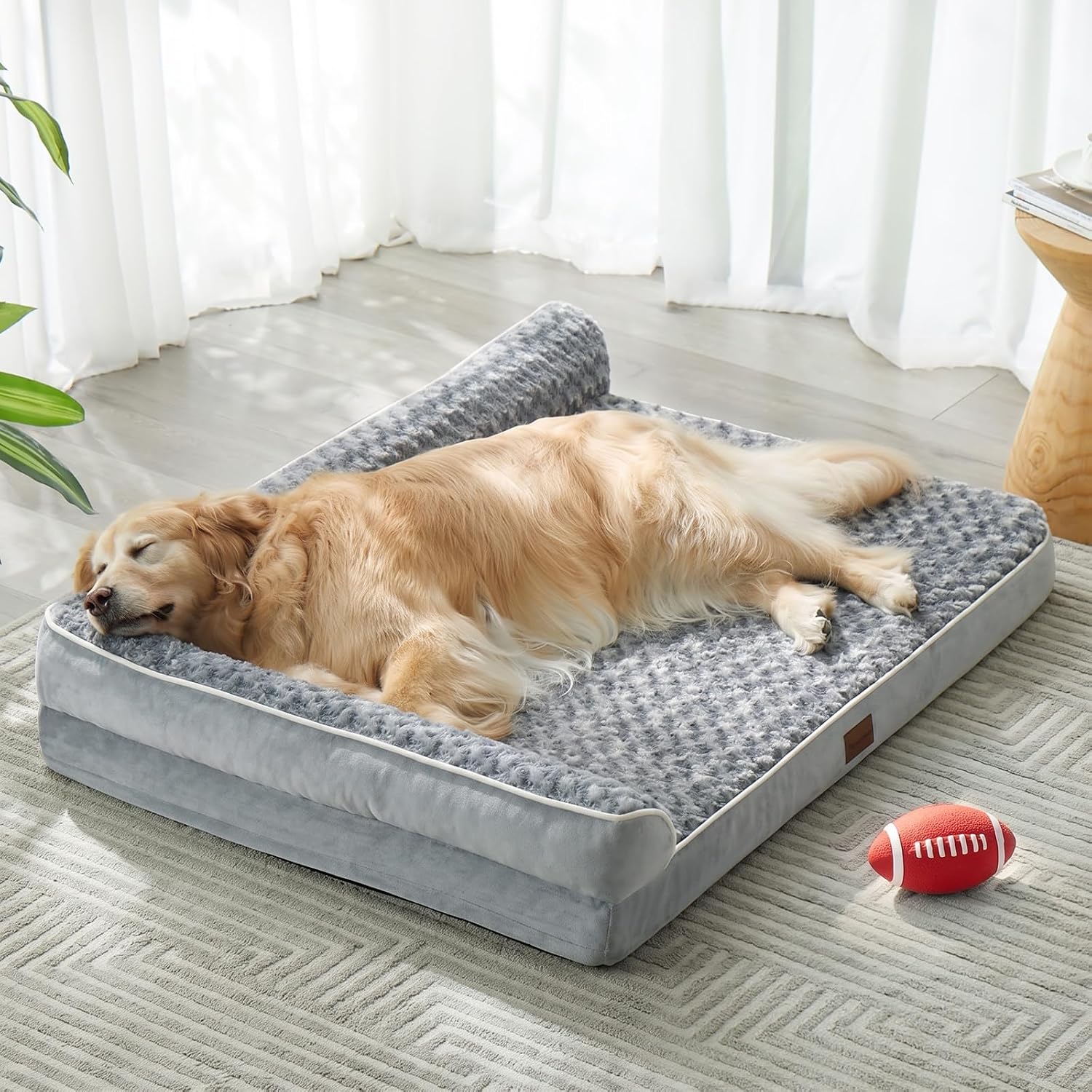
dog beds large breeds
Based on manufacturer specifications, warranty terms, and aggregated owner feedback, the following four beds represent the strongest options in the large-breed category. Each suits a different type of household, and the trade-offs are noted honestly for each.
1. Big Barker 7-inch Pillow Top - Best Overall
The Big Barker is built specifically for dogs in the 50-to-250-plus pound range and is one of the few beds on the market marketed exclusively at large and giant breeds rather than adapted from all-purpose designs. Its defining specification is the 7-inch American-made foam core, topped with a pillow-top comfort layer, and the company backs it with a 10-year warranty against foam flattening and sagging. That warranty is significant because most competing beds guarantee only manufacturing defects, not long-term compression performance.
Verified owner reviews repeatedly describe the bed holding its shape after years of use by dogs over 100 pounds, with senior-dog owners in particular reporting easier mobility in the mornings after the switch. The trade-offs are straightforward: it is one of the most expensive dog beds available, and its bulk and weight make it awkward to move for cleaning or travel. For a household with a large or giant breed and a budget that accommodates it, this is the category benchmark against which other beds are measured.
Pros:
- 7-inch thick orthopedic foam core designed for 50-250+ pound dogs
- 10-year warranty against sagging and flattening
- Machine-washable removable cover
- Foam made in the USA
Cons:
- Premium price point
- Heavy and difficult to move once positioned
2. Casper Dog Mattress - Premium Choice
The Casper dog mattress applies the layered-foam approach of the company's human mattresses to a pet product, pairing pressure-relieving comfort layers with a supportive base. The cover combines a durable nylon fabric with a sleep-surface texture designed to promote airflow, which addresses the heat-retention complaint that dense foam beds often draw from owners of heavy, warm-running dogs. Casper also offers a 100-night trial period, which is unusual in the pet bed category and lets an owner confirm the dog actually uses and settles on the bed before the purchase is final.
This bed suits an owner who wants a mattress-style sleeping surface and values trial flexibility. The considerations are price, which sits in the premium tier, and the fact that its foam is thinner than the Big Barker's, so dogs at the extreme high end of the weight range may compress it more over time. Owner feedback generally describes solid durability and easy cover removal, though some note the bed runs firmer than expected.
Pros:
- Layered pressure-relieving foam construction
- 100-night trial period
- Airflow-promoting cover material
3. PetFusion Ultimate Dog Bed - Best Value
The PetFusion Ultimate occupies the middle ground between budget stuffed beds and premium orthopedic mattresses. Its solid 4-inch orthopedic foam base provides genuine support for dogs with joint issues, and the water-resistant inner liner protects the foam from accidents, drool, and dampness, a feature usually reserved for more expensive beds. The cover is removable and machine washable, and the bolsters around the perimeter give head-resters a place to prop themselves.
For owners who want real orthopedic support without the cost of a 7-inch premium mattress, this is the practical choice, and verified owner reviews consistently describe it as holding up well under large dogs over multi-year use. The honest limitation is thickness: at 4 inches, dogs well over 100 pounds, particularly Great Danes and heavy Mastiffs, may benefit from the thicker foam of a premium option. For most dogs in the 50-to-90-pound range, it is the value leader.
Pros:
- 4-inch solid orthopedic foam base
- Water-resistant inner liner
- Strong value relative to orthopedic peers
4. Kuranda Dog Bed - Best for Chewers and Warm Climates
The Kuranda takes a completely different approach: an elevated frame of heavy-duty PVC or aluminum supporting a taut woven-vinyl fabric surface. There is no foam to chew, tear, or flatten, which is why it has a long-standing reputation among owners of destructive dogs, working kennels, and shelters. The raised design allows air to circulate beneath the dog, making it a genuinely cooler sleeping option in summer, and cleanup is as simple as hosing the surface off.
The trade-offs are comfort character and placement. The taut fabric surface is firmer than foam, so it offers less cushioning for a dog with advanced arthritis, and the elevated frame means the dog steps on and off a raised platform, which very stiff or wobbly seniors may find harder than a floor-level bed. It is also not a living-room aesthetic piece for every household. For chewers, diggers, and hot-weather sleepers, though, nothing else in this category matches its durability record.
Pros:
- No foam or stuffing to destroy
- Elevated airflow keeps dogs cooler
- Hose-off cleaning
How to Choose the Right Size
Sizing errors are the most common buying mistake in this category, and they are expensive because large beds are costly to return and ship. The correct method is to measure the dog, not to guess from its breed. Measure length from the tip of the nose to the base of the tail while the dog is standing, then add 10 to 12 inches to allow room to stretch out fully on its side. For width, measure across the widest point of the dog curled in its natural sleeping position and add a similar allowance.
Pay attention to sleeping style as well. Side sleepers who fully extend need the full length allowance, while dogs that curl tightly can accept a round or bolstered bed with less surplus. Sprawlers who shift positions through the night should get the largest footprint the room allows. Check the manufacturer's stated external dimensions and, more importantly, the interior sleeping dimensions after bolsters are accounted for, since bolster walls can consume 4 to 6 inches of usable surface on each side. A bed that measures correctly on the outside can be effectively one size smaller on the inside.
Weight ratings matter too. Match the dog's current weight to the bed's rated range, and for growing giant-breed puppies, buy for the projected adult size or expect to replace the bed within a year. The Merck Veterinary Manual's dog owner reference notes that giant breeds continue growing for up to 18 to 24 months, so a bed purchased at four months may be inadequate well before the dog matures.
Supporting Joint Health Beyond the Bed
A supportive bed is one part of a broader joint-care picture for large breeds. Keeping a big dog at a lean body condition is widely regarded by veterinarians as the single most effective step, because every extra pound multiplies load through the hips, elbows, and stifles. Feeding an appropriate large-breed diet matters here as well; the WSAVA Global Nutrition Guidelines emphasize body condition scoring and portion control as foundations of long-term orthopedic health, and controlled growth formulas are specifically recommended for large-breed puppies to reduce developmental bone and joint problems.
Practical additions include ramps for the car and furniture to reduce repeated jumping impact, traction on slippery floors via rugs or runners, and consistent moderate exercise rather than weekend bursts of intense activity. None of these replaces veterinary care, and a large dog showing persistent stiffness, reluctance to rise, or limping should be evaluated by a veterinarian rather than treated with bedding alone. But together, lean weight, sensible exercise, and a genuinely supportive sleeping surface form the core of at-home joint management.
Common Mistakes to Avoid
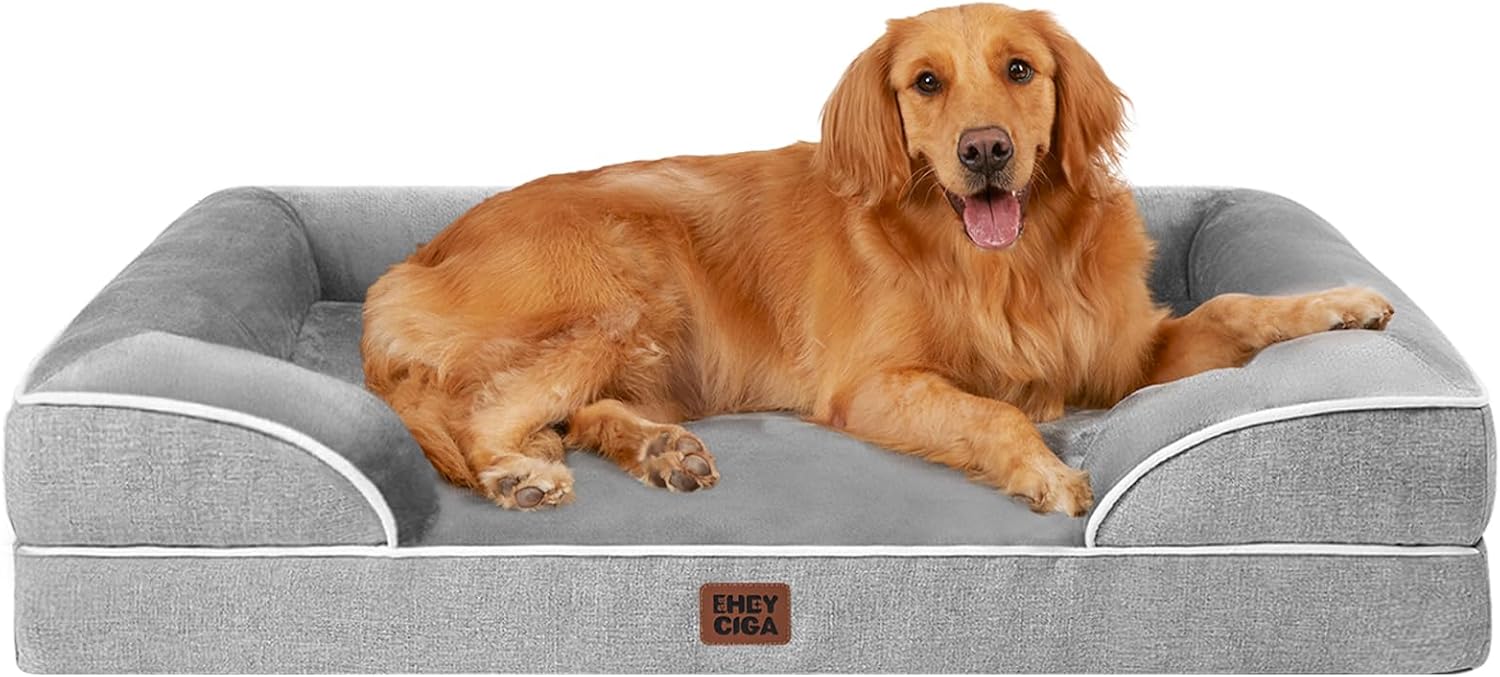
dog beds large breeds
- Buying too small: A cramped bed forces a big dog to hang limbs off the edge, defeating the purpose of orthopedic foam. Always size up when between sizes.
- Choosing style over support: Plush, overstuffed beds look inviting but compress to almost nothing under a large dog within weeks. Support comes from solid foam, not filler volume.
- Assuming memory foam claims at face value: Some inexpensive beds use thin memory foam layers over cheap filler. Check total foam thickness and whether the support core is solid or layered with fiber.
- Ignoring washability: Large dogs track in dirt and produce more odor and dander. A bed without a removable, machine-washable cover becomes a hygiene problem quickly.
- Skipping the non-slip base: A bed that slides when a 100-pound dog steps on it is a joint hazard and a floor hazard. Verify the base material before purchasing.
- Ignoring sleeping style: Head-resters need bolsters, sprawlers need flat surface area, and hot sleepers may be better served by an elevated cot than by any foam bed.
- Replacing too late: A foam bed that has visibly hammocked or flattened provides negative support, cradling the dog's spine in a sag. Long warranties exist because they let owners judge foam life by guarantee rather than guesswork.
Cleaning and Maintenance
Maintaining a large dog bed extends both its useful life and household hygiene. Wash the removable cover weekly or biweekly depending on shedding, using a gentle detergent and avoiding high heat in the dryer, which degrades waterproof liners and elastic edges. Vacuum the foam core monthly to remove hair and dander, and spot-clean accidents promptly so moisture does not wick into the foam, which causes persistent odor that is difficult to reverse once established. Beds with water-resistant inner liners, such as the PetFusion Ultimate, simplify this considerably.
Rotate the bed periodically, swapping ends, so the foam wears evenly, particularly in the spot where the dog's heaviest body section rests every night. For elevated fabric beds like the Kuranda, periodic tightening of the fabric keeps the surface taut and supportive, and the vinyl surface can be wiped or hosed clean without any laundering at all. Inspect seams and zipper tracks during cleaning, since caught seams are the earliest failure point on most covers and are far cheaper to repair than to replace.
Safety Considerations
A few safety points deserve attention with large dogs. Chewers should not be given beds with exposed foam, because ingested foam can cause intestinal obstruction, a genuine emergency; the ASPCA's Animal Poison Control resource is the appropriate contact for suspected ingestion of foreign material or toxic substances. Zipper pulls should be tucked or removed, since dangling hardware invites chewing. For dogs with mobility issues severe enough that they struggle to step onto any raised surface, a floor-level bed with a low profile is safer than an elevated one. Finally, older dogs with significant incontinence may do better on a waterproof cot-style bed that can be cleaned completely, protecting both the dog's skin and the floor beneath.
Final Recommendations
For most large and giant breed dogs, the Big Barker 7-inch Pillow Top offers the strongest combination of foam thickness, breed-specific design, and long-term warranty coverage, and its 10-year sag guarantee is the clearest manufacturer commitment to compression performance available. Where budget is the constraint, the PetFusion Ultimate delivers genuine orthopedic support and a water-resistant liner at a mid-range price. Owners who want a mattress-style bed with trial flexibility should consider the Casper Dog Mattress, and for destructive chewers or dogs that sleep hot, the Kuranda elevated bed is the durable, airflow-friendly answer. Whichever route you take, measure the dog first, prioritize solid foam over stuffing, and treat the bed as one component of a joint-care routine that includes lean weight and sensible exercise.
Affiliate Disclosure: This article contains affiliate links. We may earn a commission at no extra cost to you.
Where to Buy: Our Top Picks
As an Amazon Associate, PawCritic earns from qualifying purchases. This does not affect our reviews or recommendations.