Why Your Dog Needs a Cooling Vest in 2026
Dogs do not sweat the way humans do. They cool themselves primarily through panting and through small sweat glands located in their paw pads, which makes them far more vulnerable to heat exhaustion and heatstroke during hot summer months. According to the AVMA's pet owner resources, heatstroke in dogs can become fatal within minutes once body temperature climbs above roughly 106°F, which is why proactive heat management is a core part of responsible summer dog ownership rather than an optional luxury.
The dog cooling gear market has matured considerably in recent years. The dominant technology is evaporative cooling: you soak a vest in cool water, wring it out, and the fabric uses the dog's own body heat to slowly evaporate that water, drawing heat away from the skin over a period of hours. It is a proven, drug-free approach documented across manufacturer guidance and widely reported in owner reviews as effective for walks, hikes, and other outdoor activity. It does have limits — humidity being the biggest one — and understanding those limits is the difference between gear that helps and gear that provides false confidence.
How Evaporative Cooling Actually Works
Evaporation is an energy-intensive process: converting liquid water into vapor absorbs heat from whatever surface the water sits on. In a cooling vest, a water-absorbent core layer holds moisture against the dog's coat and skin while an outer layer slows the rate of evaporation so the effect lasts hours rather than minutes. A breathable inner mesh keeps the damp fabric from sitting uncomfortably against the skin. The physics explains both the strengths and the weaknesses of the category.
Because the process depends on water turning into vapor, dry air makes evaporative vests dramatically more effective than humid air. On a 90°F day with low humidity, a soaked vest can keep working for three to four hours before needing a re-soak, and owners consistently report a noticeable cooling effect. On a 90°F day with 80 percent humidity, evaporation slows to a crawl and the same vest may feel like little more than a wet jacket. This is why anyone shopping for cooling gear in humid regions — the Gulf Coast, the Midwest in July, much of the Southeast — should consider gel mats or fan-assisted vests as complements or alternatives.
The Four Best Dog Cooling Vests and Heat Protection Products of 2026
Rather than a long undifferentiated list, this guide focuses on the four categories most owners actually need, matched to the products we can point you to directly. Each entry below reflects manufacturer specifications, published veterinary guidance on heat safety, and patterns reported consistently in verified buyer reviews.
1. Evaporative Cooling Vest — Best Overall
A full evaporative vest is the workhorse of canine heat protection, and this style suits the widest range of dogs: medium to large breeds, dogs who walk or hike in dry heat, and any dog whose owners want maximum body coverage from a wearable product. Construction typically follows a three-layer pattern — a water-absorbent core sandwiched between a breathable inner mesh and a more durable outer shell — with adjustable chest and belly straps to keep the vest secure at a trot.
The trade-offs are real and worth knowing before you buy. The vest only works while damp, so all-day outings require access to water for re-soaking every two to four hours depending on conditions. Sizing runs snug in most brands, so measure your dog's chest girth and back length and check the manufacturer's chart rather than guessing by weight alone. On the plus side, the format is machine washable, usually includes reflective trim for low-light visibility, and covers the large surface area of the torso where blood runs close to the skin.
2. Neck and Body Wrap Cooling Bandana — Best Lightweight Option
Not every dog tolerates a full vest, and not every outing justifies one. A cooling bandana uses the same evaporative principle in a slim wrap that sits around the neck — a region where major blood vessels pass close to the surface, so cooling there has an outsized effect on how comfortable the dog feels. Owners of vest-averse dogs, small breeds, and dogs on short neighborhood walks report this format is easier to put on, easier to carry when not in use, and quick to re-soak in a water bowl or bottle.
The honest limitation is coverage and duration: a bandana holds far less water than a vest, so its effective window is shorter — commonly one to two hours — and it does nothing for the torso. It is a comfort tool for moderate heat, not a substitute for a vest on a hard hike or for a high-risk dog. For dogs with thick double coats that resent full-body gear, though, it is often the piece of cooling equipment they will actually wear without protest.
3. Pressure-Activated Gel Cooling Mat — Best for Home Use
Not every cooling product needs to be worn, and the gel mat is the category that answers the problem of a hot house, crate, or car. These mats contain a pressure-activated gel that absorbs body heat when the dog lies on it — no water, no refrigeration, no electricity. The gel naturally re-solidifies and releases stored heat when not in use, so the mat resets itself between naps. Most are sized from small through extra-large, and the covers are built to resist claw punctures, though determined chewers remain the category's known failure mode.
The trade-off is that a mat is stationary by definition: it helps a resting dog, not a walking one. Some dogs also need a few introductions before they will lie on the unfamiliar cool surface — a handful of treats scattered on the mat usually solves this within a few sessions. For brachycephalic breeds, seniors, and dogs left home during summer workdays, a mat placed in the dog's favorite resting spot is one of the lowest-effort interventions available.
4. Solar-Powered Cooling Fan Vest — Best for Extreme Heat
The most advanced wearable category pairs evaporative fabric with a small solar-powered fan that actively circulates air across the dog's back. Forced airflow addresses the core weakness of passive evaporative gear in humid conditions, because moving air carries vapor away from the fabric even when the ambient air is already moist. Manufacturer specifications for this class describe lightweight, quiet fans, battery backup that keeps air moving for several hours without direct sun, and machine-washable vest bodies with the fan unit detached.
The costs are price and complexity: this is the most expensive option per unit of coverage, it weighs more than a passive vest, and the fan introduces moving parts that need cleaning and eventual replacement. It suits serious hikers, outdoor workers' dogs, and owners in genuinely brutal summer climates — situations where the dog must be out in conditions that would otherwise be off-limits. For a casual afternoon walk, it is more machine than the job requires.
Comparison Table: Dog Cooling Gear at a Glance
| Product | Type | Cooling Method | Best For |
|---|---|---|---|
| Evaporative Cooling Vest | Vest | Evaporative | Overall best coverage for dry heat |
| Cooling Bandana | Neck wrap | Evaporative | Lightweight, short walks |
| Gel Cooling Mat | Mat | Pressure-activated gel | Home, crate, car |
| Solar Fan Vest | Vest | Evaporative plus fan | Extreme heat and humidity |
How to Size and Fit a Cooling Vest
Fit determines whether a cooling vest works at all. A loose vest shifts during movement, leaving patches of dry coat and creating friction points; a too-tight vest restricts the chest expansion dogs rely on for panting — the very mechanism they use to cool themselves. Measure the girth at the widest point of the ribcage just behind the front legs, plus the length from the base of the neck to the base of the tail, and compare both against the manufacturer's sizing chart. Where measurements fall between sizes, most brands recommend sizing up and using the adjustment straps to take up the slack.
Check the fit with two hands: you should be able to slide two fingers flat between the strap and the dog's body anywhere on the vest. Watch the first few wear sessions for rubbing behind the elbows, where short-coated dogs most often develop chafing. A properly fitted vest should move with the dog, stay in place at a canter, and never press on the throat. If your dog's build is unusual — deep-chested sighthounds, barrel-shaped bulldogs, heavily coated northern breeds — prioritize brands with four or more adjustment points over simple pull-over styles.
Safety Considerations Beyond the Gear
Cooling gear is a risk-reduction tool, not a license to exercise a dog in dangerous conditions. The Merck Veterinary Manual's dog owner reference is clear that heatstroke risk climbs steeply with temperature, humidity, exertion, and dog-specific factors such as obesity, thick coat, age, and brachycephalic anatomy. Flat-faced breeds — pugs, bulldogs, boxers, Boston terriers — have compromised airways and can slide into heat distress in conditions a retriever would shrug off. Senior dogs, heart patients, and overweight dogs deserve the same extra caution.
Practical rules that cost nothing: shift walks to before sunrise or after sunset in summer, test pavement with the back of your hand for seven seconds before walking (if you cannot hold it, it will burn paw pads), carry water for your dog on any outing over twenty minutes, and never rely on a vest to extend a walk past the point where your dog is seeking shade or slowing voluntarily. A vest cannot outrun bad judgment about conditions.
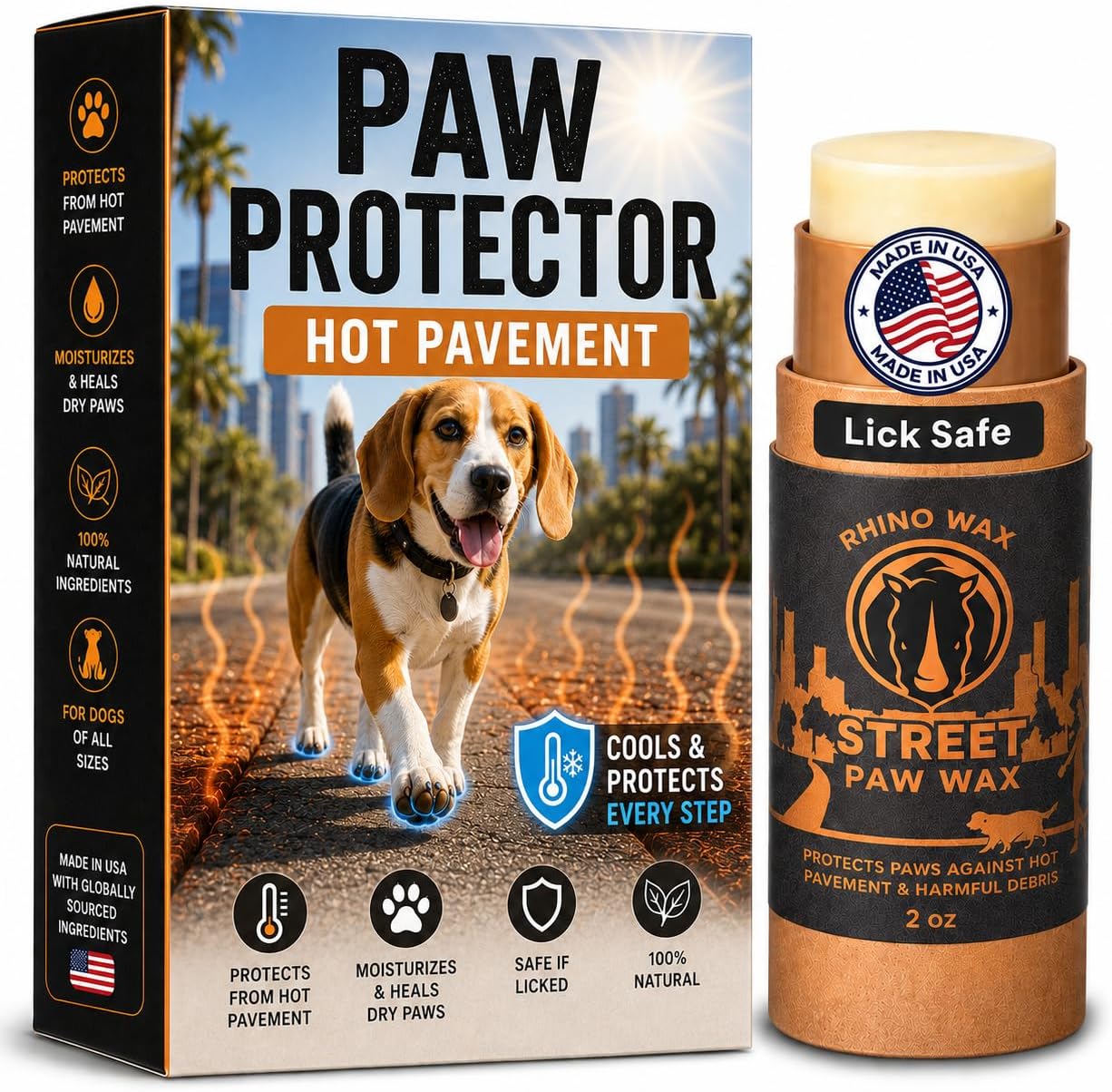
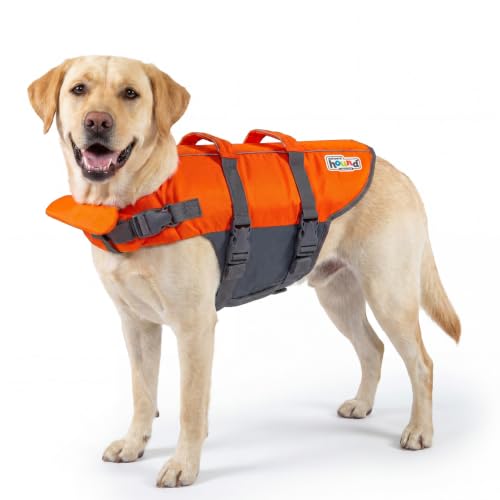
Two pieces of gear cover the gaps a vest cannot. For routes where hot asphalt is unavoidable, a barrier wax such as this paw protector wax for hot pavement adds an insulating layer between pads and ground, though the seven-second pavement test still decides whether the walk happens at all. And for dogs who cool off in water, a properly fitted flotation jacket — the Outward Hound Granby Splash dog life jacket is the widely stocked reference design — keeps a tired swimmer safe while the water does far more cooling than any garment.
Maintenance, Cleaning, and Longevity
Evaporative vests and bandanas are low-maintenance but not maintenance-free. Because they spend their working life damp, they can develop mildew if stored wet in a bag or car — always air-dry fully between uses, and rinse occasionally to remove the mineral residue that tap water leaves in the absorbent core, which gradually reduces water-holding capacity. Follow the manufacturer's washing instructions; most specify machine washing cold in a mesh bag, and none tolerate fabric softener, which coats fibers and destroys absorbency.
Gel mats should be wiped down regularly and inspected for punctures, and any leaking gel means the mat is finished — the contents are generally non-toxic per manufacturer safety sheets, but ingestion is still a reason to call your vet. Fan vests need the fan housing cleaned of hair and debris, and batteries should be stored at partial charge in cool conditions per the included care guidance. Treated well, a quality vest lasts multiple seasons; the most common failure point reported by owners is the hook-and-loop closure losing grip, which is a sign to replace, since a vest that slips is a vest that does not cool evenly.
Common Mistakes Owners Make With Cooling Gear
- Relying on a vest in high humidity. Passive evaporative cooling collapses when the air is already saturated; in muggy climates, pair a vest with shade breaks or choose a gel mat or fan-assisted option.
- Leaving the dog unattended in gear. Straps can snag, dogs can chew fan housings and gel cores, and a dog in distress cannot tell you the vest has dried out.
- Using ice-cold water or ice packs directly on the skin. Published veterinary guidance warns that extreme cold can constrict surface blood vessels and, in an overheated dog, trigger shivering that generates more heat; cool tap water is the right temperature for soaking gear and for emergency cooling alike.
- Buying by weight instead of measurements. A 60-pound greyhound and a 60-pound bulldog share almost nothing in torso geometry; girth and length measurements are what the sizing charts actually use.
- Treating gear as a fix for a dog that should not be out at all. If the forecast is dangerous for the breed and the dog's condition, the correct move is to stay home, not to dress the dog up and go anyway.
How to Recognize Heatstroke in Dogs
Knowing the warning signs of heatstroke could save your dog's life. Early symptoms include excessive panting, heavy drooling, bright red gums, weakness, unsteadiness, and a rapid heartbeat. As heatstroke progresses, dogs may vomit, have diarrhea, collapse, or become unresponsive. The ASPCA's animal poison control and emergency resources urge owners to move an overheated dog to a cool area immediately, offer small amounts of cool — not ice-cold — water, wet the dog with cool water at the paws, belly, and groin, and seek veterinary care right away if symptoms are severe or do not resolve quickly. Never leave a dog in a parked car: even with windows cracked, interior temperatures climb into the danger zone within minutes on a warm day.
What Changed in Dog Cooling Gear for 2026
Materials improved where it counts. Outer shells got lighter without giving up tear resistance, several brands added antimicrobial linings that slow the mildew smell that used to develop in damp gear bags, and phase-change inserts — packs that hold a steady cool temperature for a couple of hours before needing a freezer — became a common add-on rather than a niche import. Fan vests shrank too: current fan units are noticeably lighter than two years ago, charge over USB-C, and detach for washing without tools.
Sizing communication got better. Most brands now print girth-and-length charts with breed-specific examples instead of a weight-only table, which fixes the greyhound-versus-bulldog problem described above at the listing level. Packaging has also grown more honest about humidity: current evaporative vests commonly state their effective window in both dry and humid conditions, a small change that prevents the false-confidence problem this guide keeps returning to.
Pricing is stable in four bands. Cooling bandanas run roughly 15 to 30 dollars, passive evaporative vests 40 to 80, large gel mats 60 to 120, and solar-fan vests 150 to 200. The budget tiers are fine for short walks in dry heat; the money is best spent where the failure modes hurt — stitching at the chest strap, closure grip, and the absorbency of the middle layer.
One adjacent category is worth a mention without overselling it: smart collars that estimate exertion and ambient exposure can give you a nudge before a dog shows visible distress, but no sensor replaces watching your dog seek shade, slow down, or start panting abnormally. Gear, sensors, and judgment stack; none of them substitutes for the others.
Frequently Asked Questions
How do dog cooling vests work?
Most cooling vests use evaporative cooling. You soak the vest in cool water, wring out the excess, and put it on your dog. The water-absorbent fabric holds moisture against the dog's body; as the water evaporates, it pulls heat away from the skin, producing a cooling effect that lasts from two to four hours depending on temperature, humidity, and wind.
Do cooling vests actually work?
Yes — when used correctly and in the right conditions, evaporative vests produce a meaningful reduction in skin temperature and lower the risk of heat exhaustion during outdoor activity. They perform best in dry climates where evaporation happens quickly. In very humid conditions, gel mats or fan-assisted vests are usually the better tools, and no gear replaces shade, water, and timing your outings sensibly.
Are cooling vests safe for all dogs?
They are generally safe for healthy adult dogs, but always supervise a dog while it is wearing one. Brachycephalic (flat-faced) breeds, senior dogs, and dogs with heart or respiratory conditions are especially heat-sensitive and may need extra precautions beyond any product. When in doubt about a specific dog's heat tolerance, consult your veterinarian before summer activity ramps up.
How often should I re-soak a cooling vest?
Most evaporative vests stay effective for two to four hours before needing a re-soak, with the shorter end of that range in dry, windy, or very hot conditions where evaporation is fastest. Carry a water bottle on any long outing so you can re-activate the vest on the go; a vest that has dried out provides no cooling and just adds weight and warmth.
Can I put a cooling vest on a puppy?
Puppies regulate temperature less efficiently than adults and can overheat quickly, but they also chill quickly and may not tolerate gear well. If you use cooling gear with a puppy, choose a lightweight bandana, keep sessions short, supervise closely, and prioritize simply scheduling outdoor time around the coolest parts of the day. Ask your vet for breed-specific guidance.
Final Verdict
For most owners in most climates, a full evaporative cooling vest is the strongest single purchase: the widest coverage, the longest effective window per soak, and the best-documented track record among owners in dry and moderate heat. For light summer walks and dogs who resist vests, a cooling bandana offers a low-friction entry point. For home, crate, and car use, a pressure-activated gel mat delivers relief with no water and no effort. And for owners facing genuinely extreme heat or humidity, a fan-assisted vest is the category designed to keep working where passive evaporation gives up. Whatever you choose, treat the gear as one layer in a heat-safety plan that also includes shade, water, sensible timing, and knowing the early signs of heatstroke — because the best cooling product is the one used alongside good judgment.
Affiliate Disclosure: This article contains affiliate links. If you purchase through our links, we may earn a commission at no additional cost to you. Our recommendations are based on manufacturer specifications, published veterinary guidance, and verified owner reviews.
Related Reading
When heat gets ahead of gear, know the signs in our guide to recognizing and treating heatstroke, and see cooling mats and raised beds for indoor heat relief plus dog pools for backyard water play.