Choosing a dog food is one of the most consequential routine decisions an owner makes. Unlike a leash or a bed, food is consumed every day, and small nutritional gaps or excesses compound over years into real health outcomes — coat quality, weight trajectory, dental wear, and digestive stability. Yet the shelf itself offers little help: hundreds of brands, thousands of formulas, and marketing language engineered to sound scientific. The purpose of this reference guide is to separate the claims that can be checked from the claims that cannot, and to point to where the underlying evidence actually lives.
A few structural facts frame the 2026 market. The most useful one is also the least exciting: the only nutrition guarantee printed on a bag is the AAFCO complete-and-balanced statement. Everything else — ingredient stories, heritage branding, celebrity endorsements — is persuasive writing, not a nutritional standard. The louder trend this year is fresh and gently cooked food, with subscription services continuing to grow; these products cost meaningfully more per calorie than kibble, and owner reports frequently describe better stool quality and palatability, though published comparative data remains limited. Veterinary guidance, including the AVMA's resources for pet owners, consistently emphasizes a complete, balanced diet from a reputable manufacturer, matched to the dog's age, size, and activity level. That framing — reputable company, correct life stage, appropriateness for the individual dog — is the spine of everything below.
How to Read a Dog Food Label Before Believing Anything Else
Start with the nutritional adequacy statement, usually printed in small type near the guaranteed analysis. It names the authority (AAFCO), the method (formulated to meet a profile, or substantiated by feeding trials), and the life stage (growth, adult maintenance, all life stages, or intermittent/supplemental feeding only). A food labeled 'for intermittent or supplemental feeding only' is not a complete diet; it is a topper or treat, regardless of how the front of the bag looks. Foods substantiated by feeding trials carry more evidence than foods merely formulated to a profile, because the nutrients were confirmed in actual dogs rather than on paper.
Second, read the ingredient list with realistic expectations. Ingredients are listed by weight before cooking, which means fresh chicken at position one can shrink dramatically once moisture is removed, while a meal (a rendered, dehydrated ingredient) weighs what it weighs. This is why an ingredient list alone cannot tell you protein quality — the guaranteed analysis and the adequacy statement carry more real information. Third, check the guaranteed analysis for protein, fat, fiber, and moisture against the life-stage targets discussed later. Fourth, look for the manufacturer's name and address and a toll-free number; companies that employ full-time veterinary nutritionists and publish their research are, per veterinary consensus, meaningfully more accountable than contract blenders with a logo.
The Merck Veterinary Manual's dog owner reference is a good place to verify claims about nutrient requirements and feeding physiology, and the WSAVA Global Nutrition Guidelines publish the criteria many veterinary nutritionists use to judge whether a manufacturer meets a professional standard of transparency and quality control. Between those two sources, an owner can evaluate nearly any bag on the shelf without relying on brand marketing at all.
What Changed and What Didn't in 2026
The regulatory floor rose this year. AAFCO's updated Dog Food Nutrient Profiles, developed over several years, took effect in 2026, tightening requirements around protein quality and essential amino acids. The practical consequence is that budget formulas now must clear a higher bar than the same products did in 2025 — a quiet improvement for owners who cannot or will not pay premium prices. What did not change is the hierarchy of evidence: the adequacy statement remains the only guaranteed claim on the label, and fresh-cooked subscription food, however popular, is still a premium spending choice rather than a veterinary mandate. Dogs do well on many formats; the common denominators are completeness, balance, and consistency.
Quick Comparison of Our Featured Picks
| Pick | Format | Best suited to | Main trade-off |
|---|---|---|---|
| Orijen Original | High-protein dry, all life stages | Active dogs without sensitivities | Premium price per pound |
| Purina Pro Plan Savor | Chicken-and-rice dry, adult | Value-focused households | Contains grains and by-products |
| Blue Buffalo Life Protection | Natural-ingredient dry, adult | Owners avoiding by-product meals | Palatability quirks reported |
| Hill's Science Diet Adult | Veterinary-line dry, adult | Sensitive digestion | Plainer ingredient story |
The Four Picks, Explained
1. Orijen Original Dry Dog Food — Best Overall
Rating: 5/5
Orijen Original is built around a documented 85 percent animal-ingredient composition, with the manufacturer listing fresh chicken, raw chicken liver, raw chicken neck, fresh turkey, and raw turkey liver as the first five ingredients, and a guaranteed protein level of 38 percent on a dry basis. It is formulated for all life stages, which means it must meet the stricter growth profile as well as adult maintenance — a genuinely meaningful regulatory distinction, since growth profiles demand more of a formula than maintenance ones do.
Who it suits: active dogs of nearly any age whose digestion tolerates dense, rich food, and owners who prioritize animal-sourced protein and are willing to budget four to five dollars per pound. The trade-offs are real and worth stating plainly: the calorie and fat density that active dogs thrive on can overwhelm a sedentary or sensitive-stomach dog, owner reports frequently mention loose stool during transition, and the kibble size is large enough that very small breeds can struggle with it. Transition slowly over a week or more, and if your dog has any history of dietary intolerance, discuss the switch with your veterinarian rather than assuming premium equals gentle.
2. Purina Pro Plan Savor — Best Budget-Friendly Quality
Rating: 4.5/5
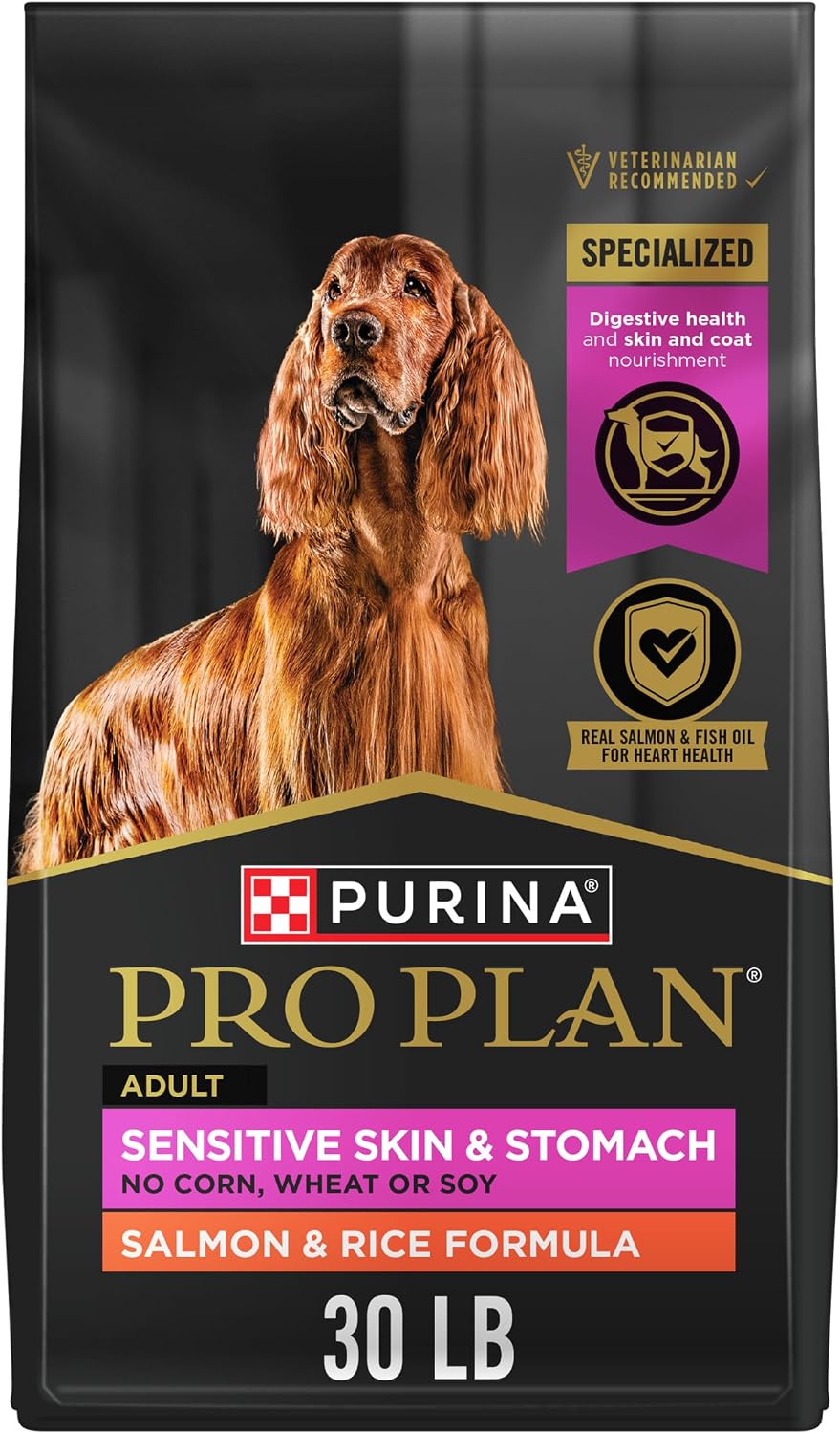
The Savor line lists chicken first, followed by rice, whole grain wheat, poultry by-product meal, and corn gluten meal, with a guaranteed protein level around 26 percent and live probiotics added for digestive support. Purina is one of the manufacturers veterinary nutritionists most often cite for employing boarded nutritionists, running feeding trials, and publishing research — the transparency criteria laid out in the WSAVA guidelines. That institutional backing is the product's core value: you are buying decades of quality control rather than an ingredient narrative.
Who it suits: budget-conscious households, multi-dog homes where per-pound cost multiplies quickly, and picky eaters, since palatability reports for the shredded-piece Savor format are consistently strong. The trade-off is philosophical rather than documented: it contains grains and named by-products, which are nutritionally usable ingredients but which some owners prefer to avoid on principle. If your position is 'no by-products, no corn,' this is not your food; if your position is 'peer-reviewed manufacturer at a mid price,' it is arguably the category default.
3. Blue Buffalo Life Protection Formula
Rating: 4/5
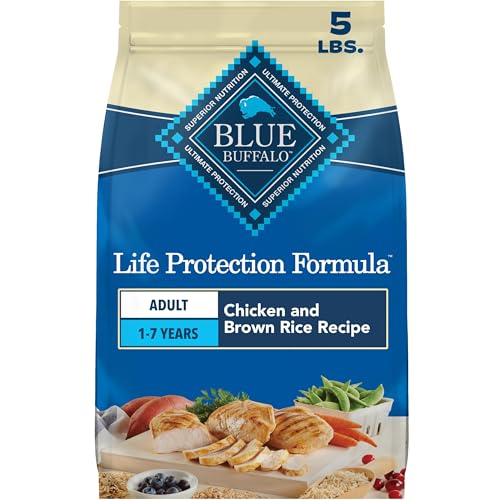
Life Protection lists deboned chicken, chicken meal, brown rice, barley, and oatmeal as its first five ingredients, at roughly 24 percent protein, with no poultry by-product meals and the brand's LifeSource Bits — a cold-formed blend of antioxidants, vitamins, and minerals — mixed through the kibble. It sits in the reasonable middle of the price range and is marketed squarely at owners who want a natural-positioning brand without paying boutique prices.
Who it suits: dogs and owners in the middle of every axis — adult maintenance, no special dietary restrictions, moderate activity. The commonly reported trade-off is behavioral rather than nutritional: some dogs pick out and eat only the LifeSource Bits, or leave them in the bowl, which is annoying though not harmful, since the bits are a supplement rather than the food's core. Quality also varies between individual formulas in the line, so evaluate the specific bag's adequacy statement and guaranteed analysis rather than trusting the brand name to be uniform.
4. Hill's Science Diet Adult — Best for Sensitive Digestion
Rating: 4.5/5
Hill's Science Diet Adult is the veterinary-clinic standard: a company with long-standing research operations, an adult maintenance formula engineered for high digestibility, and a deliberately unexciting ingredient list. Its 4.5 rating reflects what it is rather than what it claims to be — the food veterinarians most often reach for when a dog needs predictable, gentle, consistent nutrition, particularly after digestive upset or during recovery.
Who it suits: dogs with sensitive stomachs, seniors whose digestion has slowed, and any owner who values clinical track record over ingredient romance. The trade-off is the mirror image of the premium brands: the ingredient list reads plainly, the protein percentage sits toward the moderate end, and you are paying primarily for the manufacturer's research and quality-control infrastructure. For dogs with diagnosed conditions rather than mere sensitivity, note that Hill's also makes prescription lines that require veterinary authorization — the retail Science Diet products are maintenance foods, not therapeutic diets.
Food Formats: The Real Trade-offs
| Format | Strengths | Weaknesses | Best for |
|---|---|---|---|
| Dry (kibble) | Convenient, affordable, some abrasive dental benefit | Low moisture content | Most dogs, most budgets |
| Wet (canned) | High moisture, highly palatable | More expensive per calorie, messy | Picky eaters, dogs needing hydration |
| Fresh (refrigerated) | Minimally processed, often human-grade ingredients | Expensive, short shelf life, subscription commitment | Owners prioritizing processing level |
| Raw (frozen or homemade) | High palatability, owner enthusiasm | Documented bacterial contamination risk for dogs and household members | Only with veterinary guidance |
| Freeze-dried | Nutrient-dense, shelf-stable, light | Very expensive per calorie | Travel, training treats, toppers |
None of these formats is categorically superior. The practical variables are moisture (relevant for dogs with urinary or kidney considerations), cost per calorie, storage, and household food-safety tolerance. Raw feeding deserves a specific caution: veterinary public-health bodies have documented pathogen risks in raw meat diets, including bacteria that can shed into the household environment and affect immunocompromised people. If you are committed to raw, do it with a veterinary nutritionist constructing the diet, not a spreadsheet from a forum.
Life Stage: Matching Food to Age
Puppies up to roughly twelve months need more of nearly everything: protein in the 25–30 percent range, higher calorie density, and DHA for neural and retinal development. Large-breed puppies are a special case — they need controlled calcium and measured calorie intake so skeletal growth stays slow and orderly, because rapid growth in big breeds is associated with developmental orthopedic problems. Do not free-feed a large-breed puppy and do not supplement calcium on top of a complete food; more is actively harmful here.
Adults from one to seven years do best on a balanced maintenance formula in the 18–25 percent protein range, adjusted for activity. The most common adult-dog error is not protein deficiency but overfeeding: body condition scoring — ribs palpable without pressure, visible waist from above — matters more than any formula choice, and the AVMA and Merck both publish guides to it. Seniors from about seven years onward often benefit from modest calorie reduction, joint-support nutrients such as glucosamine and omega-3 fatty acids, and easily digested ingredients, though a healthy lean senior may need no change at all. Let the dog's condition, not the birthday, drive the switch.
Breed Size: Kibble Geometry and Calcium Control
Small breeds under twenty pounds have fast metabolisms, benefit from calorie-dense formulas, and physically need smaller kibble — a toy breed faced with large-breed kibble may swallow pieces whole or refuse the bowl. Large breeds over fifty pounds need the controlled-calcium logic during growth described above, and as adults often do well with larger kibble that encourages chewing rather than gulping. Sizing matters for bowls too: deep-chested large breeds are at higher risk of bloat, and while evidence on bowl height is mixed, feeding two smaller meals rather than one large one is a widely recommended precaution. When in doubt about breed-specific risk, the Merck Veterinary Manual's owner pages cover both growth nutrition and gastric conditions in plain language.
Common Mistakes Worth Avoiding
The recurring failure modes are consistent across veterinary sources. Free-feeding combined with palatable food produces gradual weight gain that owners underestimate year over year. Switching foods abruptly without a seven-to-ten-day transition produces avoidable diarrhea. Treating toppers and dental chews as harmless additions ignores that they carry calories and, in quantity, can unbalance an otherwise complete diet. Grain-free feeding as a fashion choice deserves specific mention: the FDA has investigated an association between some boutique grain-free diets high in legumes and dilated cardiomyopathy, and the investigation remains unresolved — the current veterinary position is that grains are not a problem for dogs without a diagnosed allergy, and true grain allergy in dogs is far rarer than marketing implies. Finally, homemade diets assembled from recipes on the internet are repeatedly found in veterinary studies to be nutritionally incomplete; if you want to home-cook, use a board-certified veterinary nutritionist's formulation.
Storage, Freshness, and Safety
Kibble oxidizes once opened; keep it in its original bag (the barrier is engineered for the fat level inside), roll the top closed, and store the bag in a sealed container rather than pouring it out, both for freshness and so the lot code stays available if a recall is issued. Check best-by dates at purchase, note lot codes, and never feed moldy or rancid-smelling food — mycotoxin contamination is rare but serious. If you suspect a food is making your dog ill, stop feeding it, save the packaging, and consult your veterinarian; the ASPCA Animal Poison Control line is the right call for suspected toxin ingestion, including foods like xylitol-sweetened items, grapes, onions, and chocolate that owners sometimes forget are hazards rather than treats.
The Verdict
For most healthy, active dogs, Orijen Original represents the ceiling of ingredient quality, at a price that must be justified by budget rather than necessity. Where cost constrains the choice, Purina Pro Plan Savor delivers manufacturer-grade quality control at a mid-range price and is the rational default for multi-dog homes. For sensitive digestion, Hill's Science Diet Adult is the recommendation veterinary practice most consistently supports. Blue Buffalo Life Protection occupies the sensible middle for owners avoiding by-product meals. The best dog food for your specific dog is the one that carries an AAFCO complete-and-balanced statement for the correct life stage, that your dog eats consistently with normal stools and stable weight, and that you can afford indefinitely — because the diet that gets fed properly for a decade beats the perfect diet abandoned in month three.
Where to Buy: Our Top Picks
As an Amazon Associate, PawCritic earns from qualifying purchases. This does not affect our reviews or recommendations.
#1 Orijen Original Dry Dog Food: Check Price on Amazon
#2 Purina Pro Plan Savor: Check Price on Amazon
#3 Blue Buffalo Life Protection: Check Price on Amazon
#4 Hill's Science Diet Adult: Check Price on Amazon
Affiliate Disclosure: PawCritic.com is a participant in the Amazon Services LLC Associates Program and the Chewy Affiliate Program. PawCritic may earn commissions from qualifying purchases at no extra cost to you. Reviews on this site are independent and based on published guidance, manufacturer specifications, and verified owner reports; no hands-on product testing is performed.