Affiliate Disclosure: PawCritic participates in affiliate advertising programs. We may earn a commission when you purchase through links on this page, at no extra cost to you. Our reviews are honest and independent.
Why Large Breed Dogs Have Unique Nutritional Needs
Large breed dogs are generally defined as those reaching 50 pounds or more at maturity, with giant breeds exceeding 100 pounds. That size difference is not simply a matter of scale. Large breeds grow faster and for longer than small breeds, their joints carry substantially more load, and they are predisposed to conditions including hip and elbow dysplasia, bloat (gastric dilatation-volvulus), and obesity-related cardiac and orthopedic disease. Nutrition is one of the few levers an owner can pull that measurably influences all of those risks.
The most consequential period is growth. A large breed puppy can add two to three pounds per week during peak development, and the rate at which that growth happens is partly determined by calorie and mineral intake. Feeding a large breed puppy a formula designed for small breeds, or free-feeding an all-life-stages diet, can push growth too fast and increase the likelihood of developmental orthopedic disease. This is why large breed puppy formulas exist as a distinct category rather than a marketing label.
For adults, the dominant issue shifts to weight maintenance and joint support. Every extra pound on a dog with hip dysplasia is load the joint was not designed to carry. The AVMA pet owner resources consistently frame weight management as the single most effective intervention for reducing joint stress in large dogs, which is why calorie control and body condition scoring appear throughout this guide.
What changed in 2026 is the conversation around grain-free and boutique diets. The FDA's investigation into diet-associated dilated cardiomyopathy has matured, and the agency's current position points at the overall ingredient composition of some boutique formulas rather than at grain-free status alone. That means the old shortcut of 'grain-free causes heart disease' is inaccurate, and so is the opposite claim that all grains are filler. The practical takeaway for large breed owners is unchanged: a formula from a brand that employs board-certified veterinary nutritionists, owns its manufacturing, and conducts feeding trials carries the lowest risk. The WSAVA Global Nutrition Guidelines lay out the questions to ask any manufacturer about who formulates the diet, what qualifications they hold, and whether the diet has been tested in feeding trials or only formulated to meet nutrient minimums.
What to Look for in Large Breed Dog Food
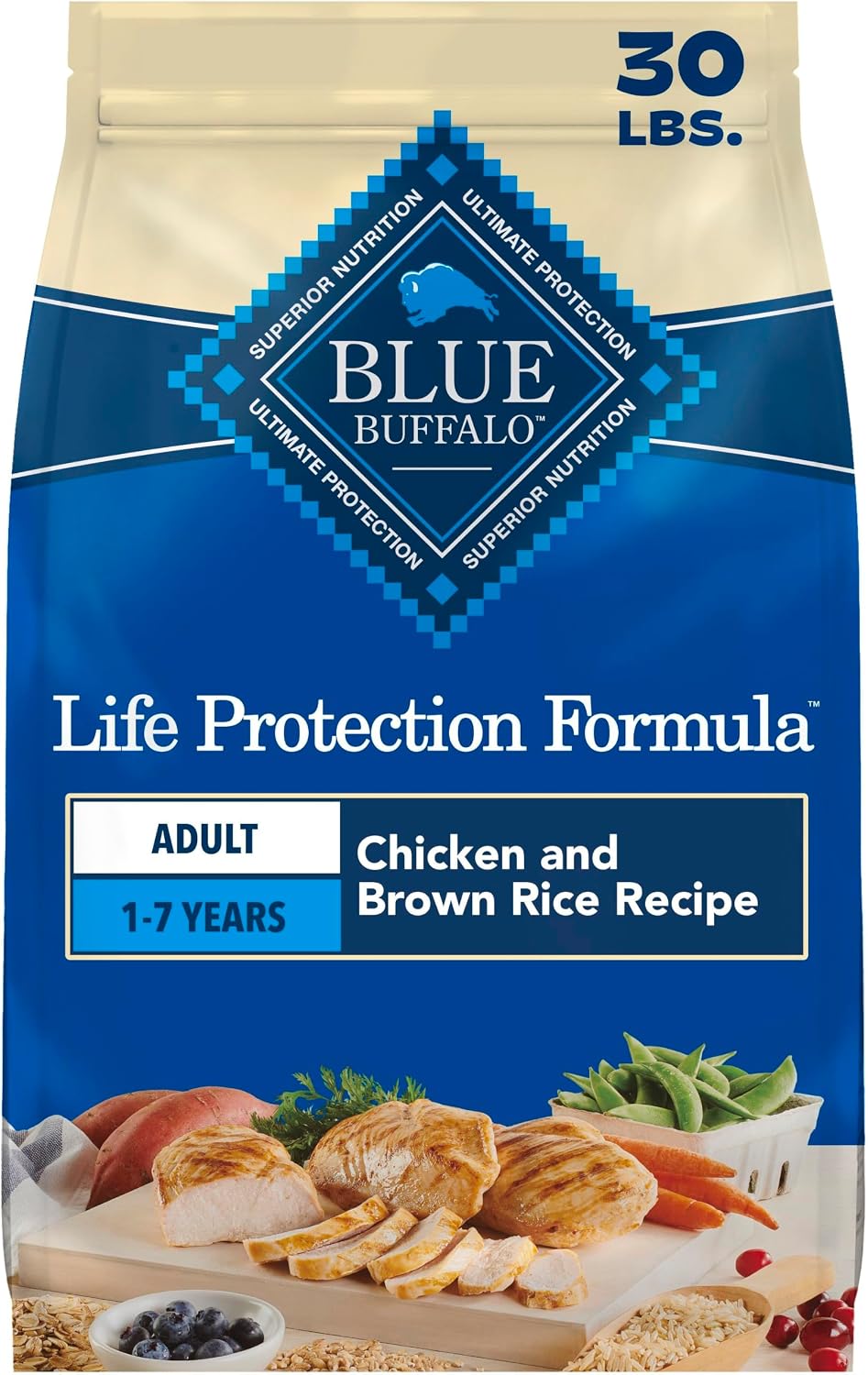
dog food for large breeds in top 5 picks reviewed
Before comparing specific formulas, it helps to know which numbers on a label actually matter for a big dog and which are noise. The five markers below drive most of the meaningful differences between a large breed formula and a generic adult maintenance diet.
Controlled Calcium and Phosphorus
This is the single most important distinction for puppies. Calcium is not a nutrient where more is better during growth. Excess calcium in a rapidly growing large breed puppy interferes with normal bone remodeling and is associated with osteochondrosis and other skeletal abnormalities. Large breed puppy formulas typically target roughly 0.7 to 1.2 percent calcium on a dry matter basis, with a calcium-to-phosphorus ratio near 1.2:1 to 1.4:1. Adult large breeds need less, generally in the 0.5 to 0.8 percent calcium range on a dry matter basis. A diet labeled for all life stages will usually meet the higher puppy minimums, which is exactly why it is a poor fit for a growing Great Dane or Newfoundland.
Glucosamine and Chondroitin
These compounds are structural components of cartilage and are included in many large breed formulas as joint support. Label guarantees vary widely, and there is no universal regulatory minimum, so the number on the bag is the only reliable comparison point. Formulas marketed for joint health frequently guarantee glucosamine in the range of 400 to 700 mg/kg, sometimes with chondroitin alongside. Natural sources include chicken meal, fish meal, and cartilage. It is worth being clear about the limits here: glucosamine is generally regarded as supportive rather than therapeutic, and a dog with diagnosed arthritis needs a veterinary plan, not a bag of kibble. The Merck Veterinary Manual dog owner reference is a useful starting point for understanding what joint disease in dogs actually involves.
Moderate Fat and Calorie Density
Large breeds are efficient at converting surplus calories into body fat, and obesity is the most common nutritional problem seen in the category. Adult maintenance formulas generally land around 10 to 15 percent fat on a dry matter basis. Higher-fat performance diets have a place for working dogs and heavily exercised animals, but they are a poor default for a sedentary Labrador. Calorie density matters as much as fat percentage, because a dense kibble makes portion errors easier. A cup of a 450 kcal/cup formula delivers nearly 50 percent more energy than a cup of a 310 kcal/cup formula, and owners who scoop by volume rather than by weight routinely overfeed the denser product.
Protein Quantity and Source
Large breeds need adequate high-quality protein to maintain lean muscle mass, particularly as they age and lose muscle more readily. Adult maintenance formulas commonly sit between 22 and 28 percent protein on a dry matter basis, and that range suits most healthy large breed adults. The source matters more than the headline number. A named animal protein such as chicken, beef, salmon, or lamb as the first ingredient is a reasonable quality signal, though by-product meals are nutritionally legitimate and often more concentrated in protein than fresh meat, which is mostly water. What is worth avoiding is a diet where the protein is overwhelmingly plant-derived and the amino acid profile is propped up with added supplements.
Kibble Size and Shape
Large breed kibble is typically larger and harder, which encourages chewing and slows ingestion. That matters because rapid eating is one of the recognized risk factors for bloat, a condition with a high mortality rate that disproportionately affects deep-chested breeds such as Great Danes, German Shepherds, and Standard Poodles. Kibble geometry will not prevent bloat on its own, but a piece that requires actual chewing is a reasonable small measure. Some formulas also use shaped kibble intended to scrape the tooth surface, which is a modest dental benefit rather than a substitute for brushing.
Large Breed Dog Foods Worth Considering
The four options below represent the main categories a large breed owner is likely to choose between: a veterinary-channel formula built around feeding trials and a specific kibble design, a sensitive-stomach formula with a long digestibility record, a highly palatable formula for dogs that refuse standard kibble, and a grain-free option for owners who have a specific reason to avoid grains. Each entry describes who the product suits and what the trade-off is.
Royal Canin Large Breed Adult Dry Dog Food
Best overall for large breed adults
Royal Canin formulates by size, age, and breed rather than by ingredient marketing, and the Large Breed Adult line is aimed at dogs roughly 56 to 100 pounds between about 15 months and 5 years of age. The formula uses a distinctively shaped kibble designed to slow eating, and it carries guaranteed glucosamine and chondroitin alongside EPA and DHA from fish oil for joint support. Protein comes largely from chicken and pork by-product meals, which are highly digestible and nutrient-dense even though they read poorly to owners who expect a named muscle meat first.
This is the option for an owner who wants a formula backed by feeding trials, manufactured under the company's own quality systems, and consistent bag to bag. The trade-offs are real: it is priced above most grocery and mid-tier brands, it contains corn and wheat, and some dogs are simply not enthusiastic about the flavor. If your dog has a confirmed grain allergy or is a genuinely fussy eater, one of the alternatives below may fit better.
Hill's Science Diet Large Breed Adult Chicken and Barley
Best for sensitive stomachs
Hill's Science Diet Large Breed Adult uses chicken as the first ingredient with whole grain wheat and barley as the carbohydrate base, and it is one of the more digestible large breed formulas on the market. That digestibility is the reason it comes up repeatedly for dogs with loose stools, sensitive guts, or a history of reacting badly to rich or high-fat diets. Glucosamine and chondroitin are supplied naturally from chicken cartilage, and the formula has been through AAFCO feeding trials rather than only nutrient analysis, which is a meaningful distinction when comparing against brands that formulate on paper alone.
Choose this if your priority is a settled digestive system and a formula with a long track record in veterinary practice. The trade-offs: it contains wheat, so it is unsuitable for grain-free or wheat-sensitive dogs; the glucosamine level is moderate compared with joint-specific formulas; and palatability is unremarkable, which matters if you are transitioning a dog off a richer diet.
Purina Pro Plan Large Breed Shredded Blend
Best for picky eaters
Pro Plan's Shredded Blend combines hard kibble with tender shredded pieces, and that texture variation is the main reason it performs well with dogs that ignore standard kibble. Real chicken is the first ingredient, and the formula includes live probiotics for digestive support plus EPA, DHA, glucosamine, and chondroitin at levels competitive with dedicated joint formulas. Purina employs full-time veterinary nutritionists and runs feeding trials, so the research backing is comparable to the other veterinary-channel brands here.
This is the pick when a dog has been refusing food and weight loss is becoming a concern, since palatability is the whole point of the formula. The trade-offs are a higher calorie density that demands careful portioning, the presence of corn and wheat, and owner reports of inconsistent ratios of shredded pieces between bags, which can affect acceptance in dogs that fixate on texture.
Taste of the Wild High Prairie Grain-Free
Best grain-free option
Taste of the Wild High Prairie is a grain-free formula built on buffalo and bison with roasted venison, lamb meal, and egg, using sweet potatoes and peas as the carbohydrate base. It is a reasonable fit for dogs with confirmed chicken or beef sensitivity, since the protein sources are novel relative to most mainstream diets, and the formula includes an antioxidant blend from fruits and vegetables plus omega fatty acids from canola and salmon oil.
The trade-off here is the most important one below. Grain-free diets remain under FDA scrutiny for a possible association with dilated cardiomyopathy, and while no definitive causal link has been established, the agency's focus on certain boutique formulas and legume-heavy ingredient profiles means this category carries more uncertainty than the feeding-trial-backed options above. If you are considering it, discuss it with your veterinarian first, particularly for breeds already predisposed to cardiac disease. The formula also carries lower glucosamine than joint-specific diets, and its pea content causes digestive upset in some dogs.
Puppy, Adult, and Senior: What Changes at Each Stage
dog food for large breeds in top 5 picks reviewed
Life stage is not a marketing detail for large breeds; it is the variable that most changes what a dog should be eating. The three stages below have genuinely different nutritional priorities, and feeding a diet designed for the wrong one is a common and avoidable mistake.
Large Breed Puppies, Roughly Under 12 to 18 Months
Large breed puppies need controlled growth rather than maximum growth. The goal is a steady, moderate rate of weight gain that lets the skeleton develop without the distortions associated with overnutrition. Look specifically for a diet labeled for large breed puppies, with calcium around 0.7 to 1.2 percent on a dry matter basis and a calorie density near 3.5 to 4.0 kcal per gram. Free-feeding is a poor practice at this stage because it removes your ability to control intake. Equally, do not supplement calcium on top of a complete large breed puppy diet; the formula is already balanced and adding calcium does harm rather than good. Puppies should be fed measured meals two to three times daily and weighed regularly against a growth chart.
Large Breed Adults, Roughly 1 to 7 Years
Adult maintenance is about holding lean body condition while supplying enough protein to preserve muscle and enough joint support to slow cumulative wear. The formulas described above all fit this stage. Portion control is the recurring theme: large breeds gain weight quietly, and a ten to fifteen pound surplus on a 90 pound dog is a substantial additional load on every step. Weigh the food rather than scooping it, and recheck body condition every few weeks.
Large Breed Seniors, Roughly 7 Years and Older
Senior large breeds typically need fewer calories, more joint support, and a higher antioxidant load. Muscle loss accelerates with age, so protein quality becomes more important even as total calories come down; some senior formulas add L-carnitine to support fat metabolism and lean mass retention. Cognitive support ingredients also become relevant in this stage. A senior dog that is losing weight despite eating normally should see a veterinarian rather than simply being fed more, since weight loss in an older large breed can signal something other than a dietary problem.
How Much to Feed a Large Breed Dog
Bag feeding charts are a starting point derived from average energy requirements, not a prescription for your individual dog. Two German Shepherds of identical weight can differ by 30 percent or more in calorie needs depending on activity level, age, neuter status, and metabolism. The chart tells you where to begin; body condition tells you whether you are right.
Body condition scoring is the practical tool. On a nine-point scale, a score of four to five is the target. You should be able to feel the ribs under a thin layer of fat without pressing hard, see a waist when looking down at the dog from above, and see an abdominal tuck from the side. A dog whose ribs are invisible and whose waist has disappeared is carrying excess weight regardless of what the scale says, and a large breed dog in that condition is at elevated risk for joint and metabolic problems.
Weigh your dog monthly and adjust portions in small increments rather than making large cuts. Most large breeds do better on two measured meals per day than one large meal, and splitting the daily ration also reduces the volume consumed in a single sitting, which is relevant to bloat risk. If you are feeding a working or highly active dog, expect to adjust upward seasonally as activity changes. If you are feeding a senior with reduced activity, expect to adjust downward, and do it before the weight appears rather than after.
Common Mistakes Large Breed Owners Make
The same handful of errors show up repeatedly with big dogs, and most of them are easy to correct once identified.
- Feeding an all-life-stages diet to a puppy. All-life-stages formulas must meet puppy nutrient minimums, which are set for small breeds and are higher in calcium than a large breed puppy needs. This is the most consequential mistake on the list.
- Scooping by volume instead of weighing. Kibble density varies between formulas and even between batches, so a cup is an inconsistent unit. A kitchen scale resolves it.
- Adding table food without subtracting kibble. Toppers and scraps are calories, and they are the most common hidden cause of gradual weight gain in large dogs.
- Supplementing calcium during growth. Large breed puppy diets are already balanced. Extra calcium increases the risk of skeletal problems rather than reducing it.
- Switching foods abruptly. A sudden change causes digestive upset in most dogs. Transitions should run seven to ten days at minimum.
- Assuming grain-free is automatically better. Grain-free is a formulation choice, not a quality guarantee, and the category carries unresolved cardiac questions.
- Ignoring body condition because the dog looks big. Large breeds are supposed to look substantial, which makes excess weight easy to overlook on a dog that was always the biggest in the room.
Frequently Asked Questions
Can a large breed dog eat regular adult dog food?
An adult large breed dog can survive on a generic adult maintenance diet, but the fit is imperfect. Large breed formulas are calibrated for controlled calorie density, joint support, and kibble size, and a generic adult formula may deliver more calories per cup than a sedentary big dog needs. For puppies, the answer is firmer: a generic adult or all-life-stages diet is not an appropriate substitute for a large breed puppy formula because of the calcium and energy differences.
Is raw food better for large breed dogs?
Raw feeding can be done well or badly. The central risk is nutritional completeness, since homemade raw recipes frequently fall short on calcium, phosphorus, and trace minerals unless they are formulated by a veterinary nutritionist. Commercially prepared raw diets that meet AAFCO nutrient profiles remove some of that uncertainty. Raw diets also carry bacterial handling risks for the household. Discuss the decision with your veterinarian rather than switching on the basis of general claims.
How do I transition my dog to a new food?
Transition gradually over seven to ten days. A common schedule is 25 percent new food for two to three days, then 50 percent for two to three days, then 75 percent for two to three days, then all new food. Dogs with sensitive digestion may need a slower ramp. If loose stool persists beyond the transition window, the formula may not suit your dog.
Does kibble size actually reduce bloat risk?
Kibble size is one small factor among several. The better-established risk factors for bloat include eating rapidly, eating from a raised bowl, and consuming a single large meal per day. Larger kibble that requires chewing addresses the speed element indirectly. If you own a deep-chested breed, the more useful changes are splitting meals, avoiding vigorous exercise immediately around mealtimes, and knowing the early signs of bloat so you can act quickly.
How do I know if a food is working?
Judge on four things over a four to eight week period: stable or improving body condition, consistent stool quality, coat condition, and energy level. A food that produces loose stool, a dull coat, or gradual weight gain is not working for your dog regardless of its ingredient list. If nothing improves after a proper transition and a fair trial, change formulas rather than adding supplements to compensate.
Bottom Line
For most large breed adults, a formula from a brand that employs veterinary nutritionists and runs feeding trials is the lowest-risk choice, and the Royal Canin Large Breed Adult formula fits that description with a kibble design aimed at slowing intake. Owners dealing with digestive sensitivity will generally do better with the Hill's Science Diet large breed formula, while dogs that refuse standard kibble are the specific case the Purina Pro Plan Shredded Blend is built for. Grain-free remains a category to enter deliberately rather than by default, and the Taste of the Wild option is best treated as a considered choice made with veterinary input rather than a casual upgrade.
Whichever direction you go, the monitoring is the same. Weigh your dog, score its body condition, watch the stool, and adjust portions in small steps. A large breed dog that holds lean condition through adulthood carries less load on every joint, and that single factor does more for long-term soundness than any individual ingredient on a label.
Last updated: August 2026. Product availability and prices may vary. Always consult your veterinarian for personalized dietary recommendations.