Dog Shampoo Buying Guide: Choosing a Gentle, Effective Formula
Choosing a shampoo for a dog is not the same as choosing one for a person. Canine skin has a different pH range, a thinner epidermis, and a different population of sebaceous glands than human skin. Published veterinary references, including the Merck Veterinary Manual dog owner reference, describe the canine skin barrier as distinct enough that human shampoos can disrupt it, stripping oils and triggering dryness, itching, or secondary infections. That does not mean every dog needs a prescription product. It means the label should match the dog's coat, skin condition, and lifestyle, and the rinse should be thorough enough that no residue stays behind.
A shampoo is a cleanser, not a treatment for an undiagnosed skin disease. If a dog has patchy hair loss, a foul odor that returns within days, crusting, or persistent scratching, the shampoo aisle is the wrong first stop. A veterinarian can identify whether the problem is allergic, parasitic, bacterial, fungal, or hormonal, and medicated shampoos work when they are matched to that diagnosis. Used blindly, a medicated formula can dry the coat, sting broken skin, or simply waste money. The sections below cover what to look for, how often bathing is reasonable, and where a single well-reviewed example fits into the picture.
Canine Skin vs Human Skin
The table below summarizes the differences that matter most when selecting a cleanser. Values are drawn from standard veterinary dermatology references and are presented as typical ranges, not fixed numbers for every individual dog.
| Factor | Dogs | Humans |
|---|---|---|
| pH Level | 5.5-7.5 | 5.2-6.2 |
| Skin Thickness | Thinner | Thicker |
| Glands | Fewer | More |
| Bathing Frequency | Every few weeks to months, depending on coat | Daily to every few days |
Because canine skin is thinner, it absorbs topical ingredients more readily and reacts more visibly to harsh surfactants, dyes, and fragrance. The AVMA pet owner resources note that most healthy dogs need bathing only every few months, and that over-bathing removes the natural oils that keep the coat waterproof and supple. Dogs with oily coats, allergies, or outdoor lifestyles may need more frequent washing, but the default is less often than most owners assume. A dog that smells unpleasant a day after a bath usually has an underlying skin or ear problem, not a shampoo deficiency.
What to Look For in a Dog Shampoo
Ingredient labels on dog shampoos are not standardized the way human cosmetic labels are, so reading them requires some interpretation. The first step is identifying the surfactant system. Gentle cleansers such as coco glucoside, cocamidopropyl betaine, and sodium lauroyl sarcosinate lift dirt without stripping the coat as aggressively as sodium lauryl sulfate. Sulfate-free formulas are not automatically better, but they tend to be less drying for dogs with sensitive or allergy-prone skin. A shampoo that lists water, a mild surfactant, and a humectant such as glycerin or colloidal oatmeal near the top is usually a reasonable everyday choice.
Fragrance is the second major consideration. Artificial fragrance and essential oils are common triggers for contact irritation, and the ASPCA Animal Poison Control warns that some essential oils, including tea tree, citrus, peppermint, and eucalyptus, are toxic to dogs when ingested or applied at concentrated levels. A strong perfume smell is not a sign of cleanliness. It often masks odor while adding a potential irritant. Fragrance-free or naturally scented formulas are the safer default for dogs with a history of itching, redness, or recurrent ear infections. If a scent is present, it should be light and derived from a source the manufacturer identifies.
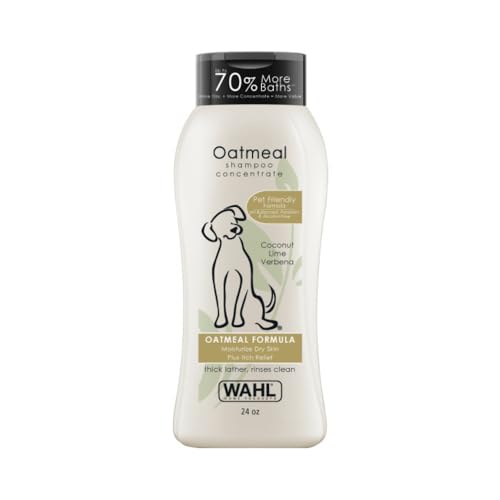
The third consideration is the intended function. Everyday shampoos clean and condition. Oatmeal shampoos are formulated to soothe dry, itchy skin and are widely recommended for dogs with mild environmental allergies. Medicated shampoos contain active ingredients such as chlorhexidine, ketoconazole, or miconazole and target specific conditions; they should be used under veterinary direction because the wrong active ingredient can worsen the problem. Whitening shampoos for light-colored coats often contain optical brighteners or mild blueing agents, and flea shampoos contain insecticides that are not appropriate for puppies under 12 weeks or for dogs with certain health conditions.
Finally, check the manufacturer's species and age statement. A product labeled for puppies over six weeks has been assessed for that use. A product labeled only for adult dogs should not be used on a puppy without veterinary guidance. The WSAVA Global Nutrition Guidelines are written for nutrition rather than topical products, but the same principle applies across pet care: species-specific, life-stage-specific guidance beats a generic label. When in doubt, ask the veterinarian who knows the dog's history.
How Often Should You Bathe Your Dog?
Bathing frequency depends on coat type, activity level, and skin condition. The AVMA notes that most healthy dogs need a bath only every few months, but the practical range is wider. The list below reflects common guidance from veterinary sources and breed-specific care recommendations.
- Short-haired breeds: Every 1-3 months, or when the coat feels oily or smells stale.
- Long-haired breeds: Every 4-6 weeks, with brushing several times a week to prevent mats.
- Oily coats: Weekly or as directed by a veterinarian, using a degreasing but gentle formula.
- Dry or sensitive skin: Every 6-8 weeks, with an oatmeal or fragrance-free shampoo.
- Dogs with allergies: Often weekly during flare-ups, following a veterinary bathing plan.
- Puppies: Not before the age stated on the product label, and never with a flea shampoo under 12 weeks.
Over-bathing is a common mistake. It removes the lipid layer that protects the skin, and the resulting dryness can lead to scratching, which damages the barrier further. Dogs that are bathed weekly with a harsh shampoo often develop a cycle of itching and odor that owners interpret as a need for more bathing. The fix is usually a gentler product and a longer interval, not more frequent washing. Conversely, under-bathing a dog with seborrhea or a yeast overgrowth allows oils and debris to accumulate, which feeds the problem. The right interval is the one that keeps the coat clean without leaving it dry or dull.
Bathing Tips That Reduce Skin Problems
The mechanics of bathing matter as much as the product. A few consistent habits prevent most of the irritation owners attribute to shampoo.
- Brush before bathing to remove loose hair and tangles. Mats tighten when wet and can trap shampoo.
- Use lukewarm water. Hot water strips oils and can scald thin canine skin.
- Avoid getting water in the ears. A cotton ball placed loosely in the ear canal can help, but do not push it in.
- Dilute the shampoo in a cup of water before applying, which spreads it more evenly and makes rinsing easier.
- Work from the neck down, avoiding the eyes and inside the ears.
- Rinse until the water runs clear, then rinse once more. Residue is a leading cause of post-bath itching.
- Dry thoroughly with a towel, and use a low-heat dryer for long coats. Damp undercoat can lead to skin infections.
- Reward the dog during and after the bath so the experience stays manageable.
Owners who report that a shampoo made their dog itchier often find that the rinse was incomplete. Shampoo residue left in the coat holds moisture and irritants against the skin, producing redness and scratching within a day. A second rinse adds less than a minute and prevents most of these reactions. If itching continues after a thorough rinse and a switch to a fragrance-free formula, the next step is a veterinary skin exam, not another product.
A Note on Puppies and Seniors
Puppies have thinner skin and less developed thermoregulation, so they chill quickly and react more strongly to harsh ingredients. A tear-free puppy formula used no more often than necessary is the usual recommendation, and flea shampoos are avoided until at least 12 weeks of age unless a veterinarian directs otherwise. Senior dogs often have thinner coats, drier skin, and underlying conditions such as thyroid disease or arthritis that make bathing stressful. A gentle, fragrance-free shampoo, a non-slip mat, and warm room temperature make the process safer. For both groups, the product label's age guidance is a minimum, not a target.
Specialty Shampoos by Need
Most dogs do well with a single gentle everyday shampoo. Specialty formulas are useful when a specific need is identified, but they are not interchangeable.
| Need | What to Look For |
|---|---|
| Sensitive Skin | Fragrance-free, dye-free, hypoallergenic formulas. Per the ASPCA, skip anything with artificial dyes or heavy fragrance. |
| Dry or Itchy Skin | Oatmeal-based shampoos with colloidal oatmeal or glycerin; avoid sulfates if the coat is already dry. |
| Flea and Tick | Flea shampoos formulated for pets only. According to the AVMA, flea shampoos are not safe for puppies under 12 weeks. |
| White Coats | Whitening shampoos with optical brighteners; use sparingly, as some can be drying. |
| Puppies | Tear-free puppy formulas labeled for the puppy's age. |
| Medicated | Chlorhexidine, ketoconazole, or miconazole formulas used under veterinary direction. |
Specialty shampoos are not a substitute for diagnosis. A dog with a bacterial skin infection needs the right active ingredient at the right contact time, which a veterinarian can specify. A dog with food or environmental allergies needs the allergen identified and managed; shampoo can soothe the skin but cannot remove the trigger. Owners who use a medicated shampoo without a diagnosis often see temporary improvement followed by a recurrence, because the underlying cause was never addressed.
dog shampoos gentle care for every coat
One Concrete Example to Compare Against
The affiliate links below point to a single product category example rather than a ranked list. The purpose is to give readers a concrete label to compare against the criteria above, not to declare a winner. One widely available option is an all-natural, soap-free pet shampoo that comes in multiple formulas, including oatmeal and aloe, and is labeled for puppies over six weeks of age. Manufacturer specifications describe it as soap-free and pH-balanced for dogs, and verified owner reviews frequently mention that it rinses clean and leaves little scent. Its trade-off is that it is a maintenance cleanser, not a medicated treatment, so it will not resolve a bacterial or fungal skin infection. Readers can check the current price on Amazon to see the current formula options and label details.
A second example in the same category is a gentle, budget-friendly formula made with a high proportion of natural-origin ingredients and no sulfates or parabens. It is often chosen for dogs with mild sensitivity or for owners who want a simple everyday wash. Its limitation is that the scent may be stronger than a fragrance-free product, and it does not contain active ingredients for skin conditions. Readers who want to compare the label can view this option on Amazon and read the ingredient panel against the criteria above.
These two examples are not a ranked shortlist. They are reference points for reading labels. A dog with healthy skin and a normal coat will usually do well with either, provided the rinse is thorough and the bathing interval is appropriate. A dog with a diagnosed skin condition should use whatever the veterinarian recommends, regardless of what is popular online.
Common Mistakes Owners Make
Most shampoo-related problems trace back to a handful of recurring errors. Recognizing them prevents unnecessary product switching and vet visits.
- Using human shampoo: The pH and surfactant profile are wrong for canine skin, even in gentle human formulas.
- Bathing too often: Weekly washing with a harsh shampoo strips oils and creates the itchiness owners are trying to fix.
- Not rinsing enough: Residue is a leading cause of post-bath scratching and redness.
- Choosing by scent: A strong perfume is a marketing feature, not a cleaning benefit, and can irritate skin.
- Using a medicated shampoo without a diagnosis: The wrong active ingredient can worsen the condition or dry the coat.
- Ignoring the ears: Water trapped in the ear canal after a bath can lead to otitis externa, especially in floppy-eared breeds.
- Skipping the brush: Mats tighten when wet and trap shampoo against the skin.
- Bathing a puppy with adult flea shampoo: Flea shampoos are not safe for puppies under 12 weeks per AVMA guidance.
Another common mistake is assuming that a shampoo can treat a condition it was not designed for. Oatmeal shampoos soothe dry, itchy skin, but they do not kill fleas, treat yeast, or resolve bacterial infections. Flea shampoos kill adult fleas on contact but have no residual activity, so they do not prevent reinfestation. Whitening shampoos may brighten a coat temporarily but can be drying with frequent use. Matching the product to the actual problem is more important than buying the most expensive bottle on the shelf.
Maintenance and Storage
Shampoo does not last forever. Most pet shampoos have a shelf life of one to three years from manufacture, and once opened, a bottle used occasionally can last well beyond the label date if stored correctly. Heat and direct sunlight degrade preservatives and active ingredients, so a cool, dark cabinet is better than a windowsill or a hot garage. If the product changes color, separates, or develops an unusual odor, discard it. Using an expired medicated shampoo can mean applying a degraded active ingredient that no longer works as intended.
Diluting shampoo in a clean cup or bottle before application is a common professional technique. It spreads the product more evenly, reduces waste, and makes rinsing faster. The dilution should be used the same day, because a diluted product without preservatives can grow bacteria. Owners who bathe frequently may find that a concentrated shampoo diluted at each bath lasts longer and is easier to apply to a thick coat. A soft rubber curry brush or a washcloth can help work the lather down to the skin without tangling long hair.
After bathing, store the shampoo bottle upright with the cap closed. Cross-contamination from wet hands or dirty water is possible if the bottle is left open near the tub. If a dog has a skin infection, use a clean cup and avoid dipping the bottle into bathwater. These small habits keep the product clean and reduce the chance of reintroducing irritants or bacteria at the next bath.
When to See a Veterinarian Instead
Shampoo is a maintenance tool, not a diagnostic one. Certain signs mean the next step is a veterinary exam, not a different bottle. Persistent scratching that does not improve after a thorough rinse and a switch to a fragrance-free formula, hair loss, red or crusted skin, a foul odor that returns within a day or two, and recurrent ear infections are all reasons to seek veterinary care. The ASPCA Animal Poison Control is a resource if a dog has ingested shampoo or been exposed to a concentrated essential oil, and the AVMA pet owner resources can help owners find a veterinarian and understand common skin conditions.
Veterinarians may recommend a medicated shampoo with a specific contact time, such as leaving it on for ten minutes before rinsing. That contact time is part of the treatment, not a suggestion. Rinsing too soon, or using a conditioner immediately after, can reduce the active ingredient's effect. Owners should follow the veterinary instruction exactly and ask about interactions with other topical products, including flea preventives and ear cleaners. A shampoo that works well for one dog may be inappropriate for another with a different diagnosis.
Frequently Asked Questions
Can I use baby shampoo on my dog?
Baby shampoo is formulated for human skin and is usually too acidic for a dog's coat. It may be less irritating than adult shampoo, but it is not pH-balanced for canines and can still strip oils with frequent use. A dog-specific gentle shampoo is the better choice.
How do I know if my dog is allergic to a shampoo?
Signs of a contact reaction include redness, itching, and sometimes hives within hours to a day after bathing. If a reaction occurs, rinse the dog thoroughly with lukewarm water, discontinue the product, and contact a veterinarian if symptoms are severe. Patch testing a small area before a full bath can help identify a sensitivity.
Is oatmeal shampoo good for all dogs?
Oatmeal is soothing for dry, itchy skin and is generally well tolerated. It is not a treatment for infections or parasites, and dogs with certain allergies may still react to other ingredients in the formula. A fragrance-free oatmeal shampoo is the usual starting point for mild itchiness.
Can I bathe my dog with flea shampoo if it has a skin infection?
No. Flea shampoos contain insecticides and can irritate broken or infected skin. A veterinarian should evaluate the skin condition first and recommend an appropriate treatment, which may include a medicated shampoo and a separate flea preventive.
How long should I leave shampoo on my dog?
For everyday shampoos, a minute or two is enough to lift dirt and oils. Medicated shampoos often require a specific contact time, sometimes ten minutes, as directed by the manufacturer or veterinarian. Follow the label or the veterinary instruction rather than guessing.
Where to Buy
As an Amazon Associate, PawCritic earns from qualifying purchases. This does not affect our reviews or recommendations.
Disclosure: This article contains affiliate links. We may earn a commission at no extra cost to you.
The practical takeaway from published guidance and owner reports is consistent: brush before bathing, use a product matched to the coat and skin, rinse until the water runs clear and then rinse again, and bathe no more often than the coat requires. A dog that itches after every bath usually has residue or an underlying skin condition, not a shampoo that needs replacing with a more expensive one. When a skin problem persists, the Merck Veterinary Manual dog owner reference and a veterinarian are more useful than another bottle.