Why Canine Joint Health Deserves Attention Long Before Limping Starts
Every time a dog leaps off the couch, sprints after a ball, or climbs a flight of stairs, the joints of the hips, elbows, and knees absorb impact forces that are multiples of body weight. For a 70-pound Labrador Retriever, that can mean well over 200 pounds of force landing on cartilage with each jump, repeated hundreds or thousands of times per day. Over years, that cumulative load is a major reason degenerative joint disease is among the most common chronic health problems in dogs entering their senior years. The Merck Veterinary Manual's dog owner reference describes osteoarthritis as a progressive condition in which cartilage gradually thins, joint fluid loses its lubricating quality, and bony changes develop around the joint margins.
Estimates cited by canine health organizations suggest that a meaningful share of all dogs, and a large majority of dogs over eight years old, show some degree of osteoarthritis. Large breeds such as Labradors, Golden Retrievers, German Shepherds, and Rottweilers carry elevated genetic risk for hip and elbow dysplasia, while small breeds are not immune: Dachshunds face spinal stresses from their long backs, and Pugs and French Bulldogs have their own skeletal vulnerabilities. Chronic joint pain also changes behavior. Dogs may become withdrawn, reluctant to play, hesitant on stairs, or even reactive when a sore area is touched, which owners sometimes mistake for a temperament change rather than a pain signal.
Joint supplements cannot cure arthritis, and no honest guide should claim otherwise. What published veterinary research and manufacturer specifications do support is that certain ingredients, given consistently at appropriate doses, can support cartilage structure, reduce inflammatory signaling, and in some cases help reduce reliance on prescription pain medication over time. The realistic goal is slowing functional decline and preserving comfortable mobility, not reversal. That framing matters, because the supplement market is full of marketing language that outruns the evidence, and learning to read a label critically is the most useful skill a dog owner can bring to this purchase.
Key Ingredients That Actually Have Evidence Behind Them
Before looking at any specific product, it helps to understand the ingredients that recur across reputable joint supplements and what each one is understood to do. Veterinary nutrition guidance, including the WSAVA Global Nutrition Guidelines, emphasizes looking at nutrient levels, bioavailability, and product quality control rather than brand marketing, and that advice applies directly to supplements.
- Glucosamine hydrochloride: A building block of the glycosaminoglycans that form cartilage matrix. It is the single most-studied joint supplement ingredient in dogs. Published dosing guidance commonly cited by veterinarians lands around 20 to 30 mg per pound of body weight daily, which is why checking milligrams per chew against your dog's weight matters so much when comparing labels.
- Chondroitin sulfate: Helps attract water into cartilage, creating a cushioning gel that resists compression, and inhibits enzymes that break cartilage down. Commonly referenced dosing is 10 to 15 mg per pound daily. Chondroitin is often paired with glucosamine because the combination appears in much of the clinical literature.
- MSM (methylsulfonylmethane): A sulfur compound used to support collagen production and moderate inflammation. It is frequently included at levels similar to glucosamine by weight, and owner reports often describe it as most helpful when stiffness has an inflammatory component.
- Omega-3 fatty acids (EPA and DHA): Marine-sourced omega-3s reduce production of inflammatory cytokines involved in cartilage degradation. Labels that specify actual EPA and DHA milligrams are far more useful than labels that only say 'fish oil,' because the active fatty acid content varies enormously between products.
- Green-lipped mussel: A New Zealand shellfish source of omega-3s, glycosaminoglycans, and amino acids. Several veterinary studies have examined its use for arthritis discomfort, and it is a common add-on in multi-ingredient formulas.
- Hyaluronic acid: A natural component of synovial fluid that lubricates the joint space. Oral forms have been studied in veterinary settings for supporting joint function, though the evidence base is smaller than for glucosamine and chondroitin.
- Avocado and soybean unsaponifiables (ASU): A plant extract studied mostly in human and equine osteoarthritis for slowing cartilage breakdown; canine evidence is still growing, so treat claims with measured expectations.
An Honest Note on How This Guide Was Written
PawCritic does not run laboratories, test periods, or instrument-based evaluations. Everything here is drawn from published veterinary guidance, manufacturer specifications and labels, and consistent patterns in verified owner reviews. Where a claim comes from clinical research, that is stated; where it reflects owner experience, that is stated too. This matters for a category like joint supplements, where results are gradual, individual, and easy to overstate. A dog owner deserves to know which parts of a recommendation rest on trials and which rest on accumulated anecdote.
A Concrete Example: One Widely Recommended Glucosamine and Chondroitin Supplement
dog joint supplements hip joint health
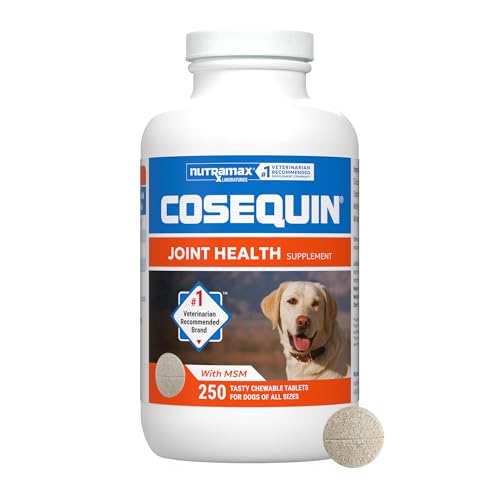
Rather than a long ranked list, this guide points to one concrete example that readers can examine directly: check the current price on Amazon. This product is a glucosamine HCl, chondroitin sulfate, and MSM formulation from Nutramax Laboratories, a long-established supplement manufacturer whose products are widely stocked by North American retailers. Its label lists per-serving quantities of each active ingredient, which lets you verify the dose against your dog's weight before buying, and it is available in soft chew and tablet forms for different preferences.
Who this type of formula suits: dogs with early stiffness, seniors in maintenance mode, and large breeds whose owners want a preventive approach starting in early adulthood. The main trade-off is that a glucosamine, chondroitin, and MSM formula does not include omega-3 fatty acids, green-lipped mussel, or hyaluronic acid, so a dog whose discomfort is strongly inflammatory may benefit from adding a separately dosed fish oil, ideally one that states its EPA and DHA content on the label. Soft chews can also dry out if the package is not resealed carefully, and dogs with chicken sensitivity may do better with a tablet form or a different flavor base. Verified owner reviews repeatedly mention giving the chews as treats, which simplifies daily compliance, and also mention the loading-then-maintenance dosing schedule described below.
To compare this example against other options, view this option on Amazon and read the full label and current pricing before deciding. The purpose of linking one product is not to declare it universally best; it is to give you a benchmark label with transparent ingredient quantities that you can hold against every other supplement you consider.
Reading a Joint Supplement Label Without Getting Fooled
The supplement aisle rewards skepticism. Start with the active ingredient panel, not the front of the package. Note the milligrams of glucosamine, chondroitin, and MSM per serving, and check whether a serving means one chew or several. Multiply by the number of chews your dog's weight band requires, then divide by the package count to get the true cost per day. Two products with similar shelf prices can differ twofold in monthly cost once dosing is factored in.
Second, look for standardization language. Manufacturers that use patented, standardized ingredient forms and publish quality-control information are making a verifiable claim; those that list only generic proprietary blends are harder to evaluate. Third, check the inactive ingredients, especially the flavor base. Chicken is common, and dogs with protein sensitivities may need an alternative. Fourth, verify the country of manufacture and whether the maker follows Good Manufacturing Practices. Because pet supplements are not FDA-approved drugs, quality varies widely between brands, and the manufacturer's own quality documentation is often the only assurance available.
Sizing and Dosing: Where Most Owners Go Wrong
Underdosing is probably the most common reason owners conclude that a joint supplement 'did not work.' Published veterinary dosing for glucosamine sits around 20 to 30 mg per pound of body weight daily, and chondroitin around 10 to 15 mg per pound. Weigh your dog rather than estimating, follow the label's weight bands, and recalculate after any significant weight change. A product dosed correctly for a 30-pound Beagle delivers half the active ingredient of the same product dosed for an 80-pound Labrador, so a shared bottle in a multi-dog household depletes at very different rates.
Most glucosamine-based products also specify a loading period, typically double the maintenance dose for the first four to six weeks, to saturate joint tissues faster. Skipping the loading phase is a false economy: therapeutic tissue levels arrive more slowly, and impatient owners often quit before benefits can appear. Budget for the faster initial consumption when you calculate how long a first package will last.
Realistic Timelines and Honest Limitations
Joint supplements are not analgesics. They do not act in hours or days the way NSAIDs do. Owner reports and clinical literature generally describe visible improvement over four to eight weeks, with maximum benefit around eight to twelve weeks at a correct dose. If nothing changes after roughly three months of consistent, correctly dosed supplementation, the reasonable next steps are a veterinary recheck, a switch to a different ingredient profile, or the addition of omega-3s, rather than simply abandoning the category.
Limits deserve plain language. No supplement rebuilds cartilage that is already gone. None replaces veterinary diagnosis, imaging, or prescription pain management for moderate to severe arthritis. Hemp and CBD-containing products deserve particular caution: the FDA has not evaluated cannabinoid claims in pets, quality varies widely, and dogs with liver conditions should avoid them without veterinary guidance. If you suspect your dog has ingested something harmful, including xylitol-containing human supplements, the ASPCA Animal Poison Control resource is the standard owner reference.
Species- and Condition-Specific Considerations
Breed and life stage shape the decision. Large and giant breeds with dysplasia risk are commonly started on joint support in early adulthood, because waiting for symptoms means structural change is already underway. Medium breeds often begin around four to five years, or earlier with a family history of joint disease. Small breeds typically start later, around six or seven years, though long-backed and brachycephalic breeds have their own spinal and patellar vulnerabilities. Working and sporting dogs place athletic-level loads on their joints and are frequently supported from early adulthood. Post-operative dogs, such as those recovering from orthopedic procedures, should follow the surgeon's specific timing and product guidance rather than self-selecting.
Safety, Interactions, and Side Effects
Reported side effects are uncommon but real. The most frequent pattern in owner reports is mild digestive upset, such as loose stool or gas, during the first week, which usually resolves as the dog adjusts. Splitting the daily dose between morning and evening, or giving chews with food, often resolves it. Allergic reactions, when they occur, usually trace to the flavoring rather than the actives. If your dog takes prescription NSAIDs, do not stop or reduce them on your own; coordinate any supplement addition with your veterinarian, since interactions and pain rebound are genuine concerns. Human joint supplements deserve a hard pass for dogs: they may contain xylitol, which is toxic to dogs even in small amounts, plus human-scale dosing and inactive ingredients unsuited to canine digestion.
Maintenance and Storage
Supplements degrade when stored badly. Soft chews dry out and harden if packages are not resealed; in warm or humid climates, refrigeration after opening helps preserve texture and palatability. Fish oil soft gels are sensitive to heat and light, which oxidize the omega-3s, so a cool, dark storage spot is essential, and gels that stick together or smell rancid should be discarded. Check expiration dates against your dog's consumption rate so you are not buying more than can be used while fresh. Consistency matters more than most owners expect: intermittent dosing never builds the tissue levels that produce results, so tie the chew to a daily ritual such as breakfast.
Common Mistakes to Avoid
- Skipping the veterinary diagnosis. Arthritis, dysplasia, soft-tissue injury, and normal aging call for different approaches, and guessing wastes months.
- Underdosing by ignoring weight bands or skipping the loading period.
- Quitting at week three, before the four-to-eight-week window where improvement typically appears.
- Expecting a supplement to compensate for excess body weight, which multiplies joint load with every step; weight management and joint support work together, not as substitutes.
- Buying on front-of-pack marketing instead of the active ingredient panel and cost per day at your dog's weight.
- Using human products without checking every ingredient against a toxicity reference.
Weight Management: The Half of the Equation Owners Skip
No supplement can outrun the mechanical stress of excess weight on damaged joints. Veterinary guidance consistently identifies weight reduction as one of the most effective single interventions for arthritic dogs, and the arithmetic is stark: each excess pound adds several pounds of load per step. A dog that sheds ten pounds relieves dozens of pounds of pressure across every stride. Combining a gradual weight program with correctly dosed joint support is repeatedly described by veterinarians as producing better outcomes than either alone, and the AVMA's pet owner resources offer sound starting guidance on body condition scoring and feeding adjustments to discuss with your vet.
Working Through the Purchase Decision
Start with a veterinary exam and, where warranted, imaging, so you know what you are actually addressing. Match formula to severity: early prevention and mild stiffness suit a straightforward glucosamine, chondroitin, and MSM product like the example above; dogs with strongly inflammatory discomfort may benefit from added marine omega-3s; multi-ingredient formulas that include green-lipped mussel or hyaluronic acid exist for owners wanting broader coverage, at higher cost per serving and more potential for individual sensitivities. Verify dosing against your dog's weight, commit to the loading period, give it a fair eight-to-twelve-week trial, and layer on weight management throughout. If you want a benchmark to compare other labels against, view this option on Amazon and note the per-serving actives, form options, and price at your dog's consumption rate. Wherever you end up buying, the same evaluation rules apply, and if the current price or formula suits your dog, check the current price on Amazon before comparing final options elsewhere.
Frequently Asked Questions
Are dog joint supplements FDA-approved?
No. Pet supplements are regulated as nutritional products rather than drugs, so no pre-approval process exists. Reputable manufacturers follow Good Manufacturing Practices, publish quality-control information, and in some cases support their formulas with published clinical trials. That manufacturer transparency is your best proxy for quality in an unregulated category.
Can I give my dog human joint supplements?
It is not recommended. Human products may contain xylitol, human-scale doses, and inactive ingredients that upset canine digestion, and they lack dog-specific dosing guidance. Canine-formulated products exist precisely because dogs differ in digestive physiology and sensitivity.
My dog is on prescription NSAIDs. Should I add a supplement?
Discuss it with your veterinarian first. NSAIDs address pain and inflammation but do not support cartilage, and long-term use carries known risks. Some dogs eventually transition toward supplement-supported management with fewer daily NSAIDs, but any change must be supervised by the prescribing vet, since abrupt discontinuation can cause rebound pain.
How long does a package last?
It depends on weight and dosing stage. A large dog at maintenance dose may consume a package in two months; the same package can last twice as long for a small dog, and the loading period doubles consumption initially. Always calculate cost per day at your dog's weight rather than comparing shelf prices.
Can joint supplements cause side effects?
Mild digestive upset in the first week is the most commonly reported issue and usually resolves on its own. Rarer allergic-type reactions typically involve the flavor base rather than active ingredients. Splitting doses, giving with food, or switching to a tablet form with fewer inactive ingredients usually solves the problem.
The Bottom Line
Joint support is a long game decided by early start, correct dosing, patience, and honest expectations. Nothing on the market reverses established arthritis, but a well-chosen, correctly dosed supplement, combined with lean body weight and veterinary oversight, can extend a dog's comfortable, active years. Learn to read labels by active milligrams per day, hold every product to the same standard, and let published evidence and verified owner experience, not marketing, make the case. More comfortable years mean more fetch, more hikes, and more tail wags, and that is a goal worth getting right.
Affiliate Disclosure: PawCritic.com participates in the Amazon Services LLC Associates Program. We may earn commissions from qualifying purchases at no extra cost to you.