A leash is not a neutral piece of equipment. It is the physical link between a handler and an animal that can weigh five pounds or one hundred and fifty, and the difference between a safe walk and a dangerous one often comes down to a few inches of webbing, the quality of a snap hook, and whether the hardware was rated for the load it is being asked to carry. Published guidance from veterinary bodies and animal-welfare organizations treats leash selection as a safety decision, not a fashion one, and the research literature on dog-walking injuries consistently points to equipment failure and improper restraint as contributing factors in bite incidents, escapes, and handler falls.
This buying guide covers what actually matters when choosing a leash: materials, hardware ratings, length, handle design, species and size considerations, and the specific situations where certain designs should be avoided. It also looks at one concrete product example readers can examine in detail, because seeing a real listing with real specifications is often more useful than an abstract checklist. Every claim below is drawn from manufacturer specifications, published veterinary or welfare guidance, or patterns that appear repeatedly in verified owner reviews.
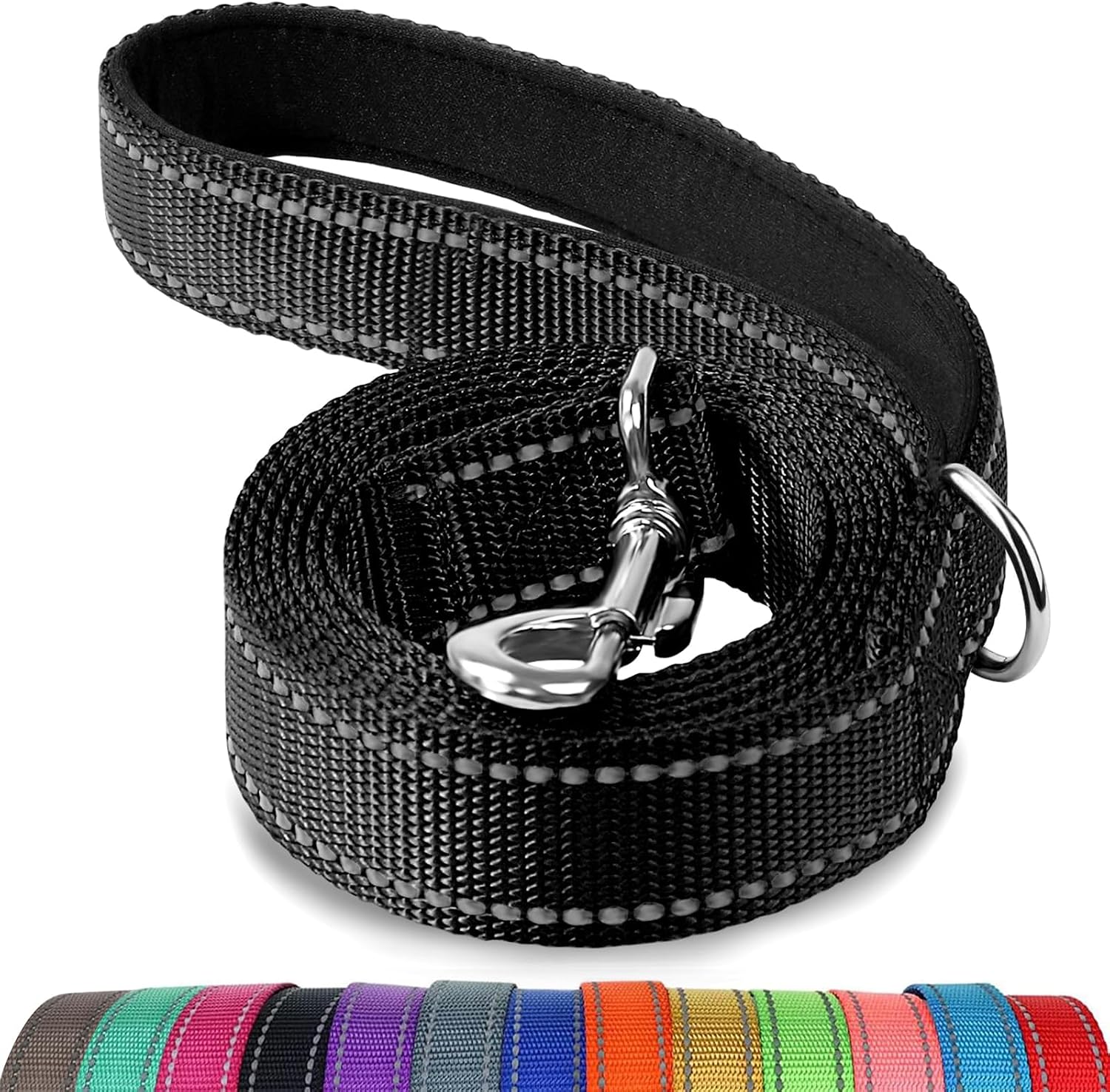
dog leashes from standard to retractable options
Why Leash Choice Matters More Than Most Owners Realize
According to the AVMA pet owner resources, dog bites and leash-related injuries remain a significant public-health concern, and a large share of incidents occur when a dog is startled, frightened, or able to close distance to a trigger faster than the handler can react. A leash that is too long, too thin, or attached to hardware that fails under load removes the handler's ability to interrupt that sequence. Conversely, a leash that is too short or too heavy for the dog creates its own problems: constant tension, neck strain, and a dog that never learns to walk without pulling.
The Merck Veterinary Manual's dog owner reference notes that neck and tracheal injuries in small breeds are frequently associated with leash pressure applied through a collar rather than a harness, particularly when the dog lunges or the handler corrects abruptly. That does not mean collars are wrong; it means the leash and the attachment point have to be matched to the dog's size, temperament, and the environment. A six-foot flat leash on a well-trained adult Labrador is a different tool than the same leash on a reactive adolescent husky in a crowded park.
There is also a legal dimension. Many municipalities have leash ordinances that specify a maximum length, usually six feet, in public spaces. A retractable leash extended to twenty-six feet in a park where the ordinance caps length at six feet puts the handler in violation even if the dog is under verbal control. Owners who walk in cities, near roads, or in shared green spaces should check local rules before assuming that a longer leash is acceptable.
Materials: What Each One Does Well and Where It Fails
Nylon webbing is the default material for a reason. It is inexpensive, widely available, comes in every color and width, and holds up to daily use for two to three years on average before the fibers begin to fray. The trade-off is that nylon absorbs water, holds odor, and becomes abrasive when wet or dirty. A nylon leash that has been dragged through mud, salt water, or snow will stiffen as it dries and can chafe a handler's hands. Machine washing on a gentle cycle with a mild detergent restores most of the hand feel, but the webbing never quite returns to its original condition.
Biothane and similar coated webbings solve most of nylon's problems. The coating is a polyester or nylon core encapsulated in a polymer layer, which means the leash does not absorb water, does not hold odor, and can be wiped clean with a damp cloth. Biothane is rated for working-dog and marine environments, and owner reports consistently describe it as the material of choice for dogs that swim, hike in wet climates, or walk daily on salted winter roads. The trade-off is price and hand feel. Coated leashes are stiffer than nylon, they can feel slick when wet until the surface scuffs slightly, and they are heavier per foot. They also tend to be more expensive, though the gap has narrowed considerably as more manufacturers have entered the category.
Rope leashes, whether climbing-grade nylon or natural hemp, offer a different set of properties. Braided rope distributes pressure more evenly across the hand than flat webbing, which reduces the likelihood of leash burn during a sudden pull. Climbing-grade rope is rated for loads far beyond anything a dog can generate, and it resists abrasion well on rock and pavement. Hemp is naturally resistant to mold and UV damage, softens with use, and is biodegradable, but it carries a distinct earthy odor when new and benefits from periodic oiling to prevent the fibers from drying out. Leather remains a traditional choice for handlers who want a leash that molds to the hand and improves with age, but leather requires conditioning, does not tolerate repeated soaking, and is not the right choice for a dog that swims regularly.
Chain is the outlier. A chain tab or full chain leash is heavy, noisy, and unpleasant to hold for long periods, but it offers two advantages that no soft material can match: it is effectively indestructible under normal use, and the weight of the chain provides clear physical feedback to a dog that is learning not to pull. Trainers have used chain tabs for decades for exactly this reason. It is a training tool, not an everyday walking leash, and it should be introduced with professional guidance.
Hardware: The Part That Actually Fails
Most leash failures reported by owners are not webbing failures. They are hardware failures: a snap hook that straightened under load, a swivel that seized and then cracked, a bolt that worked loose over months of use. The clip is the single most important component to evaluate, and it is the one most buyers ignore.
Look for a snap hook made from a single piece of metal rather than stamped or folded sheet steel. Zinc alloy is common at lower price points and is adequate for small and medium dogs, but it can deform under the load of a large dog lunging at full speed. Solid brass and stainless steel are heavier and more expensive, but they resist corrosion and hold their shape. A trigger or spring gate that requires deliberate pressure to open is safer than one that opens with a light touch, because it is less likely to be released accidentally by a dog's paw or by contact with a fence or car door.
Swivel hardware matters more than most owners realize. A swivel allows the leash to rotate without twisting, which prevents the webbing from developing a permanent coil and reduces the chance of the clip working its way loose. A seized swivel is worse than no swivel at all, because it concentrates stress at a single point. Owners should test the swivel by hand periodically and apply a drop of light oil if it begins to stick.
Length, Handles, and Control
Six feet is the standard for a reason. It gives a dog enough room to sniff, circle, and move at a natural pace without giving the handler so much slack that the dog can reach a road, another dog, or a child before the handler can respond. Four-foot leashes are useful in dense urban environments, veterinary clinics, and training sessions where close control is the priority. Anything longer than six feet, outside of a designated off-leash area, shifts the balance of control away from the handler.
Traffic handles have become standard on better leashes, and they are worth the small additional cost. A traffic handle is a second loop positioned roughly twelve to eighteen inches above the clip. When a handler needs to bring a dog close, the traffic handle provides a secure grip without having to reel in the main leash hand over hand. This matters most for strong dogs, reactive dogs, and any dog walked near roads or in crowds. The trade-off is that a second handle adds bulk and can catch on brush or fencing on narrow trails.
Padded handles are a comfort feature, not a safety feature, but they matter on long walks. Neoprene and EVA foam padding reduce hand fatigue and prevent the webbing from cutting into the palm during a sustained pull. The downside is that padding absorbs sweat and dirt, and it can become slippery when wet unless the material is specifically designed to stay grippy. Handlers with small hands sometimes find padded handles too bulky to grip securely.
Reflective stitching or reflective thread woven into the webbing is a genuine safety feature for anyone walking before dawn or after dusk. It does not replace a reflective vest or a light, but it increases the distance at which a driver can identify that a person and a dog are present. Owners who walk on or near roads at low light should treat reflectivity as a requirement rather than a nice-to-have.
Retractable Leashes: Where the Guidance Is Clear
Retractable leashes are the most controversial category in the market, and the published guidance is unusually consistent. Veterinary organizations and trainer associations advise against using retractable leashes near roads, in crowded areas, or with dogs that are reactive or still learning leash manners. The reasons are mechanical rather than ideological. The cord on a retractable leash is thin, under tension, and capable of causing deep cuts or burns if it wraps around a hand, a leg, or another dog. There are well-documented cases of finger injuries and amputations involving retractable leashes, and the cord can be difficult to see, which makes it hazardous to cyclists, runners, and other pedestrians.
None of that means retractables have no place. In an open field, a fenced yard, or a quiet trail with good sightlines, a retractable leash can give a dog more room to explore while keeping a connection to the handler. The conditions for safe use are narrow: the dog should have reliable recall, the area should be free of traffic and other people, and the handler should lock the length the moment the dog begins to close distance or shows interest in something. A retractable leash used in those conditions is a reasonable tool. A retractable leash used on a sidewalk is not.
A Concrete Example: What to Look For in a Listing
Rather than presenting a ranked list of products, this guide treats a single listing as a case study in what to examine before buying. The listing referenced here is a standard flat leash with a padded handle, and it illustrates the specifications a buyer should be able to verify before purchase.
What the Specifications Should Tell You
A well-documented listing will state the material of the webbing, the width of the webbing, the material of the clip, the length options, and the weight rating if one is given. It should also state whether the stitching is reinforced at the clip and handle junctions, since those are the two points where a leash fails first. If a listing does not state the clip material, that is a signal to look elsewhere or to inspect the product in person before relying on it.
A padded neoprene handle is a meaningful comfort feature at this price point, and it is one of the details that distinguishes a leash built for daily walks from a leash built to hit a price. Reflective stitching along the length is another detail that costs the manufacturer very little and provides real safety value. A clip that is described as heavy-duty but not specified by material should be treated as a question mark rather than a selling point.
The trade-offs to expect at this tier are fixed lengths rather than adjustable ones, a limited range of sizes, and a handle that may feel bulky to handlers with small hands. Those are reasonable compromises for a leash that is intended for everyday walking rather than specialized training or extreme conditions. Buyers who need a traffic handle, a longer length, or a specific clip material should expect to look at a different category of product.
Readers who want to examine the specific listing referenced here can check the current price on Amazon and compare the stated specifications against the checklist above.
Matching the Leash to the Dog
Small dogs under twenty-five pounds do best with lightweight webbing, a small clip, and a four- to six-foot length. A heavy clip on a small dog's collar creates unnecessary use and can contribute to neck strain if the dog pulls. A leash that weighs almost as much as the dog is a leash that will be uncomfortable for both parties.
Medium dogs between twenty-five and seventy pounds are the broad middle of the market. A six-foot flat leash in one-inch webbing with a solid brass or stainless clip covers the vast majority of walking situations. This is the size range where a traffic handle becomes genuinely useful, particularly for dogs that are strong for their size or still learning not to lunge.
Large and giant breeds over seventy pounds need hardware rated for the load. A zinc alloy clip that is fine on a beagle can straighten under a mastiff that decides to chase something. Wide webbing distributes pressure better across the hand, and a padded handle is closer to a necessity than a luxury. Owners of giant breeds should also consider a harness rather than a collar as the attachment point, both for the dog's comfort and for the handler's ability to control the dog's center of mass.
Behavior matters as much as size. A dog that is reactive to other dogs, traffic, or strangers needs a shorter leash and a secure connection, not a longer one. A dog that is calm and well-trained on a quiet trail can reasonably use a longer leash or a retractable in the right conditions. The leash should be chosen for the dog the owner actually has, not the dog the owner hopes to have after training.
Leash Safety and Attachment Points
The leash is only as safe as what it is attached to. A collar that is too loose can slip over a dog's head during a sudden backward movement, and a collar that is too tight can cause discomfort and skin irritation. Flat collars are appropriate for dogs with identification tags, but they are not the best attachment point for a leash on a dog that pulls. According to the Merck Veterinary Manual dog owner reference, pressure on the neck from a collar can contribute to tracheal and cervical injuries, particularly in small breeds and in dogs with existing respiratory conditions.
A well-fitted harness distributes load across the chest and shoulders rather than the neck, which is why trainers and veterinary behaviorists frequently recommend harnesses for puppies, brachycephalic breeds, and any dog that has not yet learned to walk without pulling. A front-clip harness can also reduce pulling by redirecting the dog's forward motion sideways, though it is not a substitute for training. A two-point system, with a leash attached to both a collar and a harness, is used by some handlers as a redundancy measure, particularly for dogs that have escaped from equipment before.
Owners should also consider what happens if the leash is dropped. A dog that bolts with a leash attached can be seriously injured if the leash catches on a fence, a car, or a tree. A leash with a handle that can be secured around the wrist or a leash with a belt attachment reduces the chance of a dropped leash in the first place. Hands-free leashes with waist belts are a reasonable option for runners and hikers, but they require the handler to be able to release the belt quickly in an emergency.
Maintenance and When to Replace
Nylon leashes should be inspected monthly for fraying at the clip and handle junctions, and more often if the dog is a chewer or the leash is used in abrasive environments. A leash with visible fraying, a clip that no longer snaps shut with a clear click, or stitching that has begun to separate should be retired immediately. A leash that fails mid-walk can result in a lost dog, a bite incident, or a traffic accident, and the cost of a replacement leash is trivial compared to any of those outcomes.
Most nylon leashes last two to three years with daily use, though this varies with the dog's size, the terrain, and how the leash is stored. Coated leashes tend to last longer because they resist the UV and moisture damage that degrades nylon over time. Rope leashes can last many years if they are kept clean and inspected regularly, but rope can develop hidden damage inside the braid that is not visible from the outside. Any leash that has been subjected to a severe shock load, such as a dog hitting the end of the leash at full speed, should be inspected carefully and replaced if there is any doubt about its integrity.
Cleaning is straightforward. Nylon and coated leashes can be hand-washed with mild soap and warm water, then air-dried away from direct heat. Hemp leashes should be cleaned sparingly and re-oiled periodically to prevent the fibers from drying and cracking. Leather should be wiped with a damp cloth and conditioned occasionally. Chain should be wiped down and inspected for bent or worn links. None of these materials should be put in a dryer, and none should be stored wet.
Common Mistakes Owners Make
The most common mistake is buying a leash based on color or pattern rather than specifications. A leash is a safety device, and the specifications matter more than the aesthetics. A second common mistake is using a retractable leash in an environment where it is not appropriate, particularly near roads or in crowded areas. A third is neglecting the attachment point: a high-quality leash attached to a worn or poorly fitted collar is not a safe system.
Owners also frequently overlook the effect of the leash on their own body. A dog that pulls on a leash held in one hand can cause repetitive strain in the wrist, elbow, and shoulder over time. A leash with a padded handle, or a hands-free belt, reduces that strain. Handlers who walk multiple dogs should consider whether they can physically manage the combined load if both dogs lunge at once, which is a common cause of handler falls and injuries.
Finally, owners sometimes assume that a more expensive leash is automatically a better leash. Price correlates with materials and hardware quality, but it is not a guarantee. The specifications on the listing, the reputation of the manufacturer, and the pattern of verified owner reviews are more reliable indicators than price alone. A mid-priced leash with a solid brass clip and reinforced stitching is a better buy than a premium-priced leash with unspecified hardware.
Frequently Asked Questions
What is the best length for a dog leash?
Six feet is the standard for everyday walking because it balances freedom of movement with handler control. Four-foot leashes are better for training and crowded environments, and anything longer than six feet should be reserved for open areas where local ordinances permit it. Retractable leashes can extend much further, but the safe-use conditions for them are narrow.
Are retractable leashes safe?
They can be safe in open, controlled spaces with a dog that has reliable recall, but published veterinary and trainer guidance advises against using them near roads, in crowds, or with dogs that are reactive or still learning leash manners. The thin cord can cause serious cuts and burns, and it is difficult for other people to see.
What leash is best for a dog that pulls?
Dogs that pull benefit from a shorter leash, a secure attachment point such as a front-clip harness, and a traffic handle for close control. A chain tab can provide useful feedback during training, but it should be introduced with professional guidance because improper use can be aversive or harmful.
How often should a leash be replaced?
Inspect monthly and replace immediately if there is fraying, a clip that no longer snaps shut, cracked hardware, or separated stitching. Most nylon leashes last two to three years with daily use; coated and rope leashes often last longer with proper care. Any leash that has taken a severe shock load should be inspected and replaced if there is doubt about its condition.
Should a leash be attached to a collar or a harness?
Harnesses are generally recommended for puppies, small breeds, brachycephalic dogs, and any dog that has not learned to walk without pulling, because they distribute load across the chest rather than the neck. Collars are appropriate for well-trained adult dogs without neck or respiratory concerns. Some handlers use a two-point system for redundancy.
What is the strongest leash material?
Chain is effectively indestructible under normal use and is the strongest option by a wide margin. Among soft materials, climbing-grade rope and reinforced nylon webbing are both rated for loads far beyond what a dog can generate, and coated webbings offer similar strength with better weather resistance.
Can a leash be used for running with a dog?
Yes, but a dedicated running leash with a waist belt and a shock-absorbing bungee section is more comfortable and safer than a standard walking leash. The handler should be able to release the belt quickly in an emergency, and the dog should be trained to run on a consistent side before the setup is used on public roads or trails.
Where to Buy
As an Amazon Associate, PawCritic earns from qualifying purchases. This does not affect our reviews or recommendations.
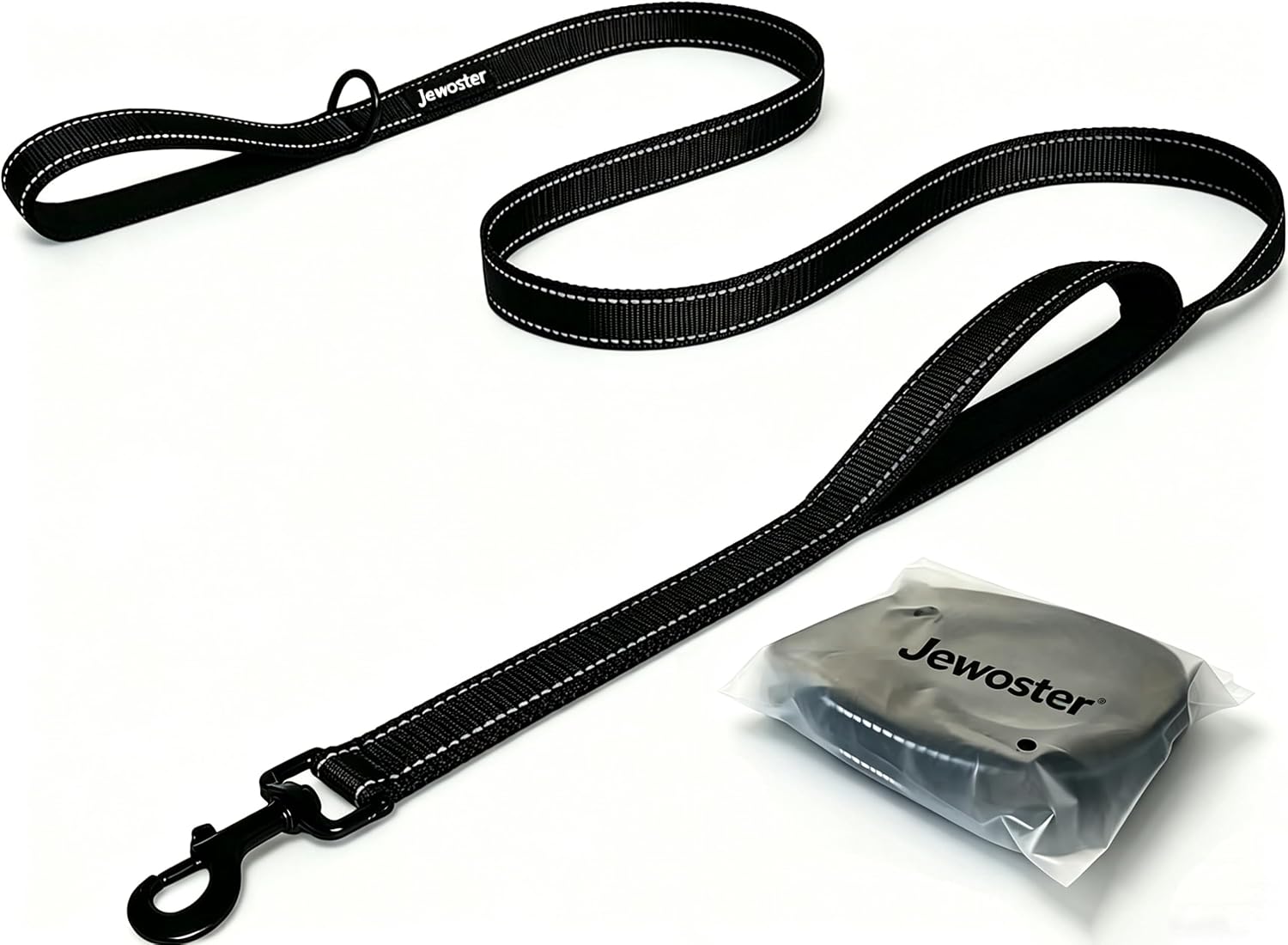
dog leashes from standard to retractable options
Final Considerations
A leash purchase should start with the dog, not the product. Size, strength, temperament, walking environment, and the handler's own physical capabilities determine what will actually work. Once those are clear, the specifications that matter are the webbing material and width, the clip material and construction, the length, the presence or absence of a traffic handle, and the quality of the stitching at the stress points. Reflective elements and padded handles are useful additions, but they are secondary to the core hardware.
Owners who walk in wet climates or with dogs that swim should look closely at coated webbings, which solve the odor and drying problems that plague nylon. Owners who need maximum control should prioritize a solid clip and a traffic handle. Owners working on training should consider a harness attachment and, if appropriate, a chain tab introduced with professional guidance. Retractable leashes have a narrow set of appropriate uses and should not be treated as a general-purpose walking tool.
Whatever leash is chosen, it should be inspected regularly, cleaned when dirty, and replaced at the first sign of structural wear. The leash is the last line of defense between a dog and a road, a fight, or a lost-animal report, and treating it as a disposable accessory rather than a piece of safety equipment is the most common and most avoidable mistake in dog walking.
Affiliate Disclosure: PawCritic is reader-supported. When you purchase products through links on our site, we may earn an affiliate commission at no extra cost to you. This helps us continue providing independent, in-depth reviews. Our editorial team selects all products reviewed based on merit and published specifications. Affiliate relationships never influence our ratings or recommendations. As an Amazon Associate and participant in other affiliate programs, we may earn commissions from qualifying purchases.
Last updated: April 2026