Why Your Dog Needs a Life Jacket — Even If They Can Swim
Picture a sunny Saturday afternoon. The kayak is loaded, the cooler is packed, and your Labrador is circling the car with unmistakable 'let's go' energy. Just before pushing off, a reasonable question surfaces: does a dog bred for water actually need a life jacket? After all, Labrador Retrievers were developed to fetch waterfowl from cold North Atlantic waters, and swimming is written into their instincts.
The answer from water-safety advocates and veterinary guidance is consistent: yes, a dog benefits from a life jacket on open water regardless of breed. Even strong swimming breeds can panic, tire, or become disoriented in currents, waves, or cold water. A quality canine flotation device does three things natural ability cannot. It keeps a dog's head above water when the animal is exhausted, it provides a grab handle for lifting a wet dog back into a boat or onto a dock, and its bright colors keep the dog visible from a distance — which can be the difference between a quick rescue and a tragedy.
This guide is a research-based buying reference, not a hands-on test report. PawCritic does not run labs or test periods. Everything below is drawn from manufacturer specifications, published sizing and safety guidance, and patterns reported by verified dog owners. Where a claim comes from owners rather than specs, that is stated plainly. For general canine health and safety background, the AVMA's pet owner resources and the Merck Veterinary Manual's dog owner reference are good starting points.
What a Dog Life Jacket Actually Does
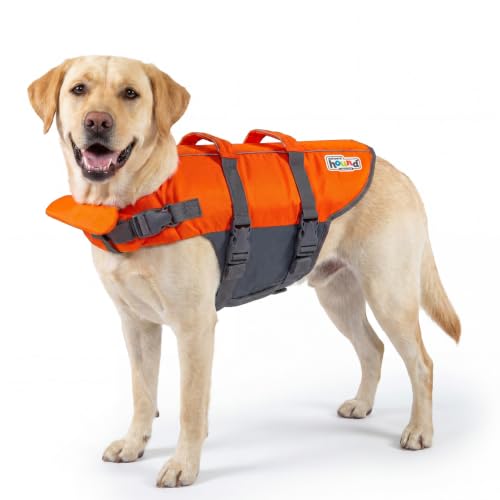
A canine life jacket is not a scaled-down human PFD. Human jackets are designed to float a vertical, bipedal body with the head naturally above water. A dog swims horizontally, with its center of gravity over the chest, so a dog jacket places flotation foam under the chest and along the sides to support a level swimming posture. If buoyancy is placed incorrectly, a dog can tip forward (nose under) or backward (struggling to right itself), which is why fit and foam placement matter more than raw flotation numbers.
Beyond flotation, the grab handle is arguably the most important safety feature. A wet 80-pound dog is heavy, slippery, and often panicked; a reinforced handle on the back lets you lift or guide the dog without grabbing limbs or collar. Visibility is the third pillar. Blaze orange, neon yellow, and neon pink colorways, plus reflective piping, make a swimming dog far easier to track from a boat, a dock, or shore, especially in chop or low light. Owner reports consistently describe visibility as the feature they did not appreciate until they needed it.
Which Dogs Need One Most
All dogs benefit from flotation on open water, but some categories carry elevated risk. Brachycephalic breeds — Pugs, French Bulldogs, English Bulldogs, Boxers — have compressed airways and tire quickly in water; many can barely sustain a proper paddling stroke. Dense-bodied breeds such as Corgis, Dachshunds, and Basset Hounds swim low in the water with short legs working overtime. Senior dogs lose stamina and muscle mass, and dogs with arthritis or hip dysplasia may not be able to sustain a swim even if they wanted to.
Small and toy dogs chill faster because of their surface-area-to-weight ratio, and low-body-fat sighthounds like Whippets and Italian Greyhounds have neither insulation nor natural buoyancy. At the other extreme, heavy-coated breeds like Newfoundlands absorb water into their coat, which adds weight over a long swim. Even a champion swimmer can be surprised by a current, a sudden drop-off, or cold-water shock. The consistent guidance: if your dog is near deep or moving water, put the jacket on.
How to Size and Fit a Dog Life Jacket
Manufacturers base sizing charts primarily on chest girth and weight, with back length as a secondary check. To measure properly, have your dog stand on a level surface and take three measurements with a soft tape: chest girth at the widest part of the ribcage just behind the front legs, neck circumference where a collar sits, and back length from the base of the neck to the base of the tail. Pull the tape snug but not tight.
Between sizes, the right direction depends on your dog's build. Sleek, deep-chested swimming breeds generally do better sizing down for a secure fit, while barrel-chested or thick-necked dogs like Bulldogs often need the larger size to close the straps comfortably. Fit follows the two-finger rule: you should be able to slide two fingers between any strap and your dog's body at the neck, chest, and belly. The jacket must be snug enough that it does not slide or rotate when you lift by the handle, but loose enough not to restrict breathing or stride.
Check the fit again after the first few minutes of swimming. Wet neoprene and webbing can shift, and straps that were fine on land may need snugging in the water. The most common chafing hotspot is the armpit area behind the front legs; owners of short-coated breeds report rub marks there more often than owners of fluffy dogs. If you see redness after a swim, either adjust the straps or the jacket's cut is wrong for your dog's shape — breed-specific owner reviews are the fastest way to learn which jackets suit, say, a deep-chested Greyhound versus a stocky Frenchie.
Materials and Construction: What to Look For
Flotation foam comes in two broad approaches: single-sheet panels and layered or segmented panels. Layered foam flexes with the dog's swimming stroke rather than fighting it, and manufacturers like Outward Hound advertise this flex-panel construction explicitly. Thicker foam floats a dog higher, which suits nervous beginners, while streamlined, lower-profile jackets suit athletic dogs that swim actively and would be irritated by bulk.
Shell fabric is usually nylon or polyester in various deniers; higher-denier ripstop weaves resist abrasion from dock edges, rocks, and dog nails. Neoprene belly bands distribute pressure comfortably and add a little insulation, which helps cold-sensitive small dogs but can feel warm in direct sun. Quick-release buckles at the neck and belly make it possible to gear up a squirming, excited dog quickly; oversized buckles are a thoughtful touch for boaters wearing gloves. Reflective piping and bright colorways are cheap insurance — treat them as a requirement, not an upsell.
Water absorption is a real trade-off. Budget jackets with lower-density foam tend to soak up more water over a session, making the jacket heavier for both dog and whoever performs the lift. Premium shells shed water and stay lighter when wet, per manufacturer descriptions and owner accounts. Rinse any jacket in fresh water after saltwater or chlorine exposure, because both degrade foam and fabric over time, and store it out of direct sunlight — UV is the leading killer of jacket longevity.
Two Concrete Options Worth a Look
Rather than a long ranked list, this guide points to two widely available examples that illustrate the two main price tiers of the category. Both are backed by established brands with published sizing charts, and both have accumulated large volumes of owner feedback you can read before buying.
A Solid Mid-Price Example: Outward Hound Granby Splash
The Granby Splash is the category's best-known mid-price jacket and a sensible default for most owners. Its construction uses layered foam panels rather than a single sheet, which the manufacturer describes as flexing with the dog's natural swimming motion, and it carries two grab handles — one on the back and one under the neck — for lifting and guiding. The dual buckle system, one at the neck and one at the belly, is designed for quick on-and-off, and the bright colorways with reflective accents address visibility. Owner feedback highlights reliable fit on barrel-chested breeds like Bulldogs and Boxers, dogs that slip out of lesser jackets, and the most common complaints are that sizing runs slightly large (go down if between sizes) and that the neoprene belly band can trap sand at the beach. It suits all-around use: boating, kayaking, lake swimming, and dock jumping. If you want one jacket for one dog without much fuss, check the current price on Amazon.
A Premium Example: Ruffwear K-9 Float Coat
At the premium end, the Ruffwear K-9 Float Coat illustrates what a higher budget buys. The manufacturer specs a water-shedding shell fabric engineered to absorb minimal water, which keeps the jacket — and therefore your dog and your lift — lighter after a long swim, and anatomically sculpted foam with a thicker chest panel to keep the head up while thinner side panels allow full leg extension. A telescoping neck closure adjusts for thick-necked breeds like Pugs and French Bulldogs without choking, and a low-profile handle lies flat against the back so it does not snag. The trade-offs are price, muted color options, and sizing that runs small, so size up if your dog is between chart sizes. Long-term owner reviews repeatedly describe multi-season durability, which is where the premium price can pay off for people who boat, paddleboard, or camp with a dog regularly. If that describes you, view this option on Amazon.
Buoyancy, Handles, and Weight Ratings
Unlike human PFDs, dog life jackets are not subject to a single standardized buoyancy-rating system in the United States, so manufacturers describe flotation qualitatively or via handle weight guidance rather than a certified newton figure. That means cross-brand comparison relies on foam thickness, coverage area, and owner reports of how high a dog rides in the water. Treat marketing phrases like 'coast guard inspired' with caution unless a specific standard is cited.
Handle strength matters if you will ever lift your dog. Check the manufacturer's stated weight guidance for the handle, not just the jacket's size range — some handles are rated for guiding, not full vertical lifts of a heavy dog. For dogs over about 70 pounds, look for reinforced, boxed-stitch handles and read owner reviews from people with similar-sized dogs; a handle tearing under load during a real rescue is the failure mode that matters most.
Common Mistakes to Avoid
- Buying by weight alone. Two dogs of the same weight can have completely different builds. Chest girth is the primary measurement; weight is a tiebreaker.
- Skipping the acclimation period. A jacket worn for the first time at the lake is a novel, confusing garment. Let your dog wear it around the house for 10 to 15 minutes at a time, paired with treats, in the days before water time.
- Throwing or pushing a dog into water. This is how lifelong water phobias form. Enter the water yourself, wade into shallows where the dog can stand, keep first sessions to 5 or 10 minutes, and reward voluntary steps.
- Ignoring strap check after swimming starts. Wet gear shifts. Re-check the two-finger fit a few minutes into every swim.
- Neglecting rinse and storage. Salt and chlorine degrade foam and fabric; UV degrades both. Rinse in fresh water, dry in shade, store cool and dry.
- Using a human life jacket on a dog. The buoyancy placement forces a dog into an unnatural, potentially dangerous posture, and there is no grab handle.
Lifespan and Replacement
With seasonal use and decent care, a quality dog life jacket typically lasts three to five years. Inspect it before each season for frayed stitching, compressed foam, and buckle function. Foam that no longer springs back after being squeezed has lost buoyancy and will not support its rated flotation, no matter how intact the shell looks. Retire any jacket immediately if the grab handle shows stitching failure — that handle is your dog's emergency lifeline, and it is the one component with no acceptable margin of degradation.
Complementary Water Safety Gear
A jacket floats your dog, but getting a wet dog out of the water is a separate problem. Pool ramps and boat ladders designed for dogs give older dogs and small breeds a self-service exit and turn a two-person boat re-entry into a one-person job. For the shore kit, owners generally recommend waterproof Biothane leashes over nylon, which waterlogs, sinks, and tangles, and floating fetch toys in colors that contrast with your local water — orange for blue lakes, neon yellow for green rivers. A small carabiner on the jacket's D-ring makes leash attachment and release quick when the swim starts and ends.
Frequently Asked Questions
Do all dogs need a life jacket, or just non-swimming breeds?
All dogs benefit on open water. Natural swimmers can still be caught in currents, become exhausted, or panic after an unexpected fall from a boat. For brachycephalic and dense-bodied breeds, a jacket is especially critical because these dogs tire extremely quickly in water.
How do I measure my dog for a life jacket?
Take chest girth at the widest part of the ribcage behind the front legs, neck circumference where a collar sits, and back length from neck base to tail base, with the dog standing on a level surface. Match those to the manufacturer chart, prioritizing girth, and read reviews from owners of your breed to catch chart quirks like running large or small.
How tight should a dog life jacket be?
Apply the two-finger rule at every adjustment point: two fingers should slide comfortably between strap and body. The jacket should not slide or rotate when lifted by the handle, nor restrict breathing or movement. Re-check after the first few minutes of swimming, since wet fabric shifts.
Can I use a human life jacket on my dog?
No. Human PFDs float a vertical bipedal body; a dog needs horizontal support under the chest and along the sides, plus a top grab handle that no human jacket includes. An ill-fitting human jacket can tip a dog into a posture that makes breathing harder.
How do I introduce my dog to swimming with a life jacket?
Start on dry land with short, treat-paired wearing sessions. At the water, go in first yourself, stay in shallows where the dog can stand, cap the first session at 5 to 10 minutes, and reward voluntary entries. Never throw or push a dog in. Many hesitant dogs visibly relax once they realize the jacket holds them up — let them discover that at their own pace.
How long does a dog life jacket last?
Roughly three to five years of seasonal use with fresh-water rinsing and shaded, dry storage. Replace when foam stops springing back, stitching frays, buckles wear, or the handle shows any sign of failure. General canine wellness guidance from sources like the Merck Veterinary Manual and the WSAVA global nutrition guidelines — relevant here because conditioning and body weight affect swimming stamina — is worth reviewing alongside any gear purchase.
The Bottom Line
For most owners, a mid-price jacket with layered foam, dual grab handles, and bright reflective colorways covers the real risks, and the Outward Hound Granby Splash is a well-documented example of that formula — if you are between sizes, owner feedback suggests going down. check the current price on Amazon. Regular boaters and paddlers who want water-shedding fabric and anatomical foam placement will find the premium tier, exemplified by the Ruffwear K-9 Float Coat, easier to justify; view this option on Amazon to compare sizing charts directly. Whatever you choose, remember the honest limitation of any gear review: the best life jacket is the one your dog actually wears, every time, near deep water. A premium jacket in the garage is worth less than a basic jacket that is on your dog. Be consistent, make it routine, and enjoy every splash, paddle, and dock jump with your four-legged first mate.
Disclosure: PawCritic is reader-supported. When you buy through links on our site, we may earn an affiliate commission at no additional cost to you. As an Amazon Associate, we earn from qualifying purchases.