Why Dog Nail Care Matters More Than Most Owners Realize
Almost every dog owner knows they should trim their dog's nails on a regular schedule, yet far fewer actually do it. Knowing and doing are very different things when an 80-pound Labrador retreats to the corner at the sight of clippers, or a Chihuahua trembles before the first nail is even touched. The important part, according to veterinary guidance, is that overgrown nails are not merely a cosmetic problem. They are a genuine welfare issue that affects a dog's gait, joint alignment, comfort level, and even temperament, and the problem compounds quietly over months and years.
General canine health resources such as the AVMA's pet owner materials and the Merck Veterinary Manual's dog owner reference emphasize that routine grooming, including nail maintenance, is part of basic preventive care. When a nail grows long enough to contact the ground during normal walking, it applies upward pressure through the nail bed into the toe joint. The dog responds by shifting weight off that paw, which alters the gait and forces compensations through the carpal joints, shoulders, hips, and spine.
Over time, veterinarians report, chronically overgrown nails contribute to splayed feet, strained carpal and tarsal joints, and chronic low-grade discomfort that often shows up as behavior change rather than limping: reluctance to walk on hard surfaces, irritability when handled, and reduced willingness to play. For senior dogs especially, long nails are one of the more frequently overlooked contributors to declining mobility, because owners reasonably attribute stiffness to age rather than to a fixable mechanical problem under the paw.
A practical target for length: when the dog is standing on a hard surface, the nails should either just barely touch the ground or sit within a millimeter or two of it. A faint click is acceptable; a constant, distinct clicking on tile or hardwood means the nails are too long and are loading the toes with every step.
Choosing a Nail Grooming Tool: The Category at a Glance
dog nail grinders clippers safe quiet professional grooming
Modern nail grooming tools fall into two broad families: manual clippers (guillotine style and scissor style) and motorized grinders. Neither category is universally better; each suits different dogs, different handlers, and different nail conditions. Many experienced owners and professional groomers end up using both, clipping overgrown nails down in stages and then smoothing the edge with a grinder.
Scissor-Style Clippers
Scissor clippers look like heavy-duty scissors with a curved, notched blade. They are the standard choice for medium, large, and giant breeds because the scissoring action generates real cutting force, and because the curved blade follows the natural shape of the nail. Quality models use hardened stainless steel and often include a safety stop, a small adjustable guard that limits how much nail can be taken in a single cut, which is a useful safeguard for beginners on light-colored nails. The trade-off is that a scissor clipper demands steady hands and confident technique: one rushed cut on a long nail can reach the quick, causing pain and bleeding, and one bad experience can set a dog's tolerance back by months.
Guillotine-Style Clippers
Guillotine clippers have a stationary loop through which the nail is passed; a blade slides across and severs it. They are traditionally favored for small and medium dogs, and their forging, if made from quality surgical stainless steel with a hollow-ground edge, produces clean cuts that resist splintering. Their weaknesses are real, though: the mechanism dulls with use, replacing blades is a recurring chore, and they struggle with the thick, dense nails of working breeds and giant dogs. For a small dog maintained on a frequent schedule, they remain a perfectly sound, inexpensive choice.
Cordless Rotary Grinders
Grinders file the nail down with a spinning abrasive drum or disc instead of cutting it. Their core advantage is control: material is removed a tiny fraction of a millimeter at a time, so the risk of cutting into the quick is dramatically lower than with any clipper. Grinding also leaves a smooth, rounded edge that does not snag on carpet or scratch floors. Well-regarded grooming-specific models, such as Dremel's PawControl line, list manufacturer specifications that matter to dog owners: variable speed (typically spanning roughly 5,000 to 22,000 RPM on the premium models), lightweight bodies in the five-to-six-ounce range, USB rechargeable batteries with runtimes around an hour, integrated LED lights to help locate the quick, and, on some models, a transparent guard that shields the paw pad and surrounding fur from the abrasive surface. Reviews from verified owners consistently describe grinders as the better route for anxious dogs, but with honest caveats: the process is slower than clipping, the motor's vibration and sound bother some dogs initially, sustained contact on one spot can generate heat, and long fur can catch in the spinning bit if the paw is not held carefully. If you want a single concrete example of a purpose-built grooming grinder to compare other listings against, you can view this option on Amazon.
Styptic Powder: The Essential Companion
Whatever tool you choose, keep styptic powder within arm's reach before you start. Applied to a nail trimmed slightly too short, it stops bleeding within seconds. Without it, a minor misjudgment becomes a bloody, frightening mess for both of you. Veterinary first-aid guidance treats it as standard grooming-kit equipment, not an optional extra, and its cost is trivial relative to its usefulness.
How to Match the Tool to Your Dog
Sizing is the first filter. Toy breeds and small dogs, with thin, small-radius nails, are well served by lightweight guillotine clippers or compact grinders on low speed. Medium breeds can use nearly any well-made tool. Large and giant breeds, whose nail cross-section can approach the thickness of a pencil, need the mechanical advantage of heavy scissor clippers or a grinder with enough torque to keep its speed under load; underpowered grinders stall or heat the nail on dense keratin. Working and sporting breeds often have the densest nails of all, and owners of these dogs report that quality forged clippers plus patience outperform cheap tools every time.
Temperament matters as much as size. For dogs with a history of fear around handling, the published advice from trainers and veterinary behavior resources converges on the same points: quiet motors matter more than motor power, gradual desensitization matters more than tool choice, and forcing a struggling dog through a trim teaches it to struggle harder next time. A very quiet grinder, introduced slowly, is frequently described in verified owner reviews as the tool that finally made trims possible for previously impossible dogs.
Nail color is a third factor. On white nails, the quick is visible as a pink triangle inside the nail, which makes clipping straightforward. On black nails, the quick is invisible, which is the strongest argument for a grinder or for cautious clip-and-check technique: with black nails, the standard approach is to remove small amounts and inspect the cut surface, stopping when a small dark dot appears at the center, which indicates the quick is close.
Technique: A Step-by-Step Reference
Start with a tired, calm dog, in a quiet room, with high-value treats within reach. Handle the paws gently without any tool present, and reward calm tolerance. If the dog pulls away, do not restrain harder; pause, reward, and try again. For a first session with a new tool, the entire goal can simply be the dog remaining relaxed while the tool sits nearby, then while it runs, then while it touches one nail for a second. This incremental approach is the method recommended across veterinary and training resources, and verified owner reports repeatedly confirm that it works where force does not.
- Trim or grind small amounts at a time, especially on dark nails.
- Work at a slight angle following the natural curve of the nail.
- With a grinder, keep contact brief and moving; sustained pressure on one spot builds heat.
- Take breaks between paws for anxious dogs; several short sessions beat one bad one.
- Keep styptic powder open and ready before the first nail, not locked in a cabinet.
- Do not forget the dewclaws, which never touch the ground and so never wear down naturally.
The quick itself recedes over time with consistent, frequent trimming. Dogs whose nails have grown very long will have quicks that have extended down the nail; the published guidance in this situation is to trim small amounts every week or two, gradually coaxing the quick back, rather than attempting to correct the length in one aggressive session. This is one of the most common and most harmful mistakes owners make, because a single painful over-cut can create lasting resistance to handling.
Frequency, Lifestyle, and Wear
How often a dog needs its nails done depends enormously on lifestyle. Dogs walked daily on pavement and concrete wear their nails down naturally and may need only occasional light trims, primarily of the dewclaws. Dogs exercised mostly on grass, carpet, and soft trails get almost no natural wear and may need attention every two to four weeks. A simple check works for any dog: stand it on a hard floor and listen. Faint contact is fine; a persistent click means it is time. Nails that have begun to curl or twist, or that have forced the toes into a splayed stance, warrant a veterinary or groomer assessment before you start, because severely overgrown nails sometimes need professional handling first.
Common Mistakes Worth Avoiding
Beyond over-cutting, experienced groomers and veterinary nurses flag a handful of recurring errors. Using dull clippers is one: a dull blade crushes rather than shears, splintering the nail and causing discomfort even when the length is correct, so blades should be replaced or sharpened when cuts stop feeling effortless. Skipping maintenance on grinders is another: abrasive drums and sanding bands lose their bite, extend session times, and generate more heat per second of contact. Holding a struggling dog down is the most damaging mistake of all, converting a manageable grooming task into a trust problem that takes months to repair. Finally, many owners forget the dewclaws entirely, and these can grow in a full circle and even embed into the leg on some dogs.
Frequently Asked Questions
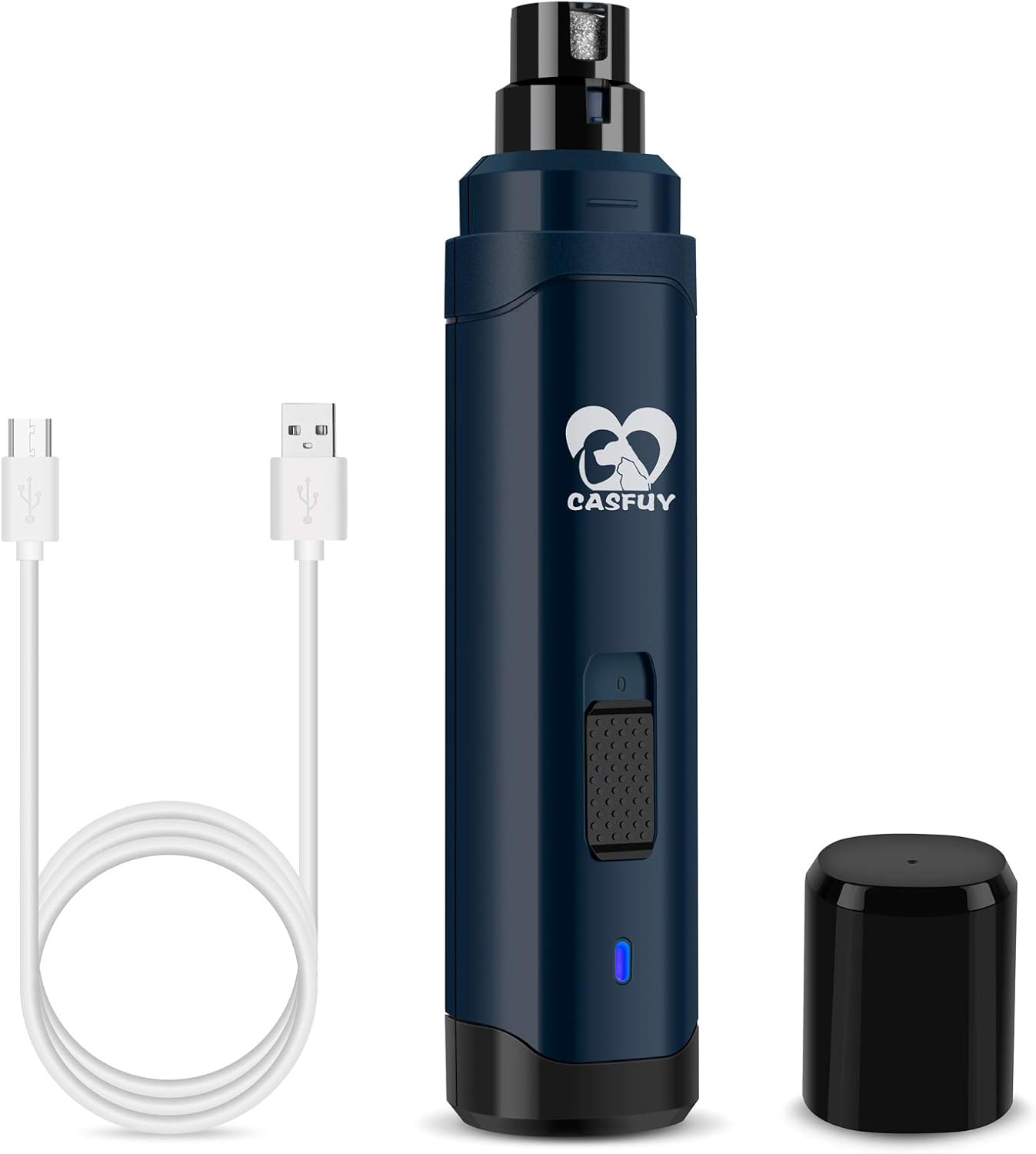
dog nail grinders clippers safe quiet professional grooming
How often should I trim my dog's nails?
For most dogs, every two to four weeks. Dogs walked mainly on soft surfaces trend toward the shorter end of that range. The standing-on-hard-floor test, with the click check described above, is the most reliable guide for an individual dog.
My dog hates nail trims. What actually works?
Desensitization paired with positive reinforcement is the approach recommended by veterinary behavior resources and confirmed in countless owner accounts. Introduce the tool near mealtimes, progress to brief paw touches, then to one nail per day with generous treats, and never punish or physically force the process. Progress is measured in weeks, not sessions, but it holds.
Grinder or clippers: which should I buy?
Both have legitimate places. Clippers are fast but carry a higher risk of an over-cut; grinders are slower but make serious injury nearly impossible and leave a smoother edge. A hybrid approach is common and sensible: clip long nails down conservatively, then smooth and round with a grinder. To see what a well-specified grooming grinder looks like on a typical listing, check the current price on Amazon and compare the listed speed range, weight, battery runtime, and guard features against the criteria above.
What is the dark center I see on a cut black nail?
That is the approaching quick, the living vascular tissue inside the nail. Its appearance on the cut surface is the classic signal to stop cutting that nail. At that point, switch to light grinding if further rounding is needed.
Can I just let a groomer or vet do it?
Absolutely, and for some dogs it is the right permanent answer. Professional trims are inexpensive, and for dogs with a history of trauma around handling, a skilled groomer or veterinary technician can be worth far more than any tool. Even so, basic familiarity with the tools and technique above helps you monitor nail length between appointments.
Tool Care and Longevity
Manual clippers benefit from simple habits: wipe blades clean after each use, dry them thoroughly, and store them dry, because stainless steel resists corrosion but is not immune to it, and pitting on a cutting edge shows up directly as crushed, splintered nails. Grinder drums and sanding bands are consumables; manufacturers typically list expected replacement intervals, and owner feedback broadly agrees that a drum that has gone glossy or stopped removing material quickly should be swapped, since a worn abrasive means longer sessions and more heat. Rechargeable grinders follow the usual lithium-ion rules: avoid storing them fully depleted for long periods, and expect some battery capacity loss over years of use, a limitation honestly acknowledged in long-term owner reviews of every brand.
Where to Buy
As an Amazon Associate, PawCritic earns from qualifying purchases.
Price and availability on grooming tools vary considerably across retailers and seasons, so treat the linked example above as a reference point: read the listed specifications against the criteria covered here (speed range, weight, runtime, guard, and included accessories), and check recent verified buyer reviews for reports on noise, battery life, and durability from owners with dogs similar to yours. The same evaluation process applies whichever listing or brand you ultimately choose.
Final Thoughts
Nail care is one of the least glamorous and most consequential parts of dog ownership. The evidence from veterinary sources is consistent: keeping nails at a length where they clear the ground protects joints, preserves normal gait, and prevents the slow slide into discomfort that owners so often mistake for simple aging. The right tool is the one your dog will tolerate often enough to matter, whether that is a forged scissor clipper for a big breed, a quiet grinder for a nervous one, or a standing appointment with a groomer. Buy for your dog's size and temperament, keep styptic powder close, go slowly, reward generously, and treat frequency as the goal rather than perfection in any single session. If a cordless grooming grinder sounds like the right fit for your situation, you can check the current price on Amazon before comparing alternatives.
Affiliate Disclosure: PawCritic.com participates in the Amazon Services LLC Associates Program. We may earn commissions from qualifying purchases at no extra cost to you.