Why a Quality Dog Bed Matters More Than You Think
Walk into any pet supply store and you will see dog beds ranging from fifteen-dollar beanbag-style mats to four-hundred-dollar orthopedic memory foam loungers. The spread in price is enormous, and it is natural to wonder whether a dog really needs an expensive bed or whether a cheap pillow will do the same job. Published veterinary guidance and large volumes of verified owner reports suggest that a well-chosen bed is one of the more consequential purchases you can make for a dog's long-term comfort, and that the cheapest options can actively cause problems over time. General care references such as the Merck Veterinary Manual's dog owner section emphasize that resting comfort, joint protection and cleanliness all play a role in a dog's physical wellbeing, and a bed touches all three.
Dogs spend roughly twelve to fourteen hours per day sleeping or resting, which is somewhere between half and sixty percent of their lives spent lying on whatever surface you provide. Puppies sleep even more, often eighteen to twenty hours a day. Large breed dogs such as Labradors, Golden Retrievers and German Shepherds are particularly susceptible to elbow hygromas, pressure sores and osteoarthritis from sleeping on hard surfaces. The pressure points at the elbows and hips, where bone sits close to the skin with minimal natural cushioning, can become inflamed when compressed against a hard floor or a thin mat night after night. Orthopedic beds built with memory foam or high-density support foam are designed to distribute a dog's weight across a larger surface area, reducing concentrated pressure at the elbows and hips compared with sleeping on carpet or bare floor.
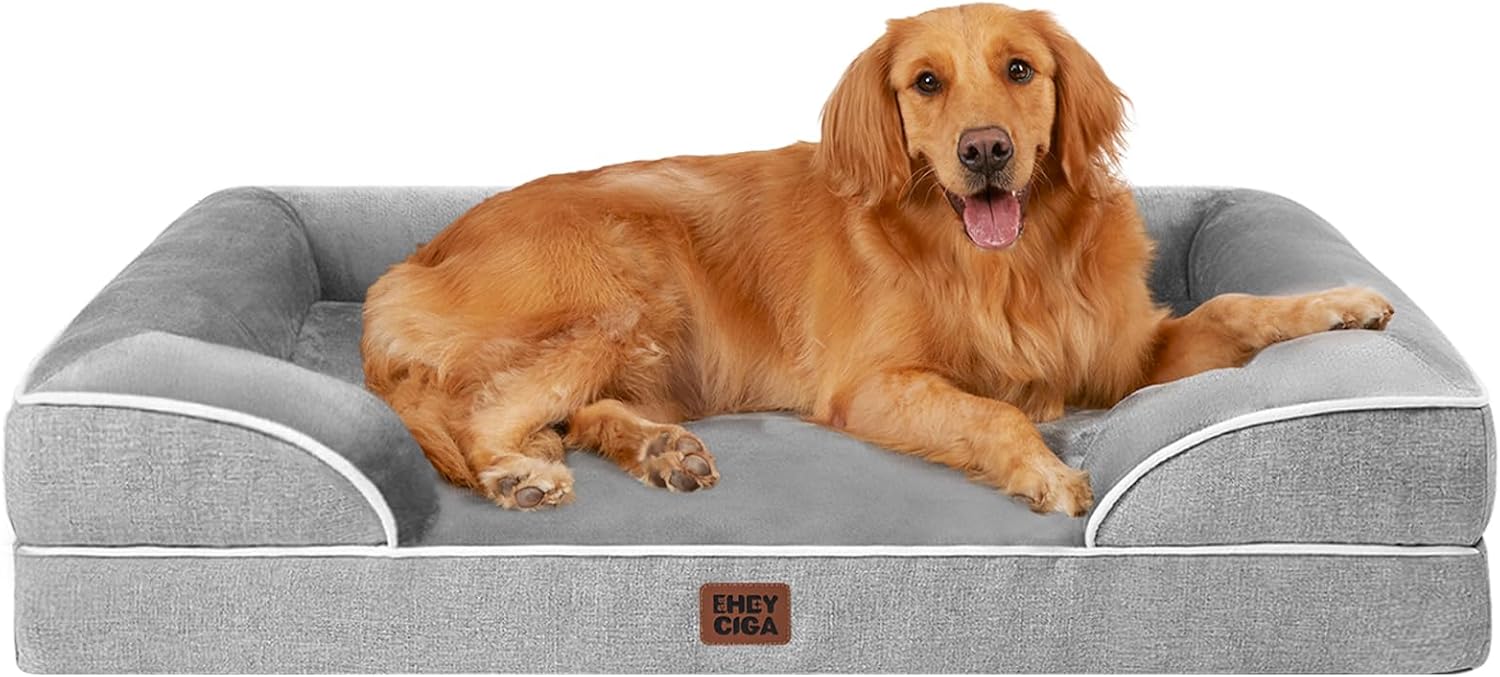
Dog bed buying guide: orthopedic, heated, cooling and elevated options explained
Joint health is only part of the equation. Temperature regulation matters just as much. Dogs run a higher normal body temperature than humans, typically around 101 to 102.5 degrees Fahrenheit, and they do not sweat through their skin the way people do; they pant and release heat through their paw pads and nose. A bed that traps body heat, such as a cheap polyfill lounger with an unbreathable cover, contributes to overheating in warm climates and summer months. Conversely, a bed that provides no insulation, like a thin mat on a cold floor, contributes to shivering and joint stiffness in winter. Manufacturers address this with gel-infused memory foam marketed as sleeping cooler, raised mesh designs that allow airflow underneath, and self-warming fleece that reflects body heat back without electricity. These claims come from manufacturer specifications rather than independent measurement, so treat them as directional rather than exact.
Behavioral factors also matter. Dogs are den animals by instinct and often seek enclosed, comfortable spaces that feel safe. Cuddler or donut-shaped beds with raised rims are designed to satisfy this denning instinct, providing a headrest for chin support and a sense of security. Bolster beds with padded sides let dogs lean against something while sleeping, and many owners report their dogs naturally seek out walls, furniture legs and their owners' legs to rest against. Flat, open beds without bolsters provide none of this, and verified owner reviews frequently describe dogs who ignore a flat bed in favor of the corner of a couch. That kind of rejection is one of the most common complaints in reviews of otherwise well-made beds, which is why matching shape to sleeping style matters as much as matching size to body weight.
What to Look For in a Dog Bed: The Critical Selection Factors
Support material. The filling determines both the support quality and the realistic lifespan of the bed. Memory foam, a high-density viscoelastic foam typically rated between two and five pounds per cubic foot of density, is widely regarded as the gold standard: it conforms to the dog's body shape, distributes weight evenly, and returns to its original form when the dog gets up. Look for CertiPUR-US certified foam, a third-party certification that excludes heavy metals, formaldehyde and ozone-depleting substances, with a minimum four-inch thickness for large dogs over fifty pounds and two to three inches for small breeds. Polyfill, or polyester fiberfill, is the cheapest filling; owner reports consistently describe it clumping and flattening within a few months, and it provides little orthopedic support for any dog over roughly twenty pounds. Egg-crate foam, a convoluted foam with a textured surface, offers moderate pressure relief but tends to compress permanently within six to twelve months of daily use. Bolster beds combine a foam base with raised filled edges, so the base supports the body while the bolsters support the head and neck. For dogs with arthritis, hip dysplasia or elbow problems, most veterinary-aligned guidance points to solid memory foam rather than any of the alternatives.
Size: measure your dog, not the label. Dog bed sizing is not standardized across brands; one manufacturer's Large may suit a fifty-pound dog while another's suits an eighty-pound dog. Measure your dog from nose to tail base while they sleep in their natural curled or stretched position, then add six to twelve inches. A bed that is too small forces an unnatural sleeping position and undermines joint support. A bed that is too large loses the sense of boundary and security that many dogs seem to want, and some dogs will reject it. In multi-dog households, either choose one large bed of roughly forty-eight by sixty inches or more that two dogs can share, or place separate beds near each other, since many dogs prefer their own sleeping space even when they get along well.
Cover removability and washability. A dog bed with a non-removable cover accumulates dander, drool, dirt, oil, flea eggs and bacteria at a pace that no amount of spot-cleaning can keep up with, and within months it becomes genuinely unpleasant. The cover should be fully removable with a zipper and machine-washable in cold water. Zippers that span at least two full sides of the bed make removal far easier than a small corner zipper, a distinction owners mention constantly in reviews. Waterproof or water-resistant covers with a hidden membrane are worth prioritizing for puppies, senior dogs with incontinence, heavy droolers such as Bloodhounds, Mastiffs and Saint Bernards, and dogs who track in outdoor mud and moisture.
Base slip resistance. A bed that slides when a dog jumps on is a genuine safety hazard; the dog may miss the bed entirely or become hesitant to approach it. Look for a non-slip bottom, whether rubberized dots, a silicone grip pattern or a textured fabric. On tile, hardwood or laminate floors this is close to essential, because ordinary fabric on a smooth floor generates almost no friction.
Temperature regulation features. Match the bed to your climate and your dog's coat. Single-coated breeds such as Dobermans, Boxers and Greyhounds get cold easily and benefit from self-warming beds with a reflective layer, or from heated beds with electric or microwaveable inserts. Double-coated breeds such as Huskies, Malamutes and Golden Retrievers overheat easily and do better with gel-infused foam, breathable mesh covers or elevated cot designs that let air circulate underneath. In temperate climates, a reversible cover, fleece on one side and cooler fabric on the other, gives year-round flexibility. If you use any heated product, follow the manufacturer's electrical safety instructions closely, and consult resources like the AVMA's pet owner pages on home safety for pets.
Shape and design. Flat mats suit dogs who stretch out on their side and do not need head support; large breeds and heavy-coated dogs often prefer these. Bolster beds suit dogs who curl up or rest their head on something, and sighthound owners in particular describe their dogs' preference for bolsters that support long necks. Donut beds, with a fully raised rim in a round or oval shape, suit small breeds and burrowing dogs who like to nest. Elevated cots, mesh or fabric stretched on a frame, suit hot climates, outdoor use and dogs who overheat easily, since the airflow underneath keeps them cool and the taut mesh limits pressure points.
Dog Bed Types Explained: Who Each One Suits
Rather than a ranked list, it helps to think of the market as a handful of distinct categories, each with a clear best-use case and a clear trade-off.
Orthopedic memory foam beds
These are the category most often recommended by veterinarians for senior dogs, large breeds and dogs with diagnosed joint disease. The defining feature is a thick slab of solid viscoelastic foam, ideally CertiPUR-US certified and at least four inches thick for dogs over fifty pounds. The trade-offs are price, weight and height: premium versions cost several hundred dollars, an extra-large model can weigh over thirty pounds, and a tall bed can be difficult for a dog with severe arthritis to step onto, in which case a ramp may be needed. Owner reviews of the strongest offerings in this category commonly describe a decade of use without significant sagging, and some manufacturers back that with long warranties of up to ten years against foam flattening, which effectively caps the per-year cost.
Egg-crate foam bolster beds
These sit in the value tier, typically forty to ninety dollars, and pair a convoluted foam base with plush bolster sides. They are well suited to small and medium dogs, to second beds for crates, offices or cars, and to dogs who want a headrest without their owner spending premium money. The honest limitations, documented repeatedly in owner reviews, are that the convoluted foam is less supportive than solid memory foam, the polyfill bolsters flatten within twelve to eighteen months of daily use, and there is usually no waterproof layer. New foam also tends to off-gas for several days, so plan to air the bed out before use.
Elevated cooling cots
An elevated cot lifts the dog six to eight inches off the ground on a metal frame with breathable mesh stretched across it, and air circulates freely on all sides. This is the most practical warm-weather option for hot climates and for outdoor use on patios, decks and camping trips, where any foam bed would be ruined by moisture and heat. The mesh used in reputable models is UV-resistant, mildew-resistant and quick-drying, and the whole thing can be hosed off. The trade-offs are significant: no insulation in winter, no orthopedic pressure relief, susceptibility to tearing from determined diggers, and discomfort for very short-coated dogs who feel the crossbars. Think of a cot as a seasonal supplement to a supportive bed rather than a replacement.
Heated beds
Low-wattage thermostatically controlled heated beds have been in production for over twenty years and are used widely by breeders, rescues and veterinary practices. Reputable models warm to roughly fifteen to twenty degrees above ambient temperature, capping at around 102 degrees Fahrenheit, at or just below a dog's normal body temperature, making them suitable across life stages when used as directed. They suit short-coated breeds, seniors with arthritis, dogs recovering from surgery, and insulated outdoor shelters in cold climates. The limitations: they need an outlet, the cords are chew-resistant rather than chew-proof, they must be kept dry, and they provide no bolster support. Any dog bed, heated or not, should be kept away from strings, small parts and materials a dog could ingest; if you are ever unsure whether something your dog chewed is dangerous, the ASPCA Animal Poison Control service is the standard reference.
Donut and calming shag beds
Roughly twenty-five to fifty-five dollars, these round beds feature a raised rim and long synthetic shag fur that many small dogs find deeply appealing. They are best for healthy dogs under about twenty-five pounds, for crate use and as supplemental cozy spots. The filling is polyfill, so they flatten, provide no joint support, and should not be a primary bed for any dog with orthopedic needs. The shag fabric also traps hair and dirt aggressively and needs weekly vacuuming plus monthly washing, and it is a poor match for dogs who dig or chew fabric.
Cave-style enclosed beds
An enclosed cave bed drapes a plush cover over a round base, creating a dark, den-like tunnel. For anxious dogs, recent rescues, and dogs with thunderstorm or fireworks phobia, verified owner reports frequently describe a calming effect that no open bed provides. The trade-offs: the polyfill base has minimal orthopedic value, the enclosure traps heat, some dogs are afraid of the cave itself, and it is unsuitable for incontinent dogs because soiled areas are hidden from view. A sensible low-cost experiment is to drape a blanket over your dog's current bed and see whether the dog seeks the enclosed space before buying a dedicated cave bed.
A Concrete Example Worth Examining
Because this guide covers a whole category rather than a ranked lineup, one concrete example helps anchor the specifications discussed above. There is a well-known orthopedic memory foam bed listed on Amazon that matches many of the ideal criteria described in the selection factors: thick CertiPUR-US certified foam, a zip-off machine-washable cover with a waterproof internal membrane, a non-slip bottom, and a long manufacturer warranty against foam sagging. Reading its listing is a useful exercise even if you buy something else, because it shows what a complete specification sheet looks like: foam density and thickness stated explicitly, cover construction and zipper type described, and warranty terms spelled out. You can check the current price on Amazon and compare its stated specs against anything else you are considering. Any bed that does not publish comparable details about foam type, thickness and certification is asking you to guess.
How to Choose the Right Dog Bed: Decision Guide
How to choose the right dog bed for your pet
Assess sleeping position. Watch your dog over two or three nights. Side-sleepers who stretch out need a flat, open bed with room to extend fully; measure nose to tail base and add six inches. Curled-up sleepers prefer donut or bolster beds they can nestle against. Belly-up sleepers need beds that do not trap heat, such as gel foam or elevated cots. Dogs who rotate positions overnight need a larger flat bed that accommodates every position.
Consider age and health. Puppies under a year need easy-to-clean, affordable beds you can replace as they grow, with waterproof covers for accidents. Adult dogs need a bed matching their sleeping style and coat, and orthopedic foam is beneficial even in young dogs as preventive support. Seniors over seven need memory foam of at least four inches for dogs over fifty pounds, a low profile or ramp for access, and waterproof protection for possible incontinence. Dogs with arthritis, hip or elbow dysplasia, or recent surgery need the highest support tier available.
Match the bed to your climate and home. In hot climates, prioritize elevated cots, gel-infused foam and breathable covers, and avoid polyfill and fleece. In cold climates, prioritize heated or self-warming beds, thick donut filling and fleece covers. On hardwood or tile, a non-slip bottom is essential. For crates, measure the interior and choose a bed that lies flat without bunching at the edges.
Calculate per-year cost. A three-hundred-dollar bed that lasts ten years costs thirty dollars a year. A fifty-dollar bed replaced every eighteen months costs about thirty-three dollars a year. The premium option frequently costs less annually while providing better support and materials, so buy the best support quality you can afford.
Common Mistakes to Avoid
Several recurring errors show up across owner reviews and return comments. Buying by weight instead of measuring the dog is the most common; two dogs of identical weight can differ enormously in body length. Choosing a bed based on how it looks in your living room rather than how it suits the dog is another. Skipping the waterproof layer to save ten dollars often shortens the bed's life dramatically, because once moisture reaches foam, it breaks down faster, develops odors and loses support. Placing a memory foam bed in direct sunlight degrades the foam and fades the cover. Finally, assuming a dog will adapt to any bed is a mistake; if a dog refuses a bed after a week or two, the shape or size is usually wrong, not the dog.
Maintenance and Cleaning
Wash the cover every two to four weeks for a healthy dog, and weekly if the dog has skin allergies, incontinence issues, heavy shedding, or sleeps outdoors or in a kennel. Use fragrance-free, dye-free detergent, since strong fragrances can irritate a dog's skin and airways, and skip fabric softener and dryer sheets entirely, as they coat fibers and reduce breathability. Air dry when possible, because high heat shrinks covers and damages waterproof membranes. To extend bed life: rotate the bed 180 degrees monthly to distribute wear, vacuum weekly with a brush attachment, keep it out of direct sunlight, and air out the foam core periodically to release trapped moisture and odor. Washable bedding hygiene also matters for allergy management in multi-pet homes, a point covered in general pet care guidance such as the WSAVA's owner-oriented resources on whole-of-life pet care.
Frequently Asked Questions
Can my dog just sleep on a human bed? Many do, and that is fine, but it does not replace a dedicated dog bed. A human mattress may not suit a dog's weight distribution; a dog also needs a retreat space when the bed is too warm or crowded; and a familiar portable bed provides routine in unfamiliar places like cars, offices and vacations.
What is the difference between egg-crate foam and memory foam? Egg-crate, or convoluted, foam is a single polyurethane layer with a textured surface offering moderate pressure relief; it compresses permanently at pressure points within six to twelve months. Memory foam is temperature-sensitive, conforms precisely to body shape, and recovers its shape for years. For any dog with joint issues, memory foam is the appropriate choice; egg-crate is adequate only for young, healthy dogs under about twenty-five pounds.
Is a waterproof cover worth it? For most owners, yes. Even without incontinence, muddy paws, wet fur, spilled water and sleep moisture all eventually reach foam, where they accelerate breakdown and odor. A waterproof membrane between cover and core can double or triple effective bed life. The exceptions are elevated cots, where water drains through, and very arid climates.
Where to Buy
As an Amazon Associate, PawCritic earns from qualifying purchases. This does not affect our recommendations.
If the specifications described above match what your dog needs, you can view this option on Amazon to inspect the current pricing, size chart and verified buyer feedback. Comparing the listed foam thickness, certification and warranty against any alternative you are considering is the single most useful step in the buying process.
The Bottom Line
The two factors that matter most are support quality and cleanability. Solid memory foam of adequate thickness is the right choice for any dog with existing or foreseeable joint issues, and a removable, machine-washable cover with waterproof protection is what keeps a bed hygienic and functional for years rather than months. Climate and shape come next: cooling cots for heat, heated or self-warming beds for cold, bolsters and donuts for dogs who curl or nest, flat mats for sprawlers. For readers ready to look at a specific listing that reflects these criteria, you can check the current price on Amazon. Whatever you choose, measure your dog first, read the specification sheet carefully, and treat the purchase as a per-year investment in your dog's comfort rather than a one-time expense. If you would like to cross-check any bed against a specific medical condition your dog has, the Merck Veterinary Manual for dog owners is a reliable starting point, and your veterinarian can confirm whether an orthopedic, heated or cooling surface suits your dog's particular situation. A good bed is not a luxury purchase; it is one of the few items that touches your dog's body for more than half of every day of their life, and choosing it deliberately pays off in every nap and every night of restful sleep.
Affiliate Disclosure: PawCritic.com participates in the Amazon Services LLC Associates Program. We may earn commissions from qualifying purchases at no extra cost to you.