Why Every Aquarist Needs a Medication Kit Before Fish Get Sick
Fish diseases move faster than almost any other category of pet illness. Ich, commonly called white spot disease, can overrun an entire tank within roughly 48 hours of the first visible spots. Columnaris, often mislabeled mouth fungus even though it is bacterial, is documented to kill within 24 to 36 hours of onset. Velvet disease moves faster still: fish can die within 12 hours of the first gold dust appearing on their bodies. When a fish shows symptoms at eight in the evening on a Saturday and the local fish store closed at six, or when cotton-like fungus appears on a betta late on a Sunday night, waiting for an online order to arrive is not a workable plan. The medication needs to already be on the shelf.
A well-stocked aquarium medicine cabinet is what separates a saved tank from a lost one. According to the Merck Veterinary Manual's reference material on exotic and laboratory animals, prompt identification and early treatment are the strongest predictors of survival in ornamental fish disease, which is exactly why supplies must be gathered before problems appear. This guide explains the categories of medication every aquarist should understand and keep on hand, what each one treats, the safety rules that prevent a well-intentioned treatment from crashing a tank, and how to match a medication to a symptom. One concrete example of an ich treatment is linked below as a reference point; the same selection principles apply to every product in this category.
Critical Safety Rules Before Dosing Any Medication
These rules come from manufacturer instructions and published aquatic veterinary guidance, and they apply to nearly every medication discussed here. Skipping them is the most common cause of treatment failure, and in some cases the most common cause of medicating a tank to death.
- Remove activated carbon and chemical filtration. Carbon, Purigen, and similar chemical media absorb medication from the water and render the dose useless. Remove these media from the filter before dosing, and return them only after the treatment course is complete so they can strip out residual medication.
- Know your actual water volume. Guessing that a tank is about 20 gallons is how fish get overdosed or underdosed. Measure the tank's internal length, width, and water height in inches, multiply, and divide by 231 to get gallons. Dose by actual water volume, not the tank's nominal rating: a nominally 20-gallon tank with substrate, decor, and equipment typically holds only 15 to 17 gallons of water.
- Scaleless fish are sensitive. Loaches, catfish, and many tetras lack the protective scales that buffer contact with medication. Malachite green, formalin, and copper in particular are toxic to these species at standard doses. Check labels for scaleless-species warnings and reduce dosing accordingly, commonly to half strength for loaches, corydoras, and tetras.
- Invertebrates cannot tolerate most medications. Snails, shrimp, crayfish, and corals will die from copper, formalin, malachite green, and many antibiotics. Treat in a separate hospital tank, or accept that invertebrate losses are the price of treating in the display.
- Never mix medications without confirming compatibility. Combining treatments can produce toxic reactions. Even the commonly paired combination of a broad-spectrum antibiotic with an antiparasitic is only safe when both labels confirm compatibility. When in doubt, treat one problem at a time.
- Do a large water change before medicating. Remove about half the water and vacuum the substrate thoroughly first. Better water quality improves the fish's own immune response, and a lower organic load means less of the medication is consumed by dissolved organics before it reaches the pathogen.
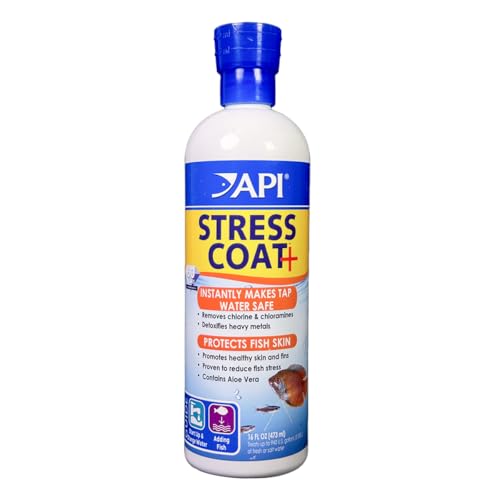
fish medications disease treatments
Medication Categories and What to Look For
Ich Treatment: The One Every Tank Owner Will Eventually Need
Ich, caused by the protozoan Ichthyophthirius multifiliis, is the single most common aquarium disease. The classic presentation is white salt-grain spots on the fins and body, flashing or rubbing against decorations, and rapid breathing. Over-the-counter ich medications are typically built around malachite green, widely regarded in published aquatic veterinary guidance as the most effective non-prescription anti-ich active ingredient. It works by killing the free-swimming theront stage, which is the only stage the medication can reach, because the feeding stage is buried in the fish's skin and the encysted stage sits on the substrate.
This life-cycle constraint explains why treatment takes four to seven days rather than a single dose. Raising water temperature to roughly 82 to 86 degrees Fahrenheit during treatment accelerates the parasite's life cycle, pushing it to the vulnerable free-swimming stage faster and often shortening the course to four or five days. An example of a widely stocked malachite-green-based ich treatment is API Super Ick Cure; you can check the current price on Amazon to compare it against what your local store carries.
The trade-offs are real and worth planning for. Malachite green is toxic to scaleless fish at full dose, lethal to invertebrates, stains silicone and decor a blue-green color, and can cause false ammonia readings on some test kits. Owners of planted shrimp tanks should plan to treat affected fish in a hospital tank from the start rather than dosing the display.
Broad-Spectrum Antibiotics: Kanamycin-Based Options
Bacterial infections are the second pillar of any fish medicine cabinet: fin rot, columnaris, bacterial gill disease, popeye, dropsy, and septicemia all fall in this category. The most commonly recommended non-prescription option in aquatic husbandry circles is kanamycin sulfate, an aminoglycoside effective against a broad spectrum of gram-negative and gram-positive bacteria. Seachem Kanaplex is the best-known kanamycin product, and its manufacturer specifications highlight two features that matter when choosing an antibiotic.
First, kanamycin delivered in water is absorbed through the skin and gills, and the same powder can be bound to food and absorbed through the gut. This dual-route delivery reaches internal infections such as dropsy arising from kidney involvement, which water-only medications often cannot touch. Second, it is rated as safe for scaleless fish and most invertebrates at standard doses, which removes the half-dose arithmetic that malachite green demands. A dosing scoop is included, which eliminates most guesswork.
Limitations to weigh: kanamycin is antibacterial only and does nothing for fungal or parasitic problems; extended use at high doses can suppress the biological filter, so ammonia should be monitored during long courses; and in some jurisdictions antibiotics for aquarium use require a veterinary prescription. A course typically runs three doses over six days, so it requires commitment to finish.
Botanical Antibacterial and Antifungal Options: Melafix and Pimafix
For mild bacterial issues, API Melafix offers a botanical alternative: it is formulated from Melaleuca, or tea tree, oil, and is positioned for mild fin rot, open wounds, cloudy eye, body sores, and torn fins from fighting or netting damage, with owner reports commonly describing noticeably faster tissue regeneration than unmedicated recovery. Because the formulation is mild, it is safe for scaleless fish, invertebrates, and plants, and can be dosed directly into a display tank without a hospital tank setup.
Its counterpart, API Pimafix, is derived from West Indian bay tree oil (Pimenta racemosa) and targets external fungal infections, the classic cotton-wool growth that appears on wounds and damaged fins, with some incidental antibacterial activity. The two products are labeled as combinable, which allows simultaneous treatment of mild fungal and bacterial problems.
The honest limitation of both is potency. Neither will resolve severe bacterial disease such as columnaris or dropsy, and neither addresses internal infections. Surface foaming is a normal, harmless reaction to the oils that nonetheless alarms new users, and some anabantoids, particularly bettas and gouramis, show sensitivity to tea tree oil, so a half dose with close monitoring is the cautious approach for those species. Aquarist communities remain genuinely divided on how botanical treatments compare to synthetic medications for anything beyond mild cases, and that debate should temper expectations.
Antiprotozoals for Internal Parasites: Metronidazole
Metronidazole is the long-standing standard treatment for internal protozoan parasites, most notably Hexamita and Spironucleus, the organisms behind hole-in-the-head disease in discus and cichlids, and behind wasting disease, where a fish eats normally but steadily loses weight. Seachem MetroPlex is the common aquarium-format product. Like kanamycin, metronidazole can be administered in water or bound to food, and the food route matters here: intestinal parasites live in the gut, so medicated food delivers the drug directly to the target. The manufacturer's food-binding approach involves mixing the powder with a binding agent and frozen food.
Practical constraints are worth knowing in advance. Water-based dosing is inactivated by light, so aquarium lights should be off during those treatments. Courses typically run three to five treatments over seven to ten days. Some fish refuse medicated food outright, forcing a fallback to water dosing, which is generally considered less effective for gut parasites. For anyone keeping discus, oscars, or other hole-in-the-head-prone species, keeping metronidazole on hand before symptoms appear is standard advice among specialist keepers.
Broad-Spectrum Antiparasitics: Metronidazole Plus Praziquantel
Combination antiparasitic products, with API General Cure as the common example, pair metronidazole with praziquantel, a dewormer. Together they cover internal protozoa plus external and internal worms: gill flukes, skin flukes, tapeworms, roundworms, hexamita, and spironucleus. When a fish shows mixed symptoms such as flashing combined with weight loss and fin deterioration, a broad antiparasitic is a sensible first response while a specific diagnosis is worked out. These products ship as pre-measured powder packets, typically one packet per 10 gallons, which simplifies dosing considerably.
Know the boundaries: the combination does not treat ich or velvet, which are external protozoan parasites requiring different actives. Praziquantel is poorly soluble, so the powder may not fully dissolve; this is normal and the dose is still delivered. Two-dose courses with a water change in between are standard. Puffers and rays are noted as praziquantel-sensitive species on treatment forums and in keeper experience, so extra caution is warranted with those fish.
Copper for Velvet and Marine Parasites
Copper remains the only reliably effective treatment for marine ich (Cryptocaryon) and marine velvet (Amyloodinium), and it also works on freshwater velvet. Chelated copper products, such as Seachem Cupramine, are more stable and less toxic to fish than ionic copper: the chelated form stays in solution longer and does not precipitate out as copper carbonate in hard water.
Copper is also the least forgiving medication below. It is lethal to all invertebrates, including snails, shrimp, corals, anemones, and starfish. It accumulates in substrate and silicone, which can render a tank permanently unsuitable for invertebrates even after treatment ends. The therapeutic window is narrow, roughly 0.4 to 0.5 mg/L, and the margin between therapeutic and toxic is small enough that dosing without daily testing is unsafe. A compatible copper test kit is a mandatory companion purchase, not an optional one. Marine keepers should treat in a bare-bottomed hospital tank specifically to avoid contaminating the display. The UF/IFAS Extension EDIS library on aquaculture and fish health publishes species- and treatment-level guidance that marine hobbyists can consult alongside product labels.
Comparison Table
| Product | Type | Treats | Invert Safe | Scaleless Safe | Price |
|---|---|---|---|---|---|
| API Super Ick Cure | Antiparasitic | Ich (white spot) | No | Half dose | $5-8 |
| Seachem Kanaplex | Antibiotic | Fin rot, columnaris, popeye, dropsy | Yes | Yes | $10-15 |
| API Melafix | Natural antibacterial | Mild fin rot, wounds, tissue repair | Yes | Yes | $8-15 |
| Seachem MetroPlex | Antiprotozoal | Hole-in-head, wasting, hexamita | Yes | Yes | $10-15 |
| API Pimafix | Natural antifungal | External fungus (cotton wool) | Yes | Yes | $8-12 |
| Seachem Cupramine | Copper antiparasitic | Marine ich, velvet | No (lethal) | No | $10-15 |
| API General Cure | Antiparasitic | Flukes, worms, hexamita | Check label | Check label | $8-12 |
Building the Medicine Cabinet
fish medications disease treatments
A practical starter cabinet for a freshwater community tank covers four bases: an ich treatment built on malachite green, a kanamycin-based antibiotic for serious bacterial disease, a metronidazole-plus-praziquantel antiparasitic for flukes and worms, and a mild botanical antibacterial for everyday wounds and torn fins. Discus and cichlid keepers should add standalone metronidazole for hole-in-the-head and wasting disease. Marine aquarists need chelated copper plus a copper test kit, and should plan to use both only in a hospital tank. As a starting point, the ich treatment, which is the item every aquarist eventually needs, is the one worth buying first; you can view this option on Amazon and compare pricing with local stockists, since ich medications are also carried by virtually every pet store.
Alongside medications, the single most valuable item is a quarantine setup: a 10-gallon hospital tank with a heater and a sponge filter. Quarantine is the closest thing fishkeeping has to a cure-all, because it prevents introductions of disease in the first place and gives you a safe place to treat without poisoning invertebrates, staining decor, or stressing healthy tankmates.
Sizing, Storage, and Shelf Life Considerations
Buy medication sizes matched to your tanks, not the largest bottle. Most of these products lose potency after opening, and liquids in particular degrade over months to a couple of years. Write the opening date on the bottle with a marker, store everything tightly sealed away from light and heat, and replace anything past its expiration or that has changed color or consistency. Malachite-green liquids that have darkened or precipitated should be discarded rather than dosed on faith. Powder packet products generally store longer than liquids, which is one argument for the packet format if you keep multiple tank sizes. Keep a dedicated set of measuring spoons or scoops with the kit so medication never contacts kitchen utensils, and store everything away from children and pets.
Common Mistakes That Kill Fish During Treatment
Beyond the label rules above, several recurring mistakes show up constantly in disease-treatment threads. Dosing by nominal tank size rather than actual water volume is the most common, and it systematically overdoses. Stopping treatment the moment symptoms fade is the second: ich in particular requires the full course because surviving parasites restart the infestation within days. Ignoring water quality during treatment is a third; medication stresses fish, and ammonia spikes from a suppressed biofilter compound that stress. Adding medication on top of untreated, poor water instead of doing the pre-treatment water change wastes the dose and the fish's remaining reserves. Finally, treating a display tank out of convenience when a hospital tank was available has cost many aquarists their entire invertebrate population or left silicone permanently stained.
How to Tell Bacterial, Fungal, and Parasitic Problems Apart
Symptom patterns give a workable first classification. White salt-grain spots point to ich, which is parasitic. Gold or rust-colored dust points to velvet, also parasitic. Cotton-like fluffy growth is fungus. Rotting, ragged, red-tinged fin edges usually indicate bacterial fin rot. White cotton on the mouth, despite the nickname mouth fungus, is usually columnaris, a bacterial disease that progresses far too fast for casual treatment. Holes in the head or body suggest hexamita. A swollen body with scales sticking out and bulging eyes is dropsy, typically involving bacterial kidney infection. A fish that eats well but loses weight points to internal parasites. When the picture is unclear, photograph the symptoms and consult an experienced fish store or a reputable aquarium forum, including clear images and water parameter details. For serious or ambiguous cases, an aquatic veterinarian is the right call; the ASPCA pet care library is a useful general resource on when professional help is warranted.
Frequently Asked Questions
Should I always use a hospital tank to treat sick fish?
Whenever possible, yes. Treating in the display exposes every fish to medication, kills invertebrates and sometimes plants, stains silicone and decor, and can damage the biological filter. The brief stress of moving one sick fish is smaller than the stress of medicating healthy fish that need no treatment. A basic hospital tank with heater and sponge filter costs around 30 dollars, less than a single failed treatment and a crashed display.
Can human antibiotics be used for fish?
No. Human antibiotics are formulated for large mammals with entirely different metabolism, and a safe dosage for a small fish cannot be calculated from human-strength tablets. Improper use also contributes to environmental antibiotic resistance through wastewater. Aquarium-formulated products exist at appropriate concentrations for small aquatic animals and are the correct route.
How long should quarantine last?
Two to four weeks is the standard recommendation for new fish, long enough for most incubating diseases to reveal themselves in isolation rather than in the display. Salt-dip or bath protocols during quarantine are a separate topic best checked against species-specific guidance, since scaleless fish tolerate them poorly.
Final Thoughts
The core freshwater kit is an ich treatment, a broad-spectrum antibiotic, and a broad antiparasitic; together those three categories address the overwhelming majority of diseases a home aquarist encounters. Botanical antibacterial and antifungal products cover mild wounds and external fungus gently. Metronidazole is essential for discus and cichlid keepers, and chelated copper with a test kit is the marine keeper's only reliable answer to marine ich. Before finishing any purchase, verify the current label on the exact bottle you receive, since formulations and species warnings change. To revisit the example product discussed above, you can check the current price on Amazon. Ultimately the best treatment is prevention: quarantine new fish, perform weekly water changes, keep parameters stable, and avoid overcrowding. A healthy fish in a clean, stable tank rarely gets sick, and when it does, the right medication is already on the shelf, in date, and matched to the symptom.
Affiliate Disclosure: PawCritic.com participates in the Amazon Services LLC Associates Program. We may earn commissions from qualifying purchases at no extra cost to you.