The Never-Ending Battle: Why Good Cleaning Tools Matter
Every aquarium develops algae. It is not a sign of failure — it is a sign of life. Excess nutrients from fish waste, uneaten food, and decomposing plant material feed algae growth on glass, decorations, filter intakes, and even plant leaves. The question is not whether you will contend with algae, but whether you have the right tools to manage it without scratching expensive tank glass, disturbing a planted aquascape, or spending hours on maintenance that should take minutes.
Algae management is fundamentally a husbandry problem before it is a tooling problem. Published guidance on aquarium fish health, such as the UF/IFAS Extension EDIS aquaculture and fish health resources, repeatedly emphasizes that nutrient control, stocking density, feeding discipline, and water-change consistency are the primary levers for keeping algae in check. Tools do not replace good husbandry; they make it practical to sustain. A modest, consistent cleaning kit used weekly will outperform an elaborate arsenal used sporadically, because algae that is removed while it is still soft films is far easier to deal with than algae that has calcified onto the glass.
A sensible cleaning toolkit turns weekly maintenance into a roughly fifteen-minute routine. Conversely, using the wrong scraper — a razor blade on acrylic, or a metal scrubber in a planted tank — can permanently damage a tank, and glass and acrylic scratches never heal on their own. This guide covers how aquarium cleaning tools work, what distinguishes a good one from a bad one, which categories suit which tank types, and what concrete specifications to check before buying.
Types of Aquarium Cleaning Tools
- Magnetic algae scrapers: A magnet pair — one inside the tank with a scrubbing pad, one outside acting as a handle. Moving the outer magnet drags the inner one across the glass, scrubbing algae without wet hands. Best suited to light and moderate algae films on glass, frequent touch-ups, and keepers who want to avoid reaching into the water.
- Long-handled algae scrapers: A rigid handle, typically 8 to 30 inches, ending in a pad or a replaceable blade. These deliver the direct downward pressure that magnets cannot, which matters for stubborn green spot algae, coralline algae in marine tanks, and hard-water mineral deposits.
- Gravel vacuums and siphons: A tube that creates suction to lift debris from the substrate while simultaneously drawing out water during a water change. The standard approach for cleaning gravel and sand substrates, and the core of routine water-change practice.
- Hand-held algae pads: Abrasive pads held directly in the hand, intended for decorations, rocks, filter intakes, and equipment that has been removed from the tank. Never use household scouring pads, which may contain soap residues or metal flecks.
- Filter brushes: Long, flexible brushes sized to the interior of filter tubing, intake pipes, spray bars, and lily pipes — the areas algae and biofilm colonize but flat scrapers cannot reach.
How to Evaluate a Cleaning Tool Before You Buy
Glass versus acrylic: the single most important distinction
Before buying any scraper, confirm what your tank is made of. Glass is hard and tolerant of metal blades and abrasive pads; acrylic is a soft plastic that scratches under precisely the tools that work well on glass, and deep acrylic scratches generally cannot be polished out without draining and disassembling the tank. Manufacturers state acrylic compatibility explicitly on packaging and product pages, and this specification should be treated as a hard limit, not a suggestion. A stainless steel blade rated for glass can ruin an acrylic pane in a single pass. If a product page does not specify, assume it is glass-only and contact the manufacturer before use on acrylic.
Even among glass-rated tools, technique matters. Any blade — metal or plastic — will scratch glass if a grain of sand or a fragment of gravel gets trapped between the blade edge and the pane. Owners reporting scratches almost always describe scraping too close to the substrate line, where displaced grains collect. Keeping the blade a finger-width above the substrate, and rinsing pads before each use, prevents nearly all of these incidents.
Magnet strength and glass thickness ratings
Magnetic scrapers are rated for a maximum glass thickness, because magnetic force falls off sharply with distance. A magnet rated for 6mm glass will barely grip on a 12mm pane, sliding and losing contact mid-scrape; a magnet rated for very thick glass can be difficult to separate by hand on thin glass. Manufacturer specifications list these thickness ratings clearly, and matching them to your tank is the difference between a tool that glides and one that fights you. If you run multiple tanks of different thicknesses, either buy magnets rated for each tank or accept that the thick-glass model will feel stiff on thinner glass.
Handle length and tank depth
For long-handled scrapers, measure the depth of your tank and add at least six inches so that you can work at a comfortable angle without submerging your arm up to the shoulder. Deep tanks beyond about 24 inches generally call for extension-handle models, which most scraper lines offer as accessories. Short handles force awkward angles, and awkward angles are the leading cause of both user fatigue and accidental contact between blade tips and silicone seams.
Replaceable wear parts and long-term cost
Pads and blades are consumables. Scrubbing pads wear smooth, plastic blades dull after a handful of uses on hard algae, and steel blades rust if stored wet. Before committing to a tool, check that replacement pads or blades are sold separately, reasonably priced, and not proprietary in a way that locks you into a single supplier. A cheap scraper with unobtainable replacements is more expensive over two years than a pricier tool with a healthy parts ecosystem. Owner reviews frequently flag tools whose replacement blades were discontinued — worth a quick check before purchase.
Materials and chemical safety
Anything that goes inside the tank should be inert: plastics, stainless steel, or acrylic-safe synthetics, with no coated metals that can flake. Dedicated aquarium use is essential — brushes previously used with household cleaners carry soap and solvent residues that are toxic to fish, a point stressed across the ASPCA pet care library's guidance on habitat safety and most manufacturer care instructions. Rinse every tool in tap water before first use and after each cleaning session, and store it dry.
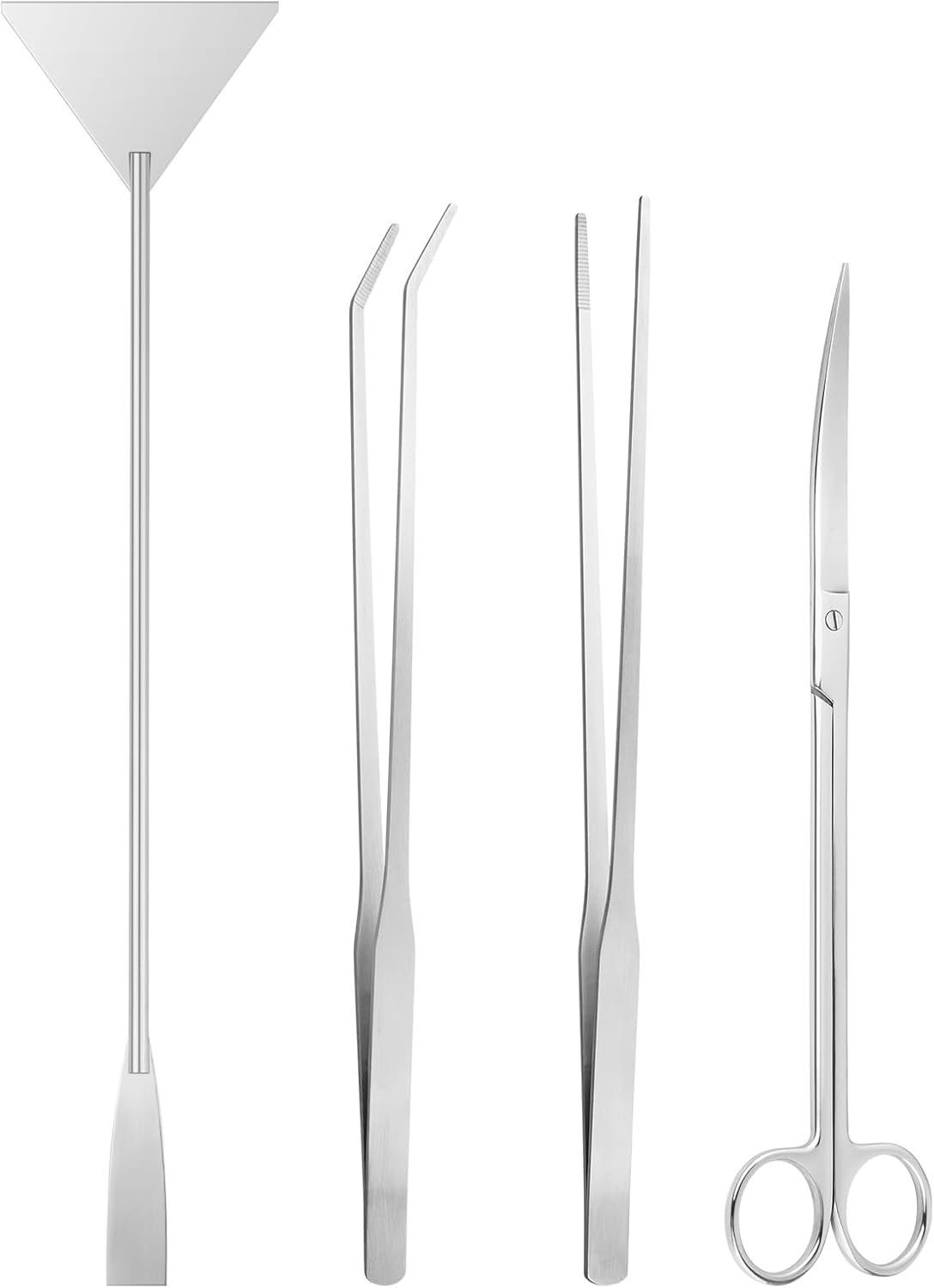
fish tank cleaners algae scrapers
Category Deep-Dive: What Each Tool Class Does Well and Where It Falls Short
Magnetic scrapers: the daily-maintenance workhorse
Magnetic scrapers excel at frequent, low-effort cleaning of soft algae films — the green dust and diatom coatings that appear on glass between water changes. Because they require no wet hands and no arm in the tank, they lower the friction of cleaning enough that most keepers actually do it often, which is the entire point: soft films wipe off in seconds, while the same algae left for a month calcifies into green spot that no magnet can shift.
The category's signature convenience feature is the floating inner magnet. When the inner half detaches — and it will, eventually, mid-scrape — a floating design rises to the surface for easy retrieval instead of sinking behind rockwork. Replacement pads attached with hook-and-loop fastening allow a worn pad to be swapped in seconds, and magnet strengths are tiered to glass thicknesses from roughly 3mm nano tanks up to 25mm-plus monster tanks.
The limitations are consistent across the category. Magnets generate insufficient pressure for calcified algae such as green spot and coralline, so a blade tool remains necessary for periodic deep cleaning. The inner magnet can trap sand and gravel if driven too close to the substrate. And glass-only abrasive pads will scratch acrylic, full stop. One well-regarded example of the format that illustrates all of these traits — floating magnet, replaceable hook-and-loop pads, tiered thickness ratings — is available if you want to check the current price on Amazon.
Long-handled blade scrapers: for what magnets cannot move
Green spot algae and coralline algae are calcified — they bond mineralogically to the glass, and no pad pressure breaks that bond. A blade mechanically separates the crust from the pane, which is why blade scrapers exist. Interchangeable-head systems are the most flexible: plastic blades for acrylic tanks, stainless steel for glass, sometimes pad heads as well. The blade angle on purpose-built scrapers is set so that algae comes off with minimal downward force, reducing scratch risk from pressing too hard.
Trade-offs: your arm goes into the tank, steel blades must be dried after use and replaced every month or two as they rust and dull, and plastic blades wear quickly on hard crusts — owner reports commonly describe five to ten heavy sessions per plastic blade. Handle length is a hard constraint; a 12-inch handle is fine for a standard 55-gallon but inadequate for a 24-inch-deep display without an extension. If you want to see how a typical interchangeable-head scraper is specified and priced, you can view this option on Amazon.
Gravel vacuums and siphons: the backbone of water changes
No scraper substitutes for substrate cleaning. Decomposing organics in the gravel are a primary nutrient source for algae and a chronic water-quality burden; extension guidance such as the Merck Veterinary Manual's section on exotic and laboratory animals ties regular waste removal directly to the prevention of ammonia spikes and disease stress in confined fish. A gravel vacuum works by siphoning: the tube is thrust into the substrate, debris lifts with the water column, and heavier grains settle back down.
Basic siphon-and-bucket setups cost little and suit small tanks. Faucet-driven systems — which connect a long hose between the vacuum and a sink, use faucet flow to generate suction, and drain dirty water directly to the drain before reversing to refill — dramatically reduce labor on tanks of 55 gallons and up, turning a bucket-hauling session into a standing task. Their costs are real, though: they require a compatible faucet and adapter, they run water continuously during siphoning, and because refill water goes straight into the tank, dechlorinator must be dosed for the full tank volume with careful timing. Tube width also matters — wide tubes suited to gravel will suck sand out of the tank; fine-sand substrates need a narrower tube or a flow-restricted version.
Brushes for tubing, decorations, and equipment
Canister hoses, intake pipes, spray bars, and lily pipes accumulate biofilm and internal algae that reduce flow long before the exterior looks dirty. Flexible wire-core brushes in graduated diameters thread through tubing and scrub the interior; nylon bristles avoid damaging the tube walls, though exposed wire tips warrant care around acrylic tubing. For decorations and equipment pulled from the tank, a small set of hand brushes — one large, one narrow detail brush, one stiff crevice brush — covers most shapes. Dedicate any brush set exclusively to aquarium use, clean with tank water or plain tap water only, never soap, and dry between uses to keep bristles from deforming.
Sizing Your Toolkit to Your Tank
A 10-gallon nano tank needs almost nothing: a small magnet or hand pad, a basic siphon, and one detail brush. A 75-gallon planted display justifies a faucet-driven water-change system, a thick-glass-rated magnet, and a long-handled blade scraper. Rimless acrylic tanks dictate plastic-blade tools throughout and careful pad selection. Marine reef tanks add coralline algae to the equation, which effectively mandates a steel blade capability on glass and patience or multiple passes with plastic on acrylic. Buy for the tank you have, not the tank you might own someday, and add categories as specific problems appear — flow reduction means filter brushes, crust at the substrate line means a blade.
A Realistic Weekly Maintenance Routine
Consistency beats intensity. A workable weekly rhythm looks like this, and none of it requires specialized skill.
- Glass, two to five minutes: Run a magnetic scraper over all panels at the first sign of film. Every-other-day passes keep soft algae from ever hardening.
- Blade work, weekly as needed: Address any green spot near the substrate line, where light, nutrients, and weak flow converge. Hold blades at a shallow angle and stay clear of silicone seams.
- Substrate, about a third of the time budget: Vacuum roughly 25 to 30 percent of the substrate surface with each water change, rotating sections week to week. Avoid deep-cleaning all the gravel at once — the substrate houses beneficial bacteria that process nitrogen waste, and wholesale disturbance disrupts the cycle.
- Filter check: Wipe intakes and outflows; if flow has dropped, rinse mechanical media in removed tank water, never untreated tap water, since chlorinated water kills the same bacteria.
- Exterior: A microfiber cloth and plain water for outer glass; skip chemical glass cleaners anywhere near the tank, as overspray enters the water column.
Common Mistakes and What to Avoid
The same errors recur in owner reports and forum threads. Using metal blades or stiff pads on acrylic, which permanently hazes the pane. Scraping with trapped grit between pad and glass, which scratches even glass tanks. Cleaning filter media under chlorinated tap water. Letting steel blades air-dry wet, inviting rust that transfers to the glass. Deep-vacuuming the entire substrate weekly, crashing the bacterial colony. Using household scrubbers or any tool that has touched soap. Ignoring reduced filter flow until the pump strains — clogged tubing is among the most common hidden causes of poor filtration. And buying a magnet rated below the tank's glass thickness, then blaming the tool for slipping. Every one of these is avoidable with a label check and a habit change.
fish tank cleaners algae scrapers
FAQ
Can I use a plain razor blade on my glass aquarium?
Yes, on glass only. A single-edge razor held at a shallow angle is effective against green spot and coralline algae. Never on acrylic, never near silicone seams, and replace the blade after a few uses before rust forms. Dedicated long-handled scrapers are safer and more comfortable than hand-held razors for most keepers.
How do I clean algae off live plant leaves?
Use a soft brush dedicated to aquarium use and gently wipe leaves supported between your fingers. Delicate plants such as cryptocoryne and anubias respond better to simply removing heavily coated leaves — aquatic plants readily replace lost foliage, and removing damaged leaves redirects energy to new growth.
What if my magnetic scraper cannot handle the algae?
That is expected for calcified algae. Green spot and coralline bond to the glass mineralogically; pads cannot break that bond regardless of pressure. Move to a blade scraper, either a flip-style magnet with an integrated blade or a long-handled interchangeable-head model, and use the magnet for routine soft-film upkeep afterward so the blade is rarely needed.
Where to Look
For keepers wanting to start with the two categories that cover most needs — a floating magnetic scraper for routine glass upkeep, and a long-handled scraper with replaceable heads for calcified deposits — concrete examples of each are easy to compare. You can check the current price on Amazon for the magnetic scraper format, and view this option on Amazon for the long-handled blade format. Verify glass-thickness ratings and acrylic compatibility on the product page against your own tank before ordering, since manufacturers list these explicitly and they determine whether the tool is safe for your setup.
Build the rest of the kit progressively: a siphon or faucet-driven system matched to tank size and substrate type, a brush set for equipment, and filter brushes once flow reduction appears. The total investment is modest, and the payoff is a tank that stays clear on a fifteen-minute weekly routine rather than demanding a half-day restoration every few months.
Affiliate Disclosure: PawCritic.com participates in the Amazon Services LLC Associates Program. We may earn commissions from qualifying purchases at no extra cost to you.