Understanding Guinea Pig Nutrition: A Practical Feeding Guide
Guinea pigs have a dietary quirk that catches many first-time owners off guard: like humans and a handful of other species, they cannot synthesize their own vitamin C. In practice, this means that a guinea pig fed a monotonous or poorly balanced diet will slowly deplete its vitamin C reserves, and the resulting deficiency — scurvy — develops gradually enough that the early signs are easy to miss. The Merck Veterinary Manual's exotic and laboratory animal section describes hypovitaminosis C as one of the most common nutrition-related conditions in pet guinea pigs, with symptoms progressing from a dull coat and reduced activity to painful joints, reluctance to move, and bleeding from the gums. The condition is almost entirely preventable with a correct diet, which is why pellet selection and vegetable variety matter far more than most owners initially assume.
The dietary picture has also shifted in recent years. Pellet manufacturers have largely moved toward stabilized forms of vitamin C — compounds engineered to survive storage and exposure to light without degrading as quickly as the raw vitamin once did — and veterinarians who specialize in exotic companion mammals have moved away from the older advice of adding vitamin drops or juice to the water bottle. There are two reasons for this shift. First, vitamin C degrades in water within hours, so by the time the pig drinks, the dose may be negligible. Second, flavored water often changes taste enough that some guinea pigs drink less, which creates its own health problems. The current consensus, reflected in guidance from organizations such as the Association of Exotic Mammal Veterinarians, is simpler and more reliable: a high-quality grass-hay-based pellet, unlimited fresh hay, and a daily rotation of vitamin C-rich vegetables.
The Correct Diet Breakdown
Before comparing any commercial foods, it helps to understand what a guinea pig's daily intake should actually look like. Published husbandry guidance is remarkably consistent on the proportions, and any pellet you choose should fit inside this framework rather than dominate it. The rough target for a healthy adult guinea pig is:
- Grass hay (roughly 80% of intake): Unlimited Timothy or other grass hay available at all times. Hay grinds the teeth down and keeps the gut moving; both functions are non-negotiable.
- Pellets (about 5%): Roughly one-eighth of a cup of plain, grass-hay-based pellets per adult per day. Pellets are a supplement, not a staple.
- Fresh vegetables (10–15%): A daily assortment, roughly one cup packed, weighted toward leafy greens and bell peppers.
- Fruits and treats (up to 5%): Small pieces, a few times a week at most. Fruit sugar adds up quickly in a one-kilogram animal.
The single most common mistake new owners make is inverting this ratio — feeding a bowl full of pellets and a sparse amount of hay. A pellet-heavy diet contributes to overweight, dental overgrowth, and bladder problems from excess calcium, while still leaving room for a vitamin C shortfall if the pellet is old or poorly formulated. When you evaluate any commercial food, ask where it sits in this hierarchy. A great pellet fed in correct portions supports the diet; it never replaces hay or fresh vegetables.
guinea pig food
How to Evaluate a Guinea Pig Pellet: What the Label Should Show
Reading a pellet ingredient list is a skill worth developing, because packaging language is not regulated the way human food labels are, and marketing terms like 'gourmet' or 'vitamin enriched' mean very little. The first thing to check is the base ingredient. For adults over about six months of age, you want a Timothy hay or other grass hay base, listed first. Alfalfa-based pellets are appropriate for pregnant sows, nursing mothers, and pups under six months, because growing animals benefit from the extra calcium and protein — but alfalfa fed to adults long-term contributes to bladder sludge and stones, a documented and painful problem in this species.
Second, look at the form of the food itself. Uniform pellets or nuggets are strongly preferable to muesli-style mixes containing flakes, colored bits, seeds, and dried fruit. Exotic veterinarians consistently flag selective feeding as a real hazard with mixed foods: guinea pigs pick out the starchy, sweet components and leave the pressed pellets behind, which means the balanced formulation the manufacturer intended never actually reaches the animal. The visually appealing mixes are, ironically, the riskier purchase. A plain brown pellet with a short ingredient list is a sign of a serious formula.
Third, check the guaranteed analysis and the vitamin C declaration. You want to see vitamin C listed with a stated minimum in ppm or mg/kg, and ideally the manufacturer should specify that it is a stabilized form. Because vitamin C degrades after milling, fresh pellets from a supplier with high turnover will deliver more of the vitamin than an identical bag that sat in a warehouse for a year. Check the mill or best-by date on the packaging, buy quantities your pets will finish within about six to eight weeks, and store the bag sealed, cool, and dark. Freezing small portions is a common practice among experienced keepers to slow degradation further.
Finally, consider fiber content. A quality guinea pig pellet should carry a crude fiber content in the mid-teens or higher, typically stated between 14% and 25% on the guaranteed analysis. Fiber is the engine of guinea pig digestive health; low-fiber, high-energy formulas encourage rapid weight gain and sluggish guts, and gastrointestinal stasis in guinea pigs is a genuine emergency. If a product's fiber number is not clearly printed, that absence is itself information.
Formulas Worth Comparing
Rather than a ranking, the following is a survey of the pellet brands that come up most consistently in veterinary recommendations and long-term owner reports, with notes on which households each suits and what trade-offs to expect. Every one of these is a plain, uniform pellet rather than a muesli mix, which is the baseline requirement before anything else about a formula matters.
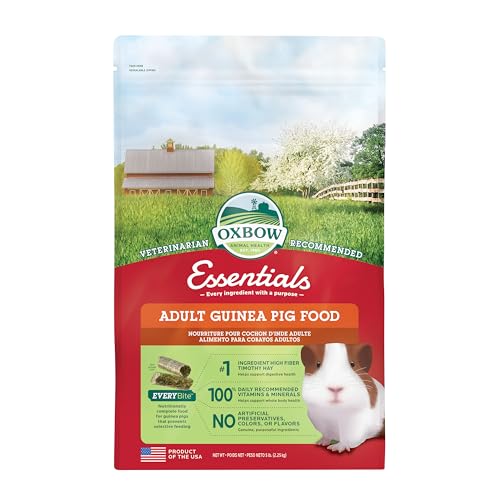
Oxbow Essentials Adult Guinea Pig
This is the formula most often named in exotic-vet handouts and rescue feeding guides, and it is the archetype of what an adult pellet should look like: Timothy hay base, uniform shape, stabilized vitamin C, no seeds, no colored pieces, and a fiber content comfortably in the correct range. It suits the majority of healthy adult guinea pigs and is the easiest recommendation for a first-time owner who wants a safe default. The trade-off is price and availability — it typically costs more per pound than big-box store brands, and some guinea pigs raised on sweeter mixes initially ignore plain pellets until they adjust. If you want a concrete example of the standard this whole category is measured against, check the current price on Amazon.
Kaytee Forti-Diet Pro Health
A widely available and budget-friendly option, fortified with prebiotics and probiotics marketed toward digestive support. It suits multi-pig households feeding larger volumes, and its shelf presence in chain pet stores makes it a practical fallback when your usual brand runs out. The trade-off is that its formulations vary across product lines — some Kaytee products are muesli-style mixes that should be avoided — so you must verify you are buying the plain pellet version, and the lower price reflects ingredients that enthusiasts consider a step below the premium names.
Small Pet Select Guinea Pig Food
A premium, high-fiber Timothy-based pellet produced in smaller batches, which its maker credits with better freshness and less vitamin degradation by the time the bag reaches you. It suits owners who order food online and want tighter control over bag age, and owner reviews frequently mention pigs transitioning onto it readily. The trade-off is cost and shipping dependence: it is harder to find in physical stores, and ordering means planning ahead so you do not run dry mid-week.
Burgess Excel Guinea Pig Nuggets
A UK-based brand whose nugget format is specifically designed to prevent selective feeding, with a high fiber content and a strong following among British keepers. It suits fussy eaters who have learned to sort through mixed foods, since every nugget is identical and there is nothing to pick around. The trade-off is regional pricing — imported bags in North America can cost noticeably more than domestic equivalents, and availability fluctuates.
Supreme Petfoods Gerty Guinea Pig
Another established UK brand, sold as a premium mix that even reluctant eaters accept enthusiastically. It suits households where palatability has been the sticking point and where an owner will measure portions carefully. The trade-off is that the mix format reintroduces selective-feeding risk, so it demands more discipline from the feeder than a uniform pellet does — an honest limitation worth weighing before choosing a mix on taste alone.
Foods to Avoid
Some items are simply inappropriate for guinea pigs, and several are actively dangerous. The ASPCA Animal Poison Control resource is worth bookmarking for any household with small herbivores, both for its plant toxicity listings and for its guidance on what to do if a pet ingests something questionable. The following come up most often in veterinary guidance on guinea pig diets:
- Iceberg lettuce: nutritionally empty, mostly water, and prone to causing loose stools and diarrhea in guinea pigs. Romaine and other dark-leaf lettuces are the appropriate substitutes.
- Potatoes and potato skins: difficult to digest and associated with toxicity concerns in related compounds; there is no reason to feed them.
- Onions and garlic: members of the allium family, damaging to red blood cells in many species and consistently listed among foods to exclude.
- Chocolate and sweets: toxic and nutritionally worthless for herbivores; also a choking and dental hazard.
- Seeds and nuts: choking hazards, unnaturally high in fat for a grazing animal, and often embedded in treat sticks that masquerade as healthy.
- Rhubarb, avocado, and houseplants like lilies: worth knowing before they are ever offered, not after.
Best Vegetables for Guinea Pigs
The vegetable bowl is where the vitamin C actually comes from, and it deserves as much attention as the pellet choice. Fresh vegetables deliver the vitamin in its most bioavailable form, alongside water and fiber that pellets cannot provide. A useful target is roughly one cup of mixed vegetables per pig per day, split into two servings, built around the following staples:
guinea pig food
- Bell peppers: the standout vegetable for this species. Red bell pepper in particular supplies roughly 95 mg of vitamin C per 100 g — more than an orange — and most guinea pigs accept it eagerly. Feed a slice or two daily; remove the seeds and the white pith.
- Romaine lettuce: a safe daily staple leaf vegetable that adds volume and hydration. Introduce gradually, as sudden large servings of any lettuce can soften stools.
- Cucumber: highly hydrating and low calorie, useful in hot weather or for pigs that under-drink. Nutritionally thin, so treat it as a carrier, not a core food.
- Carrots: universally loved but high in sugar; reserve as an occasional treat, a few coin-sized slices a couple of times per week, rather than a daily item.
- Parsley and cilantro: both notably rich in vitamin C. Parsley is also high in calcium, so feed it sparingly — a small sprig a few times weekly — particularly in pigs with any history of bladder issues.
- Leafy greens rotation: kale, mustard greens, and cilantro in measured rotation broaden the nutrient profile and prevent pickiness, while keeping calcium load across the week moderate.
Introduce any new vegetable slowly, one at a time, in small portions, and watch stools for a day or two afterward. Guinea pig digestive systems are conservative; sudden diet changes are a common trigger for soft stools and reduced appetite. Anything wilted, slimy, or bruised should go to the compost rather than the cage, and uneaten fresh food should be removed after a few hours so it does not spoil.
Sizing, Portions, and Feeding Routine
Portion discipline is where well-chosen food still goes wrong. A healthy adult guinea pig generally weighs between 900 and 1,200 grams, with males at the upper end of that range, and the standard pellet ration of one-eighth cup daily is calibrated to that body size. In multi-pig cages, some keepers feed pellets in separate dishes or supervised, because a dominant pig will happily eat a cage-mate's ration while the subordinate pig quietly under-eats — a pattern that only shows up on a scale. Weighing each pig weekly on a kitchen scale is a habit borrowed from breeders and rescues, and it is the single most useful monitoring routine available to an owner: steady weight loss is often the first visible sign of dental disease, illness, or dietary deficiency, sometimes days before behavior changes. Record the numbers; trends matter more than any single reading.
Water should be fresh daily, whether from a bottle or a heavy dish, and the delivery system should be checked for drips and blockages — a pig that stops drinking because a ball valve sticks can slide into gut stasis quickly. Hay should be topped up so that it is genuinely always available; a rack that is empty every afternoon means the supply, not the appetite, is the limiting factor. Vegetables do best split into a morning and evening serving, which spreads water and vitamin intake across the day and gives you two observation points for appetite checks.
Common Mistakes and How to Avoid Them
Beyond portion inversion and muesli mixes, a few recurring errors show up in owner communities and veterinary case reports. Feeding vitamin C drops in water is the most stubborn of these, since it feels proactive but delivers an unreliable dose in water that pigs may drink less of. Relying on old pellets is another: a bag opened six months ago may contain a fraction of its labeled vitamin C, so date discipline matters as much as brand choice. Over-supplementing calcium through heavy parsley, kale, and alfalfa feeding is a quieter mistake with serious consequences in males prone to bladder stones. And perhaps the most common of all: assuming that because a pig eats eagerly, the diet is fine. Guinea pigs are enthusiastic eaters by nature, and appetite masks nothing — weight, stool consistency, and coat condition are the honest indicators.
A Concrete Example and Where to Buy
If you want to see what a correctly formulated adult pellet looks like on a real product page — Timothy base, uniform pellet, stabilized vitamin C, and a published guaranteed analysis — one widely vet-referenced example worth examining is view this option on Amazon. Compare its label against the checklist above before buying anything, including it: first ingredient a grass hay, fiber in the mid-teens or higher, vitamin C with a stated minimum, no seeds or colored pieces. Any pellet that meets those criteria and is fed in correct portions will do the job.
As an Amazon Associate, PawCritic earns from qualifying purchases. This does not affect our reviews or recommendations.
The Bottom Line
The pellet, whichever brand you settle on, is perhaps five percent of the story. Hay is eighty percent of what your guinea pig eats, and the vegetable bowl is where the vitamin C actually comes from. Get those two things right — unlimited grass hay and a daily pepper-and-greens rotation — and the pellet becomes a simple fortified insurance policy rather than a decision to agonize over. Weigh your pig weekly, change the water daily, feed vegetables twice a day, keep hay in constant supply, and read labels before you buy rather than after. That routine, sustained over a pig's typical five-to-seven-year lifespan, is the entire secret to avoiding the nutritional problems this species is prone to. For deeper reference on husbandry and health, the ASPCA pet care library and the Merck Veterinary Manual's exotic animal section linked earlier are both reliable places to continue reading.