Why Cage Choice Matters More Than Any Other Hamster Decision
Choosing a hamster enclosure is the single most consequential decision a hamster owner makes, because nearly every other welfare factor flows from it. Hamsters are nocturnal, distance-running burrowers: published husbandry guidance notes that a healthy hamster may cover several miles of ground per night on a wheel, and that wild hamsters construct deep, multi-chambered tunnel systems. An enclosure that is too small, too shallow, or too poorly ventilated blocks both of those core behaviors, and the predictable results are stereotypic bar-gnawing, pacing, cage-directed aggression, and over-grooming. Veterinary references on rodents and small mammals, including the Merck Veterinary Manual's exotic and laboratory animal section, consistently describe spacious enclosures with deep substrate as a baseline requirement rather than a luxury, and link undersized housing to stress-related disease.
The encouraging shift over the past few years is that welfare-oriented sizing has gone mainstream. Major animal welfare organizations now advise owners plainly to provide the largest practical enclosure with generous depth for burrowing, and manufacturers have started responding by listing unbroken floor space in their specifications rather than obscuring it behind multi-level marketing. That said, the majority of cages still sold in pet stores as 'hamster habitats' remain well below modern minimums, so the burden of verification sits with the buyer. The guidance below is written to make that verification straightforward: what numbers to demand, what materials suit which households, and where the honest trade-offs sit.
Minimum Space Requirements: The Numbers That Actually Matter
Start with unbroken floor space, because it is the metric most commercial cages fail. The widely cited German welfare standard, which has become the reference point for English-language hamster communities and many rescue organizations, calls for a minimum of roughly 500 square inches of continuous floor for a Syrian hamster, and more is always better. That footprint is approximately that of a 40-gallon breeder tank, around 36 by 18 inches. Typical pet-store 'hamster habitats' offer only 200 to 300 square inches, and the shortfall cannot be fixed by adding tubes or platforms, because hamsters need long, continuous runs of ground to express natural movement. When evaluating any enclosure, measure the interior base dimensions yourself, multiply length by width, and treat any figure under 500 square inches as disqualifying regardless of how the cage is marketed.
Floor space alone is not the whole picture. The companion requirement that owners most often underestimate is bedding depth, because floor space only becomes usable habitat when it is filled with substrate a hamster can dig into. Published care guidance and exotic-mammal veterinarians generally recommend at least 6 to 10 inches of burrowable bedding, which means the enclosure needs walls tall enough to contain it. The Association of Exotic Mammal Veterinarians and its member clinics are a useful resource for species-specific husbandry standards, and a check-in with an exotic-mammal vet when setting up a first enclosure is a reasonable step for any new owner.
- Unbroken floor space: at least 500 square inches of continuous floor for Syrians; dwarf species still benefit from the same footprint.
- Bedding depth: 6 to 10 inches minimum of burrowable substrate, which requires correspondingly deep base walls.
- Wheel size: at least 10-inch diameter for dwarf hamsters and 12 inches or more for Syrians, with a solid running surface. Mesh or barred wheels catch toes and cause injuries.
- Ventilation: steady airflow without direct drafts. Full wire cages ventilate best; glass and plastic enclosures need a mesh top or ventilated panel.
- Flooring and levels: solid flooring throughout. Barred shelves and wire ramps are fall and injury hazards for hamsters, unlike for climbing species.
Cage Materials Compared: Glass, Wood, Wire, and Plastic
Glass Enclosures and Converted Cabinets
Glass has a long history in the hamster hobby because it solves several problems at once. It cannot be chewed through, it contains bedding even when a hamster digs enthusiastically at the corners, and it offers near-perfect visibility. The traditional do-it-yourself route was converting a glass display cabinet by laying it on its back and fitting a mesh lid, which yields roughly 1,000 square inches of floor space at a very low cost; community builders have migrated to currently available wide glass cabinets as the older models have disappeared from most markets. The honest trade-offs are weight and fragility: a glass enclosure full of substrate is heavy enough that it should be placed once and left there, moving it requires two people, and ventilation depends entirely on how well the mesh lid is constructed. Ammonia buildup is a real risk if the lid is under-ventilated, so a large mesh opening, not a few drilled holes, is the standard.
Wooden Enclosures
Wooden habitats have become the premium segment of the market, and they earn it on welfare grounds: they typically offer very large unbroken floor areas, deep bases that accept 8 to 12 inches of bedding, and a finished appearance that owners are happy to keep in a living room rather than hide in a spare bedroom. The trade-off is maintenance chemistry. Hamster urine is caustic to wood, so an untreated wooden floor will absorb odor and degrade over months unless it is sealed. The standard solutions are a waterproof, hamster-safe sealant on interior surfaces or a layer of glass or rigid plastic along the base. Wood also needs a well-fitted mesh lid for ventilation, and any wire hardware should be checked periodically for rust. For owners who consider the enclosure part of the room's furniture, a wooden habitat is usually the most satisfying choice; for owners who want to hose something clean in the yard, it is the wrong material.
Wire Cages With Solid Bases
A traditional wire cage over a deep plastic base remains a legitimate option, and it is the best-ventilated format available, which matters in warm climates or humid rooms. Its two structural weaknesses are bar spacing and bars themselves. Bar spacing must be narrow enough that the species cannot squeeze through or, worse, get stuck halfway: 8 millimeters is commonly cited as acceptable for adult Syrians but risky for young Syrians and dwarfs, while wider spacing sold for other rodents is unsuitable entirely. And because hamsters are gnawers, wire bars invite bar-chewing, the exact stereotypic behavior that adequate space is supposed to prevent. A wire cage works well when the base is deep, the floor plan is genuinely large, and shelves are solid rather than barred. It works poorly when it is a tall, narrow tower of tubes and platforms, which is the shape to avoid in this category.
Plastic Bin Conversions
The converted storage bin remains the most recommended budget habitat in hamster rescue communities, and the reasoning is simple arithmetic. A large 110-quart-plus storage bin provides 600 or more square inches of continuous floor for the cost of the bin, a piece of wire mesh, and some fasteners, with roughly 30 to 60 minutes of modification work: cutting a large ventilation opening in the lid and securing mesh over it. The result is escape-resistant when done correctly, easy to carry to a sink or tub for cleaning, transparent for viewing, and free of bars to chew. The trade-offs are aesthetic and thermal: a bin looks like a bin, plastic insulates more than wire so warm rooms need monitoring, and ventilation is limited to what the mesh opening provides, so the opening should be generous. As an entry point into proper hamster husbandry, nothing else at the same price comes close on the metrics that matter.
Species-Specific Considerations
Syrian hamsters are the largest common species and strictly solitary, which sets two hard rules: a bigger minimum footprint and a bigger wheel, because a Syrian running on an undersized wheel arches its back chronically and can develop spinal problems. Syrian enclosures also need walls and lids that a strong, determined chewer cannot defeat, which favors glass and thick plastic over thin wire. Dwarf species, including Campbell's, winter white, and Roborovski hamsters, are small and astonishingly good at squeezing through gaps, so bar spacing of roughly 7 millimeters or less is the safe threshold for wire cages, and every escape route in a DIY build needs to be meshed, not just the obvious ones. Roborovskis in particular are fast, flighty, and rarely tame, so glass or bin enclosures with limited handling stress suit them better than open-top setups. Chinese hamsters, with their longer tails and semi-climbing habits, benefit from extra height and securely fitted lids. The ASPCA pet care library offers general guidance on small-animal husbandry that complements species-specific sources. One rule overrides species: never house adult hamsters together. What looks like cuddling is usually stress, and serious fighting can be fatal.
Safety Checklist Before You Buy or Build
Run any candidate enclosure through a short safety audit before committing. Check bar spacing against the species you keep. Confirm the base is solid rather than wire, and replace any barred shelves with solid platforms if you buy a cage that includes them. Inspect DIY cut edges, especially on plastic bins and mesh, for burrs and sharp points, and file them smooth. Verify that the lid or door mechanism latches securely, because hamsters are stronger and more persistent than their size suggests. Confirm the enclosure will hold your target bedding depth with several inches of clearance so bedding does not spill during digging. If you are sealing wood, use a fully cured, non-toxic, hamster-safe sealant, and let it off-gas completely before introducing the animal. Finally, position the finished enclosure away from direct sunlight, radiators, and drafts, since glass and plastic enclosures can heat quickly in sun. If you ever suspect your hamster has chewed or ingested something questionable, the ASPCA Animal Poison Control service is the standard reference for suspected toxin exposure.
Two Examples Worth a Look
Rather than a ranked roundup, it helps to look at one concrete example in each of the two most popular formats. In the glass-and-plastic, maximum-space segment, one currently available large habitat option sits squarely in the tradition of converted-cabinet builds: generous unbroken floor area, deep base for serious bedding, and the containment and visibility that glass and clear-panel builds provide. It suits owners who have decided that space is the non-negotiable variable and want a manufactured version of the DIY glass build rather than cutting mesh themselves. The honest trade-offs are the familiar ones for the format: weight, limited portability once set up, and dependence on a well-made ventilated lid for airflow. If that profile fits your plans, check the current price on Amazon.
In the wooden-habitat segment, one widely discussed enclosure represents the modern premium approach: a solid-wood build with a very large footprint, a deep base accepting over eight inches of substrate, and a fitted mesh top designed for the purpose rather than adapted from furniture. It suits dedicated hobbyists and anyone whose enclosure needs to live openly in a shared room, and the trade-offs are cost and the wood-maintenance routine described above, sealing against urine damage and checking hardware for rust. For a comparison point against the glass-format example, view this option on Amazon. Neither example is the 'best cage' in an absolute sense; the right answer depends on your climate, your room, your budget for bedding, and how much maintenance you will realistically do.
Bedding: The Budget Item Owners Forget
Whatever enclosure you choose, plan for substrate as an ongoing cost, because deep bedding is what converts floor space into functional habitat. A 500-square-inch enclosure filled to eight inches holds a substantial volume of material, and it needs partial refreshes on a regular cycle plus deeper changes periodically, never a full strip-clean that destroys scent landmarks and stresses the occupant. Paper-based beddings and aspen shavings are the commonly recommended burrow-safe options; cedar and pine shavings with strong volatile oils are consistently advised against in published husbandry guidance. Substrate choice affects whether a burrow holds its shape or collapses, how odor develops between changes, and how the enclosure's humidity behaves, so it deserves as much research as the cage itself.
Maintenance and Cleaning Reality
Different enclosure formats impose genuinely different maintenance burdens, and it is worth being honest with yourself about which one you will sustain. A plastic bin is the easiest to clean: carry it to a tub, dump, wipe, refill. Glass enclosures are cleaned in place with a spot-cleaning routine, typically a small sieve or scoop for soiled corners every few days, since moving them is impractical. Wire cages come apart into base and top, which suits owners who like a full breakdown, but bar surfaces collect debris and need wiping. Wooden habitats demand the most foresight: spot-cleaning to keep urine off unsealed wood, and periodic inspection of seams and seals. Across all formats, the single most common cleaning mistake is over-cleaning, full deep cleans that remove every trace of scent, which published guidance and experienced keepers both link to stress behaviors. Hamsters use latrine areas, and targeted removal of those spots does most of the odor work.
Common Mistakes to Avoid
- Buying on tube count instead of footprint. Tubes and platforms are enrichment, not space. A tall cage with a 250-square-inch base is still a small cage.
- Undersized wheels. A wheel that forces a curved back causes chronic strain. Match wheel diameter to species: 10 inches minimum for dwarfs, 12 or more for Syrians.
- Shallow bedding. An enclosure filled with two inches of substrate wastes most of its volume. Depth is habitat.
- Barred shelves and wire floors. Limbs slip through, and falls from shelves are a documented injury source for hamsters.
- Housing hamsters together. Adult hamsters are solitary; cohabitation leads to fighting, and 'cage rage' is a recognized stress outcome of both crowding and conflict.
- Ignoring bar spacing for dwarfs. Gaps that look impossible to escape are routinely defeated by Roborovskis and young dwarfs.
- Placing the cage in sunlight or near heat. Glass and plastic enclosures heat rapidly, and hamsters tolerate heat poorly.
How to Decide: A Short Framework
If budget is the constraint, a converted storage bin is the clear starting point, and the money saved belongs in bedding and a correctly sized wheel rather than a prettier cage. If you want a manufactured option with maximum floor space and full visibility, the glass-format build tradition is the segment to shop, and the example linked above is a fair representative of what that segment currently offers. If the enclosure must double as room furniture and you will commit to wood care, the premium wooden segment delivers the best combination of size and appearance at the highest price. If you live somewhere hot or humid and ventilation is your top concern, a large wire cage with a deep solid base and correct bar spacing is the format that fits. Every one of these routes can house a hamster well; the failure mode in this category is not picking the wrong material, it is picking any enclosure below the space and depth minimums.
For readers ready to compare the two concrete examples side by side, both are listed at the same retailer: check the current price on Amazon for the large glass-format habitat, and the wooden enclosure via its link above. Verify the listed base dimensions against the 500-square-inch floor and 6-to-10-inch bedding-depth thresholds before purchasing, because manufacturer listings occasionally cite total or combined area rather than unbroken floor, and that distinction is exactly where undersized cages hide.
Frequently Asked Questions
Is a 40-gallon tank big enough for a Syrian hamster?
A standard 40-gallon breeder tank provides roughly 648 square inches of continuous floor, which clears the commonly cited 500-square-inch minimum with room to spare. The caveat is bedding depth: a standard-height tank limits substrate to a few inches unless you add a secure raised lid that creates headroom, so many keepers prefer breeders or conversions with taller walls.
Do hamsters need levels and tubes?
They are optional enrichment, not substitutes for floor space. Solid platforms can add usable area if they are safely accessible, but tube towers marketed as 'habitat systems' frequently sit on small bases. Prioritize a large continuous floor first, then add enrichment items.
Can I keep two hamsters in one large cage?
No. Adult Syrian hamsters are strictly solitary and will fight seriously, and even dwarf species kept together are a frequent source of emergency vet visits. One hamster per enclosure, always.
How often should bedding be changed?
Spot-clean the latrine area every few days and do partial refreshes on a regular cycle, reserving full deep cleans for occasional necessity. Complete stripping of all substrate removes the hamster's scent profile and is associated with stress behaviors, so targeted cleaning is both easier and better for the animal.
What is the single most important spec to check?
Unbroken floor space. Every other shortcoming, an undersized wheel, shallow bedding, a poor lid, can be fixed after purchase. Footprint cannot. Measure the interior base, multiply length by width, and walk away from anything under 500 square inches.
Affiliate Disclosure: PawCritic is reader-supported. We may earn a commission when you purchase through links on this page, at no extra cost to you. Our editorial selections are never influenced by commission rates or affiliate partnerships.
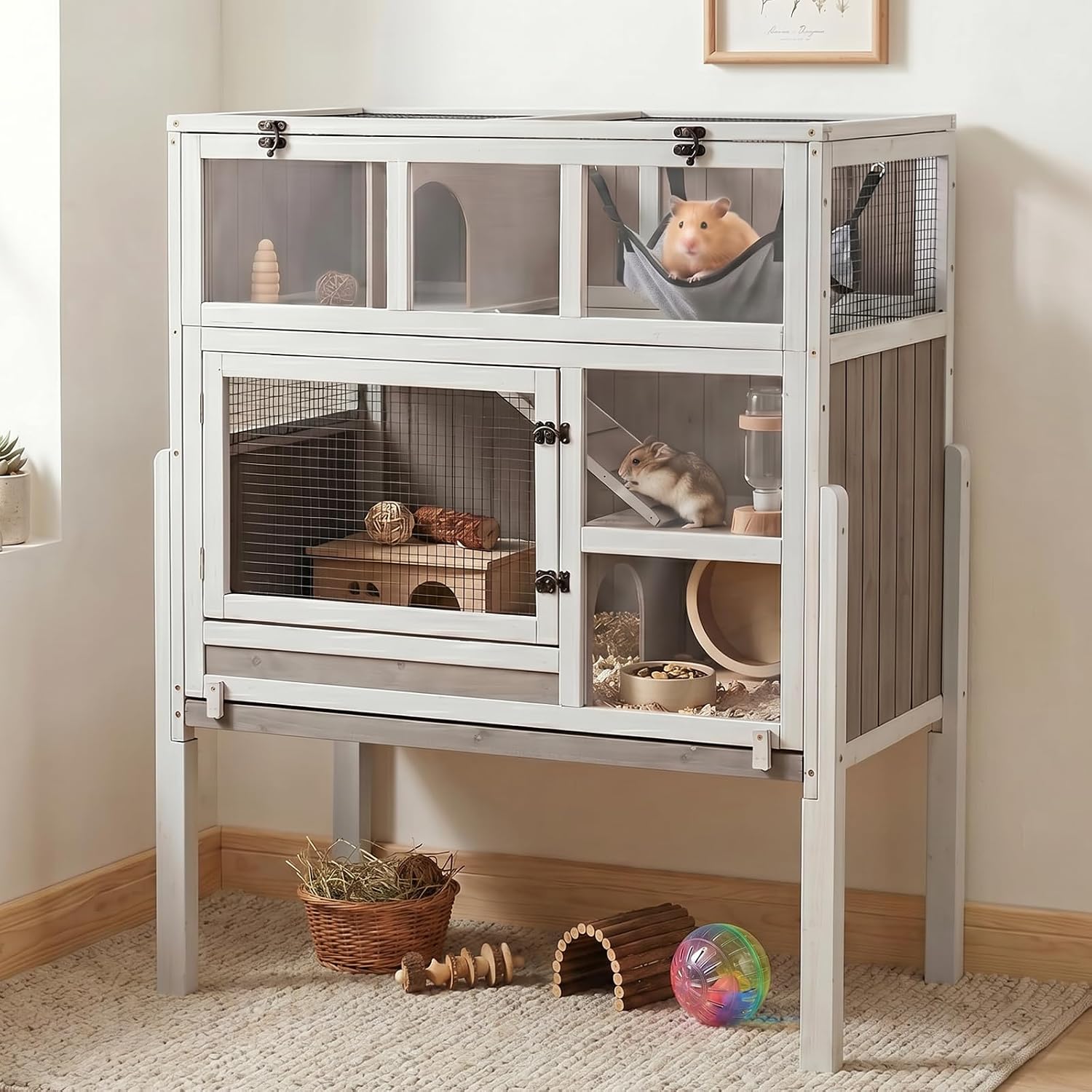
Large-format hamster enclosures: glass, wood, wire, and bin conversions compared on floor space, bedding depth, and ventilation.
Related reading: hamster bedding and substrate selection, small pet cages and habitats, hamster sand baths and grooming products, tunnel and tube systems, and step-by-step enclosure setup guides are covered elsewhere in our small pets section.
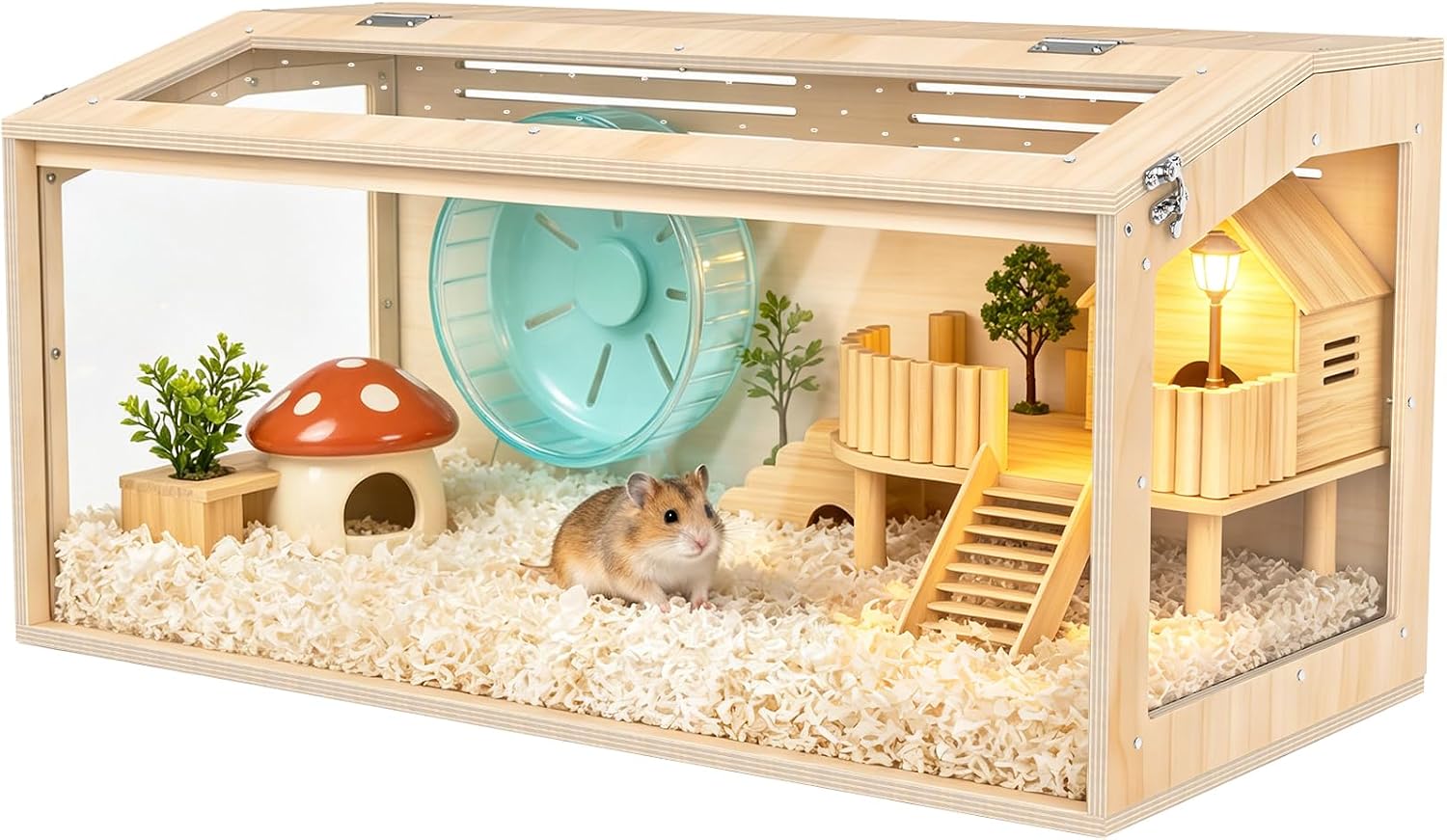
Two example habitats in the large-footprint segment, one glass-format and one wooden, illustrate the trade-offs discussed above.