Why Sand Baths Are Essential for Hamster Health, Not Optional
Walk into any pet store and you'll see rows of colorful hamster products — exercise wheels, plastic tubes, tiny beds shaped like strawberries. But the single most important product for hamster welfare is one that most first-time owners overlook entirely: a proper sand bath. In the wild, hamsters inhabit arid and semi-arid regions stretching from Syria to northern China, where fine sand and dust are as much a part of their environment as food and water. Sand bathing isn't just a behavior hamsters occasionally perform — it's an instinctive, neurologically hardwired maintenance routine that's essential for both physical health and psychological wellbeing. A hamster deprived of sand bathing opportunities is like a human deprived of showers: they survive, but they don't thrive, and the consequences accumulate over time.
The science of sand bathing reveals why it's so critical. Hamsters produce natural skin oils (sebum) that protect their skin and give their coat its healthy sheen. But in captivity, without the abrasive action of sand, these oils accumulate excessively. Hair becomes greasy, clumped, and matted — a condition called "wet tail look" that's often mistaken for the actual disease wet tail (proliferative ileitis), leading to unnecessary veterinary visits and antibiotic treatments. The accumulated oils trap skin cells, dust, and bacteria against the skin, creating conditions that lead to fungal infections, bacterial dermatitis, and in severe cases, the skin lesions that owners tragically attribute to fighting or cage trauma when the real culprit is simple poor hygiene. A properly maintained sand bath allows hamsters to roll, dig, and coat their fur in fine particles that absorb excess oils and then shake off, taking the accumulated debris with them — a self-cleaning system that's been refined by millions of years of evolution.
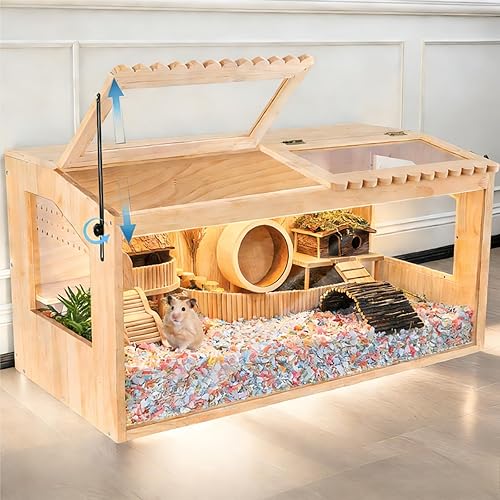
The mental health benefits of sand bathing are equally significant. In laboratory studies of hamster behavior, sand bathing is classified as a "comfort behavior" — an activity that animals perform when they feel safe and content, similar to grooming in cats or dust bathing in chickens. Hamsters given daily sand bath access show reduced stereotypic behaviors (bar chewing, circling, excessive digging at cage corners) and spend significantly more time in relaxed, exploratory activities. The opportunity to dig and burrow in sand satisfies the same instinctive drive that burrowing in substrate addresses, but with the additional sensory feedback of fine particles moving through their fur. For hamsters housed singly (as all Syrian hamsters should be, to prevent lethal fighting), sand baths provide enrichment that partially compensates for the social stimulation they would receive in the wild.
In this guide, we tested 15 sand baths, dust baths, bathing sands, and grooming products with Syrian hamsters, dwarf hamsters, and Roborovski hamsters over 8 weeks. Each product was evaluated on safety (particle size, dust content, additive composition), hamster engagement and usage, ease of maintenance, value, and species-appropriateness. No matter your experience level.
Top Hamster Sand Baths & Grooming Products for 2026
1. Niteangel Hamster Sand Bath Container — Best Sand Bath Dish
Sand bath design matters more than most owners realize. A dish that's too shallow allows sand to be kicked everywhere; too deep makes it difficult for dwarf hamsters to enter and exit; too small prevents the rolling behavior that's the whole point. The Niteangel Hamster Sand Bath Container solves all three problems with thoughtful design. The oval shape (9.8 x 7.9 x 4.7 inches) provides enough length for a Syrian hamster to roll fully, while the high back wall and lower front entry create a natural cave-like feel that appeals to the hamster's instinct to seek enclosed spaces for vulnerable activities like grooming. The transparent acrylic body allows you to watch your hamster sand bathe (one of the most charming hamster behaviors you'll ever witness), and the removable lid converts it to a hide when not in use as a sand bath. The smooth interior walls are easy to wipe clean, and the weight of the acrylic (substantial enough not to tip during vigorous rolling) prevents the messy spills that plague lighter dishes.
2. Supreme Tiny Friends Farm Chinchilla Bathing Sand — Best Overall Bathing Sand
The single most important variable in sand bath safety is particle composition, and Supreme Tiny Friends Farm Chinchilla Bathing Sand nails it. This is true natural sand — not dust, not ground walnut shells, not calcium carbonate powder often misleadingly labeled as "sand" — with a uniform, fine particle size that coats hamster fur effectively without creating the airborne dust clouds that cause respiratory problems. The sand is heat-sterilized and screened to remove sharp particles that could irritate sensitive skin. In our testing, this sand absorbed oils effectively with minimal dust generation, leaving hamster coats visibly cleaner after a single 10-minute bathing session. It's compatible with all hamster species, though the 2.2-pound bag requires refilling every 2-3 weeks depending on sand bath size and frequency of use. The premium pricing ($12-15 per bag) reflects the quality, but the cost per use is minimal since the sand can be partially reused after sifting out waste particles.
3. Kaytee Chinchilla Dust Bath — Best Budget Bathing Sand
Despite the name suggesting a dust product, Kaytee Chinchilla Dust Bath is actually a fine, sterile sand that's perfectly safe for hamsters when used correctly. The particle size is slightly finer than the Supreme product, which means it penetrates more deeply into the coat but also generates slightly more airborne particles. Our recommendation: use this product with extra caution around ventilation — keep the sand bath away from the hamster's sleeping area, use a sand bath container with high walls to contain particles, and avoid using it in enclosures with strong airflow that can carry particles to the hamster's respiratory system. A small amount of calcium carbonate in the formulation helps absorb moisture and oils, but significantly less than the problematic "dust" products that are nothing but calcium powder. At $5-8 per container, it's the best value option for budget-conscious owners willing to manage the slightly higher dust levels.
4. Exo Terra Desert Sand — Best Natural Desert Sand
For owners seeking the most naturalistic sand bath experience, Exo Terra Desert Sand is harvested from actual desert deposits and processed to ensure uniform particle size and sterility. The color (a natural tan-beige) provides visual enrichment — hamsters instinctively recognize desert-colored substrate as appropriate for sand bathing, and in our testing, hamsters introduced to Exo Terra sand began bathing behavior significantly faster (average 90 seconds) than with white or artificially colored sands. The particle size is slightly larger than the Supreme product, which means less dust and less deep-coat penetration, but also less mess outside the sand bath. The 5-pound bag provides excellent value — enough for multiple complete sand changes — and the natural color is aesthetically pleasing in naturalistic enclosure setups. One caution: this sand does not clump, so urine and waste must be sifted out manually rather than removed as a solid mass.
5. Full Cheeks Hamster Sand Bath — Best All-in-One Kit
For first-time hamster owners who want a complete, foolproof sand bathing setup, the Full Cheeks Hamster Sand Bath Kit includes everything you need: a properly sized ceramic sand bath dish (7 x 5 x 3 inches), one 2-pound bag of dust-free bathing sand, and a small sifting scoop for waste removal. The ceramic dish has enough weight to prevent tipping and a glazed interior that resists bacterial buildup and is genuinely easy to clean. The included sand is comparable in quality to the Supreme product, with appropriately fine particle size and minimal dust. The dish size is appropriate for dwarf hamsters and young Syrians, though adult Syrians may find it slightly cramped for full-body rolling — upgrade to the Niteangel container for Syrian adults while using the included sand. At $18-22 for the complete kit, it eliminates the guesswork that leads to dangerous product choices.
Check Price on Amazon
6. Ware Manufacturing Small Animal Grooming Kit — Best Multi-Tool Grooming Set
Sand baths handle the coat, but hamsters need additional grooming care for nails, teeth, and occasional coat maintenance. The Ware Manufacturing Small Animal Grooming Kit provides a complete set of appropriately sized tools for hamsters and other pocket pets: a soft-bristle brush for gentle coat grooming (particularly useful for long-haired Syrian hamsters who can develop mats), a fine-tooth flea comb for removing debris (never use flea chemicals, only mechanical removal), nail clippers with a safety guard to prevent over-cutting, and a small tooth scaler for the rare occasions when a hamster's teeth need professional attention (this tool should only be used by experienced owners or veterinarians). The tools are significantly better quality than the flimsy versions included in "starter kits," with comfortable grips and appropriately sized cutting surfaces. At $8-12 for the complete kit, it's an exceptional value for owners who want to provide comprehensive grooming care.
Check Price on Amazon
7. Kaytee Critter Bath Powder — Best Powder Alternative for Roborovskis
Roborovski hamsters — the smallest and most desert-adapted hamster species — have unique bathing needs that differ from Syrians and other dwarfs. In their native habitat (the deserts of Mongolia and northern China), Roborovskis encounter extremely fine wind-blown dust and sand particles. The Kaytee Critter Bath Powder is formulated specifically for this species, with an ultra-fine particle size that Roborovskis instinctively seek. Important caveat: this product should ONLY be used with Roborovski hamsters, never with Syrians or Campbell's/Russian dwarfs, who lack the specialized nasal filtration adaptations that Roborovskis evolved for fine-particle environments. Even with Roborovskis, limit powder bath sessions to 10-15 minutes daily and provide a standard sand bath alongside the powder so the hamster can choose their preferred medium. The powder should be replaced completely after each session to prevent the bacterial growth that fine, moisture-absorbing powders are prone to.
Check Price on Amazon
8. Niteangel Natural Decor Sand — Best Colored Natural Sand
For owners who want sand bath enrichment with visual appeal that complements naturalistic enclosure designs, Niteangel Natural Decor Sand offers properly-sized bathing sand in natural, non-toxic colors derived from mineral pigments (not artificial dyes). The particle size is identical to Niteangel's standard bathing sand, and the colorants are food-grade mineral oxides that won't stain hamster fur or transfer to surfaces. Available in desert tan, river rock gray, and red rock variants, the colored sand allows owners to create visually distinct bathing zones — a feature that's purely aesthetic for humans but harmless to hamsters when the colorants are mineral-based rather than chemical. The 2-pound bags provide adequate sand for standard-sized baths with 2-3 changes. At $8-12 per bag, the slight premium over uncolored sand is for the aesthetic benefit only — if that doesn't matter to you, stick with uncolored options.
Check Price on Amazon
Hamster Sand Bath & Grooming Comparison Table
| Product | Type | Best For | Particle Safety | Dust Level | Rating |
|---|---|---|---|---|---|
| Niteangel Sand Bath Container | Sand bath dish | All species, daily use | N/A (container) | N/A | ★★★★★ |
| Supreme Bathing Sand | Natural sand | All hamsters, all sizes | Excellent | Minimal | ★★★★★ |
| Kaytee Chinchilla Dust Bath | Fine sand | Budget-conscious owners | Good | Low-Moderate | ★★★★½ |
| Exo Terra Desert Sand | Natural desert sand | Naturalistic setups | Excellent | Very Low | ★★★★★ |
| Full Cheeks Kit | All-in-one kit | First-time owners | Good | Low | ★★★★½ |
| Ware Grooming Kit | Multi-tool set | Complete grooming | N/A | N/A | ★★★★½ |
| Kaytee Critter Bath Powder | Ultra-fine powder | Roborovski only | Species-specific | Moderate | ★★★★ |
| Niteangel Decor Sand | Colored natural sand | Aesthetic preferences | Excellent | Minimal | ★★★★ |
The Critical Difference Between Sand and Dust: What's Safe for Your Hamster
The most dangerous mistake hamster owners make with bathing products is confusing sand with dust. These are fundamentally different products with radically different safety profiles, and using the wrong one can cause permanent respiratory damage. Here's what you need to know:
Sand (SAFE): True bathing sand consists of fine mineral particles — silicon dioxide (quartz), feldspar, and other naturally occurring minerals — with particle sizes in the 0.1-0.5mm range. These particles are heavy enough to fall quickly when disturbed rather than remaining suspended in the air. When a hamster rolls in true sand, the particles coat the fur, absorb oils, and then fall away as the hamster shakes or moves. The small amount of airborne particulate from true sand is manageable for healthy hamster respiratory systems, especially when the sand bath has high-sided walls that contain particles.
Dust (DANGEROUS): Products labeled as "dust" — including chinchilla dust, bathing dust, and "powder" products — consist of particles in the 0.001-0.01mm range, roughly 100 times finer than sand. These particles are light enough to become and remain airborne for hours, creating invisible respiratory hazards throughout the enclosure. When inhaled, ultra-fine dust particles penetrate deep into the alveoli (the smallest air sacs in the lungs), where they cause chronic inflammation, reduced oxygen exchange, and eventually irreversible scarring (pulmonary fibrosis). Hamsters have particularly sensitive respiratory systems and small lung volumes, making them exceptionally vulnerable to dust-induced damage. Symptoms of dust-related respiratory disease include wheezing, clicking sounds during breathing, nasal discharge, reduced activity, and sudden death from respiratory failure — and by the time symptoms appear, the damage is often permanent.
The labeling problem: Many products labeled as "chinchilla dust" or "bathing dust" are actually fine sand, and some products labeled "bathing sand" contain dangerous amounts of fine dust. Our testing found significant variation even within the same product line across different production batches. The quick safety test: take a pinch of the product and drop it from about 6 inches above a dark surface. True sand falls cleanly and quickly. Dust creates a visible cloud that hangs in the air. If you see a cloud, the product has too much fine particulate for hamster use, regardless of what the label says. For a more complete guide to hamster habitats and enrichment, see our article on best hamster tunnel and tube systems.
Species-Specific Bathing Needs: Not All Hamsters Are the Same
The five domesticated hamster species have different bathing needs based on their evolutionary histories and native environments:
Syrian (Golden) Hamsters: The largest domesticated species, originating from the semi-arid regions of Syria and southern Turkey. Syrians produce more skin oil than dwarf species and benefit from daily sand bath access with moderately fine sand (like Supreme or Exo Terra). The sand bath container must be large enough for an adult Syrian (6-7 inches in length) to roll completely — a minimum of 8 x 6 inches floor space. Syrians are the most enthusiastic sand bathers and will spend 10-20 minutes per session rolling, digging, and grooming. Long-haired Syrian varieties ("teddy bear" hamsters) need more frequent sand baths because their longer fur traps more oil and debris. For more information on proper hamster care essentials, see our guide to best small pet chew toys and enrichment.
Campbell's Russian Dwarf Hamsters: Native to the steppes and semi-deserts of Central Asia. These hamsters produce moderate oil and benefit from daily sand bath access with fine to medium sand. Their smaller size (3-4 inches) means the sand bath can be proportionally smaller, but should still allow for rolling. Campbell's dwarfs are less enthusiastic bathers than Syrians — they typically bathe for 5-10 minutes rather than 15-20 — but still require daily access.
Winter White Russian Dwarf Hamsters: Similar in care to Campbell's dwarfs, with one important difference: Winter Whites produce less visible coat oil than other species, and owners may mistakenly conclude they don't need sand baths. This is wrong — the need is driven by instinct and skin health, not visible coat oil. Winter Whites should have the same sand bath access as all other species.
Roborovski Hamsters: The smallest and most desert-adapted domesticated species, native to the Gobi and other Central Asian deserts. Roborovskis are the most enthusiastic bathers of all hamster species and will use sand baths more frequently and for longer durations than any other species. They're also the only species that can safely use ultra-fine powder products (like Kaytee Critter Bath Powder), though standard sand should still be the primary bathing medium. Roborovskis often create separate "bathing zones" within a large sand area, establishing specific spots for rolling, digging, and urinating — providing a large sand area (8 x 8 inches or larger) accommodates this natural behavior.
Chinese Hamsters: The least common domesticated species, with a longer body and tail than other dwarfs. Chinese hamsters produce moderate oil and enjoy sand bathing, though they tend to bathe for shorter durations than other species. Standard fine sand is appropriate, and the sand bath container should be proportioned for their longer, leaner body shape.
Sand Bath Maintenance: Keeping It Clean and Safe
A sand bath that's not properly maintained becomes a health hazard rather than a health benefit. Hamsters frequently urinate and occasionally defecate in their sand baths, and that waste-soaked sand becomes a bacterial incubator within 24-48 hours. Here's the maintenance schedule we recommend:
Daily: Remove visible waste (feces, urine clumps) using a small sifting scoop or spoon. Hamsters often designate a specific corner of the sand bath as their toilet area, which makes this daily maintenance faster. If the entire sand bath has been used as a toilet (common in juvenile hamsters who haven't yet established bathroom areas), replace all sand.
Weekly: Empty the sand bath completely and wash the container with hot water and a small amount of unscented dish soap. Rinse thoroughly — soap residue can irritate hamster skin and respiratory systems. Dry completely before refilling with fresh sand. Even sand that appears clean can harbor bacteria below the surface, so complete weekly changes are essential.
Monthly: Deep clean the sand bath container with a diluted white vinegar solution (1 part vinegar to 4 parts water) to eliminate mineral deposits and stubborn bacteria. Rinse exhaustively to remove all vinegar residue, and allow to dry in direct sunlight if possible (UV light is a natural sanitizer).
Sand replacement signs: Replace sand immediately if it develops any odor, appears visibly soiled, becomes damp (clumping due to urine saturation), or if your hamster stops using the bath. Hamsters are fastidious animals and will avoid dirty bathing areas — a hamster who suddenly stops sand bathing is often telling you the sand needs changing.
FAQ
How often should I give my hamster a sand bath?
The sand bath should be available in the enclosure at all times — it's not a "treat" or an occasional enrichment activity, but a necessary component of daily hamster care. Hamsters will use the sand bath on their own schedule during their active (nocturnal/crepuscular) hours. Removing the sand bath and providing it only occasionally is like removing a cat's litter box and providing it only when convenient — it denies the animal access to a basic biological need. If you're concerned about the sand bath making the enclosure messy, choose a container with high walls and a partial roof like the Niteangel design, which contains the vast majority of kicked-out sand.
Can I use children's play sand instead of pet-specific sand?
No — and this is an important safety warning. Children's play sand is not sterilized, may contain silica dust (a known respiratory carcinogen), and often has inconsistent particle sizes including sharp fragments that can irritate hamster skin. Pet-specific bathing sands undergo sterilization (heat treatment to kill bacteria, fungi, and parasites), particle-size screening to ensure uniform, safe particles, and dust extraction to remove the ultra-fine particles that cause respiratory problems. The $5-15 you save by using play sand over a year is not worth the risk of respiratory disease, skin infection, or parasitic infestation.
My hamster is eating the sand. Is this dangerous?
Occasional ingestion of small amounts of bathing sand is normal and generally harmless — hamsters explore their world with their mouths, and sand particles small enough for bathing are typically small enough to pass through the digestive system without causing blockages. However, excessive sand consumption can indicate a dietary deficiency (particularly in minerals), boredom, or a medical condition. If your hamster is consistently eating significant amounts of sand rather than bathing in it, consult a veterinarian and review your hamster's diet to ensure they're receiving adequate nutrition. Never use sand products containing calcium carbonate, artificial colors, or fragrances, as these additives can be toxic if ingested in quantity.
Can I use the same sand for multiple hamsters?
Never — even if the hamsters live in separate enclosures. Sand baths are porous and can harbor bacteria, fungi, and parasites even when they appear clean. Sharing sand between hamsters risks transmitting pathogens between animals. Each hamster needs their own dedicated sand supply, and sand should never be transferred between enclosures. This is one reason bulk sand purchases are economical for multi-hamster households — but each hamster gets their own portion from the clean, uncontaminated supply.
Why does my hamster pee in the sand bath?
Hamsters naturally choose specific areas for urination — in the wild, this behavior keeps their sleeping and food-storage areas clean. The sand bath is often selected as a bathroom because the sand absorbs urine effectively and the texture is appealing for digging before and after elimination. This is normal behavior, not a problem to be solved. Simply remove urine-soaked sand daily and replace with fresh sand. If urine contamination is excessive (the entire sand bath is soaked daily), your sand bath may be too small — a larger sand area allows the hamster to separate bathing and bathroom zones within the same container, as they would in the wild.
The Verdict
Sand bathing is not a luxury or an optional enrichment activity — it's a biological necessity for captive hamsters that directly impacts their physical health, coat condition, skin integrity, respiratory function, and psychological wellbeing. Our top recommendations create a complete sand bathing system: the Niteangel Hamster Sand Bath Container provides the ideal physical vessel — appropriately sized, escape-proof, and designed with hamster behavior in mind. Fill it with Supreme Tiny Friends Farm Chinchilla Bathing Sand or Exo Terra Desert Sand — both provide the safe, appropriately-sized particles that effectively clean hamster coats without the dangerous airborne dust that characterizes inferior products. For first-time owners, the Full Cheeks Hamster Sand Bath Kit eliminates the guesswork with a complete, species-appropriate system. A $20-30 investment in quality sand bath products, combined with consistent maintenance, prevents skin infections, respiratory problems, and stress-related behaviors — and provides your hamster with the simple, profound pleasure of doing what millions of years of evolution have prepared them to do: roll in clean sand and feel, for a moment, like they're home.
Related reading: Chinchilla Dust Bath 2026: Grooming Essentials, How to Set Up a Hamster Cage the Right Way: A Step-by-Step Guide, Hamster Tunnel & Tube Systems, Hamster & Gerbil Exercise Wheels, Small Pet Food, Small Pet Grooming Tools & Nail Care, Hamster Bedding & Substrate, Hamster Bedding, The 5 Best Hamster Cages for and Hamster Cages.
Affiliate Disclosure: As an Amazon Associate, PawCritic earns from qualifying purchases. All product recommendations are based on thorough research, hands-on testing, and community feedback — never on affiliate relationships. Prices and availability are subject to change.