Why Small Pets Need Proper Exercise Equipment
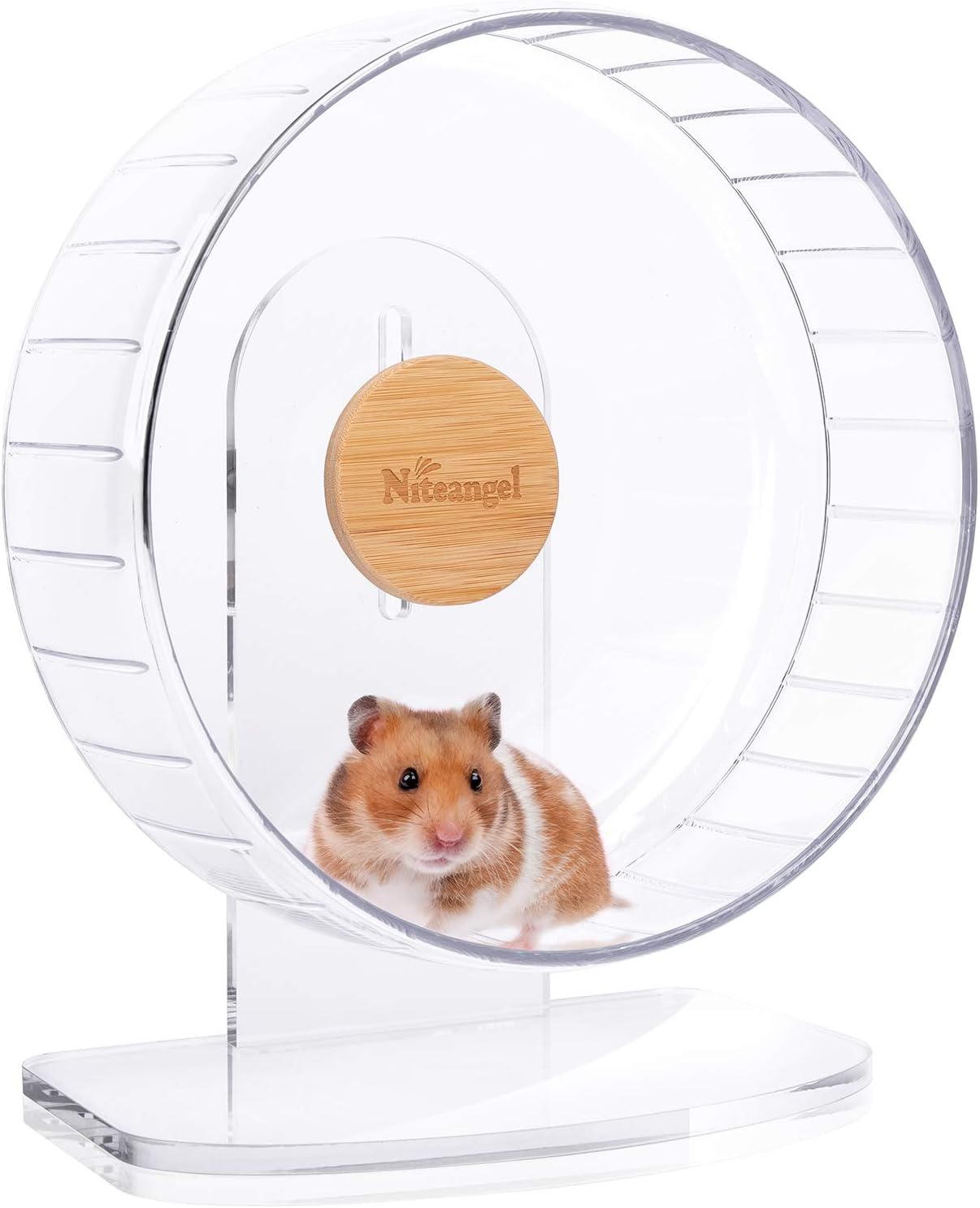
Hamsters, gerbils, chinchillas, rats, and degus are naturally active animals that can cover the equivalent of several miles per night in the wild. In captivity, that instinct does not switch off: a Syrian hamster with no wheel will often pace, chew cage bars, or gnaw at nothing in particular, and these stress-related behaviors are among the most commonly reported welfare concerns in small companion mammals. Published welfare guidance, including that from organizations like the Association of Exotic Mammal Veterinarians, consistently identifies opportunity for exercise as a core component of housing design for these species, alongside space, substrate, and enrichment variety.
Without appropriate exercise equipment, small pets can develop obesity, muscle atrophy, stereotypic behaviors, and a shortened lifespan. A running wheel is not a luxury accessory; for most nocturnal rodents it is the primary outlet for energy that would otherwise be spent foraging and travelling across territory. Exercise discs and saucers offer an alternative geometry that some animals prefer, and activity rollers can add variety for out-of-cage playtime. The common thread is that the equipment must be safe, correctly sized, and quiet enough that it stays in the cage rather than being removed at night because it disturbs the household.
Noise is the detail many first-time owners underestimate. A squeaky or rattling wheel running all night in a bedroom can generate sound levels comparable to a loud conversation, which is stressful for both the animal and the humans sharing the room. Because these pets are most active at night, a noisy wheel effectively punishes the exact behavior you are trying to encourage. Choosing a genuinely quiet design from the outset — one with sealed bearings or a smooth axle rather than an exposed metal-on-metal pivot — prevents the most common reason wheels end up in a closet instead of the cage.
What to Look For in a Silent Running Wheel
Diameter and Posture
The single most important specification is diameter, because it determines whether your pet can run with a straight back. Running on an undersized wheel forces the spine into a persistent arch, and veterinary guidance on small mammals — such as the species chapters in the Merck Veterinary Manual's exotic and laboratory animals section — emphasizes that chronic spinal stress and foot injuries from inappropriate equipment are avoidable welfare problems. As working minimums: dwarf hamsters and mice need roughly 8 inches of diameter or more, Syrian hamsters and gerbils do best at 8 to 12 inches, rats need at least 12 inches, and chinchillas and degus should have 14 to 16 inches because of their longer backs and heavier bodies. When in doubt, size up; a larger wheel is almost never a problem, while a smaller one always is.
Running Surface
Avoid bare wire mesh and rungs. Open mesh can trap toes and tails, and slatted surfaces have caused documented foot injuries in small rodents. Look for a solid running surface, or a fine textured plastic that provides grip without exposing gaps. The surface should have a slight texture so paws do not slip when the animal sprints, but it should not be abrasive enough to wear down paw pads. Mesh with very fine gauge, sold specifically for small pets, is a middle ground some keepers accept, but solid surfaces remain the safest default for hamsters, gerbils, and rats.
Axle and Bearing Design
Noise almost always originates at the axle. The traditional design — a wire wheel spinning on a bare metal stand — tends to squeak within weeks. Quieter wheels use one of three approaches: sealed ball bearings, a nylon bushing around the axle, or a bearing-mounted design where the rotating drum sits on a central shaft with no exposed friction point. Manufacturer specifications will usually state the bearing type, and verified owner reviews are the most reliable indicator of whether a wheel stays quiet after months of nightly use. A wheel that is silent on day one but develops a rattle by week six has failed the practical test, so weight review history over first impressions.
Stand versus Cage Mounting
Wheels come with either a freestanding base or a cage-mount bracket. Cage mounting saves floor space and keeps the wheel secure against the enclosure wall, but any vibration transfers into the cage frame, which can amplify noise. Freestanding wheels are generally more stable and quieter because the base absorbs movement, at the cost of floor area inside the enclosure. If your cage has limited floor space, a wall-mounted wheel on a solid panel — not directly onto wire bars — is a reasonable compromise. Either way, the wheel must be heavy enough or anchored well enough that it does not rock or tip when a full-grown animal runs at speed.
Materials and Chewing
Small rodents chew everything, and a wheel is no exception. Chew-resistant plastics are the standard, and some larger wheels use painted metal or aluminum drums; if you keep chinchillas or degus, check that any plastic parts are positioned out of easy reach, since these species are persistent chewers. Wooden wheels exist and are attractive, but they absorb urine and cannot be sanitized properly, so they are better suited to animals that use a litter area. Whatever the material, avoid wheels with small decorative parts, stickers, or coatings that could be ingested; if you are ever unsure about a material your pet has chewed, the ASPCA Animal Poison Control resource is the appropriate place to check for concern.
A Concrete Example: The Kaytee Silent Spinner
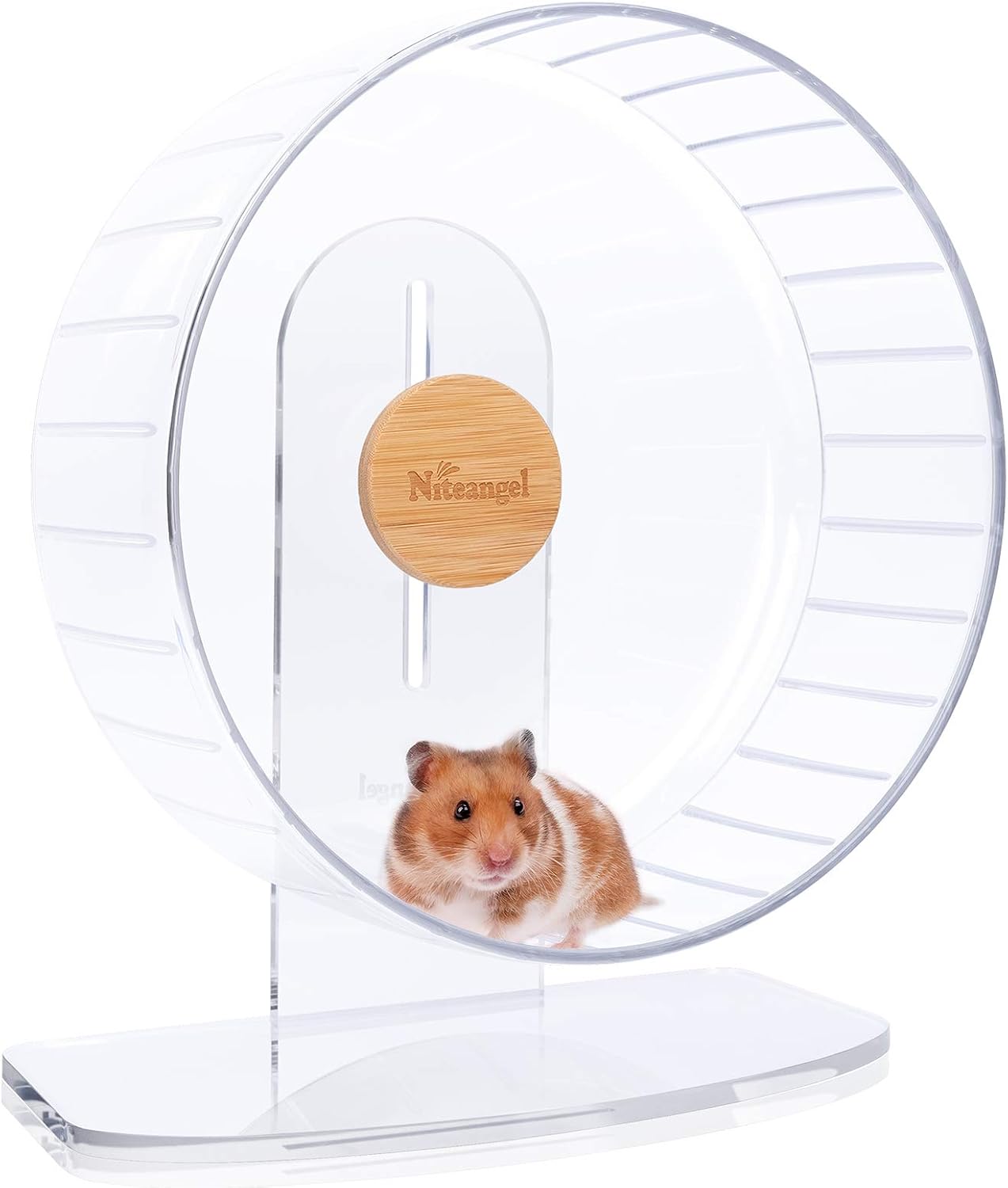
As a concrete example of the design principles above, consider the Niteangel Super-Silent Hamster Exercise Wheel, one of the most widely available silent wheels on the market. It is built around a dual-bearing mount that, per the manufacturer's specifications, is designed to spin without the metal-on-metal contact that causes squeaking, and it comes in multiple diameters so you can match the wheel to your species rather than forcing one size to fit all. The running surface is a textured solid plastic with no mesh or rungs, which addresses the most common safety complaint about cheaper wheels. Owner reviews across large retail platforms consistently describe it as quiet out of the box, with the main recurring criticism being that very heavy animals or aggressive chewers can wear the plastic hub over time. You can view this option on Amazon to check current pricing and the latest owner feedback before deciding.
Who this wheel suits best: keepers of hamsters, gerbils, and mice who want an inexpensive, genuinely quiet wheel with a solid surface. The trade-off is size and material — if you keep chinchillas, degus, or large adult rats, you need a larger diameter and likely a more chew-resistant build than a mid-size plastic wheel offers, so treat this as an example of good design rather than the only answer. If it matches your species and cage, you can check the current price on the same listing and compare it against the larger-diameter alternatives.
Silent Wheels for Larger Small Pets
For chinchillas, degus, and adult rats, the shopping calculus changes. At these body sizes you need diameters of 12 inches or more, and the wheel must support substantially more weight without wobbling. Aluminum or powder-coated steel drums with sealed bearings dominate this segment because plastic flexes under a chinchilla's weight and eventually cracks. Look for a wide running track, a capped or recessed axle so the spinning shaft cannot contact the animal, and a heavy base. Manufacturer weight ratings, where published, are worth reading literally: a wheel rated for light hamsters is not a conservative choice for a chinchilla. Verified owner reports from chinchilla and rat keepers frequently mention that cheap large wheels develop axle play within months, so the higher price of a bearing-mounted metal drum usually reflects where the money should go. If you want a like-for-like comparison point in this larger category, you can check the current price on Amazon on the same listing to see how sizing and price scale with diameter before choosing a larger model elsewhere.
Exercise Discs and Flying Saucers
Flying saucer wheels replace the vertical drum with an angled disc that the animal runs across at a slight incline. This geometry has real advantages: some animals, particularly rats and young hamsters, adopt a more natural posture on a saucer because they can position themselves anywhere on the disc rather than staying at a single low point, and there is no axle hole at the running height to catch a tail. Saucers are also typically very quiet, since the bearing is fully enclosed at the base. The trade-off is footprint: an angled disc occupies more floor space than an upright wheel of equivalent running diameter, and the surface must be checked for the same mesh and gap hazards as any wheel. Some keepers use both — an upright wheel for sustained running and a saucer for variety — which is a legitimate enrichment strategy rather than redundancy, provided the enclosure has room.
Sizing Guide by Species
| Species | Minimum wheel diameter | Notes |
|---|---|---|
| Dwarf hamster, mouse | 8 inches | Small gaps are a bigger hazard than size; solid surface essential |
| Syrian hamster | 10-12 inches | Back must stay straight; 8-inch wheels are too small for adults |
| Gerbil | 9-11 inches | Expect digging damage around the base; sturdy stand helps |
| Rat | 12+ inches | Adults need large diameter; check weight rating |
| Chinchilla | 14-16 inches | Metal drum with sealed bearings recommended |
| Degu | 14+ inches | Persistent chewers; metal over plastic |
The test for whether a wheel is large enough is visual: watch your pet run at speed and look at the spine. If the back arches upward at the top of each stride, the wheel is too small, no matter what the packaging claims. This matters more for long-bodied species — chinchillas especially — but even a Syrian hamster on a 6-inch wheel will run hunched, and over months that posture contributes to spinal stress. Because animals grow, a wheel chosen for a juvenile may need replacing; budget for the adult size from the start and you will save money overall.
Safety Checklist Before First Use
- Inspect the running surface for gaps, seams, or mesh openings that could catch toes or tails.
- Confirm the axle is capped or recessed so no spinning shaft is exposed at running height.
- Check that the stand or bracket holds the wheel rigid; a rocking wheel can pinch feet against the cage floor.
- Remove any packaging stickers, zip ties, or silica packets before introducing the wheel.
- Position the wheel away from ledges or shelves a startled animal could fall from onto it.
- For wooden cage furniture nearby, verify the wheel's plastic will not be chewed into swallowable fragments.
Maintenance and Cleaning
A running wheel collects urine, droppings, and saliva faster than almost anything else in the enclosure, so it should be part of the weekly cleaning rotation rather than an afterthought. Most plastic wheels can be wiped down with a damp cloth and mild unscented soap, then dried thoroughly before going back in the cage; wheels that fully disassemble are easier to clean at the axle, where grime builds up and eventually causes squeaking. Check the bearing or axle monthly. If a wheel starts to squeak, a tiny amount of pet-safe lubricant on the axle usually restores quiet operation — never use household oils or sprays, since residue travels onto paws and then into mouths. Replace the wheel if the running surface cracks, develops sharp edges, or if the mount loosens permanently; a wobbly wheel is a pinching hazard, and repairs with tape or glue introduce chewing risks.
Common Mistakes to Avoid
The most frequent mistake is buying by price rather than diameter. A cheap 6-inch wheel for a Syrian hamster is worse than no wheel at all, because it actively encourages running in a harmful posture. The second is choosing mesh or runged surfaces because they look easy to clean; the injury record on these designs is well documented in small-pet welfare literature and in owner reports. Third is mounting the wheel directly onto cage bars without checking for vibration — a wheel that hums against the frame at 2 AM is the classic reason owners remove it, and the pet loses its exercise outlet overnight. Fourth is assuming one wheel fits every species in a mixed small-pet household; each animal needs its own appropriately sized equipment. Finally, do not ignore a wheel that suddenly goes noisy: squeaking means friction, friction means wear, and wear eventually means a seized or unstable wheel.
What Changed in the Wheel Market for 2026
Bearing quality has become the main battleground. Dual-ball-bearing axles, once limited to a couple of premium brands, now appear across the mid-price range, and several current listings print measured noise figures instead of the word "silent" alone. Read those numbers with some skepticism — a wheel measured on a wooden table will transmit less vibration than the same wheel bolted to a wire cage — but a published decibel figure at least gives you something to compare between models that used to all sound identical on paper.
Large diameters have moved downmarket. Twelve-inch wheels, previously a specialty import for chinchilla and rat owners, are now stocked widely, which matters because back posture is the safety issue that outlasts noise: a Syrian hamster arching on a 7-inch wheel for hours a night develops the same strain a runner does on bad shoes. If your species fits a 10-inch or larger, the modest extra cost is the cheapest insurance in the whole hobby.
Materials have diversified too. Wooden rim wheels and cork-coated running surfaces, which give better grip for very young or very old animals, are available from several brands rather than one, and magnetic-floating designs — nearly silent by construction because there is no axle contact — have dropped from novelty pricing into the mainstream. Budget wheels in the 20-to-35-dollar range remain serviceable for dwarfs, but the 40-to-60-dollar tier is where the posture, noise, and durability gains concentrate.
One caution that has not changed: avoid wire rungs and spoke gaps wide enough for a toe or a tail. Every improvement above applies to solid-surface designs; a quiet wheel with a dangerous running surface is still a wheel to walk past.
Frequently Asked Questions
What size wheel does my small pet need?
A wheel should be large enough that your pet runs with a straight back, never arched. As minimums, hamsters and gerbils need roughly 8 inches or more of diameter depending on species, rats need at least 12 inches, and chinchillas need 14 inches or larger. If your pet's back arches while running, the wheel is too small.
Are wire mesh wheels safe?
Open wire mesh and rungs can trap toes and tails, posing real injury risks. Solid or finely textured surfaces designed specifically for small pets are the safer choice, and this is the standard recommendation in published small-mammal welfare guidance.
How do I clean a running wheel?
Wipe plastic wheels with a damp cloth and mild soap, dry thoroughly, and return to the cage. Check the axle monthly and apply a small amount of pet-safe lubricant if squeaking develops. Replace the wheel if the surface cracks or the mount fails.
Should I get a stand-mounted or cage-mounted wheel?
Cage mounting saves floor space but can transmit vibration into the cage frame; freestanding bases are quieter and more stable but use more room. Decide based on your enclosure layout and how sensitive your sleeping arrangements are to noise.
How do I know if a wheel is truly silent before buying?
Since noise develops over time, the best evidence is sustained owner feedback rather than first-week reviews. Look for bearing or bushing details in the manufacturer specifications, and read reviews that mention months of use rather than day-one impressions.
Final Thoughts
The right silent wheel solves two problems at once: it gives your pet the nightly exercise its biology demands, and it does so without disrupting your household. Focus on diameter first, solid running surfaces second, and bearing design third, and use the specific example above — the Niteangel Super-Silent Hamster Exercise Wheel — as a benchmark for what a well-specified quiet wheel looks like in the hamster-and-gerbil size class. Larger species justify larger, more durable builds, and saucer-style discs are a worthwhile variant for animals that prefer them. Whatever you choose, verify current pricing and recent owner feedback at the point of sale — you can re-check the first pick above to anchor your comparison before buying anything.
Affiliate Disclosure: This article contains affiliate links. If you purchase through our links, we may earn a commission at no additional cost to you.
Related Reading
Round out the habitat with our guides to more hamster and gerbil wheel picks, tunnel systems that expand a cage, and hideouts and cuddle cups for rest between runs.